预约演示
更新于:2026-09-15
Zinc Acexamate
醋氨己酸锌
更新于:2026-09-15
概要
基本信息
权益机构- |
最高研发阶段批准上市 |
最高研发阶段(中国)批准上市 |
特殊审评- |


登录后查看时间轴
结构/序列
分子式C16H30N2O6Zn |
InChIKeyVAFHIWOTWPOEJC-UHFFFAOYSA-N |
CAS号70020-71-2 |
关联
2
项与 醋氨己酸锌 相关的临床试验CTIS2024-518242-24-00
Multicenter, randomized, double-blind, comparative clinical trial to assess the efficacy of Zinc Acexamate versus a placebo in improving the prognosis of patients with advanced chronic liver disease (cACLD).
开始日期2022-06-27 |
申办/合作机构- |
KCT0000080
A Placebo-controlled, Double-blind, Randomized, Multi-center, Phase II study for adult patients who need Non-Steroidal Anti-Inflammatory Drugs (NSAIDs) to evaluate efficacy and safety of Wemate® (Zinc Acexamate) regarding prevention of small bowel's erosion induced by Non-Steroidal Anti-Inflammatory Drugs (NSAIDs).
开始日期2010-01-28 |
申办/合作机构 |
100 项与 醋氨己酸锌 相关的临床结果
登录后查看更多信息
100 项与 醋氨己酸锌 相关的转化医学
登录后查看更多信息
100 项与 醋氨己酸锌 相关的专利(医药)
登录后查看更多信息
132
项与 醋氨己酸锌 相关的文献(医药)2025-08-01·FOOD CHEMISTRY
Tibetan dark tea Theabrownin alleviates LPS-induced inflammation by modulating the Nrf2/NF-κB signaling pathway and host microbial metabolites
Article
作者: Liu, Chen ; Chen, Daiwen ; Liao, Yihong ; Wu, Aimin ; Tan, Liqiang ; Zou, Yao ; Du, Xiao ; Tang, Qian ; Chen, Shengxiang ; Baimawangzha ; He, Chunlei
Theabrownin is a key contributor to the flavor and health benefits of dark tea, but its structural characterization and anti-inflammatory properties remain underexplored. This study systematically investigated the physicochemical characteristics and anti-inflammatory mechanisms of Tibetan dark tea theabrownin (TTB). Our findings demonstrate that TTB is a hydroxyl- and carboxyl-rich polyphenolic aromatic polymer, composed of polyphenols, lipids, polysaccharides, and proteins. TTB modulated the NF-κB/Nrf2 signaling pathway, reducing inflammatory cytokines and oxidative stress, which in turn led to a decreased M1/M2 macrophage ratio and alleviated systemic inflammation. Fecal metabolomics analysis indicated that TTB exerts anti-inflammatory effects potentially by regulating key microbial metabolites, such as allantoic acid, and critical metabolic pathways like purine metabolism, as well as the metabolism of lysine, cysteine, phenylalanine, and pyruvate, etc. These findings provide insights into TTB's physicochemical properties and its mechanisms in alleviating systematic inflammation, providing a theoretical basis for the health-promoting effects of Tibetan dark tea.
2024-09-01·Pakistan Journal of Pharmaceutical Sciences
Phytochemical Profiling And Antioxidant Activities Of Bodhi Tree Leaf Extract (Ficus Religiosa L.) On Nitric Oxide And Catalase
Article
作者: Ayu Kartika, I Gusti Agung ; Mustasfa, Futri Sofi ; Rochmah, Nur Syifa ; Sinar Sari, Ni Made ; Sri Wahyuni, Ni Putu ; Suryani, -
Metabolic syndrome is on the verge of becoming a global epidemic. It is a complex, chronic illness that has epidemic proportions in most industrialized nations. This study examines the antioxidant potential of a sacred plant, the bodhi tree (Ficus religiosa). The capability of F. religiosa to suppress nitric oxide (NO) production and enhance catalase activity was determined using colorimetry methods. Additionally, liquid chromatography-mass spectroscopy was used to determine the phytochemical profile of the plant. The contribution of detected compounds was predicted using activity spectra for biologically active substances online. This study revealed the activity of F. religiosa to suppress NO production with IC50 value was 63.57?g/mL. The activity of F. religiosa to increase the catalase activity did not follow the increase of extract concentration, in contrast with the NO test. The concentration with optimum activity was 10 ?g/mL. The extract can increase catalase activity by 45.45% in this concentration. The presence of corchorifatty acid F, D-(-)-Quinic acid, 2,5-dihydroxybenzaldehyde and gentisic acid, confirmed by LC-MS/MS, might contribute to the antioxidant activity of F. religiosa. In summary, the antioxidant activity of F. religiosa was mediated by NO production suppression and catalase activity enhancement.
2024-03-01·INTERNATIONAL JOURNAL OF ADHESION AND ADHESIVES
Hybrid acrylic-modified collagen dispersions and their application as bio-adhesive with acexamic acid release capability
作者: Mario C.G. Passeggi ; Valeria S. Garcia ; Ernesto Garay ; Diego Fontana ; Verónica D.G. Gonzalez ; Roque J. Minari ; Luis M. Gugliotta ; Gisela C. Luque ; Lorena Rossini
Natural proteins appear as excellent candidates to replace polymers based on non-renowable sources and to improve the material biocompatibility and functionality.Taking advantage of collagen properties like biocompatibility and acceleration of tissue growth, in this work we present the synthesis of hybrid modified-collagen/acrylic nanoparticles by emulsifier-free emulsion polymerizationThese particles present great film-formation capability and switchable adhesion with the moisture content.Addnl., with the aim of improving the potentiality to accelerate tissue repair, films show excellent loading and release capability of acexamic acid.All these characteristics make these non-cytotoxic films good candidates to be employed as bioadhesive in wound healing treatments.
3
项与 醋氨己酸锌 相关的新闻(医药)2026-08-10
·今日头条
今天 A 股创新药直接杀疯了,股价创历史新高的公司仅有11家,药企就占据了5家。
百花医药五连板、百普赛斯20cm二连板,哈药股份秒板封单超50万手,但狂欢之下,真正有技术、有订单、有全球竞争力的,翻遍A股也就八家。
今天AI 板块高位分歧资金集体高低切换,创新药板块逆势走强,机构扎堆调研百济神州,政策、业绩、资金三重利好扎堆发酵。
但很多散户一看见 “ADC、创新药” 几个字就闭眼冲,踩坑踩得头破血流。目前市场上 90% 医药股全是空壳概念,手里无核心管线、无落地产能,医院订单寥寥无几,千万别追高接盘!
真正能穿越行情的创新药企业,三大硬标准缺一不可:
独家自研新药、规模化生产产能、锁定两三年的大额长期供货订单
。
今天九九筛掉所有蹭概念的小票,帮大家深度复盘筛选出,创新药的八强龙头公司,越往后订单体量越大,第一名更是断层领先。
第8名:石药景峰,11 亿在手订单,排产至 2027 年底。
石药集团湖南景峰医药股份有限公司的主营业务是医药产品的研发、制造与销售。公司的主要产品是心脑宁胶囊、盐酸替罗非班注射用浓溶液、盐酸替罗非班氯化钠注射液、参芎葡萄糖注射液、注射用盐酸地尔硫卓、乐脉丸、注射用培美曲塞二钠、注射用盐酸吉西他滨、盐酸伊立替康注射液、注射用磷酸氟达拉滨、注射用奥沙利铂、来曲唑片、玻璃酸钠注射液(含玻璃酸钠原料药)、镇痛活络酊、通迪胶囊、骨筋丸胶囊、妇平胶囊、金鸡丸、儿童回春颗粒、注射用泮托拉唑钠、注射用奥美拉唑钠、注射用兰索拉唑、复方胆通胶囊、消炎利胆胶囊、冰栀伤痛气雾剂、注射用盐酸克林霉素磷酸酯、注射用单磷酸阿糖腺苷、注射用更昔洛韦、复方柳唑气雾剂、伏立康唑片、医用透明质酸钠凝胶、氟比洛芬酯注射液。
公司手握纳米制剂、玉冠丰两大独家研发平台,榄香烯、玻璃酸钠院内集采持续放量,一边自产特色抗肿瘤长效制剂,一边承接药企 CDMO 代工,院内制剂 + 外包代工双线增收,订单常年饱满。
第7名:海南海药,手握 15 亿锁定订单,供货周期直达 2027 年。
海南海药股份有限公司的主营业务是药品研发、生产和销售。公司的主要产品是注射用头孢西丁钠、注射用头孢唑肟钠、注射用美罗培南、注射用氨曲南、注射用头孢呋辛钠、注射用头孢曲松钠、盐酸米诺环素胶囊、头孢克洛颗粒、头孢克洛干混悬剂、注射用头孢美唑钠、肠胃康系列(颗粒剂、片剂)、枫蓼肠胃康口服液、枫蓼肠胃康分散片、聚乙二醇4000散、富马酸伏诺拉生片、醋氨己酸锌胶囊、紫杉醇注射液、复方红豆杉胶囊、7-ANCA、4-AA、头孢西丁钠、头孢西丁酸、头孢唑肟钠、氨曲南、美罗培南、地氯雷他定口服溶液、注射用维生素C、小柴胡颗粒、红宝牌太和胶囊、双参活血通络颗粒、罗沙司他胶囊、利奈唑胺片、Crystaderm。
公司走差异化路线,肝纤维化、神经领域拥有独家首创创新药,核心产品氟非尼酮获评突破性治疗品种。抗癫痫新药同步出海洽谈合作,肠胃康抗感染制剂铺满全国大小医院,院内长期采购协议稳稳兜底,属于冷门细分赛道隐形实力派。
第6名:荣昌生物,45 亿大额订单交付到 2027 年末,国产稀缺双独家药企。
荣昌生物制药(烟台)股份有限公司的主营业务是研发、生产和销售医药产品、诊断试剂产品。公司的主要产品是泰它西普、维迪西妥单抗、RC28、RC148、RC278、RC288。
公司自研 ADC 药物、红斑狼疮自免新药双王牌在手,同赛道国内竞品极少,核心 ADC 完成重磅海外授权,海内外医院终端采购持续放量,海外药企合作订单不断兑现,自免赛道稀缺标的。
第5名:科伦药业,68 亿订单撑到 2027 上半年,ADC 管线孵化之王。
四川科伦药业股份有限公司的主营业务是输液产品及非输液医药产品的研发、生产和销售。公司的主要产品是大容量注射剂(输液)、小容量注射剂(水针)、注射用无菌粉针(含分装粉针及冻干粉针)、片剂、胶囊剂、颗粒剂、口服液、腹膜透析液等。公司是国家大容量注射剂工程技术研究中心、生物靶向药物国家工程研究中心等多个国家创新平台。
公司依靠成熟制剂稳定现金流,疯狂孵化差异化 ADC 管线,旗下科伦博泰多次对外授权新药,海外里程碑收益持续落袋。肿瘤靶向药顺利进医保集采放量,海内外药企管线合作源源不断,长期订单稳定释放。
第4名:凯莱英,99 亿框架订单覆盖 2026 至 2028 年,多肽、ADC 高端 CDMO 稀缺龙头。
凯莱英医药集团(天津)股份有限公司的主营业务是为国内外制药公司、生物技术公司提供药品全生命周期的一站式服务。公司的主要产品是小分子CDMO解决方案、新兴业务。凯莱英生物AsymBio偶联药物开发平台成功入围第12届WorldADCAwards“BestADCPlatformTechnology”奖项,印证了凯莱英生物在全球抗体偶联药物CDMO领域的卓越地位。
公司手握寡核苷酸、大分子偶联高壁垒独家工艺,深度绑定全球跨国药企,多款重磅新药签订长期锁产协议,海外大额储备订单充足,CXO 细分赛道硬核心。
第3名:百济神州,126 亿供货订单铺满 2026-2028 年,国产新药全球化标杆。
百济神州有限公司的主营业务是研究、开发、生产以及商业化创新型药物。公司的主要产品是抗肿瘤类药物。
上周单家接待 207 家机构调研,关注度直接拉满。搭建完整全球商业化团队,多款创新药在欧美多国获批上市,海外营收占比行业顶尖,全球医疗机构全部锁定长期供货,国产新药出海第一梯队。
第2名:恒瑞医药,398 亿在手订单断层行业第一,排期直接干到 2029 年。
江苏恒瑞医药股份有限公司的主营业务是药品的研发、生产和销售。公司的主要产品是马来酸吡咯替尼片、注射用卡瑞利珠单抗、瑞维鲁胺片、海曲泊帕乙醇酰胺片、羟乙磺酸达尔西利片、碘佛醇注射液。自2019年起,公司连续七年跻身美国《制药经理人》(PharmExec)杂志评选的全球制药企业50强榜单。
国内全品类综合创新药标杆,手握多款自主一类新药,多条 ADC 管线同步推进,频繁达成海外大额合作。国内各级医院核心供货企业,海内外长单源源不断,研发、商业化、产能三线无短板,稳稳坐稳创新药龙头王座。
第1名:药明康德,590 亿在手订单排到 2027 年三季度。
无锡药明康德新药开发股份有限公司的主营业务是为全球医药及生命科学行业提供一体化、端到端的新药研发和生产服务。公司的主要产品是化学业务、测试业务、生物学业务、其他业务。
公司是全球独一份全链条 CRDMO 龙头。药物发现、临床前研究、临床试验、原料药生产一条龙全覆盖,服务全球数千家药企,ADC、GLP、细胞治疗项目批量落地。刚落地海外司法利好,半年报业绩大超预期,上调全年营收指引,全球长期研发订单持续扩容,业绩弹性拉满。
给大家划重点:
近日创新药大涨,但板块内部分化极端!
那些纯蹭概念、零大额长单的小票,上涨全靠短线游资炒作;而上面八强企业,订单全部锁定未来 2-3 年业绩,就算市场短期震荡,营收利润也有实打实兜底。
当前政策持续扶持生物医药,新版药品管理法加速创新药上市、医保扩容拓宽院内销量,叠加外资药企外包需求爆发,只有手握技术、产能、长单的硬核药企,才能吃到长期红利。
【注意】本文所有数据均来自网络公开信息
关注九九,经常点“赞”评论的朋友,可以提升活跃度,这样能在第一时间收到九九的文章!
复盘文章仅作行业研究,不构成任何投资建议。
投资有风险,入市需谨慎。
2026-06-30
海南海药(000566)6月29日这天是医药板块那桌"5天3板"的领头羊之一——截至收盘报4.54元,单日涨9.93%封死涨停,开盘4.02元、最高4.54元、最低3.93元,振幅14.77%,全天成交9834.39万手、成交额4.22亿元,换手7.58%,总市值58.90亿。10点11分封板后全天没开,收盘封单还压着3992.73万元,占流通市值0.68%,主力资金净流入1.28亿元,游资净流出4676.83万、散户净流出8085.04万——机构动手的痕迹挺明显。当天医药板块集体爆发,20余只涨停,万邦医药、太龙药业、特一药业都在板上,海南海药作为"海南自贸区+央企+创新药"三重标签的标的被资金重点捞,已经是近5个交易日第3个涨停。
翻下出身挺有年头——海南海药前身是1965年成立的海口市制药厂,1992年改制股份公司,1994年5月就上了深交所主板,是海南省老牌医药上市公司,注册地在海口秀英南海大道192号。最有分量的转折是2020年3月那笔战略重组——新兴际华医药(国务院国资委旗下)与海南海药完成重组,公司实控人变更为国务院国资委,成了"中央企业控股的混合所有制企业",海南省医药行业龙头+央企背书这套组合在海南本地股里算独一份。身上贴的概念标签能从海南自贸区、央企改革、创新药、抗生素、肝炎、流感、单抗、脑科学、干细胞、肿瘤治疗、医疗信息化、互联网医疗一路贴过去,热钱能抱的方向它占一整桌,2025年报里公司给自己定的定位是"应急+医药"双核心。
公司是海南省医药行业龙头,2025年报里产品文号175个,涵盖中间体、原料药、化学制剂、现代中药、医疗服务全链条,主打"特色抗生素全产业链优势"——从中间体到原料药到制剂自己串,头孢西丁钠、头孢唑肟钠、美罗培南、氨曲南、头孢呋辛、头孢曲松这些高附加值抗生素都是它的菜,再加现代中药那边的枫蓼肠胃康系列(肠胃康口服液、分散片)是海南省名牌,聚乙二醇4000散、富马酸伏诺拉生片、醋氨己酸锌、地氯雷他定口服溶液、小柴胡颗粒、利奈唑胺片这些也在产品矩阵里。2025年报主营构成里,医药收入6.49亿占78.12%(肠胃康单品就占24.07%、头孢制剂10.96%、原料药及中间体14.05%),医疗服务1.70亿占20.47%,其他1.17亿占1.40%——基本盘是"抗生素全产业链+肠胃康中药大单品+医疗服务延伸"的三层结构。
更有意思的是它在创新药这条线上的卡位,2026年3月公司官方口径把"抗肝纤维化+抗癫痫"两款1类创新药作为核心管线推。抗肝纤维化那款叫氟非尼酮胶囊,是国内针对乙肝肝纤维化的1类创新药研发第一梯队,已经被CDE纳入突破性治疗品种名单,II期顺利达到主要终点,2026年3月完成III期临床首例患者入组,目前正在按计划推进——国内外针对抗肝纤维化尚无确定有效的药品上市,这条管线的临床价值挺稀缺。另一款抗癫痫的叫派恩加滨片,是跟中科院上海药物所合作开发的,靶向KCNQ钾通道,目前国内进展最快的同靶点品种,2019年从上海药物所引进,IIa期已经完成、达到主要及次要终点,在难治性局灶性癫痫控制上显示良好疗效信号,目前IIb期也在按节奏推,公司还在谈海外权益合作。这两款1类创新药一肝一神经,都是"临床未满足需求"的赛道,在海南海药这种老牌抗生素厂身上算是结构性跃迁。
利好这一侧,6月29日涨停的直接催化就是6月24日公司刚发的异动公告——股票连续3个交易日(6月22-24日)涨幅偏离值累计超20%,公司在公告里正式确认了氟非尼酮III期、派恩加滨IIb的推进节奏,等于给市场把创新药进度过了一遍明牌。这条公告出来后,6月25-27-29三天里又收了两个涨停,形成"5天3板"的强势结构,创新药管线从"传闻"变成"公告确认",对资金来说是预期差收敛的过程。再加上当天医药板块整体爆发,恒瑞、百济、荣昌这一桌都在动,海南海药作为小市值+创新药+央企+海南自贸港的多标签标的,弹性比一线大药企更猛,4.22亿成交额+主力1.28亿净流入的组合,在海南本地股里排最前。
另一头是"海南自贸港+央企改革"这两条暗线。海南自贸港封关运作临近,医药作为海南重点扶持的产业,本地龙头能享到的政策红利(零关税进口原料药、跨境医疗、特许药械等)是实的;央企新兴际华入主后这六年虽然业绩还在调整,但"资产处置+债务重组+运营优化"这套动作一直在做,2025年归母亏损4.30亿比2024年的15.25亿已经大幅减亏,经营现金流也由负转正到7980万——这种"央企背书+自贸港政策+创新药管线兑现+亏损收窄"的组合,在海南本地医药股里算叙事最完整的之一。贴在一身的标签——海南自贸区、央企改革、创新药、抗生素、肝炎、流感、脑科学——5天3板这天4.22亿成交额摆那,资金态度挺直白。
本文内容均来自公开渠道的事实性信息汇总,不构成任何投资建议、投资分析或股票推荐。股市有风险,投资需谨慎!
2025-11-05
·米内网
精彩内容
11月4日,海南海药发布公告称,全资子公司海口市制药厂的富马酸伏诺拉生片顺利获批,该产品是公司首款质子泵抑制剂,具有积极意义。2024年在中国三大终端六大市场,富马酸伏诺拉生片的销售额超过8亿元。
表1:产品基本情况
来源:公司公告,米内网制表
富马酸伏诺拉生片是一款钾离子竞争性酸阻滞剂(P-CAB),与传统的质子泵抑制剂(PPI)相比,伏诺拉生具有更快的起效速度、更长的作用时间和更强的抑制胃酸分泌效果。米内网数据显示,原研的富马酸伏诺拉生片最早在2019年进入中国市场,2022年山东新时代药业拿下国内首仿+首家过评,截至目前已有30家国内药企获批。
图1:富马酸伏诺拉生片的销售情况(单位:万元)
来源:米内网格局数据库
富马酸伏诺拉生片最早在2020年进入国家医保谈判目录,现为2024版国家医保常规目录品种。在中国三大终端六大市场(统计范围见文末),该产品的销售额一路飙涨,2024年突破8亿元关口,2025上半年增长率为34.34%,是治疗与胃酸分泌相关疾病的药物内服TOP4产品。
在治疗与胃酸分泌相关疾病的药物市场,海南海药早前已有盐酸雷尼替丁胶囊(H2-受体阻滞剂)、醋氨己酸锌胶囊(其它治疗消化道溃疡的药物)获批,富马酸伏诺拉生片是公司首款质子泵抑制剂,具有重大意义。
海南海药在公告中提到,公司于今年5月获批了富马酸伏诺拉生化学原料药,本次获得富马酸伏诺拉生片制剂批件有利于推动公司“原料药+制剂”产业链一体化发展,同时该产品的获批有利于公司切入消化道疾病治疗领域新适应症,实现公司产品线扩容,提升市场竞争力,助力公司持续稳健发展。
表2:海南海药近几年获批的新产品
来源:米内网中国申报进度(MED)数据库
富马酸伏诺拉生片是海南海药今年第三款获批的新品,今年3月获批的罗沙司他胶囊成功助力公司开拓了抗贫血制剂市场。2024年至今,海南海药报产在审的新品还有注射用硫酸艾沙康唑和注射用头孢他啶阿维巴坦钠。
来源:公司公告、米内网数据库
注:米内网《中国三大终端六大市场药品竞争格局》,统计范围:城市公立医院和县级公立医院、城市社区中心和乡镇卫生院、城市实体药店和网上药店,不含民营医院、私人诊所、村卫生室,不含县乡村药店;上述销售额以产品在终端的平均零售价计算。如有疏漏,欢迎指正!
免责声明:本文仅作医药信息传播分享,并不构成投资或决策建议。本文为原创稿件,转载文章或引用数据请注明来源和作者,否则将追究侵权责任。投稿及报料请发邮件到872470254@qq.com稿件要求详询米内微信首页菜单栏商务及内容合作可联系QQ:412539092
【分享、点赞、在看】点一点不失联哦
上市批准高管变更
100 项与 醋氨己酸锌 相关的药物交易
登录后查看更多信息
外链
| KEGG | Wiki | ATC | Drug Bank |
|---|---|---|---|
| D07558 | - | - | - |
研发状态
批准上市
10 条最早获批的记录, 后查看更多信息
登录
| 适应症 | 国家/地区 | 公司 | 日期 |
|---|---|---|---|
| 十二指肠溃疡 | 西班牙 | 1987-01-16 | |
| 胃溃疡 | 西班牙 | 1987-01-16 |
未上市
10 条进展最快的记录, 后查看更多信息
登录
| 适应症 | 最高研发状态 | 国家/地区 | 公司 | 日期 |
|---|---|---|---|---|
| 小肠溃疡 | 临床2期 | 美国 | 2010-01-28 |
登录后查看更多信息
临床结果
临床结果
适应症
分期
评价
查看全部结果
| 研究 | 分期 | 人群特征 | 评价人数 | 分组 | 结果 | 评价 | 发布日期 |
|---|
No Data | |||||||
登录后查看更多信息
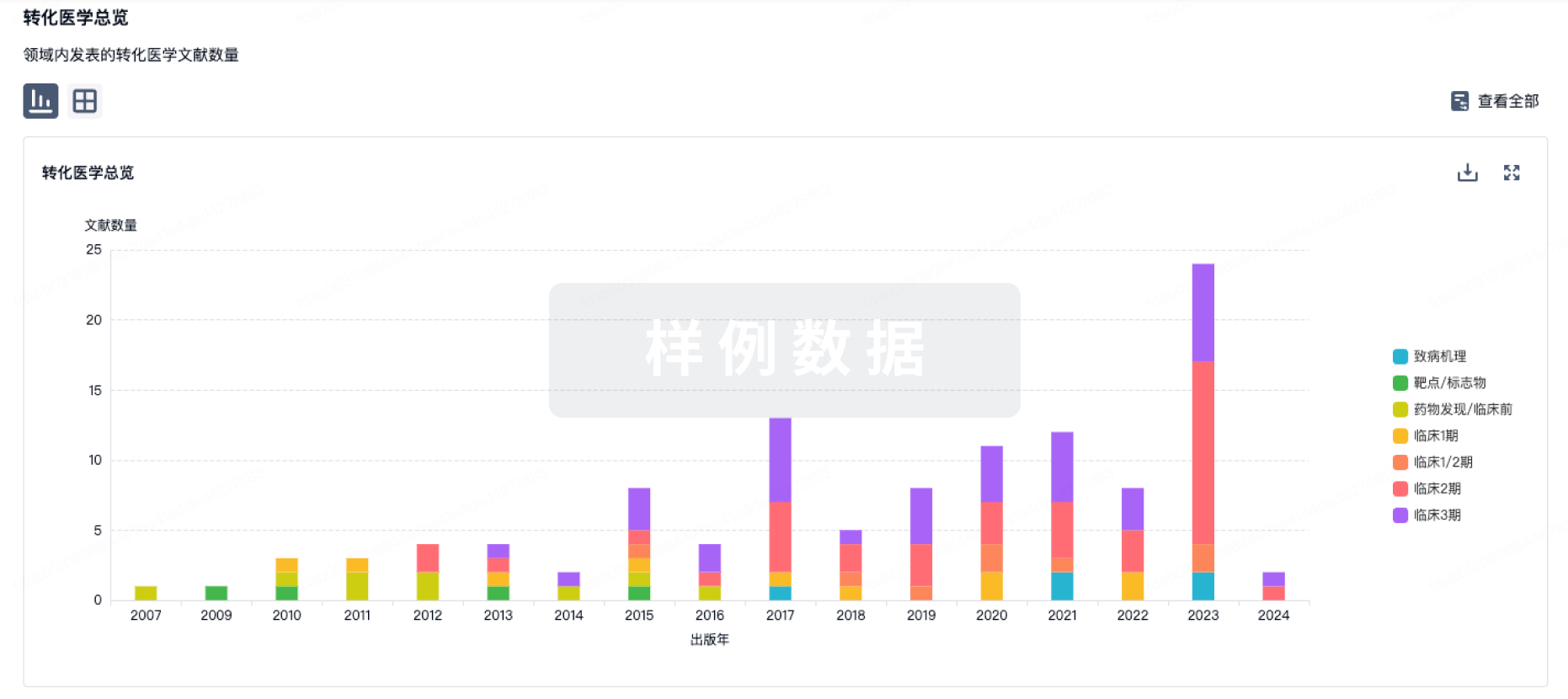
转化医学
使用我们的转化医学数据加速您的研究。
登录
或
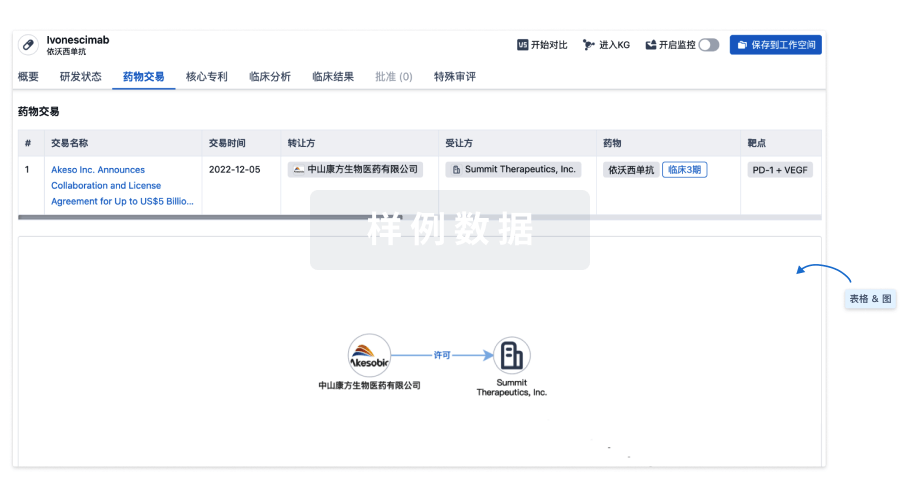
药物交易
使用我们的药物交易数据加速您的研究。
登录
或
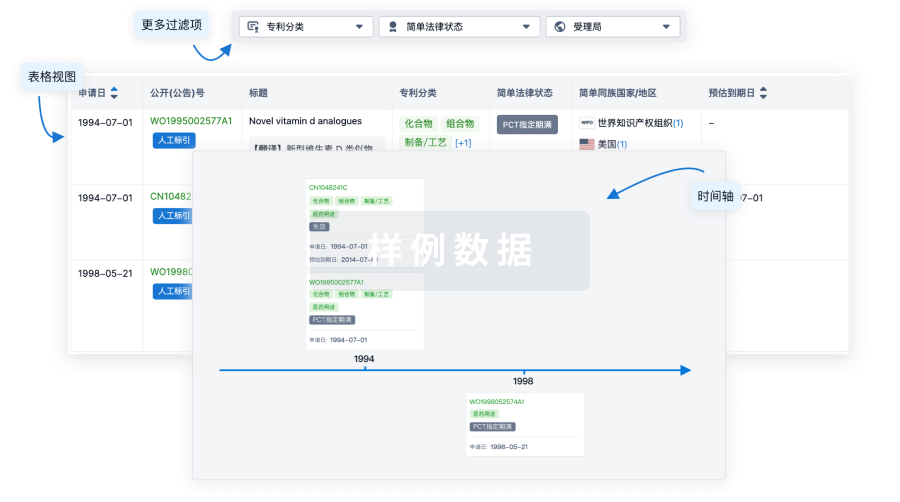
核心专利
使用我们的核心专利数据促进您的研究。
登录
或
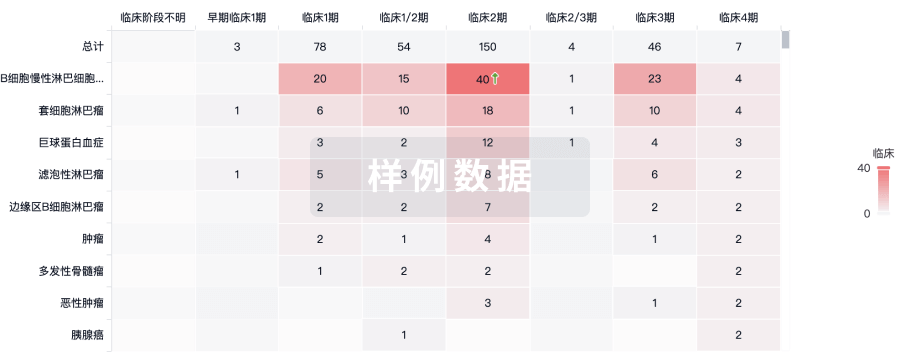
临床分析
紧跟全球注册中心的最新临床试验。
登录
或
批准
利用最新的监管批准信息加速您的研究。
登录
或
特殊审评
只需点击几下即可了解关键药物信息。
登录
或
提出任何生物医药研究问题
让每一步生物医药决策都精准制胜
基于十亿级生物数据与全球情报的精准 AI,赋能早期药物发现
立即开始免费试用!
智慧芽新药情报库是智慧芽专为生命科学人士构建的基于AI的创新药情报平台,助您全方位提升您的研发与决策效率。
立即接入生物医药数据包
智慧芽新药库数据也通过智慧芽开放平台,以MCP或API服务形式对外开放。立即使用我们的MCP服务定制您的LLM智能体。
生物序列数据库
生物药研发创新
免费使用
化学结构数据库
小分子化药研发创新
免费使用