预约演示
更新于:2026-07-11
Teduglutide Recombinant(Chongqing Paijin Biotechnology)
重组替度鲁肽(重庆派金生物科技)
更新于:2026-07-11
概要
基本信息
原研机构 |
在研机构 |
非在研机构- |
权益机构- |
最高研发阶段临床3期 |
首次获批日期- |
最高研发阶段(中国)临床3期 |
特殊审评- |
登录后查看时间轴
关联
2
项与 重组替度鲁肽(重庆派金生物科技) 相关的临床试验NCT06512584
A Multicenter, Randomized, Double-blind, Placebo-controlled Phase 3 Study to Evaluate the Efficacy and Safety of PJ009 in Patients With Short Bowel Syndrome Requiring Parenteral Nutrition
NCT06523101
A Phase 1 Study to Evaluate the Safety, Tolerability and Pharmacokinetics of PJ009 in Healthy Adult Volunteers
100 项与 重组替度鲁肽(重庆派金生物科技) 相关的临床结果
登录后查看更多信息
100 项与 重组替度鲁肽(重庆派金生物科技) 相关的转化医学
登录后查看更多信息
100 项与 重组替度鲁肽(重庆派金生物科技) 相关的专利(医药)
登录后查看更多信息
76
项与 重组替度鲁肽(重庆派金生物科技) 相关的文献(医药)2026-08-01CLINICAL NUTRITION
Growth trajectories of children with short bowel syndrome during the first year of teduglutide treatment
Article
作者: Hilberath, Johannes ; Hojsak, Iva ; Ghirardi, Arianna ; Lezo, Antonella ; Alcolea Sánchez, Alida ; Broekaert, Ilse Julia ; Guerra, Paula ; Norsa, Lorenzo ; D'Antiga, Lorenzo ; Poinsot, Pierre ; Ramos Boluda, Esther ; Lambe, Cecile ; Guz-Mark, Anat
BACKGROUND & AIM:
Short bowel syndrome (SBS) is the leading cause of pediatric intestinal failure and is frequently associated with impaired growth due to malabsorption and prolonged dependence on parenteral nutrition (PN). Teduglutide (TED), a glucagon-like peptide-2 analogue, promotes intestinal adaptation and may reduce PN requirements. Recent real-world data suggest that baseline nutritional status influences treatment response, but growth trajectories during TED therapy remain poorly characterized. This study aimed to evaluate linear and ponderal growth over the first 12 months of TED treatment, stratified by treatment response and achievement of PN weaning.
METHODS:
Data were drawn from a large European multicenter cohort of children with SBS-associated intestinal failure treated with TED. Response was defined as a >20% reduction in PN volume or calories; PN weaning was defined as full discontinuation of PN within 52 weeks. Weight, height, and BMI were measured every 3 months, and z-scores were calculated using CDC growth charts. Longitudinal changes were compared between responders and non-responders; and between children who achieved PN weaning and responders which were not weaned.
RESULTS:
Among 104 treated children, 68 were responders and 21 achieved full PN weaning. Responders showed significantly better baseline weight (-1.2 vs - 2.1 p: 0.013) and BMI z-scores (-0.7 vs -1.2 p: 0.021) compared to non-responders and maintained its significantly higher throughout follow-up and until 12 months (-1.2 vs -1.7 p: 0.046; -0.4 vs -1.4 p < 0.001 respectively). Children who achieved PN weaning did not show any significant variation on growth parameters at baseline when compared to non-weaned; during follow-up they showed a significant difference at nine months in weight (-1.6 vs -0.9 p: 0.018) and height z-score (-1.4 vs -0.9 p:0.034) which were non-significant at the end of 12 months follow-up (-1.4 vs -1.3 p: 0.15; -1.8 vs -1.2 p: 0.19).
CONCLUSION:
TED treatment was associated with more favourable weight and BMI trajectories compared to non-responders, particularly in responders, who maintained higher z-scores throughout follow-up despite modest within-group changes. However, PN withdrawal appeared to coincide with a period of growth vulnerability, highlighting the need for close nutritional monitoring. These findings support a potentially beneficial role of TED on growth, while emphasizing that PN weaning should be managed cautiously to avoid compromising linear and ponderal growth.
2026-04-03Expert Opinion on Drug Metabolism & Toxicology
Post-marketing pharmacovigilance of tedizolid: emerging safety signals
Article
作者: Yao, Haiping ; Wang, Zhu ; Gan, Guoping
BACKGROUND:
Tedizolid (TED), an oxazolidinone antibiotic, has improved pharmacokinetics compared with linezolid, but its real-world safety profile remains incompletely defined. Post-marketing surveillance helps detect adverse drug reactions (ADRs) not fully captured in clinical trials.
RESEARCH DESIGN AND METHODS:
This retrospective pharmacovigilance study analyzed adverse event (AE) reports listing TED as the primary suspect drug in the U.S. FDA Adverse Event Reporting System (July 2014 - June 2025). Demographics, clinical indications, and outcomes were summarized descriptively. Disproportionality analyses-reporting odds ratio, proportional reporting ratio, Bayesian confidence propagation neural network, and multi-item gamma Poisson shrinker-were applied at the system-organ class (SOC) and preferred term (PT) levels, requiring simultaneous positivity.
RESULTS:
Among 14,919,217 AE reports, 494 involved TED. Hematologic toxicities were consistently detected, aligning with known risks. PT-level analysis identified potential emerging safety signals, including hepatic cytolysis, gamma-glutamyltransferase increased, mental status changes, tooth discoloration, and melena. Median onset among evaluable cases (n = 386) was three days, with nearly one-third occurring as true same-day events (Day 0).
CONCLUSIONS:
Post-marketing data confirm TED's hematologic risks and reveal additional potential hepatic, neuropsychiatric, and gastrointestinal signals. These findings merit further evaluation and prospective studies to clarify clinical significance, establish causality, and optimize monitoring strategies.
2026-03-01EXPERIMENTAL EYE RESEARCH
A machine learning-based model for the prediction of thyroid eye disease with oxidative stress-related biomarkers
Article
作者: Fang, Lianfei ; Zhou, Huifang ; Qian, Weijin ; Fang, Sijie ; Sun, Jing ; Yang, Li ; Wei, Yining ; Liu, Jin ; Zhu, Tianyi
Thyroid eye disease (TED), the most common adult orbital disease, can significantly impair patients' quality of life. Currently, effective diagnostic and predictive models for TED remain limited, making early intervention and personalized treatment for patients challenging. Oxidative stress (OS) plays an important role in pathogenesis of TED, and OS related biomarkers may serve as good candidates for TED prediction. Here, we integrated the peripheral blood bulk-RNA sequencing data and clinical features of 152 TED, 61 health control (HC), and 20 patients with simple Graves' disease (GD) to identify potential biomarkers. The intersection of TED-HC and TED-GD differentially expressed genes (DEGs) identified 1220 genes strongly correlated with TED. Enrichment analysis showed upregulation of OS-related biological processes in patients with TED. Integration of DEGs, WGCNA results, and OS-related genes identified six genes as candidate biomarkers. Machine learning algorithms suggested three critical candidate genes (KLF2, SELENON, TXNRD1) with high predictive value and were used to construct an oxidative stress-related predictive gene score (OSRPGS). Receiver operating characteristic curve confirmed the predictive value of OSRPGS with an AUC value of 0.733 (TED vs HC) and 0.705 (TED vs GD). Further patient stratification analysis confirmed that the OSRPGS was associated with tear secretion dysfunction. Furthermore, immune infiltration analysis suggested an upregulation of innate immune responses, especially the monocytes/macrophages subtypes, indicating the initiation of OS-related inflammation. Collectively, our study provides a reliable tool for TED prediction and risk assessment based on OS-related biomarkers. OSRPGS may help with the early recognition and intervention in patients with TED.
100 项与 重组替度鲁肽(重庆派金生物科技) 相关的药物交易
登录后查看更多信息
研发状态
10 条进展最快的记录, 后查看更多信息
登录
| 适应症 | 最高研发状态 | 国家/地区 | 公司 | 日期 |
|---|---|---|---|---|
| 短肠综合征 | 临床3期 | 中国 | 2024-07-05 |
登录后查看更多信息
临床结果
临床结果
适应症
分期
评价
查看全部结果
登录后查看更多信息
转化医学
使用我们的转化医学数据加速您的研究。
登录
或

药物交易
使用我们的药物交易数据加速您的研究。
登录
或

核心专利
使用我们的核心专利数据促进您的研究。
登录
或

临床分析
紧跟全球注册中心的最新临床试验。
登录
或

批准
利用最新的监管批准信息加速您的研究。
登录
或

生物类似药
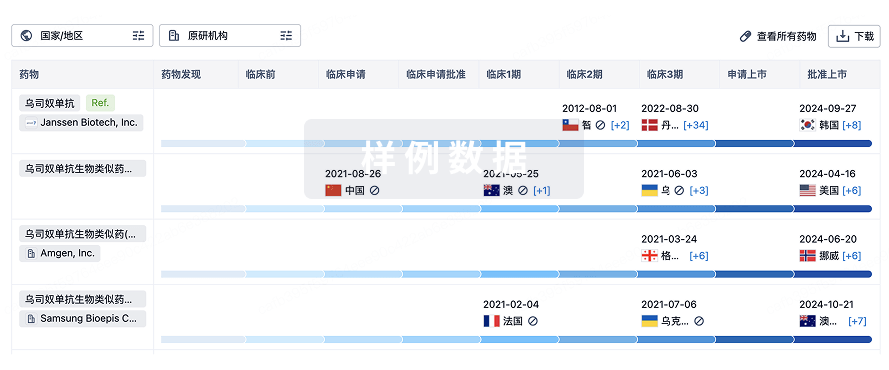
生物类似药在不同国家/地区的竞争态势。请注意临床1/2期并入临床2期,临床2/3期并入临床3期
登录
或
特殊审评
只需点击几下即可了解关键药物信息。
登录
或

提出任何生物医药研究问题
让每一步生物医药决策都精准制胜
基于十亿级生物数据与全球情报的精准 AI,赋能早期药物发现
立即开始免费试用!
智慧芽新药情报库是智慧芽专为生命科学人士构建的基于AI的创新药情报平台,助您全方位提升您的研发与决策效率。
立即接入生物医药数据包
智慧芽新药库数据也通过智慧芽开放平台,以MCP或API服务形式对外开放。立即使用我们的MCP服务定制您的LLM智能体。
生物序列数据库
生物药研发创新
免费使用
化学结构数据库
小分子化药研发创新
免费使用