预约演示
更新于:2026-01-24
α7 receptor agonists(Qingdao University)
更新于:2026-01-24
概要
基本信息

结构/序列
分子式C19H17ClFN3OS |
InChIKeyQFWUVBSOAYSYIE-UHFFFAOYSA-N |
CAS号- |
关联
100 项与 α7 receptor agonists(Qingdao University) 相关的临床结果
登录后查看更多信息
100 项与 α7 receptor agonists(Qingdao University) 相关的转化医学
登录后查看更多信息
100 项与 α7 receptor agonists(Qingdao University) 相关的专利(医药)
登录后查看更多信息
235
项与 α7 receptor agonists(Qingdao University) 相关的文献(医药)2026-01-09·ACS Pharmacology & Translational Science
3-(4-Hydroxyphenyl-1,2,3-Triazol-1-yl)Quinuclidine, a Selective α7 Nicotinic Acetylcholine Receptor Agonist, Attenuates Inflammatory Pain with a Favorable Central Nervous System Safety Profile in Mice
Article
作者: Towiwat, Pasarapa ; Rungrotmongkol, Thanyada ; Weerakul, Thorsang ; Vajragupta, Opa ; Chatdamrongsakool, Krittamate ; Rojsitthisak, Pornchai ; Hasriadi ; Suwattananurak, Piyapan ; Limprasutr, Vudhiporn ; Todsaporn, Duangjai ; Sriwongta, Soontaree ; Dasuni Wasana, Peththa Wadu
Selective α7 nicotinic acetylcholine receptors (α7 nAChRs) have emerged as therapeutic targets for managing various pain conditions, including inflammatory pain. Activation of α7 nAChRs by selective agonists has been shown to exert both antinociceptive and anti-inflammatory effects. In this study, we investigate the pharmacological effects of 3-(4-Hydroxyphenyl-1,2,3-triazol-1-yl)-quinuclidine (QND8), a selective and potent α7 nAChR agonist, in a murine model of carrageenan-induced inflammatory pain and evaluated its central nervous system (CNS) safety profile. QND8 significantly alleviated thermal and mechanical hyperalgesia at doses of 1, 3, and 10 mg/kg, and reduced carrageenan-induced paw edema at doses of 10 mg/kg. Importantly, QND8 exhibited these effects without impairing motor coordination and general behaviors, as demonstrated by the rotarod test and automated home cage behavioral analysis. These findings highlight QND8 as a promising preclinical analgesic candidate with anti-inflammatory efficacy and a favorable CNS safety profile. Computational modeling further revealed a stable and high-affinity binding of QND8 within the orthosteric site of α7 nAChR, consistent with its selective agonist activity. The results support further development of QND8 as a selective α7 nAChR-targeting therapeutic for inflammatory pain.
2026-01-01·CHEMICO-BIOLOGICAL INTERACTIONS
Dual cholinergic modulation in dementia: Quinuclidine carbamates targeting butyrylcholinesterase and α7 nicotinic receptor
Article
作者: Jardemark, Kent ; Bruton, Joseph ; Nyman, Tomas ; Ferjančič Benetik, Svit ; Meden, Anže ; Strandback, Emilia ; Gobec, Stanislav ; Hrast Rambaher, Martina ; Shahid, Mohammed ; Zorman, Maša ; Jungholm, Oscar ; Knez, Damijan ; Nachon, Florian ; Brazzolotto, Xavier ; Strašek Benedik, Nika ; Mastnak-Sokolov, Peter
Alzheimer's disease (AD) is the leading cause of dementia worldwide, but current therapies provide only symptomatic relief. Multi-target directed ligands (MTDLs) represent a promising approach to address AD pathology by modulating multiple targets with a single molecule. Here we describe quinuclidine carbamates that act simultaneously on butyrylcholinesterase (BChE) and the cholinergic α7 nicotinic receptor (α7 nAChR), thereby approaching cholinergic dysfunction at two levels: by modulating acetylcholine degradation and by direct agonism at this receptor. Starting with the α7 nAChR agonist bradanicline, its amide group was replaced by a carbamate moiety to enhance BChE inhibition while retaining receptor agonism. These quinuclidine carbamates inhibited BChE in the submicromolar range with the desired selectivity over acetylcholinesterase (AChE). In a calcium-flux assay on recombinant HEK293T cells expressing the α7 nAChR, all compounds were agonists of the α7 nAChR in the nanomolar range. Importantly, compound 6b displayed balanced, submicromolar activity against both targets. The crystal structures confirmed non-covalent binding to the active site of human BChE, and the 6b-hBChE complex also revealed an unprecedented flip of Tyr440, representing the first described example of backdoor opening for hBChE. Taken together, these results demonstrate that quinuclidine carbamates are promising dual modulators of hBChE and α7 nAChR, supporting their potential as MTDLs for AD therapy and highlighting this underexplored dual-target strategy as a promising approach in cholinergic drug discovery.
2026-01-01·EPILEPSY RESEARCH
Long-term administration of EQU-001 (ivermectin) suppresses spasms in a rat model of infantile epileptic spasms syndrome
Article
作者: Schonwald, Antonia ; Velíšková, Jana ; Chern, Chian-Ru ; Velíšek, Libor ; Vieira, Kayla
We investigated effects of long-term and acute administration of EQU-001 (ivermectin) against NMDA-triggered spasms in immature rats prenatally exposed to betamethasone and in the model of infantile epilepsy spasms syndrome (IESS). Pregnant rats were injected with betamethasone on gestational day 15 (2 ×0.4 mg/kg, i.p.). Offspring were injected with ivermectin once daily (1-4 mg/kg, i.p.) from postnatal day (P) 10 through P15. Spasms were triggered on P15 with NMDA (17 mg/kg, i.p.). Other rats received a single dose of ivermectin (1-8 mg/kg, i.p.) on P15 prior to NMDA to test acute anticonvulsant activity. Also, a randomized model was used: The spasms were triggered on P12 and ivermectin treatment (4 mg/kg) was initiated after this bout of spasms on P12, P13 and P14, with additional spasms elicited on P13 and P15. A nicotinic cholinergic α7 agonist was used to mimic effects of ivermectin, and α7 antagonist was used together with ivermectin to prevent its effects. P10-P15 administration of 4 mg/kg of ivermectin significantly suppressed occurrence of spasms on P15, an effect comparable to that of ACTH (positive control). Conversely, an acute P15 administration of ivermectin had no effects on spasms. Ivermectin in the randomized trial suppressed occurrence of spasms as well P15/P12 ratio of spasms. Ivermectin also decreased body weight gain in those animals. None of the nicotinic cholinergic α7 drugs mimicked or prevented effects of ivermectin. Our data indicate that ivermectin may become a powerful tool in the armamentarium for treatment of IESS, however the mechanisms of this action remain to be determined.
100 项与 α7 receptor agonists(Qingdao University) 相关的药物交易
登录后查看更多信息
研发状态
10 条进展最快的记录, 后查看更多信息
登录
| 适应症 | 最高研发状态 | 国家/地区 | 公司 | 日期 |
|---|---|---|---|---|
| 精神分裂症 | 临床前 | 中国 | 2024-02-23 |
登录后查看更多信息
临床结果
临床结果
适应症
分期
评价
查看全部结果
| 研究 | 分期 | 人群特征 | 评价人数 | 分组 | 结果 | 评价 | 发布日期 |
|---|
No Data | |||||||
登录后查看更多信息
转化医学
使用我们的转化医学数据加速您的研究。
登录
或
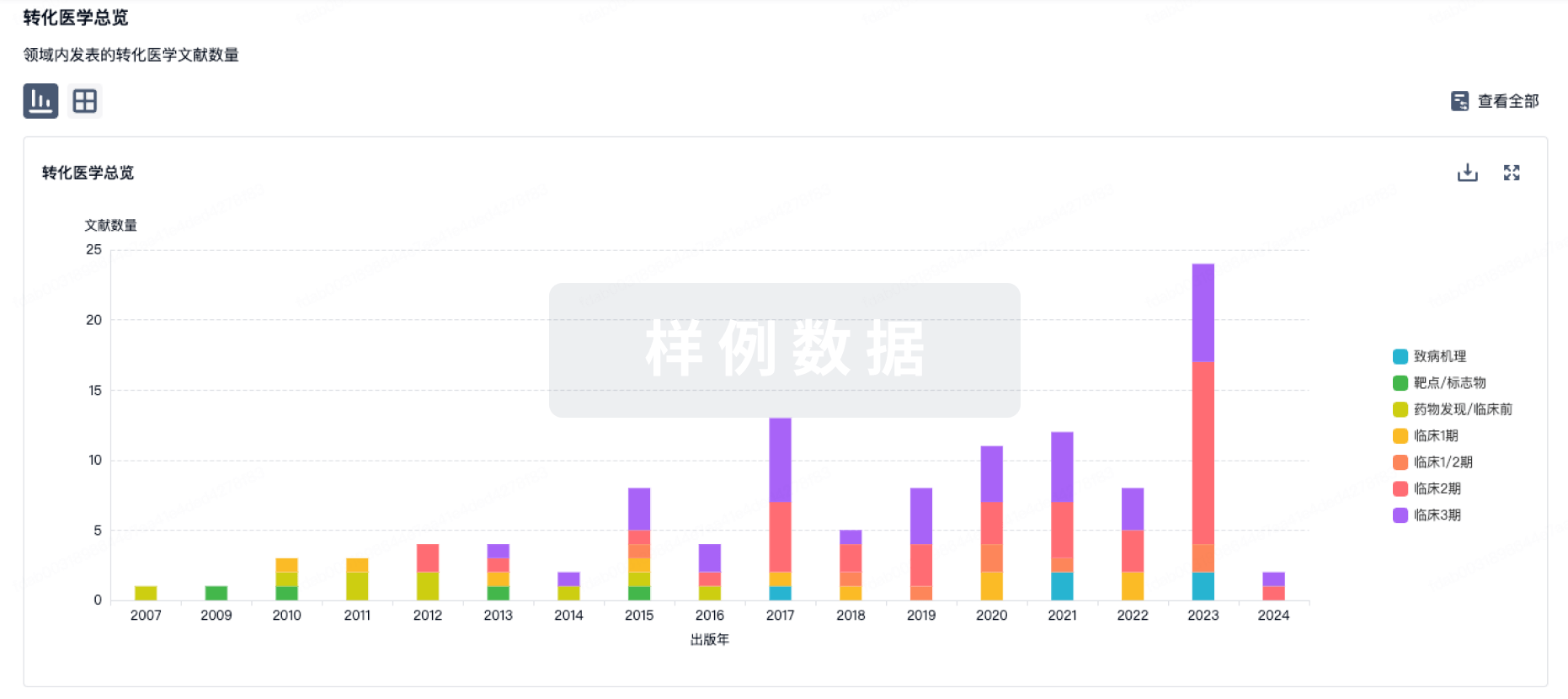
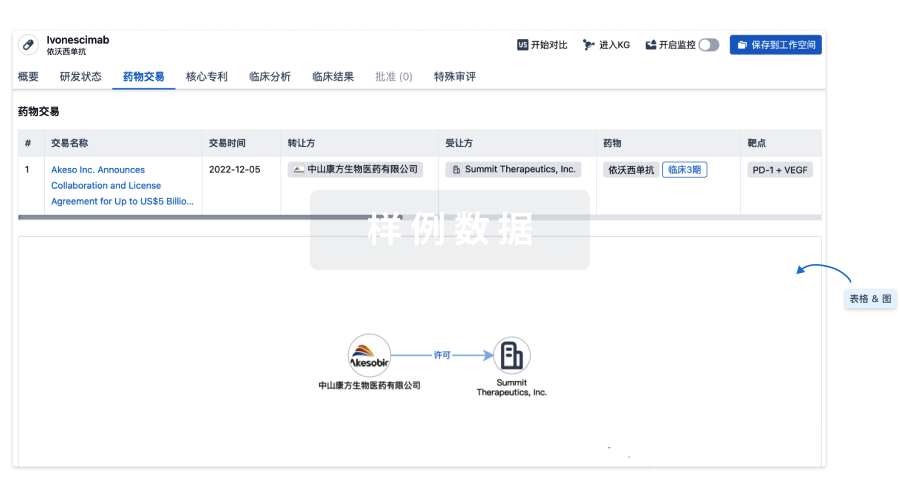
药物交易
使用我们的药物交易数据加速您的研究。
登录
或
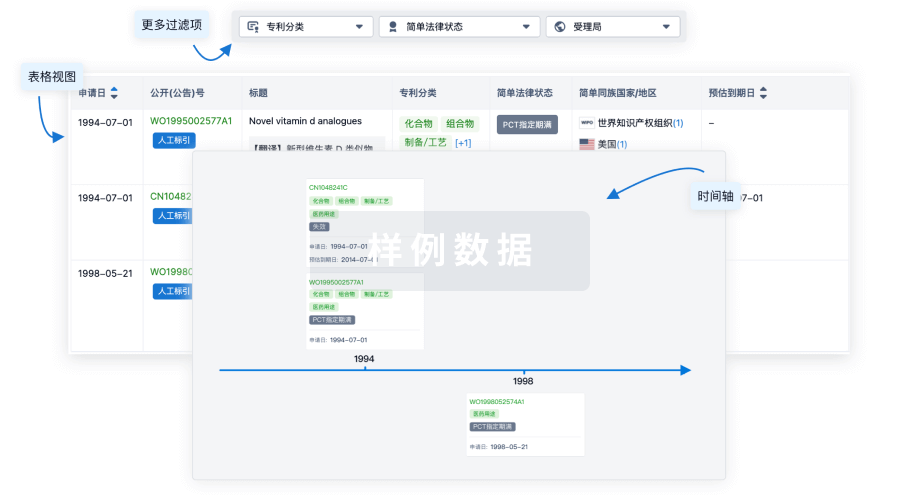
核心专利
使用我们的核心专利数据促进您的研究。
登录
或
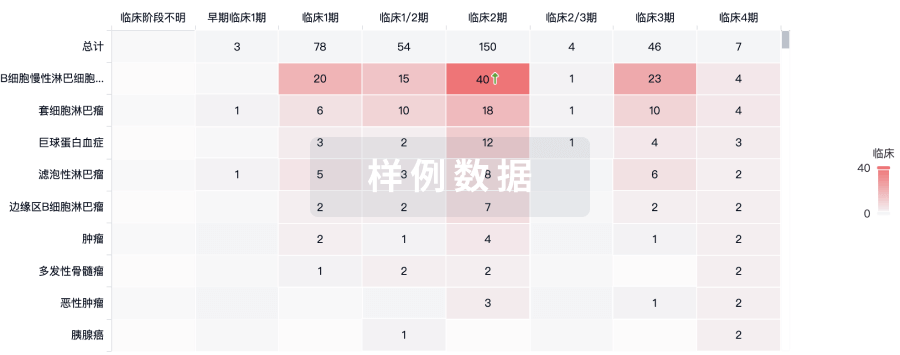
临床分析
紧跟全球注册中心的最新临床试验。
登录
或
批准
利用最新的监管批准信息加速您的研究。
登录
或
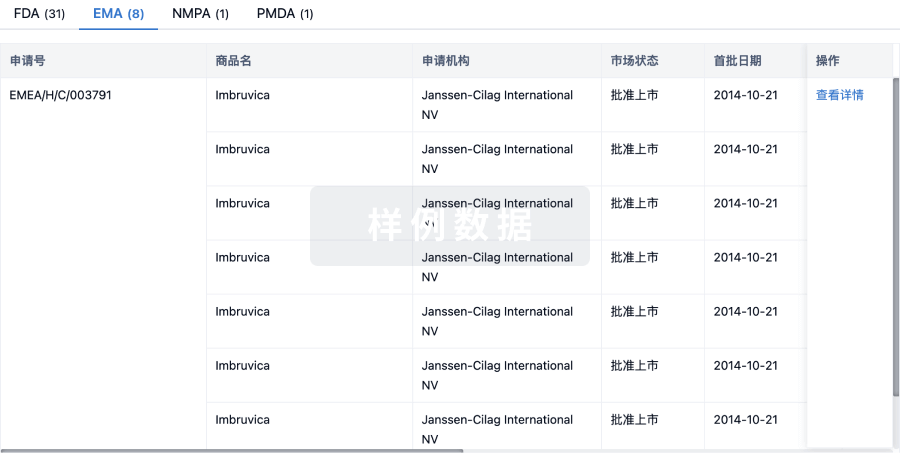
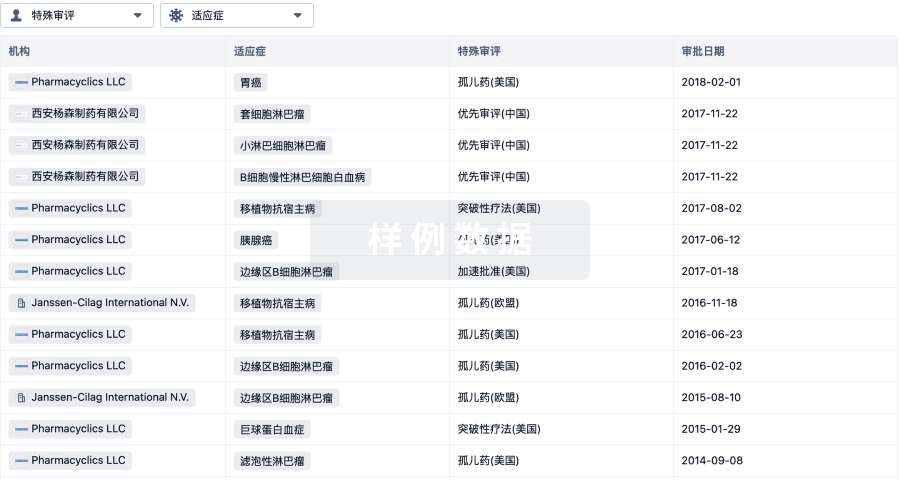
特殊审评
只需点击几下即可了解关键药物信息。
登录
或
生物医药百科问答
全新生物医药AI Agent 覆盖科研全链路,让突破性发现快人一步
立即开始免费试用!
智慧芽新药情报库是智慧芽专为生命科学人士构建的基于AI的创新药情报平台,助您全方位提升您的研发与决策效率。
立即开始数据试用!
智慧芽新药库数据也通过智慧芽数据服务平台,以API或者数据包形式对外开放,助您更加充分利用智慧芽新药情报信息。
生物序列数据库
生物药研发创新
免费使用
化学结构数据库
小分子化药研发创新
免费使用