预约演示
更新于:2026-09-05
QX-008N
更新于:2026-09-05
概要
基本信息
原研机构 |
非在研机构- |
最高研发阶段临床3期 |
首次获批日期- |
最高研发阶段(中国)临床3期 |
特殊审评- |


登录后查看时间轴
结构/序列
Sequence Code 78644CDR1-H
Sequence Code 136719CDR2-L
Sequence Code 938452231CDR2-H
Sequence Code 938452233CDR3-H
Sequence Code 938452234CDR1-L
Sequence Code 938452238CDR3-L
Sequence Code 938452240VH
Sequence Code 938452242VL
Sequence Code 938452246H
Sequence Code 938452247L
关联
11
项与 QX-008N 相关的临床试验CTR20261006
一项评价不同剂量皮下注射JKN2401注射液治疗成年控制不佳的重度哮喘患者有效性、安全性的随机、双盲、安慰剂对照Ⅱ期临床研究
NCT07330310
A Phase 3, Randomized, Double-Blind, Placebo-Controlled Study to Evaluate the Efficacy and Safety of Subcutaneous JKN2401 Injection in Patients With Moderate-to-Severe Chronic Obstructive Pulmonary Disease (COPD)
NCT07440524
A Randomized, Double-Blind, Placebo-Controlled Phase II Study to Evaluate the Efficacy and Safety of Subcutaneous JKN24011 in Patients With Moderate to Severe Chronic Obstructive Pulmonary Disease (COPD)
100 项与 QX-008N 相关的临床结果
登录后查看更多信息
100 项与 QX-008N 相关的转化医学
登录后查看更多信息
100 项与 QX-008N 相关的专利(医药)
登录后查看更多信息
3
项与 QX-008N 相关的文献(医药)2026-03-01CTS-Clinical and Translational Science
Article
作者: Zhao, Jie ; Jiang, Qi ; Shen, Zhen‐Wei ; Guo, Tong ; Chen, Gui‐Ling ; Wu, Kai‐Qi ; Jin, Ting‐Han ; Fang, Min
ABSTRACT:
QX008N, a humanized IgG1 monoclonal antibody against thymic stromal lymphopoietin (TSLP) with Fc engineering to extend half‐life, was developed with the aim of exploring whether its extended half‐life and cost‐effective production could potentially address unmet needs in severe asthma therapy, such as the need for less frequent dosing and improved accessibility. This first‐in‐human, phase I trial evaluated pharmacokinetics (PK), tolerability, and immunogenicity of QX008N in healthy Chinese subjects following subcutaneous (SC) and intravenous (IV) administration. SC group dosing demonstrated dose‐proportional exposure; for the 280 mg and 560 mg SC doses, AUC₀–∞ values were 37,611 and 81,450 h·μg/mL, respectively, with delayed Tmax (5–8 days) and absolute bioavailability of 62%–67%. Following SC administration, Cmax values were 30.0 μg/mL (280 mg) and 63.9 μg/mL (560 mg), whereas IV administration produced a Cmax of 225.83 μg/mL at 2 h. QX008N exhibited a prolonged half‐life (median 30.4 days (range 25.0–47.1) for the 560 mg SC dose), surpassing tezepelumab's 26 days, supporting potential every 6–8 week dosing. All pharmacokinetic parameters, including terminal elimination half‐life (
t
½), were derived from plasma concentration–time data. Tolerability profiles were favorable: all adverse events were mild/moderate (e.g., self‐resolving rash). No injection‐site reactions were observed following single‐dose administration in healthy subjects. Immunogenicity was low (5.6% ADA incidence; no neutralizing antibodies), with no PK or tolerability impact. Overall, QX008N demonstrated predictable pharmacokinetics, low immunogenicity, and a tolerability profile consistent with single‐dose administration of monoclonal antibodies in healthy subjects. These findings provide foundational PK and tolerability data to support subsequent clinical evaluation in patients.
2024-12-01INTERNATIONAL IMMUNOPHARMACOLOGY
Article
作者: Kong, Yong ; Qiu, Jiwan ; Chen, Wei ; Sun, Qiuping ; Qiu, Tianquan ; Zhang, Juan ; Liu, Yuzhi ; Chen, Tao ; Shi, Gaoyong ; Wang, Xiaomu
BACKGROUND:
Severe asthma is a complex and chronic respiratory disease, and current conventional treatments are not effective in controlling the patients' condition. Thymic stromal lymphopoietin (TSLP) is a key regulatory factor in the initiation and maintenance of asthma. Thus, blocking TSLP during allergic inflammation emerges as a promising therapeutic approach; however, novel anti-TSLP therapies remain to be developed. Furthermore, the importance of other signaling molecules, such as IL-4 and IL-13, should be considered. Moreover, to the best of our knowledge, the inhibitory effect of binding upstream and downstream signaling molecules has not been assessed.
PURPOSE:
This study aimed to develop a novel, humanized anti-TSLP antibody and explore the enhancement in its efficacy when combined with anti-IL-4R antibodies to treat asthma.
RESULTS:
QX008N, derived from a rabbit antibody platform, exhibits a high affinity for TSLP and superior efficacy in blocking TSLP-induced signaling pathways and inflammation in vitro compared with Tezepelumab. In a cynomolgus monkey asthma model, QX008N ameliorated lung function and reduced the levels of eosinophils and IgE. Moreover, the coadministration of QX008N with anti-IL-4R antibodies enhanced the inhibition of inflammatory mediator production triggered via costimulation in vitro. In mouse asthma models, the simultaneous blockade of TSLP and IL-4R using anti-TL4R and anti-TSLP surrogates surpassed the efficacy of monotherapy. To the best of our knowledge, the therapeutic effect of a combination of anti-TSLP and IL-4R antibodies in an asthma model has not yet been reported.
CONCLUSION:
These results furnish comprehensive preclinical evidence for QX008N as an innovative anti-TSLP therapeutic agent and provide a preliminary rationale for the development of combination therapies that simultaneously target the TSLP and IL-4R signaling pathways.
Frontiers in Immunology
Review
作者: Chen, Bangsheng ; He, Tian-li ; Hu, Guo-qiang ; Song, Guo-qiang
Chronic obstructive pulmonary disease (COPD) is characterized by persistent airflow limitation and chronic airway inflammation, traditionally managed with inhaled bronchodilators and corticosteroids. However, a significant subset of patients exhibits suboptimal response to these inhaled therapies, and disease progression remains challenging to control effectively. Recent advances in understanding the inflammatory pathways underlying COPD have led to the development of biologic agents targeting critical cytokines and their receptors, including IL-4 receptor (IL-4R), IL-5, IL-5 receptor (IL-5R), IL-33, ST2, and thymic stromal lymphopoietin (TSLP). Emerging drugs such as JKN2401, TQC2731, and tezepelumab demonstrate promising therapeutic potential by modulating these specific inflammatory mediators. This review comprehensively summarizes the pathophysiological roles of these cytokines in COPD, the current progress in biologic drug development targeting these molecules, and the outcomes of recent clinical trials. By elucidating these novel therapeutic avenues, the article aims to provide a theoretical foundation and clinical guidance for precision medicine approaches in COPD management beyond conventional inhaled treatments.
116
项与 QX-008N 相关的新闻(医药)2026-09-02
2026-09-02
2026-08-26
100 项与 QX-008N 相关的药物交易
登录后查看更多信息
研发状态
10 条进展最快的记录, 后查看更多信息
登录
| 适应症 | 最高研发状态 | 国家/地区 | 公司 | 日期 |
|---|---|---|---|---|
| 慢性阻塞性肺疾病 | 临床3期 | 中国 | 2025-12-30 | |
| 慢性鼻窦炎伴鼻息肉 | 临床2期 | 中国 | 2026-05-19 | |
| 慢性鼻窦炎伴鼻息肉 | 临床2期 | 中国 | 2026-05-19 | |
| 重度哮喘 | 临床2期 | 中国 | 2026-04-24 | |
| 炎症 | 临床2期 | 中国 | 2026-04-01 | |
| 中度哮喘 | 临床1期 | 中国 | 2023-07-03 |
登录后查看更多信息
临床结果
临床结果
适应症
分期
评价
查看全部结果
登录后查看更多信息
转化医学
使用我们的转化医学数据加速您的研究。
登录
或

药物交易
使用我们的药物交易数据加速您的研究。
登录
或

核心专利
使用我们的核心专利数据促进您的研究。
登录
或

临床分析
紧跟全球注册中心的最新临床试验。
登录
或

批准
利用最新的监管批准信息加速您的研究。
登录
或

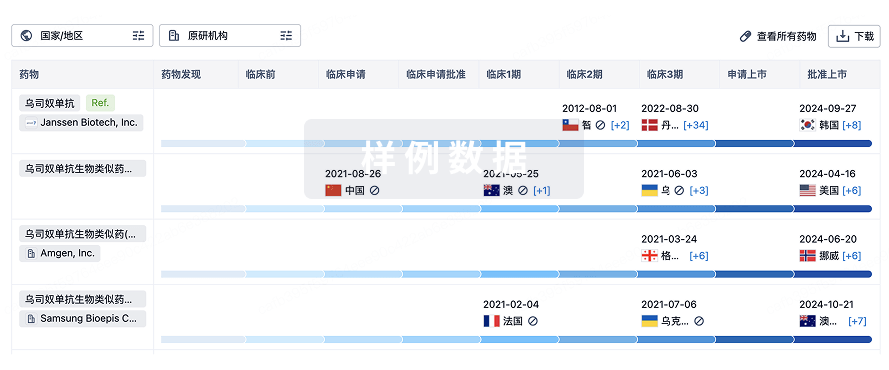
生物类似药
生物类似药在不同国家/地区的竞争态势。请注意临床1/2期并入临床2期,临床2/3期并入临床3期
登录
或
特殊审评
只需点击几下即可了解关键药物信息。
登录
或

提出任何生物医药研究问题
让每一步生物医药决策都精准制胜
基于十亿级生物数据与全球情报的精准 AI,赋能早期药物发现
立即开始免费试用!
智慧芽新药情报库是智慧芽专为生命科学人士构建的基于AI的创新药情报平台,助您全方位提升您的研发与决策效率。
立即接入生物医药数据包
智慧芽新药库数据也通过智慧芽开放平台,以MCP或API服务形式对外开放。立即使用我们的MCP服务定制您的LLM智能体。
生物序列数据库
生物药研发创新
免费使用
化学结构数据库
小分子化药研发创新
免费使用