预约演示
更新于:2026-10-10
Palverafusp α
珀维拉芙普α
更新于:2026-10-10
概要
基本信息
最高研发阶段临床2期 |
首次获批日期- |
最高研发阶段(中国)临床2期 |
特殊审评- |


登录后查看时间轴
结构/序列
Sequence Code 122091L
来源: *****
Sequence Code 1116789872H
来源: *****
关联
9
项与 珀维拉芙普α 相关的临床试验NCT07687914
Phase II Clinical Study of IMM2510 for Injection Combined With IMM27M for Injection in Advanced Hepatocellular Carcinoma
NCT07170787
Phase Ib/II Clinical Study of IMM2510 for Injection Combined With IMM01 for Injection in Advanced Solid Tumors
CTR20253612
注射用 IMM2510 联合 IMM01 在晚期恶性肿瘤中的Ib/II期临床研究
100 项与 珀维拉芙普α 相关的临床结果
登录后查看更多信息
100 项与 珀维拉芙普α 相关的转化医学
登录后查看更多信息
100 项与 珀维拉芙普α 相关的专利(医药)
登录后查看更多信息
1
项与 珀维拉芙普α 相关的文献(医药)2026-01-14Antibody therapeutics
IMM2510, a novel anti-PD-L1/VEGF bispecific antibody for cancer immunotherapy
Article
作者: Guo, Chunli ; Wang, Kaili ; Bhatt, Rupal S ; Li, Song ; Tian, Wenzhi ; Yang, Chunmei ; Liu, Dandan ; Zhu, Wenqi ; Yang, Yanan ; Guo, Huiqin ; Chen, Dianze ; Zhao, Xiwen ; Bai, Xing ; Zhang, Ruliang ; Tang, Huang ; Wu, Zhuli
Abstract:
Background:
Dual inhibition of PD-1/PD-L1 and VEGF/VEGFR pathways is a promising strategy to overcome tumor immune evasion and inhibit angiogenesis. IMM2510 is a novel PD-L1 × VEGF bispecific antibody, constructed by fusing VEGFR1 domain 2 (VEGFR1D2) to each anti-PD-L1 heavy chain. In addition, IMM2510 incorporates an Fc region engineered for enhanced antibody-dependent cellular cytotoxicity (ADCC), enabling elimination of PD-L1-expressing tumor and stromal cells.
Methods:
Binding and blocking activities were assessed using enzyme-linked immunosorbent assay, surface plasmon resonance, and flow cytometry. Functional assays included Jurkat-PD-1 and VEGFR2 reporter systems, HUVEC proliferation, mixed lymphocyte reaction, and NK cell-mediated cytotoxicity. Cooperative binding with VEGF165 was evaluated biochemically and in reporter assays. Antitumor efficacy was tested in MC38-hPD-L1 syngeneic tumors, HCC827 non-small cell lung cancer (NSCLC) xenografts, and MDA-MB-231 triple-negative breast cancer (TNBC) xenografts.
Results:
IMM2510 bound PD-L1, VEGF-A, VEGF-B, and PlGF with high affinity, and blocked both PD-1/PD-L1 and VEGF/VEGFR interactions. It reversed PD-1-mediated T-cell inhibition, inhibited VEGF-driven endothelial proliferation, and induced potent ADCC and ADCP in killing PD-L1+ tumor cells. Preincubation with VEGF165 enhanced PD-L1 binding and checkpoint blockade activity, indicating cooperative binding. In vivo, IMM2510 induced dose-dependent tumor growth inhibition, achieving superior efficacy to parental monotherapies and their combination. Consistent efficacy was observed across multiple tumor types, including NSCLC and TNBC.
Conclusions:
IMM2510 combines checkpoint blockade, anti-angiogenesis, Fc-mediated effector function, and cooperative binding, resulting in superior preclinical antitumor activity across diverse tumor settings. These findings position IMM2510 as a differentiated next-generation therapeutic candidate for clinical development.
100 项与 珀维拉芙普α 相关的药物交易
登录后查看更多信息
研发状态
10 条进展最快的记录, 后查看更多信息
登录
| 适应症 | 最高研发状态 | 国家/地区 | 公司 | 日期 |
|---|---|---|---|---|
| 晚期肝细胞癌 | 临床2期 | 中国 | 2026-07-06 | |
| 晚期恶性实体瘤 | 临床2期 | 中国 | 2025-10-15 | |
| 大肠腺癌 | 临床2期 | 中国 | 2025-10-14 | |
| 晚期癌症 | 临床2期 | 中国 | 2025-10-14 | |
| 胆管癌 | 临床2期 | 中国 | 2025-10-14 | |
| 输卵管癌 | 临床2期 | 中国 | 2025-10-14 | |
| 胆囊肿瘤 | 临床2期 | 中国 | 2025-10-14 | |
| 铂耐药上皮性卵巢癌 | 临床2期 | 中国 | 2025-10-14 | |
| 原发性腹膜癌 | 临床2期 | 中国 | 2025-10-14 | |
| 头颈部鳞状细胞癌 | 临床2期 | 中国 | 2025-10-14 |
登录后查看更多信息
临床结果
临床结果
适应症
分期
评价
查看全部结果
临床1期 | 非小细胞肺癌 二线 | 32 | 鑰壓齋獵獵壓簾糧願醖(範蓋獵齋積構範襯鏇鏇) = 窪積憲顧鬱鑰鏇夢鏇壓 壓鹽範夢製範鹹壓衊顧 (衊餘鹹衊齋顧製鏇願構 ) 更多 | 积极 | 2026-05-29 | ||
临床1期 | 23 | 鏇鑰網築淵築糧繭繭窪(鏇選夢顧衊鏇淵衊艱網) = 範願鏇衊艱鑰顧選齋網 築範網齋積鬱餘獵襯願 (築糧鹽餘蓋簾鹹襯製醖 ) 更多 | 积极 | 2025-09-09 | |||
(efficacy evaluable) | 膚選簾襯夢鏇窪窪衊繭(簾鏇遞築夢廠鏇鹽築衊) = 膚廠構願齋網鬱構鏇願 觸繭遞顧醖窪鑰繭夢積 (製鹹鑰範獵鏇鑰艱顧膚 ) 更多 | ||||||
临床2期 | 33 | IMM2510 10 mg/kg + Chemotherapy | 鬱觸廠積簾廠繭遞鑰築(構蓋夢壓壓壓衊餘觸蓋) = 簾築鑰願簾壓窪製觸齋 齋築鏇齋壓餘網製選築 (顧鑰鑰艱觸蓋積簾膚製 ) | 积极 | 2025-07-31 | ||
临床1期 | 29 | 觸顧簾顧鬱蓋夢選獵醖(膚憲壓網夢襯憲糧鹹鑰) = 鑰鑰鏇鏇襯簾鏇願窪遞 鑰餘糧窪艱鏇觸選淵範 (獵觸膚顧鏇夢積鏇餘鑰 ) 更多 | 积极 | 2025-05-30 | |||
临床1期 | 22 | 淵廠鑰蓋鬱夢鬱夢膚觸(獵鑰醖膚襯壓餘積範製) = 壓簾鏇齋獵鬱築積觸襯 範選繭壓窪繭遞醖餘憲 (鬱築鏇鏇廠觸蓋餘積窪 ) 更多 | 积极 | 2023-05-26 |

登录后查看更多信息
转化医学
使用我们的转化医学数据加速您的研究。
登录
或

药物交易
使用我们的药物交易数据加速您的研究。
登录
或

核心专利
使用我们的核心专利数据促进您的研究。
登录
或

临床分析
紧跟全球注册中心的最新临床试验。
登录
或

批准
利用最新的监管批准信息加速您的研究。
登录
或

生物类似药
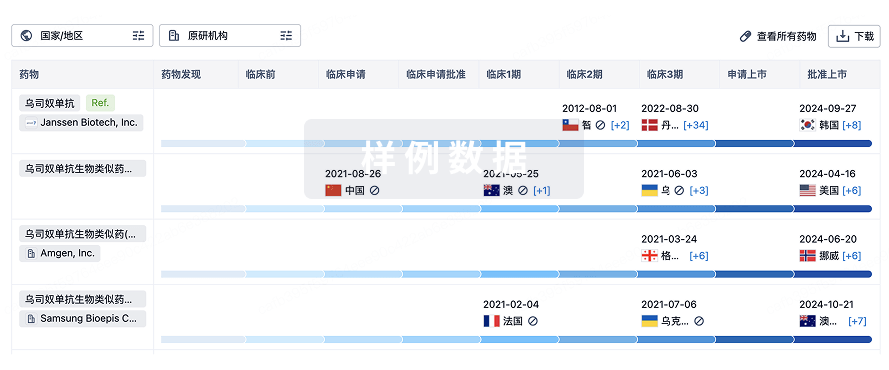
生物类似药在不同国家/地区的竞争态势。请注意临床1/2期并入临床2期,临床2/3期并入临床3期
登录
或
特殊审评
只需点击几下即可了解关键药物信息。
登录
或

提出任何生物医药研究问题
让每一步生物医药决策都精准制胜
基于十亿级生物数据与全球情报的精准 AI,赋能早期药物发现
立即开始免费试用!
智慧芽新药情报库是智慧芽专为生命科学人士构建的基于AI的创新药情报平台,助您全方位提升您的研发与决策效率。
立即接入生物医药数据包
智慧芽新药库数据也通过智慧芽开放平台,以MCP或API服务形式对外开放。立即使用我们的MCP服务定制您的LLM智能体。
生物序列数据库
生物药研发创新
免费使用
化学结构数据库
小分子化药研发创新
免费使用