预约演示
更新于:2025-12-04
Pregnanolone
孕烷醇酮
更新于:2025-12-04
概要
基本信息
药物类型 小分子化药 |
别名 Eltanolone、乙他诺隆、KABI 2213 + [4] |
作用方式 抑制剂、调节剂 |
作用机制 GABRA1抑制剂(gamma-aminobutyric acid type A receptor subunit alpha1 inhibitors)、GABRB2抑制剂(gamma-aminobutyric acid type A receptor subunit beta2 inhibitors)、GABRG2抑制剂(gamma-aminobutyric acid type A receptor subunit gamma2 inhibitors) |
在研适应症- |
非在研适应症 |
原研机构 |
在研机构- |
权益机构- |
最高研发阶段终止临床3期 |
首次获批日期- |
最高研发阶段(中国)- |
特殊审评- |



登录后查看时间轴
结构/序列
分子式C21H34O2 |
InChIKeyAURFZBICLPNKBZ-YZRLXODZSA-N |
CAS号128-20-1 |
关联
100 项与 孕烷醇酮 相关的临床结果
登录后查看更多信息
100 项与 孕烷醇酮 相关的转化医学
登录后查看更多信息
100 项与 孕烷醇酮 相关的专利(医药)
登录后查看更多信息
963
项与 孕烷醇酮 相关的文献(医药)2026-01-01·STEROIDS
Exploring the relationship between endogenous steroids and nausea and vomiting in pregnancy: A longitudinal prospective study
Article
作者: Dlouhá, Daniela ; Roberts, Kateřina ; Koliba, Peter ; Benešová, Jana ; Ullmann, Jana ; Velíková, Marta ; Hill, Martin ; Kaňková, Šárka
Nausea and vomiting in pregnancy (NVP) affect approximately 70 % of women worldwide. It is thought to have an adaptive function in the first trimester, when it protects the mother and the fetus against potential dangers from the diet. Proximate causes of NVP include hormonal changes during pregnancy. This longitudinal prospective study examined associations between various endogenous steroids and NVP. In the first and third trimester, pregnant women (N = 179) completed the Index of Nausea, Vomiting, and Retching questionnaire (92.1 % of women reported at least some symptoms of NVP in the first trimester and 37.4 % in the third trimester) and we analyzed their blood serum concentrations of 91 endogenous steroids. In the first trimester, NVP intensity was significantly positively associated with progesterone metabolites from the C21 5α/β-reduced steroid group (e.g., allopregnanolone sulfate) and with conjugated 5α-androstane-3α,17β-diol and conjugated 5α-androstane-3β,17β-diol. In the third trimester, we found significant negative associations between NVP and progesterone, conjugated testosterone, 7-oxo-DHEA, 5-androstene-3β,16α,17β-triol sulfate, some C21 Δ5 steroids (e.g., pregnenolone sulfate, 17-hydroxypregnenolone sulfate), and C21 5α/β-reduced steroids (such as allopregnanolone sulfate and conjugated pregnanolone). Our findings suggest that sulfated 3α-hydroxy-5α-steroids may contribute to NVP in early pregnancy by affecting brainstem regions involved in the vomiting reflex. In late pregnancy, higher levels of immunomodulatory androstanes and progesterone may reduce NVP severity via immune regulation and smooth muscle relaxation.
2025-11-01·Cell reports methods
Combinatorial responsiveness of chemosensory neurons in mouse explants revealed by DynamicNeuroTracker
Article
作者: Meeks, Julian P ; Noh, Jungsik ; Danuser, Gaudenz ; Chang, Bo-Jui ; Wong, Wen Mai
Calcium fluorescence imaging enables us to investigate how individual neurons of live animals encode sensory input or drive specific behaviors. Extracting and interpreting large-scale neuronal activity from imaging data are crucial steps in harnessing this information. A significant challenge arises from uncorrectable tissue deformation, which disrupts the effectiveness of existing neuron segmentation methods. Here, we propose an open-source software, DynamicNeuronTracker (DyNT), which generates dynamic neuron masks for deforming and/or incompletely registered 3D calcium imaging data using patch-matching iterations. We demonstrate that DyNT accurately tracks densely populated neurons under positional jitters. DyNT also includes automated statistical analyses for interpreting neuronal responses to multiple sequential stimuli. We applied DyNT to analyze the responses of pheromone-sensing neurons in mice to controlled stimulation. We found that four bile acids and four sulfated steroids activated 15 subpopulations of sensory neurons with distinct combinatorial response profiles, revealing a strong bias toward detecting sulfated estrogen and pregnanolone.
2025-05-01·NEUROPSYCHOPHARMACOLOGY
Neuroactive steroid biosynthesis during pregnancy predicts future postpartum depression: a role for the 3α and/or 3β-HSD neurosteroidogenic enzymes?
Article
作者: Pinna, Graziano ; Standeven, Lindsay R ; Wang, Xin-Qun ; Payne, Jennifer L ; Alemani, Rebecca ; Osborne, Lauren M ; Etyemez, Semra
Postpartum depression (PPD) affects ~10-15% of childbearing individuals, with deleterious consequences for two generations. Recent research has explored the biological mechanisms of PPD, particularly neuroactive steroids (NAS). We sought here to investigate associations between NAS levels and ratios during pregnancy and the subsequent development of depressive symptoms with postpartum onset. NAS levels and psychological scales were measured in individuals with and without mood disorders at up to eight visits across pregnancy and postpartum. Generalized linear mixed-effects regression models were used to assess relationships in euthymic pregnant individuals between each of the NAS biomarkers and ratios and subsequent PPD. Participants with a one-unit increase in the log isoallopregnanolone/pregnanolone ratio at the third trimester (T3) had higher odds (OR = 1.64, 95% CI: 1.13-2.37, FDR adjusted p = 0.038, C-index = 0.82), and those with a one-unit increase in the log pregnanolone/progesterone ratio at T3 had lower odds (OR = 0.64, 95% CI: 0.47-0.88, FDR adjusted p = 0.036, C-index = 0.82) of developing PPD; those with a one-unit increase in the log progesterone level at T3 had higher odds of developing PPD (OR = 4.00, 95% CI: 1.54-10.37, FDR adjusted p = 0.035, C-index = 0.80). We found key differences in the progesterone metabolic pathway at the third trimester, indicating likely decreased activity/expression of the 3α-HSD enzyme and/or increased activity/expression of 3β-HSD.
3
项与 孕烷醇酮 相关的新闻(医药)2024-10-28
·创鉴汇
▎药明康德内容团队编辑
据创鉴汇不完全统计,上周(10月21日至10月27日)全球大健康领域共披露融资事件35起,总额超100亿元。按照金额划分,亿元及以上融资15起。按照已披露的融资轮次划分,早期融资(B轮以前)16起,中后期融资(B轮及以后)13起。生物医药领域共16家公司获融资,涉及药物类型包括小分子靶向药物、放射性药物、细胞疗法等。
#01
Septerna登陆纳斯达克
关键词:小分子靶向药物
最新融资:IPO
10月25日,Septerna在纳斯达克上市,总收益约为2.88亿美元。Septerna致力于开发靶向G蛋白偶联受体(GPCR)的小分子药物,其中SEP-786是一种治疗甲状旁腺功能减退症的口服小分子PTH1R激动剂,目前正在进行一项1期临床试验;SEP-631是一种选择性口服小分子MRGPRX2负变构调节剂(NAM),最初用于治疗慢性荨麻疹,MRGPRX2在肥大细胞活化和脱颗粒中发挥着重要作用。抑制MRGPRX2的口服疗法可以选择性地抑制肥大细胞,并具有联合治疗的潜力。
#02
Seaport Therapeutics完成2.25亿美元B轮融资
关键词:精神病药物
最新融资:2.25亿美元B轮
本轮投资机构:ARCH Venture Partners、CPP Investments、Foresite Capital、Goldman Sachs Alternatives等
10月21日,Seaport Therapeutics今日宣布完成了超额认购的2.25亿美元B轮融资。公司将利用这笔资金推进其临床阶段的创新药物管线,并进一步提升Glyph技术平台的能力。Glyph是Seaport的专有技术平台,利用淋巴系统来增强药物的口服给药能力。通过Glyph平台,药物如同膳食脂肪一样通过肠道淋巴系统吸收并运输到血液循环中。旨在提高药物的口服生物利用度,避免首过效应,并减少肝酶升高、肝毒性和其他副作用,从而推动那些因这些限制而受阻的临床活性药物。其管线中进展最快的候选药物是SPT-300,一种口服孕烷醇酮的前药,正在2b期临床试验中用于治疗伴或不伴焦虑困扰的抑郁症。
#03
Alpha-9 Oncology完成1.75亿美元C轮融资
关键词:癌症放射性药物
最新融资:1.75亿美元C轮
本轮投资机构:Abrdn、Ascenta Capital、BVF Partners、Digitalis Ventures等
10月24日,Alpha-9 Oncology今天宣布成功完成超额认购的1.75亿美元C轮融资,以支持其研发管线的推进。该公司已建立了一个多元化的临床期和发现阶段研发管线,涵盖经过验证的靶点和创新靶点。此次C轮融资将用于支持临床阶段候选疗法的人体研究,并推动发现阶段候选药物进入临床开发。此外,C轮融资还将用于扩大研发能力,并持续投资于化学、生产与控制(CMC)和供应链。Alpha-9公司拥有一套独特的结合子、连接子、螯合剂和放射性同位素技术,这些元素在放射性药物开发中都起到关键作用。Alpha-9对每种放射性药物的每个组成部分都进行了优化,以确保药物的选择性、稳定性和有效的载荷递送。
#04
AvenCell Therapeutics完成1.12亿美元B轮融资
关键词:CAR-T细胞疗法
最新融资:1.12亿美元B轮
本轮投资机构:Blackstone Life Sciences、Eight Roads Ventures Japan、F-Prime Capital、NYBC Venture等
10月23日,AvenCell Therapeutics今日宣布完成1.12亿美元的B轮融资。AvenCell是一家处于临床阶段的细胞疗法公司,专注于推进自体和异体可控的CAR-T细胞疗法。AvenCell专注于治疗难以治愈的癌症,其核心项目聚焦于急性髓系白血病(AML),并同时开发针对其他血液系统恶性肿瘤的项目。AvenCell的目标是创建持久性与自体疗法相当或持久性更强的异体细胞,并开发出一种通用且可调控的嵌合抗原受体,使T细胞在输注到患者体内后活性仍然得到控制,并且可以通过添加不同的衔接蛋白靶向不同靶点。这两大平台的结合具潜力使细胞生产不受患者和靶点的限制,从而大幅提高疗法规模化的潜力。
#05
Be Biopharma完成8200万美元融资
关键词:B细胞药物
最新融资:8200万美元未知轮
本轮投资机构:ARCH Venture Partners、Alta Partners、Atlas Venture、Longwood Fund、RA Capital、Takeda Ventures、百时美施贵宝
10月23日,致力于开发B细胞疗法的Be Biopharma公司宣布完成8200万美元的融资,获得的资金将用于实现其用于治疗血友病B的主打项目BE-101的临床概念验证,并推进其用于治疗低磷酸酶症(HPP)的候选药物BE-102的开发。这两个项目均基于该公司强大且高效的B细胞药物(BCM)平台,该平台利用基因编辑技术改造B细胞,使其能够持续产生治疗性蛋白质,最终开发出具有持久性、可滴定且可重复给药的候选药物,无需预处理,具有成为潜在“best-in-class”基因疗法的潜力。
#06
Epitopea完成3100万美元pre-A轮融资
关键词:癌症免疫疗法
最新融资:3100万美元Pre-A轮
本轮投资机构:Advent Life Sciences、CTI Life Sciences、Cambridge Innovation Capital等
10月24日,Epitopea宣布完成3100万美元pre-A轮融资。Epitopea通过靶向一类新的未开发的肿瘤特异性抗原,开发可及现货型基于RNA的免疫疗法。该公司的技术平台利用免疫肽组学、基因组学和生物信息学,可以识别隐藏在癌症“垃圾”DNA中的异常表达的肿瘤特异性抗原(aeTSA)。公司首席执行官Alan C.Rigby博士表示,融资将支持临床前实体瘤研究,并加速公司基于RNA的免疫疗法的近期临床开发计划,最终向临床阶段过渡,并在2026年前将其RNA癌症免疫疗法进行临床交付。
读者们请星标⭐创鉴汇,第一时间收到推送
免责声明:药明康德内容团队专注介绍全球生物医药健康研究进展。本文仅作信息交流之目的,文中观点不代表药明康德立场,亦不代表药明康德支持或反对文中观点。本文也不是治疗方案推荐。如需获得治疗方案指导,请前往正规医院就诊。
版权说明:本文由药明康德内容团队根据公开资料整理编辑,欢迎个人转发至朋友圈,谢绝媒体或机构未经授权以任何形式转发/复制至其他平台。转发授权请在「创鉴汇」微信公众号留言联系我们。
更多数据内容推荐
点击“在看”,分享创鉴汇健康新动态
IPO临床1期抗体药物偶联物临床2期放射疗法
2024-10-23
近日,此前依靠新型精神病药物KarXT获得百时美施贵宝140亿美元天价收购后,从Karuna离职的核心员工现在又有了新动向。
新公司Seaport Therapeutics宣布在B轮融资中获得超额认购的2.25亿美元,而这一切仅仅发生在今年4月份时A轮融资后的6个月内,目前该公司总共已经获得了3.25亿美元的资金,开设了涉及精神疾病的三条管线。
掌舵Seaport的Karuna“老兵”
Karuna本身来自于PureTech Health的孵化,而Seaport Therapeutics同样如此。
两位创始人中的Daphne Zohar本人就是PureTech Health的创始人兼前任CEO,可以见得母公司PureTech Health对这一项目的重视。
另外一位创始人兼董事会主席的Steve Paul博士主要贡献体现在技术方面,BMS收购案核心KarXT的诞生就和Steve Paul博士拖不开关系。
Steve Paul博士早先在礼来工作了17年,主要负责神经中枢系统疾病药物的开发,而KarXT复方成分之一的呫诺美林的早期验证,正是他的手笔。然而,实际应用到人体临床中却发现,因为肠道等外周系统中存在毒蕈碱受体,因此遭到激动后会诱发严重的肠胃道副作用,因此研发就此搁置。
而这时PureTech Health合伙人之一的Andrew Miller提出,如果采用只有外周活性的蕈碱受体抑制剂形成复方制剂曲司氯铵就能够正负抵消,让呫诺美林的效力只集中于中枢神经系统,而不会产生严重的副作用。
因此双方一拍即合,便诞生出了Karuna,核心管线KarXT也确实不负所望地推动公司市值增长直至被收购。
“老兵”掌舵的新技术
2017年时,PureTech获得了莫纳什大学Christopher Porter教授的技术Glyph平台授权,Christopher Porter教授的主要研究方向是内源脂质的转运,共同发明人还有Seaport和PureTech公司的成员Dan Bonner和Jamie Simpson。
Glyph平台有点类似于ADC的设计,不过和ADC的设计不同的是,ADC的结构是抗体-Linker-payload,而Glyph平台的结构采用的是甘油三酯-Linker-小分子。
正常的口服药物会通过毛细血管抵达肝脏进行代谢再释放到体循环,这是许多药物离不开肝毒性问题的原因。
而甘油三酯则可以通过肠道吸收进入淋巴系统,最后再在体循环中释放小分子,由于绕开了肝脏系统,让这一平台大大提升了生物利用度,减少了肝毒性。
目前该公司管线中进度最快的候选药物是SPT-300,这是一种别孕烷醇酮的口服前药,目前正在进入针对伴有或不伴有焦虑不安的重度抑郁症的IIb期研究。
采用口服前药自然是需要解决别孕烷醇酮本身的缺点。
别孕烷醇酮(商品名:Zulresso)是一种内源性神经甾体,2019年被FDA批准用于成人产后抑郁,但是治疗过程非常麻烦,需要静脉点滴注射,关键还存在过度镇静和意识丧失的副作用,患者需要住院治疗,严重阻碍了这一药物的应用推广,开发商Sage Therapeutics后来为此与Biogen合作开发了口服形式的Zuranolone,然而,Zuranolone仍然存在肝毒性和肾毒性的担忧,经常需要注意用量以及和其他药物之间存在交叉反应的问题。
Glyph平台正好可以解决肝毒性等问题,因此SPT-300可能具有替代Zulresso甚至Zuranolone的临床潜力。
而有趣的是,Steve Paul博士正好也是开发商Sage Therapeutics联合创始人和董事会成员,他可能将Zulresso的遗憾寄托于SPT-300上。
其他的管线也出于类似的机制,打算采用Glyph平台来实现其他药物本身肝毒性过强等遗憾。
SPT-320所采用的Agomelatine(阿戈美拉汀),Agomelatine就是一款被肝毒性和肾毒性阻碍的抗抑郁药物,长期过量服用就很容易导致肝肾损伤。
总结
总的来看,可以期待Glyph平台在实际使用中产生的效果,这可能使得未来有更多有药物肝毒性遗憾的企业上门合作,目前已在该公司出版物中观察到涉及肥胖症的治疗,表明肥胖赛道也是这家企业未来的布局之一,难怪先后获得了高额融资。
参考来源:
https://seaporttx.com/news-papers/
并购抗体药物偶联物
2024-10-21
·药明康德
▎药明康德内容团队编辑
推动潜在“first-in-class”疗法开发,新锐完成2.25亿美元B轮融资
Seaport Therapeutics今日宣布完成了超额认购的2.25亿美元B轮融资。公司将利用这笔资金推进其临床阶段的创新药物管线,并进一步提升Glyph技术平台的能力。
Glyph是Seaport的专有技术平台,利用淋巴系统来增强药物的口服给药能力。通过Glyph平台,药物如同膳食脂肪一样通过肠道淋巴系统吸收并运输到血液循环中。旨在提高药物的口服生物利用度,避免首过效应,并减少肝酶升高、肝毒性和其他副作用,从而推动那些因这些限制而受阻的临床活性药物。其管线中进展最快的候选药物是SPT-300,一种口服孕烷醇酮的前药,正在2b期临床试验中用于治疗伴或不伴焦虑困扰的抑郁症。孕烷醇酮是一种内源性神经类固醇,具有临床验证的快速抗抑郁和抗焦虑活性,SPT-300以口服形式保留了这种活性。
此外,Seaport公司的管线中还包括潜在数十年来首个具有新作用机制的广泛性焦虑障碍治疗药物SPT-320,以及潜在“first-in-class”疗法SP-348。
3.6亿美元,Angelini Pharma合作开发阿尔茨海默病潜在“first-in-class”疗法
Angelini Pharma公司与Cureverse今日宣布,双方签署了一项关于Cureverse创新脑健康候选药物CV-01的全球独家选择权协议。根据协议条款,Angelini Pharma将负责CV-01的所有开发工作,并有权获得该化合物的全球独家开发和商业化许可(不包括韩国和大中华区)。
CV-01是一种潜在“first-in-class”在研化合物,能够激活由核因子红细胞2相关因子2(Nrf2)调控的保护性通路,具有精准控制神经炎症的作用,可作为一种在多种脑健康疾病(包括癫痫)中改变疾病进程的药物。CV-01目前正在韩国进行1期临床试验,用于治疗阿尔茨海默病。
Cureverse将获得一笔预付款,并有资格根据预定的开发和商业里程碑获得高达约3.6亿美元的额外付款。
20多年来首款!Vertex潜在重磅药物3期临床结果公布
日前,Vertex Pharmaceuticals公司在美国麻醉师协会(ASA)年会上,展示了其在研口服高选择性NaV1.8疼痛信号抑制剂suzetrigine用于治疗中重度急性疼痛的关键性3期临床试验数据。
Suzetrigine是一种口服选择性NaV1.8抑制剂,与其它NaV离子通道相比,它对NaV1.8具有高度选择性。NaV1.8是在外周神经系统的痛觉信号传导中起到关键性作用的电压门控钠通道。它是经过遗传学验证的疼痛治疗靶点。Vertex的策略是通过选择性抑制NaV1.8,开发新的药物类型。与阿片类药物相比,它们可能在提供更好镇痛效果的同时,避免上瘾等副作用。
数据显示,在接受腹部整形手术(abdominoplasty)患者中进行的3期临床试验中,suzetrigine达到试验的主要终点,与安慰剂相比,药物组患者48小时内疼痛强度差异的时间加权总和评分(SPID48)显著降低,SPID48的平均差异为48.4(95% CI:33.6,63.1;P<0.0001)。此外,患者在手术48小时后的数值疼痛评分量表(NPRS)评分与基线相比也显著降低。而在接受拇囊炎切除手术(bunionectomy)的患者中,该疗法也达到主要终点,SPID48的平均差异为29.3(95% CI:14.0,44.6;P=0.0002)。
▲Suzetrigine在两项3期临床试验中达到主要终点(图片来源:Vertex官网)
Suzetrigine的新药申请已经获得FDA的优先审评资格,此前的新闻稿指出,suzetrigine可能成为二十多年来首个用于治疗急性疼痛的新机制药物。此外,该公司持续推进suzetrigine用于外周神经性疼痛(PNP)的临床开发项目,并已启动针对疼痛性糖尿病外周神经病变(DPN)患者的关键性3期临床试验。此外,Vertex预计将在2024年底公布suzetrigine用于治疗疼痛性腰骶神经根病(LSR)的2期临床研究结果。
▲欲了解更多前沿技术在生物医药产业中的应用,请长按扫描上方二维码,即可访问“药明直播间”,观看相关话题的直播讨论与精彩回放
参考资料:
[1] Seaport Therapeutics Closes $225 Million Oversubscribed Series B Financing Round. Retrieved October 21, 2024, from https://seaporttx.com/press-release/seaport-therapeutics-closes-225-million-oversubscribed-series-b-financing-round/
[2] Vertex to Present Phase 3 Data Highlighting Suzetrigine’s Potential as a First-in-Class, Highly Selective Pain Signal Inhibitor at the American Society of Anesthesiologists Annual Meeting. Retrieved October 21, 2024, from https://news.vrtx.com/news-releases/news-release-details/vertex-present-phase-3-data-highlighting-suzetrigines-potential
[3] Angelini Pharma Enters Into An Exclusive Option Agreement With Cureverse to License Global Development and Commercialization Rights For A Novel and Innovative Clinical-Stage Brain Health Asset. Retrieved October 21, 2024, from https://www.globenewswire.com/news-release/2024/10/21/2965863/0/en/Angelini-Pharma-Enters-Into-An-Exclusive-Option-Agreement-With-Cureverse-to-License-Global-Development-and-Commercialization-Rights-For-A-Novel-and-Innovative-Clinical-Stage-Brain-.html
免责声明:药明康德内容团队专注介绍全球生物医药健康研究进展。本文仅作信息交流之目的,文中观点不代表药明康德立场,亦不代表药明康德支持或反对文中观点。本文也不是治疗方案推荐。如需获得治疗方案指导,请前往正规医院就诊。
版权说明:本文来自药明康德内容团队,欢迎个人转发至朋友圈,谢绝媒体或机构未经授权以任何形式转载至其他平台。转载授权请在「药明康德」微信公众号回复“转载”,获取转载须知。
分享,点赞,在看,聚焦全球生物医药健康创新
临床3期引进/卖出临床2期临床结果
100 项与 孕烷醇酮 相关的药物交易
登录后查看更多信息
研发状态
10 条进展最快的记录, 后查看更多信息
登录
| 适应症 | 最高研发状态 | 国家/地区 | 公司 | 日期 |
|---|---|---|---|---|
| 疼痛 | 临床3期 | 美国 | - | |
| 疼痛 | 临床3期 | 日本 | - | - |
| 疼痛 | 临床3期 | 澳大利亚 | - | - |
| 疼痛 | 临床3期 | 瑞典 | - | |
| 疼痛 | 临床3期 | - | - |
登录后查看更多信息
临床结果
临床结果
适应症
分期
评价
查看全部结果
| 研究 | 分期 | 人群特征 | 评价人数 | 分组 | 结果 | 评价 | 发布日期 |
|---|
No Data | |||||||
登录后查看更多信息
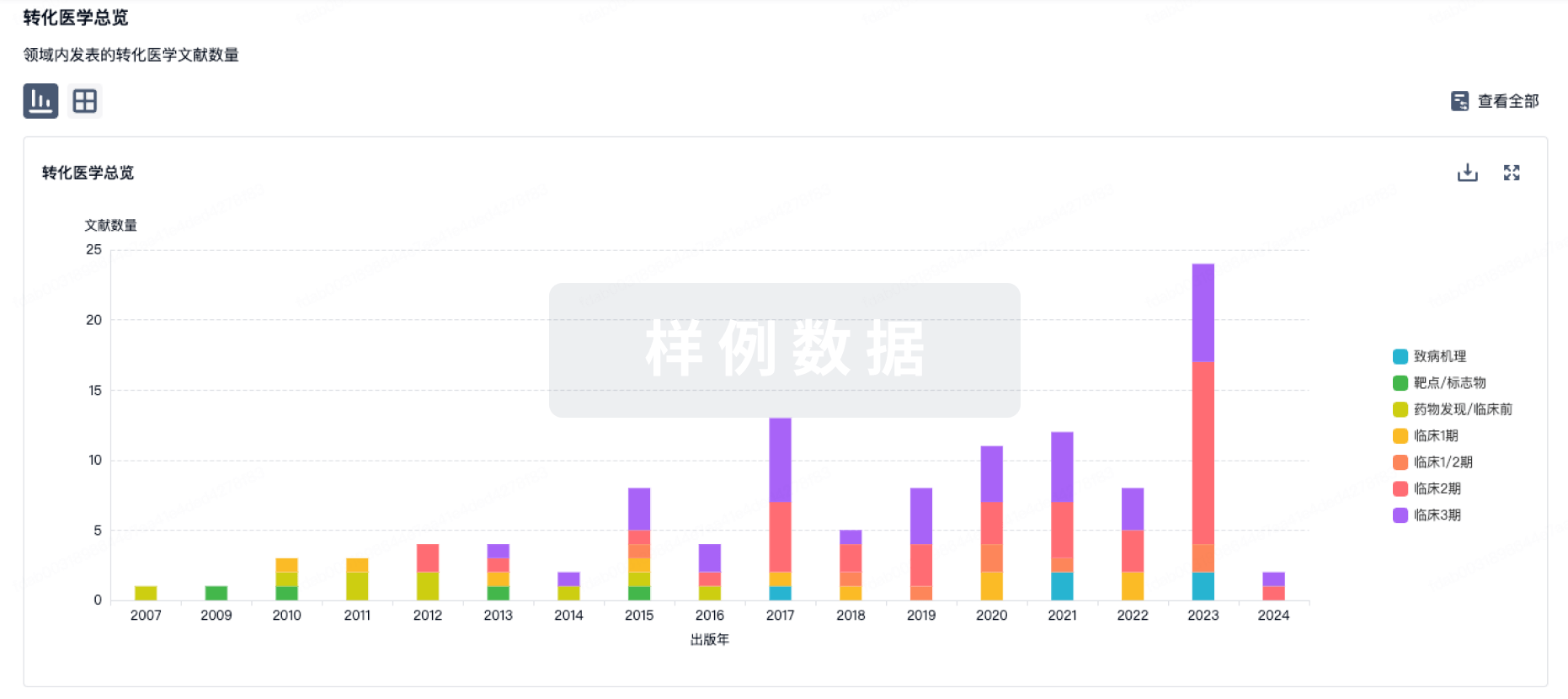
转化医学
使用我们的转化医学数据加速您的研究。
登录
或
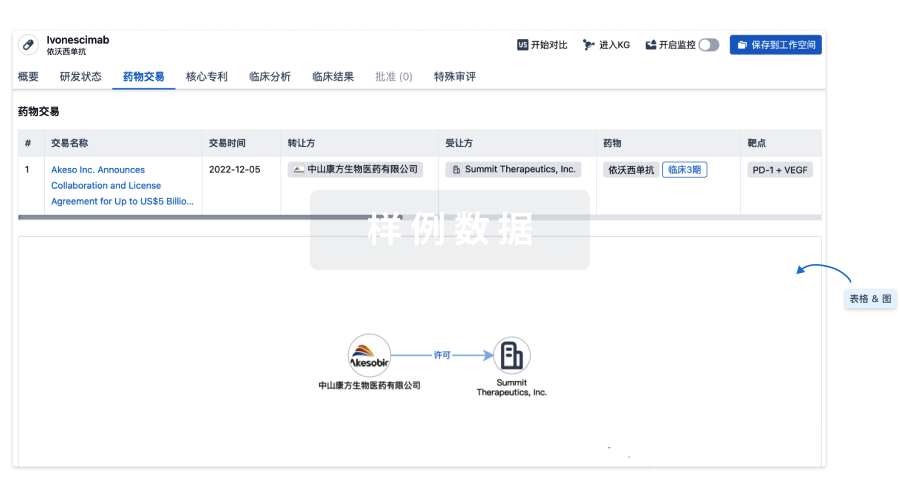
药物交易
使用我们的药物交易数据加速您的研究。
登录
或
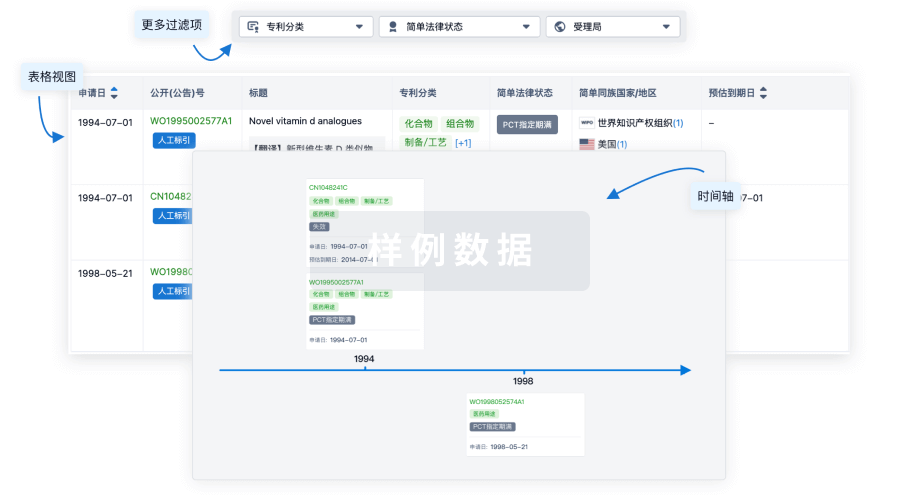
核心专利
使用我们的核心专利数据促进您的研究。
登录
或
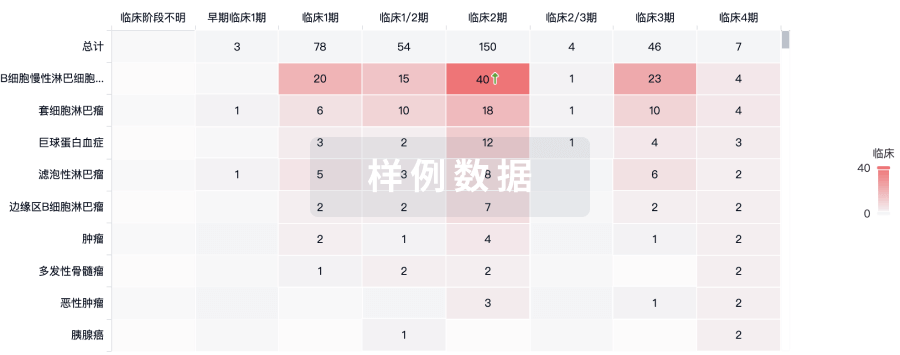
临床分析
紧跟全球注册中心的最新临床试验。
登录
或
批准
利用最新的监管批准信息加速您的研究。
登录
或
特殊审评
只需点击几下即可了解关键药物信息。
登录
或
生物医药百科问答
全新生物医药AI Agent 覆盖科研全链路,让突破性发现快人一步
立即开始免费试用!
智慧芽新药情报库是智慧芽专为生命科学人士构建的基于AI的创新药情报平台,助您全方位提升您的研发与决策效率。
立即开始数据试用!
智慧芽新药库数据也通过智慧芽数据服务平台,以API或者数据包形式对外开放,助您更加充分利用智慧芽新药情报信息。
生物序列数据库
生物药研发创新
免费使用
化学结构数据库
小分子化药研发创新
免费使用