预约演示
更新于:2026-09-26
DA-3501
更新于:2026-09-26
概要
基本信息
药物类型 ADC |
别名 Gastric, Pancreatic cancer(AbTis)、AT-211、AT211 + [2] |
作用方式 抑制剂 |
作用机制 CLDN18.2抑制剂(Claudin 18.2蛋白抑制剂)、微管蛋白抑制剂 |
在研适应症 |
非在研适应症- |
原研机构 |
非在研机构- |
权益机构- |
最高研发阶段临床1期 |
首次获批日期- |
最高研发阶段(中国)- |
特殊审评- |


登录后查看时间轴
结构/序列
分子式C39H67N5O7 |
InChIKeyDASWEROEPLKSEI-UIJRFTGLSA-N |
CAS号474645-27-7 |
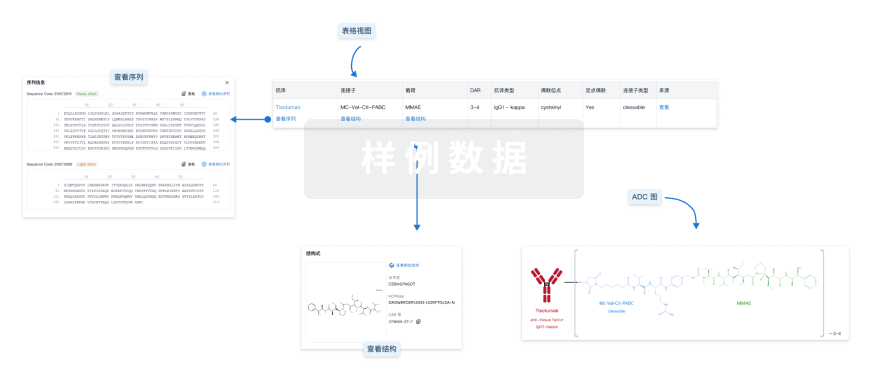
使用我们的ADC技术数据为新药研发加速。
登录
或
关联
1
项与 DA-3501 相关的临床试验NCT07481357
A First-In-Human Phase I/IIa Study to Evaluate the Safety, Tolerability, Pharmacokinetics, Pharmacodynamics, and Efficacy of DA 3501 in Patients With Advanced Gastric or Gastro-esophageal Junction Adenocarcinoma and Pancreatic Ductal Adenocarcinoma
100 项与 DA-3501 相关的临床结果
登录后查看更多信息
100 项与 DA-3501 相关的转化医学
登录后查看更多信息
100 项与 DA-3501 相关的专利(医药)
登录后查看更多信息
15
项与 DA-3501 相关的文献(医药)2026-03-01YAKUGAKU ZASSHI-JOURNAL OF THE PHARMACEUTICAL SOCIETY OF JAPAN
Development and Evaluation of At-211 Labeled Peptides
Review
作者: Ogawa, Kazuma
Astatine-211 (211At) has recently attracted significant attention as one of promising alpha-emitting radionuclides for targeted alpha therapy (TAT), owing to its favorable physical and chemical properties. As a halogen element located below iodine in the periodic table, 211At enables the adaptation of existing radioiodination techniques. It means potential for applications in radiotheranostics by combining 211At-labeled agents with iodine-123/124 (123/124I)-labeled agents. Additionally, 211At has a relatively short half-life of approximately 7.2 h, making it well-suited for use with tumor-targeting small molecules or peptides that rapidly accumulate in tumors. Here, the development of a 211At-labeled peptide using arginylglycylaspartic acid (RGD) peptide as a model targeting ligand is reviewed.
2026-03-01YAKUGAKU ZASSHI-JOURNAL OF THE PHARMACEUTICAL SOCIETY OF JAPAN
A New Frontier in Cancer Therapy: Exploring the Potential of At-211
Article
作者: Suzuki, Hiroyuki ; Fuchigami, Takeshi
2026-03-01YAKUGAKU ZASSHI-JOURNAL OF THE PHARMACEUTICAL SOCIETY OF JAPAN
Attempts to Improve the <i>In vivo</i> Stability of At-211 Labeled Agents
Review
作者: Suzuki, Hiroyuki
Recently, targeted α-therapy (TAT) that uses radiopharmaceuticals emitting α-particles has shown high therapeutic effectiveness and has attracted global attention. Astatine-211 (211At) is one of the α-emitters applicable to TAT, and 211At-labeled agents have been actively developed. However, many 211At-labeled agents suffer from the in vivo deastatination, which causes accumulation of free astatide ([211At]At-) in normal tissues, such as the stomach, thyroid, spleen, and lung. The mechanism of in vivo deastatination remains unclear, and no established strategy exists for producing highly stable 211At-labeled agents. To address this problem, we have developed a novel astatination method using a neopentyl glycol (NpG) scaffold. Initially, the stability of 211At-labeled NpG scaffold was demonstrated using a low-molecular-weight model compound. We conjugated the NpG scaffold with various low-, middle-, and high-molecular-weight targeting molecules to produce 211At-labeled agents. This review summarizes the applicability and usefulness of the NpG scaffold.
51
项与 DA-3501 相关的新闻(医药)2026-09-24
2026-09-21
100 项与 DA-3501 相关的药物交易
登录后查看更多信息
研发状态
10 条进展最快的记录, 后查看更多信息
登录
| 适应症 | 最高研发状态 | 国家/地区 | 公司 | 日期 |
|---|---|---|---|---|
| 晚期胃食管交界处腺癌 | 临床1期 | 韩国 | 2026-05-18 | |
| 胃食管交界处腺癌 | 临床1期 | 韩国 | 2026-05-18 | |
| 胃食管交界处恶性肿瘤 | 临床1期 | 韩国 | 2026-05-18 | |
| 胰腺导管腺癌 | 临床1期 | 韩国 | 2026-05-18 | |
| 胰腺癌 | 临床前 | 韩国 | - |
登录后查看更多信息
临床结果
临床结果
适应症
分期
评价
查看全部结果
登录后查看更多信息
转化医学
使用我们的转化医学数据加速您的研究。
登录
或

药物交易
使用我们的药物交易数据加速您的研究。
登录
或

核心专利
使用我们的核心专利数据促进您的研究。
登录
或

临床分析
紧跟全球注册中心的最新临床试验。
登录
或

批准
利用最新的监管批准信息加速您的研究。
登录
或

生物类似药
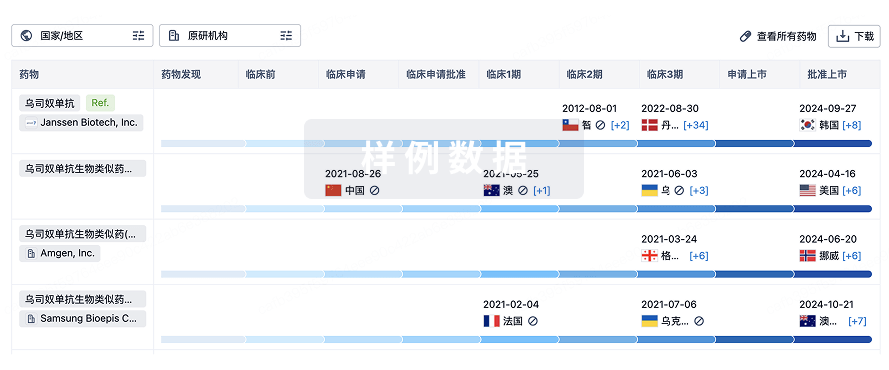
生物类似药在不同国家/地区的竞争态势。请注意临床1/2期并入临床2期,临床2/3期并入临床3期
登录
或
特殊审评
只需点击几下即可了解关键药物信息。
登录
或

提出任何生物医药研究问题
让每一步生物医药决策都精准制胜
基于十亿级生物数据与全球情报的精准 AI,赋能早期药物发现
立即开始免费试用!
智慧芽新药情报库是智慧芽专为生命科学人士构建的基于AI的创新药情报平台,助您全方位提升您的研发与决策效率。
立即接入生物医药数据包
智慧芽新药库数据也通过智慧芽开放平台,以MCP或API服务形式对外开放。立即使用我们的MCP服务定制您的LLM智能体。
生物序列数据库
生物药研发创新
免费使用
化学结构数据库
小分子化药研发创新
免费使用