预约演示
更新于:2026-07-18
ABBV-916
更新于:2026-07-18
概要
基本信息
原研机构 |
非在研机构- |
权益机构- |
最高研发阶段临床2期 |
首次获批日期- |
最高研发阶段(中国)- |
特殊审评- |
登录后查看时间轴
结构/序列
Sequence Code 1072253161H
来源: *****
Sequence Code 1072253162L
来源: *****
关联
1
项与 ABBV-916 相关的临床试验NCT05291234
A Randomized, Double-Blind, Placebo-Controlled Study to Evaluate the Safety, Efficacy, Pharmacokinetics and Pharmacodynamics of ABBV-916 in Subjects With Early Alzheimer's Disease
100 项与 ABBV-916 相关的临床结果
登录后查看更多信息
100 项与 ABBV-916 相关的转化医学
登录后查看更多信息
100 项与 ABBV-916 相关的专利(医药)
登录后查看更多信息
1
项与 ABBV-916 相关的文献(医药)ACTA NEUROPATHOLOGICA
Anti-pyroglutamate-3 Aβ immunotherapy engages microglia and inhibits amyloid accumulation in transgenic mouse models of Aβ amyloidosis
Article
作者: Liao, Fan ; Calvo-Rodriguez, Maria ; Fernandez Garcia-Agudo, Laura ; Charych, Erik I ; Sefrin, Julian P ; Huang, Lili ; Rodgers, Allison ; Secker, Philipp F ; Mezler, Mario ; Klein, Corinna ; Dellovade, Tammy ; McGlame, Emily J ; Cao, Yang ; Zhao, Karen ; Karran, Eric ; Clausznitzer, Diana ; Chhaya, Meha
Alzheimer disease (AD) is the most common form of dementia affecting more than 6 million people in the United States. Currently, 3 monospecific antibodies targeting different Amyloid β (Aβ) species have been approved by the US FDA as disease modifying therapeutics for treatment in early AD patients with amyloid pathology. ABBV-916 is a clinical stage human IgG1 monoclonal antibody which binds to N-terminal truncated, pyroglutamate-modified at amino acid position 3, Aβ (AβpE3). The current study characterized ABBV-916 using human tissue samples and amyloid precursor protein (APP) transgenic mice. ABBV-916 selectively bound to recombinant AβpE3-42 fibrils and native amyloid plaques in unfixed AD brain tissue but did not bind targets in human CSF. ABBV-916 significantly reduced dense plaques from brain tissue that were co-cultured with hiPSC-derived phagocytes. In APPPS1-21 mice, ABBV‑916 bound plaques in a dose-dependent manner after a single intravenous injection. In addition, three months of weekly administration of ABBV-916 murine surrogate antibody significantly decreased amyloid plaques in APPPS1-21 mice. In vivo two-photon imaging revealed that the murine version of ABBV-916 inhibited the growth of the plaques in APPPS1-21 mice. ABBV-916 murine surrogate antibody recruited microglia to plaques within 24-48 hours after a single intraperitoneal injection in Cx3cr1-tdTomato/APPPS1-21 mice. Importantly, in contrast to a positive control antibody, ABBV‑916 murine precursor antibody did not cause microhemorrhage in aged APPPS1-21 mice. Taken together, our results suggest that ABBV-916 is a promising drug candidate. Clinical testing is on-going to evaluate the plaque removal and safety profiles of ABBV-916 in AD patients.
18
项与 ABBV-916 相关的新闻(医药)2026-07-16
2026-01-29
临床3期上市批准抗体药物偶联物加速审批申请上市
2026-01-22
并购抗体药物偶联物专利到期生物类似药财报
100 项与 ABBV-916 相关的药物交易
登录后查看更多信息
研发状态
10 条进展最快的记录, 后查看更多信息
登录
| 适应症 | 最高研发状态 | 国家/地区 | 公司 | 日期 |
|---|---|---|---|---|
| 阿尔茨海默症 | 临床2期 | 美国 | 2022-08-15 | |
| 4型阿尔茨海默病 | 临床2期 | 美国 | 2022-08-15 |
登录后查看更多信息
临床结果
临床结果
适应症
分期
评价
查看全部结果
登录后查看更多信息
转化医学
使用我们的转化医学数据加速您的研究。
登录
或

药物交易
使用我们的药物交易数据加速您的研究。
登录
或

核心专利
使用我们的核心专利数据促进您的研究。
登录
或

临床分析
紧跟全球注册中心的最新临床试验。
登录
或

批准
利用最新的监管批准信息加速您的研究。
登录
或

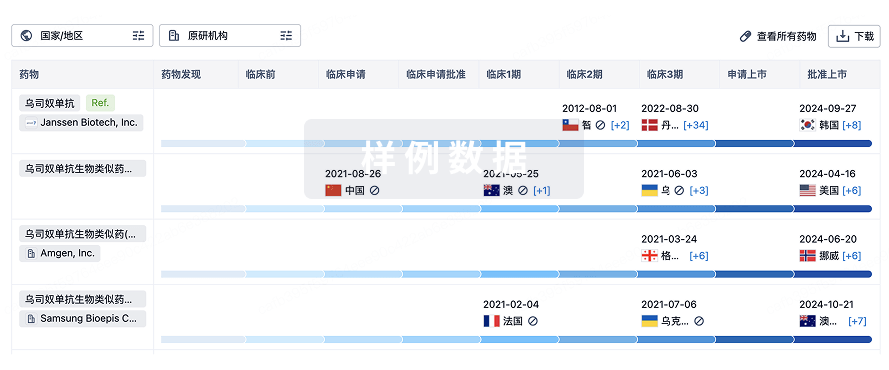
生物类似药
生物类似药在不同国家/地区的竞争态势。请注意临床1/2期并入临床2期,临床2/3期并入临床3期
登录
或
特殊审评
只需点击几下即可了解关键药物信息。
登录
或

提出任何生物医药研究问题
让每一步生物医药决策都精准制胜
基于十亿级生物数据与全球情报的精准 AI,赋能早期药物发现
立即开始免费试用!
智慧芽新药情报库是智慧芽专为生命科学人士构建的基于AI的创新药情报平台,助您全方位提升您的研发与决策效率。
立即接入生物医药数据包
智慧芽新药库数据也通过智慧芽开放平台,以MCP或API服务形式对外开放。立即使用我们的MCP服务定制您的LLM智能体。
生物序列数据库
生物药研发创新
免费使用
化学结构数据库
小分子化药研发创新
免费使用