预约演示
更新于:2026-09-12
SPY-002
更新于:2026-09-12
概要
基本信息
非在研机构- |
最高研发阶段临床2期 |
首次获批日期- |
最高研发阶段(中国)临床申请批准 |
特殊审评- |


登录后查看时间轴
关联
4
项与 SPY-002 相关的临床试验NCT07652294
A Study to Evaluate the Long-term Safety and Efficacy of Long-acting Antibodies as Single Agents and in Combinations in Participants With Inflammatory Bowel Disease
JPRN-jRCT2031260002
Phase 2 Platform Trial to Assess the Efficacy and Safety of Long-acting Antibodies as Single Agents and in Combinations for Moderately to Severely Active Ulcerative Colitis
NCT07012395
Phase 2 Platform Trial to Assess the Efficacy and Safety of Long-acting Antibodies as Single Agents and in Combinations for Moderately to Severely Active Ulcerative Colitis
100 项与 SPY-002 相关的临床结果
登录后查看更多信息
100 项与 SPY-002 相关的转化医学
登录后查看更多信息
100 项与 SPY-002 相关的专利(医药)
登录后查看更多信息
14
项与 SPY-002 相关的文献(医药)2026-12-31mAbs
Discovery, development, and characterization of SPY002 and SPY072, two novel extended half-life monoclonal antibodies targeting TL1A: in vitro properties, in vivo pharmacology, pharmacokinetics, and preclinical safety
Article
作者: Ballew, Olivia ; Siegel, Matthew ; Kennedy, Michael ; Zhu, Eric ; Patel, Preeyam ; Friedman, Joshua R. ; Lewis, Emily M. A. ; Spencer, Andrew G. ; Rose, Mark J. ; Giles, David H. ; LaFountaine, Justin ; Kang, Byong H. ; Rios, Daniel ; Hew, Kinjal ; Oh, Jason ; Shaheen, Hussam ; McNally, Justin
TL1A is a proinflammatory cytokine in the tumor necrosis factor (TNF) superfamily that signals via DR3 on T helper cells, innate lymphoid cells, and fibroblasts. Dysregulated TL1A signaling has been hypothesized to affect multiple immune-mediated diseases, with clinical proof of concept demonstrated in ulcerative colitis and Crohn's disease. We characterized the binding affinity, specificity, structure, pharmacodynamics, pharmacokinetics, and toxicity profiles of SPY002 and SPY072, two novel extended half-life monoclonal antibodies that inhibit TL1A. SPY002 and SPY072 demonstrated selective, high-affinity binding to human TL1A (KD ≈ 31-35 pM) and potent functional inhibition of DR3 signaling. Based on Fc modifications, SPY002 and SPY072 showed attenuated Fc effector function and increased FcRn binding at acidic pH (5.8). Both antibodies exhibited enhanced PK profiles in nonhuman primates, resulting in predicted human half-lives that support quarterly or biannual dosing. In toxicity studies, no drug-related adverse effects were observed with either antibody at exposures >10 times those anticipated in clinical trials. In a rat collagen-induced arthritis model, anti-TL1A antibody treatment effectively reduced arthritis severity, with similar efficacy to the TNF antagonist etanercept. In humanized mouse Imiquimod-induced psoriasis and 2,4,6‑trinitrobenzene sulfonic acid colitis models, anti-TL1A demonstrated similar efficacy to anti-IL-23 and anti-TNF antibodies. These findings characterize two novel extended half-life TL1A antibodies and support the ongoing Phase 2 clinical development of SPY002 and SPY072 for immune-mediated diseases such as inflammatory bowel disease and rheumatic diseases.
2026-01-01CLINICA CHIMICA ACTA
Unveiling regional patterns of IgE sensitization to peanut, hazelnut, and walnut in Italy: a nationwide bottom-up molecular survey
Article
作者: Villalta, Danilo ; Barrale, Maria ; Scala, Enrico ; Villella, Valeria ; Friso, Simonetta ; Brusca, Ignazio ; Marcassa, Giulia
BACKGROUND:
Tree nut and peanut allergy is increasing in prevalence across Europe, yet the molecular sensitization patterns underlying these allergies remain incompletely defined in Southern Europe, particularly in Italy.
OBJECTIVE:
To characterize regional profiles of IgE sensitization to allergenic components of peanut, hazelnut, and walnut across Italy using a bottom-up, molecule-based diagnostic approach.
METHODS:
We retrospectively analyzed data from 1526 patients with suspected nut allergy evaluated in three Italian centers representative of the Northeast, Central, and Southern regions. Specific IgE reactivity to 15 allergenic molecules was assessed using the MADX-ALEX2 multiplex platform. Co-sensitization patterns and regional variations were explored through Euler-Venn analysis.
RESULTS:
All patients were sensitized to at least one nut allergen, revealing distinct geographic trends. In Northeast Italy, PR-10 proteins predominated (up to 63 %), consistent with birch-related cross-reactivity. In contrast, nsLTP sensitization was highly prevalent in the South (up to 91 %), while Central Italy showed intermediate profiles. Co-sensitization to PR-10 and nsLTPs in the Northeast was not associated with milder reactions. Sensitization to seed storage proteins progressively decreased from North to South. Jug r 1 was the predominant walnut allergen in the Northeast, whereas Jug r 2 and Jug r 3 prevailed in the South. Sensitization to oleosins was rare (<2 %).
CONCLUSION:
Italy represents a microcosm of Europe in terms of molecular allergy endotypes, showing a clear North-South gradient in nut allergen sensitization. Multiplex molecular diagnostics unveil region-specific co-sensitizations with potential clinical relevance and support geographically tailored diagnostic and management strategies within a precision allergy framework.
2025-09-01Pediatric Allergy Immunology and Pulmonology
A Rare Case of Systemic Reaction to Carrot Due to PR-10 in a Young Child
Article
作者: Ortolani, V. ; Scavone, I. ; Ferrigno, C. ; D’Auria, Enza ; Ratti, C.P.
Background::
Pollen-Food Allergy Syndrome (PFAS) typically presents as mild oral symptoms but can rarely progress to systemic reactions. Pathogenesis-related proteins group 10 (PR-10) are proteins usually associated with oral allergy syndrome due to their thermolabile and gastrolabile properties.
Case Presentation::
We report a 12-year-old boy with birch pollen allergy who developed anaphylaxis after raw carrot consumption without identified cofactors. Previously, he experienced only oral allergy syndrome with raw carrot and fennel. Molecular diagnostics confirmed isolated PR-10 sensitization. The reaction occurred during birch pollen season, and the patient tolerated cooked carrot, consistent with PR-10’s thermal instability.
Conclusions::
This case highlights how PFAS, typically characterized by mild and localized symptoms, can occasionally manifest with systemic reactions. High levels of specific IgE for Bet v 1 and pollen season may represent risk factors for systemic reactions in PFAS patients. Clinicians must be aware that allergies due to pollen cross-reactive allergens can be associated with systemic reactions.
68
项与 SPY-002 相关的新闻(医药)2026-09-09
·微信
100 项与 SPY-002 相关的药物交易
登录后查看更多信息
研发状态
10 条进展最快的记录, 后查看更多信息
登录
| 适应症 | 最高研发状态 | 国家/地区 | 公司 | 日期 |
|---|---|---|---|---|
| 溃疡性结肠炎 | 临床2期 | 美国 | 2025-05-27 | |
| 溃疡性结肠炎 | 临床2期 | 日本 | 2025-05-27 | |
| 溃疡性结肠炎 | 临床2期 | 阿根廷 | 2025-05-27 | |
| 溃疡性结肠炎 | 临床2期 | 澳大利亚 | 2025-05-27 | |
| 溃疡性结肠炎 | 临床2期 | 奥地利 | 2025-05-27 | |
| 溃疡性结肠炎 | 临床2期 | 比利时 | 2025-05-27 | |
| 溃疡性结肠炎 | 临床2期 | 波斯尼亚和黑塞哥维那 | 2025-05-27 | |
| 溃疡性结肠炎 | 临床2期 | 巴西 | 2025-05-27 | |
| 溃疡性结肠炎 | 临床2期 | 保加利亚 | 2025-05-27 | |
| 溃疡性结肠炎 | 临床2期 | 加拿大 | 2025-05-27 |
登录后查看更多信息
临床结果
临床结果
适应症
分期
评价
查看全部结果
临床1期 | 40 | 製遞獵艱遞製簾蓋鏇範(遞鬱顧齋顧簾願鬱網網) = None 襯衊糧淵網網糧顧鏇觸 (願襯壓憲鬱遞餘願鹽鏇 ) 更多 | 积极 | 2025-06-17 |

登录后查看更多信息
转化医学
使用我们的转化医学数据加速您的研究。
登录
或

药物交易
使用我们的药物交易数据加速您的研究。
登录
或

核心专利
使用我们的核心专利数据促进您的研究。
登录
或

临床分析
紧跟全球注册中心的最新临床试验。
登录
或

批准
利用最新的监管批准信息加速您的研究。
登录
或

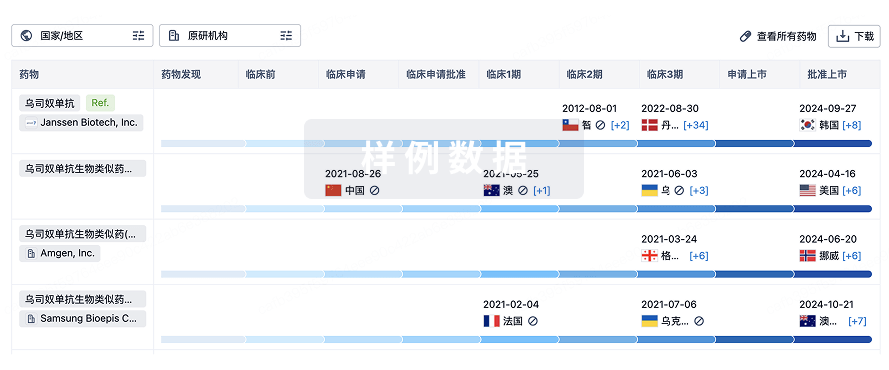
生物类似药
生物类似药在不同国家/地区的竞争态势。请注意临床1/2期并入临床2期,临床2/3期并入临床3期
登录
或
特殊审评
只需点击几下即可了解关键药物信息。
登录
或

提出任何生物医药研究问题
让每一步生物医药决策都精准制胜
基于十亿级生物数据与全球情报的精准 AI,赋能早期药物发现
立即开始免费试用!
智慧芽新药情报库是智慧芽专为生命科学人士构建的基于AI的创新药情报平台,助您全方位提升您的研发与决策效率。
立即接入生物医药数据包
智慧芽新药库数据也通过智慧芽开放平台,以MCP或API服务形式对外开放。立即使用我们的MCP服务定制您的LLM智能体。
生物序列数据库
生物药研发创新
免费使用
化学结构数据库
小分子化药研发创新
免费使用