预约演示
更新于:2026-01-31
D2/D3 Agonists(Wayne State University)
更新于:2026-01-31
概要
基本信息
药物类型 小分子化药 |
别名 (-)-19b(Wayne State University) |
作用方式 激动剂 |
作用机制 D2 receptor激动剂(多巴胺D2受体激动剂)、D3 receptor激动剂(多巴胺D3受体激动剂) |
在研适应症- |
非在研适应症 |
在研机构- |
权益机构- |
最高研发阶段无进展临床前 |
首次获批日期- |
最高研发阶段(中国)- |
特殊审评- |

结构/序列
分子式C28H36N4O2 |
InChIKeySWEZRIWMOXWKPT-UHFFFAOYSA-N |
CAS号1253693-65-0 |
关联
100 项与 D2/D3 Agonists(Wayne State University) 相关的临床结果
登录后查看更多信息
100 项与 D2/D3 Agonists(Wayne State University) 相关的转化医学
登录后查看更多信息
100 项与 D2/D3 Agonists(Wayne State University) 相关的专利(医药)
登录后查看更多信息
237
项与 D2/D3 Agonists(Wayne State University) 相关的文献(医药)2026-04-01·BIOORGANIC & MEDICINAL CHEMISTRY LETTERS
Design, synthesis and biological evaluation of ALK/HDAC dual-targeting agents
Article
作者: Xue, Xia ; Li, Shunda ; Zhang, Yingjie ; Liu, Huiping ; Fu, Ruiwei ; Xue, Xintong ; Gao, Yan ; Kong, Ye
Dual inhibition of ALK and HDACs might be an effective cancer treatment approach. We designed and synthesized novel dual ALK and HDAC inhibitors using molecular hybridization and pharmacophore merging. In enzymatic assays, compound 19b showed dual inhibitory activity against ALK (ALK WT IC50 = 8.0 ± 1.2 nM) and HDACs (HeLa cell nuclear extract IC50 = 1.18 ± 0.22 μM). Notably, 19b exhibited ~5-fold greater inhibition than Staurosporine and approved ALK inhibitor Brigatinib against the ALK G1202R mutant. Additionally, 19b demonstrated strong activity in ALK-related neuroblastoma SK-N-BE2 cells, comparable to controls SAHA, MS275, and Brigatinib. In SK-N-BE2 cells, 19b treatment led to increased apoptosis and G2/M arrest. Docking studies explained the potent dual inhibition by 19b. These findings support the promise of 19b as a dual ALK/HDAC inhibitor for managing neuroblastoma, especially ALK-positive cancer.
2025-11-01·MOLECULAR PSYCHIATRY
Effects of antipsychotics on human cognitive function: causal evidence from healthy volunteers following sustained D2/D3 antagonism, D2/D3 partial agonism and placebo
Article
作者: Finelli, Valeria ; Mehta, Mitul A ; Zahid, Uzma ; Wall, Matthew B ; Onwordi, Ellis Chika ; Osugo, Martin ; Marques, Tiago Reis ; Selvaggi, Pierluigi ; Murray, Robin M ; Whitehurst, Thomas ; Chapman, George E ; Chilimidos, Alexandria ; Howes, Oliver D
Abstract:
Dopamine D2/D3 receptor modulation with antipsychotics is thought to affect cognitive function, but causal evidence in humans is scant, and largely limited to single administrations. Clarifying this is of importance given the widespread use of antipsychotics, and to understand the role of D2/D3 signalling in human cognition. We therefore conducted a double-blind, placebo-controlled crossover study following sustained administration of either a dopamine D2/D3 receptor antagonist (amisulpride at 400 mg daily) or a D2/D3 partial agonist (aripiprazole at 10 mg daily) to two separate samples of healthy humans (total n = 50) for 7 days per condition. We assessed cognitive function using a computerised visuospatial working memory (VS-WM) task, and sustained attention and response inhibition using the Sustained Attention to Response Task (SART). We found that both amisulpride and aripiprazole caused impairments in VS-WM function compared to placebo on the Balanced Integration Score (amisulpride: p = 0.0079; aripiprazole: p = 0.015). Both antipsychotics impaired VS-WM performance in terms of response latency (amisulpride: p = 5.5 × 10⁻⁷; aripiprazole: p = 0.022), but did not affect response accuracy. Response latency deficits were not correlated with motor impairments induced by either drug, and we also found no effect of either drug on the SART measures, or on subjective alertness, suggesting that D2/D3 antagonism or partial agonism did not cause a generalised cognitive or motor deficit but specifically impaired cognition during VS-WM. This study provides the first causal evidence in healthy humans that working memory function is impaired following either sustained antagonism or partial agonism of D2/D3 receptors by antipsychotic drugs.
2025-09-06·Cureus Journal of Medical Science
A Comparative Evaluation of the Efficacy and Safety Profile of Cariprazine and Olanzapine in Patients With Schizophrenia in a Tertiary Care Hospital
Article
作者: Dhandayuthapani, Sivanesan ; Batra, Jyoti ; Saran, Brijesh ; Dey, Saborni ; Tiwari, Satyajyoti ; Yadav, Vivek Tejvir
Background Schizophrenia is a chronic psychiatric disorder requiring long-term antipsychotic treatment. Cariprazine, a newer atypical antipsychotic with D2/D3 partial agonist activity, has shown promise in managing both positive and negative symptoms. This study aimed to compare the efficacy and safety of cariprazine with olanzapine in patients with schizophrenia in a tertiary care setting in India. Methods A prospective comparative study was conducted among 60 patients diagnosed with schizophrenia, allocated in equal numbers to cariprazine and olanzapine groups. Baseline and six-week assessments were performed using the Brief Psychiatric Rating Scale (BPRS), Scale for the Assessment of Positive Symptoms (SAPS), Scale for the Assessment of Negative Symptoms (SANS), and the Udvalg for Kliniske Undersøgelser (UKU) Side Effect Rating Scale. Statistical analyses included t-tests, ANOVA, and chi-square tests, with significance set at p<0.05. Results Both groups showed significant improvements from baseline on BPRS, SAPS, and SANS scores (p<0.001). At six weeks, cariprazine was more effective in reducing negative symptoms (SANS: 39.90 ± 19.25) compared to olanzapine (SANS: 55.37 ± 16.22; p=0.005). Olanzapine led to a greater reduction in positive symptoms (SAPS: 38.13 ± 18.45 vs. 45.80 ± 20.33; p=0.008). UKU scores indicated minimal adverse effects in both groups, with cariprazine showing a slightly more favorable tolerability profile (2.97 ± 3.42 vs. 3.07 ± 3.63; p<0.001). Age significantly influenced BPRS outcomes, while gender, marital status, and socioeconomic status had no significant effect. Conclusion Both cariprazine and olanzapine demonstrated comparable overall efficacy. Cariprazine showed an advantage in improving negative symptoms and exhibited a more favorable side effect profile. Given the small sample size, short follow-up period, and single-center setting, these findings should be interpreted with caution. Larger, long-term trials are needed to confirm the results.
100 项与 D2/D3 Agonists(Wayne State University) 相关的药物交易
登录后查看更多信息
研发状态
10 条进展最快的记录, 后查看更多信息
登录
| 适应症 | 最高研发状态 | 国家/地区 | 公司 | 日期 |
|---|---|---|---|---|
| 帕金森病 | 临床前 | 美国 | 2010-03-11 |
登录后查看更多信息
临床结果
临床结果
适应症
分期
评价
查看全部结果
| 研究 | 分期 | 人群特征 | 评价人数 | 分组 | 结果 | 评价 | 发布日期 |
|---|
No Data | |||||||
登录后查看更多信息
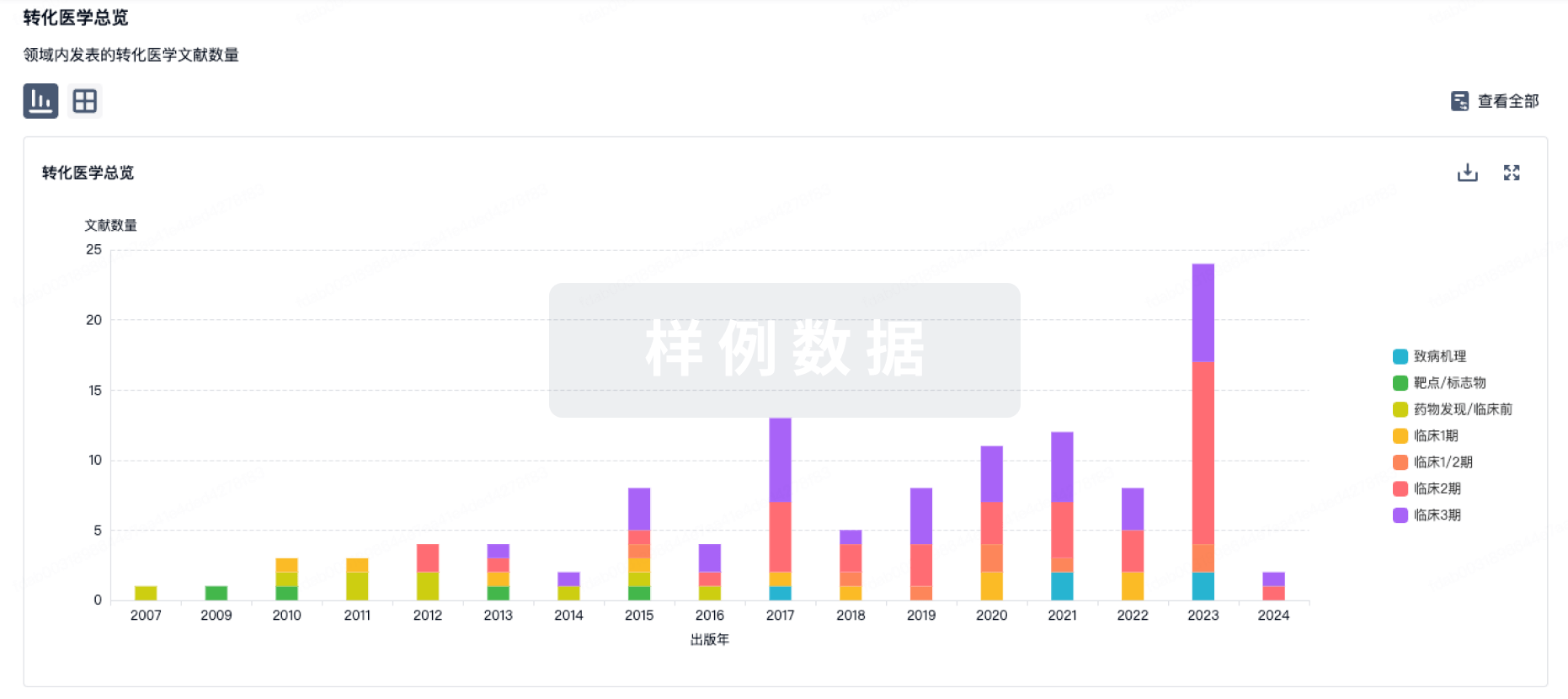
转化医学
使用我们的转化医学数据加速您的研究。
登录
或
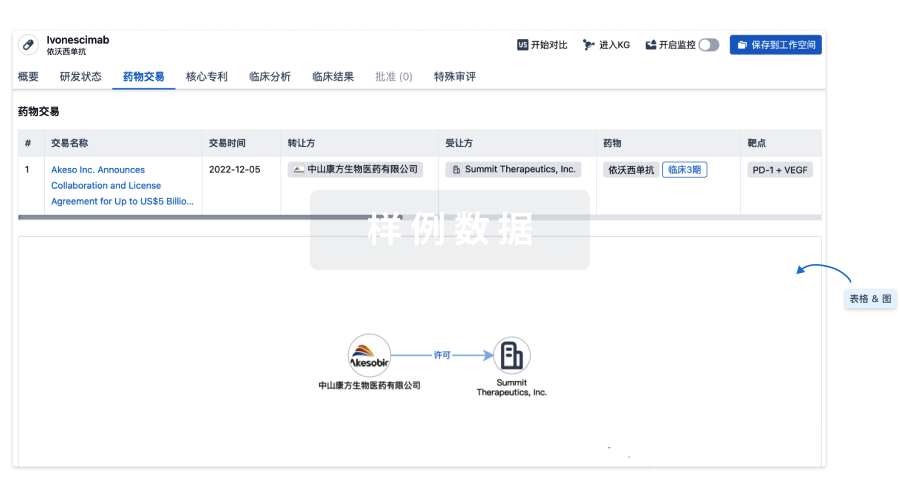
药物交易
使用我们的药物交易数据加速您的研究。
登录
或
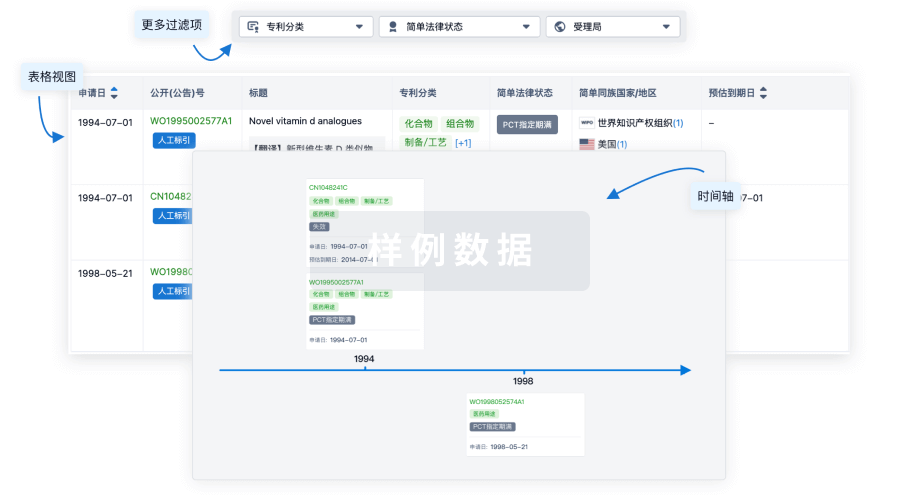
核心专利
使用我们的核心专利数据促进您的研究。
登录
或
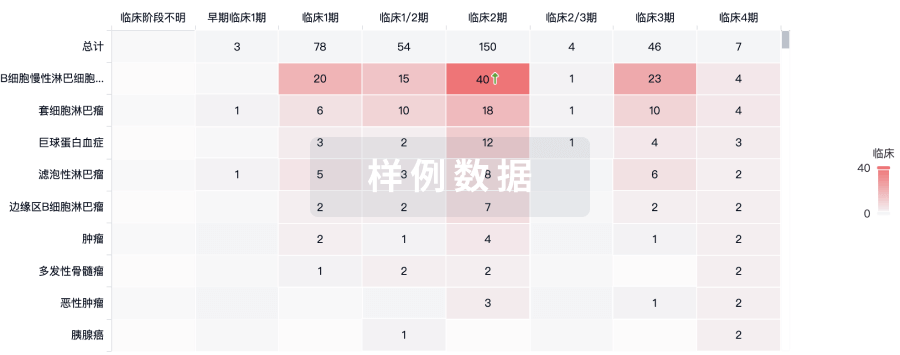
临床分析
紧跟全球注册中心的最新临床试验。
登录
或
批准
利用最新的监管批准信息加速您的研究。
登录
或
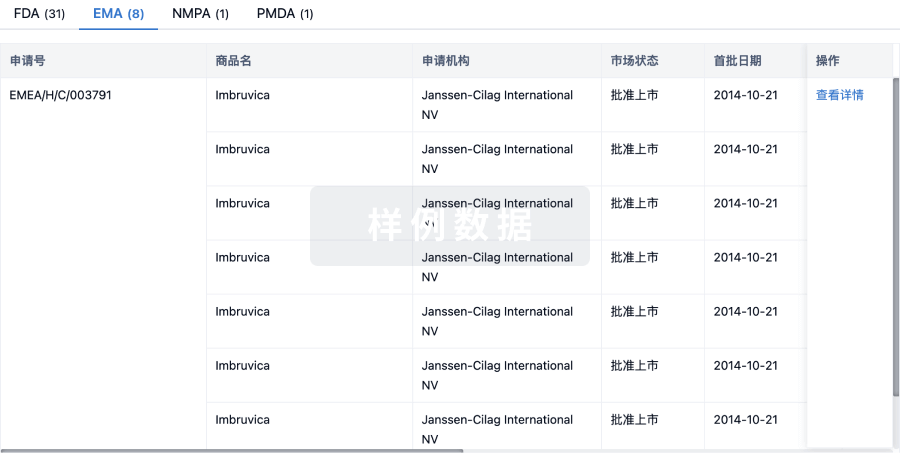
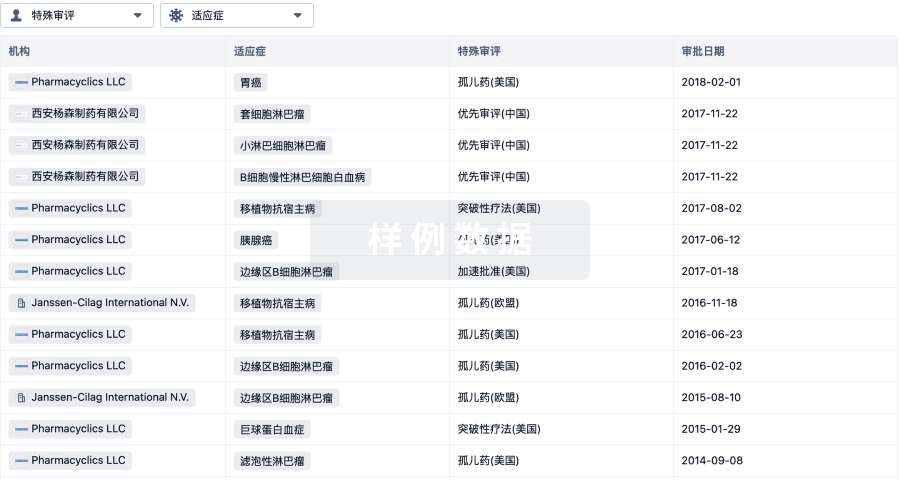
特殊审评
只需点击几下即可了解关键药物信息。
登录
或
生物医药百科问答
全新生物医药AI Agent 覆盖科研全链路,让突破性发现快人一步
立即开始免费试用!
智慧芽新药情报库是智慧芽专为生命科学人士构建的基于AI的创新药情报平台,助您全方位提升您的研发与决策效率。
立即开始数据试用!
智慧芽新药库数据也通过智慧芽数据服务平台,以API或者数据包形式对外开放,助您更加充分利用智慧芽新药情报信息。
生物序列数据库
生物药研发创新
免费使用
化学结构数据库
小分子化药研发创新
免费使用