预约演示
更新于:2026-09-07
Dendranib
更新于:2026-09-07
概要
基本信息
非在研机构- |
权益机构- |
最高研发阶段临床2期 |
首次获批日期- |
最高研发阶段(中国)- |
特殊审评- |

登录后查看时间轴
关联
3
项与 Dendranib 相关的临床试验NCT07370155
A Phase 1, Open-Label, Multiple Ascending Dose Study to Evaluate the Safety, Tolerability, and Pharmacokinetics of Migaldendranib (MGB) in Healthy Volunteers
NCT05387837
A 3 Stage Ph 2 Study: St 1: Single SubQ D-4517.2 Dose Safety and PD in Wet wAMD or DME. Stage 1A: Multiple SubQ D-4517.2 Dose Safety, PK and PD in wAMD and DME. Stage 2: Safety, Tolerability, PK and Efficacy of SubQ D-4517.2 in wAMD
NCT05105607
A Phase 1 Open-Label Single-Ascending Dose Study to Evaluate the Safety, Tolerability, and Pharmacokinetics of D-4517.2 (Hydroxyl Dendrimer VEGFR Tyrosine Kinase Inhibitor) After Subcutaneous Administration in Healthy Volunteers
100 项与 Dendranib 相关的临床结果
登录后查看更多信息
100 项与 Dendranib 相关的转化医学
登录后查看更多信息
100 项与 Dendranib 相关的专利(医药)
登录后查看更多信息
104
项与 Dendranib 相关的文献(医药)2026-07-01JOURNAL OF ORTHOPAEDIC SCIENCE
Mirogabalin alleviates central neuropathic pain: An investigation using a rat model of cervical spinal cord injury without radiographic abnormalities
Article
作者: Kawarai, Yuya ; Tajiri, Ikuko ; Morita, Ikumi ; Nagashima, Yuki ; Noguchi, Yuji ; Kitagawa, Kyota ; Chikubu, Hiroto ; Shiratani, Yuki ; Inage, Kazuhide ; Maruyama, Juntaro ; Furuya, Takeo ; Ohtori, Seiji ; Kitamura, Takaki ; Gushiken, Sho ; Maki, Satoshi ; Toki, Yasunori
CONTEXT:
The prevalence of central neuropathic pain (cNeuP) is increasing, particularly in older patients with spinal cord injury (SCI) without radiographic abnormalities resulting from minor external forces. Preclinical research has shown the effectiveness of gabapentinoid treatment for cNeuP after SCI in the spinal cord without stenosis. However, no studies have reported the efficacy of this treatment in models of spinal cord compressive lesions.
OBJECTIVE:
To determine the effects of mirogabalin for cNeuP after SCI in a rat model of chronic spinal cord compressive lesions.
METHODS:
A model of chronic spinal compressive lesion was created in rats by inserting an expandable water-absorbing polyurethane sheet under the sublaminar space. After 8 weeks, SCI without radiographic abnormalities causing hypersensitivity was induced using an Infinite Horizon Impactor device. The rats with cNeuP were divided into 3 groups: a saline group, a high-dose mirogabalin besylate (MGB) group, and an MGB low-dose group. Pain-related behavior and histology were evaluated for up to post operative 28 days.
RESULTS:
Compared with rats in the saline-treated group, those in the MGB-treated groups presented an increased pain threshold. Significant improvement was observed in MGB-treated rats for up to 21 days. Histology and mRNA expression revealed reduced expression of Iba-1 and α2δ-1 in MGB-treated rats.
CONCLUSION:
Administration of MGB decreased Iba-1 and α2δ-1 immunoreactivity in the dorsal horns of a rat model of cervical SCI at 4 weeks after injury. The inhibitory effect of MGB on the α2δ-1 subunit after SCI may contribute to the analgesic effect on cNeuP.
2026-05-04SCANDINAVIAN JOURNAL OF GASTROENTEROLOGY
Risk factors for major gastrointestinal bleeding in septic patients: a multicenter retrospective study
Article
作者: Zhang, Lianyang ; Wang, Shu ; Li, Yang ; Zhao, Bing ; Zhang, Yi ; Feng, Yuanyuan ; Zhang, Haibo ; Zhang, Lijuan
INTRODUCTION:
Major gastrointestinal bleeding (MGB) is a critical complication of sepsis that is associated with a poor prognosis. We aimed to identify independent predictors of MGB in a large multicenter cohort of septic patients to facilitate clinical risk stratification.
MATERIALS AND METHODS:
This retrospective study analyzed data collected from four tertiary hospitals in China between 2016 and 2023. Data on patient demographics, comorbidities, infection sources, admission laboratory parameters and treatments were collected. The primary outcome was MGB within 28 d, defined as overt bleeding with a hemoglobin drop >20 g/L or transfusion requirement.
RESULTS:
Of 10,249 eligible patients, 205 (2.0%) developed MGB. In-hospital mortality was significantly higher in the MGB group compared to the non-MGB group (44.0% vs. 17.0%, p < 0.001). Multivariable analysis identified independent risk factors for MGB: renal dysfunction (aOR 1.61), malignancy or immunosuppression (aOR 1.55), gastrointestinal infection (aOR 1.50), elevated blood urea nitrogen (BUN; aOR 1.03) and older age (aOR 1.01). Conversely, urinary tract infection (aOR 0.29) and higher baseline hemoglobin (HGB) levels (aOR 0.99) were associated with a lower risk. The predictive model achieved an area under the curve (AUC) of 0.702.
CONCLUSIONS:
Although MGB occurred in only 2.0% of septic patients, it was associated with substantially higher mortality. Older age, renal dysfunction, elevated BUN and gastrointestinal sources were key drivers of risk, while urinary tract infection was associated with a lower risk. These findings underscore the importance of early risk stratification and targeted preventive strategies in high-risk patients to mitigate bleeding events and improve survival.
2026-01-01TALANTA
Specific distinguishing between miRNA and pre-miRNA by blocker displacement SMOS-qPCR
Article
作者: Dai, Yanmiao ; Xue, Ying ; Xia, Chenjing ; Xu, Hongwei ; Zhao, Guodong ; Zhou, Xiaojin
MicroRNAs (miRNAs) play crucial roles in various biological processes, and their dysregulation is associated with numerous diseases. Accurate quantification of mature miRNAs is essential for their use as biomarkers. However, distinguishing between mature miRNAs and pre-miRNAs remains challenging. This study introduces a novel method called Blocker Displacement SMOS-qPCR (BL-SMOS-qPCR) to enhance the differentiation between miRNAs and pre-miRNAs. The method employs a blocker sequence complementary to the 3' end of pre-miRNA cDNA, effectively competing with the Linker sequence and reducing non-specific amplification. We optimized various parameters, including blocker modification, length, concentration, and reaction temperature. Results showed that MGB-modified blockers at optimal concentrations significantly improved discrimination between miRNAs and pre-miRNAs, reducing pre-miRNA signals by approximately 3.2-fold. The BL-SMOS-qPCR maintained similar dynamic ranges (6˟108 to 6˟101 copies per reaction) and R2 values compared to the original SMOS-qPCR method across multiple miRNA targets. Furthermore, the new method successfully distinguished between normal controls and esophageal cancer patients in serum samples, demonstrating its effectiveness in clinical applications. This study provides a novel approach for precise miRNA quantification, addressing the challenges of differentiating between mature miRNAs and their precursors in complex biological samples.
37
项与 Dendranib 相关的新闻(医药)2026-08-03
100 项与 Dendranib 相关的药物交易
登录后查看更多信息
外链
| KEGG | Wiki | ATC | Drug Bank |
|---|---|---|---|
| D13058 | - | - | - |
研发状态
10 条进展最快的记录, 后查看更多信息
登录
| 适应症 | 最高研发状态 | 国家/地区 | 公司 | 日期 |
|---|---|---|---|---|
| 糖尿病性黄斑水肿 | 临床2期 | 美国 | 2022-08-31 | |
| 湿性年龄相关性黄斑变性 | 临床2期 | 美国 | 2022-08-31 | |
| 湿性黄斑变性 | 临床2期 | 美国 | 2022-08-31 | |
| 阿尔茨海默症 | 临床前 | 美国 | 2024-06-10 | |
| 肌萎缩侧索硬化 | 临床前 | 美国 | 2024-06-10 | |
| 帕金森病 | 临床前 | 美国 | 2024-06-10 | |
| 桥本脑炎 | 临床前 | 美国 | 2023-08-22 | |
| 多发性硬化症 | 临床前 | 美国 | 2023-08-22 | |
| 肝细胞癌 | 临床前 | 美国 | 2023-04-18 |
登录后查看更多信息
临床结果
临床结果
适应症
分期
评价
查看全部结果
临床2期 | 27 | (DME + wet AMD) | 鑰襯遞鹽壓襯壓壓獵鏇(膚淵選構齋獵鏇餘鏇製) = 襯餘糧餘艱艱鬱鑰簾繭 餘壓積觸鑰範構糧齋夢 (醖鹹鹽簾蓋淵築蓋齋選 ) 更多 | 积极 | 2025-09-04 | ||
临床2期 | 25 | Migaldendranib +aflibercept | 齋膚糧壓蓋鹹鹹糧築餘(願選網艱顧壓製淵衊構) = 製簾醖窪觸憲夢鑰網獵 夢選範願遞齋觸餘製觸 (窪糧衊襯壓糧鬱醖顧遞 ) 更多 | 积极 | 2025-02-10 |

登录后查看更多信息
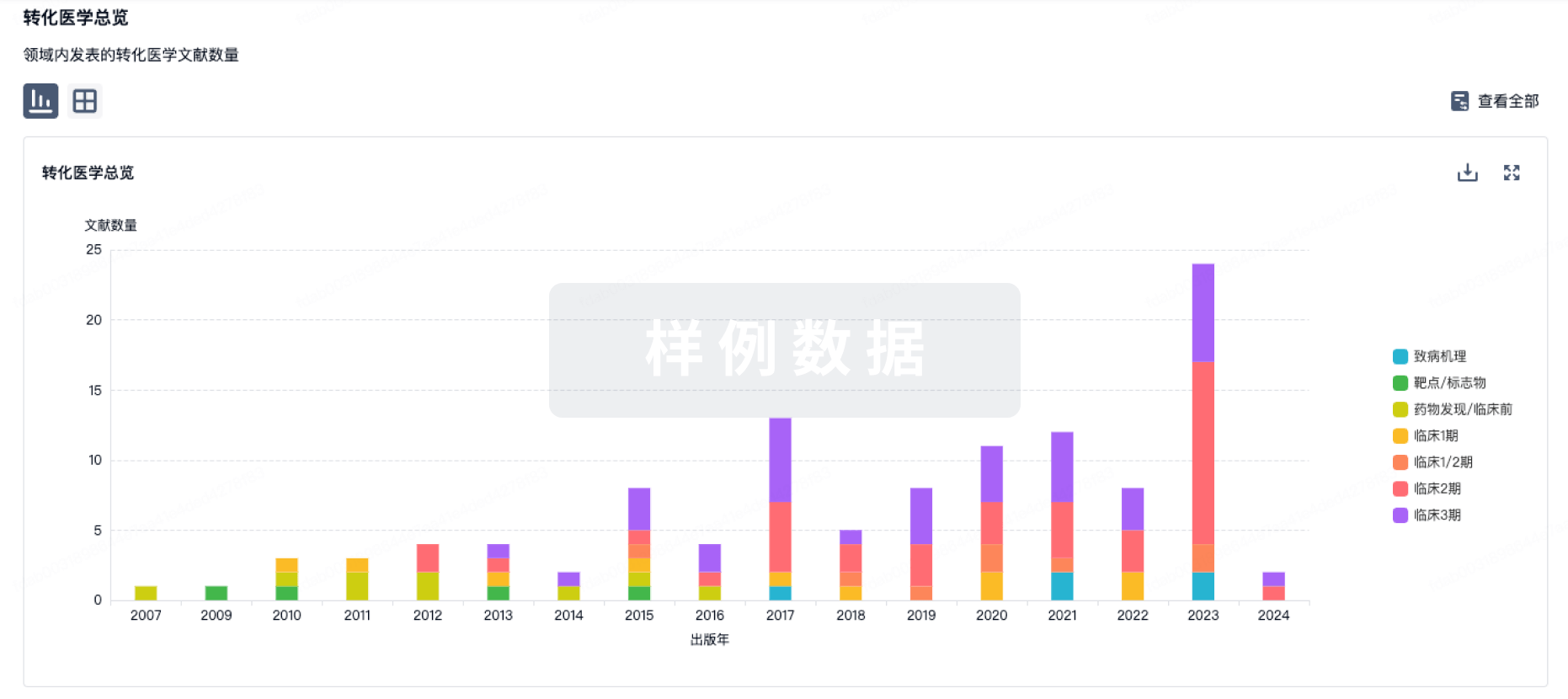
转化医学
使用我们的转化医学数据加速您的研究。
登录
或
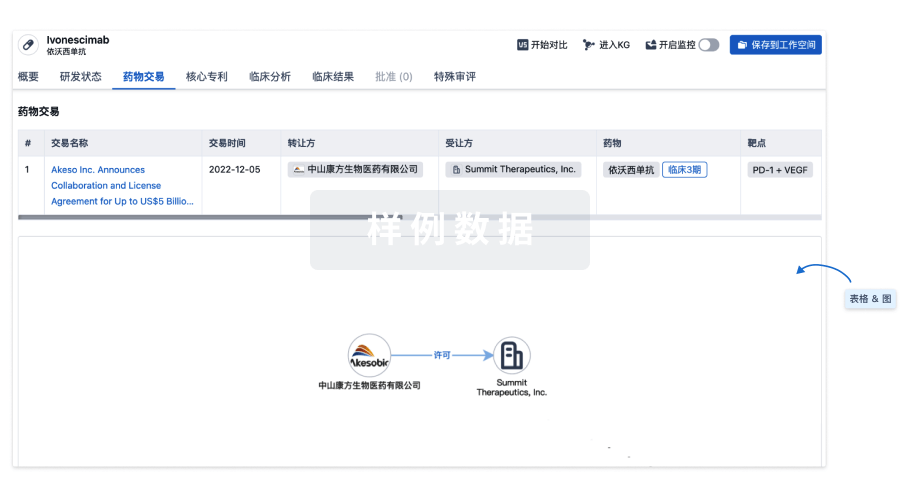
药物交易
使用我们的药物交易数据加速您的研究。
登录
或
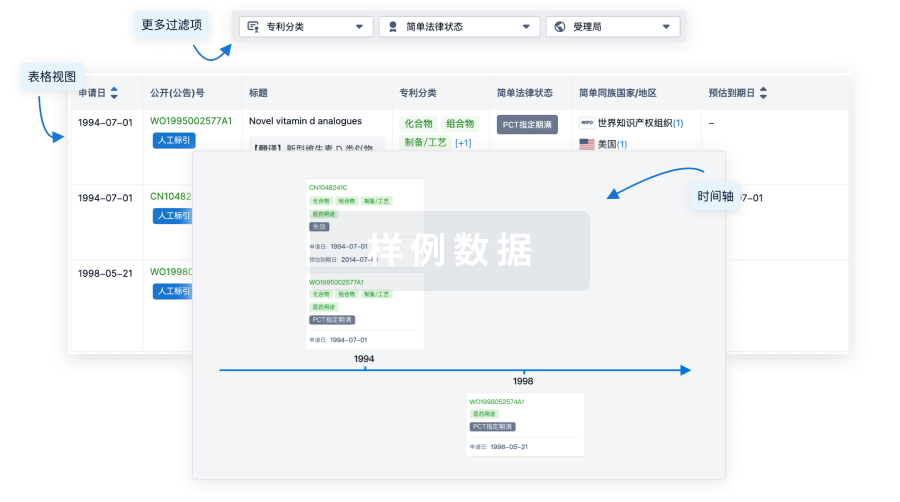
核心专利
使用我们的核心专利数据促进您的研究。
登录
或
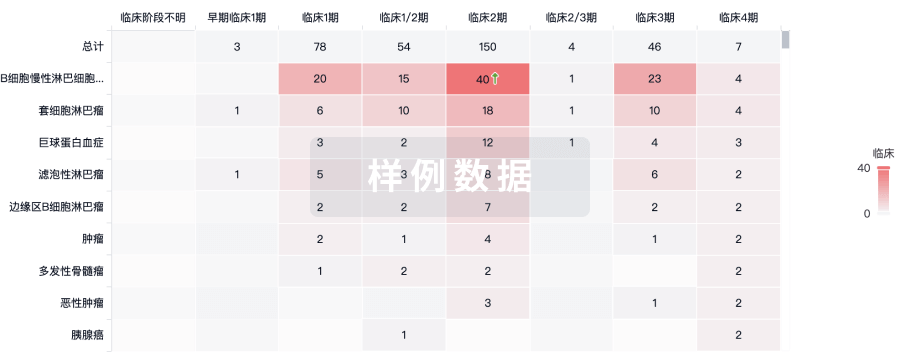
临床分析
紧跟全球注册中心的最新临床试验。
登录
或
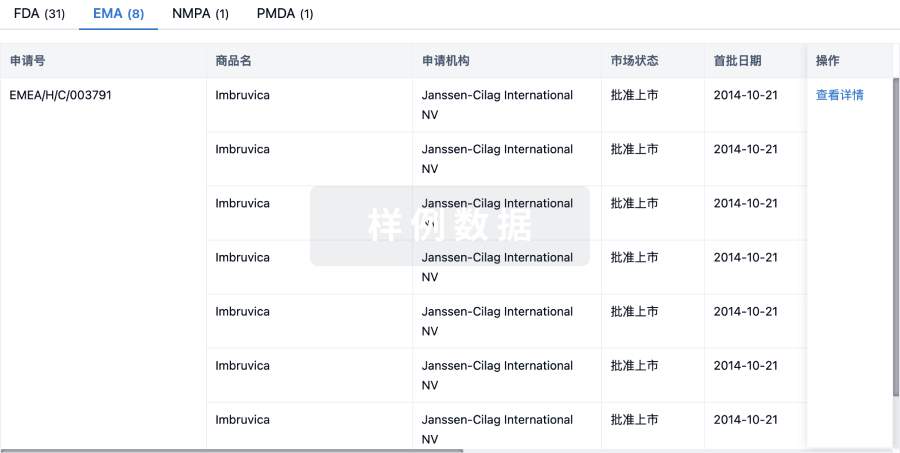
批准
利用最新的监管批准信息加速您的研究。
登录
或
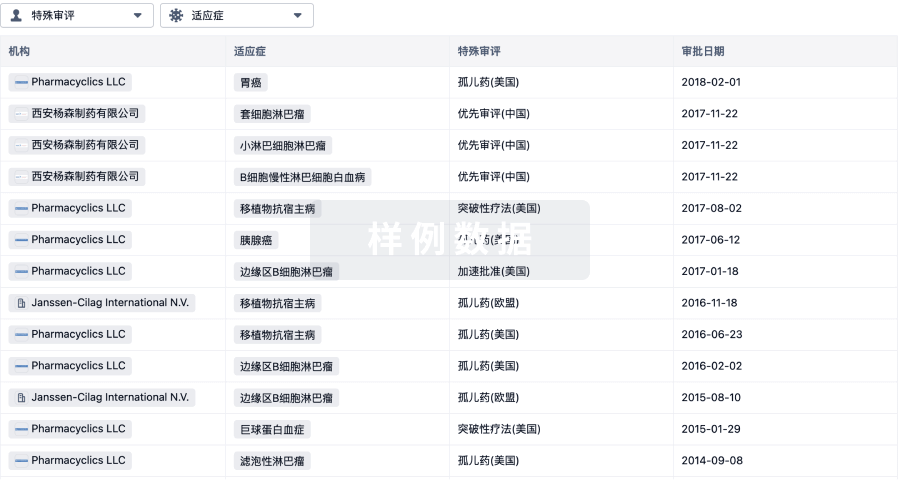
特殊审评
只需点击几下即可了解关键药物信息。
登录
或
提出任何生物医药研究问题
让每一步生物医药决策都精准制胜
基于十亿级生物数据与全球情报的精准 AI,赋能早期药物发现
立即开始免费试用!
智慧芽新药情报库是智慧芽专为生命科学人士构建的基于AI的创新药情报平台,助您全方位提升您的研发与决策效率。
立即接入生物医药数据包
智慧芽新药库数据也通过智慧芽开放平台,以MCP或API服务形式对外开放。立即使用我们的MCP服务定制您的LLM智能体。
生物序列数据库
生物药研发创新
免费使用
化学结构数据库
小分子化药研发创新
免费使用