预约演示
更新于:2026-02-25
Teriparatide(Yunnan Xianshi )
特立帕肽(云南先施)
更新于:2026-02-25
概要
基本信息
原研机构 |
非在研机构- |
权益机构- |
最高研发阶段批准上市 |
首次获批日期 澳大利亚 (2003-05-22), |
最高研发阶段(中国)临床申请批准 |
特殊审评- |

登录后查看时间轴
关联
1
项与 特立帕肽(云南先施) 相关的临床试验CTRI/2024/09/074479
Effect of Three Months Daily Teriparatide Injection in Osteoporotic Intertrochanteric Fractures: A Randomized Controlled Trial
开始日期2024-10-01 |
申办/合作机构- |
100 项与 特立帕肽(云南先施) 相关的临床结果
登录后查看更多信息
100 项与 特立帕肽(云南先施) 相关的转化医学
登录后查看更多信息
100 项与 特立帕肽(云南先施) 相关的专利(医药)
登录后查看更多信息
164
项与 特立帕肽(云南先施) 相关的文献(医药)2026-05-01·Deutsches Arzteblatt International
Diabetes Mellitus and Osteoporosis After Organ Transplantation: Frequency, Clinical Features, and Treatment.
Review
作者: Mathew, Annie ; Willuweit, Katharina ; Gallinat, Anja ; Führer, Dagmar ; Sarabhai, Theresia ; Rashidi-Alavijeh, Jassin
BACKGROUND:
Organ transplantation is an effective treatment option, often the last remaining one, for terminal organ failure. 22-32% of transplant recipients, however, develop metabolic-endocrine complications that markedly impair transplant function and overall survival. We provide an evidence-based narrative review of the clinical features, diagnostic evaluation, and treatment of post-transplantation diabetes mellitus (PTDM) and osteoporosis.
METHODS:
This review is based on pertinent publications that were retrieved by a selective search in PubMed, MEDLINE, and the Cochrane Library (01/1995-09/2025), including systematic reviews, clinical studies, randomized controlled trials, register data analyses, observational studies, and guidelines.
RESULTS:
Post-transplantation diabetes affects 9-40% of organ recipients in the first year after transplantation, corresponding to a two- to threefold risk elevation compared to the general population. Its incidence and course are organ-specific and characterized by further risk factors, including a 3.3-fold elevation of the risk of cardiovascular events. Studies have shown that, alongside insulin and metformin, newer antidiabetic agents such as GLP-1 receptor antagonists and SGLT2 inhibitors also improve glycemic control, reduce cardiovascular events, and, as far as can be determined, do not endanger the transplant. Transplantation-associated osteoporosis affects 23-67% of transplant recipients, causing the most marked bone loss in the first 6-18 months after transplantation. Approximately 20% of the affected patients sustain fractures. Bisphosphonate, denosumab, and teriparatide have been found to be treatment options. Treatment should be initiated as early as possible.
CONCLUSION:
Thorough screening and timely, specialist-coordinated interdisciplinary care in specialized transplantation centers are decisive for the recognition and risk-adapted, evidence-based treatment of PTDM and transplantation-associated osteoporosis.
2026-05-01·Journal of Orthopaedics
Teriparatide enhances vertebral bone quality: Quantitative analysis using the VBQ score in lumbar fusion patients
Article
作者: Sako, Noriaki ; Miyazaki, Masashi ; Abe, Tetsutaro ; Kaku, Nobuhiro
Background:
Vertebral bone quality is a critical factor influencing spinal stability and surgical planning. The vertebral bone quality (VBQ) score, derived from routine MRI, has emerged as a noninvasive imaging biomarker of bone quality; however, its clinical implications in the perioperative spinal fusion setting remain incompletely understood.
Methods:
This retrospective study included patients who underwent single-level lumbar fusion at L4-5. VBQ was measured at T12-L2 to avoid instrumentation-related artifacts. Associations between VBQ and radiographic parameters were evaluated using correlation and multivariable regression analyses. Inter- and intra-rater reliability were assessed using kappa statistics.
Results:
VBQ scores significantly decreased in the PTH group (ΔVBQ -0.31 ± 0.56), indicating improved bone quality, whereas no improvement was observed in controls (ΔVBQ 0.08 ± 0.61; p = 0.03). HU changes did not differ between groups. ΔVBQ correlated with postoperative BMD (r = -0.28, p = 0.04) and PTH duration (r = -0.39, p = 0.01). Regression analysis identified PTH use (β = -0.39, 95%CI: -0.72 to -0.06, p = 0.02) and treatment duration (β = -0.27, 95%CI: -0.52 to -0.02, p = 0.03) as independent predictors of VBQ improvement with R2 of 0.32.
Conclusion:
Perioperative teriparatide significantly enhances vertebral bone quality, demonstrated by reduced VBQ scores over 12 months. VBQ appears more sensitive than HU or BMD to anabolic therapy-induced qualitative changes and may serve as a practical imaging biomarker for optimizing perioperative bone management in osteoporotic spinal fusion patients.
2026-01-01·OSTEOPOROSIS INTERNATIONAL
A systematic review and meta-analysis of sequential treatment strategies for osteoporosis
Review
作者: Greenspan, Susan L ; Nayak, Smita
PURPOSE:
The purpose of this systematic review and meta-analysis was to evaluate the efficacy of sequential osteoporosis medication strategies on bone mineral density (BMD) and fracture outcomes.
METHODS:
Pubmed, Embase, and Cochrane Library databases were searched, and pre-specified criteria were applied to select relevant primary studies for inclusion in this systematic review and meta-analysis.
RESULTS:
Thirty-nine primary studies were included. Meta-analysis summary estimates for BMD change on the second medication in a treatment sequence showed robust BMD gain with bisphosphonates followed by 1 year of romosozumab at the lumbar spine (10.1%, 95% CI 9.9-10.4), femoral neck (3.1%, 95% CI 2.9-3.4), and total hip (3.1%, 95% CI 2.7-3.5). Moderate BMD gains were found with romosozumab followed by 1 year of denosumab, with summary estimates of 4.0% (95% CI 1.2-6.7) at the lumbar spine, 2.2% (95% CI 0.5-3.8) at the femoral neck, and 2.8% (95% CI 0.8-4.9) at the total hip; similar gains were found with teriparatide transitioned to 1 year of denosumab. Bisphosphonates followed by 1 year of denosumab resulted in significant BMD gain at the lumbar spine (3.5%, 95% CI 2.8-4.2), femoral neck (1.5%, 95% CI 1.2-1.9), and total hip (2.1%, 95% CI 1.8-2.3). However, bisphosphonates transitioned to 1 year of teriparatide resulted in significant BMD gain at the lumbar spine (5.1%, 95% CI 4.4-5.9) but not at the hip.
CONCLUSION:
These findings provide a rigorous summary of the evidence to guide sequential medication choice for patients with osteoporosis.
8
项与 特立帕肽(云南先施) 相关的新闻(医药)2026-02-22
·胡金艮
摘要
骨质疏松症是一种以骨量低下和骨微结构破坏为特征的全身性骨病,已成为全球性的重大公共卫生问题。补钙作为其基础预防和治疗的基石,其具体的有效性、潜在安全性以及如何实现优化补充策略,始终是学术界与临床实践关注的焦点。本文旨在系统梳理和综述补钙在骨质疏松症防治中的核心作用机制,比较不同钙剂类型的特性与适用性,探讨最佳补充剂量、时机及其与维生素D等关键营养素的协同效应。同时,分析补钙干预对不同高危人群(如绝经后女性和老年人)的疗效差异,评估长期应用可能带来的心血管事件及肾结石等安全性风险,并整合基于循证医学的最新临床指南推荐。通过系统整合从基础研究到临床应用的现有证据,本综述期望为骨质疏松症的精准化、个体化营养干预提供坚实的科学依据与切实的临床实践指导。关键词:骨质疏松症;钙补充;骨密度;维生素D;安全性;临床指南前言
骨质疏松症是一种全球性的公共卫生问题,其导致的骨折并发症给个人和社会带来沉重的负担[1][2]。骨折,尤其是髋部骨折,与高发病率、死亡率和医疗成本密切相关[3]。值得注意的是,骨质疏松症在男性中常被低估和诊断不足,尽管男性骨折后的死亡率和并发症风险可能更高[4][5]。此外,骨质疏松症是多种慢性疾病的常见并发症,例如创伤性脊髓损伤[6]、肝移植后[7]、强直性脊柱炎[8]以及糖皮质激素治疗[9]等,这进一步凸显了其防治的广泛重要性。
钙是骨骼矿物质的主要成分,充足的钙摄入对获得峰值骨量和维持骨健康至关重要[10]。峰值骨量的积累主要发生在儿童期和青春期,受遗传、种族、性别以及体力活动、钙和蛋白质摄入等环境因素共同影响[11]。研究表明,儿童期和青春期的钙摄入不足会损害骨量积累,导致骨密度和骨微结构下降,即使在没有继发性甲状旁腺功能亢进的情况下也是如此[12]。因此,优化生命早期阶段的钙摄入是预防晚年骨质疏松的关键策略[13]。然而,在资源有限或饮食模式特殊的人群中,如严格素食者[14]或贫困老年人[15],钙摄入不足的风险显著增加。
尽管补钙被广泛推荐,但其在骨质疏松症防治中的确切角色、最佳实践方案及潜在风险仍存在争议和不断演进的认识。传统的口服钙补充剂,如碳酸钙,虽然常用,但其疗效和安全性受到质疑。例如,在老年骨质疏松小鼠模型中,补充碳酸钙可能破坏肠道屏障和微生物生态系统,加剧全身炎症反应,从而削弱其治疗效果[16]。此外,补钙的心血管风险一直是关注的焦点。一项基于韩国人群的全国性队列研究发现,单独补充钙(不含维生素D)与复合心血管疾病风险增加相关,而钙与维生素D联合补充则未显示出这种危害[17]。最近的荟萃分析也提示,在健康的绝经后妇女中,钙补充剂可能使心血管疾病风险增加约15%[18]。这些发现强调了在补钙时需考虑维生素D的协同作用以及个体化的风险评估。
近年来,随着大规模临床试验和荟萃分析结果的公布,对补钙的获益与风险平衡有了更深入的评估。例如,一项系统评价发现,在接受抗骨吸收药物治疗的绝经后骨质疏松妇女中,维生素D补充与较低的胃肠道不良事件和死亡率相关,而钙补充则未显示与任何终点显著相关[19]。另一项针对老年人群的荟萃分析得出结论,钙和/或维生素D补充在降低骨折风险方面并未显示出优于安慰剂或未治疗的明确益处[20]。这些证据促使临床实践更加审慎,倾向于通过膳食来源优先满足钙需求,并对补充剂的使用采取个性化策略[21]。
同时,个性化补钙策略,包括考虑个体吸收差异、膳食基线摄入量及合并用药等,成为新的研究方向。研究显示,遗传因素如Cdx2多态性可能影响膳食钙摄入与峰值骨量之间的关系[22]。此外,肠道微生物群在钙吸收和骨代谢中扮演着关键角色,益生菌和益生元(如可溶性玉米纤维)可能通过调节肠道环境来增强钙的生物利用度[23][24]。新型的钙递送系统也在开发中,例如基于纳米技术的靶向递送平台,旨在提高钙的靶向性和吸收效率,同时降低所需剂量和潜在副作用[25][26]。这些进展预示着骨质疏松症的补钙干预正朝着更精准、更有效的方向发展。1. 钙在骨代谢中的生理学基础与骨质疏松病理机制1.1 钙稳态的调节与骨重塑循环
钙稳态的精密调节是维持骨骼健康的核心,这一过程主要依赖于甲状旁腺激素(PTH)、降钙素和活性维生素D(1,25-(OH)2D3)的协同作用。PTH是调节血钙浓度的关键激素,当血钙降低时,PTH分泌增加,通过促进肾脏对钙的重吸收、刺激骨吸收以及增强肾脏合成1,25-(OH)2D3来提升血钙水平[27]。活性维生素D则主要促进肠道对钙的吸收,是维持钙平衡不可或缺的环节[28]。降钙素则在血钙过高时发挥拮抗作用,通过抑制破骨细胞活性来降低血钙。这些激素共同构成了一个精细的反馈环路,确保血钙浓度在一个狭窄的生理范围内波动[29]。血钙水平的波动直接影响骨重塑循环。在骨重塑区室(BRC)附近,细胞外钙浓度局部升高,钙敏感受体(CaSR)能够感知这种变化,并调节骨形成细胞(成骨细胞)和骨吸收细胞(破骨细胞)的活性[30]。细胞内钙信号对于破骨细胞和成骨细胞的分化与功能至关重要,是连接全身钙稳态与局部骨重塑的关键分子[31]。例如,线粒体钙单向转运体(MCU)通过调节线粒体钙稳态和氧化应激,直接影响成骨细胞的分化能力,从而参与骨重塑的调控[32]。因此,钙稳态的激素调节与局部骨细胞对钙离子的响应,共同构成了骨重塑的生理基础。
在衰老和雌激素缺乏等病理状态下,上述钙稳态调节系统失衡,导致骨重塑负平衡,即骨吸收大于骨形成,这是骨质疏松症发生的关键机制。衰老伴随着肠道钙吸收效率的下降,这与维生素D受体敏感性降低以及肠上皮细胞钙转运蛋白功能减退有关[33]。活性维生素D水平的不足或作用减弱,直接影响了钙的肠源性供应。与此同时,PTH的生理节律可能发生改变,慢性PTH水平升高(如继发性甲状旁腺功能亢进)会持续刺激骨转换,偏向于骨吸收,导致骨量丢失和骨微结构破坏[27]。在雌激素缺乏状态下,如绝经后妇女,其对破骨细胞的抑制作用减弱,进一步加剧了骨吸收的亢进。这种钙稳态的长期失衡,使得骨重塑循环无法维持骨形成与骨吸收的平衡。研究表明,骨重塑是一个动态的、由破骨细胞启动、成骨细胞跟进的连续过程,其根本目的之一是维持钙磷稳态[34]。当钙吸收不足或激素调节紊乱时,机体为维持血钙稳定,会过度动员骨骼中的钙库,加速骨吸收,而骨形成却无法同步补偿,最终导致净骨量丢失[35]。这种负平衡状态是骨质疏松症进行性骨量减少和骨折风险增加的核心病理生理过程。
肠道钙吸收效率随年龄增长而下降是加剧钙负平衡和骨质疏松风险的重要因素,其机制涉及多个层面。首先,活性维生素D(1,25-(OH)2D3)的合成与效能降低是关键。随着年龄增长,肾脏1α-羟化酶活性可能下降,导致1,25-(OH)2D3生成减少[33]。更重要的是,肠道维生素D受体(VDR)的表达和敏感性可能随年龄增长而减退,这使得即使循环中1,25-(OH)2D3水平正常,其促进肠钙吸收的生物效应也会大打折扣[28]。其次,肠上皮细胞上负责钙主动转运的蛋白质功能发生改变。钙通过肠上皮细胞的跨细胞转运主要依赖于瞬时受体电位香草酸亚型6(TRPV6)通道、钙结合蛋白D9k(Calbindin-D9k)和质膜钙ATP酶(PMCA1b)。研究表明,衰老可能下调这些转运蛋白的表达或功能。例如,在动物模型中,衰老相关的VDR信号通路减弱会直接导致TRPV6和Calbindin-D9k表达下降[33]。此外,衰老还可能伴随胃酸分泌减少,影响食物中钙盐的溶解和离子化,从而减少被动扩散吸收的钙量。这些变化共同导致饮食钙的吸收率显著降低。为了代偿肠道吸收的不足,PTH分泌可能代偿性增加,以通过增强骨吸收来维持血钙,但这进一步加速了骨丢失[27]。因此,年龄相关的肠钙吸收障碍不仅是钙摄入不足的问题,更是触发和加剧骨重塑负平衡、导致骨质疏松的重要环节。1.2 钙缺乏在骨质疏松发生发展中的核心作用
长期膳食钙摄入不足是导致骨质疏松症发生发展的核心病理生理环节之一。当机体长期处于钙负平衡状态时,血清钙离子浓度下降,这会刺激甲状旁腺分泌更多的甲状旁腺激素(PTH),引发继发性甲状旁腺功能亢进[36]。PTH水平的持续升高会通过作用于成骨细胞和破骨细胞,显著增加骨转换率,即同时加速骨形成与骨吸收过程。然而,在钙持续缺乏的情况下,骨吸收的速率往往超过骨形成,导致净骨量丢失[37]。这一过程对骨骼的微结构造成双重损害:一方面,PTH促进破骨细胞对骨小梁的侵蚀,使原本致密的网状结构变得稀疏、断裂,骨小梁数量和厚度下降,分离度增加;另一方面,它也作用于皮质骨,导致皮质骨孔隙率增加、厚度变薄[38]。动物模型研究清晰地揭示了这一过程,例如,通过低钙饮食诱导的骨质疏松大鼠模型显示,其股骨骨钙含量和骨密度显著降低,同时伴随骨小梁体积减少、厚度变薄以及分离度增大的微观结构恶化[38]。这种由钙缺乏驱动的、经PTH介导的高转换型骨丢失,是骨质疏松症,特别是老年性骨质疏松的重要机制。
临床研究数据有力地支持了膳食钙摄入量与骨骼健康之间的密切关联。充足的钙摄入对于在青少年期和青年期达成理想的峰值骨量至关重要,而峰值骨量是决定个体一生中骨折风险的关键因素之一[36]。一项针对印度武装部队士兵的横断面研究发现,牛奶及奶制品的消费量与血清钙水平存在统计学上的显著正相关,提示充足的膳食钙摄入有助于维持正常的血钙水平,从而可能对骨骼健康产生积极影响[39]。相反,长期钙摄入不足的人群,其峰值骨量可能低于理想水平,为日后骨质疏松埋下隐患。随年龄增长,尤其是女性绝经后和男性老年期,骨量会生理性丢失。此时,充足的钙摄入可以减缓这一丢失速率。研究表明,补充钙剂(如碳酸钙)与维生素D联合使用,能够有效增加骨密度(BMD),而单独补充维生素D则效果不显著[40]。这凸显了钙在维持老年期骨量中的基础作用。对钙缺乏小鼠的研究也证实,长期钙缺乏会导致钙吸收率和骨钙含量显著降低,并伴有骨小梁结构的恶化;而通过膳食补充(如含有益生菌和益生元的合生元奶粉)可以显著改善表观钙吸收率,提高血清钙磷水平,并增加骨矿物质密度和骨小梁数量[41]。这些证据共同表明,无论是生命早期还是衰老过程中,充足的钙摄入对于优化骨量积累和减缓骨量丢失都具有不可替代的意义。
钙缺乏并非孤立地损害骨骼健康,它常与其他膳食风险因素产生交互作用,共同加剧骨质疏松的风险。其中,蛋白质摄入不足是一个重要的协同因素。蛋白质是骨基质有机成分(主要是胶原蛋白)合成的基础,其摄入不足会影响骨基质的形成和修复。在钙缺乏的背景下,骨转换加速,对蛋白质的需求增加,若此时蛋白质供应不足,新骨的形成质量将大打折扣,进一步削弱骨骼的机械强度[38]。研究显示,补充羊骨蛋白水解物与氯化钙,不仅能促进钙吸收,还能显著增强骨骼的机械强度,改善骨的微观结构,使骨小梁网络更连续、完整和粗壮[38]。这提示蛋白质与钙在维持骨质量方面具有协同作用。另一个关键交互因素是钠摄入过高。高钠饮食会增加尿钙的排泄,导致钙的负平衡加剧[36]。当膳食钙本身摄入不足时,高尿钙排泄无异于雪上加霜,使机体更难维持钙稳态,从而加速骨钙的动员和丢失。此外,严格的植物性饮食模式也值得关注。系统性综述表明,规划不当的纯素食或素食饮食,由于可能缺乏钙、维生素B12和铁,与贫血风险增加和骨矿物质密度降低相关[42]。对于炎症性肠病患者,由于疾病本身导致的吸收障碍以及对乳制品(传统钙源)的回避,钙和维生素D缺乏非常普遍,这显著增加了其罹患骨质疏松的风险[43]。这些因素相互交织,共同作用于钙磷代谢和骨重建的复杂网络,放大了钙缺乏对骨骼的负面影响。因此,在评估和干预骨质疏松风险时,必须综合考虑钙摄入与这些相关膳食因素的交互作用。2. 不同钙补充剂的药理学特性与生物利用度比较2.1 无机钙盐:碳酸钙与柠檬酸钙
在骨质疏松症的补钙干预策略中,无机钙盐,尤其是碳酸钙和柠檬酸钙,是临床应用最为广泛的两种补充剂,它们在理化性质、吸收机制和适用人群上存在显著差异。碳酸钙是含钙量最高的钙盐形式之一,其元素钙含量约为40%,这意味着较小的剂量即可提供较多的钙元素[44]。然而,碳酸钙的吸收高度依赖于胃酸环境,其需要在酸性条件下解离为可溶性的钙离子才能被有效吸收,因此通常建议随餐或餐后服用,以利用食物刺激产生的胃酸[45]。相比之下,柠檬酸钙的元素钙含量较低,约为21%,但其优势在于其溶解不依赖于胃酸,即使在胃酸缺乏或空腹状态下也能被良好吸收[46]。这使得柠檬酸钙成为胃酸分泌不足患者(如萎缩性胃炎患者、长期服用质子泵抑制剂者)以及需要空腹服药人群的更优选择。一项针对老年骨量减少患者的真实世界研究显示,柠檬酸钙补充剂具有良好的依从性和耐受性,为这类人群提供了安全有效的补钙方案[46]。
影响碳酸钙与柠檬酸钙生物利用度的具体因素是多方面的,其中胃酸状态是关键。对于胃酸缺乏的患者,如萎缩性胃炎或长期服用质子泵抑制剂者,服用碳酸钙的吸收率会显著下降,因为其无法在胃内被充分解离[45]。而柠檬酸钙的吸收则受此影响较小,其生物利用度相对稳定。此外,剂型也是影响患者依从性和吸收效率的重要因素。常见的剂型包括咀嚼片、泡腾片和液体剂等。咀嚼片和泡腾片可以提高服用的便利性和口感,可能改善老年患者的依从性。液体剂型中的钙通常已处于溶解状态,可能更易于吸收,尤其适用于吞咽困难或胃肠道功能较弱的患者[44]。然而,不同剂型对最终钙吸收效率的影响还需结合个体胃肠道环境和服用方式综合评估。值得注意的是,单纯补充钙剂的效果可能有限。研究显示,在老年性骨质疏松小鼠模型中,长期补充碳酸钙虽能轻微缓解年龄相关的骨量丢失,但同时也可能破坏肠道微生物生态、损害肠黏膜屏障功能并加剧全身炎症反应,导致其治疗老年性骨质疏松的疗效甚微[16]。这提示我们,在选择钙剂时,需综合考虑其吸收特性、潜在副作用以及患者的整体健康状况。
除了传统的补充剂形式,新型的钙递送系统也在不断探索中,旨在提高钙的靶向性和生物利用度。例如,有研究构建了以无定形碳酸钙为核心的纳米平台,该平台能够响应骨质疏松微环境,实现钙的靶向递送和原位补充,从而在极低钙剂量下(仅为商业碳酸钙片剂的十分之一)实现协同治疗,并显著减轻副作用[26]。另一项研究则开发了掺杂葡萄糖酸钙的抗氧化碳点,该复合物具有抗氧化和补钙双重功能,能有效提高钙的生物利用度,实现超低浓度钙补充治疗铁过载诱导的骨质疏松[47]。这些前沿研究为克服传统无机钙盐的局限性提供了新思路。在临床联合用药方面,碳酸钙常作为基础治疗。例如,在经皮椎体后凸成形术后的骨质疏松患者中,唑来膦酸联合碳酸钙和维生素D3治疗,能更有效地改善骨代谢指标和骨密度,提升患者生活质量[48]。另一项针对老年原发性骨质疏松患者的研究也证实,在碳酸钙D3和骨化三醇基础上加用唑来膦酸,能显著提高骨密度、改善骨代谢并提升临床疗效[49]。然而,长期钙补充也需关注潜在风险,如一项横断面研究指出,有复发性肾结石病史的骨质疏松患者在接受钙和维生素D补充期间,发生肾结石的风险独立增加,这可能与尿钙排泄增多有关[50]。因此,临床实践中需对患者进行个体化评估,权衡补钙的获益与风险。2.2 有机钙及其他新型钙剂
有机钙盐,如氨基酸螯合钙、乳酸钙和葡萄糖酸钙,因其在胃肠道中通常具有更好的溶解度而受到关注,这有助于提高钙离子的生物利用度。然而,这类钙剂的一个普遍局限性是其元素钙含量相对较低,这意味着要达到相同的钙补充量,可能需要摄入更大的剂量或体积。研究表明,肽-钙螯合物相较于氨基酸-钙螯合物、有机钙及无机钙,能激发更高的钙吸收率[51]。例如,从大豆酸奶中纯化鉴定出的一种新型肽DEDEQIPSHPPR(CBP),其钙结合活性可达36.64 ± 0.04 mg g-1,并且能够显著增加斑马鱼骨质疏松模型的骨量[51]。这提示,通过特定的肽或氨基酸进行螯合,可以改善钙在消化道的稳定性,从而可能为临床骨质疏松治疗提供有用的载体[51]。此外,发酵乳制品,如酸奶,不仅含有生物可利用的钙,还可能含有其他生物活性成分,如肽、寡糖和有机酸,这些成分共同作用可能进一步促进钙的吸收和骨骼健康[52]。因此,尽管有机钙盐的元素钙含量偏低,但其通过改善溶解度和利用特殊载体(如特定肽段)的策略,为高效补钙提供了新的思路。
从天然生物质中提取的钙源,如海藻和红藻,正成为传统钙补充剂的有益替代或补充。这些天然来源的钙通常并非以单一成分存在,而是可能伴随有其他对骨骼健康有益的矿物质,如镁和锶,从而产生潜在的协同效应。例如,蛋壳膜(ESM)作为一种天然生物材料,其有机化学成分与人类骨骼相似,主要包含I型胶原、硫酸软骨素、硫酸皮肤素、透明质酸和弹性蛋白[53]。研究表明,补充蛋壳膜可以改善人体细胞的钙摄取,并在骨质疏松患者中观察到疼痛减轻和成骨细胞活性增加[53]。这种效应可能部分归因于蛋壳膜中含有的多种成分共同促进了骨组织的矿化。此外,牛奶及其组分在改善钙吸收和支持骨骼健康方面的作用已被广泛讨论,其中含有的益生元如低聚半乳糖(GOS)不仅能改善矿物质平衡和骨骼特性,还能增加肠道中的双歧杆菌,产生益生元效应,这可能间接促进了包括钙在内的矿物质吸收[52]。这些发现表明,天然复合钙源的价值不仅在于提供钙元素,更在于其可能通过所含的其他矿物质和生物活性物质,从多个层面协同维护骨骼稳态。
新型制剂技术,如纳米钙和微球化钙,旨在通过提高钙的溶解度和实现靶向递送来克服传统钙剂的局限性。纳米技术可以显著增加钙剂的比表面积,从而改善其在水性环境中的溶解性和生物可及性。例如,研究开发了具有核壳结构的纳米颗粒药物系统,其核心是由甘草酸和钙离子合成的金属有机框架(MOF),外部包裹血小板膜囊泡,这种设计旨在实现向肾脏炎症部位的非特异性靶向,并在酸性炎症环境下缓慢降解释放药物,同时甘草酸还能缓解由长期使用糖皮质激素引起的骨质疏松[54]。在钙补充领域,有研究构建了由四环素修饰的单硬脂酸甘油酯包被的无定形碳酸钙(ACC)平台,作为口服骨靶向且对骨质疏松微环境(水/pH)响应的载体,用于原位钙补充[26]。这种系统能够在低钙剂量下实现协同的成骨促进疗法,并显著减轻副作用[26]。此外,基于两性离子羧酸配体的钙金属有机框架(MOF)被证明具有良好的水稳定性和生物相容性,在体外能调节成骨细胞分化,在体内能显著缓解卵巢切除小鼠的骨丢失,且对主要器官无毒性作用[55]。这些创新制剂技术通过提高钙的递送效率和靶向性,为开发更安全有效的骨质疏松治疗策略开辟了新途径。3. 补钙的剂量、时机与疗程优化策略3.1 基于年龄与生理状态的个性化剂量推荐
骨质疏松症的补钙干预策略强调个性化原则,其核心在于根据个体的年龄、生理状态及潜在病理状况制定精准的钙摄入推荐。国内外主要指南,如国际骨质疏松基金会(IOF)、美国国家骨质疏松基金会(NOF)及中华医学会的相关共识,均对不同人群的每日总钙摄入量(膳食与补充剂之和)提供了具体指导。一般而言,对于19-50岁的健康成人,推荐每日摄入约1000毫克钙以维持骨骼健康[56]。对于50-70岁的男性,推荐摄入量通常维持在1000毫克/日,而绝经后女性由于雌激素水平下降导致骨丢失加速,其钙需求增加,指南多推荐每日摄入1200毫克[57]。年龄超过70岁的老年人,无论性别,由于肠道钙吸收效率下降和肾脏钙保留能力减弱,每日钙摄入推荐值通常提高至1200毫克[58]。这些推荐值是基于维持骨骼稳态和最大化峰值骨量的流行病学证据制定的。
确定个体化补充剂量的关键在于准确评估膳食钙摄入。临床实践中常通过食物频率问卷(FFQ)等工具进行估算。例如,一项针对澳大利亚18-30岁年轻人的横断面调查显示,超过半数的女性和近半数的男性每日钙摄入量低于估计平均需要量(EAR),其主要原因是奶制品摄入不足[56]。因此,补充剂量应计算为推荐总摄入量减去通过膳食评估获得的实际摄入量之差,旨在填补“钙缺口”,而非盲目补充。过量补钙(尤其是通过补充剂形式)可能带来肾结石、血管钙化等风险,因此避免过量至关重要[59]。一项针对中国香港中老年人的随机对照试验表明,通过强化牛奶补充钙质(每日约600毫克)并结合运动,能有效改善骨转换标志物,而未报告高钙血症,这体现了在评估基础上进行补充的安全性[60]。
在特殊病理状态下,钙剂量的调整需格外谨慎。对于慢性肾脏病(CKD)患者,由于肾脏1α-羟化酶活性受损及高磷血症风险,钙的补充需综合考虑血清钙、磷及甲状旁腺激素(PTH)水平,通常建议使用非钙磷结合剂并限制钙摄入,以避免转移性钙化[61]。在甲状旁腺功能异常的情况下,如原发性甲状旁腺功能亢进症(PHPT),其特征是高钙血症和PTH不适当升高。此时,首要目标是控制高钙血症,通常需要限制膳食钙摄入,并积极处理原发病。一项关于妊娠期PHPT的病例报告指出,通过低钙饮食、充分水化等保守治疗,可以在严密监测下管理高钙血症,保障母婴安全[62]。相反,对于因甲状腺功能亢进或其他原因导致的继发性甲状旁腺功能亢进并伴有低钙血症的患者,则需要在治疗原发病的同时补充钙和活性维生素D[63]。此外,长期使用糖皮质激素的患者是骨质疏松的高危人群,指南建议在开始长期(≥3个月)糖皮质激素治疗时即评估骨折风险,并确保充足的钙(通常与维生素D联合)摄入作为基础措施,但具体剂量需结合抗骨质疏松药物使用及个体风险分层来确定[64]。总之,基于病理状态的钙剂量调整是一个动态、综合的过程,必须由临床医生在全面评估后个体化实施。3.2 服用时机、频率与吸收效率的关系
钙剂的服用时机、频率与剂量是影响其肠道吸收效率的关键因素,这些因素通过影响肠道转运蛋白的饱和动力学及内环境而发挥作用。从生理学原理上看,肠道对钙的吸收主要依赖于主动转运和被动扩散两种方式,其中主动转运过程涉及瞬时受体电位香草酸亚型6(TRPV6)通道、钙结合蛋白(Calbindin-D28k)以及基底膜侧的质膜钙泵(PMCA1b)等关键蛋白[65][66]。这些转运蛋白的容量有限,遵循饱和动力学原理。当单次摄入大剂量钙(如超过500毫克)时,肠道上皮细胞上的转运蛋白会迅速达到饱和状态,多余的钙离子无法被有效吸收,只能通过被动扩散或随粪便排出,导致净吸收率下降。相反,采用分次补充策略(如每次剂量≤500毫克),可以使每次摄入的钙量处于肠道主动转运系统的有效处理范围内,避免了转运蛋白的过早饱和,从而显著提高钙的净吸收率[67]。这种策略优化了钙离子与肠道转运蛋白的接触时间和效率,是提高钙补充剂生物利用度的基础生理学依据。
随餐服用是提高某些钙剂,尤其是碳酸钙吸收率的常用策略。餐后胃酸分泌增加,有助于将不溶性的碳酸钙转化为可溶的氯化钙,从而促进其在十二指肠和空肠上段的吸收[16]。此外,食物中的某些成分,如蛋白质和碳水化合物,可能通过暂时改变肠道局部pH值或提供能量而间接促进钙的主动转运过程。然而,随餐服用也需注意食物种类的选择。某些食物中富含的草酸(如菠菜、甜菜叶)和植酸(如全谷物、豆类)会与钙离子在肠道内结合,形成难溶性的草酸钙或植酸钙盐,从而显著降低钙的生物可利用度[68]。一项基于美国国家健康与营养调查(NHANES)的序列横断面分析显示,1999年至2023年间,美国成年人膳食中草酸和植酸摄入量呈上升趋势,而钙摄入量和牛奶消费量下降,这与钙吸收率降低及骨密度下降、骨质疏松症患病率增加显著相关[68]。因此,建议在服用钙补充剂时,应避免与富含草酸或植酸的食物同服,以最大化其吸收效益。
探讨睡前补钙的理论优势主要基于对钙代谢昼夜节律的调节。夜间,尤其是后半夜,血钙水平有生理性下降趋势,这会刺激甲状旁腺激素(PTH)分泌增加。PTH通过促进骨吸收来动员骨钙入血以维持血钙稳定,长期而言这一过程会加剧骨量丢失[66]。理论上,在睡前补充钙剂可以提高夜间血钙水平,从而抑制PTH的过度分泌,减少夜间骨吸收的激活。尽管这一假说在生理学上具有合理性,但直接的临床研究证据仍需进一步充实。现有研究更多聚焦于钙吸收的分子机制和长期补充效果。例如,研究表明雌激素通过ERβ上调十二指肠黏膜细胞PMCA1b的表达和功能,从而促进钙吸收并改善绝经后骨质疏松[66]。另一项研究则发现,脱氢表雄酮(DHEA)虽然能改善去卵巢大鼠的骨密度,但其作用并不涉及对肠道钙吸收的影响[69]。这些研究提示,不同干预措施对骨代谢的影响途径各异。虽然专门针对“睡前服用”时机的高质量临床对照试验有限,但基于钙代谢的昼夜节律理论,在晚间(如晚餐后或睡前)分次补充一天中的部分钙剂量,可能是一种合理的、旨在平抑夜间PTH波动的辅助策略,但其临床净收益仍需更多设计严谨的研究来验证。4. 钙与维生素D的协同作用及联合补充证据4.1 维生素D对钙吸收和骨代谢的关键作用机制
维生素D是钙稳态和骨代谢的关键调节因子,其经典功能在于促进肠道对钙和磷的吸收[70]。维生素D本身无生物活性,需在肝脏经25-羟化酶(CYP2R1)羟化为25-羟基维生素D [25(OH)D],再在肾脏经1α-羟化酶(CYP27B1)转化为具有激素活性的1,25-二羟基维生素D [1,25(OH)2D3,即骨化三醇][[71]](https://pubmed.ncbi.nlm.nih.gov/38365463/)。骨化三醇通过与肠道上皮细胞内的维生素D受体(VDR)结合,形成复合物并转运至细胞核,与维生素D反应元件(VDRE)结合,从而启动下游靶基因的转录[70]。其中,上调肠道钙结合蛋白(如Calbindin-D9k)的表达是其促进钙吸收的核心分子机制之一。当膳食钙摄入量较低时,钙吸收主要依赖于这种维生素D调节的、可饱和的主动转运途径[70]。动物模型研究为此提供了有力证据:敲除介导维生素D作用的基因(如VDR)或维生素D生成的关键酶(如CYP27B1),会消除基础钙吸收能力,并阻止小鼠适应低钙饮食[72]。这表明,1,25(OH)2D3/VDR信号通路在肠道钙的主动吸收过程中发挥着不可或缺的生理功能[72]。
维生素D缺乏会直接导致肠道钙吸收效率下降,即使膳食钙摄入充足,也可能引发一系列连锁的病理生理反应[73]。钙吸收不足导致血清离子钙水平降低,这会刺激甲状旁腺分泌更多的甲状旁腺激素(PTH),引发继发性甲状旁腺功能亢进[73]。PTH通过增强骨吸收(即破骨细胞活性)来动员骨骼中的钙进入血液,以维持血钙稳定,其代价是持续的骨丢失[74]。此外,PTH还能促进肾脏对钙的重吸收,并刺激肾脏合成更多的骨化三醇,形成代偿性反馈调节[74]。然而,在长期维生素D缺乏的状态下,这种代偿机制不足以纠正钙吸收的根本缺陷,最终导致骨矿化不足和骨量减少。这在儿童中表现为佝偻病,在成人中则表现为骨软化症或加剧骨质疏松风险[75]。研究证实,维生素D缺乏与骨质疏松症的发生发展密切相关[76]。在老年人中,维生素D的产生减少、膳食摄入不足、肾脏1α-羟化能力下降以及肠道VDR水平降低等多种因素共同导致钙吸收减少,成为老年性骨丢失的重要诱因[74]。
除了通过调节血钙间接影响骨骼,维生素D对骨骼也具有直接作用。它参与调节成骨细胞的分化、功能以及骨基质的矿化过程[77]。维生素D可以影响骨髓间充质干细胞向成骨细胞谱系的分化,并调节成骨细胞特异性基因的表达,从而影响骨形成[28]。例如,在鱼类模型中的研究发现,适宜的维生素D3与维生素K3组合能上调与骨形成、骨重塑和钙稳态相关基因在椎骨等组织中的表达[28]。同时,维生素D也参与调节骨转换的平衡。足够的维生素D状态对于维持正常的骨矿化至关重要,它能确保有充足的钙和磷被输送到骨骼矿化前沿[77]。维生素D缺乏时,即使成骨细胞产生了足够的骨胶原基质(类骨质),也会因矿物质沉积障碍而导致矿化延迟或缺陷,即骨软化[75]。因此,维持充足的维生素D水平,对于保障骨骼的正常矿化、维持骨密度和骨强度具有基础性作用[73]。4.2 联合补充 versus 单独补钙的临床疗效对比
大型随机对照试验(RCT)和荟萃分析的系统回顾表明,在维生素D充足的背景下,联合补充钙和维生素D对于提高骨密度(BMD)至关重要。一项针对健康绝经前女性的Cochrane系统评价发现,单独补充钙或维生素D,或者两者联合补充,均未能显著改善腰椎或髋部的骨密度[78]。这一结果强调了在评估补钙效果时,必须考虑维生素D的营养状况。相反,在维生素D水平充足或得到纠正的情况下,补钙才能发挥其应有的骨骼效应。例如,一项针对老年原发性骨质疏松症患者的研究显示,在联合使用钙剂(碳酸钙D3片)和活性维生素D(骨化三醇软胶囊)的基础上,加用唑来膦酸能显著提高腰椎(L1~L4节段)、股骨颈和髋部的骨密度[49]。这间接印证了充足的维生素D是钙剂发挥骨骼保护作用的基础。意大利的一个多学科工作组专家意见也明确指出,钙和维生素D的联合补充对于实现抗骨折效应和支持抗骨质疏松药物的疗效至关重要[79]。因此,临床证据强烈支持,只有在确保维生素D充足的前提下,补钙才能对提高腰椎和髋部骨密度产生显著影响。
关于骨折风险的降低,联合补充钙和维生素D显示出比单独补钙更明确的协同效应,尤其是在维生素D严重缺乏的脆弱老年人群中。大量试验证据表明,在社区居住的成年人中,单独补充钙剂并不能预防骨折[80]。同样,一篇综述指出,补充钙、维生素D或其组合并不能预防社区居住成年人的骨折,但一项针对维生素D缺乏的疗养院居民的大型研究确实证明了联合补充具有骨折预防作用[81]。这清晰地指出了目标人群维生素D基线水平的关键性:在维生素D严重缺乏(如25-羟基维生素D水平<25 nmol/L)的老年人群中,单独补钙几乎没有任何抗骨折效果。联合补充的协同机制在于,维生素D促进肠道对钙的吸收并抑制甲状旁腺激素(PTH),从而减少骨吸收。专家意见强调,钙和维生素D的联合补充对于达到能够抑制PTH和骨吸收的充足水平是必要的[79]。这种协同作用对于降低椎体和非椎体骨折风险均有益处。例如,在糖皮质激素诱导的骨质疏松症(GIOP)的治疗中,虽然研究重点在药物对比,但常规基础治疗均包含钙和维生素D的补充,以优化骨骼环境[82]。因此,临床决策应优先考虑对高风险、尤其是维生素D缺乏的老年个体进行联合补充,而非普遍推广单独补钙。
为了优化钙的利用和骨骼获益,探讨并确定最佳的维生素D补充剂量至关重要。国际上的共识倾向于使用营养性维生素D(胆钙化醇或麦角钙化醇)进行补充。证据表明,维生素D缺乏通常可通过每日补充400-800 IU的钙化醇来纠正[81]。对于更严重的缺乏或特定人群,可能需要更高的剂量。例如,在一项针对接受辅助化疗的早期乳腺癌患者的II期试验中,采用每3周10万IU(相当于每日约4760 IU)的高剂量25-羟基维生素D口服方案,成功使近半数患者在化疗期间实现了维生素D水平的正常化,且安全性良好[83]。然而,剂量也需谨慎,因为剂量超过4000 IU/天的维生素D补充与更多的跌倒和骨折风险相关[81]。因此,每日800-2000 IU的剂量范围被广泛认为是优化钙稳态和骨骼健康的安全有效区间。在特殊人群如慢性肾病(CKD)患者中,为确保地舒单抗治疗的安全性,需要维持高剂量的维生素D(如1000 IU/天)和钙剂补充,以预防低钙血症[84]。值得注意的是,应区分营养性维生素D与活性维生素D类似物(如骨化三醇)。后者因其增加高钙血症、血管钙化等风险,在国际上并不被视为骨质疏松症的标准疗法,其使用应严格限于特定的内分泌适应症[85]。综上所述,对于大多数骨质疏松症患者,每日补充800-2000 IU的营养性维生素D,结合适量的钙摄入,是平衡疗效与安全性的合理策略。5. 补钙对不同骨质疏松症人群的疗效差异5.1 绝经后女性
绝经后女性是骨质疏松症的高危人群,其骨量丢失呈现阶段性特征。在绝经早期,由于雌激素水平急剧下降,骨转换加速,导致骨吸收超过骨形成,出现快速骨丢失。在这一阶段,补钙干预对于减缓骨量丢失具有重要作用。一项针对约旦绝经后女性的全国性横断面研究显示,钙和维生素D补充剂的摄入与骨质疏松症患病率显著相关[86]。这表明,在骨丢失的快速期,确保充足的钙摄入是基础性干预措施。然而,单纯补钙的效果可能有限,尤其是在骨转换率极高的状态下。因此,补钙常需与其他抗骨吸收疗法联用以增强效果。例如,选择性雌激素受体调节剂(SERMs)作为非激素类抗骨吸收药物,与钙剂联用可协同作用。有文献综述指出,对于绝经后骨质疏松女性,最有效的治疗方案应是个体化的,需确保SERMs和补钙等治疗的益处大于潜在风险,特别是心血管事件风险[87]。这提示在绝经早期,将补钙作为SERMs或激素替代疗法(HRT)的辅助手段,有助于在控制骨丢失的同时,综合评估和管理患者的整体健康风险。
随着年龄增长,高龄绝经后女性(通常指年龄>75岁)面临更为复杂的生理挑战,其肠钙吸收能力因年龄增长和维生素D合成减少而进一步下降,同时肾脏保钙功能减退,导致钙负平衡风险显著增加。因此,在这一人群中,补钙联合充足维生素D的支持显得尤为重要。一项系统综述专门探讨了在接受抗骨吸收药物治疗的绝经后骨质疏松女性中,补充维生素D和钙剂的效果。该综述发现,维生素D补充与较低的胃肠道不良事件发生率和死亡率相关,而钙补充则未显示出与任何主要终点(如骨密度、骨折率)的显著关联[19]。这一结果可能部分反映了高龄女性肠道钙吸收效率低下,单纯补钙难以有效提升血钙水平并促进骨矿化,凸显了维生素D在促进肠钙吸收中的关键作用。此外,针对肾功能正常但使用狄诺塞麦(一种强效抗骨吸收药物)的绝经后骨质疏松患者的研究发现,尽管所有患者均接受了钙和维生素D补充,仍有高达23%的患者出现低钙血症,其中严重低钙血症者占30.4%[88]。这一数据强烈提示,对于高龄女性,尤其是接受强效抗骨吸收治疗者,不仅需要补充钙和维生素D,还需密切监测血钙水平,并可能需要更高剂量或更生物可利用的钙剂形式,以确保充足的钙供应,预防因治疗引发的严重低钙血症及其并发症,如急性心力衰竭[89]。
绝经后女性对补钙干预的反应存在显著的个体差异,这种差异主要与基线骨密度状态和膳食钙摄入水平有关。研究数据表明,不同骨密度状态的女性对干预措施的反应不同。例如,一项大型队列研究显示,在1669名接受DXA筛查的绝经后女性中,45.0%患有骨质疏松症,43.5%为骨量减少。尽管患病率高,但超过一半的骨质疏松女性未接受任何积极的药物治疗,而补充钙/维生素D的比例为20.6%[90]。这反映了治疗缺口,也暗示了不同基线骨密度人群的干预需求未被均等满足。对于基线骨密度较低(骨质疏松)的女性,补钙联合抗骨吸收药物的益处可能更为明显。另一方面,膳食钙摄入水平是决定补钙干预必要性和反应性的关键因素。一项系统回顾和荟萃分析发现,强化了钙和维生素D的乳制品对绝经后女性的总骨密度和腰椎骨密度有显著有利影响,而单纯的钙和维生素D补充剂则未显示出对总骨密度和腰椎骨密度的显著影响[91]。这提示,对于膳食钙摄入不足的女性,通过强化食品或补充剂增加钙摄入可能带来骨密度获益;而对于膳食钙摄入已充足的女性,额外补充的边际效益可能较小。此外,一项针对中国绝经后女性的横断面研究进一步揭示了社会经济因素与骨质疏松风险的相关性,教育水平低、个人年收入低的女性患病率更高[92]。这些因素往往与营养知识、膳食质量和补充剂使用率相关,间接影响了不同膳食钙摄入水平女性对补钙干预的可及性和反应性。因此,临床实践中,评估绝经后女性的基线骨密度和膳食钙摄入情况,对于制定个体化、精准的补钙策略至关重要。5.2 老年男性
老年男性骨质疏松症具有其独特的病理生理特点,其中与年龄相关的性腺功能减退,即迟发性性腺功能减退症,是影响钙代谢和骨稳态的关键因素。随着年龄增长,男性血清睾酮水平逐渐下降,这不仅直接削弱了成骨细胞的活性,还间接通过影响维生素D代谢和肠道钙吸收,加剧了骨量丢失[93]。一项针对老年男性2型糖尿病合并骨质疏松患者的研究发现,低睾酮水平是重要的可控危险因素之一,强调了性腺功能在维持骨健康中的核心作用[93]。这种激素水平的改变导致骨转换失衡,骨吸收超过骨形成,使得老年男性成为骨质疏松及脆性骨折的高危人群。此外,老年男性骨质疏松的临床表现常较隐匿,骨折发生前往往缺乏典型症状,导致诊断和治疗延迟。流行病学数据显示,尽管老年男性骨质疏松的患病率低于同年龄段女性,但其导致的骨折,尤其是髋部骨折,伴随的死亡率和致残率却可能更高[94]。因此,深入理解迟发性性腺功能减退对钙代谢的负面影响,对于制定针对性的预防和干预策略至关重要。
针对老年男性的临床试验为补钙联合维生素D的干预策略提供了重要证据。尽管单纯补钙和维生素D在健康老年男性中对骨骼的益处可能有限,但在特定人群和联合其他干预措施时显示出积极效果[95]。例如,一项随机对照试验评估了在低睾酮水平且存在行动问题的老年男性中,联合使用睾酮、钙、维生素D、蛋白质补充剂及渐进性抗阻训练的效果,结果显示该联合方案显著改善了肌肉力量和身体功能,并提高了生活质量[96]。这提示补钙和维生素D作为基础营养支持,在与抗阻训练和激素替代等综合方案结合时,能更有效地改善骨骼肌肉健康。然而,证据强度需要辩证看待。大规模观察性研究指出,在老年男性中,较高的体力活动水平,特别是休闲性体育活动,与较低的骨质疏松发生风险独立相关,这种保护作用独立于遗传易感性[97]。这表明,生活方式干预,包括确保充足的钙和维生素D摄入以支持运动带来的骨骼负荷,是改善骨密度和降低非椎体骨折风险的综合策略的重要组成部分。尽管有证据支持其基础地位,但补钙和维生素D的干预效果可能因个体营养状况、基线水平及是否联合其他疗法而异。
在老年男性中实施补钙干预时,必须审慎考虑前列腺健康问题,特别是与抗雄激素药物治疗之间的潜在关联。许多老年男性因前列腺增生或前列腺癌需要接受抗雄激素治疗,这类药物会进一步降低体内雄激素水平,从而可能加剧骨量丢失和骨质疏松风险[93]。在这种情况下,补充钙剂和维生素D成为支持骨骼健康、预防治疗相关骨丢失的重要辅助手段。然而,临床决策需权衡利弊。一方面,确保足够的钙和维生素D营养状态有助于维持骨矿物质密度;另一方面,对于存在或高风险前列腺癌的患者,尤其是那些已发生骨转移者,不恰当的钙补充理论上可能带来风险,尽管此关联在骨质疏松预防的常规剂量下通常不是主要顾虑。更值得关注的是,老年男性常合并多种慢性疾病,其营养状况复杂。研究显示,老年男性2型糖尿病患者的骨质疏松风险与营养状况密切相关,较低的老年营养风险指数评分与较低的骨密度显著相关[98]。因此,在考虑补钙前,应对患者进行全面的营养评估,并监测血清钙水平,以避免高钙血症等潜在风险。总之,针对服用抗雄激素药物的老年男性,补钙应个体化,在评估前列腺疾病状态、总体营养及肾功能的基础上,作为综合骨骼健康管理方案的一部分来实施。6. 长期补钙的安全性争议与风险评估6.1 心血管事件风险:争议与最新共识
关于钙补充剂与心血管事件风险关联的争议,主要源于一些关键研究的发现。例如,对妇女健康倡议(WHI)钙剂研究的事后分析以及Bolland等人的荟萃分析提示,补充钙剂可能与心肌梗死风险的轻微增加有关[80]。这些分析指出,钙补充剂可能使心肌梗死的风险增加10-20%,而膳食钙摄入似乎并非心脏风险因素[80]。这种风险的潜在机制可能与摄入钙剂后引起的急性血钙浓度升高有关,这种升高可持续约8小时,并伴随血液凝固性和钙化倾向的急性增加,同时血压也可能比安慰剂组高出5 mmHg以上[80]。孟德尔随机化研究也表明,循环钙水平是心血管疾病的重要风险因素,因此补充剂引起的急性血钙升高效应可能促进了心血管风险的增加[80]。此外,有研究指出,绝经后骨质疏松女性心血管疾病风险升高与使用钙补充剂有关[87]。这些发现引发了学界对钙补充剂安全性的广泛关注和重新评估。
然而,反对观点和后续研究对上述风险提出了质疑,并提供了更细致的解读。许多引发争议的研究并未明确区分膳食钙与补充钙的影响[80]。有观点认为,补充钙可能仅在特定情况下存在风险,例如单独使用(未与维生素D联用)或采用大剂量冲击疗法时[99]。一项关于钙、镁和锶心血管安全性的综述指出,尽管钙补充剂与胃肠道副作用和肾结石风险小幅增加有关,但其与心血管结局的所谓关联仍缺乏说服力;在正常生理状态下,尚未阐明其关联机制,且剂量反应和时间关系等其他考虑因素也不支持存在因果关系[99]。该综述总结认为,钙补充剂(用于骨骼健康)最适宜与维生素D补充剂联合使用,并针对这些营养素缺乏的人群,或与抗骨质疏松药物联用[99]。此外,一项针对终末期肾病透析患者的研究发现,使用钙基磷酸盐结合剂的患者,其骨质疏松性骨折风险降低,且与未使用者相比,并未增加主要不良心血管事件等风险[100]。这些证据表明,风险可能具有情境依赖性,而非普遍存在。
基于现有证据,当前主流学术组织采取了审慎而平衡的立场。美国国家骨质疏松基金会和欧洲骨质疏松和骨关节炎学会等机构普遍认为,在推荐剂量下,补钙对骨骼的益处大于其潜在的心血管风险[99]。这种立场强调了个体化治疗的重要性,即确保某些治疗(如选择性雌激素受体调节剂和钙补充)的益处大于潜在的健康风险,特别是绝经后女性的心血管事件风险[87]。对于骨质疏松的预防和治疗,尤其是在绝经后女性中,需要精心设计以预防和降低心血管事件风险[87]。尽管钙补充剂在预防社区居住成人骨折方面的效果受到质疑[80],且证据平衡提示其在骨质疏松防治中作用有限[80],但针对特定人群(如营养素缺乏者)或在特定方案(如联合维生素D或抗骨吸收药物)下,钙的补充仍被视为整体管理策略的一部分。因此,临床决策应基于全面的风险评估,权衡已知的骨骼获益与可能的心血管风险,并优先推荐通过膳食途径获取充足的钙。6.2 肾结石与高钙血症风险
补钙干预与肾结石风险之间的关系是复杂且双向的。一方面,补充钙剂会增加尿钙的排泄,这是形成含钙肾结石(主要是草酸钙结石)的重要风险因素[101]。尿钙排泄的增加直接提升了尿液中草酸钙过饱和的风险,从而可能促进结石的形成。然而,值得注意的是,当钙剂随餐服用时,其与食物中的草酸盐在肠道内结合,形成不溶性的草酸钙复合物并随粪便排出,这反而减少了肠道对草酸的吸收,从而降低了尿液中草酸的浓度[101]。这种机制意味着,对于预防草酸钙结石而言,随餐补充钙剂可能通过降低尿草酸而带来益处,部分抵消了因尿钙升高带来的风险。因此,补钙对肾结石风险的净效应高度依赖于补充的时机和个体的整体代谢状况。
对于存在特定风险因素的易感人群,如既往有肾结石病史或患有特发性高尿钙症的患者,在进行补钙时需要格外谨慎并实施严密监测。对这些个体而言,定期评估24小时尿钙排泄量是至关重要的监测指标,有助于判断钙补充是否导致了病理性高尿钙[101]。除了监测,积极的预防措施必不可少。保证充足的液体摄入以增加尿量、稀释尿液中成石物质的浓度,是预防所有类型肾结石的基石。同时,应避免使用高剂量的钙补充剂,因为剂量越高,导致高尿钙的风险也相应增加[101]。对于这些高危人群,补钙决策应基于对骨健康益处与结石风险增加的个体化权衡,并在医生指导下进行。
高钙血症作为补钙的一种严重但相对罕见的不良反应,其发生通常并非单纯由膳食或常规剂量钙补充引起。临床上显著的高钙血症多见于钙剂过量补充、维生素D中毒或合并存在如原发性甲状旁腺功能亢进(PHPT)或结节病等基础疾病的情况[102][103]。在原发性甲状旁腺功能亢进中,甲状旁腺激素(PTH)的不适当分泌导致骨钙动员和肾钙重吸收增加,是引起高钙血症的常见内分泌原因,其严重程度可以很高[103]。结节病患者则由于肉芽肿内巨噬细胞中1α-羟化酶活性增加,产生过多的活性维生素D(骨化三醇),进而促进肠道钙吸收,也可导致高钙血症和高尿钙[102]。高钙血症的早期症状可能非特异,但常包括胃肠道表现如恶心、便秘、厌食,以及因肾脏浓缩功能受损导致的烦渴、多尿等[104][101]。严重的高钙血症可影响神经精神系统,甚至引发如精神病性症状等严重表现,即使血钙水平仅为轻度升高时也可能发生[104]。因此,识别这些早期症状对于及时诊断和处理潜在的高钙血症至关重要。7. 补钙与其他抗骨质疏松药物的联合应用7.1 与骨吸收抑制剂(双膦酸盐、地舒单抗)的联用
钙和维生素D作为所有抗骨吸收药物基础治疗的必然性,源于这些药物在强力抑制破骨细胞活性的同时,必须为骨矿化提供充足的原料和吸收保障。双膦酸盐和地舒单抗等骨吸收抑制剂通过不同的机制有效抑制破骨细胞介导的骨吸收,例如双膦酸盐通过整合骨骼中的钙离子靶向骨组织并抑制破骨细胞功能[105],而地舒单抗则是一种靶向核因子κB受体活化因子配体(RANKL)的单克隆抗体[106]。然而,强力抑制骨吸收后,新骨的形成和矿化过程需要持续供应钙和磷。钙是骨骼矿物质的主要成分,而维生素D对于肠道钙的吸收至关重要,缺乏维生素D会导致继发性甲状旁腺功能亢进,增加骨转换,从而削弱抗骨吸收药物的疗效[107]。因此,充足的钙和维生素D是确保抗骨吸收药物发挥最佳疗效、支持骨矿化、并预防因药物引起的低钙血症等不良反应的基石。临床指南普遍建议,在使用双膦酸盐或地舒单抗治疗骨质疏松症时,应同时补充钙剂和维生素D[108]。一项针对养老院居民的横断面研究显示,在双膦酸盐使用者中,仅约三分之一同时服用了维生素D和钙的联合补充剂,这突显了临床实践中对这一基础治疗原则的遵循仍需加强[109]。
临床研究数据明确显示,联用基础钙和维生素D补充剂能显著增强双膦酸盐或地舒单抗提升骨密度和降低骨折的疗效。一项关于糖尿病骨质疏松患者的荟萃分析表明,双膦酸盐治疗能显著提高患者的腰椎、股骨颈等部位的骨密度,并改善骨代谢标志物[110]。然而,这些疗效的取得通常以充足的钙和维生素D背景治疗为前提。对于地舒单抗,尽管有回顾性研究表明,在治疗两年期间,无论是否补充钙和维生素D,患者的骨密度均有相似程度的改善[111],但这并不能否定在治疗起始和整个过程中确保充足钙营养状态的重要性,尤其是考虑到地舒单抗有诱发低钙血症的风险。事实上,多项研究强调,对于肾功能不全等高风险患者,在使用地舒单抗时必须密切监测血钙水平并给予充足的钙和维生素D补充,以预防严重低钙血症的发生[89][112]。一项针对原发性骨质疏松患者的研究发现,尽管在补充钙和维生素D的基础上使用地舒单抗,治疗初期(3个月内)仍可能出现血钙下降和甲状旁腺激素水平升高,但随着治疗延长,这些指标可恢复至基线水平,这进一步说明了持续监测和补充的必要性[113]。此外,一项网络荟萃分析比较了不同骨保护干预措施对接受芳香化酶抑制剂治疗的乳腺癌患者骨密度的效果,发现所有活性干预措施(包括双膦酸盐和地舒单抗)在改善骨密度方面均显著优于单纯的钙加维生素D补充,这间接证实了在抗骨吸收治疗基础上,钙和维生素D作为辅助而非替代的关键角色[114]。
特别需要指出的是,服用口服双膦酸盐时,钙剂需在不同时间服用(通常间隔至少30-60分钟),以避免在胃肠道中形成不溶性复合物而影响药物吸收。双膦酸盐分子结构中的P-C-P基团使其对钙离子具有高亲和力,能够与骨骼中的羟基磷灰石结合[105]。若与钙剂同时服用,双膦酸盐会在肠道内与钙离子结合,形成难以吸收的螯合物,从而大幅降低其生物利用度,减弱其抑制骨吸收的疗效。因此,临床用药指导明确建议,口服双膦酸盐(如阿仑膦酸钠、利塞膦酸钠等)应在清晨空腹以足量白水送服,并保持上身直立至少30分钟,在此期间避免进食、饮用其他饮料或服用其他药物,包括钙剂和抗酸药。钙剂和维生素D的补充应安排在全天其他时间,例如午餐或晚餐时。这一服药间隔对于确保双膦酸盐的有效吸收至关重要。相比之下,静脉注射的双膦酸盐(如唑来膦酸)和皮下注射的地舒单抗则不存在口服吸收的问题,但钙剂的补充时间安排仍应遵循常规建议,以维持稳定的血钙水平。不遵守服药间隔是导致口服双膦酸盐治疗失败或疗效不佳的常见原因之一。一项旨在通过针对性指导提高骨质疏松治疗依从性的研究发现,在教练指导下,口服双膦酸盐的12个月依从率可达77.3%[115],这提示患者教育在确保正确服药、包括错开钙剂服用时间方面的重要性。总之,钙和维生素D的补充是抗骨吸收药物治疗不可或缺的组成部分,但具体的给药方案需根据药物剂型和患者具体情况个体化制定,以最大化疗效并最小化风险。7.2 与骨形成促进剂(特立帕肽、罗莫索单抗)的联用详细说明特立帕肽(PTH类似物)通过促进骨形成和增加肠道钙吸收来发挥作用,但仍强调保证充足钙摄入对优化其合成代谢效果的重要性。
特立帕肽作为甲状旁腺激素(PTH)的N端片段,是一种重要的骨合成代谢药物,其作用机制复杂且多效。它通过间歇性给药,能够直接刺激成骨细胞和骨细胞,从而显著促进骨形成[116]。这种刺激作用不仅体现在增加骨量上,还通过激活RANK/RANKL系统,在促进骨形成的同时也适度激活骨吸收,最终实现骨重建的净正平衡[116]。除了对骨骼的直接作用,特立帕肽在调节钙磷稳态中也扮演关键角色。它作用于肾脏,促进钙的重吸收,并刺激肾脏合成活性维生素D(1,25-二羟维生素D),后者能显著增强肠道对钙的吸收[116]。因此,特立帕肽通过“开源”——增加肠道钙吸收,与“节流”——减少肾脏钙排泄,共同提升血清钙水平,为骨骼的矿化提供充足的原料基础。然而,正是这种强大的骨形成刺激作用,使得机体对钙的需求急剧增加。如果钙和维生素D的摄入不足,新形成的骨基质将无法得到充分的矿化,从而削弱特立帕肽的合成代谢效果,甚至可能导致治疗失败[117]。临床实践和指南均强调,在启动特立帕肽治疗前及治疗期间,必须确保患者有充足的钙和维生素D摄入,这被认为是优化其疗效、实现骨折风险降低这一根本治疗目标的基石[117][118]。对于接受特立帕肽治疗的患者,每日钙摄入量通常建议维持在1000至1200毫克,维生素D摄入量建议为600至800国际单位,以支持其强大的成骨活性[118]。此外,研究也提示,蛋白质营养支持可能通过增强钙吸收等机制,对改善骨健康产生协同作用[119]。因此,将特立帕肽与充足的钙、维生素D及合理的营养支持相结合,是最大化其抗骨质疏松疗效、实现骨质量实质性改善的关键临床策略。分析罗莫索单抗(硬骨抑素单抗)的作用机制下,补充钙和维生素D对于预防其引起的低钙血症(尤其是治疗初期)的至关重要性,并引用相关黑框警告和临床管理建议。
罗莫索单抗是一种针对硬骨抑素(sclerostin)的单克隆抗体,通过双重作用机制发挥强效抗骨质疏松效果:一方面抑制硬骨抑素以解除其对Wnt/β-catenin信号通路的抑制,从而强力促进骨形成;另一方面,它也能适度降低骨吸收[120][121]。这种独特的“先促形成、后抑吸收”的序贯作用,使其在治疗初期能快速、显著地增加骨密度[122]。然而,正是这种强大的、快速的骨形成刺激,导致大量钙离子从血液循环中被迅速整合到新形成的骨基质中,从而在治疗初期(特别是前几剂后)显著增加了发生低钙血症的风险[121]。低钙血症可能引发感觉异常、肌肉痉挛、抽搐甚至更严重的不良事件。鉴于这一风险,美国食品药品监督管理局(FDA)对罗莫索单抗发出了黑框警告,明确指出在开始治疗前必须纠正已存在的低钙血症,并在整个治疗期间确保充足的钙和维生素D摄入,以预防治疗引起的低钙血症[121]。这一警告强调了钙和维生素D补充在罗莫索单抗治疗管理中的核心地位,不是辅助而是必需。临床管理建议通常要求,在启动罗莫索单抗治疗前,患者的25-羟维生素D水平应充足(通常建议>30 nmol/L),并应开始补充钙剂(每日1000-1200 mg)和维生素D(每日至少600-800 IU)[118][121]。一项前瞻性研究也观察到,在罗莫索单抗治疗期间联合使用活性维生素D类似物,相较于不联合使用组,能显著减小血清校正钙水平的下降幅度,这进一步证实了补充维生素D对于稳定血钙、支持治疗安全性的积极作用[123]。因此,对于所有考虑使用罗莫索单抗的患者,临床医生必须严格评估其基线钙和维生素D状态,并进行充分的补充教育。将罗莫索单抗与足量的钙和维生素D联用,是确保这一强效骨形成促进剂能够安全、有效地发挥其降低骨折风险作用的前提,任何对基础补充的忽视都可能使患者暴露于不必要的风险之中。8. 膳食钙源与补充剂的比较及综合摄入策略8.1 高生物利用度膳食钙源评估
膳食钙的生物利用度是决定其营养效能的关键因素,不同食物来源的钙含量和吸收率存在显著差异。乳制品,如牛奶、酸奶和奶酪,因其高钙含量和良好的吸收率(约30%)而被广泛认为是优质的钙源[124]。研究表明,牛奶来源的钙具有更高的生物利用度和吸收率,优于其他合成或天然矿物来源的钙[124]。然而,某些蔬菜也提供了生物可利用的钙。例如,仙人掌(Opuntia ficus-indica)的嫩茎可溶性纤维中的钙具有良好的生物利用度,在动物模型中显示出改善骨骼特性的潜力[125]。同样,从仙人掌嫩茎中提取的可溶性纤维也被证明是幼年大鼠体内生物可利用钙的宝贵来源,有助于改善骨骼的物理、密度、生物力学和微结构特性[126]。相比之下,菠菜等富含草酸的蔬菜,其钙的吸收率则因草酸与钙结合形成不溶性盐而显著降低[68]。一项针对美国成年人的系列横断面分析显示,膳食中草酸盐摄入量的增加与钙吸收减少和不利的骨骼健康结果相关[68]。此外,植物性食物中的植酸也是影响钙生物利用度的重要因素。例如,在Terminalia ferdinandiana植物组织中,植酸含量与钙含量呈显著正相关,但其对钙生物利用度的具体影响尚需进一步研究[127]。在莫桑比克儿童中的研究发现,膳食中植酸与钙的摩尔比普遍超过推荐值,表明植酸可能抑制钙的吸收[128]。因此,评估膳食钙源时,必须综合考虑食物的钙含量、吸收率以及其中存在的抑制因子(如草酸和植酸)的综合影响。
强化钙食品在增加特定人群膳食钙摄入方面扮演着重要角色。对于乳制品摄入不足或存在饮食限制的人群,钙强化果汁、豆奶和谷物等产品是有效的补充途径。研究表明,强化食品中的钙盐形式会影响其生物利用度。例如,在动物模型中,与矿物钙盐相比,以乳制品基质形式提供的钙在对抗肉类消费引起的结肠有害副作用方面表现出更好的预防效果[129]。这提示了食物基质本身对钙生物利用度的积极影响。此外,天然富钙矿泉水也被认为是一种生物可利用的膳食钙来源,尤其适用于乳糖不耐受或坚持植物性饮食的人群[130]。在低收入和中等收入国家,饮用水常被忽视作为钙的来源,但计算表明,考虑饮用水中的钙可以平均每人每天增加49毫克的钙供应量,是改善钙摄入的一个潜在策略[131]。除了直接强化,通过食品加工技术也能提升钙的生物利用度。例如,从发酵豆酸奶中分离出的特定肽段(如DEDEQIPSHPPR)能与钙离子螯合,在胃肠道中保持稳定,并在斑马鱼骨质疏松模型中增加骨量,显示出作为钙载体的潜力[51]。同样,通过高能球磨技术将鱼骨加工成纳米颗粒,可以保留其高钙磷比和矿物质成分,成为一种有前景的天然补钙剂[132]。这些创新方法为开发高生物利用度的功能性钙强化食品提供了新思路。
针对不同饮食习惯的人群,优化食物选择是满足钙需求的关键。对于乳糖不耐受者,除了选择无乳糖乳制品外,还可以转向其他高生物利用度的钙源。研究表明,发酵乳制品如益生菌羊奶冰淇淋,其中的钙生物利用度可达40.63%至54.40%,并且添加的益生菌对钙、镁、磷的生物利用度有积极影响[133]。此外,天然富钙矿泉水、强化钙的植物奶(如豆奶)以及某些低草酸含量的蔬菜(如西兰花、甘蓝)都是良好的替代选择。对于素食者,尤其是严格素食者,面临的主要挑战是植物性食物中植酸和草酸对钙吸收的抑制。因此,需要通过食物搭配和加工方法来提高钙的生物利用度。例如,阿育吠陀中提到的使用酪乳(Buttermilk)作为佐剂,可以显著提高绿豆中钙、铁和锌的生物可及性与生物利用度[134]。这为改善植物性饮食中的矿物质吸收提供了传统智慧与现代科学结合的依据。此外,选择特定植物部位也很重要,如仙人掌嫩茎的可溶性纤维是生物可利用钙的良好来源[125]。对于普通人群,确保膳食中包含生物可利用钙高的食物,如乳制品,与降低非传染性疾病风险相关[124]。在制定最低成本且营养充足的膳食模式时,考虑到营养素的生物可利用单位后,动物源性食物(包括牛肉)因其能提供生物可利用的蛋白质、维生素B12、钙、磷、硒和锌而成为重要的组成部分[135]。综上所述,通过了解各类食物的钙生物利用度特性,并结合个体的饮食习惯进行个性化选择,是有效预防钙缺乏和促进骨骼健康的核心策略。8.2 “食物优先”原则与补充剂的合理定位
在骨质疏松症的防治策略中,“食物优先”原则是获取钙质的基石。通过膳食途径摄入钙不仅能够满足机体对钙的基本需求,还能同时获取一系列对骨骼健康至关重要的协同营养素,如蛋白质、磷、镁和维生素K等,从而形成更为全面和自然的骨骼保护网络[136]。例如,乳制品作为主要的膳食钙来源,通常也富含蛋白质和磷,这些营养素共同参与骨骼基质的构建与矿化[137]。此外,植物性食物来源的钙,如绿叶蔬菜和豆类,往往伴随着镁和维生素K的摄入,镁是骨矿物质的重要组成部分,而维生素K则参与骨钙素的羧化,对维持骨强度至关重要[138]。从安全性角度看,通过食物获取钙通常剂量适中,且生物利用度在食物基质中与其他成分相互作用下可能更佳,避免了单一高剂量补充剂可能带来的潜在风险,如胃肠道不适或与其他营养素吸收的相互干扰[139]。一项针对意大利女性的研究也发现,无论是否患有骨质疏松症,其膳食钙的来源构成(主要为乳制品)并无显著差异,这强调了均衡膳食作为基础干预的普适性[137]。因此,优先通过多样化、均衡的膳食来满足钙需求,是实现骨骼长期健康最安全、最有效的策略。
尽管膳食是首选,但在特定临床情况下,钙补充剂的应用具有明确的合理性和必要性。补充剂的适用情况主要涵盖以下几类:首先,当膳食无法满足每日钙需求时,例如老年人因食欲普遍下降、咀嚼困难或乳制品摄入不足(如乳糖不耐受或饮食偏好)而导致钙摄入量持续低于推荐水平[140][141]。研究表明,在许多地区,老年人群和女性的膳食钙摄入量长期低于推荐值,仅达到推荐水平的40-80%[142]。其次,存在影响钙吸收的病理状态时,如胃肠道吸收障碍、慢性肾脏疾病或某些药物(如质子泵抑制剂)的长期使用,此时补充剂有助于确保足量的钙被机体利用[143]。再者,在骨质疏松的疾病治疗过程中,为确保抗骨吸收药物或促骨形成药物发挥最佳疗效,通常需要确保每日钙摄入量达到治疗阈值(如1200毫克)[144]。例如,对于接受糖皮质激素治疗的患者,钙和维生素D的补充是预防继发性骨质疏松的核心措施之一[9]。此外,对于存在食物不安全或贫困状况的人群,膳食来源的钙获取受限,补充剂也成为了一种重要的干预手段[15]。明确这些适用情况有助于避免补充剂的滥用,并将其精准应用于最需要的人群。
为实现从“食物优先”到“必要补充”的无缝衔接,建立一套从膳食评估到补充剂选择的标准化临床实践路径至关重要。该路径的第一步是系统性的膳食钙摄入评估。临床中可使用经过验证的简短食物频率问卷(钙筛查工具)快速评估患者的日常钙摄入量,这类工具具有良好的信效度和临床可行性,能有效识别出摄入不足(如低于1200毫克/天)的个体[144]。评估时应涵盖所有膳食来源,特别是乳制品、强化食品、深绿色蔬菜等,并注意不同文化背景下主要钙来源的差异,例如在亚洲部分地区,植物性食物是膳食钙的主要贡献者[142]。第二步是基于评估结果进行分层管理。对于膳食摄入充足者,应给予强化和鼓励,并教育其维持均衡饮食,特别是保证富含钙、蛋白质及其他骨骼营养素的食物的摄入[145]。对于摄入不足者,则进入第三步:个体化干预。首先尝试通过膳食咨询与教育来改善饮食,例如增加低脂乳制品、钙强化食品或特定蔬菜的摄入,并提供具体的、符合患者饮食习惯的建议[146]。若通过膳食调整仍无法达到目标摄入量,或患者存在前述的适用情况(如吸收障碍、治疗需要等),则进入第四步:补充剂的选择与使用。选择补充剂时需考虑剂型(如碳酸钙、柠檬酸钙)、元素钙含量、服用时间(随餐或空腹)以及与其它药物(如双膦酸盐)或食物的相互作用[147]。例如,碳酸钙需随餐服用以利吸收,而柠檬酸钙则在空腹状态下吸收更好,且对胃酸缺乏者更适宜。最后,路径应包含第五步:监测与随访。定期复查患者的钙摄入情况(包括膳食和补充剂)、血清钙水平、维生素D状态以及肾功能,并根据情况调整方案,确保治疗的有效性与安全性,预防高钙血症或肾结石等潜在风险[50]。这套结构化路径有助于临床医生做出循证、个体化的决策,优化骨质疏松症患者的钙营养管理。9. 未来研究方向与个性化补钙展望9.1 钙代谢的遗传学与个体反应差异
钙代谢的稳态受到复杂遗传网络的精密调控,个体间对钙摄入的骨密度反应和尿钙排泄存在显著差异,这很大程度上归因于关键基因的多态性。维生素D受体(VDR)基因和钙敏感受体(CaSR)基因的变异是影响钙稳态和骨代谢的核心遗传因素。VDR作为核受体,介导了维生素D的绝大部分生物学效应,包括调节肠道钙吸收和骨矿化。研究表明,VDR基因的多态性(如FokI、BsmI、ApaI和TaqI)与血清维生素D水平、骨密度(BMD)以及骨质疏松风险密切相关[148]。例如,在系统性硬化症患者中,VDR FokI基因型的纯合子与较低的轴性骨密度显著相关[149]。同样,在阿拉伯绝经后妇女中,PTHR1(甲状旁腺激素1型受体,与钙信号传导密切相关)的rs1138518多态性是骨质疏松的潜在风险因素,并与25-羟基维生素D的调节有关[150]。另一方面,CaSR基因多态性在调节尿钙排泄方面扮演着关键角色。CaSR通过感知细胞外钙离子浓度来调节甲状旁腺激素(PTH)的分泌和肾小管对钙的重吸收。多项研究证实,特定的CaSR单核苷酸多态性(SNPs),如rs1801725(A986S)和rs1042636,与高尿钙症和肾结石病的风险增加显著相关[151][152]。在终末期肾病(ESRD)患者中,CaSR基因的变异(如rs10190)被发现与血清磷酸盐和I型前胶原α1水平的变化相关,表明其影响钙磷代谢的生物标志物[153]。这些遗传变异通过改变受体功能或表达水平,导致个体在相同钙摄入下出现不同的骨密度增益或尿钙流失,构成了补钙干预反应差异的分子基础。
“营养基因组学”在骨质疏松领域的应用前景广阔,其核心在于通过基因检测来指导个性化的钙和维生素D补充方案。随着对钙代谢相关基因(如VDR、CaSR、CYP24A1、CYP27B1等)多态性功能的深入理解,实现基于遗传背景的精准营养干预成为可能。例如,携带特定VDR基因型(如FokI ff基因型)的个体,其维生素D代谢和钙吸收效率可能不同,因此所需的维生素D补充剂量也应个体化[154]。一项针对韩国成年人的研究显示,苦味受体基因TAS2R38的遗传变异(rs10246939)与女性膳食钙、磷等微量营养素的摄入量相关,提示遗传因素可能通过影响食物偏好间接调控钙的摄入[155]。在慢性肾病(CKD)人群中,全基因组关联研究(GWAS)已识别出与矿物质代谢标志物(如磷酸盐、钙、FGF23)相关的遗传位点,例如RGS14和CASR基因附近的SNPs[156]。这些发现为开发针对CKD患者骨矿物质紊乱的个体化治疗策略提供了遗传学依据。未来,通过整合个体的基因型信息(如VDR、CaSR的多态性)、代谢表型(如血钙、尿钙、PTH水平)及临床状况,可以构建预测模型,以确定最有效的钙和维生素D补充剂量与形式,从而最大化骨骼获益并最小化高钙血症或肾结石等不良反应风险[157]。这种基于营养基因组学的精准干预策略,有望从根本上改变目前“一刀切”的补充建议,提升骨质疏松症预防和管理的效率与安全性。
肠道菌群作为影响钙吸收和骨代谢的新兴因素,其作为干预靶点的潜力日益受到关注。肠道微生物通过多种机制参与宿主的钙稳态调节。首先,某些益生菌(如乳酸杆菌属)可以发酵膳食纤维产生短链脂肪酸(SCFAs),降低肠道pH值,从而增加钙的可溶性和被动扩散吸收[158]。其次,肠道菌群能影响肠上皮屏障功能和紧密连接蛋白(如claudin-1, occludin)的表达,调节钙的跨细胞转运。一项对蛋鸡的研究发现,空肠中乳酸杆菌的高丰度与总蛋壳重量(反映钙代谢强度)呈负相关,其机制可能是通过上调肠上皮紧密连接蛋白来抑制钙的吸收[159]。此外,肠道菌群参与维生素K和B族维生素的合成,这些维生素对骨基质蛋白(如骨钙素)的羧化至关重要,从而影响骨矿化[160]。菌群失调可能引发慢性低度炎症,促进促炎细胞因子(如TNF-α, IL-6)的释放,这些因子可刺激破骨细胞生成并抑制成骨细胞活性,导致骨丢失[161]。因此,通过益生菌、益生元或膳食干预调控肠道菌群组成,成为改善钙吸收和骨骼健康的新策略。例如,补充特定的益生菌株可能增强钙的生物利用度,并产生有益代谢物以抗炎和维持肠道屏障完整性,从而对骨密度产生积极影响[158]。然而,宿主遗传与肠道菌群之间存在复杂的相互作用。微生物组全基因组关联研究(mb-GWAS)已发现宿主基因组变异与特定肠道菌属丰度之间的关联,表明遗传背景可能塑造了个体独特的肠道微生态,进而影响其对钙干预的反应[159]。未来研究需要进一步阐明“基因-菌群-骨骼”轴的具体机制,并探索靶向肠道菌群的个性化营养或微生物疗法,为骨质疏松的防治开辟新途径。9.2 新型钙基复合制剂与智能递送系统
在骨质疏松症的干预策略中,新型钙基复合制剂与智能递送系统的研发正成为提升钙补充效率和靶向性的关键方向。一方面,研究者致力于开发能够同时改善骨基质有机成分和促进钙吸收的复合制剂。例如,基于β-磷酸三钙(β-TCP)和硫酸钙的复合骨水泥材料,通过引入聚乙烯醇(PVA)和聚乙烯吡咯烷酮(PVP)等聚合物成分,不仅调控了材料的溶解度和钙离子释放动力学,还展现出良好的细胞相容性,为骨再生提供了新的材料选择[162]。此外,将钙与生物活性分子结合的尝试也在进行中,如利用南极磷虾来源的七肽(QEELISK)组装钙递送系统,该肽段通过其连续的谷氨酸残基与钙离子以1:1的化学计量比结合,形成的复合物在胃肠道消化过程中表现出独特的解聚和自组装行为,并能在十二指肠和回肠显著增强钙的吸收,提示其具有作为口服钙载体的潜力[163]。另一项研究则探索了脱盐鸭蛋清肽与壳寡糖通过阿马多里型连接或转谷氨酰胺酶反应形成的共聚物作为钙递送系统,其在细胞和动物模型中均显示出能够逆转植酸对钙转运的抑制作用,促进钙的生物利用度并改善肠道健康[164]。这些复合制剂的设计超越了单纯的钙盐补充,旨在通过多组分协同作用优化骨代谢的微环境。
另一方面,基于生物材料的缓控释及响应型靶向递送系统为实现肠道高效吸收并减少不良反应提供了创新思路。钙磷酸盐(CaP)纳米颗粒因其良好的生物相容性、骨诱导性和与核酸的高亲和力,被广泛研究作为骨组织工程中的非病毒基因递送载体[165]。为了提高其转染效率,表面功能化修饰被证明可以增强纳米颗粒的稳定性、细胞摄取和递送效率[165]。在药物递送领域,研究者开发了多种智能系统。例如,一种基于无定形碳酸钙(ACC)并包覆谷氨酸六肽修饰磷脂的纳米颗粒(OAPLG),能够响应破骨细胞微环境的酸性条件,瞬时中和酸并释放负载的药物(如Oroxylin A),从而协同抑制破骨细胞的形成与活性,在动物模型中有效逆转系统性骨丢失[166]。此外,pH响应型的壳聚糖-铜(II)/钙磷酸盐微球被开发用于骨癌的靶向治疗,该体系在酸性微环境中(如肿瘤部位)能增强阿霉素的释放,实现局部药物浓度的精准调控[167]。对于抗生素的局部递送,将蒙脱石-庆大霉素复合物作为药物释放通道整合到磷酸钙骨水泥中,可以避免药物的突释,实现长达504小时的缓释周期,其释放动力学符合多阶段模型,并具有良好的体外长效抗菌性能和体内组织相容性[168]。这些系统通过响应生理或病理信号(如pH值),实现了钙或治疗药物在特定部位(如骨缺损处或肿瘤微环境)的按需释放,提高了治疗的靶向性和安全性。
展望未来,将钙补充与数字化健康管理工具相结合,实现摄入监测、提醒和效果反馈的闭环管理,是提升患者依从性和干预效果的重要趋势。虽然当前提供的参考文献主要集中于材料科学与递送系统本身,但其中蕴含的“智能化”和“可控释放”理念为数字化管理奠定了基础。例如,基于电纺纳米纤维技术制备的快速溶解纳米纤维膜,可作为口腔黏膜给药系统,用于尼非地平和阿托伐他汀钙的联合递送,其崩解时间短(≤12秒),能促进药物快速释放和渗透,这种剂型革新为开发便于患者使用、并能通过可穿戴设备监测摄入的剂型提供了思路[169]。更进一步的智能系统,如一种钙响应性的模块化磷脂酶系统,被设计用于增强DNA递送过程中的内体逃逸,该系统通过非共价捕获并在内体酸性环境中释放磷脂酶,实现了在血清环境中高效转染[170]。这提示,未来的钙补充策略可能整合类似的生物传感与反馈机制。例如,可开发集成生物传感器的口服钙制剂或贴片,实时监测血钙波动或骨转换标志物,并通过移动应用提醒患者服药、提供个性化剂量调整建议,甚至与临床数据库联动,为医生调整治疗方案提供动态数据支持。通过融合材料科学、药剂学与数字健康技术,构建从精准递送到智能管理的全链条干预体系,将是骨质疏松症补钙策略发展的前沿方向。结论
从现有证据来看,补钙作为骨质疏松症防治的基石,其价值已得到广泛认可,但其临床效益的实现并非孤立存在,而是与维生素D水平、补充策略及个体状况紧密交织。充足的钙与维生素D联合干预,对于改善骨密度、降低特定高危人群(如膳食摄入不足的老年及绝经后女性)的骨折风险具有明确意义。然而,这并非一个“一刀切”的方案。长期补钙,尤其是高剂量补充,与潜在心血管风险之间的关联,提示我们需要在临床决策中审慎权衡获益与风险。当前共识认为,在推荐剂量范围内,补钙的总体获益风险比是积极的,但关键在于避免盲目和过量的补充,这凸显了“个性化”原则的核心地位。
在临床实践中,应始终坚持“膳食优先”的基本原则,将营养评估作为首要步骤。对于确需补充剂干预的个体,制定方案时必须综合考虑其年龄、性别、基础膳食摄入、维生素D状态、肾功能以及合并用药(特别是抗骨质疏松药物)情况,以实现协同增效,并最大限度规避潜在风险。补钙不应被视为孤立的治疗手段,而是整合性骨质疏松症管理体系中的一个关键组成部分。
展望未来,研究需向更深层次和更精准的方向迈进。首要任务是阐明个体对钙剂反应存在显著差异的生物学机制,这涉及遗传背景、肠道吸收效率、激素调节网络等多方面因素。在此基础上,致力于开发新型钙剂或复合制剂,以提高生物利用度、减少不良反应,并探索更优化的补充时机与剂量策略。最终目标是将基于循证医学和精准医学理念的补钙策略,无缝嵌入到涵盖生活方式干预、药物疗法及跌倒预防在内的全面骨质疏松症防控网络中,从而为患者带来更安全、更有效的长期健康收益。参考文献
[1] Cha YH, Ha YC, Lim JY, Kim WS. Introduction of the Cost-Effectiveness Studies of Fracture Liaison Service in Other Countries. J Bone Metab. 2020;27(2):79-83. doi:10.11005/jbm.2020.27.2.79 https://pubmed.ncbi.nlm.nih.gov/32572368/
[2] Chevalley T, Cruz-Tochon A, Portela M, Padlina I, Brulhart-Citozi D, Ferrari S. [Development and evaluation of Fracture Liaison Service in Switzerland]. Rev Med Suisse. 2021;17(735):780-783. https://pubmed.ncbi.nlm.nih.gov/33881240/
[3] Hurtado Y, Hernández OA, De Leon DPA, Duque G. Challenges in Delivering Effective Care for Older Persons with Fragility Fractures. Clin Interv Aging. 19:133-140. Published 2024 None. doi:10.2147/CIA.S433999 https://pubmed.ncbi.nlm.nih.gov/38283764/
[4] Rinonapoli G, Ruggiero C, Meccariello L, Bisaccia M, Ceccarini P, Caraffa A. Osteoporosis in Men: A Review of an Underestimated Bone Condition. Int J Mol Sci. 2021;22(4). Published 2021 Feb 20. doi:10.3390/ijms22042105 https://pubmed.ncbi.nlm.nih.gov/33672656/
[5] Chou SH. Osteoporosis in Men: an Overlooked Patient Population. Curr Osteoporos Rep.2025;23(1):13. Published 2025 Mar 7. doi:10.1007/s11914-025-00907-4 https://pubmed.ncbi.nlm.nih.gov/40053208/
[6] Kim HJ, Lim JS, Kim O. Osteoporosis and fracture incidence and risk factors among individuals with traumatic spinal cord injury: A nationwide cohort study in Korea. J Spinal Cord Med. :1-8. Published online Feb 19,2026. doi:10.1080/10790268.2025.2611654 https://pubmed.ncbi.nlm.nih.gov/41712329/
[7] Lim WH, Ng CH, Ow ZGW, et al.A systematic review and meta-analysis on the incidence of osteoporosis and fractures after liver transplant. Transpl Int. 2021;34(6):1032-1043. doi:10.1111/tri.13863 https://pubmed.ncbi.nlm.nih.gov/33835638/
[8] Liu Y, Ma X, Dai T, et al.Prevalence and relative risk of fractures and osteoporosis in patients with ankylosing spondylitis: a systematic review and meta-analysis. Osteoporos Int. . Published online Jan 23,2026. doi:10.1007/s00198-025-07838-x https://pubmed.ncbi.nlm.nih.gov/41575558/
[9] Gazitt T, Feld J, Zisman D. Implementation of Calcium and Vitamin D Supplementation in Glucocorticosteroid-Induced Osteoporosis Prevention Guidelines-Insights from Rheumatologists. Rambam Maimonides Med J. 2023;14(2). Published 2023 Apr 30. doi:10.5041/RMMJ.10497 https://pubmed.ncbi.nlm.nih.gov/37116065/
[10] Chevalley T, Rizzoli R. Acquisition of peak bone mass. Best Pract Res Clin Endocrinol Metab. 2022;36(2):101616. doi:10.1016/j.beem.2022.101616 https://pubmed.ncbi.nlm.nih.gov/35125324/
[11] Zhu X, Zheng H. Factors influencing peak bone mass gain. Front Med. 2021;15(1):53-69. doi:10.1007/s11684-020-0748-y https://pubmed.ncbi.nlm.nih.gov/32519297/
[12] Yadav S, Porwal K, Sinha RA, Chattopadhyay N, Gupta SK. Moderate/subclinical calcium deficiency attenuates trabecular mass, microarchitecture and bone growth in growing rats. Biochem Biophys Rep.26:101033. Published 2021 Jul. doi:10.1016/j.bbrep.2021.101033 https://pubmed.ncbi.nlm.nih.gov/34124397/
[13] Rodd C, Kirouac N, Orkin J, Grimes R. Evaluating and optimizing bone health in children with chronic health conditions. Paediatr Child Health. 2022;27(4):232-242. Published 2022 Jul.doi:10.1093/pch/pxac036 https://pubmed.ncbi.nlm.nih.gov/35859678/
[14] Schemes MB, Martini G, Strey B, Guerini C, Pinto R, Schneider C. Dietary intake, body composition, and muscle function in resistance-untrained strict vegetarian and non-vegetarian women: an exploratory cross-sectional study. Appl Physiol Nutr Metab. 50:1-8. doi:10.1139/apnm-2025-0099 https://pubmed.ncbi.nlm.nih.gov/40882222/
[15] Marshall K, Teo L, Shanahan C, Legette L, Mitmesser SH. Inadequate calcium and vitamin D intake and osteoporosis risk in older Americans living in poverty with food insecurities. PLoS One. 2020;15(7):e0235042. Published 2020 None. doi:10.1371/journal.pone.0235042 https://pubmed.ncbi.nlm.nih.gov/32639966/
[16] Chen J, Liu J, Xu M, Fu Q, Si H. Calcium carbonate supplementation exacerbated gut microenvironment disruption in senile osteoporosis mice. iScience. 2026;29(1):114530. Published 2026 Jan 16. doi:10.1016/j.isci.2025.114530 https://pubmed.ncbi.nlm.nih.gov/41550734/
[17] Kim KJ, Kim MS, Hong N, et al.Cardiovascular risks associated with calcium supplementation in patients with osteoporosis: a nationwide cohort study. Eur Heart J Cardiovasc Pharmacother. 2022;8(6):568-577. doi:10.1093/ehjcvp/pvab054 https://pubmed.ncbi.nlm.nih.gov/34244740/
[18] Myung SK, Kim HB, Lee YJ, Choi YJ, Oh SW. Calcium Supplements and Risk of Cardiovascular Disease: A Meta-Analysis of Clinical Trials. Nutrients. 2021;13(2). Published 2021 Jan 26. doi:10.3390/nu13020368 https://pubmed.ncbi.nlm.nih.gov/33530332/
[19] Migliorini F, Maffulli N, Colarossi G, Filippelli A, Memminger M, Conti V. Vitamin D and calcium supplementation in women undergoing pharmacological management for postmenopausal osteoporosis: a level I of evidence systematic review. Eur J Med Res. 2025;30(1):170. Published 2025 Mar 14. doi:10.1186/s40001-025-02412-x https://pubmed.ncbi.nlm.nih.gov/40087804/
[20] Khatri K, Kaur M, Dhir T, Kankaria A, Arora H. Role of calcium &/or vitamin D supplementation in preventing osteoporotic fracture in the elderly: A systematic review & meta-analysis. Indian J Med Res. 2023;158(1):5-16. doi:10.4103/ijmr.ijmr_1946_21 https://pubmed.ncbi.nlm.nih.gov/37602580/
[21] Gureev SA, Mingazova EN. [On the question of the application of calcium preparations for the purpose of optimizing the diets of the population, including and for different diseases]. Vopr Pitan. 2021;90(2):6-14. doi:10.33029/0042-8833-2021-90-2-6-14 https://pubmed.ncbi.nlm.nih.gov/34019344/
[22] Oono F, Sakamoto Y, Tachi Y, Mabashi-Asazuma H, Iida K. Effect of Cdx2 Polymorphism on the Relationship between Dietary Calcium Intake and Peak Bone Mass in Young Japanese Women. Nutrients. 2020;12(1). Published 2020 Jan 10. doi:10.3390/nu12010191 https://pubmed.ncbi.nlm.nih.gov/32284510/
[23] Rizzoli R, Biver E. Are Probiotics the New Calcium and Vitamin D for Bone Health? Curr Osteoporos Rep.2020;18(3):273-284. doi:10.1007/s11914-020-00591-6 https://pubmed.ncbi.nlm.nih.gov/32285249/
[24] Palacios C, Trak-Fellermeier MA, Pérez CM, et al.Effect of soluble corn fiber supplementation for 1 year on bone metabolism in children, the MetA-bone trial: Rationale and design. Contemp Clin Trials. 95:106061. doi:10.1016/j.cct.2020.106061 https://pubmed.ncbi.nlm.nih.gov/32574844/
[25] Wang J, Tao S, Jin X, et al.Calcium Supplement by Tetracycline guided amorphous Calcium Carbonate potentiates Osteoblast promotion for Synergetic Osteoporosis Therapy. Theranostics. 2020;10(19):8591-8605. Published 2020 None. doi:10.7150/thno.45142 https://pubmed.ncbi.nlm.nih.gov/32754265/
[26] Tao S, Yu F, Song Y, et al.Water/pH dual responsive in situ calcium supplement collaborates simvastatin for osteoblast promotion mediated osteoporosis therapy via oral medication. J Control Release. 329:121-135. doi:10.1016/j.jconrel.2020.11.059 https://pubmed.ncbi.nlm.nih.gov/33279604/
[27] Roumpou A, Palermo A, Tournis S, et al.Bone in Parathyroid Diseases Revisited: Evidence From Epidemiological, Surgical and New Drug Outcomes. Endocr Rev. 2025;46(4):576-620. doi:10.1210/endrev/bnaf010 https://pubmed.ncbi.nlm.nih.gov/40177730/
[28] Sivagurunathan U, Izquierdo M, Tseng Y, et al.Effects of the Interaction between Dietary Vitamin D3 and Vitamin K3 on Growth, Skeletal Anomalies, and Expression of Bone and Calcium Metabolism-Related Genes in Juvenile Gilthead Seabream (Sparus aurata). Animals (Basel). 2024;14(19). Published 2024 Sep 28. doi:10.3390/ani14192808 https://pubmed.ncbi.nlm.nih.gov/39409757/
[29] El-Farrash RA, Ali RH, Barakat NM. Post-natal bone physiology. Semin Fetal Neonatal Med. 2020;25(1):101077. doi:10.1016/j.siny.2019.101077 https://pubmed.ncbi.nlm.nih.gov/31889637/
[30] Cho H, Lee J, Jang S, et al.CaSR-Mediated hBMSCs Activity Modulation: Additional Coupling Mechanism in Bone Remodeling Compartment. Int J Mol Sci. 2020;22(1). Published 2020 Dec 30. doi:10.3390/ijms22010325 https://pubmed.ncbi.nlm.nih.gov/33396907/
[31] Hansen MS. Measuring Calcium Levels in Bone-Resorbing Osteoclasts and Bone-Forming Osteoblasts. Methods Mol Biol. 2861:167-186. doi:10.1007/978-1-0716-4164-4_13 https://pubmed.ncbi.nlm.nih.gov/39395105/
[32] Li C, Sun J, Ling H, et al.MCU regulating bone remodeling and osteogenic function through mitochondrial calcium homeostasis and oxidative stress alteration. Free Radic Biol Med. 236:87-97. doi:10.1016/j.freeradbiomed.2025.05.001 https://pubmed.ncbi.nlm.nih.gov/40389181/
[33] Stadt MM, Layton AT. Mathematical modeling of calcium homeostasis in female rats: An analysis of sex differences and maternal adaptations. J Theor Biol. 572:111583. doi:10.1016/j.jtbi.2023.111583 https://pubmed.ncbi.nlm.nih.gov/37516344/
[34] Maciel GBM, Maciel RM, Danesi CC. Bone cells and their role in physiological remodeling. Mol Biol Rep.2023;50(3):2857-2863. doi:10.1007/s11033-022-08190-7 https://pubmed.ncbi.nlm.nih.gov/36609750/
[35] Ciosek Ż, Kot K, Kosik-Bogacka D, Łanocha-Arendarczyk N, Rotter I. The Effects of Calcium, Magnesium, Phosphorus, Fluoride, and Lead on Bone Tissue. Biomolecules. 2021;11(4). Published 2021 Mar 28. doi:10.3390/biom11040506 https://pubmed.ncbi.nlm.nih.gov/33800689/
[36] Tański W, Kosiorowska J, Szymańska-Chabowska A. Osteoporosis - risk factors, pharmaceutical and non-pharmaceutical treatment. Eur Rev Med Pharmacol Sci. 2021;25(9):3557-3566. doi:10.26355/eurrev_202105_25838 https://pubmed.ncbi.nlm.nih.gov/34002830/
[37] Vasikaran SD, Makris K, Bhattoa HP, et al.The importance of laboratory medicine in the management of CKD-MBD: insights from the KDIGO 2023 controversies conference. Clin Chem Lab Med. 2025;63(12):2371-2376. Published 2025 Nov 25. doi:10.1515/cclm-2025-0802 https://pubmed.ncbi.nlm.nih.gov/40817567/
[38] Hu G, Sun X, Hao S, et al.Effect of sheep bone protein hydrolysate on promoting calcium absorption and enhancing bone quality in low-calcium diet fed rats. Food Chem. 446:138763. doi:10.1016/j.foodchem.2024.138763 https://pubmed.ncbi.nlm.nih.gov/38428077/
[39] Bandyopadhyay K, Ray S, Shikha D, Bhalla GS, Khetan A. Risk factors of osteoporosis in soldiers of the Armed Forces: A cross-sectional study from Western India. Med J Armed Forces India. 2023 Mar-Apr;79(2):194-200. doi:10.1016/j.mjafi.2021.04.008 https://pubmed.ncbi.nlm.nih.gov/36969126/
[40] Voulgaridou G, Papadopoulou SK, Detopoulou P, et al.Vitamin D and Calcium in Osteoporosis, and the Role of Bone Turnover Markers: A Narrative Review of Recent Data from RCTs. Diseases. 2023;11(1). Published 2023 Feb 8. doi:10.3390/diseases11010029 https://pubmed.ncbi.nlm.nih.gov/36810543/
[41] Jia M, Luo J, Gao B, et al.Preparation of synbiotic milk powder and its effect on calcium absorption and the bone microstructure in calcium deficient mice. Food Funct. 2023;14(7):3092-3106. Published 2023 Apr 3. doi:10.1039/d2fo04092a https://pubmed.ncbi.nlm.nih.gov/36919678/
[42] Akinwumi FE, Akinyemi AO, Akangbe B, et al.Risk of Osteoporosis and Anemia in Plant-Based Diets: A Systematic Review of Nutritional Deficiencies and Clinical Implications. Cureus. 2025;17(7):e88461. Published 2025 Jul. doi:10.7759/cureus.88461 https://pubmed.ncbi.nlm.nih.gov/40842789/
[43] Ratajczak AE, Rychter AM, Zawada A, Dobrowolska A, Krela-Kaźmierczak I. Lactose intolerance in patients with inflammatory bowel diseases and dietary management in prevention of osteoporosis. Nutrition. 82:111043. doi:10.1016/j.nut.2020.111043 https://pubmed.ncbi.nlm.nih.gov/33316755/
[44] Wiria M, Tran HM, Nguyen PHB, Valencia O, Dutta S, Pouteau E. Relative bioavailability and pharmacokinetic comparison of calcium glucoheptonate with calcium carbonate. Pharmacol Res Perspect. 2020;8(2):e00589. doi:10.1002/prp2.589 https://pubmed.ncbi.nlm.nih.gov/32302064/
[45] Sheth B, Akil Prabhakar S, Pawar P, Ganwir H, Panchal S, Jain A. Calcium prescription by Indian orthopaedic surgeons: A survey and a review of literature. J Clin Orthop Trauma. 16:292-298. Published 2021 May. doi:10.1016/j.jcot.2021.02.015 https://pubmed.ncbi.nlm.nih.gov/33747782/
[46] Rondanelli M, Minisola S, Barale M, et al.Evaluating adherence, tolerability and safety of oral calcium citrate in elderly osteopenic subjects: a real-life non-interventional, prospective, multicenter study. Aging Clin Exp Res. 2024;36(1):38. Published 2024 Feb 12. doi:10.1007/s40520-024-02696-9 https://pubmed.ncbi.nlm.nih.gov/38345765/
[47] Yu L, Li X, He M, et al.Antioxidant Carboxymethyl Chitosan Carbon Dots with Calcium Doping Achieve Ultra-Low Calcium Concentration for Iron-Induced Osteoporosis Treatment by Effectively Enhancing Calcium Bioavailability in Zebrafish. Antioxidants (Basel). 2023;12(3). Published 2023 Feb 26. doi:10.3390/antiox12030583 https://pubmed.ncbi.nlm.nih.gov/36978831/
[48] Wu W, Zheng W, Pan W, Chen F, Jiang L. Reducing Re-fractures Post Percutaneous Kyphoplasty: The Impact of Zoledronic Acid with Calcium and Vitamin D3 in Osteoporotic Patients. Altern Ther Health Med. 2024;30(12):340-345. https://pubmed.ncbi.nlm.nih.gov/38518159/
[49] Zhang Y, Tian Y, Chen X. Therapeutic efficacy of zoledronic acid combined with calcium and calcitriol in the treatment of senile osteoporosis in elderly patients. Inflammopharmacology. 2025;33(4):1899-1905. doi:10.1007/s10787-025-01683-4 https://pubmed.ncbi.nlm.nih.gov/40042722/
[50] Shi L, Bao Y, Deng X, Xu X, Hu J. Association between calcium and vitamin D supplementation and increased risk of kidney stone formation in patients with osteoporosis in Southwest China: a cross-sectional study. BMJ Open. 2025;15(2):e092901. Published 2025 Feb 16. doi:10.1136/bmjopen-2024-092901 https://pubmed.ncbi.nlm.nih.gov/39956606/
[51] Gan J, Xiao Z, Wang K, et al.Isolation, characterization, and molecular docking analyses of novel calcium-chelating peptide from soy yogurt and the study of its calcium chelation mechanism. J Sci Food Agric. 2023;103(6):2939-2948. doi:10.1002/jsfa.12370 https://pubmed.ncbi.nlm.nih.gov/36460619/
[52] Ilesanmi-Oyelere BL, Kruger MC. The Role of Milk Components, Pro-, Pre-, and Synbiotic Foods in Calcium Absorption and Bone Health Maintenance. Front Nutr. 7:578702. Published 2020 None. doi:10.3389/fnut.2020.578702 https://pubmed.ncbi.nlm.nih.gov/33072800/
[53] Fladerer JP, Grollitsch S. Eggshell membrane as promising supplement to maintain bone health: A systematic review. Bone Rep.21:101776. Published 2024 Jun. doi:10.1016/j.bonr.2024.101776 https://pubmed.ncbi.nlm.nih.gov/38872992/
[54] Li J, Zhao M, Xiang X, He Q, Gui R. A novel biomimetic nanomedicine system with anti-inflammatory and anti-osteoporosis effects improves the therapy efficacy of steroid-resistant nephrotic syndrome. J Nanobiotechnology. 2021;19(1):417. Published 2021 Dec 13. doi:10.1186/s12951-021-01165-z https://pubmed.ncbi.nlm.nih.gov/34903236/
[55] Hou Y, Luo CZ, Xie DH, et al.Convenient synthesis of zwitterionic calcium(II)-carboxylate metal organic frameworks with efficient activities for the treatment of osteoporosis. Int J Pharm. 608:121083. doi:10.1016/j.ijpharm.2021.121083 https://pubmed.ncbi.nlm.nih.gov/34536524/
[56] Davies A, Rangan A, Allman-Farinelli M. Dietary Behaviors That Place Young Adults at Risk for Future Osteoporosis. Nutrients. 2020;12(6). Published 2020 Jun 17. doi:10.3390/nu12061800 https://pubmed.ncbi.nlm.nih.gov/32560378/
[57] Grippe K, Ryan V. Nutritional considerations for the prevention and treatment of postmenopausal osteoporosis. JAAPA. 2020;33(7):31-36. doi:10.1097/01.JAA.0000662384.93538.a2 https://pubmed.ncbi.nlm.nih.gov/32590531/
[58] Yao X, Hu J, Kong X, Zhu Z. Association between Dietary Calcium Intake and Bone Mineral Density in Older Adults. Ecol Food Nutr. 2021 Jan-Feb;60(1):89-100. doi:10.1080/03670244.2020.1801432 https://pubmed.ncbi.nlm.nih.gov/32779476/
[59] Polzonetti V, Pucciarelli S, Vincenzetti S, Polidori P. Dietary Intake of Vitamin D from Dairy Products Reduces the Risk of Osteoporosis. Nutrients. 2020;12(6). Published 2020 Jun 10. doi:10.3390/nu12061743 https://pubmed.ncbi.nlm.nih.gov/32532150/
[60] Groenendijk I, Chan R, Woo J, et al.A Combined Nutrition and Exercise Intervention Influences Serum Vitamin B-12 and 25-Hydroxyvitamin D and Bone Turnover of Healthy Chinese Middle-Aged and Older Adults. J Nutr. 2020;150(8):2112-2119. doi:10.1093/jn/nxaa149 https://pubmed.ncbi.nlm.nih.gov/32588047/
[61] Eisenhauer A, Hastuti A, Heuser A, et al.Calcium isotope composition in serum and urine for the assessment of bone mineral balance (BMB) - The Osteolabs post-market follow-up study. Bone. 188:117210. doi:10.1016/j.bone.2024.117210 https://pubmed.ncbi.nlm.nih.gov/39079608/
[62] Di Bari F, Vita R, Marini H, et al.Conservative Management of Gestational Hypercalcemia Due to Primary Hyperparathyroidism with Lack of Complications. Endocr Metab Immune Disord Drug Targets. 2021;21(8):1512-1517. doi:10.2174/1871530320666201007151331 https://pubmed.ncbi.nlm.nih.gov/33030137/
[63] Liu H, Ma Q, Han X, Huang W. Bone mineral density and its correlation with serum 25-hydroxyvitamin D levels in patients with hyperthyroidism. J Int Med Res. 2020;48(2):300060520903666. doi:10.1177/0300060520903666 https://pubmed.ncbi.nlm.nih.gov/32043416/
[64] Paccou J, Yavropoulou MP, Naciu AM, et al.Prevention and treatment of glucocorticoid-induced osteoporosis in adults: recommendations from the European Calcified Tissue Society. Eur J Endocrinol. 2024;191(6):G1-G17. doi:10.1093/ejendo/lvae146 https://pubmed.ncbi.nlm.nih.gov/39556468/
[65] Mamet T, Guo Y, Li X, Yang J, Zhao B. Yak milk improves retinoic acid-induced osteoporosis by promoting intestinal calcium absorption. J Dairy Sci. 2025;108(8):7912-7922. doi:10.3168/jds.2023-24359 https://pubmed.ncbi.nlm.nih.gov/40349765/
[66] Wu Y, Guo X, Jiang A, Bai J, Nie X. Estrogen regulates duodenal calcium absorption and improves postmenopausal osteoporosis by the effect of ERβ on PMCA1b. Sci Rep.2025;15(1):16053. Published 2025 May 8. doi:10.1038/s41598-025-00605-2 https://pubmed.ncbi.nlm.nih.gov/40341576/
[67] Liang Y, Cheng Q, Chen Z, Hou T. Effects of yeast protein on the promotion of intestinal calcium absorption (in vivo/in vitro) and bone formation (in vivo) in rats fed by normal and low-calcium diets. Food Res Int. 220:117179. doi:10.1016/j.foodres.2025.117179 https://pubmed.ncbi.nlm.nih.gov/41074380/
[68] Sun H, Weaver CM. Rising phytate and oxalate intake, declining calcium intake, and bone health in United States adults: 1999-2023, a serial cross-sectional analysis. Am J Clin Nutr. 2025;122(1):315-323. doi:10.1016/j.ajcnut.2025.05.018 https://pubmed.ncbi.nlm.nih.gov/40409467/
[69] Hattori S, Park S, Park JH, Omi N. The effect of dehydroepiandrosterone administration on intestinal calcium absorption in ovariectomized female rats. Phys Act Nutr. 2020;24(4):24-27. doi:10.20463/pan.2020.0024 https://pubmed.ncbi.nlm.nih.gov/33539691/
[70] Fleet JC. Vitamin D-Mediated Regulation of Intestinal Calcium Absorption. Nutrients. 2022;14(16). Published 2022 Aug 16. doi:10.3390/nu14163351 https://pubmed.ncbi.nlm.nih.gov/36014856/
[71] Sarathi V, Dhananjaya MS, Karlekar M, Lila AR. Vitamin D deficiency or resistance and hypophosphatemia. Best Pract Res Clin Endocrinol Metab. 2024;38(2):101876. doi:10.1016/j.beem.2024.101876 https://pubmed.ncbi.nlm.nih.gov/38365463/
[72] Christakos S. Vitamin D: A Critical Regulator of Intestinal Physiology. JBMR Plus. 2021;5(12):e10554. Published 2021 Dec.doi:10.1002/jbm4.10554 https://pubmed.ncbi.nlm.nih.gov/34950825/
[73] Mendes MM, Botelho PB, Ribeiro H. Vitamin D and musculoskeletal health: outstanding aspects to be considered in the light of current evidence. Endocr Connect. 2022;11(10). Published 2022 Oct 1. doi:10.1530/EC-21-0596 https://pubmed.ncbi.nlm.nih.gov/36048470/
[74] Bhattarai HK, Shrestha S, Rokka K, Shakya R. Vitamin D, Calcium, Parathyroid Hormone, and Sex Steroids in Bone Health and Effects of Aging. J Osteoporos. 2020:9324505. Published 2020 None. doi:10.1155/2020/9324505 https://pubmed.ncbi.nlm.nih.gov/32612801/
[75] Narasimhan S, Lavik A, Auron M. Rickets. Pediatr Rev.2025;46(9):494-509. doi:10.1542/pir.2024-006494 https://pubmed.ncbi.nlm.nih.gov/40875260/
[76] Gasmi A, Bjørklund G, Peana M, et al.Phosphocalcic metabolism and the role of vitamin D, vitamin K2, and nattokinase supplementation. Crit Rev Food Sci Nutr. 2022;62(25):7062-7071. doi:10.1080/10408398.2021.1910481 https://pubmed.ncbi.nlm.nih.gov/33966563/
[77] Zafalon RVA, Ruberti B, Rentas MF, et al.The Role of Vitamin D in Small Animal Bone Metabolism. Metabolites. 2020;10(12). Published 2020 Dec 3. doi:10.3390/metabo10120496 https://pubmed.ncbi.nlm.nih.gov/33287408/
[78] Méndez-Sánchez L, Clark P, Winzenberg TM, Tugwell P, Correa-Burrows P, Costello R. Calcium and vitamin D for increasing bone mineral density in premenopausal women. Cochrane Database Syst Rev.1:CD012664. Published 2023 Jan 27. doi:10.1002/14651858.CD012664.pub2 https://pubmed.ncbi.nlm.nih.gov/36705288/
[79] Carugo S, Vescini F, Giusti A, et al.The essential role of combined calcium and vitamin D supplementation in the osteoporosis scenario in italy: Expert opinion paper. Arch Osteoporos. 2024;19(1):99. Published 2024 Oct 22. doi:10.1007/s11657-024-01451-x https://pubmed.ncbi.nlm.nih.gov/39438361/
[80] Reid IR. Calcium Supplementation- Efficacy and Safety. Curr Osteoporos Rep.2025;23(1):8. Published 2025 Feb 12. doi:10.1007/s11914-025-00904-7 https://pubmed.ncbi.nlm.nih.gov/39937345/
[81] Reid IR, Bolland MJ. Calcium and/or Vitamin D Supplementation for the Prevention of Fragility Fractures: Who Needs It? Nutrients. 2020;12(4). Published 2020 Apr 7. doi:10.3390/nu12041011 https://pubmed.ncbi.nlm.nih.gov/32272593/
[82] Dong B, Zhou Y, Wang J, et al.Comparison of Bisphosphonates Versus Teriparatide in Therapy of the Glucocorticoid-Induced Osteoporosis (GIOP): A Meta-Analysis of Randomized Controlled Trials. Horm Metab Res. 2023;55(4):236-244. doi:10.1055/a-2015-1747 https://pubmed.ncbi.nlm.nih.gov/36652960/
[83] Chartron E, Firmin N, Touraine C, et al.A Phase II Multicenter Trial on High-Dose Vitamin D Supplementation for the Correction of Vitamin D Insufficiency in Patients with Breast Cancer Receiving Adjuvant Chemotherapy. Nutrients. 2021;13(12). Published 2021 Dec 10. doi:10.3390/nu13124429 https://pubmed.ncbi.nlm.nih.gov/34959982/
[84] Kim JS, Kim JT, Lim HI, et al.Real-world outcomes of denosumab treatment in patients undergoing hemodialysis for osteoporosis: A 3-year observational study. Clin Nephrol. . Published online Feb 2,2026. doi:10.5414/CN111917 https://pubmed.ncbi.nlm.nih.gov/41626778/
[85] Uemura O. Reconsidering the Widespread Use of Active Vitamin D Analogues for Osteoporosis in Japan: A Call for Evidence-Based Prescription Practices. JMA J. 2026;9(1):363-365. doi:10.31662/jmaj.2025-0401 https://pubmed.ncbi.nlm.nih.gov/41676834/
[86] Saadeh R, Jumaa D, Elsalem L, et al.Osteoporosis among Postmenopausal Women in Jordan: A National Cross-Sectional Study. Int J Environ Res Public Health. 2022;19(14). Published 2022 Jul 20. doi:10.3390/ijerph19148803 https://pubmed.ncbi.nlm.nih.gov/35886655/
[87] Gilbert ZA, Muller A, Leibowitz JA, Kesselman MM. Osteoporosis Prevention and Treatment: The Risk of Comorbid Cardiovascular Events in Postmenopausal Women. Cureus. 2022;14(4):e24117. Published 2022 Apr.doi:10.7759/cureus.24117 https://pubmed.ncbi.nlm.nih.gov/35573562/
[88] Bitar ZI, Hajjiah AM, Maadarani OS, et al.Hypocalcemia in Patients With Osteoporosis and Normal Renal Function, Treated With Denosumab, a Retrospective Analysis. Nutr Metab Insights. 17:11786388231223604. Published 2024 None. doi:10.1177/11786388231223604 https://pubmed.ncbi.nlm.nih.gov/38205220/
[89] Xing Y, Ju S, Sun M, Xiang S. Case report: Denosumab-associated acute heart failure in patients with cardiorenal insufficiency. Front Endocrinol (Lausanne). 13:970571. Published 2022 None. doi:10.3389/fendo.2022.970571 https://pubmed.ncbi.nlm.nih.gov/36187135/
[90] Ardelean A, Tit DM, Furau R, et al.Beyond Bone Mineral Density: Real-World Fracture Risk Profiles and Therapeutic Gaps in Postmenopausal Osteoporosis. Diagnostics (Basel). 2025;15(15). Published 2025 Aug 6. doi:10.3390/diagnostics15151972 https://pubmed.ncbi.nlm.nih.gov/40804936/
[91] Liu C, Kuang X, Li K, Guo X, Deng Q, Li D. Effects of combined calcium and vitamin D supplementation on osteoporosis in postmenopausal women: a systematic review and meta-analysis of randomized controlled trials. Food Funct. 2020;11(12):10817-10827. doi:10.1039/d0fo00787k https://pubmed.ncbi.nlm.nih.gov/33237064/
[92] Tang SS, Yin XJ, Yu W, et al.[Prevalence of osteoporosis and related factors in postmenopausal women aged 40 and above in China]. Zhonghua Liu Xing Bing Xue Za Zhi. 2022;43(4):509-516. doi:10.3760/cma.j.cn112338-20210826-00680 https://pubmed.ncbi.nlm.nih.gov/35443305/
[93] Li C, Wang S, Du M, Wei Y, Jiang S. Clinical Characteristics and Controllable Risk Factors of Osteoporosis in Elderly Men with Diabetes Mellitus. Orthop Surg. 2021;13(3):1001-1005. doi:10.1111/os.12957 https://pubmed.ncbi.nlm.nih.gov/33821551/
[94] Gupta A, Cha T, Schwab J, et al.Males Have Higher Rates of Peri-operative Mortality Following Surgery for Osteoporotic Vertebral Compression Fracture. Osteoporos Int. 2021;32(4):699-704. doi:10.1007/s00198-020-05630-7 https://pubmed.ncbi.nlm.nih.gov/32929524/
[95] Arnst JL, Alappan UD, Viggeswarapu M, Beck GR Jr.Sustained and reversible effects of a dietary phosphate intake on bone and mineral metabolism during aging. Geroscience. . Published online Jun 2,2025. doi:10.1007/s11357-025-01714-6 https://pubmed.ncbi.nlm.nih.gov/40455097/
[96] Midttun M, Overgaard K, Zerahn B, et al.Beneficial effects of exercise, testosterone, vitamin D, calcium and protein in older men-A randomized clinical trial. J Cachexia Sarcopenia Muscle. 2024;15(4):1451-1462. doi:10.1002/jcsm.13498 https://pubmed.ncbi.nlm.nih.gov/38890228/
[97] Cao Y, Hu Y, Lei F, et al.Associations between leisure-time physical activity and the prevalence and incidence of osteoporosis disease: Cross-sectional and prospective findings from the UK biobank. Bone. 187:117208. doi:10.1016/j.bone.2024.117208 https://pubmed.ncbi.nlm.nih.gov/39047901/
[98] Abdelrahman AM, Farg ME, Nofal HA, et al.Geriatric Nutritional Risk Index as a Predictor for Osteoporosis Risk in Elderly Patients with Type 2 Diabetes Mellitus: A Hospital-Based Study. Diagnostics (Basel). 2026;16(3). Published 2026 Jan 27. doi:10.3390/diagnostics16030408 https://pubmed.ncbi.nlm.nih.gov/41681725/
[99] Curtis EM, Cooper C, Harvey NC. Cardiovascular safety of calcium, magnesium and strontium: what does the evidence say? Aging Clin Exp Res. 2021;33(3):479-494. doi:10.1007/s40520-021-01799-x https://pubmed.ncbi.nlm.nih.gov/33565045/
[100] Kim JE, Park J, Jang Y, et al.Oral phosphate binders and incident osteoporotic fracture in patients on dialysis. Nephrol Dial Transplant. 2025;40(2):329-340. doi:10.1093/ndt/gfae139 https://pubmed.ncbi.nlm.nih.gov/38886108/
[101] Razzaque MS, Wimalawansa SJ. Minerals and Human Health: From Deficiency to Toxicity. Nutrients. 2025;17(3). Published 2025 Jan 26. doi:10.3390/nu17030454 https://pubmed.ncbi.nlm.nih.gov/39940312/
[102] Zhou Y, Lower EE. Balancing Altered Calcium Metabolism with Bone Health in Sarcoidosis. Semin Respir Crit Care Med. 2020;41(5):618-625. doi:10.1055/s-0040-1713009 https://pubmed.ncbi.nlm.nih.gov/32777848/
[103] Grabill N, Louis M, Machado N, Brown P 3rd, Ellis E, So S. A case series on parathyroid carcinoma: Diagnostic challenges and therapeutic approaches. Int J Surg Case Rep.125:110601. doi:10.1016/j.ijscr.2024.110601 https://pubmed.ncbi.nlm.nih.gov/39580979/
[104] Otsuki K, Izuhara M, Miura S, et al.Psychosis in a primary hyperparathyroidism patient with mild hypercalcemia: A case report. Medicine (Baltimore). 2021;100(12):e25248. doi:10.1097/MD.0000000000025248 https://pubmed.ncbi.nlm.nih.gov/33761720/
[105] Liu G, Li B, Li J, et al.EGTA-Derived Carbon Dots with Bone-Targeting Ability: Target-Oriented Synthesis and Calcium Affinity. ACS Appl Mater Interfaces. 2023;15(34):40163-40177. doi:10.1021/acsami.3c05184 https://pubmed.ncbi.nlm.nih.gov/37603390/
[106] Park SY, Kim J, Chung HY. Denosumab-induced hypocalcemia in a patient with hyperthyroidism: a case report. Osteoporos Int. 2022;33(1):305-308. doi:10.1007/s00198-021-06059-2 https://pubmed.ncbi.nlm.nih.gov/34232341/
[107] Brzęczek M, Hyla-Klekot L, Kokot F, Synder M. Contribution of Bone Tissue to Regulation of Calcium and Phosphate Metabolism. Role of FGF23 and Klotho Protein. Ortop Traumatol Rehabil. 2020;22(2):69-76. doi:10.5604/01.3001.0014.1153 https://pubmed.ncbi.nlm.nih.gov/32468993/
[108] Farrah Z, Jawad AS. Optimising the management of osteoporosis. Clin Med (Lond). 2020;20(5):e196-e201. doi:10.7861/clinmed.2020-0131 https://pubmed.ncbi.nlm.nih.gov/32934064/
[109] Makan AM, Hout HV, Onder G, et al.Pharmacological management of osteoporosis in nursing home residents: the Shelter study. Maturitas. 143:184-189. doi:10.1016/j.maturitas.2020.10.020 https://pubmed.ncbi.nlm.nih.gov/33308627/
[110] Yang YX, Jin Y. Clinical Efficacy of Bisphosphonates in Treating Osteoporosis in Diabetes Patients: A Meta-Analysis. Horm Metab Res. 2024;56(11):795-806. doi:10.1055/a-2295-9335 https://pubmed.ncbi.nlm.nih.gov/38670123/
[111] Cho YH, Byun SE, Lee HH. Two-year outcomes of denosumab treatment for osteoporosis comparing the effects of calcium and vitamin D supplementation. Sci Rep.2025;15(1):44588. Published 2025 Dec 24. doi:10.1038/s41598-025-28252-7 https://pubmed.ncbi.nlm.nih.gov/41444308/
[112] Yoshida K, Kojima S, Sakurada T. Severe symptomatic hypocalcemia and prolonged heart failure after treatment of osteoporosis with denosumab in a peritoneal dialysis patient: A case report. Perit Dial Int. :8968608251361322. Published online Jul 23,2025. doi:10.1177/08968608251361322 https://pubmed.ncbi.nlm.nih.gov/40697092/
[113] Chen Y, Wu W, Xu L, et al.[Changes in circulating levels of calcium and bone metabolism biochemical markers in patients receiving denosumab treatment]. Nan Fang Yi Ke Da Xue Xue Bao. 2025;45(4):760-764. doi:10.12122/j.issn.1673-4254.2025.04.11 https://pubmed.ncbi.nlm.nih.gov/40294926/
[114] Xu Y, Lai J, Mai M, Tang Y, Wu Z. Comparative effectiveness of bone-protective interventions for aromatase inhibitors-induced bone loss in postmenopausal women with early breast cancer: a network meta-analysis. Front Oncol. 15:1638370. Published 2025 None. doi:10.3389/fonc.2025.1638370 https://pubmed.ncbi.nlm.nih.gov/41568387/
[115] Ye C, McAlister FA, Bellerose D, Lin M. Targeted Coaching to Improve Osteoporosis Therapy Adherence: A Single Arm Variation of the C-STOP Study. J Bone Metab. 2024;31(1):13-20. doi:10.11005/jbm.2024.31.1.13 https://pubmed.ncbi.nlm.nih.gov/38485237/
[116] Bonnet AL, Aboishava L, Mannstadt M. Advances in Parathyroid Hormone-based medicines. J Bone Miner Res. 2025;40(11):1195-1206. doi:10.1093/jbmr/zjaf118 https://pubmed.ncbi.nlm.nih.gov/40847810/
[117] Gatti D, Fassio A. Pharmacological management of osteoporosis in postmenopausal women: The current state of the art. J Popul Ther Clin Pharmacol. 2019;26(4):e1-e17. Published 2019 Nov 20. doi:10.15586/jptcp.v26.i4.646 https://pubmed.ncbi.nlm.nih.gov/31909575/
[118] Morin SN, Leslie WD, Schousboe JT. Osteoporosis: A Review. JAMA. 2025;334(10):894-907. doi:10.1001/jama.2025.6003 https://pubmed.ncbi.nlm.nih.gov/40587168/
[119] Yu Y, Li X, Zheng M, et al.The potential benefits and mechanisms of protein nutritional intervention on bone health improvement. Crit Rev Food Sci Nutr. 2024;64(18):6380-6394. doi:10.1080/10408398.2023.2168250 https://pubmed.ncbi.nlm.nih.gov/36655469/
[120] Martiniakova M, Babikova M, Omelka R. Pharmacological agents and natural compounds: available treatments for osteoporosis. J Physiol Pharmacol. 2020;71(3). doi:10.26402/jpp.2020.3.01 https://pubmed.ncbi.nlm.nih.gov/32991310/
[121] Reid IR. EXTENSIVE EXPERTISE IN ENDOCRINOLOGY: Osteoporosis management. Eur J Endocrinol. 2022;187(4):R65-R80. Published 2022 Oct 1. doi:10.1530/EJE-22-0574 https://pubmed.ncbi.nlm.nih.gov/35984345/
[122] Corredor DC, Pascual LÁC. Predictors of clinically meaningful bone mineral density gains with romosozumab: An explainable machine leaning analysis of a real-world cohort. Bone Rep.27:101890. Published 2025 Dec. doi:10.1016/j.bonr.2025.101890 https://pubmed.ncbi.nlm.nih.gov/41404357/
[123] Kobayakawa T, Miyazaki A, Takahashi J, Nakamura Y. Effects of romosozumab with and without active vitamin D analog supplementation for postmenopausal osteoporosis. Clin Nutr ESPEN. 48:267-274. doi:10.1016/j.clnesp.2022.02.002 https://pubmed.ncbi.nlm.nih.gov/35331501/
[124] Baturin AK, Sharafetdinov KK, Kodentsova VM. [Role of calcium in health and reducing the risk of non-communicable diseases]. Vopr Pitan. 2022;91(1):65-75. doi:10.33029/0042-8833-2022-91-1-65-75 https://pubmed.ncbi.nlm.nih.gov/35298105/
[125] Quintero-García M, Gutiérrez-Cortez E, Rojas-Molina A, et al.Calcium Bioavailability of Opuntia ficus-indica Cladodes in an Ovariectomized Rat Model of Postmenopausal Bone Loss. Nutrients. 2020;12(5). Published 2020 May 15. doi:10.3390/nu12051431 https://pubmed.ncbi.nlm.nih.gov/32429103/
[126] Mendoza-Ávila M, Gutiérrez-Cortez E, Quintero-García M, et al.Calcium Bioavailability in the Soluble and Insoluble Fibers Extracted from Opuntia ficus indica at Different Maturity Stages in Growing Rats. Nutrients. 2020;12(11). Published 2020 Oct 23. doi:10.3390/nu12113250 https://pubmed.ncbi.nlm.nih.gov/33114068/
[127] Akter S, Netzel M, Tinggi U, Fletcher M, Osborne S, Sultanbawa Y. Interactions Between Phytochemicals and Minerals in Terminalia ferdinandiana and Implications for Mineral Bioavailability. Front Nutr. 7:598219. Published 2020 None. doi:10.3389/fnut.2020.598219 https://pubmed.ncbi.nlm.nih.gov/33425972/
[128] Sateikaite I, Samaei Y, Khan M, Carvalho I, Lazarte CE. Nutritional status of children under-five in rural mozambique: the role of phytate intake and mineral bioavailability. J Health Popul Nutr. . Published online Feb 14,2026. doi:10.1186/s41043-026-01247-4 https://pubmed.ncbi.nlm.nih.gov/41689148/
[129] Olier M, Naud N, Fouché E, et al.Calcium-rich dairy matrix protects better than mineral calcium against colonic luminal haem-induced alterations in male rats. NPJ Sci Food. 2024;8(1):43. Published 2024 Jul 2. doi:10.1038/s41538-024-00273-y https://pubmed.ncbi.nlm.nih.gov/38956092/
[130] Pop MS, Cheregi DC, Onose G, et al.Exploring the Potential Benefits of Natural Calcium-Rich Mineral Waters for Health and Wellness: A Systematic Review. Nutrients. 2023;15(14). Published 2023 Jul 13. doi:10.3390/nu15143126 https://pubmed.ncbi.nlm.nih.gov/37513544/
[131] Cormick G, Settecase E, Wu ML, et al.Calculation of the contribution of water to calcium intake in low- and middle-income countries. Ann N Y Acad Sci. 2023;1522(1):149-157. doi:10.1111/nyas.14973 https://pubmed.ncbi.nlm.nih.gov/36841929/
[132] Hasanuddin DNA, Dewi SP, Fatmawati S, Adi AC, Rachmawati H. Nano Calcium from Marine Fish Bones via High-Energy Ball Milling: A Potential Natural Supplement for Bone Health. J Bone Metab. 2025;32(4):285-296. doi:10.11005/jbm.25.875 https://pubmed.ncbi.nlm.nih.gov/41423191/
[133] Kowalczyk M, Znamirowska-Piotrowska A, Buniowska-Olejnik M, Zaguła G, Pawlos M. Bioavailability of Macroelements from Synbiotic Sheep’s Milk Ice Cream. Nutrients. 2023;15(14). Published 2023 Jul 20. doi:10.3390/nu15143230 https://pubmed.ncbi.nlm.nih.gov/37513648/
[134] Varshanath B, Robin DT, Meera S, et al.Enhancement of iron, zinc, and calcium bioaccessibility and bioavailability in green gram (Vigna radiata L.) supplemented with buttermilk through phytate reduction: an in vitro dietary evaluation. Front Nutr. 13:1756171. Published 2026 None. doi:10.3389/fnut.2026.1756171 https://pubmed.ncbi.nlm.nih.gov/41693945/
[135] Chungchunlam SM, Moughan PJ. The Role of Beef for the Lowest Cost and Adequate Provision of Bioavailable Nutrients in Modeled Diets at a Population Level in the United States. Curr Dev Nutr. 2025;9(12):107604. Published 2025 Dec.doi:10.1016/j.cdnut.2025.107604 https://pubmed.ncbi.nlm.nih.gov/41492341/
[136] Ilesanmi-Oyelere BL, Kruger MC. Nutrient and Dietary Patterns in Relation to the Pathogenesis of Postmenopausal Osteoporosis-A Literature Review. Life (Basel). 2020;10(10). Published 2020 Sep 25. doi:10.3390/life10100220 https://pubmed.ncbi.nlm.nih.gov/32992740/
[137] Martini D, Rosi A, Angelino D, Passeri G. Calcium intake from different food sources in Italian women without and with non-previously diagnosed osteoporosis. Int J Food Sci Nutr. 2021;72(3):418-427. doi:10.1080/09637486.2020.1818698 https://pubmed.ncbi.nlm.nih.gov/32912052/
[138] Martiniakova M, Babikova M, Mondockova V, Blahova J, Kovacova V, Omelka R. The Role of Macronutrients, Micronutrients and Flavonoid Polyphenols in the Prevention and Treatment of Osteoporosis. Nutrients. 2022;14(3). Published 2022 Jan 25. doi:10.3390/nu14030523 https://pubmed.ncbi.nlm.nih.gov/35276879/
[139] Arnold M, Rajagukguk YV, Gramza-Michałowska A. Functional Food for Elderly High in Antioxidant and Chicken Eggshell Calcium to Reduce the Risk of Osteoporosis-A Narrative Review. Foods. 2021;10(3). Published 2021 Mar 19. doi:10.3390/foods10030656 https://pubmed.ncbi.nlm.nih.gov/33808726/
[140] Nguyen B, Murimi MW. Lack of calcium rich foods in the diet, low knowledge on calcium level recommendations and severe food insecurity predicts low calcium intake among Vietnamese women. Appetite. 163:105242. doi:10.1016/j.appet.2021.105242 https://pubmed.ncbi.nlm.nih.gov/33823231/
[141] Chaudhary NK, Sunuwar DR, Sapkota MR, Pant S, Pradhan M, Bhandari KK. Prevalence of osteoporosis and associated factors among people aged 50 years and older in the Madhesh province of Nepal: a community-based cross-sectional study. J Health Popul Nutr. 2024;43(1):100. Published 2024 Jul 4. doi:10.1186/s41043-024-00591-7 https://pubmed.ncbi.nlm.nih.gov/38965638/
[142] Ju S, Kwon Y, Yeum KJ. Persistent Calcium Inadequacy in Korean Adults over 20 Years: Analysis of the 1998-2018 Korea National Health and Nutrition Examination Survey. Foods. 2024;13(22). Published 2024 Nov 7. doi:10.3390/foods13223568 https://pubmed.ncbi.nlm.nih.gov/39593984/
[143] Cairoli E, Aresta C, Giovanelli L, et al.Dietary calcium intake in a cohort of individuals evaluated for low bone mineral density: a multicenter Italian study. Aging Clin Exp Res. 2021;33(12):3223-3235. doi:10.1007/s40520-021-01856-5 https://pubmed.ncbi.nlm.nih.gov/33909280/
[144] Verbeke J, Laurent MR, Matthys C. Development and validation of an eight-item calcium screener to assess daily calcium intake of patients with osteoporosis in clinical practice. Eur J Clin Nutr. 2024;78(4):301-306. doi:10.1038/s41430-023-01390-9 https://pubmed.ncbi.nlm.nih.gov/38158406/
[145] Iuliano S, Poon S, Robbins J, et al.Effect of dietary sources of calcium and protein on hip fractures and falls in older adults in residential care: cluster randomised controlled trial. BMJ. 375:n2364. Published 2021 Oct 20. doi:10.1136/bmj.n2364 https://pubmed.ncbi.nlm.nih.gov/34670754/
[146] Hunegnaw MT, Mesinovic J, Jansons P, et al.Effects of a digital voice assistant-delivered osteoporosis self-management program on diet in postmenopausal women with osteoporosis: A secondary analysis of a 12-month feasibility randomised controlled trial. Maturitas. 206:108840. Published online Jan 21,2026. doi:10.1016/j.maturitas.2026.108840 https://pubmed.ncbi.nlm.nih.gov/41579420/
[147] Wiesner A, Szuta M, Galanty A, Paśko P. Optimal Dosing Regimen of Osteoporosis Drugs in Relation to Food Intake as the Key for the Enhancement of the Treatment Effectiveness-A Concise Literature Review. Foods. 2021;10(4). Published 2021 Mar 29. doi:10.3390/foods10040720 https://pubmed.ncbi.nlm.nih.gov/33805435/
[148] Li Y, Zhao P, Jiang B, et al.Modulation of the vitamin D/vitamin D receptor system in osteoporosis pathogenesis: insights and therapeutic approaches. J Orthop Surg Res. 2023;18(1):860. Published 2023 Nov 13. doi:10.1186/s13018-023-04320-4 https://pubmed.ncbi.nlm.nih.gov/37957749/
[149] Schulz N, Dischereit G, Henke L, Lange U, Klemm P. Prevalence and effects of Vitamin D receptor polymorphism on bone mineral density and metabolism in patients with systemic sclerosis: a preliminary study. Clin Exp Med. 2024;24(1):121. Published 2024 Jun 7. doi:10.1007/s10238-024-01385-1 https://pubmed.ncbi.nlm.nih.gov/38847864/
[150] Abdi S, Almiman AA, Ansari MGA, et al.PTHR1 Genetic Polymorphisms Are Associated with Osteoporosis among Postmenopausal Arab Women. Biomed Res Int. 2021:2993761. Published 2021 None. doi:10.1155/2021/2993761 https://pubmed.ncbi.nlm.nih.gov/34977236/
[151] Patel YP, Pandey SN, Patel SB, et al.Haplotype of CaSR gene is associated with risk of renal stone disease in West Indian population. Urolithiasis. 2022;51(1):25. Published 2022 Dec 31. doi:10.1007/s00240-022-01394-3 https://pubmed.ncbi.nlm.nih.gov/36585523/
[152] Zheng S, Zhu L, Wang Y, Hua Y, Ying J, Chen J. Key genes of vitamin D metabolism and their roles in the risk and prognosis of cancer. Front Genet. 16:1598525. Published 2025 None. doi:10.3389/fgene.2025.1598525 https://pubmed.ncbi.nlm.nih.gov/40630116/
[153] Sridharan K, Jassim A, Qader AM, Qader MM. Influence of vitamin D and calcium-sensing receptor gene variants on calcium metabolism in end-stage renal disease: insights from machine learning analysis. Eur Rev Med Pharmacol Sci. 2024;28(22):4634-4643. doi:10.26355/eurrev_202411_36957 https://pubmed.ncbi.nlm.nih.gov/39624014/
[154] Voltan G, Cannito M, Ferrarese M, Ceccato F, Camozzi V. Vitamin D: An Overview of Gene Regulation, Ranging from Metabolism to Genomic Effects. Genes (Basel). 2023;14(9). Published 2023 Aug 25. doi:10.3390/genes14091691 https://pubmed.ncbi.nlm.nih.gov/37761831/
[155] Benish, Choi JH. Bitter Taste Receptor TAS2R38 Genetic Variation (rs10246939), Dietary Nutrient Intake, and Bio-Clinical Parameters in Koreans. Clin Nutr Res. 2023;12(1):40-53. Published 2023 Jan.doi:10.7762/cnr.2023.12.1.40 https://pubmed.ncbi.nlm.nih.gov/36793779/
[156] Laster ML, Rowan B, Chen HC, et al.Genetic Variants Associated With Mineral Metabolism Traits in Chronic Kidney Disease. J Clin Endocrinol Metab. 2022;107(9):e3866-e3876. doi:10.1210/clinem/dgac318 https://pubmed.ncbi.nlm.nih.gov/35587600/
[157] Kayani M, Sangeetha GK, Sarangi S, et al.Pharmacogenomics and its Role in Cardiovascular Diseases: A Narrative Literature Review. Curr Cardiol Rev. 2025;21(4):e1573403X334668. doi:10.2174/011573403X334668241227074314 https://pubmed.ncbi.nlm.nih.gov/39901689/
[158] Wu J, Zhang S, Wu J, et al.Targeting the gut‑bone axis through exercise: A novel approach to osteoporosis prevention and treatment (Review). Int J Mol Med. 2026;57(4). doi:10.3892/ijmm.2026.5762 https://pubmed.ncbi.nlm.nih.gov/41685587/
[159] Jin J, Li Q, Zhou Q, et al.Calcium deposition in chicken eggshells: role of host genetics and gut microbiota. Poult Sci. 2024;103(10):104073. doi:10.1016/j.psj.2024.104073 https://pubmed.ncbi.nlm.nih.gov/39068697/
[160] He J, Xie H, Yan C, Sun Y, Xu Z, Zhang X. Genetic Variation in VKORC1 and Risk for Osteoporosis. Arch Med Res. 2021;52(2):211-216. doi:10.1016/j.arcmed.2020.10.008 https://pubmed.ncbi.nlm.nih.gov/33234259/
[161] Di Marcello F, Di Donato G, d’Angelo DM, Breda L, Chiarelli F. Bone Health in Children with Rheumatic Disorders: Focus on Molecular Mechanisms, Diagnosis, and Management. Int J Mol Sci. 2022;23(10). Published 2022 May 20. doi:10.3390/ijms23105725 https://pubmed.ncbi.nlm.nih.gov/35628529/
[162] Stepanova K, Lytkina D, Sadykov R, et al.Composite Cement Materials Based on β-Tricalcium Phosphate, Calcium Sulfate, and a Mixture of Polyvinyl Alcohol and Polyvinylpyrrolidone Intended for Osteanagenesis. Polymers (Basel). 2022;15(1). Published 2022 Dec 31. doi:10.3390/polym15010210 https://pubmed.ncbi.nlm.nih.gov/36616560/
[163] Sun N, Hu S, Wang D, Jiang P, Zhang S, Lin S. Calcium Delivery Systems Assembled using Antarctic Krill Derived Heptapeptides: Exploration of the Assembly Mechanism, In Vitro Digestion Profile, and Calcium Absorption Behavior. J Agric Food Chem. 2022;70(6):2018-2028. doi:10.1021/acs.jafc.1c06951 https://pubmed.ncbi.nlm.nih.gov/35107281/
[164] Zhao M, Ma A, He H, Guo D, Hou T. Desalted duck egg white peptides-chitosan oligosaccharide copolymers as calcium delivery systems: Preparation, characterization and calcium release evaluation in vitro and vivo. Food Res Int. 131:108974. doi:10.1016/j.foodres.2019.108974 https://pubmed.ncbi.nlm.nih.gov/32247485/
[165] Levingstone TJ, Herbaj S, Redmond J, McCarthy HO, Dunne NJ. Calcium Phosphate Nanoparticles-Based Systems for RNAi Delivery: Applications in Bone Tissue Regeneration. Nanomaterials (Basel). 2020;10(1). Published 2020 Jan 14. doi:10.3390/nano10010146 https://pubmed.ncbi.nlm.nih.gov/31947548/
[166] Yu B, Gao Q, Sheng S, et al.Smart osteoclasts targeted nanomedicine based on amorphous CaCO3 for effective osteoporosis reversal. J Nanobiotechnology. 2024;22(1):153. Published 2024 Apr 5. doi:10.1186/s12951-024-02412-9 https://pubmed.ncbi.nlm.nih.gov/38580995/
[167] Lončarević Vrabec A, Bazina I, Vlahović L, Abdii E, Urlić I, Rogina A. Chitosan/calcium phosphate microspheres as smart, multi-functional delivery systems for targeted bone cancer treatment. Colloids Surf B Biointerfaces. 257:115163. doi:10.1016/j.colsurfb.2025.115163 https://pubmed.ncbi.nlm.nih.gov/41033246/
[168] Chen L, Lin X, Wei M, et al.Hierarchical antibiotic delivery system based on calcium phosphate cement/montmorillonite-gentamicin sulfate with drug release pathways. Colloids Surf B Biointerfaces. 238:113925. doi:10.1016/j.colsurfb.2024.113925 https://pubmed.ncbi.nlm.nih.gov/38657556/
[169] Alshaya HA, Alfahad AJ, Alsulaihem FM, et al.Fast-Dissolving Nifedipine and Atorvastatin Calcium Electrospun Nanofibers as a Potential Buccal Delivery System. Pharmaceutics. 2022;14(2). Published 2022 Feb 4. doi:10.3390/pharmaceutics14020358 https://pubmed.ncbi.nlm.nih.gov/35214093/
[170] Klipp A, Greitens C, Scherer D, Elsener A, Leroux JC, Burger M. Modular Calcium-Responsive and CD9-Targeted Phospholipase System Enhancing Endosomal Escape for DNA Delivery. Adv Sci (Weinh). 2025;12(15):e2410815. doi:10.1002/advs.202410815 https://pubmed.ncbi.nlm.nih.gov/39998318/
骨质疏松症生活方式干预的研究进展与综合策略
AI辅助原创作品
2026-01-01
·信狐药迅
每周药品注册获批数据,分门别类呈现,一目了然。(12.22-12.31)
新药上市申请
药品名称
企业
注册分类
受理号
盐酸匹米替尼胶囊
默克雪兰诺(北京)医药有限公司
1
CXHS2500063
醋酸索乐匹尼布片
和记黄埔医药(上海)有限公司
1
CXHS2400004
重组人胰岛素肠溶胶囊
合肥天汇生物科技有限公司
2.1
CXSS2300021
信迪利单抗注射液
信达生物制药(苏州)有限公司
2.2
CXSS2500031
伊匹木单抗注射液
信达生物医药科技(杭州)有限公司
2.2
CXSS2500032
派安普利单抗注射液
正大天晴康方(上海)生物医药科技有限公司
2.2
CXSS2400125
重组人血小板生成素注射液
沈阳三生制药有限责任公司
2.2
CXSS2400091
重组人血小板生成素注射液
沈阳三生制药有限责任公司
2.2
CXSS2400090
新药临床申请
药品名称
企业
注册分类
受理号
BG-75098片
百济神州(苏州)生物科技有限公司
1
CXHL2501273
BG-75098片
百济神州(苏州)生物科技有限公司
1
CXHL2501272
BG-75098片
百济神州(苏州)生物科技有限公司
1
CXHL2501271
HSK44459片
海思科医药集团股份有限公司
1
CXHL2501176
BR2251片
台州博之锐生物制药有限公司
1
CXHL2501169
BR2251片
台州博之锐生物制药有限公司
1
CXHL2501168
SV-1993 胶囊
北京森妙生物科技有限公司
1
CXHL2501166
SV-1993 胶囊
北京森妙生物科技有限公司
1
CXHL2501165
IGS01片
翼思生物医药(苏州)有限公司
1
CXHL2501163
IGS01片
翼思生物医药(苏州)有限公司
1
CXHL2501162
IGS01片
翼思生物医药(苏州)有限公司
1
CXHL2501161
IGS01片
翼思生物医药(苏州)有限公司
1
CXHL2501160
注射用RAB001
中山莱博瑞辰生物医药有限公司
1
CXHL2501164
SYH2072片
上海翊石医药科技有限公司
1
CXHL2501152
SYH2072片
上海翊石医药科技有限公司
1
CXHL2501149
HRS-2141片(II)
山东盛迪医药有限公司
1
CXHL2501154
HRS-2141片(I)
山东盛迪医药有限公司
1
CXHL2501153
SYH2072片
上海翊石医药科技有限公司
1
CXHL2501151
SYH2072片
上海翊石医药科技有限公司
1
CXHL2501150
LPM682000012片
山东绿叶制药有限公司
1
CXHL2501148
LPM682000012片
山东绿叶制药有限公司
1
CXHL2501147
LPM682000012片
山东绿叶制药有限公司
1
CXHL2501146
ICP-488片
北京诺诚健华医药科技有限公司
1
CXHL2501138
注射用BH1621
珠海贝海生物技术有限公司
1
CXHL2501134
BG-75202片
百济神州(苏州)生物科技有限公司
1
CXHL2501141
BG-75202片
百济神州(苏州)生物科技有限公司
1
CXHL2501140
BG-75202片
百济神州(苏州)生物科技有限公司
1
CXHL2501139
注射用美罗培南普莱巴坦
齐鲁制药有限公司
1
CXHL2501132
注射用美罗培南普莱巴坦
齐鲁制药有限公司
1
CXHL2501130
SYH2069注射液
北京抗创联生物制药技术研究有限公司
1
CXHL2501126
SYH2069注射液
北京抗创联生物制药技术研究有限公司
1
CXHL2501125
SYH2069注射液
北京抗创联生物制药技术研究有限公司
1
CXHL2501124
DC6001片
北京双鹤润创科技有限公司
1
CXHL2501088
DC6001片
北京双鹤润创科技有限公司
1
CXHL2501087
CMCY2304口崩片
杭州中美华东制药有限公司
2.1;2.2
CXHL2501156
CMCY2304口崩片
杭州中美华东制药有限公司
2.1;2.2
CXHL2501155
特立帕肽注射液
云南先施药业有限公司
2.2
CXHL2501135
司美格鲁肽注射液
中山万汉制药有限公司
2.2
CXHL2501117
司美格鲁肽注射液
中山万汉制药有限公司
2.2
CXHL2501116
司美格鲁肽注射液
中山万汉制药有限公司
2.2
CXHL2501115
司美格鲁肽注射液
中山万汉制药有限公司
2.2
CXHL2501114
司美格鲁肽注射液
中山万汉制药有限公司
2.2
CXHL2501113
BZ064软膏
广东洛斯特制药有限公司
2.2
CXHL2501084
注射用辅酶I
康诺生物制药股份有限公司
2.2;2.4
CXHL2501170
普卢格列汀达格列净二甲双胍缓释片
石药集团欧意药业有限公司
2.3
CXHL2501145
普卢格列汀达格列净二甲双胍缓释片
石药集团欧意药业有限公司
2.3
CXHL2501144
羟钴胺注射液
华润双鹤药业股份有限公司
2.4
CXHL2501159
羟钴胺注射液
华润双鹤药业股份有限公司
2.4;2.2
CXHL2501158
羟钴胺注射液
华润双鹤药业股份有限公司
2.4;2.2
CXHL2501157
重组呼吸道合胞病毒疫苗(CHO细胞)
远大赛威信生命科学(南京)有限公司
1.3
CXSL2500838
注射用7MW3711
迈威(上海)生物科技股份有限公司
1
CXSL2500927
注射用JS207
上海君实生物医药科技股份有限公司
1
CXSL2500926
注射用MK-1045
默沙东研发(中国)有限公司
1
CXSL2500923
注射用MK-1045
默沙东研发(中国)有限公司
1
CXSL2500922
注射用QLS2313
齐鲁制药有限公司
1
CXSL2500921
IMM2510
宜明昂科生物医药技术(上海)股份有限公司
1
CXSL2500916
IMM2510
宜明昂科生物医药技术(上海)股份有限公司
1
CXSL2500914
SIM0278注射液
江苏先声药业有限公司
1
CXSL2500918
PT199
凡恩世制药(北京)有限公司
1
CXSL2500907
注射用BG-C9074
广州百济神州生物制药有限公司
1
CXSL2500904
MIL116注射液
北京天广实生物技术股份有限公司
1
CXSL2500900
SHR-7787 注射液
上海恒瑞医药有限公司
1
CXSL2500896
注射用HS-20093
上海翰森生物医药科技有限公司
1
CXSL2500894
AGA2115注射液
安济盛生物医药技术(广州)有限公司
1
CXSL2500893
注射用SIM0610
上海先纬医药科技有限公司
1
CXSL2500892
CM512注射液
康诺亚生物医药科技(成都)有限公司
1
CXSL2500889
CM512注射液
康诺亚生物医药科技(成都)有限公司
1
CXSL2500888
IBNI617肠溶胶囊
合肥瀚微生物科技有限公司
1
CXSL2500867
IBNI617肠溶胶囊
合肥瀚微生物科技有限公司
1
CXSL2500866
XLS-103注射液
香雪生命科学技术(广东)有限公司
1
CXSL2500857
XLS-103注射液
香雪生命科学技术(广东)有限公司
1
CXSL2500856
注射用YB-01
元本(珠海横琴)生物科技有限公司
1
CXSL2500855
HY001N细胞注射液
合源生物科技(天津)有限公司
1
CXSL2500854
RJMty19注射液
浙江瑞加美生物科技有限公司
1
CXSL2500843
SSGJ-627注射液(静脉输注)
三生国健药业(上海)股份有限公司
1
CXSL2500835
注射用SHR-A2102
苏州盛迪亚生物医药有限公司
1
CXSL2500682
阿得贝利单抗注射液
上海盛迪医药有限公司
2.2
CXSL2500895
注射用重组A型肉毒毒素
君合盟生物制药(通化)有限公司
2.2;2.4
CXSL2500933
注射用重组A型肉毒毒素(Sf9细胞,150 kD天然氨基酸序列)
苏州若弋生物科技有限公司
2.4
CXSL2500908
仿制药申请
药品名称
企业
注册分类
受理号
比拉斯汀口腔崩解片
广东仁想药业有限公司
3
CYHS2500717
盐酸纳美芬注射液
新乡市常乐制药有限责任公司
3
CYHS2500675
山梨醇甘露醇冲洗剂
青岛奥瑞森医疗科技有限公司
3
CYHS2500672
盐酸纳美芬注射液
中山万汉制药有限公司
3
CYHS2500421
坎地氢噻片
海南药谷云生物科技有限公司
3
CYHS2500403
依帕司他片
湖南千金湘江药业股份有限公司
3
CYHS2500153
美沙拉秦肠溶缓释胶囊
南通联亚药业股份有限公司
3
CYHS2500072
比拉斯汀口服溶液
合肥华威药业有限公司
3
CYHS2403320
维生素B6注射液
江西泰吉立生物医药科技有限公司
3
CYHS2402953
中性腹膜透析液(碳酸氢盐-G1.5)
上海长征富民金山制药有限公司
3
CYHS2402869
中性腹膜透析液(碳酸氢盐-G2.5)
上海长征富民金山制药有限公司
3
CYHS2402868
中性低钙腹膜透析液(碳酸氢盐-G2.5)
上海长征富民金山制药有限公司
3
CYHS2402867
中性低钙腹膜透析液(碳酸氢盐-G1.5)
上海长征富民金山制药有限公司
3
CYHS2402866
布美他尼注射液
江苏宝东医药科技有限公司
3
CYHS2402806
布美他尼注射液
江苏宝东医药科技有限公司
3
CYHS2402805
盐酸溴己新注射液
陕西博森生物制药股份集团有限公司
3
CYHS2402789
碳酸氢钠注射液
绪必迪药业(河北)有限公司
3
CYHS2402696
磷酸奥司他韦干混悬剂
浙江普洛康裕制药有限公司
3
CYHS2402658
琥珀酸美托洛尔缓释胶囊
桂林华信制药有限公司
3
CYHS2402530
琥珀酸美托洛尔缓释胶囊
桂林华信制药有限公司
3
CYHS2402529
盐酸曲唑酮片
福建省闽东力捷迅药业股份有限公司
3
CYHS2402414
盐酸曲唑酮片
福建省闽东力捷迅药业股份有限公司
3
CYHS2402413
盐酸溴己新口服溶液
江苏广承药业有限公司
3
CYHS2402404
吸入用盐酸丙卡特罗溶液
浙江金华康恩贝生物制药有限公司
3
CYHS2402388
吸入用盐酸丙卡特罗溶液
浙江金华康恩贝生物制药有限公司
3
CYHS2402387
盐酸曲唑酮片
浙江诺得药业有限公司
3
CYHS2402382
醋氯芬酸片
华益药业科技(安徽)有限公司
3
CYHS2402302
氨磺必利口服溶液
江苏长泰药业股份有限公司
3
CYHS2402279
盐酸纳洛酮注射液
浙江华海药业股份有限公司
3
CYHS2402214
钠钾镁钙注射用浓溶液
江苏正大丰海制药有限公司
3
CYHS2402252
盐酸异丙嗪注射液
汇禹远和(海南)药业有限公司
3
CYHS2402247
盐酸异丙嗪注射液
汇禹远和(海南)药业有限公司
3
CYHS2402246
重酒石酸去甲肾上腺素注射液
湖南华纳大药厂股份有限公司
3
CYHS2402087
碳酸镧颗粒
福建博悦医药科技有限公司
3
CYHS2401942
碳酸镧颗粒
福建博悦医药科技有限公司
3
CYHS2401941
盐酸曲唑酮片
福安药业集团宁波天衡制药有限公司
3
CYHS2401910
盐酸曲唑酮片
福安药业集团宁波天衡制药有限公司
3
CYHS2401909
注射用哌拉西林钠
东阳祥昇医药科技有限公司
3
CYHS2401889
注射用哌拉西林钠
东阳祥昇医药科技有限公司
3
CYHS2401888
注射用哌拉西林钠
东阳祥昇医药科技有限公司
3
CYHS2401887
法莫替丁注射液
江苏神龙药业有限公司
3
CYHS2401873
盐酸异丙嗪注射液
扬州中宝药业股份有限公司
3
CYHS2401742
丙戊酸钠注射用浓溶液
广州市联瑞制药有限公司
3
CYHS2401704
硫酸沙丁胺醇注射液
湖北民康药业集团有限公司
3
CYHS2401659
氨磺必利口服溶液
常州四药制药有限公司
3
CYHS2401638
复方氨基酸(15AA-II)/葡萄糖(10)电解质注射液
山东齐都药业有限公司
3
CYHS2401556
复方氨基酸(15AA-II)/葡萄糖(10)电解质注射液
山东齐都药业有限公司
3
CYHS2401554
盐酸异丙肾上腺素注射液
湖南华纳大药厂股份有限公司
3
CYHS2401534
盐酸异丙肾上腺素注射液
湖南华纳大药厂股份有限公司
3
CYHS2401533
盐酸洛美沙星滴眼液
江苏广承药业有限公司
3
CYHS2401352
西咪替丁注射液
云南药科院生物医药股份有限公司
3
CYHS2401360
氯化钙注射液
广西铭磊维生制药有限公司
3
CYHS2401334
盐酸甲氧氯普胺注射液
仁合益康汇泽药业河北有限公司
3
CYHS2401300
西咪替丁注射液
四川汇宇制药股份有限公司
3
CYHS2401262
法莫替丁注射液
河北智恒医药科技股份有限公司
3
CYHS2401244
复合磷酸氢钾注射液
嘉亨(珠海横琴)医药科技有限公司
3
CYHS2401217
盐酸美金刚口服溶液
安徽康融药业有限公司
3
CYHS2401162
磷酸奥司他韦干混悬剂
山东新华制药股份有限公司
3
CYHS2401142
盐酸普萘洛尔注射液
北京布霖生物科技有限公司
3
CYHS2401085
醋酸钙片
河北华晨药业集团有限公司
3
CYHS2401040
布美他尼注射液
北京布霖生物科技有限公司
3
CYHS2401010
琥珀酸亚铁片
合肥英太制药有限公司
3
CYHS2400997
米诺地尔搽剂
嘉实(湖南)医药科技有限公司
3
CYHS2400953
氟哌啶醇片
上海理想制药有限公司
3
CYHS2400944
注射用德拉沙星
江苏奥赛康药业有限公司
3
CYHS2400746
普瑞巴林口服溶液
广东南国药业有限公司
3
CYHS2400724
复合磷酸氢钾注射液
重庆赛维药业有限公司
3
CYHS2400681
盐酸美金刚口腔崩解片
北京星昊医药股份有限公司
3
CYHS2400578
盐酸美金刚口腔崩解片
北京星昊医药股份有限公司
3
CYHS2400577
非那雄胺他达拉非胶囊
山东华铂凯盛生物科技有限公司
3
CYHS2400454
色甘酸钠滴眼液
中山万汉制药有限公司
3
CYHS2400417
色甘酸钠滴眼液
中山万汉制药有限公司
3
CYHS2400416
乙酰半胱氨酸注射液
四川上善六经医药科技有限公司
3
CYHS2400245
琥珀酸亚铁片
华益药业科技(安徽)有限公司
3
CYHS2400200
重酒石酸去甲肾上腺素注射液
广州惠沣德生物技术有限公司
3
CYHS2400143
西格列汀二甲双胍缓释片
广东东阳光药业股份有限公司
3
CYHS2400087
氯化钙注射液
广州瑞尔医药科技有限公司
3
CYHS2400025
氯化钙注射液
扬州中宝药业股份有限公司
3
CYHS2400020
盐酸多巴胺注射液
成都百裕制药股份有限公司
3
CYHS2303684
盐酸多巴胺注射液
成都百裕制药股份有限公司
3
CYHS2303683
盐酸艾司洛尔注射液
山东新时代药业有限公司
3
CYHS2303214
盐酸艾司洛尔注射液
江西亿友药业有限公司
3
CYHS2303200
铝镁匹林片(II)
仁合益康集团有限公司
3
CYHS2302866
氨溴特罗口服溶液
江苏开元药业有限公司
3
CYHS2302332
丁溴东莨菪碱注射液
厦门紫旭医药科技有限公司
3
CYHS2300424
氨溴特罗口服溶液
华萃国际生物科技(广东)有限公司
3
CYHS2300296
氨溴特罗口服溶液
华萃国际生物科技(广东)有限公司
3
CYHS2300295
氨溴特罗口服溶液
华萃国际生物科技(广东)有限公司
3
CYHS2300294
铝镁匹林片(II)
北京诚济制药股份有限公司
3
CYHS2101924
丙酸氟替卡松雾化吸入用混悬液
四川普锐特药业有限公司
4
CYHS2503902
鲑降钙素注射液
成都欣捷高新技术开发股份有限公司
4
CYHS2503782
乌帕替尼缓释片
浙江昂利康制药股份有限公司
4
CYHS2503687
盐酸决奈达隆片
石家庄市华新药业有限责任公司
4
CYHS2503475
聚乙烯醇滴眼液
广州仁恒医药科技股份有限公司
4
CYHS2502212
丁二磺酸腺苷蛋氨酸肠溶片
浙江皓格药业有限公司
4
CYHS2502076
丙戊酸钠缓释片(I)
燃点(南京)生物医药科技有限公司
4
CYHS2500848
左氧氟沙星氯化钠注射液
河南利欣制药股份有限公司
4
CYHS2500773
利格列汀片
江苏康缘药业股份有限公司
4
CYHS2500690
他克莫司胶囊
北京以岭生物工程技术有限公司
4
CYHS2500668
他克莫司胶囊
北京以岭生物工程技术有限公司
4
CYHS2500667
富马酸伏诺拉生片
寿光富康制药有限公司
4
CYHS2500638
富马酸喹硫平缓释片
国药集团工业有限公司
4
CYHS2500465
西甲硅油乳剂
湖南华纳大药厂股份有限公司
4
CYHS2500411
沙库巴曲缬沙坦钠片
四川百利药业有限责任公司
4
CYHS2500374
比拉斯汀片
宁波美诺华天康药业有限公司
4
CYHS2404304
比拉斯汀片
广州大光制药有限公司
4
CYHS2404193
布地奈德肠溶胶囊
海南合瑞制药股份有限公司
4
CYHS2403413
苯磺顺阿曲库铵注射液
浙江亚瑟医药有限公司
4
CYHS2403386
硫酸氨基葡萄糖胶囊
天地恒一制药股份有限公司
4
CYHS2403382
苯磺酸左氨氯地平片
江苏万高药业股份有限公司
4
CYHS2403331
布瑞哌唑片
北京海步医药科技有限公司
4
CYHS2403278
硫酸特布他林雾化吸入用溶液
河北金益合生物技术有限公司
4
CYHS2403277
布洛芬缓释胶囊
山西同达药业有限公司
4
CYHS2403158
盐酸乙哌立松片
江苏吴中医药集团有限公司苏州制药厂
4
CYHS2403143
非布司他片
河北万岁药业有限公司
4
CYHS2403106
非布司他片
河北万岁药业有限公司
4
CYHS2403105
盐酸氨溴索口服溶液
广东众生药业股份有限公司
4
CYHS2403052
盐酸氨溴索口服溶液
广东众生药业股份有限公司
4
CYHS2403051
硫酸特布他林雾化吸入用溶液
山东达因金控儿童制药有限公司
4
CYHS2403034
马来酸阿伐曲泊帕片
宁波美舒医药科技有限公司
4
CYHS2402883
缬沙坦胶囊
山东新华制药股份有限公司
4
CYHS2402871
瑞舒伐他汀依折麦布片(I)
山东朗诺制药有限公司
4
CYHS2402864
甲磺酸溴隐亭片
成都瑞尔医药科技有限公司
4
CYHS2402856
枸橼酸西地那非口腔崩解片
北京北陆药业股份有限公司
4
CYHS2402758
盐酸达泊西汀片
江苏福邦药业有限公司
4
CYHS2402757
美阿沙坦钾片
新乡市常乐制药有限责任公司
4
CYHS2402767
美阿沙坦钾片
新乡市常乐制药有限责任公司
4
CYHS2402766
恩格列净片
沐邦(北京)医药科技有限公司
4
CYHS2402747
恩格列净片
沐邦(北京)医药科技有限公司
4
CYHS2402746
甘油磷酸钠注射液
石家庄四药有限公司
4
CYHS2402687
布瑞哌唑片
辰欣药业股份有限公司
4
CYHS2402613
布瑞哌唑片
辰欣药业股份有限公司
4
CYHS2402612
比索洛尔氨氯地平片
合肥国高药业有限公司
4
CYHS2402556
来特莫韦注射液
齐鲁制药有限公司
4
CYHS2402551
来特莫韦注射液
齐鲁制药有限公司
4
CYHS2402548
比索洛尔氨氯地平片
东阳祥昇医药科技有限公司
4
CYHS2402564
盐酸乙哌立松片
江苏谦仁生物科技有限公司
4
CYHS2402525
苯磺酸左氨氯地平片
海南斯达制药有限公司
4
CYHS2402523
苯磺酸左氨氯地平片
海南斯达制药有限公司
4
CYHS2402522
布瑞哌唑片
成都康弘药业集团股份有限公司
4
CYHS2402398
布瑞哌唑片
成都康弘药业集团股份有限公司
4
CYHS2402397
沙格列汀片
浙江杭康药业有限公司
4
CYHS2402391
沙格列汀片
浙江杭康药业有限公司
4
CYHS2402390
聚乙烯醇滴眼液
湖南状元制药有限公司
4
CYHS2402361
非那雄胺片
山东鲁抗医药集团赛特有限责任公司
4
CYHS2402276
非那雄胺片
山东鲁抗医药集团赛特有限责任公司
4
CYHS2402275
注射用盐酸伊达比星
吉斯美(武汉)制药有限公司
4
CYHS2402249
亚叶酸钙注射液
成都新恒创药业有限公司
4
CYHS2402177
非布司他片
陕西西岳制药有限公司
4
CYHS2402199
非布司他片
陕西西岳制药有限公司
4
CYHS2402198
间苯三酚注射液
山东新华制药股份有限公司
4
CYHS2402195
左卡尼汀注射液
海南卓科制药有限公司
4
CYHS2402155
亚叶酸钙注射液
泽田(山东)药业有限公司
4
CYHS2402134
乳酸钠林格注射液
成都医路康医学技术服务有限公司
4
CYHS2402114
铝碳酸镁咀嚼片
白云山汤阴东泰药业有限责任公司
4
CYHS2402116
富马酸伏诺拉生片
杭州煌森生物科技有限公司
4
CYHS2402077
氢溴酸伏硫西汀片
海南倍康医药科技有限公司
4
CYHS2402030
美阿沙坦钾片
仁合益康集团有限公司
4
CYHS2401991
美阿沙坦钾片
仁合益康集团有限公司
4
CYHS2401990
氢溴酸伏硫西汀片
山西远扬医药科技有限公司
4
CYHS2401987
艾拉莫德片
浙江高跖医药科技股份有限公司
4
CYHS2401984
亚叶酸钙注射液
河北千康医药科技有限责任公司
4
CYHS2401916
比拉斯汀片
浙江诺得药业有限公司
4
CYHS2401911
10脂肪乳(OO)/5.5氨基酸(15)/葡萄糖(20)注射液
四川科伦药业股份有限公司
4
CYHS2401823
二甲双胍维格列汀片(Ⅱ)
悦康药业集团股份有限公司
4
CYHS2401801
精氨酸培哚普利片
江西施美药业股份有限公司
4
CYHS2401696
精氨酸培哚普利片
江西施美药业股份有限公司
4
CYHS2401695
硫酸镁钠钾口服用浓溶液
广州合和医药有限公司
4
CYHS2401675
乳果糖口服溶液
重庆和平制药有限公司
4
CYHS2401614
乳果糖口服溶液
重庆和平制药有限公司
4
CYHS2401613
巴瑞替尼片
江苏万邦生化医药集团有限责任公司
4
CYHS2401544
巴瑞替尼片
江苏万邦生化医药集团有限责任公司
4
CYHS2401543
碳酸氢钠血滤置换液
上海峰林生物科技有限公司
4
CYHS2401478
氨氯地平阿托伐他汀钙片
宁波大红鹰药业股份有限公司
4
CYHS2401440
结构脂肪乳注射液(C6-24)
江苏盈科生物制药有限公司
4
CYHS2401406
乙磺酸尼达尼布软胶囊
瑞阳制药股份有限公司
4
CYHS2401355
酒石酸美托洛尔片
山东新时代药业有限公司
4
CYHS2401269
酒石酸美托洛尔片
山东新时代药业有限公司
4
CYHS2401268
克立硼罗软膏
扬子江药业集团江苏制药股份有限公司
4
CYHS2401249
甲硝唑凝胶
华润三九医药股份有限公司
4
CYHS2401146
富马酸伏诺拉生片
裕松源药业有限公司
4
CYHS2401044
吸入用乙酰半胱氨酸溶液
德全药品(江苏)股份有限公司
4
CYHS2400973
美沙拉秦肠溶片
湖南慧泽生物医药科技有限公司
4
CYHS2400912
比拉斯汀片
石家庄四药有限公司
4
CYHS2400804
利丙双卡因乳膏
宁波美舒医药科技有限公司
4
CYHS2400791
左氧氟沙星片
广东沙溪制药有限公司
4
CYHS2400722
盐酸罗哌卡因注射液
广东鼎信医药科技有限公司
4
CYHS2400688
盐酸罗哌卡因注射液
广东鼎信医药科技有限公司
4
CYHS2400687
他克莫司胶囊
广东粤和泽药物研究有限公司
4
CYHS2400551
他克莫司胶囊
广东粤和泽药物研究有限公司
4
CYHS2400550
比拉斯汀片
北京四环科宝制药股份有限公司
4
CYHS2400460
富马酸伏诺拉生片
浙江赛默制药有限公司
4
CYHS2400391
富马酸伏诺拉生片
浙江赛默制药有限公司
4
CYHS2400390
丙戊酸钠缓释片(I)
上海曜谷药业有限公司
4
CYHS2303584
丙戊酸钠缓释片(I)
厦门力卓药业有限公司
4
CYHS2302879
丙戊酸钠缓释片(I)
福建海西新药创制股份有限公司
4
CYHS2302527
比拉斯汀片
浙江普利药业有限公司
4
CYHS2302493
冻干人用狂犬病疫苗(Vero细胞)
广州白云山生物制品股份有限公司
3.3
CXSS2400079
人凝血因子VIII
博晖生物制药(河北)有限公司
3.4
CXSS2400077
利多卡因丁卡因乳膏
湖北恒安芙林药业股份有限公司
3
CYHL2500192
贝美前列素涂剂
广州大光制药有限公司
3
CYHL2500189
黄体酮阴道缓释凝胶
浙江爱生药业有限公司
4
CYHL2500187
倍氯米松福莫特罗吸入气雾剂
鲁南贝特制药有限公司
4
CYHL2500176
艾美赛珠单抗注射液
武汉友芝友生物制药股份有限公司
3.3
CXSL2500899
艾美赛珠单抗注射液
武汉友芝友生物制药股份有限公司
3.3
CXSL2500897
抗五步蛇毒血清
江西生物制品研究所股份有限公司
3.4
CXSL2500869
静注人免疫球蛋白
广东卫伦生物制药有限公司
3.4
CXSL2500861
进口申请
药品名称
企业
注册分类
受理号
Aficamten片
Cytokinetics, Incorporated
1
JXHS2400085
甲磺酸兰泽替尼片
Janssen-Cilag International NV
2.4
JXHS2400076
呫诺美林曲司氯铵胶囊(III)
Bristol-Myers Squibb Company
5.1
JXHS2500011
呫诺美林曲司氯铵胶囊(II)
Bristol-Myers Squibb Company
5.1
JXHS2500010
呫诺美林曲司氯铵胶囊(I)
Bristol-Myers Squibb Company
5.1
JXHS2500009
肾上腺素鼻喷雾剂
ARS Pharmaceuticals Operations, Inc.
5.1
JXHS2400117
Eplontersen注射液
AstraZeneca AB
5.1
JXHS2400075
二十碳五烯酸乙酯软胶囊
Mochida Pharmaceutical CO.,LTD.
5.1
JXHS2400044
维生素K1滴剂(胶囊型)
Neoceuticals Limited
5.1
JXHS2300040
伊坦长效重组人生长激素注射液
YI-MAB BIOTECH HONG KONG LIMITED
1
JXSS2400105
埃万妥单抗注射液
Janssen-Cilag International NV
2.1
JXSS2400085
埃万妥单抗注射液
Janssen-Cilag International NV
2.1
JXSS2400084
埃万妥单抗注射液
Janssen-Cilag International NV
2.1
JXSS2400075
埃万妥单抗注射液
Janssen-Cilag International NV
2.1
JXSS2400077
埃万妥单抗注射液
Janssen-Cilag International NV
2.1
JXSS2400078
埃万妥单抗注射液
Janssen-Cilag International NV
2.1
JXSS2400076
美泊利珠单抗注射液
GlaxoSmithKline Trading Services Limited
2.2
JXSS2500006
美泊利珠单抗注射液
GlaxoSmithKline Trading Services Limited
2.2
JXSS2500005
本瑞利珠单抗注射液
AstraZeneca AB
3.1
JXSS2500040
本瑞利珠单抗注射液
AstraZeneca AB
3.1
JXSS2500039
注射用德曲妥珠单抗
Daiichi Sankyo Europe GmbH
3.1
JXSS2500041
司美格鲁肽注射液
Novo Nordisk A/S
3.1
JXSS2500011
司美格鲁肽注射液
Novo Nordisk A/S
3.1
JXSS2500010
司美格鲁肽注射液
Novo Nordisk A/S
3.1
JXSS2500009
司美格鲁肽注射液
Novo Nordisk A/S
3.1
JXSS2500008
司美格鲁肽注射液
Novo Nordisk A/S
3.1
JXSS2500007
帕西生长素注射液
Novo Nordisk A/S
3.1
JXSS2400074
帕西生长素注射液
Novo Nordisk A/S
3.1
JXSS2400073
罗莫佐单抗注射液
UCB Pharma S.A.
3.1
JXSS2400057
泊沙康唑口服混悬液
Deva Holding A.S.
5.2
JYHS2400015
利格列汀片
Hetero Labs Limited
5.2
JYHS2300135
他克莫司胶囊
Strides Pharma Global Pte Limited
5.2
JYHS2300093
他克莫司胶囊
Strides Pharma Global Pte Limited
5.2
JYHS2300092
JNJ-88545223片
Janssen Research & Development, LLC
1
JXHL2500367
JNJ-88545223片
Janssen Research & Development, LLC
1
JXHL2500366
Nucresiran注射液
Alnylam Pharmaceuticals, Inc.
1
JXHL2500325
Balinatunfib
Sanofi-Aventis Recherche & Développement
1
JXHL2500322
Balinatunfib
Sanofi-Aventis Recherche & Développement
1
JXHL2500321
BI764198 片
Boehringer Ingelheim International GmbH
1
JXHL2500328
BMS-986519肠溶胶囊
Bristol-Myers Squibb Company
2.2
JXHL2500308
BMS-986519肠溶胶囊
Bristol-Myers Squibb Company
2.2
JXHL2500307
BMS-986519肠溶胶囊
Bristol-Myers Squibb Company
2.2
JXHL2500306
BMS-986519肠溶胶囊
Bristol-Myers Squibb Company
2.2
JXHL2500305
伊那利塞片
F. Hoffmann-La Roche Ltd.
2.4
JXHL2500327
伊那利塞片
F. Hoffmann-La Roche Ltd.
2.4
JXHL2500326
KarXT胶囊
Karuna Therapeutics, Inc.
2.4
JXHL2500320
KarXT胶囊
Karuna Therapeutics, Inc.
2.4
JXHL2500319
KarXT胶囊
Karuna Therapeutics, Inc.
2.4
JXHL2500318
KarXT胶囊
Karuna Therapeutics, Inc.
2.4
JXHL2500317
KarXT胶囊
Karuna Therapeutics, Inc.
2.4
JXHL2500316
BMS-986510胶囊
Bristol-Myers Squibb Company
2.4
JXHL2500315
BMS-986510胶囊
Bristol-Myers Squibb Company
2.4
JXHL2500314
BMS-986510胶囊
Bristol-Myers Squibb Company
2.4
JXHL2500313
BMS-986510胶囊
Bristol-Myers Squibb Company
2.4
JXHL2500312
注射用PF-08046050
Seagen Inc.
1
JXSL2500207
Duvakitug注射液
Sanofi-Aventis Recherche & Developpement
1
JXSL2500205
Duvakitug注射液
Sanofi-Aventis Recherche & Developpement
1
JXSL2500204
Duvakitug注射液
Sanofi-Aventis Recherche & Developpement
1
JXSL2500203
Duvakitug注射液
Sanofi-Aventis Recherche & Developpement
1
JXSL2500202
度普利尤单抗注射液
Sanofi Winthrop Industrie
2.2
JXSL2500201
古塞奇尤单抗注射液
Janssen-Cilag International NV
3.1
JXSL2500206
中药相关申请
药品名称
企业
注册分类
受理号
连冰喷雾剂
卓和药业集团股份有限公司
1.1
CXZL2500098
七味防己黄芪颗粒
正大青春宝药业有限公司
1.1
CXZL2500097
荆防合剂
鲁南厚普制药有限公司
2.3
CXZL2500092
半夏泻心汤颗粒
山西广誉远国药有限公司
3.1
CXZS2500010
半夏白术天麻汤颗粒
安徽华润金蟾药业有限公司
3.1
CXZS2400040
注:橙色字体部分结论为不批准或收到通知件;
申请上市
2025-12-25
·谈医说药
序号
受理号
药品名称
申请人名称
适应症
注册分类
1
CXHL2501164
注射用RAB001
中山莱博瑞辰生物医药有限公司
膝骨关节炎
1
2
CXSL2500921
注射用QLS2313
齐鲁制药有限公司
血液系统恶性肿瘤
1
3
CXSL2500923
注射用MK-1045
默沙东研发(中国)有限公司
类风湿关节炎
1
4
CXSL2500922
注射用MK-1045
默沙东研发(中国)有限公司
类风湿关节炎
1
5
JXHL2500327
伊那利塞片
F. Hoffmann-La Roche Ltd
伊那利塞片联合贝伐珠单抗+FOLFOX或FOLFIRI一线治疗PIK3CA突变型转移性结直肠癌患者
2.4
6
JXHL2500326
伊那利塞片
F. Hoffmann-La Roche Ltd
伊那利塞片联合贝伐珠单抗+FOLFOX或FOLFIRI一线治疗PIK3CA突变型转移性结直肠癌患者
2.4
7
CXHL2501159
羟钴胺注射液
华润双鹤药业股份有限公司
本药物适用于儿童甲基丙二酸血症(Methylmalonic Acidemia,MMA)伴或不伴同型半胱氨酸血症患者代谢紊乱的治疗。
2.4
8
CXHL2501158
羟钴胺注射液
华润双鹤药业股份有限公司
本药物适用于儿童甲基丙二酸血症(Methylmalonic Acidemia,MMA)伴或不伴同型半胱氨酸血症患者代谢紊乱的治疗。
2.4;2.2
9
CXHL2501157
羟钴胺注射液
华润双鹤药业股份有限公司
本药物适用于儿童甲基丙二酸血症(Methylmalonic Acidemia,MMA)伴或不伴同型半胱氨酸血症患者代谢紊乱的治疗。
2.4;2.2
10
CXHL2501163
IGS01片
翼思生物医药(苏州)有限公司
本品适用于治疗帕金森病异动症(LID)
1
11
CXHL2501162
IGS01片
翼思生物医药(苏州)有限公司
本品适用于治疗帕金森病异动症(LID)
1
12
CXHL2501161
IGS01片
翼思生物医药(苏州)有限公司
本品适用于治疗帕金森病异动症(LID)
1
13
CXHL2501160
IGS01片
翼思生物医药(苏州)有限公司
本品适用于治疗帕金森病异动症(LID)
1
14
JXHL2500322
Balinatunfib
Sanofi-Aventis Recherche & Développement
克罗恩病(CD)。
1
15
JXHL2500321
Balinatunfib
Sanofi-Aventis Recherche & Développement
溃疡性结肠炎(UC)。
1
16
JXSL2500207
注射用PF-08046050
Seagen Inc., a wholly owned subsidiary of Pfizer
本品拟用于晚期实体瘤患者的治疗。
治疗用生物制品:1类
17
CXHL2501151
SYH2072片
上海翊石医药科技有限公司
本品用于原发性醛固酮增多症。
1
18
CXHL2501150
SYH2072片
上海翊石医药科技有限公司
本品用于原发性醛固酮增多症。
1
19
CXHL2501154
HRS-2141片(II)
山东盛迪医药有限公司
经二甲双胍和SGLT2抑制剂联合治疗血糖控制不佳的成人2型糖尿病。
1
20
CXHL2501153
HRS-2141片(I)
山东盛迪医药有限公司
经二甲双胍和SGLT2抑制剂联合治疗血糖控制不佳的成人2型糖尿病。
1
21
CXHL2501145
普卢格列汀达格列净二甲双胍缓释片
石药集团欧意药业有限公司
本品配合饮食运动,用于单独使用盐酸二甲双胍血糖控制不佳的成人2型糖尿病患者。 重要的使用限制 本品不适用于1型糖尿病或糖尿病酮症酸中毒的患者。
2.3
22
CXHL2501144
普卢格列汀达格列净二甲双胍缓释片
石药集团欧意药业有限公司
本品配合饮食运动,用于单独使用盐酸二甲双胍血糖控制不佳的成人2型糖尿病患者。 重要的使用限制 本品不适用于1型糖尿病或糖尿病酮症酸中毒的患者。
2.3
23
CXHB2500279
ABP2111Na片
上海爱博医药科技有限公司
2型糖尿病;用于超重或肥胖人群的体重管理;非酒精性脂肪性肝炎(NASH)
1
24
CXHB2500278
ABP2111Na片
上海爱博医药科技有限公司
2型糖尿病;用于超重或肥胖人群的体重管理;非酒精性脂肪性肝炎(NASH)
1
25
JXSL2500206
古塞奇尤单抗注射液
Janssen-Cilag International NV
本品适用于治疗对传统治疗或生物制剂应答不充分、失应答或不耐受的中度至重度活动性克罗恩病成人患者。
3.1
26
JXHL2500367
JNJ-88545223片
Janssen Research & Development, LLC
活动性银屑病关节炎
1
27
JXHL2500366
JNJ-88545223片
Janssen Research & Development, LLC
活动性银屑病关节炎
1
28
CXHL2501141
BG-75202片
百济神州(苏州)生物科技有限公司
拟用于治疗晚期实体瘤患者
1
29
CXHL2501140
BG-75202片
百济神州(苏州)生物科技有限公司
拟用于治疗晚期实体瘤患者
1
30
CXHL2501139
BG-75202片
百济神州(苏州)生物科技有限公司
拟用于治疗晚期实体瘤患者
1
31
CXHL2501135
特立帕肽注射液
云南先施药业有限公司;深圳市健翔生物制药有限公司
适用于有骨折高发风险的绝经后妇女骨质疏松症的治疗。本品可显著降低绝经后妇女椎骨和非椎骨骨折风险,但对降低髋骨骨折风险的效果尚未证实。
化学药品:2.2类
32
CXSB2500199
注射用D3L-001
德昇济医药(无锡)有限公司
HER2阳性晚期实体瘤
1
33
CXSL2500893
AGA2115注射液
安济盛生物医药技术(广州)有限公司
本品拟用于治疗患有I、III、IV型成骨不全症(OI)的成人和儿童。
1
34
CXHL2501126
SYH2069注射液
北京抗创联生物制药技术研究有限公司;石药集团欧意药业有限公司
肥胖或超重合并至少一种体重相关合并症人群的体重管理。
1
35
CXHL2501125
SYH2069注射液
北京抗创联生物制药技术研究有限公司;石药集团欧意药业有限公司
肥胖或超重合并至少一种体重相关合并症人群的体重管理。
1
36
CXHL2501124
SYH2069注射液
北京抗创联生物制药技术研究有限公司;石药集团欧意药业有限公司
肥胖或超重合并至少一种体重相关合并症人群的体重管理。
1
37
CXSB2500192
注射用TQB2102
正大天晴药业集团南京顺欣制药有限公司
晚期恶性肿瘤。本品联合免疫检查点抑制剂,拟用于晚期恶性肿瘤的治疗。本品联合派安普利单抗或贝莫苏拜单抗以及联合或不联合化疗,拟用于HER2表达或基因异常的晚期恶性肿瘤的治疗。本品联合内分泌药物,拟用于CDK4/6抑制剂耐药后HR阳性、HER2低表达复发/转移性乳腺癌的治疗。本品拟用于HER2阳性乳腺癌的围手术期治疗。
1
38
CXHL2501117
司美格鲁肽注射液
中山万汉制药有限公司
本品适用于在控制饮食和增强体力活动的基础上对成人患者的长期体重管理,初始体重指数(BMI)符合以下条件:≥30kg/m2(肥胖),或≥27kg/m2至<30kg/m2(超重)且存在至少一种体重相关合并症,例如高血压、高血糖、血脂异常、阻塞性睡眠呼吸暂停或心血管疾病等。
2.2
39
CXHL2501116
司美格鲁肽注射液
中山万汉制药有限公司
本品适用于在控制饮食和增强体力活动的基础上对成人患者的长期体重管理,初始体重指数(BMI)符合以下条件:≥30kg/m2(肥胖),或≥27kg/m2至<30kg/m2(超重)且存在至少一种体重相关合并症,例如高血压、高血糖、血脂异常、阻塞性睡眠呼吸暂停或心血管疾病等。
2.2
40
CXHL2501115
司美格鲁肽注射液
中山万汉制药有限公司
本品适用于在控制饮食和增强体力活动的基础上对成人患者的长期体重管理,初始体重指数(BMI)符合以下条件:≥30kg/m2(肥胖),或≥27kg/m2至<30kg/m2(超重)且存在至少一种体重相关合并症,例如高血压、高血糖、血脂异常、阻塞性睡眠呼吸暂停或心血管疾病等。
2.2
41
CXHL2501114
司美格鲁肽注射液
中山万汉制药有限公司
本品适用于在控制饮食和增强体力活动的基础上对成人患者的长期体重管理,初始体重指数(BMI)符合以下条件:≥30kg/m2(肥胖),或≥27kg/m2至<30kg/m2(超重)且存在至少一种体重相关合并症,例如高血压、高血糖、血脂异常、阻塞性睡眠呼吸暂停或心血管疾病等。
2.2
42
CXHL2501113
司美格鲁肽注射液
中山万汉制药有限公司
本品适用于在控制饮食和增强体力活动的基础上对成人患者的长期体重管理,初始体重指数(BMI)符合以下条件:≥30kg/m2(肥胖),或≥27kg/m2至<30kg/m2(超重)且存在至少一种体重相关合并症,例如高血压、高血糖、血脂异常、阻塞性睡眠呼吸暂停或心血管疾病等。
2.2
43
CXHB2500268
IMP1734片
上海瑛派药业有限公司
本品拟用于治疗晚期实体瘤。
1
44
CXHB2500266
WSD0922-FU片
威尚(上海)生物医药有限公司
晚期恶性实体肿瘤(包括但不限于晚期非小细胞肺癌)
1
45
CXHB2500265
WSD0922-FU片
威尚(上海)生物医药有限公司
晚期恶性实体肿瘤(包括但不限于晚期非小细胞肺癌)
1
申请上市临床申请ASH会议
100 项与 特立帕肽(云南先施) 相关的药物交易
登录后查看更多信息
研发状态
10 条最早获批的记录, 后查看更多信息
登录
| 适应症 | 国家/地区 | 公司 | 日期 |
|---|---|---|---|
| 骨折 | 澳大利亚 | 2003-05-22 | |
| 糖皮质激素诱导的骨质疏松症 | 澳大利亚 | 2003-05-22 | |
| 绝经期后骨质疏松 | 澳大利亚 | 2003-05-22 | |
| 原发性骨质疏松症 | 澳大利亚 | 2003-05-22 |
登录后查看更多信息
临床结果
临床结果
适应症
分期
评价
查看全部结果
| 研究 | 分期 | 人群特征 | 评价人数 | 分组 | 结果 | 评价 | 发布日期 |
|---|
No Data | |||||||
登录后查看更多信息
转化医学
使用我们的转化医学数据加速您的研究。
登录
或

药物交易
使用我们的药物交易数据加速您的研究。
登录
或

核心专利
使用我们的核心专利数据促进您的研究。
登录
或

临床分析
紧跟全球注册中心的最新临床试验。
登录
或

批准
利用最新的监管批准信息加速您的研究。
登录
或

生物类似药
生物类似药在不同国家/地区的竞争态势。请注意临床1/2期并入临床2期,临床2/3期并入临床3期
登录
或
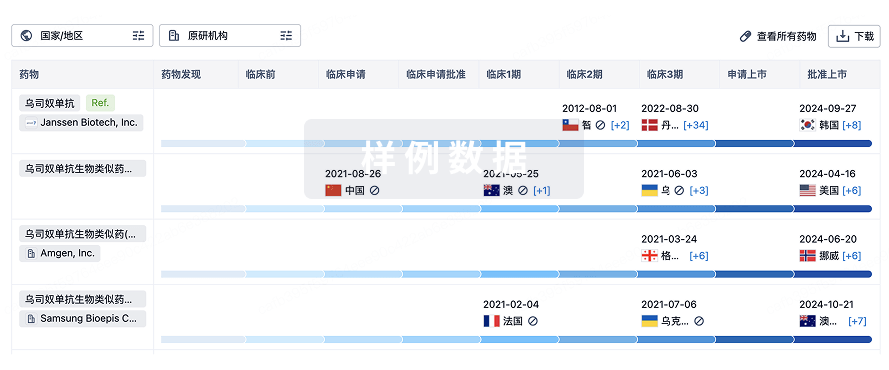
特殊审评
只需点击几下即可了解关键药物信息。
登录
或

提出任何生物医药研究问题
让每一步生物医药决策都精准制胜
基于十亿级生物数据与全球情报的精准 AI,赋能早期药物发现
立即开始免费试用!
智慧芽新药情报库是智慧芽专为生命科学人士构建的基于AI的创新药情报平台,助您全方位提升您的研发与决策效率。
立即接入生物医药数据包
智慧芽新药库数据也通过智慧芽开放平台,以MCP或API服务形式对外开放。立即使用我们的MCP服务定制您的LLM智能体。
生物序列数据库
生物药研发创新
免费使用
化学结构数据库
小分子化药研发创新
免费使用