预约演示
更新于:2026-09-03
Recombinant human albumin(Shanghai Anruite)
重组人白蛋白(上海安睿特)
更新于:2026-09-03
概要
基本信息
原研机构 |
非在研机构- |
权益机构- |
最高研发阶段批准上市 |
首次获批日期 俄罗斯 (2024-04-08), |
最高研发阶段(中国)申请上市 |
特殊审评- |

登录后查看时间轴
关联
6
项与 重组人白蛋白(上海安睿特) 相关的临床试验CTR20213117
评价重组人白蛋白注射液在肝硬化低白蛋白血症患者中单中心、随机、双盲、阳性药平行对照的多次给药的安全性与免疫原性的Ⅰc期临床试验
NCT06411743
A Phase II/III Clinical Study of Recombinant Human Albumin Injection for the Treatment of Hypoalbuminemia in Cirrhotic Patients With Ascites

CTR20192457
重组人白蛋白注射液治疗肝硬化腹水患者的Ib期临床试验
100 项与 重组人白蛋白(上海安睿特) 相关的临床结果
登录后查看更多信息
100 项与 重组人白蛋白(上海安睿特) 相关的转化医学
登录后查看更多信息
100 项与 重组人白蛋白(上海安睿特) 相关的专利(医药)
登录后查看更多信息
23
项与 重组人白蛋白(上海安睿特) 相关的文献(医药)2026-01-01ANZ JOURNAL OF SURGERY
A Biodegradable Polymeric Sealant Applied to Transected Margin Following Stapled Distal Pancreatectomy Reduces Overall Complication: A Randomised Controlled Trial
Article
作者: Houli, Nezor ; Smith, Marty ; Sritharan, Mithra ; Privett, Benjamin J. ; Lam, Vincent ; Fink, Michael A. ; Furtado, Ruelan ; Hodgson, Russell ; Weinberg, Laurence ; Gandy, Robert C. ; Yuen, Lawrence ; Pilgrim, Charles H. C. ; Perini, Marcos V. ; Jones, Robert ; Nikfarjam, Mehrdad ; Burnett, David ; Haghighi, Koroush S. ; Ban, Ee Jun ; Yoshino, Osamu ; Muralidharan, Vijayaragavan ; Daly, Daniel ; Croagh, Daniel
ABSTRACT:
Background:
Postoperative pancreatic fistula (POPF) is the primary cause of morbidity after distal pancreatectomy (DP). This trial investigated the application of a combined polyethylene glycol (PEG) and recombinant human albumin sealant gel to the stapled, transected pancreatic margin to reduce clinically significant POPF.
Methods:
A multicenter randomised controlled trial in patient candidates for DP with stapled transection was conducted. Participants were randomised to receive DP with or without PEG sealant applied to the stapled margin. The primary outcome was clinically significant POPF. Secondary outcomes included other complications, length of hospital stay and 90‐day mortality.
Results:
Seventy‐eight patients with completed DP were included, 38 of whom underwent stapled DP combined with the use of PEG sealant (PEG group). No significant differences between the two groups were observed with respect to pathology type, operative approach or operative time. The PEG group exhibited significantly fewer complications (18% vs. 50% in the control group;
p
= 0.003), and a lower rate of POPF (11% vs. 28%;
p
= 0.08, respectively). Multivariate analysis revealed a significant association between spleen preservation and the rate of clinically significant fistula (OR 4.4; 95% CI 1.1–18.0;
p
= 0.038). The rate of POPF was lower in the PEG group but did not reach statistical significance (OR 0.3; 95% CI 0.1–1.2;
p
= 0.091).
Conclusion:
Stapled DP combined with PEG application was associated with reduced complications. There was a lower rate of POPF in the PEG sealant group that did not reach statistical significance.Australian New Zealand Clinical Trials Registry:
ACTRN12620001336976p.
2025-02-01JOURNAL OF PHARMACEUTICAL SCIENCES
Formulation development and feasibility of AAV5 as a lyophilized drug product
Article
作者: Vargas, Stephanie K ; Moshashaee, Saeed ; Sharifi, Farrokh ; Nambayan, Reinard ; Siahaan, Teruna J
The majority of adeno-associated virus (AAV) gene therapies are currently developed as frozen formulations (e.g., ≤ - 60 °C) that are challenging to maintain and distribute world-wide. Lyophilization can allow for long-term refrigerated storage and improved shelf-life that lowers long-term cost. Here, we performed a lyophilization feasibility study to assess the ability of several different excipients to stabilize AAV5 during lyophilization and on storage stability. A range of biophysical techniques were used to assess capsid integrity on a molecular level including quantification of externalized DNA, capsid particle size, and capsid monomer percent area. Additionally, transmission electron microscopy was used for the first time to monitor the size and integrity of the capsids subjected to the lyophilization process, and the results supported other characterization methods used in this study. A formulation containing hydroxyectoine and trehalose stabilized capsid structure directly after lyophilization, as observed directly by 5.0 % of internally stained capsids (empty) and indirectly with 7.5 % external DNA. A recombinant human albumin and trehalose formulation stabilized capsid structure on stability as observed by improved external DNA and monomer profiles overtime. Adversely, mannitol crystallization negatively affected capsid structure. Our findings indicate that lyophilization is a viable option to frozen formulation for stabilizing AAV5 drug products.
2021-11-01ANZ journal of surgery4区 · 医学
Reduction in post‐operative pancreatic fistula with polyethylene glycol and recombinant human albumin sealant following stapled distal pancreatectomy
4区 · 医学
Article
作者: Lin, Yi‐Ju ; Privett, Benjamin J. ; Weinberg, Laurence ; Muralidharan, Vijayaragavan ; Jones, Robert ; Starkey, Graham ; Perini, Marcos V. ; Lee, Eunice ; Fink, Michael A. ; Nikfarjam, Mehrdad
Abstract:
Background:
Postoperative pancreatic fistula (POPF) remains a significant cause of morbidity in patients undergoing distal pancreatectomy (DP). The use of polyethylene glycol (PEG) and recombinant human albumin sealant gel applied to the transected pancreatic margin in DP may reduce POPF rates and was assessed.
Methods:
A retrospective single centre cohort study of patient undergoing DP at an Australian high volume tertiary institution between January 2015 and January 2021. Rates of POPF in patients undergoing stapled pancreatic transection with PEG sealant were compared to other methods.
Results:
A total of 54 cases were identified for analysis, with 16 undergoing stapled DP combined with staple line application of PEG (PEG group). Most patients in the control group had stapled DP 92% (35 of 38), with 47% (18 of 38) combined with a reinforcing buttress, with or without the use other glue types. Overall, 28 of 54 (52%) developed a POPF, with a significantly lower rate in the PEG group (3 of 16 vs. 25 of 38 in the Control group; p = 0.003). Clinically significant Grade B/C POPF was lower in the PEG group (0 of 16 vs. 9 of 28 in the Control group; p = 0.045), and patients in the PEG group had a shorter median (range) length of hospital stay (6 [4–14] days vs. 10 [6–41] days p = 0.04).
Conclusion:
Stapled DP with the application of PEG and recombinant human albumin sealant to the transection line appears to be associated with a lower rate of clinically significant POPF.
100 项与 重组人白蛋白(上海安睿特) 相关的药物交易
登录后查看更多信息
研发状态
批准上市
10 条最早获批的记录, 后查看更多信息
登录
| 适应症 | 国家/地区 | 公司 | 日期 |
|---|---|---|---|
| 肝硬化 | 俄罗斯 | 2024-04-08 |
未上市
10 条进展最快的记录, 后查看更多信息
登录
| 适应症 | 最高研发状态 | 国家/地区 | 公司 | 日期 |
|---|---|---|---|---|
| 腹水 | 临床3期 | 中国 | 2023-06-12 | |
| 腹水 | 临床3期 | 中国 | 2023-06-12 | |
| 低白蛋白血症 | 临床3期 | 中国 | 2023-06-12 | |
| 低白蛋白血症 | 临床3期 | 中国 | 2023-06-12 | |
| 纤维化 | 临床申请 | 中国 | 2018-04-08 | |
| 纤维化 | 临床申请 | 中国 | 2018-04-08 |
登录后查看更多信息
临床结果
临床结果
适应症
分期
评价
查看全部结果
登录后查看更多信息
转化医学
使用我们的转化医学数据加速您的研究。
登录
或

药物交易
使用我们的药物交易数据加速您的研究。
登录
或

核心专利
使用我们的核心专利数据促进您的研究。
登录
或

临床分析
紧跟全球注册中心的最新临床试验。
登录
或

批准
利用最新的监管批准信息加速您的研究。
登录
或

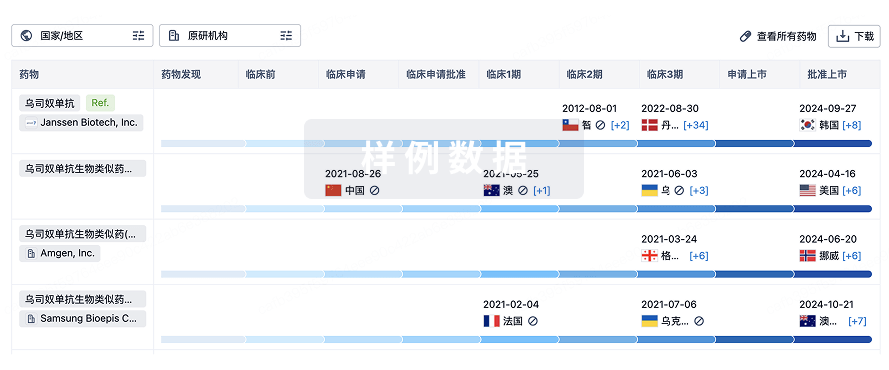
生物类似药
生物类似药在不同国家/地区的竞争态势。请注意临床1/2期并入临床2期,临床2/3期并入临床3期
登录
或
特殊审评
只需点击几下即可了解关键药物信息。
登录
或

提出任何生物医药研究问题
让每一步生物医药决策都精准制胜
基于十亿级生物数据与全球情报的精准 AI,赋能早期药物发现
立即开始免费试用!
智慧芽新药情报库是智慧芽专为生命科学人士构建的基于AI的创新药情报平台,助您全方位提升您的研发与决策效率。
立即接入生物医药数据包
智慧芽新药库数据也通过智慧芽开放平台,以MCP或API服务形式对外开放。立即使用我们的MCP服务定制您的LLM智能体。
生物序列数据库
生物药研发创新
免费使用
化学结构数据库
小分子化药研发创新
免费使用