预约演示
更新于:2025-12-09
Anti-A35 mAbs(Shenzhen Third People's Hospital)
更新于:2025-12-09
概要
基本信息
非在研机构- |
权益机构- |
最高研发阶段临床前 |
首次获批日期- |
最高研发阶段(中国)临床前 |
特殊审评- |
关联
100 项与 Anti-A35 mAbs(Shenzhen Third People's Hospital) 相关的临床结果
登录后查看更多信息
100 项与 Anti-A35 mAbs(Shenzhen Third People's Hospital) 相关的转化医学
登录后查看更多信息
100 项与 Anti-A35 mAbs(Shenzhen Third People's Hospital) 相关的专利(医药)
登录后查看更多信息
1
项与 Anti-A35 mAbs(Shenzhen Third People's Hospital) 相关的文献(医药)2025-10-01·CELL
Structurally conserved human anti-A35 antibodies protect mice and macaques from mpox virus infection
Article
作者: Chen, Ting ; Sun, Yuehong ; Tang, Shilong ; Zhu, Lin ; Ge, Xiangyang ; Yan, Renhong ; Lu, Jiahan ; Shi, Tianhao ; Ma, Jianrong ; Li, Na ; Cheng, Lin ; Ju, Bin ; Zhang, Jingjing ; Huang, Baoying ; Tan, Wen-Jie ; Wang, Miao ; Yang, Haonan ; Zhao, Juanjuan ; Li, Yaning ; Liu, Congcong ; Zhang, Zheng ; Cong, Zhe ; Zhou, Bing ; Xue, Jing
The A35 protein, expressed on the enveloped virion of monkeypox (mpox) virus (MPXV), is essential for viral infection and spread within the host, making it an effective antiviral target. In this study, we demonstrated two human anti-A35 monoclonal antibodies (mAbs) displayed potential protection against MPXV in CAST/EiJ mice and rhesus macaques. Using cryo-electron microscopy, we determined two high-resolution structures of the A35 dimer in complex with the fragment of antigen binding of mAb 975 or mAb 981, revealing detailed interactions at the antigen-antibody interfaces. Structural analysis showed that these structurally conserved mAbs bind to a groove region at the interface of A35 dimer. Overall, we provided a proof of concept for a single administration of anti-A35 mAbs mitigating the pathogenic effects of MPXV infection in rhesus macaques. These human-derived mAbs could be served as antibody drug candidates, and their binding models to the A35 dimer will provide valuable insights for future vaccine design.
1
项与 Anti-A35 mAbs(Shenzhen Third People's Hospital) 相关的新闻(医药)2025-11-18
三十七项科研成果
1、 人工智能筛选细胞焦亡抑制剂研究
2、 基于君臣佐使理论治疗溃疡性结肠炎研究
3、 前列腺癌人工智能辅助无创精准诊断与分级研究
4、 遗传性耳聋基因治疗临床研究
5、 高血压治疗新靶点研究
6、 人工智能生成式药物设计研究
7、 天然药源分子生物合成研究
8、 AI药物分子设计
9、 化学与生物协同催化赋能中药萜类成分全合成研究
10、异种肝脏移植研究
11、通用型CAR-T研究
12、抗猴痘病毒人源单克隆抗体研究
13、针刺调控胃蠕动功能的神经环路机制研究
14、人类全生命周期大脑功能连接组图谱研究
15、异种肝移植
16、细胞衰老促进骨关节炎形成研究
17、代谢功能障碍相关脂肪性肝炎原创药物靶标研究
18、神经酰胺受体调控动脉粥样硬化机制研究
19、鼻咽癌“减毒”放疗研究
20、老药新用及其作用机制研究
21、支气管扩张症患者“肠-肺轴”研究
22、冠状病毒刺突蛋白早期融合中间态靶点发现和抗病毒药物设计
23、小分子靶向蛋白降解剂开发
24、离子通道新型调控机制研究
25、帕金森病发病机制研究
26、颞下颌关节骨关节炎神经调控机制研究
27、先天性脊柱畸形发病机制研究
28、帕金森病发病机制研究
29、轻度认知障碍向阿尔茨海默病转化风险因素研究
30、新冠患者肺部病毒特异性T细胞的特征与功能研究
31、肿瘤细胞来源外囊泡促转移研究
32、中国支气管扩张症研究
33、肠道微生态失衡驱动肝性脑病机制研究
34、苯乙醇苷全生物合成研究
35、大脑动态“充电供能”的神经机制研究
36、过敏性哮喘研究
37、造血干祖细胞基因组稳定性的机制研究
01
人工智能筛选细胞焦亡抑制剂研究
在国家自然科学基金项目(批准号:82222038、82360075、32471178、81903666)等资助下,陆军军医大学大坪医院王淦副研究员、曾灵研究员团队与昆明医科大学附属延安医院孟平副研究员团队合作,在人工智能筛选细胞焦亡抑制剂研究方面取得进展。研究成果以“人工智能辅助筛选的gasdermin D孔道阻断剂延缓细胞焦亡以减轻炎症反应(Delaying pyroptosis with an AI-screened gasdermin D pore blocker mitigates inflammatory response)”为题,于2025年9月15日在《自然·免疫》杂志(Nature Immunology)上在线发表。论文链接:https://www.nature.com/articles/s41590-025-02280-x。
细胞焦亡是一种由gasdermin D(GSDMD)蛋白介导的程序性细胞死亡方式。GSDMD被激活后,其N端结构域(GSDMD-NT)可在细胞膜上形成孔道,导致细胞渗透压失衡、内容物释放,从而引发强烈的炎症反应。该过程在脓毒症、自身免疫病等炎症性疾病的发生机制中起重要作用。近年来研究发现,细胞外囊泡(EVs)可携带GSDMD-NT孔道并将其传递至邻近细胞,诱导细胞焦亡,实现炎症信号在细胞间 “传播”,这种现象在脓毒症患者中尤为显著。临床相关患者的治疗时间多在GSDMD-NT孔道形成之后,而现有的细胞焦亡抑制剂多靶向于GSDMD蛋白切割激活过程,对已形成的GSDMD-NT孔道无阻断作用,因此开发直接阻断GSDMD-NT孔道功能的新型抑制剂具有重要临床价值。
该合作研究团队通过自主开发的深度学习原子生成模型(Transformer),对可抑制GSDMD-NT孔道功能的肽类分子进行大规模虚拟筛选,并结合细胞模型、人肺泡类器官及临床前动物模型开展系统性验证,成功鉴定出一种候选多肽分子SK56。该分子能够特异性靶向GSDMD-NT孔道,且不影响白细胞介素-1β的加工和GSDMD的激活过程,并在细胞膜孔道形成后进入细胞,与线粒体上的GSDMD-NT孔道结合,减轻线粒体损伤和活性氧释放。同时,SK56通过静电相互作用与ESCRT蛋白(CHMP4等)结合,加速膜泡形成以减少膜损伤和加快膜修复,从而抑制细胞焦亡。此外,SK56还能减少树突状细胞对焦亡细胞膜碎片的吞噬,抑制树突状细胞超激活,进而减少抗原呈递和抑制炎症反应。在人肺泡类器官模型中,SK56可有效阻断焦亡在细胞间的“传播”。在脓毒症小鼠模型延迟给药实验中,即使在成功造模后4~16小时给药干预,SK56仍能显著提升脓毒症小鼠的存活率(图)。
该研究通过人工智能筛选的肽类分子SK56,可直接与GSDMD-NT孔道相结合抑制焦亡反应,并通过细胞ESCRT膜修复系统减缓细胞死亡,为焦亡引发的炎症疾病治疗提供了新思路。
02
基于君臣佐使理论治疗溃疡性结肠炎研究
在国家自然科学基金项目(批准号:82174253、82474370、82374319、82474207、82305020)等资助支持下,暨南大学中医学院陈孝银教授、邓力教授联合暨南大学生物医学工程研究所张奕副教授团队在基于君臣佐使理论治疗溃疡性结肠炎研究方面取得进展。研究成果以“一种分层组装的口服制剂,采用可转化药物载体,通过三管齐下的策略实现溃疡性结肠炎的靶向治疗(A hierarchically assembled oral formulation with drug-convertible carriers for targeted ulcerative colitis therapy through a three-pronged strategy)”为题,于2025年6月19日在线发表于《先进复合材料和混合材料》(Advanced Composites and Hybrid Materials)杂志。论文链接:https://link.springer.com/article/10.1007/s42114-025-01362-6。
溃疡性结肠炎是一种全球发病率持续攀升的肠道炎症疾病,以结直肠炎反复发作、上皮屏障缺陷和微生态失调为特征。该病现有临床药物存在缓解率低、靶点单一等瓶颈,从中医学传统有效草药方剂中开发活性成分用于疾病治疗的需求迫切。香连丸源自宋代《太平惠民和剂局方》,由黄连、木香两种草药配伍而成,治疗湿热内蕴、阻滞肠道的炎症疾病已有数千年历史。小檗碱和去氢木香内酯是香连丸两种草药的主要有效成分,但存在生物利用度低、协同作用不清等局限性。因此,亟需开发一种可整合多组分技术,为优化给药方案、提高疗效提供用药指导。
研究团队从中医典籍《黄帝内经》提出的“君-臣-佐-使”药物配伍理论中获取灵感,该理论要求在处方中需赋予不同组分不同角色定位,以便治疗时各司其职。该药物配伍理论重视组分协同配伍、谋求药物增效减毒、强调引药直达病所等理念与现代药物递送技术的目标高度契合。研究团队通过融合该中医观念与现代药物递送技术,成功设计了一种高效靶向缓解溃疡性结肠炎的香连丸组分口服制剂:香连丸中两种主要有效成分小檗碱和去氢木香内酯作为“君”“臣”组分,通过药物-蛋白共组装技术,使两种活性成分被纳米/微米尺度的牛血清白蛋白聚集体负载作为“佐”组分,通过静电液滴技术将诸成分封装于海藻酸钠微球作为“使”组分。研究团队通过器官成像、组织化学染色、酶联免疫吸附、微生物多样性分析等技术,发现该制剂各组分的协同作用显著延长了两种活性成分的生物利用度,使其在约1/20的原始剂量下起效长达一周;且相比于临床一线药物5-氨基水杨酸,对溃疡性结肠炎的三大病理特征炎症、上皮屏障缺陷和微生态失调的改善效果更显著。同时,利用微生物组、代谢组学和转录组学分析还发现制剂中的蛋白聚集体和海藻酸钠微球具有药物可转化的特性,能被乳酸杆菌群转化为短链脂肪酸,协同缓解溃疡性结肠炎最大限度地提高其疗效(图)。
本研究受中医学“君-臣-佐-使”药物配伍理论的启发,开发了一种通过多途径有效缓解溃疡性结肠炎的香连丸组分口服制剂,为中医传统有效方剂开发活性成分并利用现代药物递送技术创制新药提供了新的思路与技术手段。
03
前列腺癌人工智能辅助无创精准诊断与分级研究
在国家自然科学基金项目(批准号:82125025,82330091,82302316)等资助下,海军军医大学任善成教授团队与北京大学张树栋教授、南京医科大学李杰教授、首都医科大学王良教授、青岛大学聂佩教授合作,在前列腺癌人工智能辅助无创精准诊断与分级研究方面取得进展。相关成果以“磁共振-病理基础模型实现前列腺癌无创诊断和分级(An MRI-pathology foundation model for noninvasive diagnosis and grading of prostate cancer)”为题,于2025年9月2日在线发表于《自然・癌症》(Nature Cancer)杂志,论文链接:https://www.nature.com/articles/s43018-025-01041-x。
我国前列腺癌发病率持续增长,前列腺穿刺活检是诊断“金标准”但其为有创操作,存在并发症与假阴性可能。多参数磁共振成像(mpMRI)及前列腺影像报告和数据系统(PI-RADS)虽是无创筛查的优选,却受主观性强、准确性不足的局限。目前,PI-RADS评分难以精准诊断前列腺肿瘤,迫切需要更优的无创辅助诊断手段。
研究团队基于多中心真实临床数据,开发并验证了一个用于前列腺癌无创诊断和分级的影像-病理基础模型(MRI-PTPCa)。该模型整合了T2WI、DWI和ADC三个磁共振序列,通过自监督学习及Transformer等技术构建,利用近130万份配对数据进行训练,多中心队列招募了超5500例患者进行回顾性与前瞻性测试,发现其预测结果与病理评估结果有很好的一致性,在诊断前列腺癌、区分临床显著前列腺癌及确定前列腺癌病理分级方面均优于传统临床评估体系和其他诊断模型。该模型的可解释性分析表明,智能化评分与格里森分级显著正相关,其融合特征与肿瘤细胞形态纹理显著相关,编码特征与血液PSA指标显著相关(图)。
该研究展示了人工智能结合磁共振在前列腺癌无创诊断和分级中的应用潜力,有望减少患者不必要的穿刺,降低患者痛苦,提升诊疗准确性与安全性。
04
遗传性耳聋基因治疗临床研究
在国家自然科学基金项目(批准号:82330033,82030029,92468302, 82192862)等资助下,东南大学附属中大医院柴人杰教授联合加州大学欧文分校曾凡钢教授、山东省第二人民医院徐磊教授、南京大学医学院附属鼓楼医院高下教授、华中科技大学同济医学院附属协和医院孙宇教授、第四军医大学西京医院查定军教授、瑞典卡罗林斯卡大学医院Maoli Duan教授在遗传性耳聋基因治疗临床研究方面取得进展。研究成果以“常染色体隐性耳聋9型的AAV基因疗法:一项单臂试验(AAV gene therapy for autosomal recessive deafness 9: a single-arm trial)”为题,于2025年7月2日发表在《自然·医学》(Nature Medicine)杂志。论文链接:https://www.nature.com/articles/s41591-025-03773-w。
OTOF基因突变是导致常染色体隐性遗传性聋9型(DFNB9)的主要原因,在婴幼儿听神经病患者中突变频率高达41.2%。人工耳蜗可恢复重度DFNB9患者的部分听觉,但存在音质失真、噪声环境识别困难等局限。基因治疗对先天性耳聋儿童患者具有较好疗效,但对成人患者疗效尚不明确。
研究团队开展了一项单臂试验,首次纳入青少年及成人受试者,采用腺相关病毒AAV-OTOF对10名来自中国5个地区的1.5~23.9岁DFNB9患者开展基因治疗,并随访6~12个月。随访期内,所有受试者共报告162次轻度不良事件,未发生严重不良事件,证明该疗法的长期安全性。受试者平均听阈从术前106 dB显著降低至52 dB (正常谈话水平),其中62%的听阈改善出现在治疗首月。在个体水平上,脑干听觉诱发电位能够有效预测基因治疗4个月后患者的行为纯音平均阈值。研究还发现AAV基因治疗效果与患者年龄相关,5至8岁儿童获益最为显著,其在多个听力学测试中表现更好,提示这一年龄段可能是最佳干预窗口期。以上结果表明,虽然听觉通路可塑性随年龄增长递减,但基因治疗在青少年及成人群体中仍具有显著疗效。
该研究拓展了DFNB9患者的基因治疗窗口,提示了治疗的最佳年龄范围,为指导临床干预时间及制定治疗策略提供了依据。
05
高血压治疗新靶点研究
在国家自然科学基金项目(批准号:82425104)等资助下,华东师范大学药学院李洪林教授、李诗良教授研究团队联合华东理工大学药学院王蕊教授研究团队在高血压治疗新靶点研究方面取得进展,相关研究成果以“靶向TRPV4-RhoA-RhoGDI1轴抑制RhoA活性的新型抗高血压疗法(Inactivation of RhoA for Hypertension Treatment Through the TRPV4-RhoA-RhoGDI1 Axis)”为题,于2025年6月16日在《循坏》(Circulation)杂志在线发表。论文链接:https://doi.org/10.1161/CIRCULATIONAHA.124.071884。
高血压患病率持续攀升,易引发多种心血管并发症,已成全球重大公共卫生挑战。传统五大类一线降压药(ACEI、ARB、β受体阻滞剂、CCB和利尿剂)因靶点分布广泛、机体代偿机制复杂,常引发药物副作用和耐药问题,导致许多患者血压控制不佳,亟需开发更精准、安全的新策略。血压稳定的核心在于血管的“张弛有度”,这离不开血管平滑肌细胞(Vascular smooth muscle cell, VSMC)的精细调控。其中,瞬时受体电位香草酸4型通道(Transient receptor potential vanilloid 4, TRPV4)是一种广泛分布于动脉壁的非选择性阳离子通道,通过调控钙离子流动直接影响血管舒缩功能,在维持血压稳态中发挥关键作用。最新研究发现,Ras同源蛋白A(Ras homolog family member A, RhoA)可结合于TRPV4的ARD区域并抑制其活性。然而,TRPV4-RhoA复合物在血管功能及高血压发生发展中的具体调控机制尚不明确,深入解析高血压状态下TRPV4-RhoA的相互作用及其动态调控规律,对解锁新型降压靶点并开发新药具有重要意义。
研究团队发现候选药物AH001能够有效抑制TRPV4通道活性,并借助冷冻电镜成功捕获到TRPV4AH001-RhoA复合物的高分辨率结构,直观揭示了AH001诱导TRPV4与RhoA形成“共抑制”状态。进一步在高表达TRPV4和RhoA的细胞中发现,AH001通过作用于TRPV4-RhoA-RhoGDI1轴,一方面增强TRPV4与RhoA的结合,另一方面促进RhoGDI1(鸟苷酸解离抑制因子1 )对RhoA的“管控”,从而有效抑制RhoA信号通路活性。在多种高血压动物模型中,AH001均展现出显著的即时和持续降压效果(图)。
该研究发现TRPV4-RhoA轴为高血压治疗的全新药物靶点,在高血压患者中具有"病理性激活"的特征,这一发现为高血压的精准治疗带来了潜在的突破。与传统降压药物相比,靶向TRPV4-RhoA轴的候选药物AH001能够选择性阻断异常激活的信号,在有效降低血压的同时,显著减少对正常生理功能的干扰,有望解决当前高血压治疗中普遍存在的副作用大、疗效不稳定、个体差异显著等问题,推动高血压治疗从“经验用药”向“机制导向”转变,为广大患者带来更安全、更有效的治疗选择。
06
人工智能生成式药物设计研究
在国家自然科学基金项目(批准号:81925034, 82441035, 824B2105)等资助下,上海交通大学医学人工智能研究院张健教授课题组,在人工智能生成式药物设计研究方面取得进展。相关成果以“基于电子云密度引导的高效可靠从头分子设计和优化方法ED2Mol(Electron-density-informed effective and reliable de novo molecular design and optimization with ED2Mol)”为题,于2025年8月20日在《自然·机器智能》(Nature Machine Intelligence)杂志在线发表,被该期刊选为封面故事推荐,并获Ana Laura Dias教授在News Highlight专文中的高度评价(https://www.nature.com/articles/s42256-025-01102-x)。论文链接:https://www.nature.com/articles/s42256-025-01095-7。
创新药物研发的核心在于发现具有生物活性的分子(“苗头分子”或“先导分子”)。传统方法主要依赖高通量筛选技术,从现有化合物库中搜寻候选分子。然而,现有化合物库的规模有限(仅约109个分子),结构多样性不足,难以覆盖庞大而复杂的化学空间,使得许多具备潜力的候选分子未被发掘。相比之下,从头设计(de novo)方法直接在估计约1050规模的化学空间中“无中生有”地生成分子,大大提高了发现全新、高效药物分子的可能性。
研究团队开发的电子云密度驱动分子生成模型——ED2Mol,正是这一方向的突破。结构生物学长期以来依赖电子密度图解析分子结构:它不仅宏观展示配体与靶点蛋白的空间匹配,更在微观层面反映原子间的电磁相互作用。ED2Mol首次将电子密度信息融入深度学习生成框架,既能把握结合口袋的整体结构环境,又可精准模拟原子级别的相互作用机制。在多项系统评估中,ED2Mol所生成的分子在结合能力、构象质量与稳定性方面均超越现有方法,同时表现出良好的可合成性、类药性以及丰富的结构多样性。研究团队在成纤维细胞生长因子受体3(FGFR3),细胞分裂控制蛋白42同源物(CDC42),葡萄糖激酶(GCK),视黄酸诱导蛋白(GPRC5A)等靶标体系的药物研发场景中验证了ED2Mol的应用潜力。
该研究开发了从苗头分子生成到先导化合物优化的统一智能框架,生成分子在可靠性与创新性上达到当前最优水平。ED2Mol不仅在常规正构位点表现出色,也能针对难以突破的变构位点生成高效分子,同时覆盖抑制剂与激动剂等多种药物类型,为创新药物研发提供了高效、可靠的人工智能驱动平台。
07
天然药源分子生物合成研究
在国家自然科学基金项目(批准号:82325046、82273829)等资助下,北京大学药学院马明教授团队在在天然药源分子生物合成研究方面取得进展,相关成果以“两个焦磷酸硫胺素依赖酶的结构研究以及它们在碳-碳键连接反应方面的催化应用(Structural insights into two thiamine diphosphate-dependent enzymes and their synthetic applications in carbon–carbon linkage reactions)”为题,于2025年5月14日在《自然·化学》(Nature Chemistry)杂志在线发表。论文链接:https://doi.org/10.1038/s41557-025-01822-y。
焦磷酸硫胺素依赖酶是以焦磷酸硫胺素(维生素B1的磷酸化形式)为辅因子的一类酶,它们在氨基酸代谢、糖代谢等初级代谢中扮演重要角色。近年来这类酶被发现也参与生物体中次级代谢产物(包括一些天然药源分子)的生物合成,它们催化特殊的分子间碳-碳键形成反应,构建了天然药源分子的化学骨架,其选择的底物类型与初级代谢中截然不同。然而截至目前,这些天然药源分子生物合成酶的三维结构未得到解析,其催化反应的底物选择性和立体选择性未得到阐明,极大限制了在天然药源分子碳骨架构建中的催化应用。
研究团队从构建的海洋细菌菌种库中发现了一种天然产物,并通过基因组测序、进化树分析发现了两个负责天然产物生物合成的焦磷酸硫胺素依赖酶;进一步解析了焦磷酸硫胺素依赖酶、辅因子和底物的复合物晶体结构,揭示了它们催化α-酮酸碳-碳键连接反应的底物选择性和立体选择性结构基础;针对活性位点关键氨基酸的定点突变理性改造了两个酶的催化功能,并催化合成了360个碳-碳键连接产物,包括354个新化合物;进一步构建了多酶级联催化体系,通过提供简单的原料分子,酶法全合成了36个结构复杂的呋喃内酯类抗生素类似物(图)。
该研究揭示了天然药源分子生物合成中新颖的酶催化机制,为合成生物学规模化制造复杂天然药物提供了酶催化元件。
08
AI药物分子设计
在国家自然科学基金项目(批准号:82122065,82473845,82073698)等资助下,四川大学华西药学院李国菠教授团队,在AI药物分子设计方面取得进展,相关成果以“药效团导向3D分子生成用于高效特征定制的药物发现(Pharmacophore-oriented 3D molecular generation toward efficient feature-customized drug discovery)”为题,于2025年8月26日在线发表于《自然·计算科学》(Nature Computational Science)杂志。论文链接:https://doi.org/10.1038/s43588-025-00850-5。
随着人工智能技术的快速发展,深度生成模型逐渐成为推动新药研发的重要工具。其中,分子生成技术因其能够高效探索化学空间并设计出具有新颖结构和潜在活性的分子,受到广泛关注。然而,大多数现有分子生成技术在实际应用中仍存在一定局限性,尤其在需要定制特征的药物设计场景中,如金属酶药物分子设计、共价药物分子设计等,存在较大的不足。因此,需要开发导向更加明确的分子生成技术。
研究团队提出了一种基于扩散模型的药效团导向3D分子生成方法,简称PhoreGen。该方法通过原子与化学键的异步扰乱机制,并在消息传递网络中融入配体–药效团匹配的先验知识,确保生成的分子能够满足目标药效团的约束要求。经过大规模药效团–3D配体对数据的分层训练,PhoreGen模型能够生成在结构合理性、类药性、多样性和结合亲和力等方面均表现优异的3D分子。在金属酶药物设计和共价药物设计中,PhoreGen也展现了较强的应用潜力(图)。
利用PhoreGen模型,针对耐药菌的金属-β-内酰胺酶和丝氨酸-β-内酰胺酶,研究团队成功发现了纳摩尔级的新型抑制剂。同时,针对金属烟酰胺酶,团队也发现了新的共价抑制剂,通过X射线晶体衍射技术,揭示了这些抑制剂与酶的结合模式,结果与分子生成的结合模式高度一致,进一步验证了PhoreGen在实际药物研发中的应用潜力。
09
化学与生物协同催化赋能中药萜类成分全合成研究
在国家自然科学基金项目(批准号:82430119)等资助下,上海交通大学李健副教授团队与海军军医大学/中国医学科学院药用植物研究所张卫东教授团队合作,在化学与生物协同催化赋能中药萜类成分全合成研究方面取得进展。研究成果以“人工法尼醇环氧化酶赋能萜类化合物的简洁高效全合成(Artificial farnesol epoxidase enables a concise synthesis of meroterpenoids)”为题,于2025年8月15日发表于《科学》(Science)杂志上。论文链接:https://www.science.org/doi/10.1126/science.adt2096。
萜类化合物是一类重要的中药活性成分,具有广泛的生物活性,是新药发现的巨大宝库(如青蒿素、紫杉醇等),但往往高活性成分的天然丰度较低,严重影响后续的研究与应用。如何利用替代手段高效制备低丰度活性成分是目前研究的主要挑战。
针对这一挑战,该团队基于生物与化学协同策略,利用自建酶库筛选获得起始催化剂EPO1,并通过对EPO1酶5轮饱和突变的定向进化,迭代获得具有高度精准性的“分子剪刀”——EPO6。EPO6可对法尼醇的中部双键实现93%的区域选择性与94%的对映选择性,显著优于既有化学催化(43%区域选择性、10%对映选择性)。该成果完成了法尼醇(萜类合成的关键生源前体)分子内最惰性双键的高选择性官能化,使研究团队得以进一步利用其余双键的较高反应性,高效、简洁地构筑多种合成中间体。在此基础上,研究团队验证了三甲基硅(TMS)促进的中—尾端多烯串联环化策略,有效解决了大位阻侧链带来的环化组装能垒问题;可将11种重要天然药物的合成步骤缩短50%~74%,为高效制备免疫抑制剂、抗肿瘤萜类活性成分提供了一条最简洁的发散式合成路线(图)。
该研究推动了化学生物协同的低丰度高活性成分合成范式转变,即由以往对天然或既有酶催化剂的依赖和简单改造,迈向合成化学家根据合成策略需求精准设计与优化理想生物催化剂的新阶段。
10
异种肝脏移植研究
在国家自然科学基金项目(批准号:82325007、92468202、U24A20656、82371793)等资助下,中国人民解放军第四军医大学西京医院窦科峰教授、王琳教授、陶开山教授和四川中科奥格生物科技有限公司潘登科教授团队合作在异种肝脏移植研究方面取得进展,研究成果以“接受异种猪肝移植患者的免疫细胞景观(Immune cell landscape in a human decedent receiving a pig liver xenograft)”为题,于2025年7月30日在线发表于《自然·医学》(Nature Medicine)杂志上。论文链接:https://www.nature.com/articles/s41591-025-03860-y。
随着基因编辑猪和异种移植研究的不断发展,在目前供体器官短缺的情况下,异种肝脏移植为终末期肝病患者带来了希望,但仍有许多问题亟待克服,包括免疫排斥反应、凝血异常相关移植物损伤等。目前对接受异种肝脏移植患者体内的免疫细胞动态变化规律及其分子机制仍不清楚。
研究团队利用单细胞转录组和空间转录组测序技术,对一名接受猪肝脏异种移植的脑死亡患者术后 10 天内外周血和移植肝脏中的免疫细胞景观进行了表征。研究发现虽然外周血中的 T 细胞逐渐活化,但γδT细胞和耗竭T细胞广泛浸润猪肝,表明移植物中适应性免疫受损。进一步研究,发现了两种不同的单核细胞群,可能会影响异种移植后的凝血和免疫反应。在移植后的早期阶段,THBS1+单核细胞通过THBS1-CD36信号通路与血小板相互作用,参与凝血机制的调节。在术后随访后期,C1QC+单核细胞浸润猪肝,该群细胞高表达CD274(PD-L1),可促进T细胞耗竭。综上,该研究发现了在肝脏异种移植后固有免疫细胞对凝血和免疫途径的调节作用,该THBS1+和C1QC+单核细胞的作用机制有待进一步阐明(图)。
该研究揭示了异种移植背景下免疫细胞之间的相互作用,对进一步发现抗异种移植排斥反应新靶点,改进异种移植物的基因编辑策略提供了实验依据。
11
通用型CAR-T研究
在国家自然科学基金项目(批准号:82341207、82341208)等资助下,北京大学魏文胜团队、解放军总医院韩为东团队与博雅辑因团队合作在通用型CAR-T研究领域方面取得新进展。研究成果以“糖基化屏蔽赋能TCR保留型同种异体CAR-T疗法(Glycan shielding enables TCR-sufficient allogeneic CAR-T therapy)”为题,于2025年8月21日在《细胞》(Cell)杂志上在线发表。论文链接: https://www.cell.com/cell/fulltext/S0092-8674(25)00910-9。
尽管自体CAR-T细胞疗法在B细胞恶性肿瘤治疗中取得革命性突破,但在运输、产品质量以及患者适用性等方面仍面临挑战。“通用型CAR-T”(异体来源CAR-T),即直接利用健康供体T细胞改造后输入患者,可实现现货化和规模化生产。然而,在异体环境中如何实现持久存活并避免排斥反应仍是其尚未攻克的核心瓶颈。
研究团队通过全基因组CRISPR筛选,鉴定出糖基化调控基因信号肽肽酶样 3(SPPL3)。敲除SPPL3能显著提高T细胞表面的整体糖基化水平,形成致密的糖基修饰层,即所谓的“糖苷盾”,限制了配体可及性,减少了异体免疫反应。SPPL3的基因编辑并未影响CAR-T的抗肿瘤效能,却显著提升了免疫耐受性和持久性。采用SPPL3缺失、T细胞受体(TCR)缺陷的抗CD19异体CAR-T细胞治疗9例复发/难治性B细胞非霍奇金淋巴瘤(B-NHL)患者,I期临床试验结果显示,安全性方面未出现移植物抗宿主病(GvHD),但CAR-T在体内的持续时间有限。反向转化研究揭示了TCR在维持T细胞持久性中的关键作用。基于此,研究团队在3例淋巴瘤或白血病患者中评估了SPPL3缺失、TCR完整的CAR-T疗法的安全性,未观察到GvHD的临床表现,CAR-T细胞在患者体内可持续存在6个月以上。研究结果证实SPPL3缺失诱导的糖基化重塑能够突破异体CAR-T的免疫屏障,而内源性TCR信号对细胞持久性具有不可替代的作用(图)。
该研究揭示了SPPL3靶向编辑不仅保留了CAR介导的抗肿瘤效能,还显著增强了免疫耐受性与体内持久性,提供了一种能够保留TCR的通用型CAR-T的可行方案,为通用型CAR-T的设计与开发提供了全新的策略范式。
12
抗猴痘病毒人源单克隆抗体研究
在国家自然科学基金项目(批准号:82025022、82322040、82222041、82241068、32422039)等资助下,南方科技大学第二附属医院/深圳市第三人民医院张政教授、鞠斌特聘研究员团队联合中国医学科学院医学实验动物研究所薛婧研究员、南方科技大学医学院鄢仁鸿副教授、中国疾病预防控制中心病毒病预防控制所谭文杰研究员团队,在抗猴痘病毒人源单克隆抗体研究方面取得进展。相关研究成果以“结构保守的人源A35抗体保护小鼠和恒河猴抵抗猴痘病毒感染(Structurally conserved human anti-A35 antibodies protect mice and macaques from mpox virus infection)”为题,于2025年8月26日在《细胞》(Cell)杂志上在线发表。论文链接:https://www.cell.com/cell/abstract/S0092-8674(25)00919-5。
猴痘疫情已对全球公共卫生安全构成严重威胁,世界卫生组织曾两度宣布其为“国际关注的突发公共卫生事件”。猴痘病毒包膜粒子(EV)表面的A35蛋白对于病毒在宿主体内的细胞间传播至关重要,是开发抗病毒药物和疫苗的理想靶点。尽管已有研究表明靶向A35蛋白的抗体具备保护潜力,但其在更接近人类的非人灵长类动物模型中的保护效果数据尚不充分,其分子识别机制亦有待阐明。
该研究团队筛选并验证了两株人源单克隆抗体(mAb 975和mAb 981)能交叉识别猴痘病毒A35蛋白与痘苗病毒的同源蛋白A33;在CAST/EiJ小鼠猴痘病毒感染模型中,单独使用任一抗体均能有效降低血浆及多组织中的病毒载量,显著缓解脾脏的病理损伤;在恒河猴猴痘病毒感染模型中,这两株抗体同样具有明显的保护效果,不仅能降低恒河猴血浆、咽拭子、肛拭子及组织中的病毒水平,还显著抑制了皮损出痘等临床症状。该研究团队进一步利用冷冻电子显微镜(cryo-EM)技术,解析了mAb 975及mAb 981分别与A35蛋白复合物的高分辨率三维结构。结构分析揭示了一种跨物种保守的抗体结合模式:抗体重链CDR3区域的正电氨基酸能够精准插入抗原二聚体中部的沟槽状结构(groove-like structure),与该区域的负电氨基酸形成稳定的静电相互作用;同时,抗体多个CDR区域的疏水氨基酸与抗原的疏水平台协同作用,进一步增强了抗体-抗原复合物的稳定性(图)。
该研究筛选出两株能有效保护小鼠和恒河猴抵抗猴痘病毒感染的人源单克隆抗体,并阐明了抗体与猴痘病毒A35蛋白相互作用的结构基础,为开发猴痘病毒相关抗体药物提供了候选分子,也为研发新一代广谱性正痘病毒疫苗提供了结构生物学基础和新思路。
13
针刺调控胃蠕动功能的神经环路机制研究
在国家自然科学基金项目(批准号:82330127、82274228)等资助下,复旦大学脑科学研究院柳申滨研究员联合复旦大学华山医院王念宏教授团队在针刺调控胃蠕动功能的神经环路机制研究方面取得进展。研究成果以“电针调节小鼠和人类胃功能的神经解剖学基础(Neuroanatomical organization of electroacupuncture in modulating gastric function in mice and humans)”为题,于2025年7月25日,在线发表于《神经元》(Neuron)杂志。论文链接:https://www.cell.com/ neuron/fulltext/S0896-6273(25) 00504-5。
胃肠功能障碍是临床常见病症,其中功能性消化不良困扰全球7%以上人群,症状迁延难愈,常规药物疗效有限,严重影响患者生存质量。电针疗法通过调控体表特定穴位的刺激参数(包括强度和深浅等)能实现对不同靶器官的特异性调控。临床实践显示电针在调节胃肠功能方面具有良好疗效,但受电针刺激参数的不同存在疗效差异,以及电针作用机制尚未阐明也制约了其推广应用。因此,探究电针调控胃肠功能的最优刺激参数及作用机制,对推动其临床应用具有重要意义。
研究团队利用活体成像、在体双光子钙成像等技术,发现仅高强度(2 mA)电针足三里穴可促进小鼠胃蠕动,且这一调控效应依赖于迷走神经通路的完整性;同时发现高强度电针足三里穴诱发“迷走神经-胃”反射通路具有组织层次特异性,依赖于对穴位区深层组织的刺激,而对穴位区皮肤及浅层肌肉刺激无效。进一步通过基因编辑、神经示踪、单细胞测序等技术,发现电针足三里穴通过特异性激活TRPV1+躯体感觉神经纤维促进胃蠕动,并且TRPV1+神经元的感觉信号传入被迷走神经背核(DMV)中的Oxtr+神经元整合。运用2 mA电针足三里穴可改善顺铂诱导的功能性消化不良小鼠的胃蠕动障碍。为进一步验证电针强度及深浅刺激的临床疗效,研究团队进行了随机对照临床研究,发现相较于浅层刺激以及深层组织低、中强度的刺激,深层组织高强度电针足三里穴可更好的促进胃蠕动,使用高强度电针治疗也可显著改善胃蠕动和功能性消化不良患者的症状及生活质量(图)。
本研究阐明了电针足三里调控胃蠕动功能的组织层次特异性与强度依赖性特征,揭示了“躯体感觉-迷走神经-胃反射”这一特异性神经环路机制,为临床胃功能障碍的电针治疗方案优化提供了理论依据,也为推动针灸治疗从传统经验模式向现代精准医学模式的范式转变奠定了基础。
14
人类全生命周期大脑功能连接组图谱研究
在国家自然科学基金项目(批准号:82021004、82327807、31830034)等资助下,北京师范大学贺永教授团队在人类全生命周期大脑功能连接组发育图谱研究方面取得进展。研究成果以“人脑功能连接组在全生命周期中的发展变化(Human lifespan changes in the brain's functional connectome)”为题,于2025年4月3日以封面论文在《自然•神经科学》(Nature Neuroscience)杂志上在线发表。论文链接:https://www.nature.com/articles/s41593-025-01907-4。
人类的大脑网络在整个生命周期中,经历了从形成、发育到衰退的复杂过程,支撑着个体认知与行为的发展。建立覆盖全生命周期的大脑功能网络发育图谱和参考标准,为大脑网络的发育与老化建立一套“生长曲线图”,对于理解人类大脑功能的演化规律至关重要,也对神经发育疾病、神经退行性疾病和精神疾病的个体化诊疗评估具有重要价值,是脑科学领域的重大科学问题。
贺永教授团队联合全球100余家机构,整合了从新生儿到老年人群的脑功能和结构磁共振影像数据集(33250名受试者),制定了统一的多模态脑影像数据分析标准流程,并研发了适用于不同年龄阶段的大脑功能图谱绘制算法。该研究系统地揭示了人脑功能连接组在全生命周期中的变化规律:全脑功能连接强度(38岁达峰)和变异度(28岁达峰)均呈现“先升后降”的非线性轨迹;不同脑功能系统发育时序差异显著,其中视觉、运动等初级系统的网络架构在出生时已接近成人的80%,而默认模式网络和额顶网络等高级功能系统的架构在4-6岁初步形成,但这些高级网络的分离度(脑网络分离与整合平衡的指标)持续发育至25-30岁 ,并在老年期衰退最为明显;人脑功能连接组的时空变化遵循“感觉运动-联合皮层”发育轴的规律,与大脑的进化轨迹高度吻合(图)。
该研究系统解析了人类大脑功能网络发育的关键时间节点及其时空演化规律,为全年龄段的脑健康数字化评估和脑疾病精准诊疗提供了参考标准,推动了脑健康评估的标准化和精准化的发展。
15
异种肝移植
在国家自然科学基金项目(批准号:82325007、82371793、82070671、82170667)等资助下,第四军医大学西京医院窦科峰教授、王琳教授、董海龙教授团队在异种肝移植方面取得进展,研究以“基因编辑猪-人肝移植(Gene-modified pig-to-human liver xenotransplantation)”为题,于2025年3月26日在《自然》(Nature)杂志上在线发表。论文链接为:https://www.nature.com/articles/s41586-025-08799-1。
全球范围内,终末期肝病患者面临着供体器官严重匮乏的生存困境。作为解决器官短缺的创新方案,基因编辑猪异种移植技术已取得新的进展,继心脏、肾脏成功完成人体移植后,我国科研团队在异种肝移植领域取得重要研究成果。
本研究采用六基因编辑猪(沉默猪源性免疫排斥基因及表达人源性免疫耐受基因)为供体肝源,移植受体为脑死亡患者,术后进行了为期十天的观察监测。在移植前证实供体猪外周血单核细胞和肝组织中致超急性排斥反应的GGTA1、B4GALNT2和CMAH基因已失活,人源补体调节蛋白CD46/CD55以及抗血栓蛋白TBM显著过表达。异位辅助肝移植术中精准匹配血管尺寸,将供肝的肝静脉和门静脉接入受体的下腔静脉系统,将供肝的肝动脉与腹主动脉吻合,并建立胆汁外引流。术后超声显示肝动脉血流速度稳定于41.45~60.63 cm/s,门静脉血流参数正常。移植后供肝立即出现胆汁分泌,猪源白蛋白水平显著上升;直至观察终点,谷草转氨酶虽有短暂升高,但谷丙转氨酶、碱性磷酸酶等核心指标维持正常,凝血功能总体稳定且波动在生理范围内。补体活化、细胞及体液免疫反应均得到有效抑制。研究中未发现猪内源性逆转录病毒及巨细胞病毒的跨物种传播。该研究表明通过供体猪的六基因编辑策略联合受体的特异性免疫抑制方案,可成功控制异种肝移植的超急性和急性排斥反应,使猪源肝脏在人体内发挥一定的生理功能替代能力(图)。
该研究展示了异种器官移植领域的重要成果,为异种肝移植的临床应用奠定了基础,也为治疗急性肝功能衰竭或等待同种肝移植患者的生命维持提供了干预新思路。
16
细胞衰老促进骨关节炎形成研究
在国家自然科学基金项目(批准号:82322045、81972105、82272557)等资助下,东南大学附属中大医院季明亮副主任医师、陆军主任医师团队与浙江大学医学院附属邵逸夫医院沈舒滢研究员团队合作,在细胞衰老促进骨关节炎形成研究方面取得进展。研究成果以“TRIM15驱动软骨细胞衰老和骨关节炎进展(TRIM15 drives chondrocyte senescence and osteoarthritis progression)”为题,于2025年3月26日在《科学.转化医学》(Science Translational Medicine)杂志发表。论文链接:https://www.science.org/doi/10.1126/scitranslmed.adq1735。
骨关节炎是一种常见的慢性关节疾病,主要病理特点为关节软骨的退行性改变、继发性骨质增生和关节周围炎性改变。这些病理变化常导致关节疼痛、僵硬和功能障碍,晚期致残率极高,严重影响了患者的生活质量。细胞衰老是指细胞在执行生命活动的过程中,随时间推移逐渐出现增殖与分化能力减弱和生理功能衰退的变化过程。目前已被证实与多种疾病的病理变化相关,但其在促进骨关节炎进展过程中的作用机制尚未被阐明。
研究团队通过对骨关节炎患者病变组织进行RNA-seq检测分析,发现含三联基序蛋白15(tripartite motif containing 15,Trim15)基因在病变组织中表达增高,且在细胞衰老相关通路富集;通过人群队列得到进一步验证后,对条件性敲除小鼠品系进行表型鉴定,发现敲除Trim15能够显著抑制软骨细胞衰老和骨关节炎进展。分子机制研究发现,表达增高的TRIM15蛋白与YAP蛋白结合,介导其K254位点(人源)被K48泛素链修饰,导致YAP核转位增强,驱动了细胞衰老相关基因表达,促进软骨细胞衰老。在体动物实验和离体人源组织实验发现,腺相关病毒5负载Trim15 shRNA可缓解软骨细胞衰老和骨关节炎进展(图)。
该研究揭示了靶向TRIM15通过调控YAP信号通路缓解软骨细胞衰老和抑制骨关节炎进展的分子机制,为骨关节炎的防治提供了新策略。
17
代谢功能障碍相关脂肪性肝炎原创药物靶标研究
在国家自然科学基金项目(批准号:82222071、22337003、82322063)等资助下,中国科学院上海药物研究所谢岑研究员、上海交通大学附属瑞金医院谢青教授、中国科学院上海药物研究所柳红研究员和刘雅萌副研究员等开展合作,在代谢功能障碍相关脂肪性肝炎原创药物靶标研究方面取得进展。相关成果以“肝脏鞘磷脂磷酸二酯酶3通过扰乱细胞膜鞘脂代谢促进脂肪性肝炎(Hepatic sphingomyelin phosphodiesterase 3 promotes steatohepatitis by disrupting membrane sphingolipid metabolism)”为题,于2025年2月26日在《细胞·代谢》(Cell Metabolism)杂志在线发表。论文链接:https://www.cell.com/cell-metabolism/fulltext/S1550-4131(25)00016-6。
代谢功能障碍相关脂肪性肝炎(MASH)是肝硬化和肝癌的主要诱因,影响全球约25%的成年人,目前尚缺乏有效的干预手段。MASH以脂肪变性、肝细胞气球样变、炎症和纤维化为主要病理特征。尽管抑制脂质从头合成能够有效减少肝脏脂质积累,但在阻止MASH进展方面效果不一,且全面抑制脂质合成可能影响膜系统稳定性而加剧肝脏损伤。因此,MASH恶化的核心驱动因素可能不在于总脂质负担,而在于特定毒性脂质引发的病理级联反应。鞘脂及其核心代谢物神经酰胺被认为是产生脂毒性的关键分子,但在MASH进展中鞘脂代谢网络的变化规律尚未阐明。
研究团队通过对MASH患者和小鼠模型的鞘脂谱进行分析,确定了细胞膜上的鞘磷脂磷酸二酯酶3(SMPD3)是促进MASH肝脏神经酰胺蓄积的关键驱动因子。尽管SMPD3在健康肝脏表达极低,但脂毒性诱导的DNA损伤通过抑制sirtuin 1(SIRT1),触发MASH发病期间SMPD3的病理性上调;SMPD3通过破坏细胞膜小窝区域的鞘脂代谢平衡,增强脂肪变性肝细胞的小窝依赖性脂质摄取和细胞外囊泡分泌,从而加剧炎症和纤维化,推动疾病进展。因此研究提出SMPD3是连接MASH关键病理特征的中心枢纽和潜在治疗靶标;进一步通过小分子化合物双靶点设计及活性筛选,发现了同时激活SIRT1并抑制SMPD3的双靶点化合物,在多种MASH动物模型中展现出优于单靶点药物的治疗潜力(图)。
该研究揭示了肝细胞膜鞘脂代谢失衡是MASH进展的重要特征,提出精准干预肝脏SMPD3恢复膜鞘脂代谢或有助于改善MASH。该研究成果为MASH治疗提供了潜在原创药物靶标和先导化合物。
18
神经酰胺受体调控动脉粥样硬化机制研究
在国家自然科学基金项目(批准号:81921001、82230010、82270352、82425105、82330118)等资助下,北京大学孔炜教授、姜长涛教授联合北京大学/山东大学孙金鹏教授及中日友好医院郑金刚教授团队在神经酰胺受体调控动脉粥样硬化发病机制研究方面取得进展。研究成果以“CYSLTR2和P2RY6通过感知神经酰胺加剧动脉粥样硬化(Sensing ceramides by CYSLTR2 and P2RY6 to aggravate atherosclerosis)”为题,于2025年3月6日在《自然》(Nature)杂志上在线发表。论文链接:https://www.nature.com/articles/s41586-025-08792-8#citeas。
动脉粥样硬化是心血管疾病的主要原因,目前主要以降脂治疗为主,但仍有显著的残余心血管事件风险未被解决。循环中神经酰胺作为动脉粥样硬化性心血管疾病的独立风险因素逐渐受到关注,但其在疾病进展中的作用机制尚不清楚。
研究团队发现,半胱氨酸白三烯受体2(cysteinyl leukotriene receptor 2,CYSLTR2)和嘧啶能受体P2Y6(pyrimidinergic receptor P2Y6, P2RY6)是神经酰胺的内源性受体。研究团队成功解析了“神经酰胺C16:0-CYSLTR2-Gq”复合物的三维结构,揭示了一个特定的结合口袋,决定了CYSLTR2对神经酰胺亚型的识别。神经酰胺与这些受体结合后,激活下游Gq蛋白介导的炎症小体通路,在动脉粥样硬化的发病机制中发挥关键作用。进一步动物实验证实,通过基因敲除或特异性拮抗剂阻断CYSLTR2或P2RY6两种神经酰胺受体,可在不影响血脂水平的情况下,使斑块负荷减少,双受体联合阻断效果更加显著。此外,临床队列研究显示,慢性肾病合并冠心病患者血浆神经酰胺水平与冠状动脉病变程度呈显著正相关,提示神经酰胺可能成为动脉粥样硬化性心血管疾病的新型生物标志物(图)。
本研究结果揭示了神经酰胺通过直接结合CYSLTR2和P2RY6受体启动跨膜Gq和炎症体信号传导的结构和分子机制,阻断这些信号传导可能为治疗动脉粥样硬化相关疾病提供新的治疗思路,为开发新的治疗策略提供了理论依据。
19
鼻咽癌“减毒”放疗研究
在国家自然科学基金项目(批准号:82172870)等资助下,中山大学马骏教授研究团队在鼻咽癌“减毒”放疗研究方面取得进展,研究成果以“鼻咽癌诱导化疗后缩小体积放疗对比传统放疗:一项开放标签、非劣效性、多中心、随机3期临床试验(Reduced-volume Radiotherapy versus Conventional Volume Radiotherapy After Induction Chemotherapy in Nasopharyngeal Carcinoma: An open-label, noninferiority, multicenter, randomized phase 3 trial)”为题,于2025年2月19日发表于《临床医师癌症杂志》(CA:A Cancer Journal for Clinicians)。论文链接为:https://acsjournals.onlinelibrary.wiley.com/doi/full/10.3322/caac.21881。
鼻咽癌高发于中国,新发病例占世界47%。马骏教授团队提出的“诱导化疗+同期放化疗”已经被国际指南采纳并全球应用。尽管诱导化疗可以使90%的患者肿瘤体积显著缩小,但是目前国际专家共识仍推荐不管化疗后肿瘤体积如何缩小,放疗的范围均需要包括化疗前的肿瘤范围,这种治疗方式导致周围正常组织放疗后遗症发生率高,严重影响患者生活质量。
为了解决这一问题,研究团队采用国际通用的标准多中心、随机、平行对照设计,开展了缩小体积放疗与传统体积放疗的随机对照临床试验。研究纳入445例中晚期鼻咽癌患者,随机分为两组:分别基于化疗后和化疗前肿瘤范围进行放疗,探索缩小体积放疗能否在保证疗效的同时降低放疗毒性。研究结果显示,两组患者的局部区域无复发生存率和总生存率均无显著差异,表明缩小体积放疗在疗效上与传统放疗并无差别。与之相对应的是,缩小体积组的毒副反应明显降低,包括严重放射性口腔黏膜炎降低4成, 晚期严重中耳炎发生率锐减5成,口干症状改善6成。同时,患者的整体健康状态、体力状态和情绪功能均显著改善(图)。
该研究为局部区域晚期鼻咽癌的放射治疗提供了创新且有效的新方案,在我国鼻咽癌诊治方面实现从“保生存”到“优生存”的突破。
20
老药新用及其作用机制研究
在国家自然科学基金项目(批准号:82192880、82192882)等资助下,中国航天员科研训练中心李英贤研究员团队、华东师范大学李洪林教授团队与瓯江实验室凌树宽研究员团队等多个团队合作,在老药新用及其作用机制研究方面取得进展。研究成果以“Tamsulosin通过楔入TMEM16A的一个新颖的变构位点来抑制氯离子的释放从而改善骨质流失(Tamsulosin ameliorates bone loss by inhibiting the release of Cl⁻ through wedging into a novel allosteric site of TMEM16A)”为题,于2024年12月31日在线发表于《美国国家科学院院刊》(Proceedings of the National Academy of Sciences)杂志。论文链接:https://www.pnas.org/doi/10.1073/pnas.2407493121。
随着全球人口老龄化加速,骨质疏松症正成为一个日益严峻的公共卫生问题。跨膜蛋白16A(TMEM16A)是一种钙激活的氯离子通道,然而由于对其调控机制认识不足,开发有效的抑制剂仍面临巨大挑战。
研究团队使用自主发展的分子三维相似性的方法SHAFTS(SHApe-FeaTure Similarity,一种同时考虑分子形状-特征相似性的混合计算方法),发现用于治疗良性前列腺增生症的药物Tamsulosin(坦索罗辛)对TMEM16A表现出较好的抑制活性(IC50 = 7.22 μM)。随后利用冷冻电镜技术,解析了TMEM16A与Tamsulosin的复合物结构(蛋白质数据库(PDB)编号: 8XLR,分辨率为2.93 Å),发现Tamsulosin楔入TMEM16A细胞外结构域的全新隐式口袋,通过稳定TMEM16A在Ca2+激活状态下的预开放瞬时构象,阻止孔道打开以及Cl−的透过。综合应用分子动力学模拟、电生理、点突变和功能实验,进一步验证了精氨酸605、谷氨酸624、酪氨酸593与异亮氨酸641在调节Tamsulosin结合和孔道构象及活性中的关键作用。Tamsulosin有效抑制TMEM16A电流,抑制破骨细胞分化,降低关键破骨细胞标志基因的表达,并通过调控Cl−浓度和信号通路(如Syk-Btk-PLCγ2和CaMKIV-CREB-NFATc1)抑制骨吸收。在卵巢切除诱导的骨质疏松小鼠模型中,Tamsulosin显著改善骨密度和结构,降低骨吸收标志物CTX-1和破骨细胞基因表达(图)。
该研究通过计算模拟结合药理学发现了老药Tamsulosin的新用途,并用结构生物学方法证实了Tamsulosin通过楔入靶标TMEM16A,挤压出隐含的变构位点,同时验证了蛋白质瞬时构象作为药物开发靶点的可行性,为药物靶点和原创药物发现提供了新的研究思路和启示。
21
支气管扩张症患者“肠-肺轴”研究
在国家自然科学基金项目(批准号:81925001、82330070、82100004、82300063)等资助下,同济大学徐金富教授团队,在支气管扩张症(简称支扩)患者“肠-肺轴”研究方面取得进展。研究成果以“肠道细菌埃格特迟缓菌衍生的代谢物通过损害中性粒细胞功能加重细菌性肺部感染(A Gut Eggerthella lenta-derived metabolite impairs neutrophil function to aggravate bacterial lung infection)”为题,于2025年2月26日在《科学转化医学》(Science Translational Medicine)杂志在线发表。论文链接:https://www.science.org/doi/10.1126/scitranslmed.adq4409。
支扩是一种以气道结构破坏和反复感染为特征的慢性呼吸系统疾病。近年来,支扩的发病率呈逐年上升趋势,不仅显著影响患者的生活质量,还带来社会经济负担。研究表明,支扩患者的肠道微生物群组成与健康人群存在显著差异,然而,在支扩的“肠-肺轴”中具体致病微生物及其机制尚不清楚。
研究团队通过分析41例支扩患者和29例健康对照者的粪便样本,发现支扩患者肠道微生物群中埃格特迟缓菌(Eggerthella lenta,E. lenta)显著富集,其代谢产物牛磺酸熊去氧胆酸(Tauroursodeoxycholic acid,TUDCA)在支扩患者的肠道和血清中均显著富集,且E. lenta和TUDCA均与疾病严重程度呈显著正相关。移植支扩患者粪便或定植E. lenta可加重小鼠肺部铜绿假单胞菌感染。进一步研究显示,TUDCA通过与中性粒细胞内的AMP依赖的蛋白激酶(Adenosine 5‘-monophosphate (AMP)-activated protein kinase,AMPK)相结合,干扰LKB1- AMPK相互作用,降低AMPK磷酸化水平,从而抑制中性粒细胞的功能,导致肺内铜绿假单胞菌的清除障碍和组织损伤加重。二甲双胍(一种AMPK激活剂)可以缓解E. lenta或TUDCA导致的肺部细菌清除障碍,并改善支扩患者中性粒细胞的功能异常(图)。
该研究从肠道菌群角度解析支扩患者常伴铜绿假单胞菌定植的可能机制,揭示了肠道细菌会通过其代谢物影响肺部细菌感染免疫的分子机制,并提出潜在的干预新策略。研究成果为支扩患者的预防和治疗提供了新思路。
22
冠状病毒刺突蛋白早期融合中间态靶点发现和抗病毒药物设计
在国家自然科学基金项目(批准号:82394463、82425033、92469108)等资助下,复旦大学上海医学院陆路研究员联合孙蕾研究员、姜世勃教授团队在冠状病毒刺突蛋白早期融合中间态靶点发现和抗病毒药物设计方面取得进展。研究成果以“以ACE2受体的冠状病毒刺突蛋白早期融合中间态为抗病毒靶点(Early fusion intermediate of ACE2-using coronavirus spike acting as antiviral target)”为题,于2025年1月30日在线发表于《细胞》(Cell)杂志。论文链接:https://doi.org/10.1016/j.cell.2025.01.012。
冠状病毒入侵细胞主要由病毒表面刺突(Spike,S)蛋白介导的膜融合来完成。发现S蛋白诱导膜融合各个阶段的蛋白互作及变构特征,对于理解冠状病毒的入侵机制,以及寻找抗冠状病毒药物设计的新靶点以应对当前流行或未来新发的冠状病毒传染病具有重要意义。冠状病毒S蛋白的融合前构象与受体相互作用,以及融合后构象(即六螺旋体,6HB)相对比较清晰。然而,刺突蛋白从融合前状态转变为融合后状态过程中的变构特征,特别是早期融合中间态构象由于其瞬间变构难以扑捉,仍主要处于猜想阶段。同时,对于该类中间态中所存在的抗病毒药物靶点也了解甚少。
研究团队利用分子生物学、病毒学等技术,以冠状病毒SARS-CoV-2为模式病毒,发现了其S蛋白存在一个能同时与ACE2蛋白结合(即S1亚单位的RBD区)及与EK1多肽结合(即S2亚单位的HR1区)的早期融合中间态构象。并进一步利用结构生物学技术,获得了一种高分辨率的新冠病毒S蛋白早期融合中间态构象(E-FIC)。在E-FIC中,S2亚基发生了构象转变,其中HR1三螺旋与含有S2’的中间环区IL770复合物结构弹出,而S1亚基组成环状结构结合在S2亚基的底部。基于上述中间态构象的特征,研究者发现了其中潜在的抗病毒靶点,并基于该靶点,设计了蛋白类病毒失活剂AL5E。经体内和体外病毒感染模型验证,研究者发现AL5E蛋白具有高效、广谱地使利用ACE2受体的冠状病毒快速失去感染力并抑制其感染(图)。
该研究揭示了冠状病毒S蛋白在膜融合早期经历的构象变化细节,并发现了潜在的药物靶点,为深入探索冠状病毒的膜融合机制及开发新型靶向性广谱抗病毒药物或疫苗提供了思路。
23
小分子靶向蛋白降解剂开发
在国家自然科学基金项目(批准号:82125034、82330115)等资助下,清华大学饶燏教授和孙秀云副研究员团队在小分子靶向蛋白降解剂开发方面取得进展。研究成果以“开发结合抑制和降解的双靶点双机制分子胶设计策略(A dual-target and dual-mechanism design strategy by combining inhibition and degradation together)”为题,于2025年1月29日以封面文章发表于《美国化学会志》(Journal of the American Chemical Society)杂志。论文链接https://pubs.acs.org/doi/10.1021/jacs.4c11930。
胶质瘤是成人中最常见的原发性恶性脑肿瘤,单靠外科切除往往无法治愈,患者的预后较差,五年生存率仅为5%。肿瘤基因组具有复杂性,而且涉及多条信号通路,因此,靶向单一靶点可能无法达到有效的治疗效果。因此,亟需针对不同致癌通路的组合治疗方法。mTOR作为细胞生长和增殖的关键调节因子,在胶质瘤的发生发展中扮演了重要角色。然而,现有的mTOR激酶抑制剂由于选择性差、毒性高以及耐药性问题而限制了其临床应用。同时,GSPT1作为调控蛋白翻译终止的关键蛋白,在胶质母细胞瘤中高度表达,并通过特定机制促进肿瘤进展。因此,同时靶向mTOR和GSPT1的治疗策略为胶质瘤的治疗提供了新的方向。
该研究基于分子胶技术提出了一种将小分子抑制剂和分子胶降解剂的特性整合到单一分子中的新策略。作者设计合成了双功能分子化合物库,通过高通量筛选出可同时抑制mTOR并降解GSPT1的苗头化合物YB-2-43,经过结构优化,最终获得活性较优的双功能化合物YB-3-17。YB-3-17显著抑制mTORC1/2复合物的活性并高效降解GSPT1,有效抑制多种神经肿瘤细胞的增殖。蛋白质组学分析证实YB-3-17可高选择性降解GSPT1,并未显著影响非靶标蛋白;激酶谱实验也表明其在抑制mTOR活性时对其他细胞生长相关激酶无显著抑制作用,表明YB-3-17在降解和抑制方面的高度选择性,有助于提高YB-3-17的安全性。RNA-seq分析显示,YB-3-17通过调控多条信号通路增强mTOR抑制活性。动物体内实验中,YB-3-17表现出显著的肿瘤抑制效果,且在不同剂量下均未见明显毒性反应,显示其在动物体内的有效性与安全性。与临床中mTOR抑制剂MLN0128相比,YB-3-17在体内外的抗肿瘤效果均具有显著优势且安全性更佳(图)。
该研究开发的双靶双机制小分子YB-3-17,能够高效、选择性地抑制mTOR同时降解GSPT1,对肿瘤细胞增殖抑制活性优于单一治疗及靶向mTOR和GSPT1抑制剂的联合使用。该研究将mTOR抑制与GSPT1蛋白降解结合起来,展示了将小分子抑制剂和降解剂整合到单一分子中的概念验证与可行性,为胶质瘤的治疗提供了一个潜在的研究方向。
24
离子通道新型调控机制研究
在国家自然科学基金项目(批准号:82273857、82373792)等资助下,华东师范大学生命科学学院阳怀宇教授、张乾森研究员和浙江大学基础医学院郭江涛研究员等团队合作,在离子通道新型调控机制研究方面取得进展。研究成果以“小分子以非阻断机制抑制KCNQ通道(Small molecule inhibits KCNQ channels with a non-blocking mechanism)”为题,于2025年1月15日在线发表于《自然•化学生物学》(Nature Chemical Biology)杂志。论文链接:https://www.nature.com/articles/s41589-024-01834-8。
电压门控类离子通道在调控神经元兴奋性和肌肉收缩等生理过程中发挥重要作用,具有较好的成靶潜力。美国食品药品监督管理局(FDA)批准的小分子药物中有超过10%是通过抑制该类离子通道发挥作用,但相关靶向药物大多是孔道阻断剂,即通过阻塞孔道的机制发挥作用。由于离子通道的孔道区域序列和结构高度保守,利用阻断机制开发的小分子药物难以具备较好的选择性,迫切需要发现电压门控类离子通道的新型调控机制。非失活类电压门控钾通道KCNQ2与多种神经系统疾病相关,如智力障碍、脑病和自闭症谱系障碍等,开发其抑制剂具有重要的临床意义。
该研究发现了两种小分子调节剂Ebio2和Ebio3,它们对KCNQ2通道具有相反的调节作用,前者为高活性激活剂,后者为高活性抑制剂。电生理实验显示Ebio3具有新颖的抑制功能,诱导KCNQ2通道产生失活特征。Ebio3和Ebio2具有相同骨架,只是Ebio3的疏水烷基链大于EBio2的疏水烷基链。对比Ebio2的作用机制,发现Ebio3中更大的疏水烷基链对门控区的疏水性残基F304和L307产生了挤压作用,作用传递后诱导离子通道激活态构象产生门控区关闭,据此提出了“挤压至抑制(squeeze-to-inhibit)”机制。分子动力学模拟研究进一步支持了该机制。Ebio3还显示了抑制KCNQ2功能获得性致病突变体电流的补救效应,为相关疾病药物研发提供了先导化合物(图)。
通常药物研发的思路是寻找增强或减弱蛋白质生理功能的外源性分子,对应的分子作用机制是药物分子与蛋白质自有结构或动态构象产生结合。KCNQ2属于非失活通道,但Ebio3能够诱导KCNQ2产生失活态,这说明可以用小分子诱导蛋白质产生新功能形态,而不只是增强或减弱蛋白质自有功能。鉴于电压门控类离子通道序列和结构存在相似性,该研究发现的调控位点和调控机制为设计靶向其他电压门控类通道的抑制剂提供了思路。
25
帕金森病发病机制研究
在国家自然科学基金项目(批准号:82271471、82401676、92249305)等资助下,复旦大学附属华山医院郁金泰教授团队联合复旦大学脑科学转化研究院袁鹏教授团队、中科院上海有机化学研究所生物与化学交叉研究中心刘聪教授团队在帕金森病发病机制研究方面取得进展。研究成果以“神经元FAM171A2介导α-突触核蛋白纤维摄取并促进帕金森病发生(Neuronal FAM171A2 mediates α-synuclein fibril uptake and drives Parkinson's disease)”为题,于2025年2月20日在线发表于《科学》(Science)杂志,论文链接:https://www.science.org/doi/10.1126/science.adp3645。
帕金森病(Parkinson's disease, PD)是第二常见的神经退行性疾病,我国65岁以上老年人群中帕金森病患病率为1.7%,到2030年,我国帕金森病患者数预计将达500万,几乎占到全球患者数的一半。既往研究发现α-突触核蛋白在病理条件下会发生错误折叠并聚集形成病理性α-突触核蛋白,破坏神经元功能并导致其死亡,是PD的关键致病蛋白。这些致病蛋白还会像“种子”一样播散,入侵邻近神经元,募集神经元内α-突触核蛋白单体发生错误折叠,形成更多的致病“种子”。这些致病“种子”可以在神经元间传播,当传播到中脑黑质区域时,可导致多巴胺能神经元死亡,从而出现动作迟缓、静止性震颤、肌强直等PD运动症状。但目前病理性α-突触核蛋白在神经元间传播机制尚不清楚,临床仍然缺乏有效干预手段。
研究团队首先通过大规模人群的全基因组关联分析,发现FAM171A2是PD风险基因;并基于PD患者临床样本分析发现,患者大脑中FAM171A2蛋白含量增高,且FAM171A2含量越高的患者,其脑内病理性α-突触核蛋白含量也越高。进一步研究发现在神经元细胞膜上,FAM171A2可选择性的结合病理性α-突触核蛋白,并携带其进入到神经元中,诱导神经元内单体形式的α-突触核蛋白发生错误折叠,造成神经元死亡和其在神经元间的传播。团队随后研究证实敲除小鼠神经元上FAM171A2,可以有效控制小鼠帕金森样症状的进展。基于前述发现,研究团队利用人工智能的蛋白结构预测和虚拟筛选技术,从7000余种药物中成功筛选出候选小分子bemcentinib,并在体外实验和动物实验证实该小分子可有效抑制FAM171A2蛋白和病理性α-突触核蛋白结合,并抑制多巴胺能神经元对病理性α-突触核蛋白的摄取(图)。
本研究发现了神经元上病理性α-突触核蛋白潜在膜受体FAM171A2蛋白,揭示了FAM171A2蛋白是促进病理性α-突触核蛋白传播的关键,筛选出FAM171A2有效阻断剂bemcentinib是治疗PD的候选小分子。该研究结果为PD的治疗提供了潜在新靶点和新思路。
26
颞下颌关节骨关节炎神经调控机制研究
在国家自然科学基金项目(批准号:82471000、82170978、82325012)等资助下,中国人民解放军第四军医大学焦凯教授团队在颞下颌关节神经调控机制研究方面取得进展,系列研究成果连续发表两篇论文:(1)以“交感-感觉神经交互作用对颞下颌关节骨关节炎疼痛的调控机制(Effect of regional crosstalk between sympathetic nerves and sensory nerves on temporomandibular joint osteoarthritic pain)”为题,于2025年1月7日发表在《国际口腔科学杂志(英文版)》(International Journal of Oral Science)杂志。原文链接:https://www.nature.com/articles/s41368-024-00336-6;(2)以“双响应水凝胶通过抑制神经血管化减缓骨关节炎进展(Neurovascularization inhibiting dual responsive hydrogel for alleviating the progression of osteoarthritis)”为题,于2025年2月6日发表在《自然•通讯》(Nature Communications)杂志。原文链接:https://www.nature.com/articles/s41467-025-56727-8。
颞下颌关节骨关节炎(temporomandibular joint osteoarthritis,TMJ-OA)是重症颞下颌关节紊乱病患者的主要表现,可导致持续性口颌面部疼痛与关节功能受限,当前治疗手段虽能短暂缓解疼痛,但无法阻断疾病进展,亟需深入解析其病理机制并开发新型干预策略。研究团队通过构建TMJ-OA疼痛模型,发现髁突软骨下骨中交感神经通过释放去甲肾上腺素(NE),协同激活netrin-1和前列腺素E2(PGE2)等神经活性因子,诱导感觉神经异常生长与活化,进而加剧疼痛信号传导,表明颞下颌关节作为“神经性关节”更易受到外周神经的调控和支配(图1)。在此基础上,研究团队发现软骨下骨中带负电的细胞外核酸(exRNA)可通过募集VEGF、Netrin1等正电蛋白,形成核酸-蛋白聚集体,驱动神经血管侵入骨软骨交界区,进而揭示TMJ-OA髁突神经血管化的分子机制。针对这一机制,团队提出双重阻断策略:特异性清除髁突局部exRNA,并持续释放贝伐单抗以抑制VEGF功能。实验表明,该策略可有效阻断神经血管信号通路,抑制异常血管生成,同步改善疼痛行为学指标并促进软骨-骨界面结构再生(图2)。
系列研究从神经调控角度深化了对TMJ-OA病理机制的理解,提出的“神经性关节”理论为同时实现TMJ-OA症状干预和病变阻断提供了潜在新靶点。
27
先天性脊柱畸形发病机制研究
在国家自然科学基金项目(批准号:82102522、82072391、82172382)等资助下,北京协和医院吴南教授、仉建国教授团队与德克萨斯大学奥斯丁分校Ryan S. Gray教授团队、南加州大学Liu Zhaoyang教授团队合作,在先天性脊柱畸形发病机制研究方面取得进展。研究成果以“SOX9反式激活中间结构域的突变导致中轴骨发育不良与脊柱侧凸(Variants in the SOX9 transactivation middle domain induce axial skeleton dysplasia and scoliosis)”为题,于2025年1月24日在线发表于《美国科学院院刊》(PNAS)杂志。论文链接:https://www.pnas.org/doi/10.1073/pnas.2313978121。
先天性脊柱畸形(congenital vertebral malformation, CVM)是指椎体先天性的形成不良或分节障碍,随着患者年龄的增长,可能发生进行性脊柱畸形和心肺功能受损,对患者的生理、心理产生严重影响。SOX9是调节软骨发育的重要转录因子,对中轴骨的发育与稳态至关重要。因此,深入研究CVM与SOX9基因突变的关联,将有助于理解CVM的发病机制和进行早期诊治。
该合作研究团队通过对424例CVM患者进行全外显子测序分析,确定了4例SOX9的错义突变,其中1例位于反式激活中间结构域(transactivation middle domain ,TAM)。通过构建TAM点突变小鼠(Asp272del),发现TAM突变会导致产后轻度的中轴骨发育畸形和局部SOX9表达下降。合作研究团队分别通过体外凝胶迁移和荧光素酶报告基因实验对TAM突变的致病机制进行研究,证明TAM突变不会影响SOX9的DNA结合能力和转录活性;通过体外细胞培养,发现TAM突变会降低SOX9的蛋白稳定性并影响体外软骨形成;进一步的测序结果表明,TAM对维持SOX9及其下游纤维环稳态所需的细胞外基质成分表达至关重要。通过X射线与切片染色分析,发现6月龄的点突变小鼠表现出迟发性的脊柱侧弯、肋骨畸形与椎间盘退变,终板COLX、IHH与RUNX2等软骨肥大的标志物表达升高,提示TAM点突变可能通过降低SOX9稳定性扰乱SOX9对软骨成熟的调节,进而导致脊柱畸形与退变(图)。
该研究在先天性脊柱畸形队列中报道了SOX9致病性突变,并研究了SOX9的TAM突变导致轻度中轴骨发育不良的机制,为脊柱畸形的早期诊断及遗传咨询提供了理论依据。
28
帕金森病发病机制研究
在国家自然科学基金项目(批准号:82271447、81771382、82301430)等资助下,武汉大学张振涛教授研究团队在帕金森病发病机制研究方面取得进展,研究成果以“α-突触核蛋白从肾脏向脑内传播促进帕金森病发生(Propagation of pathologic α-synuclein from kidney to brain may contribute to Parkinson's disease)”为题,于2025年1月23日在线发表于《自然·神经科学》(Nature Neuroscience)杂志。论文链接:https://www.nature.com/articles/s41593-024-01866-2。
帕金森病(Parkinson’s disease, PD)是第二大常见的神经退行性疾病,患者表现为静止性震颤、肌强直和运动迟缓等运动症状,以及嗅觉障碍、睡眠障碍和认知障碍等非运动症状。我国65岁以上老年人患病率为1.7%,随着人口老龄化的加剧,其发病率逐年增高。PD特征性的病理改变是黑质致密部多巴胺能神经元变性缺失,残存神经元内形成病理性包涵体,其主要成分是异常聚集的α-突触核蛋白(α-synuclein, α-Syn),α-Syn聚集体形成后会沿着神经通路传播,在新的神经元中诱导更多α-Syn发生聚集,导致病变不断扩增。因此α-Syn聚集体的形成是PD发病的核心环节,α-Syn聚集体的起源部位是PD领域研究的重要科学问题。传统观点认为α-Syn聚集体起源于脑内,但近期研究发现半数PD患者病变起源于外周器官,进而向脑内传播,称为“体源性PD”,但尚不清楚这些患者的α-Syn聚集体起源于何处。
研究团队系统检测了PD患者的外周器官,发现肾脏中存在大量α-Syn聚集体。肾功能障碍是PD的独立危险因素,而且部分肾衰竭患者的肾脏和神经系统中也存在α-Syn聚集体。进一步研究发现血液中的α-Syn主要通过肾脏代谢,肾功能障碍时α-Syn清除能力受阻,沉积在肾脏中形成聚集体。在PD小鼠模型中诱导肾功能衰竭可显著加速α-Syn聚集和神经损伤。将α-Syn聚集体直接注射到肾脏,不但在肾脏中诱导α-Syn形成聚集体,还能够沿着神经通路传播到脑内,而切断肾脏的神经支配可阻断病变向脑内传播。那么肾脏中沉积的α-Syn来源于何处呢?研究团队发现红细胞中含有大量α-Syn,其浓度是脑脊液中的1000倍左右。红细胞的正常寿命是3个月,肾功能障碍时,红细胞破碎产生的游离α-Syn不能通过肾脏降解,就会在肾脏中聚集,并向脑内播散,导致PD的发生。特异性敲除PD模型小鼠血细胞中的α-Syn可以显著延缓病变进展(图)。
本研究发现了肾脏是α-Syn聚集体起源的重要外周器官,不但加深了对PD病变起源的理解,也提示清除外周α-Syn能够延缓PD的进展,为PD的治疗提供了新的思路。
29
轻度认知障碍向阿尔茨海默病转化风险因素研究
在国家自然科学基金项目(批准号:81161120498、82293642、82230043)等资助下,温州医科大学/瓯江实验室宋伟宏教授、重庆医科大学李廷玉教授和南京鼓楼医院张韵研究员团队在轻度认知障碍(Mild cognitive impairment,MCI)向阿尔茨海默病(Alzheimer's disease,AD)转化风险因素的相关研究方面取得进展。研究成果以“基于重庆大规模社区人群队列的认知衰退风险标志物的发现(Identification of circulating risk biomarkers for cognitive decline in a large community-based population in Chongqing China)”为题,于2024年12月23日在《阿尔茨海默病与痴呆》(Alzheimer’s & Dementia)杂志在线发表,论文链接:https://alz-journals.onlinelibrary.wiley.com/doi/10.1002/alz.14443。
人口老龄化导致衰老相关的慢性疾病的患病率显著增加。我国老年人口占全球首位,60岁及以上人口达到3亿人,以AD为主的痴呆症患者高达1500万,给病患、家庭和社会带来巨大的疾病和经济负担。MCI被认为是AD发病的前兆。准确识别MCI向AD转化的风险标志物可有助于AD的机制研究、早期诊断及精准干预。
该研究采用多阶段分层聚类抽样方法,共纳入重庆6个区县城镇和农村的26,554名居民,涵盖了不同年龄和民族等多样化背景的研究对象。通过生活方式调查、临床评估及血液生物标志物检测,发现年龄、性别、教育程度、职业、体重指数以及糖尿病、高血压、中风等共病作为认知衰退的风险因素,并揭示了这些风险因素在城市与农村人群及不同性别之间的差异。此外,研究系统解析了不同程度认知衰退之间共享的风险因素及其独特特征,发现衰老、低教育水平、卒中、高血压和癫痫病史是促使MCI向痴呆转化的重要因素。研究还发现,AD患者血液中显著增高的生物标志物与主要风险因素之间存在相互作用。具体而言,年龄与AD患者血液中β-淀粉样蛋白Aβ42/Aβ40比值、胶质纤维酸性蛋白和神经微丝轻链水平显著正相关,体重指数、2型糖尿病病史与患者血液中NfL及Aβ40水平显著正相关(图)。
该研究揭示了认知衰退不同阶段的风险因素及其与AD病理之间的相关性,并系统探讨了这些风险因素在AD发生发展中的潜在作用机制。研究成果为深入理解风险因素在认知衰退中的作用机制提供了新视角,为AD早期诊断和防治提供了潜在新靶点和理论依据。
30
新冠患者肺部病毒特异性T细胞的特征与功能研究
在国家自然科学基金项目(批准号:82495200、82495203、82025001、82201933、82201932)等资助下,广州医科大学附属第一医院/广州国家实验室赵金存教授、肇静娴教授、钟南山院士团队在新冠患者肺部病毒特异性T细胞的特征与功能研究方面取得进展。相关研究成果以“粘膜部位新型冠状病毒特异性 T 细胞可有效对抗 COVID-19 并在患者肺部建立多功能常驻记忆(Robust mucosal SARS-CoV-2-specific T cells effectively combat COVID-19 and establish polyfunctional resident memory in patient lungs)”为题,于2025年1月28日在线发表于《自然•免疫》(Nature Immunology)杂志上。论文链接为:https://www.nature.com/articles/s41590-024-02072-9 。
新冠(COVID-19)疫情对全球公共卫生造成了巨大冲击。尽管疫苗接种在控制疫情中发挥了重要作用,但突破感染仍时有发生,提示我们需要更深入地了解人体免疫反应,尤其是肺部区域免疫反应在新冠感染中的作用。虽然针对新型冠状病毒(SARS-CoV-2) 的研究不断深入,但肺部免疫反应的许多关键环节,尤其是 SARS-CoV-2 特异性 T 细胞在肺部的特征和功能,此前缺乏深入研究。
该研究团队纳入了159例COVID-19患者,收集到122 份支气管肺泡灌洗液(BALF)样本和280份血液样本(含来自24名患者的27对支气管肺泡灌洗液和血液样本)。通过单细胞转录组测序(scRNA-seq)、单细胞T细胞受体(TCR)测序和高维流式细胞术等技术,对肺气道与外周的SARS-CoV-2特异性T细胞进行了全面分析。研究团队发现患者支气管肺泡灌洗液中SARS-CoV-2 特异性 T 细胞的数量与病毒载量降低、系统炎症减轻以及呼吸功能改善密切相关,表明呼吸道黏膜T细胞在控制病毒复制、减轻COVID-19严重程度方面发挥着重要作用(图)。并且,与外周血标本相比,上述特异性T细胞表现出更强的激活、增殖和分泌多种细胞因子的能力,并且其表现出独特的以糖酵解为主的代谢特征,可为激活的T细胞的效应功能提供支持。进一步的转录分析揭示了干扰素应答、T细胞激活、炎症、组织迁移、增殖和代谢相关通路在这类病毒特异性T细胞中显著高表达。在病毒清除后,上述T细胞维持着多功能组织驻留记忆表型,这些记忆细胞可在再次感染时迅速作出反应,为抵抗SARS-CoV-2提供长期保护。此外,在肌注接种新冠灭活疫苗与未接种疫苗的个体中,肺区域的病毒特异性T细胞在响应 SARS-CoV-2感染过程中没有显著差异,提示肌肉注射疫苗可能难以在气道中建立有效的T细胞免疫记忆,提示了开发可诱导呼吸道局部免疫的黏膜疫苗的必要性。
该研究揭示了肺气道黏膜SARS-CoV-2特异性T细胞在COVID-19中的重要作用,为开发更有效的黏膜疫苗以对抗COVID-19及其他呼吸道感染提供了依据。
31
肿瘤细胞来源外囊泡促转移研究
在国家自然科学基金项目(批准号:82025029、82150114、82430094)等资助下,东南大学高山教授课题组在肿瘤细胞来源外囊泡促转移研究方面取得进展。研究成果以“肿瘤细胞来源外囊泡C3通过招募髓性免疫抑制细胞促进肾癌细胞转移(Complement C3 of Tumor-derived Extracellular Vesicles Promotes Metastasis of RCC via Recruitment of Immunosuppressive Myeloid Cells)”为题,于2025年1月 23日在线发表于《美国国家科学院院刊》(Proceedings of the National Academy of Sciences of the United States of America)杂志。论文链接为:https://www.pnas.org/doi/10.1073/pnas.2420005122。
C3是补体系统的中心效应分子,通过经典途径、凝集素途径或旁路途径被激活后,产生活性片段C3a和C3b,这些片段不仅参与免疫反应,也在肿瘤发生发展中发挥重要功能。C3a/C3aR轴通过破坏上皮细胞间的紧密连接、激活肿瘤相关成纤维细胞和招募中性粒细胞促进肿瘤转移,但是补体系统影响肿瘤进展和免疫微环境的机制还有很多的未知等待探索。肿瘤细胞分泌的因子,尤其是细胞外囊泡(extracellular vesicles,EVs),在转移前生态位形成过程中发挥着重要功能。形成过程包括血管泄漏、造血、细胞外基质重塑和免疫抑制微环境产生。目前,关于EV C3在肿瘤转移以及转移前生态位形成过程中的具体功能和作用机制尚不明确。
该研究利用定量质谱分析比较了肾细胞癌转移细胞和原位细胞分泌的EV蛋白质丰度,发现补体C3在转移细胞系的EVs中含量升高。在功能方面,在免疫缺陷小鼠体内C3不影响转移,但是在免疫健全小鼠体内C3促进转移,说明C3在体内的促转移作用依赖于免疫系统。在分子机制上,EV C3被肺转移部位的巨噬细胞吸收,促进该细胞分泌趋化因子CCL2和CXCL1,它们分别负责招募肿瘤相关巨噬细胞和多形核骨髓来源免疫抑制细胞。利用小分子抑制剂阻断CCL2/CCR2和CXCL1/CXCR2轴后,C3的促招募和促转移作用被抑制。临床上,高表达C3的肾细胞癌病人的总生存期和无进展生存期比低表达C3的病人短(图)。
此项工作揭示了肾癌来源EVs关键分子C3在促转移过程中的分子机制,为肾癌转移的免疫治疗提供了新靶点和理论支持。
32
中国支气管扩张症研究
在国家自然科学基金项目(批准号:81925001、82330070)等资助下,复旦大学附属华东医院/同济大学呼吸病研究所徐金富教授团队、上海交通大学医学院附属瑞金医院瞿介明教授团队联合海内外学者在中国支气管扩张症(简称支扩)患者临床特征图谱数据方面取得进展。研究成果以“中国支扩患者的基线临床特征:一项多中心前瞻性队列研究(Baseline characteristics of patients in the Chinese Bronchiectasis Registry [BE-China]: a multicentre prospective cohort study)”为题,于2024年1月10日发表在《柳叶刀呼吸病学》 (The Lancet Respiratory Medicine)上。论文链接:https://www.thelancet.com/journals/lanres/article/PIIS2213-2600(24)00364-3/fulltext。
支扩是一种慢性气道疾病,其发病率呈逐年上升趋势。支扩具有病程长、症状显著且易反复急性加重的特点。然而,目前对中国支扩患者的临床特征认知较为有限,且缺乏对支扩患者人群数据的系统收集与分析。明确中国支扩患者的临床特征及其异质性,是提高我国支扩规范诊治能力所面临的关键问题。
研究团队收集了来自97家中心的10,324名支扩患者的临床数据,并与欧洲支扩联盟等支扩队列特征进行了对比分析。研究发现,在中国支扩患者中,女性占比较高,且更易合并心血管疾病和慢性阻塞性肺疾病。在肺功能方面,以阻塞性气流受限为主要类型,占比达42.8%。病因学分析显示,感染是导致支气管扩张的最常见因素,占比43.2%;铜绿假单胞菌则是检出率最高的病原体,占比20.8%。影像学检查结果显示,囊性支气管扩张是最常见的表现形式,占比37.4%。此外,研究还发现中低收入地区支扩患者疾病负担较重,急性加重和住院比例更高,生活质量更差等现象。
该研究建立了中国支气管扩张症注册研究(BE-China),绘制了我国支扩患者临床特征图谱,发现其具有明显的地域特征。研究成果为支扩的精准诊断与治疗提供了数据支撑.
33
肠道微生态失衡驱动肝性脑病机制研究
在国家自然科学基金项目(批准号:81925026、82272387、31900101、82130068、82372305)等资助下,南方医科大学周宏伟教授、陈金军教授团队联合广州医科大学高杰教授、东南大学祁小龙教授团队,在肠道微生态失衡驱动肝性脑病(Hepatic Encephalopathy,HE)机制研究方面取得进展。相关研究成果以“肠-脑轴在肝硬化肝性脑病中的作用(The gut-brain axis underlying hepatic encephalopathy in liver cirrhosis)”为题,于2025年1月8日在线发表于《自然•医学》(Nature Medicine)杂志上。论文链接为:https://www.nature.com/articles/s41591-024-03405-9。
肝性脑病是肝硬化患者常见且严重的并发症,发病机制复杂。传统理论认为,HE的发病机制主要归因于“氨中毒”,即由于肝脏功能衰竭,无法有效清除血液中的氨,导致氨在大脑中积累,进而引发神经损伤。然而,血氨水平与HE病情的发生和严重性并不完全相关,表明还存在其它未被阐明肝硬化肝性脑病病因。
该研究团队首先构建了一种可评估肠道菌群来源神经活性代谢物的基因集,即“肠-脑模块”。通过分析肝硬化患者队列肠道微生物宏基因组数据中“肠-脑模块”, 发现单胺合成模块显著富集,进一步通过酶活性筛选实验证实来自活泼瘤胃球菌(Ruminococcus gnavus)的苯丙氨酸脱羧酶(Phenylalanine Decarboxylase,PDC)是菌群单胺合成模块中的关键限速酶。动物实验证实,活泼瘤胃球菌定植于肝硬化小鼠可导致其脑内苯乙胺(phenylethylamine,PEA)累积,并表现出记忆障碍、扑翼样震颤等典型肝性脑病症状。利用粪菌移植实验,研究团队发现定植HE患者粪菌的肝硬化小鼠出现明显的记忆损伤,而使用PDC抑制剂或使用PEA中和抗体能有效阻断HE患者粪菌的神经毒性作用。最后,团队发现HE患者粪便中的活泼瘤胃球菌和PDC基因丰度显著高于非HE肝硬化患者,并与血清PEA水平呈正相关;在接受肝内门静脉分流术的肝硬化患者队列中,术前高PEA水平患者发生HE的风险是低PEA水平的患者的7倍(图)。
该研究揭示了肠道活泼瘤胃球菌通过PDC及其产物PEA驱动肝性脑病的新机制,为HE的精准诊疗提供了潜在的新靶标。
34
苯乙醇苷全生物合成研究
在国家自然科学基金项目(批准号:81402809、82173922、81773832)等资助下,北京大学屠鹏飞教授团队和北京中医药大学刘晓研究员、史社坡研究员、李军研究员团队在濒危中药肉苁蓉主要药效成分苯乙醇苷全生物合成研究方面取得重要进展。相关成果以“管花肉苁蓉中松果菊苷全生物合成途径解析及苯乙醇苷类化合物的从头生物合成” (Complete pathway elucidation of echinacoside in Cistanche tubulosa and de novo biosynthesis of phenylethanoid glycosides) 为题,于2025年1月21日在线发表在《自然·通讯》 (Nature Communications) 期刊。论文链接:https://www.nature.com/articles/s41467-025-56243-9。
肉苁蓉为沙生寄生植物,野生资源濒临枯竭,被列入《濒危野生动植物种国际贸易公约(CITES)》附录Ⅱ。以松果菊苷为代表的苯乙醇苷类化合物为肉苁蓉主要药效成分,具有改善性功能、提高学习记忆能力、防治神经退行性疾病等生物活性。由于传统的提取分离或化学合成成本很高,严重限制了松果菊苷的深入研究和开发利用。利用合成生物学策略实现活性天然产物生物合成途径的异源重构,已成为突破珍稀濒危中药材关键活性成分来源难题的有效途径。
该研究以松果菊苷为目标,成功完成了14条相关基因的克隆鉴定,揭示了由酪氨酸起始至松果菊苷的全生物合成途径,明晰了肉苁蓉体内两条与酪醇生物合成相关的路径,并鉴定了酪醇后修饰阶段装配生成松果菊苷相关的糖基转移酶、酰基转移酶及P450羟化酶。进一步在烟草中重构该合成途径,在不添加任何外源前体的情况下,成功实现了红景天苷、桂叶苷A、桂叶苷B、syringalide A,syringalide A-3′-rhamnoside 等5个已知和18个新颖苯乙醇苷的异源从头合成(图)。
此项研究为其它苯乙醇苷类化合物生物合成途径的解析提供了重要启示,为复杂结构苯乙醇苷类化合物的异源合成提供了理想的基因元件,还为肉苁蓉优良品种选育及苯乙醇苷类创新药物研发奠定了坚实的基础,具有重要的科学价值和应用前景.
35
大脑动态“充电供能”的神经机制研究
在国家自然科学基金项目(批准号:81930030、82230036)等资助下,浙江大学马欢教授团队在大脑动态“充电供能”的神经可塑性机制研究方面取得进展。研究成果以“促进神经活动-线粒体DNA转录偶联改善老年小鼠认知(Boosting neuronal activity-driven mitochondrial DNA transcription improves cognition in aged mice)”为题,于2024年12月20日在《科学》(Science)杂志发表,论文链接https://www.science.org/doi/10.1126/science.adp6547。
作为主导思维与意识的核心器官,大脑高效低耗的特性是人工智能技术争相模仿的目标,也是当前人类科技尚未企及的巅峰。同时,大脑能量调控与人类健康密切相关,其失衡被认为是神经系统疾病的关键风险因素。无论是人工智能发展中因高能耗引发的能源短缺问题,还是老龄化社会所带来的严峻挑战,都是当今人类生存与发展必须面对的重大难题。而从科学的角度理解哺乳类动物大脑如何整合“能量-物质-信息”这些生命宇宙的基本元素, 不仅为模仿甚至超越大脑在漫长进化中形成的“低耗高效”能力提供了方向,更是探索解决衰老相关问题的重要契机。
研究团队利用分子生物学、电生理和行为学技术,发现神经活动和线粒体DNA(mitochondrial DNA,mtDNA) 转录之间存在与核中的经典神经活动-基因转录偶联(excitation-transcription coupling in the nucleus,E-TCnuc)不同的年龄依赖性偶联(excitation dependent mitochondrial gene transcription coupling,E-TCmito)。E-TCmito利用传统上与 E-TCnuc相关的分子来调节突触激活密切相关区域的mtDNA表达。在体外和体内模型中,阻断 E-TCmito会损害活动驱动的 mtDNA 表达,并严重破坏神经元的能量储备,降低满足突触传递需求的能力。 进一步研究发现老年小鼠表现出活动依赖型线粒体钙信号和 mtDNA 表达的减少,提示 E-TCmito 存在与年龄相关的衰退。在老年小鼠中表达持续激活形式的线粒体环磷腺苷效应元件结合蛋白能够恢复活动依赖型 mtDNA 表达,增加神经元能量储备,并提升记忆功能(图)。
该研究发现了信息处理过程中大脑的神经活动可以驱动线粒体基因转录这一全新的偶联机制,解析了大脑动态“充电供能”的神经可塑性机制。这一成果为理解信息处理“节能”和抗认知衰老提供了新的方向。
36
过敏性哮喘研究
在国家自然科学基金项目(批准号:82025002、82394411、82170113)等资助下,四川大学华西医院免疫与血液研究院/全国重点实验室张惠媛教授、胡洪波研究员团队与陆军军医大学西南医院刘新东教授合作,在过敏性哮喘研究方面取得进展。研究成果以“缺氧诱导因子2a(HIF2α)通过调节磷脂代谢促进干性Th2细胞的致病性极化(Hypoxia-inducible factor 2α promotes pathogenic polarization of stem-like Th2 cells via modulation of phospholipid metabolism)”为题,于2024年12月10日发表在《免疫》(Immunity)杂志上。论文链接:https://www.cell.com/immunity/fulltext/ S1074-7613(24) 00496-5。
过敏性哮喘(简称哮喘)是一种常见的慢性呼吸道免疫性疾病,其发病机制主要与过敏原诱导的辅助性2型T细胞(T helper 2 cells,Th2细胞)异常激活相关。传统治疗手段支气管扩张剂和糖皮质激素等能够有效缓解哮喘患者症状,但无法实现根治哮喘。此外,对于重症哮喘患者,药物耐药性问题进一步限制了现有治疗方案的疗效。因此,探索新的治疗策略,特别是针对致病性Th2细胞的精准靶向治疗,已成为哮喘治疗领域的关键研究方向。
该研究通过对哮喘患者和慢性鼻窦炎患者的CD4+ T细胞进行单细胞分析,发现HIF2α在致病性Th2细胞中的表达显著增高。进一步的实验结果显示,T细胞特异性敲除HIF2α可显著抑制Th2细胞的分化,并减轻小鼠的哮喘症状。该研究描述了哮喘中Th2细胞异质性特征,揭示了HIF2α在干性样Th2细胞向致病性Th2细胞转化过程中的核心调控作用(图)。基于上述发现,研究进一步评估了HIF2α特异性抑制剂PT-2385的治疗潜力,结果表明PT-2385能够显著抑制Th2细胞分化,有效缓解气道炎症并控制哮喘症状。
该研究阐述了HIF2a促进磷脂代谢调控Th2细胞分化的在过敏性哮喘发病中的关键作用,为深入理解哮喘的免疫发病机制提供了新的视角,并为精准靶向HIF2α治疗过敏性哮喘提供了新思路。
37
造血干祖细胞基因组稳定性的机制研究
在国家自然科学基金项目(批准号:81920108005、U23A20417、81730007、31872842、91442106)等资助下,上海交通大学医学院洪登礼教授研究团队,在揭示胚胎发育组织维持干细胞基因组稳定性及其疾病起源的机制研究方面取得进展。研究成果以“胎肝细胞通过胎球蛋白A保护造血干祖细胞的基因组(Fetal hepatocytes protect the HSPC genome via fetuin-A)”为题,于2024年12月4日发表在《自然》(Nature)杂志上。论文链接:https://doi.org/10.1038/s41586-024-08307-x。
在胚胎发育阶段,三胚层细胞的大量增殖分化是形成多样化功能性细胞类型及组织器官的关键过程。在此过程中,维持组织干细胞基因组的稳定性是一个至关重要的挑战。目前尚不清楚发育器官组织如何形成微环境并传递信号,进而激活干细胞内源性的基因组稳定性机制。此外,若失去该保护机制又是如何导致发育相关疾病(如儿童肿瘤)的发生,也亟待研究。
研究团队建立肝细胞示踪和敲除小鼠模型,发现在胎肝(胎儿最主要的造血组织)发育的早期,大量造血干祖细胞(haematopoietic stem and progenitor cells,HSPCs)由胎盘迁移至胎肝,因为肝细胞数量少使得刚迁入的HSPCs得不到有效的微环境保护,导致其基因组不稳定;在受到基因毒性物质刺激时,易产生DNA断裂和突变,启动白血病的发生。随着胎肝发育进行,肝细胞数量增多,HSPCs的基因组稳定性增强。
进一步研究发现,肝细胞分泌的胎球蛋白A(fetuin-A)结合到HSPC表面的Toll样受体(Toll-like receptor 4,TLR4)受体,激活TLR4-MYD88-bZIP通路,上调核酸解旋酶BLM的表达,从而解除HSPCs因DNA复制转录中产生的R-loops结构,维持HSPCs的基因组稳定性。若小鼠敲除Fetua基因后,相关基因复制转录产生的R-loops水平显著增高,小鼠对白血病明显易感。在人类胎肝中同样验证了上述保护机制,低浓度fetuin-A与儿童白血病的发生密切相关。
研究揭示了胎肝细胞维持造血干祖细胞基因组稳定性的关键作用机制,研究成果不仅为深入研究发育疾病的发病机制和预防策略提供了理论支撑和实验证据,而且为预测和预防儿童白血病的诊断工具和治疗药物研发提供了科学基础。
100 项与 Anti-A35 mAbs(Shenzhen Third People's Hospital) 相关的药物交易
登录后查看更多信息
研发状态
10 条进展最快的记录, 后查看更多信息
登录
| 适应症 | 最高研发状态 | 国家/地区 | 公司 | 日期 |
|---|---|---|---|---|
| 猴痘 | 临床前 | 中国 | 2025-10-30 |
登录后查看更多信息
临床结果
临床结果
适应症
分期
评价
查看全部结果
| 研究 | 分期 | 人群特征 | 评价人数 | 分组 | 结果 | 评价 | 发布日期 |
|---|
No Data | |||||||
登录后查看更多信息
转化医学
使用我们的转化医学数据加速您的研究。
登录
或

药物交易
使用我们的药物交易数据加速您的研究。
登录
或

核心专利
使用我们的核心专利数据促进您的研究。
登录
或

临床分析
紧跟全球注册中心的最新临床试验。
登录
或

批准
利用最新的监管批准信息加速您的研究。
登录
或

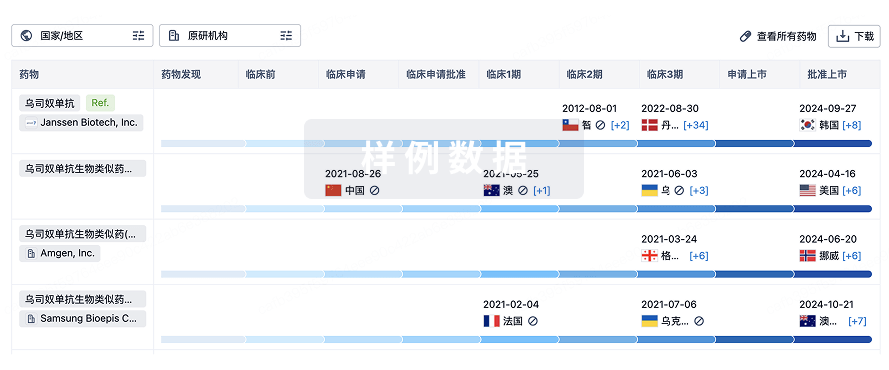
生物类似药
生物类似药在不同国家/地区的竞争态势。请注意临床1/2期并入临床2期,临床2/3期并入临床3期
登录
或
特殊审评
只需点击几下即可了解关键药物信息。
登录
或

提出任何生物医药研究问题
让每一步生物医药决策都精准制胜
基于十亿级生物数据与全球情报的精准 AI,赋能早期药物发现
立即开始免费试用!
智慧芽新药情报库是智慧芽专为生命科学人士构建的基于AI的创新药情报平台,助您全方位提升您的研发与决策效率。
立即接入生物医药数据包
智慧芽新药库数据也通过智慧芽开放平台,以MCP或API服务形式对外开放。立即使用我们的MCP服务定制您的LLM智能体。
生物序列数据库
生物药研发创新
免费使用
化学结构数据库
小分子化药研发创新
免费使用