预约演示
更新于:2026-10-03
F2A4-K-NS
更新于:2026-10-03
概要
基本信息
在研机构- |
权益机构- |
最高研发阶段终止药物发现 |
首次获批日期- |
最高研发阶段(中国)- |
特殊审评- |

关联
100 项与 F2A4-K-NS 相关的临床结果
登录后查看更多信息
100 项与 F2A4-K-NS 相关的转化医学
登录后查看更多信息
100 项与 F2A4-K-NS 相关的专利(医药)
登录后查看更多信息
16
项与 F2A4-K-NS 相关的文献(医药)2026-04-01·CHEMOSPHERE
Cell-based and computational toxicity profiling of thiourea and imine derivatives in Acanthamoeba sp. as environmental bioindicators for potential optoelectronic applications
Article
作者: Razali, Siti Aisyah ; Hashim, Fatimah ; Mohammed, Mas ; Rahamathullah, Rafizah ; Musa, Fariq Zulfaqar ; Tuan Johari, Syed Ahmad Tajudin ; Manisekaran, Thivyan ; Khairul, Wan M ; Mohd Rashid, Nur Amirah Nabilah ; Syahrul Fahmy, Amira Nabiha Najwa
Acanthamoeba sp., a sensitive yet underutilised environmental bioindicator, was utilised to evaluate the toxicity of two emerging hybrid moieties, AN6C and F-2a, with potential applications in optoelectronic materials. This study highlights implications for future safety, ecological monitoring, and environmental health assessment of the two hybrid moieties. The structures were confirmed by spectroscopic analysis, namely FTIR, 1D NMR, and UV-visible analysis. The HOMO-LUMO gaps of these compounds are below 4 eV, indicating their semiconducting properties. Additionally, the presence of the (-CHN-) moiety in AN6C, as well as the presence of carbonyl (CO) and thiocarbonyl (CS) groups in F-2a, reveals a good binding capacity in inhibiting cell growth. A cytotoxicity screening was conducted using the MTT assay to examine dose-response activities based on the IC50 values obtained. Thiourea (F-2a) exhibits an IC50 value of 24.32 μg/mL, while imine (AN6C) shows a significantly lower IC50 value of 0.4589 μg/mL. Post-treatment cell morphology and cytoplasmic biochemical changes, assessed through light and fluorescence microscopy, revealed rounded and floating encystment phases, yellowish-orange granulation within the cells, and burst-open plasma membranes, indicating the presence of autophagy and necrosis. The DNA laddering assay indicated that DNA fragmentation occurred at 1100, 900, and 100 bp after treatment with both compounds. Analysis of mitochondrial membrane potential (MMP) by flow cytometry demonstrated that F-2a and AN6C produced 20.6% and 16% disruption of the MMP, respectively. Molecular docking simulation was conducted on the profilin protein of Acanthamoeba sp., profilin II (PDB ID: 2ACG), a small cytoskeletal protein that binds to actin and is required for normal actin cytoskeleton function. F-2a exhibited a docking score of -6.2 kcal/mol, indicating high binding affinity, and interacted with 12 amino acid residues compared to AN6C, which showed a docking score of -3.4 kcal/mol and interacted with nine amino acid residues of the 2ACG protein. These findings were evaluated to generate hypotheses regarding the roles and effects of the hybrid moieties and their conjugated functional groups at cellular, molecular, and in silico levels on eukaryotic microorganisms that are sensitive to environmental change.
2020-10-01·JOURNAL OF ETHNOPHARMACOLOGY
Oral treatments with a flavonoid-enriched fraction from Cecropia hololeuca and with rutin reduce articular pain and inflammation in murine zymosan-induced arthritis
Article
作者: da Cunha Pinto, Angelo ; Costa, Sônia Soares ; Coelho, Mariana Neubarth ; Teixeira, Felipe Marques ; Machado Vianna-Filho, Marcelo Dias ; Malvar, David do Carmo ; José-Chagas, Fernanda do Nascimento ; Kanashiro, Alexandre ; Cunha, Fernando Queiroz ; Vanderlinde, Frederico Argollo
ETHNOPHARMACOLOGICAL RELEVANCE:
Cecropia Loefl. species (Urticaceae) are widely spread across the rainforest in tropical and subtropical regions of Central and South America. Inhabitants of different regions of Brazil employ leaves, fruits and sprouts of Cecropia hololeuca Miq. mainly as anti-inflammatory, anti-asthmatic, expectorant, fever suppressant, and against cough.
AIM OF THE STUDY:
To evaluate the antinociceptive and anti-inflammatory activities of an aqueous leaf extract of C. hololeuca in a murine model of zymosan-induced arthritis (ZIA) and characterize compounds contributing to these effects.
MATERIALS AND METHODS:
The crude aqueous extract of C. hololeuca (CAE) was obtained by infusion, screened for antinociceptive and anti-inflammatory activities, and fractionated (solvent partition; RP-2 and Sephadex G-25 column chromatography), yielding fractions that were chemically and pharmacologically investigated. TLC, HPLC-DAD, HPLC-DAD-ESI-MS/MS and NMR analyses were peformed. The antinociceptive activity was assessed by means of acetic acid-induced writhing, hot-plate and rota-rod tests. ZIA was used to evaluate the anti-arthritic activity of oral treatment with CAE, butanolic (BF) and aqueous fraction (AF), as well as the fractions obtained from BF (F2, F2-A and F2-B). Rutin, a flavonoid found in C. hololeuca, was also tested. Mechanical hypernociception, joint edema, local neutrophil recruitment and articular TNF-α quantification were performed to measure the severity of arthritis and identify the anti-inflammatory potential of C. hololeuca.
RESULTS:
CAE (0.03-1 g/kg, p.o.) showed a dose-related inhibitory effect on acetic acid-induced writhing test, but did not change the pain latency in the hotplate test, nor the first fall time on the rota-rod test. In addition, CAE (1 g/kg, p.o.) inhibited by 65% the mechanical hypernociception, 46% the joint edema, 54% the neutrophil recruitment and 53% the articular TNF-α concentration levels in ZIA. BF (0.4 g/kg, p.o.), AF (0.6 g/kg), F2 (0.1 g/kg) and F2-A (0.045 g/kg), but not F2-B (0.055 g/kg), inhibited the mechanical hypernociception, joint edema and neutrophil recruitment in ZIA. Rutin (0.001-0.03 g/kg, p.o.) produced dose-related inhibitory effects in the mechanical hypernociception, joint edema and neutrophil recruitment, and at 0.03 g/kg also inhibited articular TNF-α synthesis after intra-articular zymosan injection. Isoorientin, isovitexin, rutin and isoquercitrin were identified in the most active fraction (F2-A), along with luteolin and apigenin derivatives, tentatively identified as isoorientin-2″-O-glucoside and isovitexin-2″-O-glucoside.
CONCLUSION:
This study corroborates the popular use by oral route of aqueous preparations of C. hololeuca against joint inflammatory disorders, such as rheumatoid arthritis. Our results demonstrated for the first time that oral administration of rutin shows antinociceptive and anti-inflammatory effects in ZIA, indicating that this flavonoid is one of the immunomodulatory compounds involved in the anti-arthritic activity of C. hololeuca.
2012-03-01·Journal of liposome research4区 · 医学
Investigations on feasibility of in situ development of amphotericin B liposomes for industrial applications
4区 · 医学
Article
作者: Mitra, Kalyan ; Mishra, Prabhat Ranjan ; Verma, Ashwni ; Singodia, Deepak ; Khare, Prashant ; Dube, Anuradha
Amphotericin B (AmB) liposome formulations are very successful in the treatment of fungal infections and leishmaniasis. But higher cost limits its widespread use among people in developing countries. Therefore, we have developed a modified ethanol-injection method for the preparation of AmB liposomes. Two liposomal formulations were developed with dimyristoyl phosphatidylcholine [F-1a] and soya phosphatidylcholine [F-2a], along with egg phosphatidyl glycerol and cholesterol. AmB was dissolved in acidified dimethyl acetamide and mixed with ethanolic lipid solution and rapidly injected in 5% dextrose to prepare liposomes. Liposomes were characterized on the basis of size (~100 nm), zeta (-43.3 ± 2.8 mV) and percent entrapment efficiency (>95%). The in vitro release study showed an insignificant difference (P ≥ 0.05) for 24-hour release between marketed AmB liposomes (AmBisome) and F-1a and F-2a. Proliposome concentrate, used for the preparation of in situ liposomes, was physically stable for more than 3 months at experimental conditions. Similarly, AmB showed no sign of degradation in reconstituted liposomes stored at 2-8°C for more than 3 months. IC(50) value of Ambisome (0.18 µg/mL) was comparatively similar to F-1a (0.17 µg/mL) and F-2a (0.16 µg/mL) against intramacrophagic amastigotes. Under experimental conditions, a novel modified method for AmB liposomes is a great success and generates interest for development as a platform technology for many therapeutic drug products.
100 项与 F2A4-K-NS 相关的药物交易
登录后查看更多信息
研发状态
10 条进展最快的记录, 后查看更多信息
登录
| 适应症 | 最高研发状态 | 国家/地区 | 公司 | 日期 |
|---|---|---|---|---|
| 溃疡性结肠炎 | 药物发现 | 美国 | - |
登录后查看更多信息
临床结果
临床结果
适应症
分期
评价
查看全部结果
| 研究 | 分期 | 人群特征 | 评价人数 | 分组 | 结果 | 评价 | 发布日期 |
|---|
No Data | |||||||
登录后查看更多信息
转化医学
使用我们的转化医学数据加速您的研究。
登录
或

药物交易
使用我们的药物交易数据加速您的研究。
登录
或

核心专利
使用我们的核心专利数据促进您的研究。
登录
或

临床分析
紧跟全球注册中心的最新临床试验。
登录
或

批准
利用最新的监管批准信息加速您的研究。
登录
或

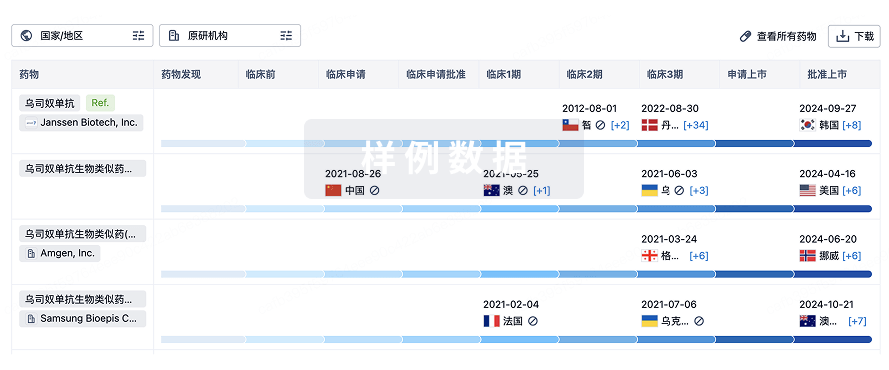
生物类似药
生物类似药在不同国家/地区的竞争态势。请注意临床1/2期并入临床2期,临床2/3期并入临床3期
登录
或
特殊审评
只需点击几下即可了解关键药物信息。
登录
或

提出任何生物医药研究问题
让每一步生物医药决策都精准制胜
基于十亿级生物数据与全球情报的精准 AI,赋能早期药物发现
立即开始免费试用!
智慧芽新药情报库是智慧芽专为生命科学人士构建的基于AI的创新药情报平台,助您全方位提升您的研发与决策效率。
立即接入生物医药数据包
智慧芽新药库数据也通过智慧芽开放平台,以MCP或API服务形式对外开放。立即使用我们的MCP服务定制您的LLM智能体。
生物序列数据库
生物药研发创新
免费使用
化学结构数据库
小分子化药研发创新
免费使用