预约演示
更新于:2025-12-09
Human Haptoglobin(Japan Blood Products Organization)
人结合珠蛋白(Japan Blood Products Organization)
更新于:2025-12-09
概要
基本信息
非在研机构- |
权益机构- |
最高研发阶段批准上市 |
首次获批日期 日本 (2008-10-14), |
最高研发阶段(中国)- |
特殊审评- |

登录后查看时间轴
关联
2
项与 人结合珠蛋白(Japan Blood Products Organization) 相关的临床试验NCT03009760
A Phase I , Study to Investigate Pharmacokinetics and Pharmacodynamics of Single and Multiple Dose of CJ-12420 50mg, 100mg in Helicobacter Pylori ?

JPRN-UMIN000011606
Efficacy and Safety of eradication therapy to exterminate Hp - Hp eradtiocn 3rd line therapy
100 项与 人结合珠蛋白(Japan Blood Products Organization) 相关的临床结果
登录后查看更多信息
100 项与 人结合珠蛋白(Japan Blood Products Organization) 相关的转化医学
登录后查看更多信息
100 项与 人结合珠蛋白(Japan Blood Products Organization) 相关的专利(医药)
登录后查看更多信息
3
项与 人结合珠蛋白(Japan Blood Products Organization) 相关的文献(医药)2025-11-01ARCHIVES OF MICROBIOLOGY
A novel mechanistic study on inhibiting influenza A virus replication by a newly extracted polypeptide targeting host autophagy
Article
作者: Elalem, Osama R ; Alalem, Nedaa ; Khalil, Hany ; Elshamy, Amany M ; Awad, Ahmed ; Tabl, Ahmed M ; Ebaid, Mohamed E ; Alalem, Mai
Influenza is a contagious respiratory disease in humans, primarily caused by influenza A and B viruses. The severity of pandemic influenza is influenced by several factors, including the virus's ability to evade immune defenses such as autophagy, a key catabolic process within cells. Influenza A virus (IAV) exploits the autophagic pathway to facilitate its replication. In this study, we explored the impact of specific purified honey-derived peptide (H-P) on IAV-induced autophagy signaling, aiming to disrupt viral replication through host-directed strategies and potentially reduce the risk of viral mutation and resistance, as seen with antiviral drugs like Tamiflu. We examined the antiviral potential of H-P in human lung epithelial cells (A549) and compared its effects with Tamiflu and phosphate-buffered saline (PBS) as controls. To assess the safety of H-P, we first evaluated cell viability, lactate dehydrogenase (LDH) release, cell morphology, and cell count following treatment with various concentrations of H-P or Tamiflu in the absence of infection. At lower concentrations, including 5 µM, both treatments showed minimal impact on cell viability, LDH levels, morphology, and cell count. Upon infection with IAV, treatment with 5 µM H-P significantly reduced the expression of both viral nonstructural protein 1 (NS1) and nucleoprotein (NP), whereas Tamiflu treatment at the same concentration reduced only NP expression. Mechanistic analyses revealed that H-P induced both early and late apoptotic signaling in infected cells, as demonstrated by Annexin V staining, suggesting its role in promoting apoptosis during early stages of infection. Additionally, H-P treatment significantly suppressed the expression of autophagy-related genes Atg5 and LC3B during the early stages of infection. It also inhibited the conversion of cytosolic LC3-I to membrane-bound LC3-II, even when autophagy was induced by rapamycin independently of infection. Notably, unlike Tamiflu, H-P increased the production of immune mediators, interferon-beta (IFN-β) and interleukin-6 (IL-6) specifically in response to IAV infection, without altering their expression in the absence of infection. Collectively, these findings highlight the antiviral potential of the naturally derived H-P polypeptide through suppression of IAV-stimulated autophagy, promotion of early apoptosis, and enhancement of antiviral cytokine responses. This suggests a promising host-targeted approach to influenza treatment that may complement or offer alternatives to conventional antiviral therapies like Tamiflu.
2022-01-14The British journal of nutrition3区 · 医学
Intermittent fasting with a high-protein diet mitigated osteoarthritis symptoms by increasing lean body mass and reducing inflammation in osteoarthritic rats with Alzheimer’s disease-like dementia
3区 · 医学
Article
作者: Shin, Bae Kun ; Park, Sunmin
Abstract:
Menopausal women are susceptible to osteoarthritis(OA) and memory impairment. We hypothesised that Alzheimer’s-like disease(AD) exacerbates OA and that intermittent fasting(IMF) with a high-protein(H-P) diet would enhance memory function and relieve OA symptoms in oestrogen-deficient animals induced AD and OA. The action mechanism was also explored. Ovariectomised Sprague–Dawley rats were fed high-fat(H-F) or H-P diets for 2 weeks, and then they had a hippocampal infusion of β-amyloid(25–35) for 4 weeks to induce AD and an injection of monoidoacetate(MIA) into the articular cartilage to induce OA. Non-AD groups had non-AD symptoms by hippocampal amyloid-β(35–25) infusion. IMF suppressed memory impairment in AD rats, especially those fed H-P diets. Compared with non-AD, AD exacerbated OA symptoms, including swelling, limping, slowed treadmill running speed, and uneven weight distribution in the left leg. The exacerbations were linked to increased inflammation and pain, but IMF and H-P lessened the exacerbation. Lean body mass(LBM) decreased with AD, but H-P protected against LBM loss. Histological examination of the knee joint revealed the degree of the cellular invasion into the middle zone, and the changes in the tidemark plateau were greatest in the AD-AL with H-F, while non-AD-IMF improved the cellular invasion to as much as non-AD-AL. H-P reduced the infiltration into the middle zone of the knee and promoted collagen production. In conclusion, AD exacerbated the articular cartilage deterioration and memory impairment, and IMF with H-P alleviated the memory impairment and osteoarthritic symptoms by decreasing hippocampal amyloid-β deposition and proinflammatory cytokine expressions and by increasing LBM.
2013-10-01Rheumatology international4区 · 医学
Periodontal therapy in chronic periodontitis lowers gingival crevicular fluid interleukin-1beta and DAS28 in rheumatoid arthritis patients
4区 · 医学
Article
作者: Başak Bıyıkoğlu ; Denis F. Kinane ; Evren Evrenosoğlu ; Nurcan Buduneli ; David F. Lappin ; Ayşe Nalbantsoy ; Kenan Aksu
To evaluate clinical outcomes and effects of non-surgical periodontal therapy on serum, gingival crevicular fluid (GCF) interleukin-1beta (IL-1β) and tumor necrosis factor-alpha (TNF-α) levels in chronic periodontitis patients with/without rheumatoid arthritis (RA), fifteen RA patients with chronic periodontitis (RA-P) and 15 systemically healthy non-RA chronic periodontitis patients (H-P) were recruited. Clinical periodontal recordings, GCF, and blood samples were obtained at baseline, 1, 3, and 6 months after periodontal treatment. GCF, serum IL-1β, TNF-α levels were analyzed by ELISA. Disease activity score 28 (DAS28) was used to assess RA clinical morbidity. Study groups were compared by Mann-Whitney U test. Wilcoxon test was used to compare the data at baseline, 1, 3, and 6 months after periodontal therapy within the same group. DAS28 decreased significantly after periodontal therapy in RA-P group (p < 0.01). Serum TNF-α concentrations of H-P group were significantly higher than those of RA-P group (p < 0.01), whereas IL-1β levels were similar. No significant change was observed in serum levels of these cytokines after periodontal therapy. GCF IL-1β amounts decreased significantly in both groups following treatment (p < 0.01). At 6-months, H-P GCF IL-1β concentrations were significantly lower than baseline. DAS28 and GCF IL-1β correlated with clinical periodontal indices (p < 0.01). Significant decreases in DAS28 and GCF IL-1β amounts after periodontal treatment suggest that periodontal therapy synergizes with systemic RA therapy to improve RA status.
100 项与 人结合珠蛋白(Japan Blood Products Organization) 相关的药物交易
登录后查看更多信息
研发状态
10 条最早获批的记录, 后查看更多信息
登录
| 适应症 | 国家/地区 | 公司 | 日期 |
|---|---|---|---|
| 血红蛋白尿 | 日本 | 2008-10-14 |
登录后查看更多信息
临床结果
临床结果
适应症
分期
评价
查看全部结果
登录后查看更多信息
转化医学
使用我们的转化医学数据加速您的研究。
登录
或

药物交易
使用我们的药物交易数据加速您的研究。
登录
或

核心专利
使用我们的核心专利数据促进您的研究。
登录
或

临床分析
紧跟全球注册中心的最新临床试验。
登录
或

批准
利用最新的监管批准信息加速您的研究。
登录
或

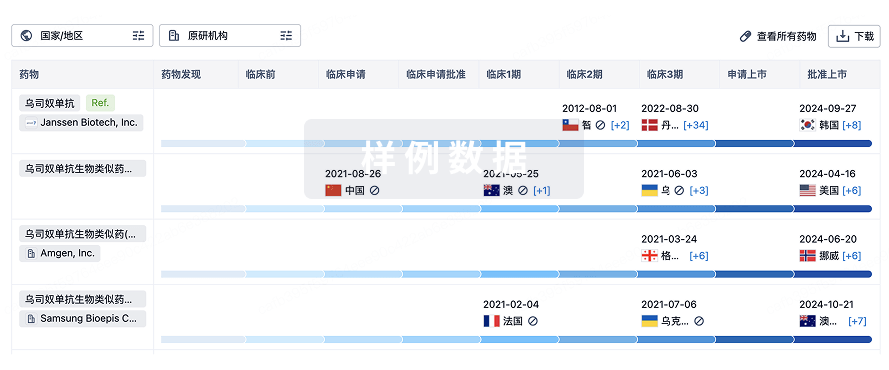
生物类似药
生物类似药在不同国家/地区的竞争态势。请注意临床1/2期并入临床2期,临床2/3期并入临床3期
登录
或
特殊审评
只需点击几下即可了解关键药物信息。
登录
或

提出任何生物医药研究问题
让每一步生物医药决策都精准制胜
基于十亿级生物数据与全球情报的精准 AI,赋能早期药物发现
立即开始免费试用!
智慧芽新药情报库是智慧芽专为生命科学人士构建的基于AI的创新药情报平台,助您全方位提升您的研发与决策效率。
立即接入生物医药数据包
智慧芽新药库数据也通过智慧芽开放平台,以MCP或API服务形式对外开放。立即使用我们的MCP服务定制您的LLM智能体。
生物序列数据库
生物药研发创新
免费使用
化学结构数据库
小分子化药研发创新
免费使用