预约演示
更新于:2026-09-07
Avexitide
更新于:2026-09-07
概要
基本信息
非在研机构- |
最高研发阶段临床3期 |
首次获批日期- |
最高研发阶段(中国)- |
特殊审评- |



登录后查看时间轴
结构/序列
Sequence Code 1158684

来源: *****
关联
5
项与 Avexitide 相关的临床试验NCT06747468
A Phase 3 Multicenter, Randomized, Double-Blind, Placebo-Controlled Study to Evaluate the Efficacy and Safety of Avexitide in Participants With Post-Bariatric Hypoglycemia
NCT06498063
Renal Extraction of Glucagon and Renal Effects of Glucagon

ACTRN12614001117606
Defining the role of endogenous glucagon-like peptide-1 (GLP-1) in the glycaemic, triglyceride and energy expenditure responses to fat in patients with Type 2 Diabetes (T2D) using Galvus (vildagliptin) and the GLP-1 receptor antagonist exendin (9-39)
100 项与 Avexitide 相关的临床结果
登录后查看更多信息
100 项与 Avexitide 相关的转化医学
登录后查看更多信息
100 项与 Avexitide 相关的专利(医药)
登录后查看更多信息
318
项与 Avexitide 相关的文献(医药)2026-08-01Molecular Metabolism
Dysregulated glucagon signaling contributes to hypoglycemia after vertical sleeve gastrectomy in mice
Article
作者: McClennan, Andrew ; Bethea, Maigen ; Benninger, Richard Kp ; Cook, Tyler M ; Birznieks, Carissa ; da Silva Teixeira, Silvania ; Patti, Mary-Elizabeth ; Sandoval, Darleen A ; Hendrix, Jasmine
OBJECTIVES:
After bariatric surgery, many individuals experience debilitating bouts of hypoglycemia, termed post-bariatric hypoglycemia (PBH). Our mouse model of vertical sleeve gastrectomy (VSG) mimics key aspects of PBH in humans. As glucagon is a key element of the counterregulatory hormonal response to hypoglycemia, the objective of this manuscript is to understand if glucagon responses and sensitivity are altered after VSG in mice.
METHODS:
Mice underwent sham or VSG surgery. We measured glucagon responses to insulin-induced hypoglycemia and mixed meal tolerance tests. We then measured glucose and insulin responses to different doses of exogenous glucagon in fed and fasted states. Lastly, we performed in vitro experiments to examine glucagon responses to glucose and amino acids.
RESULTS:
Postprandial glucagon levels were elevated in mice after VSG, but glucose responses to low doses of exogenous glucagon were blunted in the fasted and postprandial state. Administration of low dose glucagon in the fed state led to hypoglycemia in some VSG mice in parallel with stimulation of insulin release. This effect was partially prevented by pretreatment with the GLP-1 receptor antagonist exendin9-39. In islets isolated from VSG mice, glucagon release in response to high glucose was suppressed, but glucagon responses to alanine and high glucose were not different compared to sham controls.
CONCLUSIONS:
Altogether, our data suggest both glucagon responses, and sensitivity to exogenous glucagon are altered by VSG. The glucagon dysregulation was not observed in isolated islets suggesting gut signaling may be critical in driving glucagon responses after VSG.
2026-08-01JOURNAL OF ETHNOPHARMACOLOGY
Yueju pill exerts rapid antidepressant effects via sequential activation of hippocampal GLP-1 receptor and PACAP signaling in mice
Article
作者: Han, Mingzhi ; Xie, Huijun ; Chen, Gang ; Wu, Changyu ; Wang, Yanqin ; Zhang, Hailou ; Peng, Yuhan ; Xing, Shan
ETHNOPHARMACOLOGICAL RELEVANCE:
Yueju pill (YJ), a classical Chinese medicine formula first documented in 'Danxixinfa by Zhu Danxi for treating "six stagnations" (Liu Yu: qi, blood, phlegm, fire, dampness, and food), has been clinically prescribed for mood disorders characterized by qi stagnation and depression for centuries. Despite its historical application for relieving emotional constraint (Yujie) and treating depressive disorders, the rapid antidepressant mechanism and molecular targets of YJ remain incompletely elucidated.
AIM OF THE STUDY:
This study aimed to investigate the rapid antidepressant-like effects of YJ and uncover the underlying mechanism involving hippocampal GLP-1 receptor (GLP-1r) and pituitary adenylate cyclase-activating polypeptide (PACAP) signaling.
MATERIALS AND METHODS:
The chemical stability of YJ was evaluated by quantifying active constituents. A chronic unpredictable mild stress (CUMS) mouse model was employed to assess rapid antidepressant effects of YJ through acute administration using behavioral paradigms including novelty-suppressed feeding (NSF), tail suspension (TST), forced swim (FST), and sucrose preference tests (SPT). Hippocampal transcriptome sequencing was performed 30 min post-treatment to identify key targets. Protein and gene expressions were validated by Western blot, immunofluorescence, and quantitative PCR. Pharmacological interventions using exendin (9-39) (GLP-1r antagonist) and PACAP6-38 (PACAP antagonist) were conducted to establish signaling hierarchies. Additionally, HT22 hippocampal neuronal cells were utilized to examine direct effects on synaptic proteins.
RESULTS:
Four active constituents (shanzhiside methylester, geniposide, ferulic acid, and gentiobioside) were identified in YJ with stable and reproducible concentrations. Acute administration of YJ (2 g/kg, as the final extract) rapidly ameliorated depressive-like behaviors in CUMS mice, with effects comparable to ketamine. Hippocampal transcriptome sequencing identified 461 differentially expressed genes following YJ treatment, with GLP-1r and Adcyap1 (PACAP) notably upregulated compared to the CUMS group. Western blot, immunofluorescence and PCR confirmed that YJ elevated protein and gene expression of GLP-1r and PACAP in the dentate gyrus within 30 min. Pharmacological blockade of GLP-1r with exendin9-39 abolished YJ's rapid antidepressant effects and prevented YJ-induced PACAP upregulation. Conversely, intra-dentate gyrus injection of PACAP6-38 blocked YJ's behavioral effects without affecting GLP-1 expression, indicating that PACAP acts downstream of GLP-1. In HT22 cells, YJ dose-dependently upregulated GLP-1r and PACAP, while also improving synaptic protein expression (pCaMKII, synapsin-1, PSD95, and BDNF).
CONCLUSION:
These findings demonstrate that YJ produces rapid antidepressant effects through activation of hippocampal GLP-1r-dependent PACAP signaling, providing scientific evidence for the traditional "resolving depression" (Jieyu) function of this classical formula and identifying a novel polyherbal strategy for rapid-acting antidepressant therapy.
2026-07-01JOURNAL OF ETHNOPHARMACOLOGY
Dendrobium huoshanense polysaccharides alleviate DSS-induced ulcerative colitis in mice: comparison between different parts of plant and role of GLP-1/GLP-1R axis
Article
作者: Luo, Jian-Ping ; Li, Qiang-Ming ; Zha, Xue-Qiang ; Shang, Zhen-Zi ; Zhang, Feng-Yun ; Gao, Xin
ETHNOPHARMACOLOGICAL RELEVANCE:
Dendrobium huoshanense has been long used to treat gastrointestinal disorders including ulcerative colitis (UC) in traditional Chinese medicine. Polysaccharides as its main active components can alleviate UC by reducing inflammation, and promote the secretion of glucagon-like peptide-1 (GLP-1), which possesses anti-inflammatory effects via GLP-1 receptor (GLP-1R). However, it remains unclear whether polysaccharides from different parts of this herb are equally effective in alleviating UC and whether polysaccharides function via GLP-1/GLP-1R axis.
AIM OF THE STUDY:
To identify the part in which the polysaccharide is most effective in alleviating UC and to explore its mechanism of action through GLP-1/GLP-1R axis.
MATERIALS AND METHODS:
The physicochemical properties of polysaccharides were analyzed. A dextran sulfate sodium (DSS)-induced UC mouse model was used to assess colitis-associated damage via morphological scoring, histopathological evaluation and inflammatory examination with multi-cytokine array and western blotting. Gut microbiota compositions, short-chain fatty acid contents and GLP-1 levels were measured, and their roles were checked using antibiotic mixture and GLP-1R antagonist Exendin (9-39).
RESULTS:
Stem, leaf and flower polysaccharides, with different molecular weight, monosaccharide composition and spatial conformation, differentially alleviated UC symptoms, and stem polysaccharide (DHPS) showed the strongest efficacy, as evidenced by improved epithelial integrity, mucus barrier and inflammatory disorder. DHPS-alleviated UC was independent of DHPS-altered gut microbiota and positively correlated with DHPS-elevated GLP-1 levels, which could be abolished by Exendin (9-39), suggesting that GLP-1-activated GLP-1R signaling mediated the effects of DHPS against UC.
CONCLUSIONS:
DHPS is the most effective polysaccharide for alleviating DSS-induced UC through GLP-1/GLP-1R axis, proposing DHPS is a valid candidate for UC treatment using D. huoshanense.
100 项与 Avexitide 相关的药物交易
登录后查看更多信息
外链
| KEGG | Wiki | ATC | Drug Bank |
|---|---|---|---|
| D11418 | - | - | - |
研发状态
10 条进展最快的记录, 后查看更多信息
登录
| 适应症 | 最高研发状态 | 国家/地区 | 公司 | 日期 |
|---|---|---|---|---|
| 低血糖 | 临床3期 | 美国 | 2025-04-29 |
登录后查看更多信息
临床结果
临床结果
适应症
分期
评价
查看全部结果
登录后查看更多信息
转化医学
使用我们的转化医学数据加速您的研究。
登录
或

药物交易
使用我们的药物交易数据加速您的研究。
登录
或

核心专利
使用我们的核心专利数据促进您的研究。
登录
或

临床分析
紧跟全球注册中心的最新临床试验。
登录
或

批准
利用最新的监管批准信息加速您的研究。
登录
或

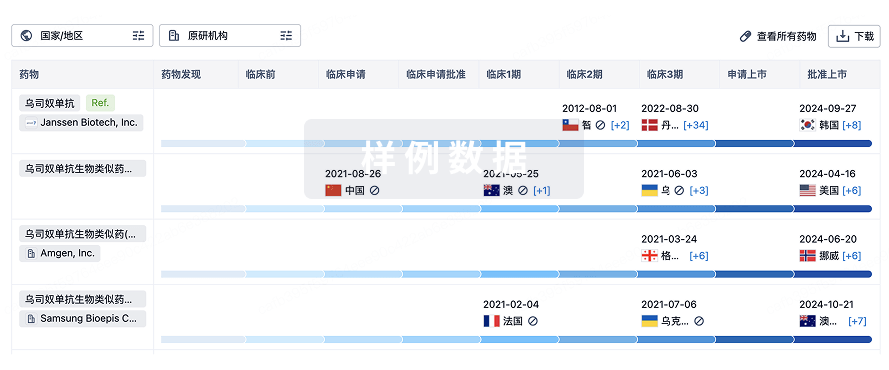
生物类似药
生物类似药在不同国家/地区的竞争态势。请注意临床1/2期并入临床2期,临床2/3期并入临床3期
登录
或
特殊审评
只需点击几下即可了解关键药物信息。
登录
或

提出任何生物医药研究问题
让每一步生物医药决策都精准制胜
基于十亿级生物数据与全球情报的精准 AI,赋能早期药物发现
立即开始免费试用!
智慧芽新药情报库是智慧芽专为生命科学人士构建的基于AI的创新药情报平台,助您全方位提升您的研发与决策效率。
立即接入生物医药数据包
智慧芽新药库数据也通过智慧芽开放平台,以MCP或API服务形式对外开放。立即使用我们的MCP服务定制您的LLM智能体。
生物序列数据库
生物药研发创新
免费使用
化学结构数据库
小分子化药研发创新
免费使用