预约演示
更新于:2026-09-12
Semaglutide(Hainan Zhonghe)
司美格鲁肽(海南中和)
更新于:2026-09-12
概要
基本信息
原研机构 |
在研机构 |
非在研机构- |
权益机构- |
最高研发阶段临床3期 |
首次获批日期- |
最高研发阶段(中国)临床3期 |
特殊审评- |

登录后查看时间轴
关联
2
项与 司美格鲁肽(海南中和) 相关的临床试验CTR20254198
评价司美格鲁肽注射液在中国肥胖人群中的有效性及安全性的多中心、随机、开放、平行、阳性对照的Ⅲ期临床试验
CTR20253360
司美格鲁肽注射液与诺和泰在中国健康受试者中单中心、开放、随机、单剂量、平行设计的药代动力学比对试验
100 项与 司美格鲁肽(海南中和) 相关的临床结果
登录后查看更多信息
100 项与 司美格鲁肽(海南中和) 相关的转化医学
登录后查看更多信息
100 项与 司美格鲁肽(海南中和) 相关的专利(医药)
登录后查看更多信息
813
项与 司美格鲁肽(海南中和) 相关的文献(医药)2026-12-31JOURNAL OF MEDICAL ECONOMICS
Calculating cost per event avoided using a composite number needed to treat
Article
作者: Wang, Julia ; Bhavsar, Jigish ; Toliver, Joshua ; Sullivan, Sean D.
OBJECTIVE:
Number needed to treat (NNT) and cost per event avoided (CPEA) are measures used to represent the clinical and economic value of chronic treatments and are commonly calculated based on primary endpoints from trials. This approach, although widely used, does not reflect the complete value of a treatment, as it does not consider outcomes beyond the primary endpoints. This research aims to overcome this limitation by developing multiple composite NNTs to derive the CPEA to estimate a total value of semaglutide and dulaglutide in people with established cardiovascular disease.
METHODS:
Two cardiovascular outcomes trials were selected, SELECT (NCT03574597, semaglutide 2.4 mg) and REWIND (NCT01394952, dulaglutide 1.5 mg). NNT was calculated as NNT = 1/ARR where ARR = control event rate - experimental event rate. NNT was estimated for 3-point major adverse cardiovascular events (MACE-3; primary endpoint of the trials), 5-point MACE (MACE-5), and cardiovascular-kidney-metabolic events (CKM). CPEA of MACE-3, MACE-5, and CKM was calculated as NNT*duration of mean follow-up (semaglutide) or duration of median follow-up (dulaglutide)*estimated net price.
RESULTS:
The NNT decreased as the number of outcomes in the composite endpoint increased, where NNTMACE-3, NNTMACE-5, and NNTCKM were 67, 49, and 8 for semaglutide, and 72, 64, and 23 for dulaglutide, respectively. Similarly, the CPEA decreased as the number of outcomes in the composite endpoint increased, where the CPEA for MACE-3, MACE-5 and CKM calculations were $1,662,001, $1,232,417, and $190,387 for semaglutide and $1,884,013, $1,670,366, and $607,886 for dulaglutide.
CONCLUSIONS:
This research illustrates the limitations of using a NNT focused only on the primary endpoint, as it does not capture the total benefit of the treatment. When considering the value of treatments through NNT or CPEA analyses, a composite endpoint capturing broader benefit should be utilized.
2026-12-31JOURNAL OF MEDICAL ECONOMICS
Cost-effectiveness of tirzepatide versus semaglutide for patients with obesity or overweight in the US: evidence from the SURMOUNT-5 head-to-head phase-3 trial
Article
作者: Kirk, Myles ; Zimner-Rapuch, Sarah ; Johansson, Erin ; van Hest, Naomi ; Annemans, Lieven ; Bays, Harold ; Wilding, John P. H. ; Spaepen, Erik ; Upadhyay, Navneet
PURPOSE:
This study evaluated the cost-effectiveness (from the United States [US] societal perspective) of tirzepatide at its maximum-tolerated-dose (MTD) compared to semaglutide (MTD), both administered adjunct to a reduced-calorie diet and increased physical activity. The analysis focused on individuals with obesity (body mass index [BMI] ≥ 30 kg/m2), or overweight (BMI ≥27 to <30 kg/m2 + ≥1 obesity-related complication), using data from the head-to-head Phase-3 SURMOUNT-5 trial (patients without type 2 diabetes [T2D]).
PATIENTS AND METHODS:
This patient-level simulation modeling study assessed the cost and long-term clinical outcomes of tirzepatide (MTD) versus semaglutide (MTD), using data from the SURMOUNT-5 trial population. The modeled population were at risk of developing obesity-related complications including cardiovascular disease (CVD) and obstructive sleep apnea (OSA), amongst others. These outcomes were modeled using cardiometabolic parameters including weight, systolic blood pressure, high-density lipoprotein, glycated hemoglobin (HbA1c) and total cholesterol, by assessing their impact on healthcare and wider societal costs, quality of life, and mortality. Incremental cost-effectiveness ratios (ICERs; cost/quality-adjusted life year [QALY]) and incremental net health benefit (iNHBs) were calculated, and uncertainty was assessed through sensitivity and scenario analyses.
RESULTS:
Tirzepatide (MTD) was estimated to be less costly and more efficacious compared to semaglutide (MTD) with per patient cost savings of $41,688, 0.506 QALYs gained and positive iNHB of 0.784, indicating a net health benefit for tirzepatide. The model predicted that per 1,000 patients, 70 fewer patients will develop T2D, 10 fewer will develop CVD with tirzepatide (MTD) and patients spend 3.07 more years living with moderate/severe OSA when treated with semaglutide (MTD).
CONCLUSION:
Based on this simulation model, using head-to-head SURMOUNT-5 trial data, tirzepatide (MTD) had lower total costs and higher QALYs compared to semaglutide (MTD). This supports that tirzepatide (MTD) is a cost-effective treatment option for individuals with obesity or overweight compared to semaglutide (MTD).
2026-09-01Neural Regeneration Research
Semaglutide exerts neuroprotective effects by blocking the interleukin-17/NOD-like receptor family pyrin domain containing 3-mediated neuroinflammation pathway after traumatic brain injury
Article
作者: Chen, Xiyu ; Liu, Baiyun ; He, Wei ; Kong, Lu ; Bai, Miao ; Wang, Yumei ; Zhang, Yaxuan ; Yang, Mengshi ; Zhang, Xueling ; Shi, Guangzhi ; Zhang, Bin
Abstract:
Semaglutide, a long-acting glucagon-like peptide-1 receptor agonist, exhibits significant neuroprotective effects in stroke and neurodegenerative diseases. However, the antiinflammatory and barrier-protective effects of semaglutide and the mechanisms underlying its effects following traumatic brain injury remain unclear. In this study, we used mice to establish a model of controlled cortical impact injury to investigate the roles and effects of semaglutide on neuroinflammation, the integrity and permeability of the blood–brain barrier, brain edema, and the recovery of neurological function after traumatic brain injury. Our results showed that semaglutide treatment alleviated interleukin-17/NODlike receptor pyrin domain-containing 3-induced neuroinflammation and upregulated the expression of tight junction proteins, thereby reducing brain leakage and edema while promoting the recovery of neurological function. Furthermore, transmission electron microscopy assessments demonstrated that semaglutide maintained the ultrastructure of the blood–brain barrier, strengthening the tight junctions between endothelial cell membranes. Mechanistically, semaglutide alleviated inflammatory conditions by interrupting the positive-feedback loop of inflammation in peripheral and innate immune cells induced by interleukin-17/NOD-like receptor pyrin domain-containing 3. Collectively, our findings reveal the dual anti-inflammatory and neuroprotective roles of semaglutide, providing important preclinical evidence for its clinical application in the acute phase of traumatic brain injury.
100 项与 司美格鲁肽(海南中和) 相关的药物交易
登录后查看更多信息
外链
| KEGG | Wiki | ATC | Drug Bank |
|---|---|---|---|
| - | - | - |
研发状态
10 条进展最快的记录, 后查看更多信息
登录
| 适应症 | 最高研发状态 | 国家/地区 | 公司 | 日期 |
|---|---|---|---|---|
| 肥胖 | 临床3期 | 中国 | 2025-12-02 | |
| 2型糖尿病 | 临床1期 | 中国 | 2025-09-10 |
登录后查看更多信息
临床结果
临床结果
适应症
分期
评价
查看全部结果
登录后查看更多信息
转化医学
使用我们的转化医学数据加速您的研究。
登录
或

药物交易
使用我们的药物交易数据加速您的研究。
登录
或

核心专利
使用我们的核心专利数据促进您的研究。
登录
或

临床分析
紧跟全球注册中心的最新临床试验。
登录
或

批准
利用最新的监管批准信息加速您的研究。
登录
或

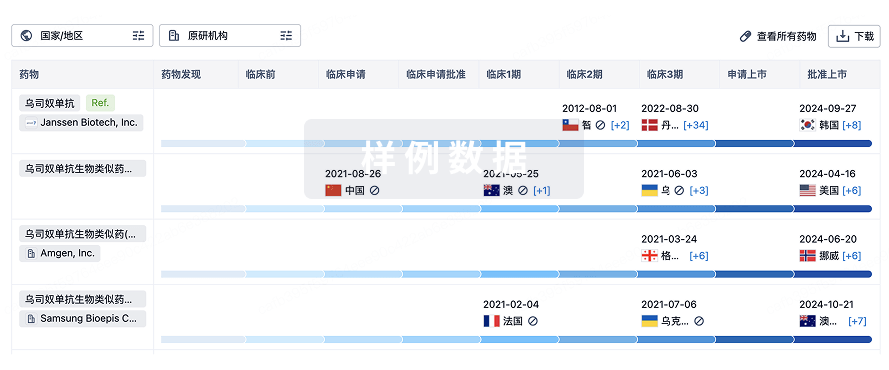
生物类似药
生物类似药在不同国家/地区的竞争态势。请注意临床1/2期并入临床2期,临床2/3期并入临床3期
登录
或
特殊审评
只需点击几下即可了解关键药物信息。
登录
或

提出任何生物医药研究问题
让每一步生物医药决策都精准制胜
基于十亿级生物数据与全球情报的精准 AI,赋能早期药物发现
立即开始免费试用!
智慧芽新药情报库是智慧芽专为生命科学人士构建的基于AI的创新药情报平台,助您全方位提升您的研发与决策效率。
立即接入生物医药数据包
智慧芽新药库数据也通过智慧芽开放平台,以MCP或API服务形式对外开放。立即使用我们的MCP服务定制您的LLM智能体。
生物序列数据库
生物药研发创新
免费使用
化学结构数据库
小分子化药研发创新
免费使用