预约演示
更新于:2026-09-25
MVC-101
更新于:2026-09-25
概要
基本信息
原研机构- |
在研机构- |
最高研发阶段终止临床1/2期 |
首次获批日期- |
最高研发阶段(中国)- |
特殊审评- |



登录后查看时间轴
关联
2
项与 MVC-101 相关的临床试验NCT04891718
A Phase 0 Master Protocol Using the CIVO® Platform to Evaluate Intratumoural Microdoses of Anti-Cancer Therapies in Patients With Solid Tumours
NCT04844073
A Phase 1/2, First-in-Human, Open-Label, Dose-Escalation Study of TAK-186 (Also Known as MVC-101), An EGFR x CD3 COnditional Bispecific Redirected Activation (COBRA) Protein in Patients With Unresectable Locally Advanced or Metastatic Cancer
100 项与 MVC-101 相关的临床结果
登录后查看更多信息
100 项与 MVC-101 相关的转化医学
登录后查看更多信息
100 项与 MVC-101 相关的专利(医药)
登录后查看更多信息
2
项与 MVC-101 相关的文献(医药)2025-12-31mAbs
Heterogeneous and evolving epitope landscape of clinical anti-drug antibodies against multidomain biotherapeutic: a case study of TAK-186
Article
作者: Li, Bin ; Zhang, Xiaobin ; Ronxhi, Janey ; Zha, Zheng ; Sun, Ruoxuan ; Qian, Mark G.
The emergence of anti-drug antibodies (ADAs) poses a major obstacle in the clinical development of therapeutic proteins (TPs) such as monoclonal antibodies and their derivatives. While standard multitiered ADA assays and neutralizing antibody assays offer valuable insights into the humoral immunogenicity risks of TPs, they are not sufficient to provide in-depth knowledge such as ADA epitope specificities. For complex multidomain biotherapeutics (MDBs), ADAs targeting individual domains can elicit distinct pharmacological effects. Therefore, it is crucial to implement straightforward and reliable methodologies to deconvolute ADA epitope profiles of MDBs. Herein, we report a case study using domain specificity analysis, linear peptide scanning and bioinformatic B cell epitope prediction to unveil the clinical ADA epitope landscape of TAK-186, a multidomain T cell engager that has been discontinued from clinical development. By applying this workflow, we observed strong domain specificity variability among patient samples. Furthermore, the data showed that many patients demonstrated evolved ADA epitope specificities throughout the course of the treatment. Several potential linear epitopes were identified subsequently through experimental and computational approaches. Overall, we presented in this study a practical strategy to elucidate and potentially mitigate the immunogenicity liabilities of complex biotherapeutics.
2022-06-01Journal for immunotherapy of cancer
Regression of EGFR positive established solid tumors in mice with the conditionally active T cell engager TAK-186
Article
作者: Datt, Aakash ; Krakow, Jessica L ; Vinogradova, Maia ; May, Chad ; Hillier, Brian J ; Quach, Lucy ; Wall, Russell ; Dettling, Danielle E ; Kwok, Eilene ; Panchal, Anand ; DuBridge, Robert B ; Degenhardt, Jeremiah D ; Zhu, Ying ; Seto, Pui
Background:
Despite clinical success with T cell engagers (TCEs) targeting hematological malignancies, achieving a safe and efficacious dose in patients with solid tumors remains challenging. Due to potency, low levels of target antigen expression on normal tissues may not be tolerated. To overcome this, we engineered a novel conditionally active TCE design called COBRA (Conditional Bispecific Redirected Activation). Administered as prodrugs, COBRAs bind to cell surface antigens on both normal and tumor tissues but are preferentially activated within the tumor microenvironment.
Methods:
A COBRA was engineered to target EGFR, TAK-186. The potency of precleaved TAK-186 relative to a non-cleavable control was assessed in vitro. Mice bearing established solid tumors expressing a range of EGFR levels were administered a single bolus of human T cells, and concurrently treated with TAK-186 and associated controls intravenously. We assessed the plasma and tumor exposure of intact and cleaved TAK-186.
Results:
TAK-186 shows potent redirected T cell killing of antigen expressing tumor cells. In vivo efficacy studies demonstrate regressions of established solid tumors, dependent on intratumoral COBRA cleavage. Pharmacokinetic studies reveal TAK-186 is stable in circulation, but once activated is rapidly cleared due to loss of its albumin-binding half-life extension domain.
Conclusions:
The studies shown support the advancement of TAK-186, and the pursuit of additional COBRA TCEs for the treatment of solid tumors.
100 项与 MVC-101 相关的药物交易
登录后查看更多信息
研发状态
10 条进展最快的记录, 后查看更多信息
登录
| 适应症 | 最高研发状态 | 国家/地区 | 公司 | 日期 |
|---|---|---|---|---|
| 结直肠癌 | 临床2期 | 美国 | 2021-03-08 | |
| 结直肠癌 | 临床2期 | 澳大利亚 | 2021-03-08 | |
| 结直肠癌 | 临床2期 | 韩国 | 2021-03-08 | |
| 结直肠癌 | 临床2期 | 英国 | 2021-03-08 | |
| 肝转移 | 临床2期 | 美国 | 2021-03-08 | |
| 肝转移 | 临床2期 | 澳大利亚 | 2021-03-08 | |
| 肝转移 | 临床2期 | 韩国 | 2021-03-08 | |
| 肝转移 | 临床2期 | 英国 | 2021-03-08 | |
| 局部晚期不可切除癌 | 临床2期 | 美国 | 2021-03-08 | |
| 局部晚期不可切除癌 | 临床2期 | 澳大利亚 | 2021-03-08 |
登录后查看更多信息
临床结果
临床结果
适应症
分期
评价
查看全部结果
登录后查看更多信息
转化医学
使用我们的转化医学数据加速您的研究。
登录
或

药物交易
使用我们的药物交易数据加速您的研究。
登录
或

核心专利
使用我们的核心专利数据促进您的研究。
登录
或

临床分析
紧跟全球注册中心的最新临床试验。
登录
或

批准
利用最新的监管批准信息加速您的研究。
登录
或

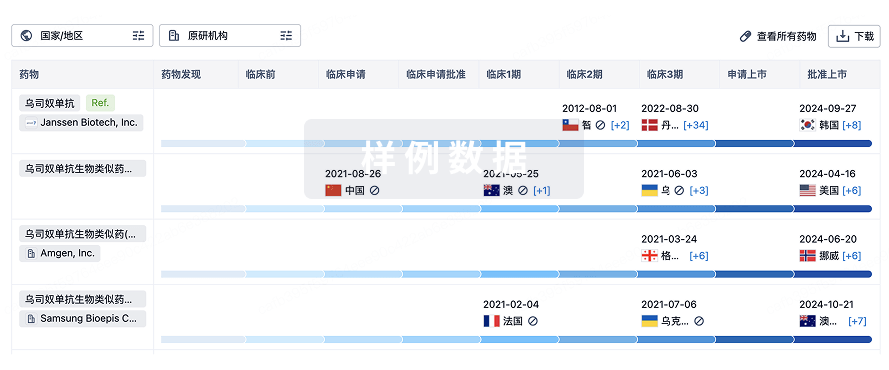
生物类似药
生物类似药在不同国家/地区的竞争态势。请注意临床1/2期并入临床2期,临床2/3期并入临床3期
登录
或
特殊审评
只需点击几下即可了解关键药物信息。
登录
或

提出任何生物医药研究问题
让每一步生物医药决策都精准制胜
基于十亿级生物数据与全球情报的精准 AI,赋能早期药物发现
立即开始免费试用!
智慧芽新药情报库是智慧芽专为生命科学人士构建的基于AI的创新药情报平台,助您全方位提升您的研发与决策效率。
立即接入生物医药数据包
智慧芽新药库数据也通过智慧芽开放平台,以MCP或API服务形式对外开放。立即使用我们的MCP服务定制您的LLM智能体。
生物序列数据库
生物药研发创新
免费使用
化学结构数据库
小分子化药研发创新
免费使用