预约演示
更新于:2026-04-02
Fibrinogen (Liminal BioSciences)
更新于:2026-04-02
概要
基本信息
药物类型 重组凝血因子 |
别名- |
靶点- |
作用方式- |
作用机制 Fibrinogen replacements(纤维蛋白原替代物) |
在研适应症 |
非在研适应症- |
权益机构- |
最高研发阶段批准上市 |
首次获批日期 澳大利亚 (2010-08-09), |
最高研发阶段(中国)- |
特殊审评- |



登录后查看时间轴
关联
13
项与 Fibrinogen (Liminal BioSciences) 相关的临床试验ACTRN12623000812695
Efficacy and safety of prehospital fibrinogen early in severe trauma study: A fphase II study (PRE-FEISTY II)(Stage 1)
开始日期2023-12-10 |
申办/合作机构- |
CTRI/2022/09/046046
Effect of Fibrinogen Prophylaxis on Perioperative Bleeding in patients with Cerebral Meningioma undergoing elective Craniotomy: A Double-Blind Placebo-Controlled Randomized Trial
开始日期2022-10-01 |
申办/合作机构- |
CTRI/2020/08/027288
Use of liquid fibrinogen as gel coating on dental implant surface to enhance osseointegration - A prospective randomized clinical trial
开始日期2020-10-01 |
申办/合作机构- |
100 项与 Fibrinogen (Liminal BioSciences) 相关的临床结果
登录后查看更多信息
100 项与 Fibrinogen (Liminal BioSciences) 相关的转化医学
登录后查看更多信息
100 项与 Fibrinogen (Liminal BioSciences) 相关的专利(医药)
登录后查看更多信息
367
项与 Fibrinogen (Liminal BioSciences) 相关的文献(医药)2026-05-01·INTERNATIONAL JOURNAL OF OBSTETRIC ANESTHESIA
Hyperfibrinolysis and reduced functional fibrinogen in haemorrhagic caesarean delivery: a secondary analysis of the TRACES trial evaluating fibrinogen kinetics following fibrinogen concentrate or plasma infusion
Article
作者: Bouthors, Anne-Sophie ; Abraham, Emilien ; Ollier, Edouard ; Lanoiselée, Julien ; Denys, Bérangère ; Hureau, Maxence
INTRODUCTION:
Postpartum haemorrhage-induced coagulopathy is marked by early fibrinogen depletion and, in acute obstetric coagulopathy, by hyperfibrinolysis and fibrinogenolysis. It remains unclear that exogenous fibrinogen concentrate is similarly susceptible to plasmin-mediated degradation. This secondary analysis of the TRACES trial assessed fibrinogen restoration kinetics after fibrinogen concentrate administration during postpartum hemorrhage.
METHODS:
The TRACES trial was a multicentre, randomised, double-blind, placebo-controlled study investigating tranexamic acid dosing in haemorrhagic caesarean delivery. For this analysis, only patients receiving fibrinogen concentrate were included. All laboratory and clinical data were re-timestamped relative to the first fibrinogen concentrate administration. Hyperfibrinolysis (HF) was defined by fibrinogen < 300 mg/dL, D-dimer ≥ 50,000 ng/mL and plasmin-antiplasmin complexes ≥ 2,000 ng/mL at any time point. Fibrinogen restoration trajectories were compared between cases with HF and No HF.
RESULTS:
Among 151 patients, 34 received fibrinogen concentrate. Five met HF criteria. Despite receiving higher fibrinogen concentrate doses, HF patients showed significantly impaired fibrinogen restoration (p < 0.01), with an initial rise followed by early decline. HF status was also associated with increased blood loss during postpartum hemorrhage.
DISCUSSION:
These exploratory findings support the hypothesis that exogenous fibrinogen may undergo plasmin-mediated cleavage in acute obstetric coagulopathy, leading to restoration failure and highlight the hypothesis of fibrinogenolysis.
CONCLUSION:
Hyperfibrinolysis markedly impairs fibrinogen concentrate-mediated fibrinogen restoration during postpartum haemorrhage. Dedicated pharmacokinetic-pharmacodynamic studies are needed to optimise fibrinogen supplementation and hemostatic strategies.
2026-04-01·TRANSFUSION AND APHERESIS SCIENCE
Unexpected fibrinogen impairment detected by rotational thromboelastometry in a 76-year-old patient undergoing brain tumor resection: A case report
Article
作者: Czempik, Piotr F ; Jaworski, Tomasz ; Szczepańska, Anna
BACKGROUND:
Fibrinogen abnormalities pose significant challenge in neurosurgical patients, where even subtle coagulation defects may lead to catastrophic bleeding. Viscoelastic hemostasis assays (VHSa) can reveal functional disturbances not captured by conventional coagulation tests.
CASE PRESENTATION:
We report a 76‑year‑old woman undergoing resection of a brain tumor who presented with mildhypofibrinogenemia (162 mg dL⁻¹) and severely impaired fibrin‑based clot firmness (FIBTEM MCF 5 mm) detected by rotational thromboelastometry (ROTEM). The patient exhibited laboratory evidence of liver dysfunction, suggesting secondary fibrinogen impairment. Cryoprecipitate was administered postoperatively due to the inability to exclude factor XIII deficiency. Fibrinogen concentration and ROTEM parameters normalized; however, the patient developed a postoperative hematoma.
DISCUSSION:
This case highlights the diagnostic value of ROTEM in identifying functional fibrinogen abnormalities but also underscores its limitations. The discrepancy between normalized coagulation parameters and subsequent hematoma formation emphasizes the need for cautious interpretation of single‑time‑point results. Decisions regarding fibrinogen supplementation should integrate viscoelastic findings, clinical context, and the dynamic coagulation profile.
CONCLUSIONS:
Fibrinogen impairment is a multifaceted risk factor in neurosurgical patients. Viscoelastic testing serves as a valuable adjunct to standard assays, but its limitations must be recognized. Management of fibrinogen abnormalities-particularly in the presence of liver dysfunction or malignancy-requires individualized, context‑dependent decision‑making.
2026-03-01·THROMBOSIS RESEARCH
Efficacy and safety of prophylaxis and treatment of bleeding events with a novel fibrinogen concentrate from human plasma in patients with congenital fibrinogen deficiency
Article
作者: Abraha, Salomon ; Schuettrumpf, Joerg ; Khayat, Claudia Djambas ; Belhadjali, Emna Gouider ; Miesbach, Wolfgang ; Khelif, Abderrahim ; Omar, Naglaa ; Adolf, Sonia ; El-Beshlawy, Amal ; Boehm, Heike ; Aigner, Silke
BACKGROUND:
Congenital fibrinogen deficiency is a rare inherited coagulation disorder characterized by partial or total lack of plasma fibrinogen (hypo- or afibrinogenemia), or expression of dysfunctional fibrinogen (dysfibrinogenemia), which may cause plasma level reduction (hypodysfibrinogenemia). Loss of functional fibrinogen causes bleeding disposition. In case of trauma or surgical intervention, supplementation of human fibrinogen is required to stop or prevent extensive bleeding events.
STUDY DESIGN:
A prospective, open-label, uncontrolled, multi-center phase I/III trial was performed to investigate pharmacokinetics, efficacy and safety of single and/or repetitive intravenous infusions of a human fibrinogen concentrate (BT524) for on-demand prophylaxis (ODP) and/or on-demand treatment (ODT) of bleeding events in patients with congenital fibrinogen deficiency.
PATIENTS:
In the phase III part of the trial reported here, 36 patients (3 children <6 years, 9 children 6-12 years, 4 adolescents and 20 adults) were treated with BT524 for 175 bleeding events, either for ODP or ODT.
RESULTS:
Fibrinogen concentrate infusion substantially improved maximum clot firmness (MCF). The overall hemostatic response was rated as good or excellent in 98.9% of bleedings. Loss of blood was considered normal in the majority of surgical interventions, and wound healing was also positively assessed. Additional evaluations, including blood product consumption and adverse events, further supported the efficacy and confirmed the favorable safety profile of the novel fibrinogen product.
CONCLUSION:
BT524 represents a novel human fibrinogen concentrate provenly efficacious and safe both for the treatment of bleeding and for peri-operative bleeding prophylaxis in patients with congenital fibrinogen deficiency of all ages.
100 项与 Fibrinogen (Liminal BioSciences) 相关的药物交易
登录后查看更多信息
研发状态
10 条最早获批的记录, 后查看更多信息
登录
| 适应症 | 国家/地区 | 公司 | 日期 |
|---|---|---|---|
| 纤维蛋白原缺乏血症 | 澳大利亚 | 2010-08-09 | |
| 先天性低纤维蛋白原血症 | 澳大利亚 | 2010-08-09 |
登录后查看更多信息
临床结果
临床结果
适应症
分期
评价
查看全部结果
| 研究 | 分期 | 人群特征 | 评价人数 | 分组 | 结果 | 评价 | 发布日期 |
|---|
No Data | |||||||
登录后查看更多信息
转化医学
使用我们的转化医学数据加速您的研究。
登录
或

药物交易
使用我们的药物交易数据加速您的研究。
登录
或

核心专利
使用我们的核心专利数据促进您的研究。
登录
或

临床分析
紧跟全球注册中心的最新临床试验。
登录
或

批准
利用最新的监管批准信息加速您的研究。
登录
或

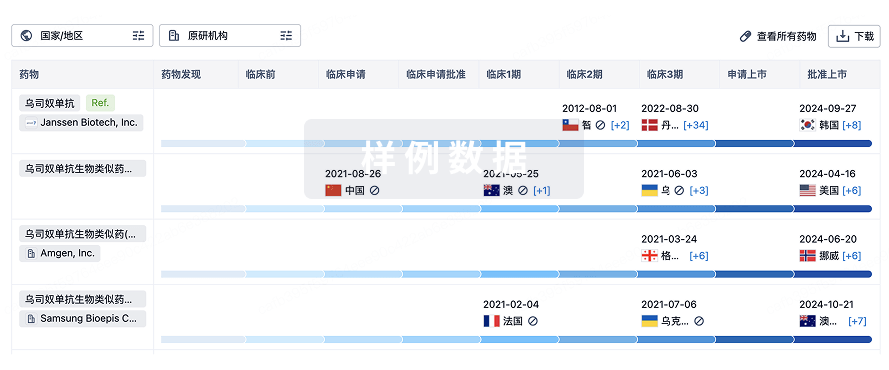
生物类似药
生物类似药在不同国家/地区的竞争态势。请注意临床1/2期并入临床2期,临床2/3期并入临床3期
登录
或
特殊审评
只需点击几下即可了解关键药物信息。
登录
或

提出任何生物医药研究问题
让每一步生物医药决策都精准制胜
基于十亿级生物数据与全球情报的精准 AI,赋能早期药物发现
立即开始免费试用!
智慧芽新药情报库是智慧芽专为生命科学人士构建的基于AI的创新药情报平台,助您全方位提升您的研发与决策效率。
立即接入生物医药数据包
智慧芽新药库数据也通过智慧芽开放平台,以MCP或API服务形式对外开放。立即使用我们的MCP服务定制您的LLM智能体。
生物序列数据库
生物药研发创新
免费使用
化学结构数据库
小分子化药研发创新
免费使用