预约演示
更新于:2026-07-21
Recombinant human platelet-derived growth factor (Huaren Shengwu)
重组人血小板源生长因子 (华芢生物)
更新于:2026-07-21
概要
基本信息
非在研机构- |
权益机构- |
最高研发阶段临床3期 |
首次获批日期- |
最高研发阶段(中国)临床3期 |
特殊审评- |


登录后查看时间轴
关联
6
项与 重组人血小板源生长因子 (华芢生物) 相关的临床试验CTR20255194
一项评价重组人血小板源生长因子(rhPDGF-BB)凝胶在皮肤局部深Ⅱ度烧伤患者的有效性和安全性的多中心、随机、双盲、安慰剂对照的Ⅲa期临床研究
CTR20220638
一项评价重组人血小板源生长因子凝胶(rhPDGF-BB)在糖尿病足溃疡患者中的初步有效性和安全性的、多中心、随机、双盲、安慰剂对照的Ⅱ期临床研究
CTR20233683
一项评价重组人血小板源生长因子(rhPDGF-BB)凝胶在皮肤局部(浅/深)Ⅱ度烧伤患者的有效性和安全性的多中心、随机、双盲、安慰剂对照的Ⅱb期临床研究
100 项与 重组人血小板源生长因子 (华芢生物) 相关的临床结果
登录后查看更多信息
100 项与 重组人血小板源生长因子 (华芢生物) 相关的转化医学
登录后查看更多信息
100 项与 重组人血小板源生长因子 (华芢生物) 相关的专利(医药)
登录后查看更多信息
36
项与 重组人血小板源生长因子 (华芢生物) 相关的文献(医药)2026-01-01Journal of Cosmetic Dermatology
Safety of Exogenous Recombinant Human Platelet‐Derived Growth Factor‐
BB
(
rhPDGF
‐
BB
) for Medical and Cosmetic Applications: A Review
Review
作者: Slade, Herbert B. ; Lynch, Samuel E. ; Hee, Christopher K.
ABSTRACT:
Background:
Recombinant human platelet‐derived growth factor‐BB (rhPDGF‐BB or pure PDGF) has been extensively studied in medicine, resulting in four FDA approvals for products based on pure PDGF for tissue regeneration applications, including stimulation of the healing of skin wounds in diabetic patients, stimulation of healing of intra‐oral tissue defects, and stimulation of bone and tissue regeneration following foot and ankle arthrodesis surgery. More recently, pure PDGF has also been introduced for esthetic and cosmetic applications.
Objective:
Here, we review the extensive nonclinical and clinical pharmacokinetic and safety studies performed on rhPDGF‐BB across diverse administration routes, including topical, injection, and surgical implantation to establish a large margin of safety.
Results:
Pharmacokinetic studies confirmed that systemic exposure to rhPDGF‐BB is negligible following repeated topical application, injection, or implantation, minimizing any potential for systemic risks. Biocompatibility and toxicology studies demonstrated that rhPDGF‐BB applied topically to skin, implanted, or injected subcutaneously, intradermally, intramuscularly, intraperitoneally, or intravenously, one time, or repeatedly, is noncytotoxic, nonirritating, nonsensitizing, nonmutagenic, nonclastogenic, noncarcinogenic, and nontoxic. No risk of cancer incidence or cancer mortality was detected following injection, implantation, or repeated, daily topical application of rhPDGF‐BB onto partial or full thickness skin wounds for up to 20 weeks, that is, 140 doses.
Conclusion:
The totality of the data demonstrates that the use of rhPDGF‐BB for regeneration and rejuvenation of skin and other tissues has an excellent safety profile, a finding further affirmed by its record of safe and effective use in multiple medical indications for over 25 years.
2025-10-01JOURNAL OF ORTHOPAEDIC RESEARCH
Osteogenic Small Molecule FK506 for Enhanced Bone Formation in a Rabbit Ankle Fusion Model
Article
作者: Solomon, Hanna ; Bariteau, Jason T. ; Patel, Jay M. ; Sangadala, Sreedhara ; Magesh, Amogh ; Dingler, Caroline ; Huffman, Nicholas
ABSTRACT:
Non‐union remains a significant complication following ankle fusion procedures, underscoring the need for effective osteogenic adjuvants to improve boney healing and fusion outcomes. This study investigates the osteogenic potential of FK506 (Tacrolimus), both in vitro and in vivo, for enhanced ankle fusion. Known orthobiologics in the market, such as recombinant human platelet‐derived growth factor‐BB (rhPDGF‐BB), have been utilized to promote bone healing and were included in this study to assess their comparative and combinatory effects with FK506. Bovine marrow‐derived cells (MDCs) were cultured in 2D and 3D environments to assess temporal markers of osteogenesis: RUNX2 nuclear localization (early), Alizarin Red S staining (intermediate), and mineral deposition with micro‐computed tomography (late). A rabbit ankle fusion model (t = 4 weeks) was utilized to evaluate FK506's early in vivo efficacy. In 2D cultures, FK506 resulted in an increase, but rhPDGF‐BB and the combination of rhPDGF‐BB and FK506 yielded the highest mineral deposition. However, in 3D fibrin gel cultures, FK506 alone demonstrated the greatest bone volume and tissue mineralization. In vivo rabbit ankle studies revealed that while ankle joint fusion was not achieved, FK506‐treated animals consistently showed substantial bone formation anterior to the joint, indicating its potential for localized osteogenesis in the ankle environment. This study demonstrates FK506's osteogenic potential as a standalone or combinatorial therapy. These findings highlight the need for further optimization of FK506 delivery methods and fixation strategies to maximize its clinical utility in ankle fusion procedures.Statement of Clinical Significance: The investigation of FK506 represents a potential pharmacological strategy for enhancing fusion healing and improving patient outcomes.
2024-02-01Periodontology 2000
Twenty‐five years of recombinant human growth factors rhPDGF‐BB and rhBMP‐2 in oral hard and soft tissue regeneration
Review
作者: Nevins, Marc L. ; Galarraga‐Vinueza, Maria Elisa ; Barootchi, Shayan ; Tavelli, Lorenzo ; Nevins, Myron ; Miron, Richard J.
Abstract:
Contemporary oral tissue engineering strategies involve recombinant human growth factor approaches to stimulate diverse cellular processes including cell differentiation, migration, recruitment, and proliferation at grafted areas. Recombinant human growth factor applications in oral hard and soft tissue regeneration have been progressively researched over the last 25 years. Growth factor‐mediated surgical approaches aim to accelerate healing, tissue reconstruction, and patient recovery. Thus, regenerative approaches involving growth factors such as recombinant human platelet‐derived growth factor‐BB (rhPDGF‐BB) and recombinant human bone morphogenetic proteins (rhBMPs) have shown certain advantages over invasive traditional surgical approaches in severe hard and soft tissue defects. Several clinical studies assessed the outcomes of rhBMP‐2 in diverse clinical applications for implant site development and bone augmentation. Current evidence regarding the clinical benefits of rhBMP‐2 compared to conventional therapies is inconclusive. Nevertheless, it seems that rhBMP‐2 can promote faster wound healing processes and enhance de novo bone formation, which may be particularly favorable in patients with compromised bone healing capacity or limited donor sites. rhPDGF‐BB has been extensively applied for periodontal regenerative procedures and for the treatment of gingival recessions, showing consistent and positive outcomes. Nevertheless, current evidence regarding its benefits at implant and edentulous sites is limited. The present review explores and depicts the current applications, outcomes, and evidence‐based clinical recommendations of rhPDGF‐BB and rhBMPs for oral tissue regeneration.
100 项与 重组人血小板源生长因子 (华芢生物) 相关的药物交易
登录后查看更多信息
研发状态
10 条进展最快的记录, 后查看更多信息
登录
| 适应症 | 最高研发状态 | 国家/地区 | 公司 | 日期 |
|---|---|---|---|---|
| 烧伤 | 临床3期 | 中国 | 2026-05-07 | |
| 糖尿病足溃疡 | 临床2期 | 中国 | 2024-10-31 | |
| 糖尿病足溃疡 | 临床2期 | 中国 | 2024-10-31 | |
| 慢性溃疡 | 临床申请批准 | 中国 | 2026-03-20 | |
| 褥疮 | 临床申请批准 | 中国 | 2026-03-20 | |
| 脱发 | 临床前 | 中国 | 2024-05-13 | |
| 痔疮 | 临床前 | 中国 | 2024-05-13 | |
| 光过敏疾患 | 临床前 | 中国 | 2024-05-13 |
登录后查看更多信息
临床结果
临床结果
适应症
分期
评价
查看全部结果
登录后查看更多信息
转化医学
使用我们的转化医学数据加速您的研究。
登录
或

药物交易
使用我们的药物交易数据加速您的研究。
登录
或

核心专利
使用我们的核心专利数据促进您的研究。
登录
或

临床分析
紧跟全球注册中心的最新临床试验。
登录
或

批准
利用最新的监管批准信息加速您的研究。
登录
或

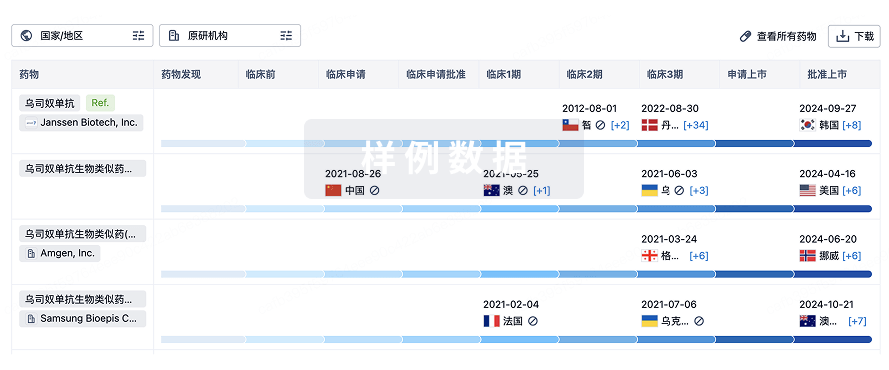
生物类似药
生物类似药在不同国家/地区的竞争态势。请注意临床1/2期并入临床2期,临床2/3期并入临床3期
登录
或
特殊审评
只需点击几下即可了解关键药物信息。
登录
或

提出任何生物医药研究问题
让每一步生物医药决策都精准制胜
基于十亿级生物数据与全球情报的精准 AI,赋能早期药物发现
立即开始免费试用!
智慧芽新药情报库是智慧芽专为生命科学人士构建的基于AI的创新药情报平台,助您全方位提升您的研发与决策效率。
立即接入生物医药数据包
智慧芽新药库数据也通过智慧芽开放平台,以MCP或API服务形式对外开放。立即使用我们的MCP服务定制您的LLM智能体。
生物序列数据库
生物药研发创新
免费使用
化学结构数据库
小分子化药研发创新
免费使用