预约演示
更新于:2026-01-10
Dentonin
更新于:2026-01-10
概要
基本信息
非在研机构- |
最高研发阶段临床2期 |
首次获批日期- |
最高研发阶段(中国)- |
特殊审评- |



登录后查看时间轴
结构/序列
分子式C107H160N30O42 |
InChIKeyPRFOXOFIVVOCCT-SIBALICDSA-N |
CAS号400090-20-2 |
Sequence Code 93851

关联
4
项与 Dentonin 相关的临床试验NCT06865079
A Randomized, Double-blind, Placebo-controlled, 53-Week Study Evaluating the Safety and Efficacy of Intra-articular Injections of TPX-100 in Subjects With Mild to Severe Tibio- Femoral Osteoarthritis of the Knee
NCT03125499
A Prospective Observational Study to Evaluate Long-term Changes in Cartilage Morphology in Subjects Who Previously Received TPX-100 or Placebo in Study TPX-100-1 for Patellar Osteoarthritis Involving Both Knees
NCT02837900
A Randomized, Double-blind, Placebo-controlled, Study Evaluating the Safety and Efficacy of a Second Course of Intra-articular Injections of TPX-100 in Subjects Who Previously Received TPX-100 for Patellar Osteoarthritis Involving Both Knees
100 项与 Dentonin 相关的临床结果
登录后查看更多信息
100 项与 Dentonin 相关的转化医学
登录后查看更多信息
100 项与 Dentonin 相关的专利(医药)
登录后查看更多信息
114
项与 Dentonin 相关的文献(医药)2025-12-01JOURNAL OF ENVIRONMENTAL MANAGEMENT
Effect of catchment characteristics and water physicochemical parameters on nitrogen and phosphorus concentrations in streams and small reservoirs
Article
作者: Chen, Long ; Jiang, Qinghu ; Tang, Bichao ; Tian, Qiuxiang ; Lu, Mengzhen ; Zhao, Xiaoxiang ; Ren, Boshen ; Liu, Feng
Water quality plays a vital role in determining the sustainability, safety, and usability of a water source. Nutrient concentrations are among the primary indicators that determine and affect water quality. Understanding the factors that influence nutrient dynamics in watershed water bodies is crucial for effective nutrient management in watersheds, but the mechanisms underlying nutrient variation in streams versus small reservoirs remain incompletely resolved for this national strategic water source area for the the Middle-Route of the South-to-North Water Diversion Project of China (hereafter "the Middle Route"). This study conducted eight seasonal sampling campaigns across 65 streams and 23 small reservoirs within the Danjiangkou Reservoir watershed, the water source area of the Middle Route. By integrating catchment characteristics and water physicochemical parameters and applying model-averaging multiple linear regression (ΔAIC <2), we investigated the key catchment-scale and in-situ drivers of dissolved total nitrogen (DTN) and total phosphorus (TP) concentrations in these waterbodies. Results revealed that DTN and TP concentrations were significantly higher in spring and summer than in autumn and winter, likely driven by the combined influence of agricultural practices and hydrological processes. Multiple regression models showed that DTN was primarily influenced by soil total nitrogen (STN, -), water pH (-), and edge density (ED, -) (adjusted R2 = 0.28), with water physicochemical parameters explaining the largest portion of variance in streams (60.4 %). In reservoirs, DTN was mainly regulated by dissolved oxygen (DO, -) and STN (-) (adjusted R2 = 0.27). For TP in streams, turbidity (+), slope (+), and contagion index (CONTAG, -) were the dominant drivers (adjusted R2 = 0.30), whereas in reservoirs, TP concentrations were mainly associated with turbidity (+) and soil total P (STP, -) (adjusted R2 = 0.37). These findings highlight distinct nutrient regulation mechanisms in lotic and lentic systems, highlighting the need for seasonally adaptive management strategies. For streams, prioritize riparian buffer restoration and higher landscape aggregation (higher CONTAG, β = -0.39, p < 0.01) to intercept nutrients, and reduce fertilizer inputs during high-flow seasons. For small reservoirs, emphasize erosion control, turbidity reduction (β = 0.34, p < 0.001), and oxygen management (β = -0.49, p < 0.001), while minimizing fertilizer inputs to limit in-reservoir accumulation.
2025-11-01WATER RESEARCH
Hydrodynamic cavitation based advanced reduction process (ARP) for degradation of 2-nitrophenol in aqueous environment
Article
作者: Honarmandrad, Zhila ; Boczkaj, Grzegorz ; Fedorov, Kirill
Hydrodynamic cavitation (HC) along with acoustic cavitation are emerging techniques in wastewater treatment for degradation of toxic, refractory and non-biodegradable pollutants. The energy released during cavitation phenomenon has a number of applications in advanced oxidation processes (AOPs). In contrast this paper presents an effective activation of dithionite (DTN) under HC as advanced reduction process (ARP). The developed process of HC/DTN was tested for the first attempt to perform the reductive degradation of 2-nitrophenol (2-NP) in water. The complete degradation of 2-NP was achieved within 15 min at optimal conditions of Cv 0.27 with rred 8.33, pH 11, 20 ± 2.5 °C ensuring a synergistic index (ξ) of 9.47. These results demonstrated HC as an effective tool for DTN activation. The degradation of 2-NP was primarily contributed by sulfur dioxide anion radicals (SO2•-) and hydrated electrons (eaq-), while oxidizing radicals (i.e., HO• and SO4•-) played minor role. The degradation pathway of 2-NP in HC/DTN was proposed relying on the identified intermediates using gas chromatography coupled to mass spectrometry (GC-MS). The main intermediates of 2-NP degradation were aniline and hydroquinone confirming the combined ARP/AOP action of HC/DTN. The total treatment cost of 1 m3 of contaminated water by the developed HC/DTN process was estimated as 1.08 euros according to the economic feasibility analysis. Along with rapid degradation, simple instrumentation and ultra-low costs, HC/DTN offers a promising solution for industrial water treatment.
2025-10-01International Journal of Surgery Case Reports
Distal tibial nail for complex nonunion of open distal tibial fracture with diabetes and prior pin-site infection: A case report
Article
作者: Yang, Hai ; Wang, Wei ; Wu, Wei ; Wang, Junqiu ; Zhang, Lei ; Yin, Lu
INTRODUCTION:
This study reports the successful application of distal tibial nail (DTN) for managing complex nonunions in open distal tibial fractures in patients with diabetes and a history of pin-site infection.
PRESENTATION OF CASE:
A 55-year-old diabetic female presented with an open left tibia-fibula fracture (Gustilo-Anderson Type IIIA) sustained in a car accident. She initially underwent debridement, suturing, and external fixation at a referring hospital. Postoperatively, the external fixation pin sites showed erythema, swelling, and discharge. Radiographs and CT scans revealed a tibial nonunion. Ten months post-injury, the tibial nonunion was successfully treated using the DTN, a novel technique. The distal tibia fracture achieved complete union postoperatively, allowing the patient to resume full weight-bearing and recreational activities such as running and jumping.
DISCUSSION:
To our knowledge, this is the first case report presenting the successful application of the DTN to treat nonunion following a Gustilo type IIIA open distal tibial fracture with prior pin-site infection and diabetes mellitus CONCLUSION: In this case, the DTN was effective in treating distal tibial nonunion, achieving satisfactory radiographic and functional outcomes. These findings suggest that DTN offers distinct advantages for the management of distal tibial nonunion, providing a valuable reference for clinical practice.
1
项与 Dentonin 相关的新闻(医药)2022-06-01
100 项与 Dentonin 相关的药物交易
登录后查看更多信息
外链
| KEGG | Wiki | ATC | Drug Bank |
|---|---|---|---|
| - | - | - |
研发状态
10 条进展最快的记录, 后查看更多信息
登录
| 适应症 | 最高研发状态 | 国家/地区 | 公司 | 日期 |
|---|---|---|---|---|
| 膝关节炎 | 临床2期 | 美国 | 2014-01-01 | |
| 骨病 | 临床前 | 日本 | 2009-12-02 |
登录后查看更多信息
临床结果
临床结果
适应症
分期
评价
查看全部结果
登录后查看更多信息
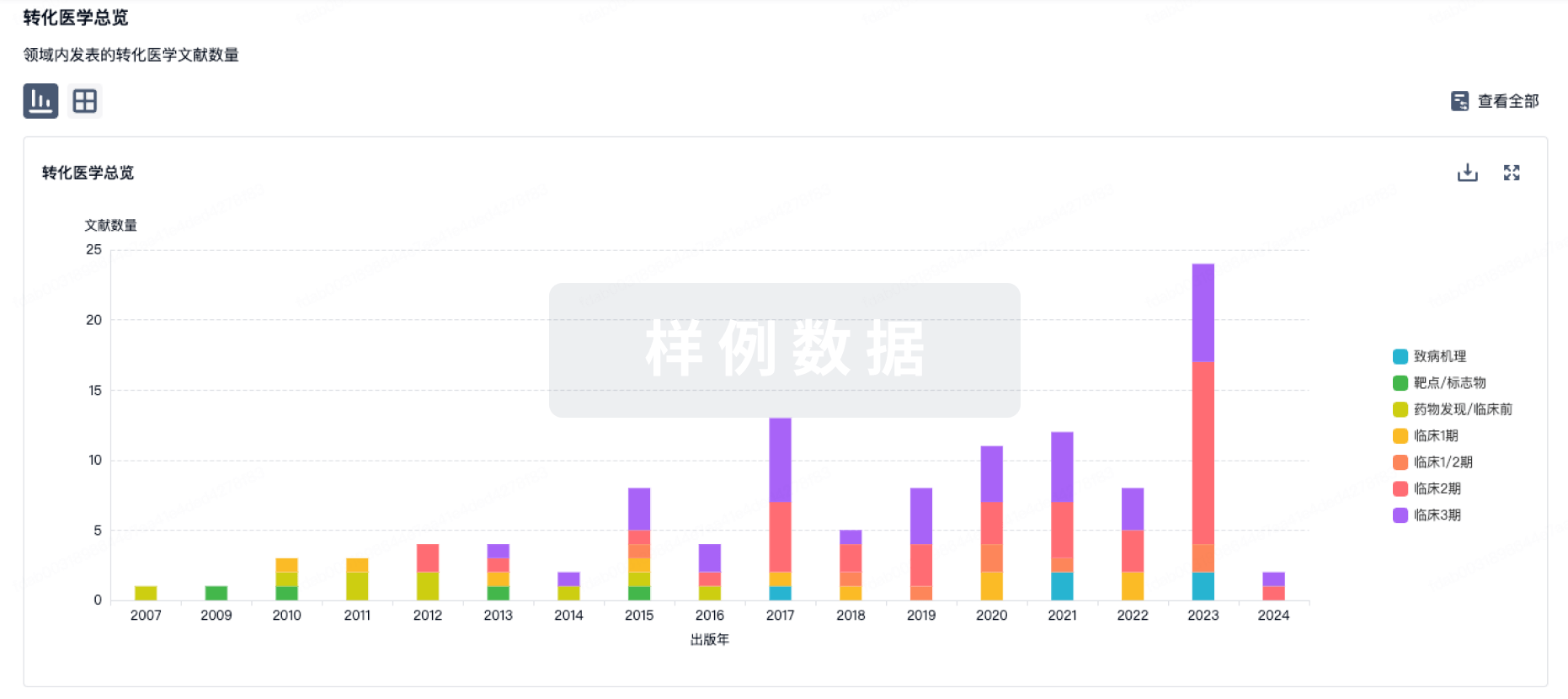
转化医学
使用我们的转化医学数据加速您的研究。
登录
或
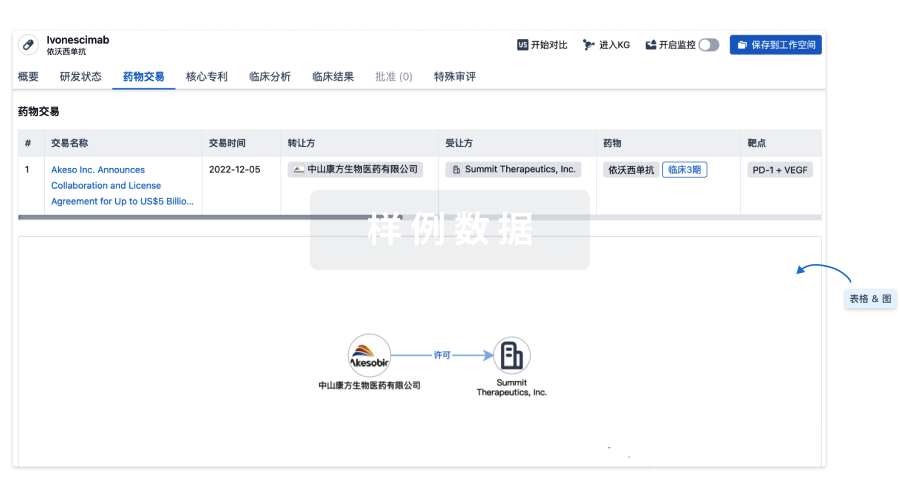
药物交易
使用我们的药物交易数据加速您的研究。
登录
或
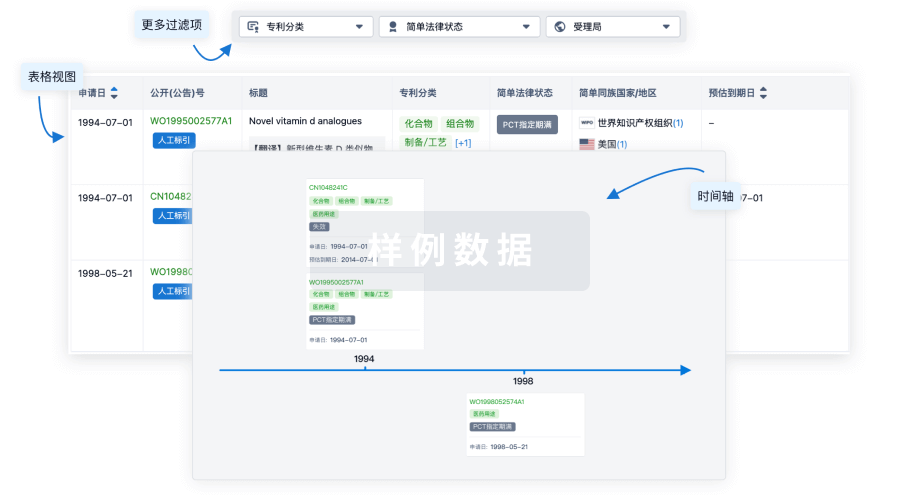
核心专利
使用我们的核心专利数据促进您的研究。
登录
或
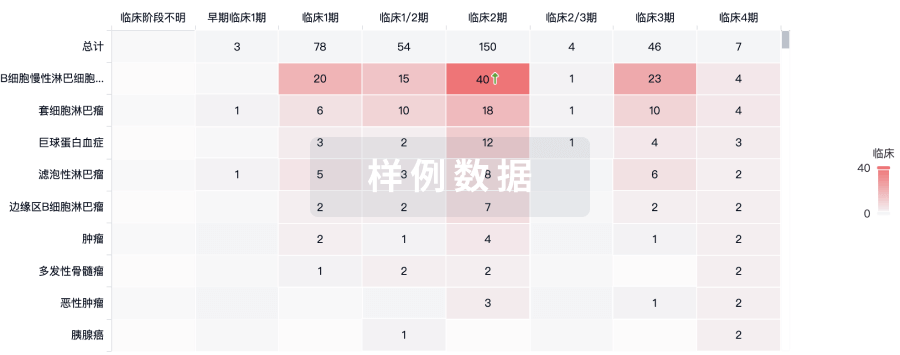
临床分析
紧跟全球注册中心的最新临床试验。
登录
或
批准
利用最新的监管批准信息加速您的研究。
登录
或
生物类似药
生物类似药在不同国家/地区的竞争态势。请注意临床1/2期并入临床2期,临床2/3期并入临床3期
登录
或
特殊审评
只需点击几下即可了解关键药物信息。
登录
或
生物医药百科问答
全新生物医药AI Agent 覆盖科研全链路,让突破性发现快人一步
立即开始免费试用!
智慧芽新药情报库是智慧芽专为生命科学人士构建的基于AI的创新药情报平台,助您全方位提升您的研发与决策效率。
立即开始数据试用!
智慧芽新药库数据也通过智慧芽数据服务平台,以API或者数据包形式对外开放,助您更加充分利用智慧芽新药情报信息。
生物序列数据库
生物药研发创新
免费使用
化学结构数据库
小分子化药研发创新
免费使用