预约演示
更新于:2026-08-15
Z-11
更新于:2026-08-15
概要
基本信息

结构/序列
分子式C29H33F2N5O4 |
InChIKeyVZRBGAXSPYVRRB-UHFFFAOYSA-N |
CAS号2737262-24-5 |
关联
100 项与 Z-11 相关的临床结果
登录后查看更多信息
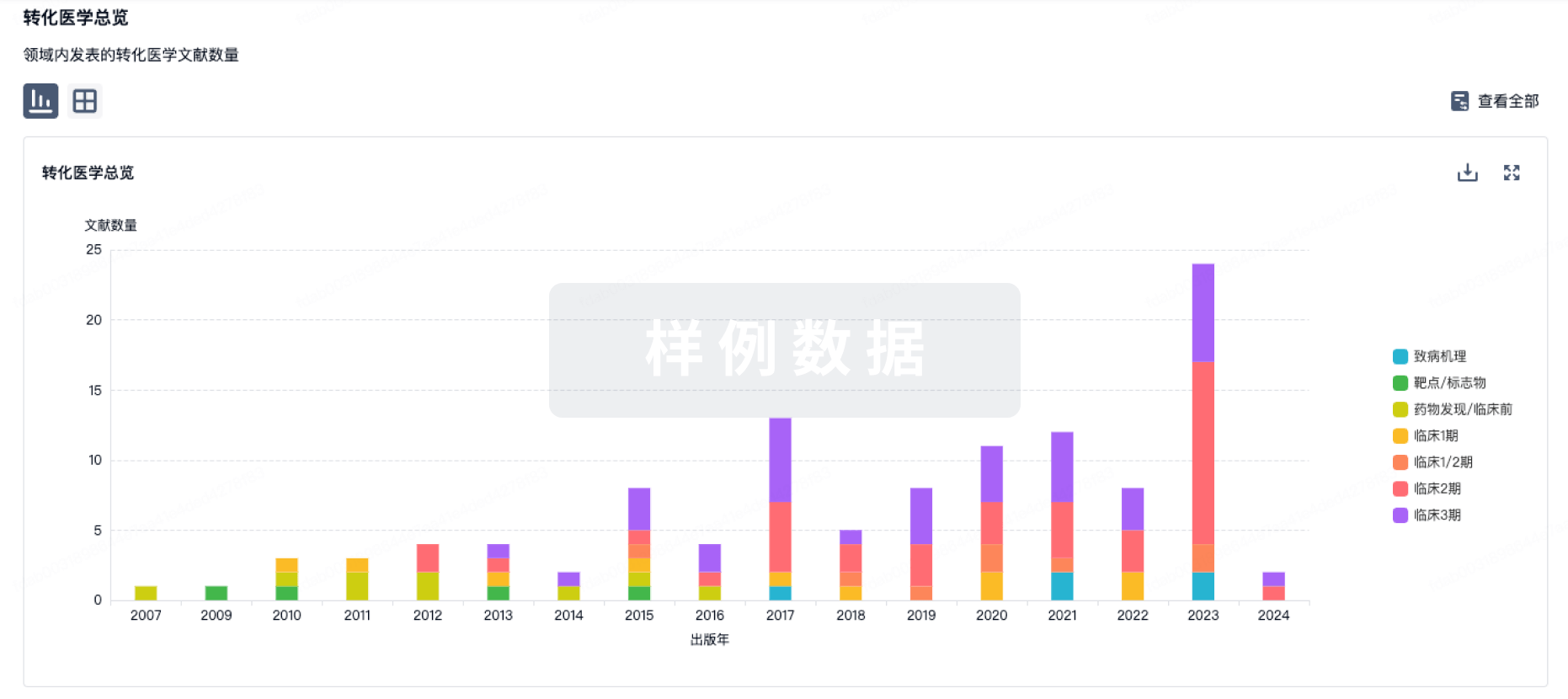
100 项与 Z-11 相关的转化医学
登录后查看更多信息
100 项与 Z-11 相关的专利(医药)
登录后查看更多信息
10
项与 Z-11 相关的文献(医药)2026-01-01·EUROPEAN JOURNAL OF PHARMACOLOGY
Z11, a small-molecule inhibitor of NAP1L1, alleviates cardiac fibrosis by regulating AKT/mTOR pathway
Article
作者: Jiang, Shuxia ; Zhou, Yuhong ; Shan, Hongli ; Gong, Jingyi ; Yu, Tong ; Zuo, Zhicheng ; Wang, Haoshu ; Zhou, Xinjie ; He, Yaoxuan ; Pang, Ping ; Ma, Jun ; Kong, Chengyu
Cardiac fibrosis represents the terminal pathological progression of diverse cardiovascular diseases, characterized by aberrant activation and migration of cardiac fibroblasts, as well as excessive and disordered deposition of the extracellular matrix. Our previous study showed that NAP1L1 is an important regulator of cardiac fibrosis and is upregulated in ischemic cardiomyopathy patient hearts. Accordingly, discovery of NAP1L1 inhibitors and elucidating their underlying mechanisms of anti-cardiac fibrosis should be urgently needed. Herein, we identified a new NAP1L1 small molecule inhibitor Z1149421873 (named Z11) by the structure-based drug design strategy. Z11 was shown to inhibit cardiac fibroblasts activation, deposition of collagen hypersecretion, and alleviate cardiac fibrosis in both in vitro models induced by TGF-β1 and in vivo myocardial infarction (MI) mouse models. Mechanistically, Z11 interfered with the interaction between NAP1L1 and YAP1, which in turn promotes the ubiquitination degradation of YAP1, thereby inhibiting the AKT/mTOR signaling pathway, and attenuating myofibroblast activity and cardiac fibrosis, and improving cardiac function after MI. This finding may provide new insights for the development of promising candidate drugs for the treatment of cardiac fibrosis related diseases in the future.
2024-11-01·PHOTOCHEMICAL & PHOTOBIOLOGICAL SCIENCES
Investigation of the ability of 3-((4-chloro-6-methyl pyrimidin-2-yl)amino) isobenzofuran-1(3H)-one to bind to double-stranded deoxyribonucleic acid
Article
作者: Şenel, Pelin ; Gölcü, Ayşegül ; Al Faysal, Abdullah ; Erdoğan, Taner ; Yilmaz, Zeynep ; Odabaşoğlu, Mustafa
Phthalides represent a notable category of secondary metabolites that are prevalent in various plant species, certain fungi, and liverworts. The significant pharmacological properties of these compounds have led to the synthesis of a novel phthalide derivative. The current study focuses on investigating the binding interactions of a newly synthesized 3-substituted phthalide derivative, specifically 3-((4-chloro-6-methyl pyrimidine-2-yl)amino) isobenzofuran-1(3H)-one (Z11), with double-stranded deoxyribonucleic acid (dsDNA). Research in the pharmaceutical and biological fields aimed at developing more potent DNA-binding agents must take into account the mechanisms by which these newly synthesized compounds interact with DNA. This investigation seeks to explore the binding dynamics between dsDNA and our compound through a variety of analytical techniques, such as electrochemistry, UV spectroscopy, fluorescence spectroscopy, and thermal denaturation. The binding constant (Kb) of Z11 with DNA was determined using both spectroscopic and voltammetric approaches. The research revealed that Z11 employs a groove binding mechanism to associate with dsDNA. To further explore the interactions between Z11 and dsDNA, the study utilized density functional theory (DFT) calculations, molecular docking, and molecular dynamics simulations. These analyses aimed to ascertain the potential for a stable complex formation between Z11 and dsDNA. The results indicate that Z11 is situated within the minor groove of the dsDNA, demonstrating the ability to establish a stable complex. Furthermore, the findings imply that both π-alkyl interactions and hydrogen bonding play significant roles in the stabilization of this complex.
2024-05-01·Breast cancer research and treatment
Omission of axillary lymph node dissection for breast cancer patients with three or more positive sentinel lymph nodes
Article
作者: White, McKenzie ; Marmor, Schelomo ; Brauer, David ; Kolbow, Madison ; Hui, Jane Yuet Ching ; LaRocca, Christopher J ; Ankeny, Jacob ; Tuttle, Todd M ; Prathibha, Saranya ; Jensen, Eric H
PURPOSE:
The ACOSOG Z0011 (Z11) trial assessed the benefit of axillary dissection (ALND) for breast cancer patients with sentinel lymph node (SLN) metastases; however, Z11 excluded patients with ≥ 3 positive SLNs. We analyzed trends in ALND omission in patients with ≥ 3 positive SLNs.
METHODS:
Women with ≥ 3 positive SLNs who underwent breast-conserving surgery (BCS) or mastectomy between 2018 and 2020 in the National Cancer Database were included using SLN codes initiated in 2018. Patients with stage IV disease, recurrent breast cancer, and who underwent neoadjuvant chemotherapy were excluded. A multivariable logistic regression model was utilized to determine the proportion who received ALND and factors associated with ALND omission. A subgroup analysis was performed among patients who met the remainder of the Z11 inclusion criteria (BCS, T1/T2 breast cancer).
RESULTS:
We identified 3654 patients with ≥ 3 positive SLNs. ALND was omitted in 37% of patients, and omission significantly increased from 2018 to 2020 (29% vs. 41%, p < 0.0001). Older age, lower grade tumors, no radiation, non-academic facility, BCS, more SLNs examined and fewer positive SLNs were significantly associated with ALND omission. 942 patients with ≥ 3 positive SLNs met the remainder of the Z11 inclusion criteria. ALND was omitted in 49% of these patients, and omission increased from 2018 to 2020 (44% vs. 49%, p = 0.22).
CONCLUSION:
Approximately one-third of patients with ≥ 3 positive SLNs do not undergo ALND; omission of ALND increased from 2018 to 2020. Studies assessing oncologic outcomes of patients with ≥ 3 positive SLNs who do and do not receive ALND are required.
1
项与 Z-11 相关的新闻(医药)2024-04-02
2024年第一季度,在学院广大教师的共同努力下,科研成果产出取得了良好成效,特别是在高水平论文方面,以下我们把部分科研成果与大家分享。
让我们一起来看看吧!
CDK9对抗凋亡蛋白Mcl-1的直接调控作用使其成为抗肿瘤药物开发的有效靶点。该研究团队依托蛋白结构分析,运用大环化策略设计出一系列大环类CDK9抑制剂。其中,优势化合物Z11不仅显著抑制CDK9蛋白活性(IC50 = 3.2 nM),而且具有高度的激酶选择性,在多种肺癌细胞中展现出明显的抗肿瘤作用。值得一提的是,Z11对两种奥西替尼耐药肺癌细胞株也表现出显著的抗肿瘤效应(HCC827OR: IC50 = 0.25 μM; H1975OR: IC50 = 0.15 μM),其活性远超阳性对照药物BAY1143572。进一步研究显示,在奥西替尼耐药细胞株H1975OR中,Z11能快速下调Mcl-1蛋白水平,抑制细胞增殖和克隆形成,并诱导细胞凋亡。药效评估表明,低剂量的Z11能有效抑制多个奥西替尼耐药肺癌类器官的生长,并且具有适中的代谢性质和良好的体内安全性。
示意图
G蛋白偶联受体35(Gpr35)是宿主-微生物在肠道的共生调节器,这表明它可能通过肠道微生物信号调节宿主病理生理过程,但目前尚不清楚Gpr35如何参与抑郁症的行为控制。本研究发现肠道上皮细胞Gpr35缺陷的小鼠肠道微生物狄氏副拟杆菌(Parabacteroides distasonis)丰度增加,并诱导抑郁样行为。肠道Gpr35决定了肠道细菌代谢物吲哚-3-甲醛(IAld)和吲哚-3-乳酸(ILA)的平衡,表现为IAld减少和ILA增多,这对神经可塑性和抑郁症状产生了相反的作用。进一步研究显示,IAld通过恢复伏隔核(NAc)中与突触传递和神经可塑性相关的基因来发挥抗抑郁作用。并在临床抑郁症患者的血清和粪便样本中得到验证。该研究揭示了肠道Gpr35对抑郁样行为的调控作用,并揭示了在肠道微生物群-大脑轴中发挥调控作用的代谢物,这可能扩展对抑郁症遗传易感性的治疗方法。
示意图
肝纤维化是由于器官受损引发过度自愈反应,是组织内细胞外基质异常增多和过度沉积的病理过程。纤维结缔组织增生会导致实质细胞减少,持续进展可导致肝脏结构坏死和功能减退,乃至衰竭,严重威胁人类生命健康。针对肝纤维化条件下“毛细血管化的肝窦内皮细胞-活化的肝星状细胞-功能失常的肝实质细胞”相互作用构成恶性循环的病理特点,该团队构建CS-NPs/VDG调节肝窦内皮细胞,恢复分化表型,同时促进肝星状细胞转变至静息态,并构建GA-NPs/SIB清除过度生成的活性氧,促进肝实质细胞功能正常化,最终成功逆转肝纤维化病理微环境,恢复细胞良性循环,实现有效治疗。
示意图
流行病学研究表明,长期暴露于精神心理压力会驱动多种疾病的发生发展。然而,目前人们对于精神应激下脑-肠双向信号传递机制,特别是心理压力如何传递并扰动肠道内稳态仍然知之甚少。围绕以上问题,郝海平教授团队基于前期建立的慢性束缚应激小鼠模型及足底电击模型,发现慢性心理压力暴露会引发不可逆的小肠上皮细胞功能紊乱。该研究发现慢性精神应激触发的交感神经输出诱导肠道共生乳杆菌及色氨酸代谢物吲哚-3-乙酸(IAA)的富集,IAA作为代谢信号抑制小肠干细胞(ISC)的线粒体生物能从而以细胞固有的方式破坏其谱系分化、加重肠上皮细胞损伤。最后,研究团队在患有不同精神困扰的临床患者中证实精神应激下肠道菌群IAA产生能力持续增加并与肠道功能障碍相关。该研究通过多学科技术手段,揭示了精神应激下微生物失调驱动肠干细胞分化异常的信号分子及其机制,为后续开展脑肠轴信号传递、靶标发现及药物精准干预研究提供了新思路与潜在新靶点。
示意图
二芳基醚类骨架广泛存在于各类天然产物、药物及生物活性分子中,具有广谱的生物活性。目前,围绕二芳基醚类化合物的不对称合成方法仍然十分有限,主要包括:动态动力学转化、酶或有机小分子催化二芳基醚骨架的去对称化等策略。然而,利用过渡金属催化去对称化策略构建此类骨架迄今仍未有报道。近年来,姚和权团队针对具有重要生物活性的药物分子片段和砌块,采用过渡金属催化去对称化策略,合成了多类手性分子骨架。在此基础上,该团队通过铜催化的不对称叠氮-炔环加成反应,首次实现了过渡金属催化的轴手性二芳基醚类化合物的不对称合成。该研究为轴手性二芳基醚类化合物在药物研发、C-O轴手性配体的设计合成等领域的研究奠定了合成基础。
示意图
特发性肺纤维化(IPF)是一种与年龄相关的肺间质疾病,病因不明,对人类健康构成严重威胁。临床上IPF主要通过口服尼达尼布(NIN)实现,但其在肺部的蓄积量过低且忽视对上皮细胞的作用。吸入疗法是治疗肺部疾病的有效途径。然而,气管中的黏液屏障和间质中的细胞外基质(ECM)屏障是吸入治疗递送的两个主要障碍。姜虎林团队利用三-(2-羧乙基)-膦(TCEP)和L-精氨酸分别穿透黏液和ECM屏障,构建了双重屏障穿透吸入脂质体(AN-TR)。这种方法有助于NIN和navitoclax(ABT-263)在五个肺叶中的均匀分布。此外,ABT-263可以去除气管和肺泡中衰老的上皮细胞,从而提高NIN治疗IPF的效果。这项研究表明,双重屏障穿透吸入脂质体是一线临床药物的有效无创载体,可提高IPF治疗的效果。
示意图
论文信息:Yang M., Han M., Tang L., et al. Dual Barrier-Penetrating Inhaled Nanoparticles for Enhanced Idiopathic Pulmonary Fibrosis Therapy. Adv. Funct. Mater. 2024, https://doi.org/10.1002/adfm.202315128
特发性肺纤维化(IPF)是一种进展性肺病,死亡率高。美国食品药品监督管理局批准的药物,尼达尼布和吡非尼酮,可以通过抑制成纤维细胞的过度激活延缓进行性纤维化,然而,由于肺部药物蓄积过低和肺泡周围蜂窝囊肿与间质的重塑,患者的生存率并未显著提高。姜虎林团队构建了一种双药(维替泊芬和吡非尼酮)负载的纳米粒(Lip@VP),通过抑制气道上皮流态化和成纤维细胞过度活化阻止蜂窝囊肿和间质重塑。Lip@VP通过吸入给药在肺组织中广泛分布,释放的维替泊芬抑制气道上皮的流态化和蜂窝样囊肿的形成,吡非尼酮抑制成纤维细胞的过度活化和减少促进气道上皮流态化的细胞因子分泌。本研究构建的Lip@VP通过抑制蜂窝囊肿和间质重塑实现IPF的有效治疗,为临床IPF的治疗提供一种有前景的策略。
示意图
2'-脱氧核苷即通常所说的脱氧核苷,这类化合物的立体选择性合成在糖化学中是一个挑战,现有的方法存在产率低、立体选择性差以及底物适用范围窄等不足,阻碍了相关的药物研发和生产。此外,以往的研究基本都是针对具备天然β构型的β-2'-脱氧核苷;而其非天然的异构体α-2'-脱氧核苷则缺乏有效的获得途径,并未引起足够的重视。本论文研究者在前期工作的基础上(Angew. Chem., Int. Ed. 2022, 61, e202206128; Chin. J. Chem. 2022, 40, 443),利用廉价商品化试剂在2-脱氧核糖上引入二苯基次膦酰基(diphenylphosphinoyl, DPP),可以分别实现α-和β-2'-脱氧核苷的高立体选择性合成。体外抗增殖实验结果表明非天然构型α-2'-脱氧核苷对某些肿瘤细胞的抑制作用强于天然构型的b-2'-脱氧核苷,并且DPP基团的引入使得一系列化合物的抗肿瘤活性得到显著提升,为核苷类化合物的合成及其药学领域中的应用开辟了新思路。
示意图
本文提出利用功能化脂质体的肿瘤细胞靶向和膜融合机制,在肿瘤细胞膜表面锚定生物正交反应激活剂(四嗪基修饰的膜锚定分子,DSPE-PEG-Tz),将肿瘤活细胞作为反应器构建基元,在体构建可触发前药激活的膜反应器。该反应器的构建能深入肿瘤内部、稳定保持在瘤内长达96小时以上,并持续激活外源性前药(如反式环辛烯修饰的阿霉素,TCO-Dox)。肿瘤细胞膜表面激活的阿霉素(Dox)通过浓度梯度的驱动作用,精准进入肿瘤细胞核中,发挥药效。此外,通过再次补充功能化脂质体的策略可显著提高正交反应前药激活的反应效率。这种将活体肿瘤组织作为前药激活车间、肿瘤细胞作为反应器的策略,为肿瘤化疗的有效性、选择性和安全性提供了一种通用的方法。
示意图:肿瘤细胞膜反应器的构建原理和原位生物正交前药激活机制
抑郁症是一种严重的精神疾病,其发病机制复杂且具有异质性,临床常用药物副作用较大、起效较慢。因此,研究抑郁症发病新机制及抗抑郁药物新靶点具有重要意义。本研究发现,在慢性社会挫败应激诱导的抑郁易感小鼠中,外侧下丘脑(LHA)GABA能神经元胆汁酸受体TGR5表达显著降低,调控LHAGABA神经元TGR5能够影响小鼠抑郁样行为。进一步的研究发现,TGR5通过ERK信号通路依赖的钾通道Kv4.2调节LHAGABA神经元的兴奋性,并通过调控LHAGABA神经元至背侧海马CA3脑区(dCA3)CaMKIIa神经元再下行至背外侧隔阂(DLS)GABA神经元的神经环路(即LHAGABA → dCA3CaMKIIa → DLSGABA神经环路)介导小鼠抑郁样行为。本研究首次发现LHAGABA神经元介导的神经环路在抑郁样行为中的作用,以及胆汁酸受体TGR5通过该神经环路调控抑郁样行为,提示胆汁酸类的化合物可能具有抗抑郁作用,为明确抑郁症发病机制和发掘药物治疗靶点提供了研究基础。
示意图
论文信息:Li X., Zhang S., Hong Y., et al. TGR5-mediated lateral hypothalamus-dCA3-dorsolateral septum circuit regulates depressive-like behavior in male mice. Neuron. 2024, https://doi.org/10.1016/j.neuron.2024.02.019
三阴性乳腺癌(TNBC)因其侵袭性强、易转移、预后极差,是乳腺癌中最“毒”的一种亚型,目前在治疗上存在诸多难点。研究发现,作为肝细胞生长因子(HGF)天然配体的c-Met蛋白会在TNBC细胞(例如:MAD-MB-231)中高表达。c-Met通过磷酸化PARP1蛋白的Tyr907,导致PARP1抑制剂出现原发性耐药。同时,c-Met也可磷酸化Rad51,参与同源重组(HR)功能。因此,该团队提出设计PARP1/c-Met双靶点抑制剂,不仅可以抑制c-Met蛋白,减少PARP1抑制剂原发性耐药的产生,也可削弱TNBC细胞中HR功能,增强其对PARP1抑制剂的敏感性。
示意图
“谷氨酰胺成瘾”是肿瘤代谢重编程过程的重要部分,是癌细胞生长的显著特征。DON(6 Diazo-5-oxo L norleucine)作为一种效果显著的谷氨酰胺拮抗剂,已进入临床II期研究。但DON的治疗潜力受到其狭窄的治疗窗口和在胃肠道产生的显著副作用的限制。为了减少DON的毒性,本研究设计了肿瘤靶向性的DON前药,通过特异性地将药物传递到肿瘤部位,以降低对健康细胞的伤害。本研究开发的DON-TK-BM3,通过近红外光触发,实现了在肿瘤组织中的精确靶向和药物释放,同时减少了副作用。该策略不仅增强了抗肿瘤效果,而且通过药物释放前后的结构变化提供了治疗监测的新手段。这些研究结果不仅表明该前药技术在临床应用上的潜力,也为针对癌症代谢靶点的药物开发提供了新的策略。
示意图
微生物疗法
100 项与 Z-11 相关的药物交易
登录后查看更多信息
研发状态
10 条进展最快的记录, 后查看更多信息
登录
| 适应症 | 最高研发状态 | 国家/地区 | 公司 | 日期 |
|---|---|---|---|---|
| 非小细胞肺癌 | 药物发现 | 中国 | 2023-10-23 |
登录后查看更多信息
临床结果
临床结果
适应症
分期
评价
查看全部结果
| 研究 | 分期 | 人群特征 | 评价人数 | 分组 | 结果 | 评价 | 发布日期 |
|---|
No Data | |||||||
登录后查看更多信息
转化医学
使用我们的转化医学数据加速您的研究。
登录
或
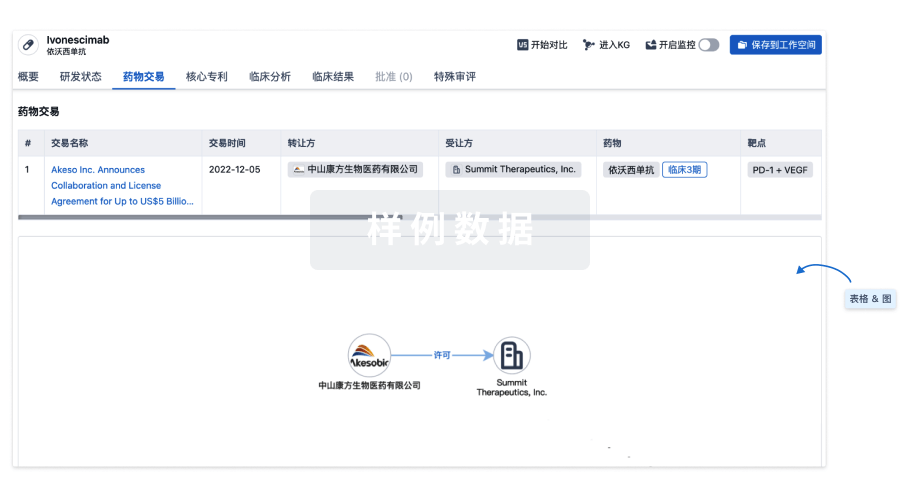
药物交易
使用我们的药物交易数据加速您的研究。
登录
或
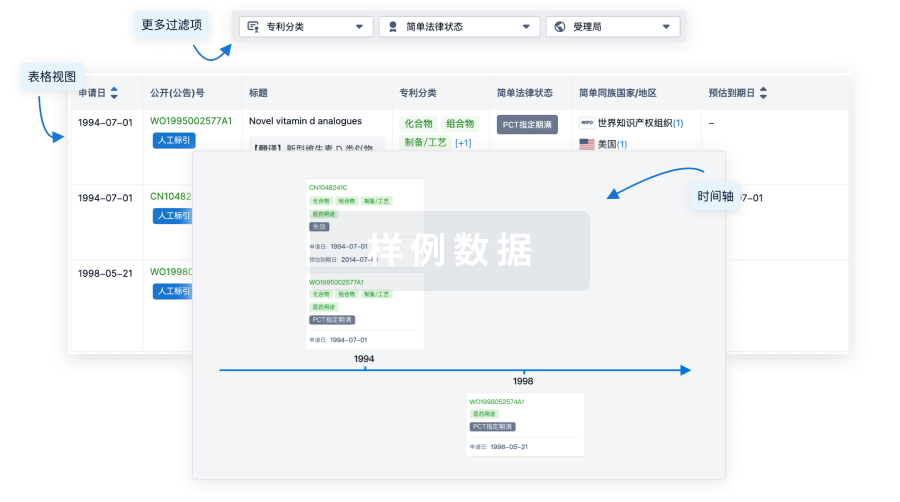
核心专利
使用我们的核心专利数据促进您的研究。
登录
或
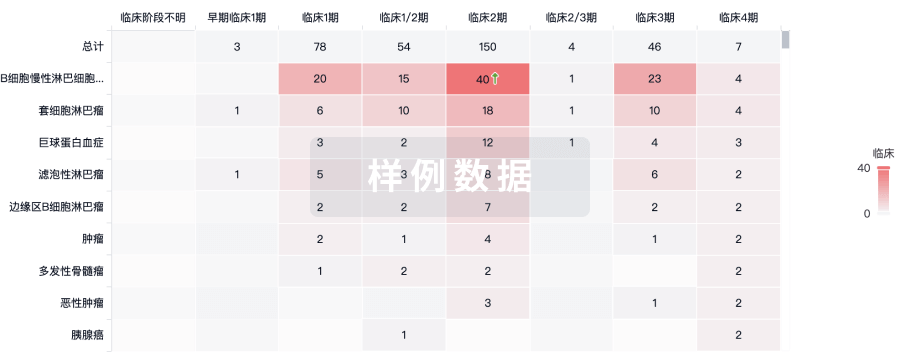
临床分析
紧跟全球注册中心的最新临床试验。
登录
或
批准
利用最新的监管批准信息加速您的研究。
登录
或
特殊审评
只需点击几下即可了解关键药物信息。
登录
或
提出任何生物医药研究问题
让每一步生物医药决策都精准制胜
基于十亿级生物数据与全球情报的精准 AI,赋能早期药物发现
立即开始免费试用!
智慧芽新药情报库是智慧芽专为生命科学人士构建的基于AI的创新药情报平台,助您全方位提升您的研发与决策效率。
立即接入生物医药数据包
智慧芽新药库数据也通过智慧芽开放平台,以MCP或API服务形式对外开放。立即使用我们的MCP服务定制您的LLM智能体。
生物序列数据库
生物药研发创新
免费使用
化学结构数据库
小分子化药研发创新
免费使用