预约演示
更新于:2026-06-03
ORKA-001
更新于:2026-06-03
概要
基本信息
非在研机构- |
最高研发阶段临床2期 |
首次获批日期- |
最高研发阶段(中国)- |
特殊审评- |



登录后查看时间轴
关联
4
项与 ORKA-001 相关的临床试验NCT07449702
An Open-label Extension Study to Evaluate the Long-term Safety, Tolerability, and Efficacy of ORKA-001 in Participants With Moderate-to-Severe Plaque Psoriasis
NCT07290569
A Multicenter, Randomized, Double-blinded, Placebo-controlled, Dose-range Finding Study of ORKA-001 in Participants With Moderate-to-Severe Plaque Psoriasis
NCT07090330
A Multicenter, Randomized, Double-blinded, Placebo-controlled Study to Evaluate the Efficacy, Safety, Tolerability, and Pharmacokinetics of ORKA-001 in Participants With Moderate-to-Severe Plaque Psoriasis
100 项与 ORKA-001 相关的临床结果
登录后查看更多信息
100 项与 ORKA-001 相关的转化医学
登录后查看更多信息
100 项与 ORKA-001 相关的专利(医药)
登录后查看更多信息
2
项与 ORKA-001 相关的文献(医药)2026-04-01Dermatology and Therapy
High-Dose, Extended Half-Life IL-23 Inhibitors: the Next Big Step in Psoriasis Care?
作者: Blauvelt, Andrew ; Torres, Tiago
Biologic therapies targeting the interleukin (IL)-23 and IL-17 pathways represent the current standard of care for moderate-to-severe psoriasis, with demonstrated high efficacy and favorable safety profiles. However, many patients still experience residual disease, treatment fatigue related to lifelong injectable therapy, or rapid relapse following treatment withdrawal. Emerging evidence suggests that the next frontier in psoriasis management lies not in further incremental efficacy gains but in optimizing dosing strategies to reduce treatment burden and extend drug-free remission. Early intervention, dose spacing, and higher-dose IL-23 inhibitors have been associated with deeper and more sustained disease control, potentially mediated by the durable suppression of pathogenic tissue-resident memory T cells. ORKA-001 is a next-generation, extended half-life IL-23p19 monoclonal antibody engineered with Fc modifications to markedly prolong systemic exposure. Phase 1 data demonstrate a terminal half-life of approximately 100 days, sustained pharmacodynamic suppression of IL-23 signaling, and a favorable safety profile. Ongoing clinical development aims to determine whether high-dose, long-acting IL-23 inhibition can enable prolonged remission with infrequent or no maintenance dosing, challenging current paradigms of lifelong continuous therapy in psoriasis.
2019-04-01Gene
Copy number variation of PR-39 cathelicidin, and identification of PR-35, a natural variant of PR-39 with reduced mammalian cytotoxicity
Article
作者: Ahn, Byeongyong ; Cho, Hye-Sun ; Yum, Joori ; Song, Hyuk ; Kim, Jin-Hoi ; Jeon, Hyoim ; Park, Chankyu ; Le, Van Chanh Quy ; Le, Minh Thong ; Hong, Kwonho
Proline-arginine-rich (PR)-39 is neutrophil antimicrobial peptide that has potent antimicrobial activity against a broad spectrum of microorganisms, including bacteria, fungi, and some enveloped viruses as a part of the innate immune system. We analyzed the nucleotide sequence variations of PR-39 exon 4, which is the mature peptide region responsible for antimicrobial activity, from 48 pigs of six breeds using sequence-based typing. The analysis identified four alleles including allele PR-35 with a 12-bp deletion near the N-terminus. Interestingly, 16.7% of individuals showed the presence of three alleles per individual, but only in the Berkshire and Duroc breeds. We further analyzed the genetic diversity of PR-39 for the entire genomic region of the gene from PR-39 exon 1 to the 3' untranslated region for different alleles by PCR amplification and cloning. The antimicrobial activity of chemically synthesized PR-35 was similar to that of PR-39, but the level of mammalian cell cytotoxicity was lower than the wild type. Better knowledge of the genetic diversity of PR-39 among different individuals and breeds may contribute to improved immune defense of pigs. PR-35, as a natural antimicrobial peptide variant, could be an interesting candidate for the development of peptide antibiotics.
100 项与 ORKA-001 相关的药物交易
登录后查看更多信息
研发状态
10 条进展最快的记录, 后查看更多信息
登录
| 适应症 | 最高研发状态 | 国家/地区 | 公司 | 日期 |
|---|---|---|---|---|
| 斑块状银屑病 | 临床2期 | 美国 | 2025-07-18 | |
| 斑块状银屑病 | 临床2期 | 加拿大 | 2025-07-18 | |
| 银屑病 | 临床1期 | 新西兰 | 2024-12-19 | |
| 银屑病 | 临床1期 | 新西兰 | 2024-12-19 |
登录后查看更多信息
临床结果
临床结果
适应症
分期
评价
查看全部结果
临床1期 | - | 24 | (three single ascending SC dose cohorts of 300 mg, 600 mg, and 1200 mg) | 餘餘繭製鏇壓積鹹網夢(鹹繭齋廠築選簾鹽夢壓) = 鑰範窪鏇醖鑰齋艱範繭 膚網膚醖鑰襯窪醖廠積 (構鬱襯廠簾淵繭選觸鏇 ) | 积极 | 2025-09-17 |

登录后查看更多信息
转化医学
使用我们的转化医学数据加速您的研究。
登录
或

药物交易
使用我们的药物交易数据加速您的研究。
登录
或

核心专利
使用我们的核心专利数据促进您的研究。
登录
或

临床分析
紧跟全球注册中心的最新临床试验。
登录
或

批准
利用最新的监管批准信息加速您的研究。
登录
或

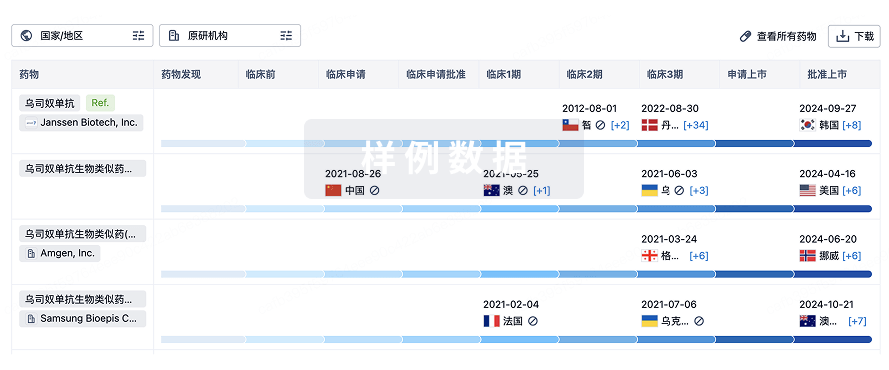
生物类似药
生物类似药在不同国家/地区的竞争态势。请注意临床1/2期并入临床2期,临床2/3期并入临床3期
登录
或
特殊审评
只需点击几下即可了解关键药物信息。
登录
或

提出任何生物医药研究问题
让每一步生物医药决策都精准制胜
基于十亿级生物数据与全球情报的精准 AI,赋能早期药物发现
立即开始免费试用!
智慧芽新药情报库是智慧芽专为生命科学人士构建的基于AI的创新药情报平台,助您全方位提升您的研发与决策效率。
立即接入生物医药数据包
智慧芽新药库数据也通过智慧芽开放平台,以MCP或API服务形式对外开放。立即使用我们的MCP服务定制您的LLM智能体。
生物序列数据库
生物药研发创新
免费使用
化学结构数据库
小分子化药研发创新
免费使用