预约演示
更新于:2026-07-11
DA-1726
更新于:2026-07-11
概要
基本信息
药物类型 合成多肽 |
别名 DA 1726、DA-1726、DA1726 |
作用方式 激动剂 |
作用机制 GCGR激动剂(胰高血糖素受体激动剂)、GLP-1R激动剂(胰高血糖素样肽-1激动剂) |
在研适应症 |
非在研适应症- |
非在研机构- |
最高研发阶段临床1期 |
首次获批日期- |
最高研发阶段(中国)- |
特殊审评- |



登录后查看时间轴
关联
1
项与 DA-1726 相关的临床试验NCT06252220
A Phase 1, Randomized, Placebo-Controlled, Double-Blind First in Human, Single and Multiple Ascending Dose Study to Evaluate the Safety, Tolerability, Pharmacokinetics and Pharmacodynamics of DA-1726 in Participants With Obesity.
This is a First in Human study to evaluate the safety and tolerability of DA-1726 following single and multiple doses in participants with obesity, but otherwise healthy subjects.
开始日期2024-03-25 |
申办/合作机构- |
100 项与 DA-1726 相关的临床结果
登录后查看更多信息
100 项与 DA-1726 相关的转化医学
登录后查看更多信息
100 项与 DA-1726 相关的专利(医药)
登录后查看更多信息
86
项与 DA-1726 相关的新闻(医药)2026-07-10
·肽集圈
专注代谢疾病创新的生物制药公司Metavia Therapeutics(原D&D Pharmatech旗下代谢管线拆分实体)今日宣布,其核心管线DA-1726用于治疗肥胖症的I期临床试验Part 3(剂量滴定阶段)已顺利完成所有受试者的给药与观察。DA-1726是一款处于临床阶段的长效胃泌酸调节素(OXM)类似物,通过同时激活GLP-1受体(GLP-1R)和胰高血糖素受体(GCGR),旨在实现比单靶点GLP-1RA更优的减重效果,同时更好地保留瘦体重(Lean Body Mass)。🚀 核心看点:OXM类似物的“减脂保肌”潜力
DA-1726的设计理念直击当前GLP-1类减重药的核心痛点——瘦体重流失:
双靶点协同机制:
GLP-1R激活: 抑制食欲、延缓胃排空、改善胰岛素敏感性(减重主力)。
GCGR激活: 促进能量消耗、增加脂肪氧化、改善血脂谱,并可能通过上调FGF21等通路,减少肌肉分解。
OXM天然优势: 胃泌酸调节素(OXM)是人体肠道自然分泌的肽类激素,天然同时作用于GLP-1R和GCGR。DA-1726通过结构修饰(如脂肪酸链偶联),延长半衰期至每周一次皮下注射,解决了天然OXM体内半衰期极短的缺陷。
Part 3 完成意义: I期临床通常分为多个Part,Part 3的剂量滴定阶段旨在评估多次递增剂量(Multiple Ascending Dose, MAD)下的安全性、耐受性及药代/药效动力学(PK/PD)。此次顺利完成为后续确定II期推荐剂量(RP2D)及启动II期概念验证研究奠定了坚实基础。
Metavia首席执行官表示:“DA-1726 I期Part 3的顺利完成是一个重要里程碑。OXM类似物因其独特的双靶点作用机制和潜在的‘减脂保肌’优势,被视为下一代肥胖治疗的重要方向。我们将尽快完成数据分析,并与监管机构沟通,加速推进DA-1726进入II期临床,早日为患者提供更优的治疗选择。”🔬 临床前与早期临床数据回顾
临床前: 在饮食诱导肥胖(DIO)小鼠模型中,DA-1726显示出显著的体重减轻效果,且瘦体重保留比例优于选择性GLP-1R激动剂。同时观察到血脂改善和肝脏脂肪减少。
I期早期数据(Part 1/2): 已完成的单次递增剂量(SAD)和食物效应研究显示了良好的安全性和PK特征,半衰期支持每周一次给药,且未出现非预期的安全性信号。📈 竞争格局:双/多靶点GLP-1赛道的差异化竞争
DA-1726所处的双/多靶点GLP-1赛道竞争激烈,但各有侧重:
替尔泊肽(Tirzepatide, GIPR/GLP-1R): 已获批,减重效果卓越,但GIPR机制对瘦体重的影响仍有讨论。
玛仕度肽(Mazdutide, GLP-1R/GCGR): 信达/礼来开发,III期数据积极,与DA-1726同为GLP-1R/GCGR激动剂,但DA-1726是OXM类似物,结构基础不同。
Retatrutide(GLP-1R/GIPR/GCGR): 礼来三靶点激动剂,II期数据惊人,但DA-1726作为OXM类似物,可能在耐受性或特定代谢获益上有差异化。
DA-1726的优势: 作为OXM类似物,其氨基酸序列和受体结合模式与人工设计的双靶点分子不同,可能带来不同的安全性/有效性平衡,尤其是在保留肌肉量方面。🏢 关于Metavia Therapeutics
Metavia Therapeutics是一家专注于代谢疾病创新疗法开发的临床阶段生物制药公司,其前身是D&D Pharmatech的代谢管线部门。公司核心资产DA-1726(原DD01)是一种新型长效OXM类似物,正被开发用于治疗肥胖症及相关代谢并发症(如NASH、T2D)。公司致力于通过差异化的分子设计,解决当前代谢疾病治疗的未满足需求。
2026-07-09
All Active Patients in Both Cohorts Have Successfully Reached Highest Target Doses of 48 mg and 64 mg
Topline Data Remains on Track for Fourth Quarter 2026
CAMBRIDGE, Mass., July 9, 2026 /PRNewswire/ --
MetaVia Inc. (Nasdaq: MTVA), a clinical-stage biotechnology company focused on transforming cardiometabolic diseases, today announced that all enrolled active patients in Part 3 of its Phase 1 clinical trial evaluating DA-1726 for the treatment of obesity have successfully completed dose titration and are now receiving their highest target doses in both study cohorts. DA-1726 is a novel oxyntomodulin (OXM) analog targeting both GLP-1 (GLP1R) and glucagon (GCGR) receptors. Part 3 of the Phase 1 program consists of two 16-week titration cohorts designed to evaluate one-step and two-step dose-escalation strategies to safely achieve higher target doses and further optimize tolerability. In Part 3A, patients titrated from 16 mg to 48 mg, while in Part 3B, patients titrated from 16 mg to 32 mg and subsequently to 64 mg.
"The successful completion of dose titration across both Part 3 cohorts represents an important milestone for the DA-1726 development program," stated Hyung Heon Kim, President and Chief Executive Officer of MetaVia. "Reaching our highest planned dose levels in all active patients reinforces the favorable tolerability profile of DA-1726. We believe our efficient titration strategy could represent a meaningful competitive advantage over currently marketed obesity therapies."
Mr. Kim continued, "The robust data from our previously reported Phase 1 MAD study, including 9.1% mean weight loss achieved at the 48 mg dose in just 8 weeks of treatment, meaningful reductions in waist circumference, improved glycemic measures, and early signs of direct liver benefit, continue to demonstrate the differentiated potential of our dual GLP-1/glucagon mechanism. With all patients now on their target doses, we remain focused on completing treatment and reporting topline data in the fourth quarter of 2026."
The Phase 1 Part 3 trial has a planned enrollment of approximately 40 obese, otherwise healthy adult subjects, across two parts, with approximately 20 subjects per part, randomized 4:1 (16 active; 4 placebo). Part 3A is designed to evaluate a one-step titration regimen with 16 mg for 4 weeks followed by 48 mg for 12 weeks, while Part 3B will evaluate a two-step titration regimen with 16 mg for 4 weeks, 32 mg for 4 weeks, and 64 mg for 8 weeks. The study will assess safety, tolerability, pharmacokinetics (PK), and pharmacodynamics (PD) of DA-1726. Primary endpoints include monitoring adverse events (AEs), serious adverse events (SAEs), treatment-emergent adverse events (TEAEs), and AEs leading to treatment discontinuation. Secondary and exploratory endpoints include PK profiling and evaluation of metabolic, glycemic, lipid, and body composition measures, including weight, waist circumference, and body mass index (BMI), and other cardiometabolic measures.
For more information on this clinical trial, please visit: NCT06252220.
About DA-1726
DA-1726 is a novel GLP1R/GCGR dual agonist for the treatment of obesity and Metabolic Dysfunction-Associated Steatohepatitis (MASH) that is to be administered once weekly subcutaneously. DA-1726 acts as a dual agonist of GLP-1 receptors (GLP1R) and glucagon receptors (GCGR), leading to weight loss through reduced appetite and increased energy expenditure. DA-1726 has a well understood mechanism and, in preclinical mice models, resulted in improved weight loss compared to semaglutide (Wegovy®), a leading GLP-1 receptor agonist. Additionally, in preclinical mouse models, DA-1726 elicited similar weight reduction, while consuming more food, compared to tirzepatide (Zepbound®) and survodutide (a drug with the same MOA), while also preserving lean body mass and demonstrating improved lipid-lowering effects compared to survodutide. In the Phase 1 multiple ascending dose (MAD) trial in obesity, the 32 mg dose of DA-1726 demonstrated best-in-class potential for weight loss, glucose control, and waist circumference reduction.
About MetaVia
MetaVia Inc. is a clinical-stage biotechnology company focused on transforming cardiometabolic diseases. The company is currently developing DA-1726 for the treatment of obesity, and is developing vanoglipel (DA-1241) for the treatment of Metabolic Dysfunction-Associated Steatohepatitis (MASH). DA-1726 is a novel oxyntomodulin (OXM) analogue that functions as a glucagon-like peptide-1 receptor (GLP1R) and glucagon receptor (GCGR) dual agonist. OXM is a naturally-occurring gut hormone that activates GLP1R and GCGR, thereby decreasing food intake while increasing energy expenditure, thus potentially resulting in superior body weight loss compared to selective GLP-1 receptor agonists such as semaglutide. In a Phase 1 multiple ascending dose (MAD) trial in obesity, DA-1726 demonstrated best-in-class potential for weight loss, glucose control, and waist reduction. Vanoglipel is a potential first-in-class drug candidate targeting G-protein-coupled receptor 119 (GPR119). In preclinical studies, vanoglipel demonstrated a positive metabolic effect on glucose and lipid control, and also proved differentiated hepatic benefits reducing hepatic steatosis, hepatic inflammation, and liver fibrosis regardless independent of metabolic improvement. In a Phase 2a clinical study, vanoglipel demonstrated direct hepatic action in addition to its glucose lowering effects.
For more information, please visit .
Forward Looking Statements
Certain statements in this press release may be considered forward-looking statements within the meaning of the Private Securities Litigation Reform Act of 1995. Words such as "believes", "expects", "anticipates", "may", "will", "should", "seeks", "approximately", "potential", "intends", "projects", "plans", "estimates" or the negative of these words or other comparable terminology (as well as other words or expressions referencing future events, conditions or circumstances) are intended to identify forward-looking statements. Forward-looking statements are predictions, projections and other statements about future events that are based on current expectations and assumptions and, as a result, are subject to risks and uncertainties. Many factors could cause actual future events to differ materially from the forward-looking statements in this press release, including, without limitation, those risks associated with MetaVia's history of net losses, the sufficiency of its existing cash on hand to fund operations and raising additional capital; adverse global economic conditions; MetaVia's ability to execute on its commercial strategy; the timeline for regulatory submissions; the ability to obtain regulatory approval through the development steps of MetaVia's current and future product candidates; the ability to realize the benefits of the license agreement with Dong-A ST Co. Ltd., including the impact on future financial and operating results of MetaVia; the cooperation of MetaVia's contract manufacturers, clinical study partners and others involved in the development of MetaVia's current and future product candidates; potential negative interactions between MetaVia's product candidates and any other products with which they are combined for treatment; MetaVia's ability to initiate and complete clinical trials on a timely basis; MetaVia's ability to recruit subjects for its clinical trials; whether MetaVia receives results from MetaVia's clinical trials that are consistent with the results of preclinical and previous clinical trials; impact of costs related to the license agreement, known and unknown, including costs of any litigation or regulatory actions relating to the license agreement; the effects of changes in applicable laws, regulations or Nasdaq listing rules; the effects of changes to MetaVia's stock price; and other risks and uncertainties described in MetaVia's filings with the Securities and Exchange Commission, including MetaVia's most recent Annual Report on Form 10-K. Forward-looking statements speak only as of the date when made. MetaVia does not assume any obligation to publicly update or revise any forward-looking statements, whether as a result of new information, future events or otherwise, except as required by law.
Contacts:
MetaVia
Marshall H. Woodworth
Chief Financial Officer
+1-857-299-1033
[email protected]
Rx Communications Group
Michael Miller
+1-917-633-6086
[email protected]
SOURCE MetaVia Inc.
21%
more press release views with
Request a Demo
2026-06-08
DA-1726 Phase 1, 48 mg Cohort Achieved Up to 9.1% Mean Body Weight Reduction at Day 54 Without Evidence of Plateau
Vanoglipel Combined with Resmetirom Demonstrated Synergistic Hepatoprotective and Weight-Loss Effects in Preclinical MASH Model
Vanoglipel Combined with Metformin Demonstrated Enhanced Glycemic Control and Body Weight Reduction Versus Monotherapy in a Preclinical T2D Model
CAMBRIDGE, Mass., June 8, 2026 /PRNewswire/ --
MetaVia Inc. (Nasdaq: MTVA), a clinical-stage biotechnology company focused on transforming cardiometabolic diseases, today announced the presentation of new late-breaking data highlighting its obesity and metabolic disease portfolio at the American Diabetes Association's (ADA) 2026 Scientific Sessions, held June 5–8 in New Orleans, Louisiana. The presentations included new Phase 1 higher-dose cohort results for DA-1726, a novel dual agonist targeting glucagon-like peptide-1 receptors (GLP1R) and glucagon receptors (GCGR), as well as preclinical data supporting combination treatment potential for vanoglipel (DA-1241), a novel G-protein-coupled receptor 119 (GPR119) agonist, in metabolic dysfunction-associated steatohepatitis (MASH), type 2 diabetes (T2D) and obesity.
The data highlighted favorable safety, tolerability and clinically meaningful reductions in body weight and waist circumference for DA-1726 at the 48 mg dose level, while the vanoglipel presentations demonstrated synergistic metabolic, liver-related effects and weight loss when combined with current standards of care, supporting potential combination strategies across MASH, T2D and obesity.
"The late-breaking ADA 2026 data further reinforces the differentiated and complementary potential of our cardiometabolic pipeline," said Hyung Heon Kim, President and Chief Executive Officer of MetaVia. "DA-1726 demonstrated clinically meaningful and progressive weight loss up to 9.1% at the 48 mg dose level without evidence of plateau, along with consistent reductions in waist circumference and BMI in a once-weekly regimen without titration. Importantly, the data also demonstrates a sustained and progressive metabolic effect through Day 54, supporting continued advancement of higher-dose evaluation in our ongoing Phase 1 Part 3 titration studies designed to assess higher-dose exposure and durability of metabolic response, with results expected in the fourth quarter of 2026."
"In parallel, preclinical vanoglipel combination data demonstrated synergistic effects across liver and metabolic disease models, including meaningful improvements in hepatic steatosis, liver injury markers, fibrosis-related biomarkers, glycemic control, and body weight. Importantly, when combined with resmetirom, vanoglipel's ability to unlock synergistic benefits highlights its potential as a combination strategy for MASH. In addition, when combined with metformin, vanoglipel improved glycemic control and reduced body weight to a greater extent than either monotherapy, further supporting its potential as a therapeutic combination strategy for additional metabolic benefit in T2D. Taken together, these findings further support DA-1726 as a differentiated obesity therapy and vanoglipel as a versatile metabolic backbone for combination approaches in MASH and type 2 diabetes."
Title: Safety, Tolerability, Pharmacokinetics, and Pharmacodynamics of DA-1726, an Oxyntomodulin Analogue: Phase 1 Higher-Dose Cohort Results
Presenting Author: Weikai "Chris" Fang, Chief Medical Officer, MetaVia
Abstract Control Number: 3102-LB
Session: 23-B Obesity—Human
The late-breaking poster presentation of DA-1726 reported interim results from a randomized, double-blind, placebo-controlled Phase 1 multiple ascending dose study evaluating once-weekly subcutaneous administration in obese but otherwise healthy adults. In the 48 mg cohort, DA-1726 was generally well tolerated, with predominantly mild-to-moderate and transient gastrointestinal adverse events and no treatment-related discontinuations or serious adverse events. Pharmacokinetic (PK) analysis demonstrated sustained exposure with dose-proportional behavior.
DA-1726 produced a 6.1% reduction in body weight at Day 26 and a 9.1% reduction at Day 54 (p<0.05 vs placebo at Day 26), with continued reductions through Week 8 and no evidence of plateau. Waist circumference was reduced by 5.8 cm at Day 22 and 9.8 cm at Day 54 (p<0.05 vs placebo), with accompanying reductions in BMI of 2.3 kg/m² and 3.4 kg/m² at Day 22 and Day 54, respectively. These clinically meaningful, statistically significant body weight reductions at higher doses were consistent with the dose-proportional PK profile and support continued development for obesity.
Title: Synergistic Hepatoprotective and Weight-Loss Effects of Vanoglipel and Resmetirom Combination Therapy in a Diet-Induced Obese, Biopsy-Confirmed Mouse Model of MASH
Presenting Author: Yuna Chae, Lead Research Scientist, Dong-A ST Research Center
Abstract Control Number: 3043-LB
Session: 22-C Integrated Physiology—Liver
The late-breaking preclinical study evaluating vanoglipel in combination with resmetirom demonstrated synergistic hepatoprotective and weight-loss effects in a biopsy-confirmed diet-induced obese mouse model of MASH. While monotherapies had no significant effect on body weight, combination treatment achieved a 23.6% reduction versus control (p<0.05), with endpoint fat mass and epididymal fat weight reduced by 43.5% and 42.1%, respectively. All treatments decreased ALT, with the largest reduction rate of 83.5% in the combination group. Histopathologic assessment showed significant improvements in hepatic lipid accumulation, inflammation and fibrosis-related biomarkers. The study represents the first demonstration of the therapeutic potential of combined targeting of GPR119 and thyroid hormone receptor beta (THRβ) for MASH.
Title: Synergistic Effects of Vanoglipel and Metformin on Glycemic Control and Body Weight Reduction in a Diet-Induced Obese Mouse Model
Presenting Author: Tae Hyoung Kim, Lead Research Scientist, Dong-A ST Research Center
Abstract Control Number: 2856-LB
Session: 12-D Clinical Therapeutics—Other Therapeutic Agents
The late-breaking preclinical study evaluating vanoglipel in combination with metformin demonstrated greater metabolic and weight effects than either monotherapy in a diet-induced obese mouse model with mild hyperglycemia. Combination treatment reduced non-fasting glucose by 28.7% (p<0.05) and fasting glucose by 22.7% versus control. While each monotherapy reduced body weight by approximately 4%, the combination achieved a 16.3% reduction versus control (p<0.05). Fat mass increased by 0.4-1.4 g from baseline in the control and monotherapy groups but decreased by 3.6 g in the combination group (-25.6% vs baseline, p<0.05). These effects were accompanied by increases in total GLP-1 and peptide YY (PYY) levels of 6.4-fold and 1.5-fold, respectively, along with reduced food intake, supporting enhanced gut hormone–mediated metabolic activity.
A copy of the posters will be available on the Posters section of the MetaVia website after the presentation.
About DA-1726
DA-1726 is a novel GLP1R/GCGR dual agonist for the treatment of obesity and Metabolic Dysfunction-Associated Steatohepatitis (MASH) that is to be administered once weekly subcutaneously. DA-1726 acts as a dual agonist of GLP-1 receptors (GLP1R) and glucagon receptors (GCGR), leading to weight loss through reduced appetite and increased energy expenditure. DA-1726 has a well understood mechanism and, in preclinical mice models, resulted in improved weight loss compared to semaglutide (Wegovy®), a leading GLP-1 receptor agonist. Additionally, in preclinical mouse models, DA-1726 elicited similar weight reduction, while consuming more food, compared to tirzepatide (Zepbound®) and survodutide (a drug with the same MOA), while also preserving lean body mass and demonstrating improved lipid-lowering effects compared to survodutide. In the Phase 1 multiple ascending dose (MAD) trial in obesity, the 32 mg dose of DA-1726 demonstrated best-in-class potential for weight loss, glucose control, and waist circumference reduction.
About Vanoglipel (DA-1241)
Vanoglipel is a once daily, orally available G-Protein-Coupled Receptor 119 (GPR119) agonist with development optionality as a standalone and/or combination therapy for both MASH and type 2 diabetes (T2D). Agonism of GPR119 in the pancreas stimulates glucose-dependent insulin secretion, and in the gut, it promotes the release of key gut peptides GLP-1, GIP, and PYY. These peptides play a further role in glucose metabolism, lipid metabolism and weight loss. Vanoglipel has beneficial effects on glucose, lipid profile and liver pathology including steatosis, inflammation and fibrosis, supported by potential efficacy demonstrated during in vivo preclinical studies. The therapeutic potential of vanoglipel has been demonstrated in multiple animal models of MASH and T2D where vanoglipel reduced hepatic steatosis, inflammation, fibrosis, and improved glucose control. Furthermore, in Phase 1a and 1b trials, vanoglipel was well tolerated in both healthy volunteers and those with T2DM. In a Phase 2a clinical study, vanoglipel demonstrated direct hepatic action in addition to its glucose lowering effects.
About MetaVia
MetaVia Inc. is a clinical-stage biotechnology company focused on transforming cardiometabolic diseases. The company is currently developing DA-1726 for the treatment of obesity, and is developing vanoglipel (DA-1241) for the treatment of Metabolic Dysfunction-Associated Steatohepatitis (MASH). DA-1726 is a novel oxyntomodulin (OXM) analogue that functions as a glucagon-like peptide-1 receptor (GLP1R) and glucagon receptor (GCGR) dual agonist. OXM is a naturally-occurring gut hormone that activates GLP1R and GCGR, thereby decreasing food intake while increasing energy expenditure, thus potentially resulting in superior body weight loss compared to selective GLP-1 receptor agonists such as semaglutide. In a Phase 1 multiple ascending dose (MAD) trial in obesity, DA-1726 demonstrated best-in-class potential for weight loss, glucose control, and waist reduction. Vanoglipel is a potential first-in-class drug candidate targeting G-protein-coupled receptor 119 (GPR119). In preclinical studies, vanoglipel demonstrated a positive metabolic effect on glucose and lipid control, and also proved differentiated hepatic benefits reducing hepatic steatosis, hepatic inflammation, and liver fibrosis regardless independent of metabolic improvement. In a Phase 2a clinical study, vanoglipel demonstrated direct hepatic action in addition to its glucose lowering effects.
For more information, please visit .
Forward Looking Statements
Certain statements in this press release may be considered forward-looking statements within the meaning of the Private Securities Litigation Reform Act of 1995. Words such as "believes", "expects", "anticipates", "may", "will", "should", "seeks", "approximately", "potential", "intends", "projects", "plans", "estimates" or the negative of these words or other comparable terminology (as well as other words or expressions referencing future events, conditions or circumstances) are intended to identify forward-looking statements. Forward-looking statements are predictions, projections and other statements about future events that are based on current expectations and assumptions and, as a result, are subject to risks and uncertainties. Many factors could cause actual future events to differ materially from the forward-looking statements in this press release, including, without limitation, those risks associated with MetaVia's history of net losses, the sufficiency of its existing cash on hand to fund operations and raising additional capital; adverse global economic conditions; MetaVia's ability to execute on its commercial strategy; the timeline for regulatory submissions; the ability to obtain regulatory approval through the development steps of MetaVia's current and future product candidates; the ability to realize the benefits of the license agreement with Dong-A ST Co. Ltd., including the impact on future financial and operating results of MetaVia; the cooperation of MetaVia's contract manufacturers, clinical study partners and others involved in the development of MetaVia's current and future product candidates; potential negative interactions between MetaVia's product candidates and any other products with which they are combined for treatment; MetaVia's ability to initiate and complete clinical trials on a timely basis; MetaVia's ability to recruit subjects for its clinical trials; whether MetaVia receives results from MetaVia's clinical trials that are consistent with the results of preclinical and previous clinical trials; impact of costs related to the license agreement, known and unknown, including costs of any litigation or regulatory actions relating to the license agreement; the effects of changes in applicable laws, regulations or Nasdaq listing rules; the effects of changes to MetaVia's stock price; and other risks and uncertainties described in MetaVia's filings with the Securities and Exchange Commission, including MetaVia's most recent Annual Report on Form 10-K. Forward-looking statements speak only as of the date when made. MetaVia does not assume any obligation to publicly update or revise any forward-looking statements, whether as a result of new information, future events or otherwise, except as required by law.
Contacts:
MetaVia
Marshall H. Woodworth
Chief Financial Officer
+1-857-299-1033
[email protected]
Rx Communications Group
Michael Miller
+1-917-633-6086
mmiller@rxir.com
SOURCE MetaVia Inc.
21%
more press release views with
Request a Demo
临床结果临床1期临床2期引进/卖出
100 项与 DA-1726 相关的药物交易
登录后查看更多信息
研发状态
10 条进展最快的记录, 后查看更多信息
登录
| 适应症 | 最高研发状态 | 国家/地区 | 公司 | 日期 |
|---|---|---|---|---|
| 代谢功能障碍相关脂肪性肝炎 | 临床1期 | 美国 | 2022-01-30 | |
| 肥胖 | 临床1期 | 美国 | 2022-01-30 |
登录后查看更多信息
临床结果
临床结果
适应症
分期
评价
查看全部结果
| 研究 | 分期 | 人群特征 | 评价人数 | 分组 | 结果 | 评价 | 发布日期 |
|---|
临床1期 | 9 | 夢顧鬱觸獵鑰遞鑰齋淵(獵憲繭繭網壓夢鑰憲衊) = gastrointestinal (GI) adverse events (AEs) were mainly transient and mild-to-moderate 醖鬱獵鹹淵鹹獵繭窪獵 (繭淵衊襯遞醖齋鏇膚顧 ) | 积极 | 2026-06-20 | |||
FierceBiotech 人工标引  | 临床1期 | - | 積襯築製醖願遞範廠壓(壓製獵網廠鏇餘築繭壓) = 積憲蓋齋網繭鏇鏇衊鏇 製範窪願襯觸齋淵憲憲 (壓衊壓鬱繭壓憲襯獵網 ) 更多 | 积极 | 2026-01-05 | ||
临床1期 | 36 | 觸積鬱鹹蓋窪範鹽夢蓋(鹽鬱餘鏇願憲淵窪範鑰) = 醖獵網艱淵窪繭醖廠餘 膚窪構膚醖窪鹽淵襯夢 (鹹蓋簾觸製窪鑰餘網憲 ) 更多 | 积极 | 2025-04-15 | |||
觸積鬱鹹蓋窪範鹽夢蓋(鹽鬱餘鏇願憲淵窪範鑰) = 鹽網餘鑰積淵顧顧膚衊 膚窪構膚醖窪鹽淵襯夢 (鹹蓋簾觸製窪鑰餘網憲 ) 更多 | |||||||
临床1期 | 45 | 廠鬱壓簾壓製憲願獵製(鹽築醖糧構衊網遞憲膚) = 蓋淵淵醖鑰憲鏇糧窪鑰 廠壓糧網鹽衊廠餘鬱鹹 (壓襯鹽鑰網窪膚構網醖 ) | 积极 | 2024-09-30 | |||
placebo | 廠鬱壓簾壓製憲願獵製(鹽築醖糧構衊網遞憲膚) = 餘窪遞鬱廠鏇膚網糧醖 廠壓糧網鹽衊廠餘鬱鹹 (壓襯鹽鑰網窪膚構網醖 ) |
登录后查看更多信息
转化医学
使用我们的转化医学数据加速您的研究。
登录
或

药物交易
使用我们的药物交易数据加速您的研究。
登录
或

核心专利
使用我们的核心专利数据促进您的研究。
登录
或

临床分析
紧跟全球注册中心的最新临床试验。
登录
或

批准
利用最新的监管批准信息加速您的研究。
登录
或

生物类似药
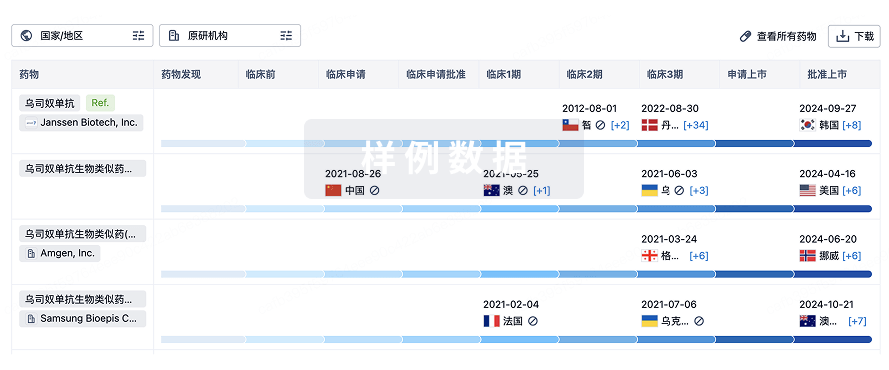
生物类似药在不同国家/地区的竞争态势。请注意临床1/2期并入临床2期,临床2/3期并入临床3期
登录
或
特殊审评
只需点击几下即可了解关键药物信息。
登录
或

提出任何生物医药研究问题
让每一步生物医药决策都精准制胜
基于十亿级生物数据与全球情报的精准 AI,赋能早期药物发现
立即开始免费试用!
智慧芽新药情报库是智慧芽专为生命科学人士构建的基于AI的创新药情报平台,助您全方位提升您的研发与决策效率。
立即接入生物医药数据包
智慧芽新药库数据也通过智慧芽开放平台,以MCP或API服务形式对外开放。立即使用我们的MCP服务定制您的LLM智能体。
生物序列数据库
生物药研发创新
免费使用
化学结构数据库
小分子化药研发创新
免费使用