预约演示
更新于:2026-08-15
Botulinum toxin(ATGC Co)
肉毒杆菌毒素(ATGC Co)
更新于:2026-08-15
概要
基本信息
原研机构 |
在研机构 |
非在研机构- |
权益机构- |
最高研发阶段临床前 |
首次获批日期- |
最高研发阶段(中国)- |
特殊审评- |

关联
100 项与 肉毒杆菌毒素(ATGC Co) 相关的临床结果
登录后查看更多信息
100 项与 肉毒杆菌毒素(ATGC Co) 相关的转化医学
登录后查看更多信息
100 项与 肉毒杆菌毒素(ATGC Co) 相关的专利(医药)
登录后查看更多信息
2,027
项与 肉毒杆菌毒素(ATGC Co) 相关的文献(医药)2026-09-01·JPRAS open
The efficacy of botulinum toxin treatment in facial palsy: A systematic review
Review
作者: Ghawi, Odette El ; Emmanuel, Nancy ; Ibrahim, Reina ; Boughambouz, Karima ; Nicolas, Gregory ; Menendez, Juan Pablo
Background:
Facial palsy, characterized by the partial or complete paralysis of facial muscles, poses significant challenges to individuals' quality of life due to its functional and psychological impacts. Botulinum toxin (botulinum toxin) injections have emerged as a promising therapeutic option for managing facial palsy, but the extent of their efficacy across various etiologies and the duration of treatment effects warrant further investigation.
Objective:
This study aims to systematically assess the efficacy of botulinum toxin injections in treating facial palsy, including subjective assessments, long-term follow-up, and evaluation of adverse effects.
Methods:
A systematic review following the PRISMA Guidelines was conducted by searching four major databases: PubMed, Cochrane, Scopus, and Embase. A total of 394 randomized controlled trials (RCTs) published between 2013 and 2024 were initially identified for screening. After applying the inclusion and exclusion criteria, 20 studies were selected for detailed analysis in this review.
Results:
The analysis revealed a significant improvement in facial symmetry, reduction in spasticity, and enhancement of functional outcomes following botulinum toxin injections for facial palsy. Subjective assessments indicated patient satisfaction, with sustained treatment effects observed during long-term follow-up. Adverse effects were generally mild and transient.
Conclusion:
Botulinum toxin injections demonstrate promising efficacy in treating facial palsy, offering improvements in facial symmetry and functional outcomes. Long-term follow-up confirms sustained treatment effects, while adverse effects remain manageable. This study underscores the potential of botulinum toxin therapy as a valuable intervention for individuals with facial palsy.
2026-08-01·INTERNATIONAL JOURNAL OF PEDIATRIC OTORHINOLARYNGOLOGY
Management of pediatric sialorrhea: A systematic review with a stepwise evidence-based clinical algorithm
Review
作者: AlGhamdi, Muhnnad A ; Almohanna, Saad ; Halawani, Mohammed ; Alanazi, Noura Farhan
BACKGROUND:
Pediatric sialorrhea, or pathological drooling beyond early childhood, is commonly associated with neurological and motor impairments, particularly cerebral palsy. It can cause significant physical, psychosocial, and caregiver burden. Despite multiple treatment modalities, management remains inconsistent, with no universally accepted guideline for assessment or treatment sequencing.
OBJECTIVE:
To evaluate current interventions and develop a practical, evidence-based, stepwise clinical management algorithm.
METHOD:
A PRISMA-guided systematic review was conducted. Medline, PubMed, Scopus, OVID, CENTRAL, and other databases were searched for studies reporting management strategies for pediatric sialorrhea. Randomized controlled trials were included for non-surgical interventions, while all study designs were considered for surgical management. Outcomes included drooling severity, frequency, adverse events, and treatment durability. Risk of bias was assessed using Cochrane RoB 2 and MINORS, while the GRADE framework evaluated evidence certainty.
RESULTS:
Twenty-two studies encompassing 1028 pediatric participants were included. Interventions were categorized as behavioral/rehabilitative, pharmacologic, botulinum toxin, and surgical therapies. Behavioral therapies, particularly oral motor therapy, produced modest short-term improvements in drooling severity and frequency (low-to-moderate certainty). Pharmacologic agents, primarily anticholinergics, demonstrated medium-term efficacy but were limited by systemic side effects (moderate certainty). Botulinum toxin injections offered reversible, short-to medium-term reductions (low certainty), while surgical interventions provided the most durable benefit in severe or refractory cases (moderate certainty). A stepwise, severity-informed algorithm was developed, integrating initial risk stratification, escalation principles, and multidisciplinary collaboration.
CONCLUSION:
Pediatric sialorrhea requires a structured, individualized approach. The proposed algorithm provides a stepwise management framework, emphasizes early conservative measures, and reserves invasive interventions for severe or refractory cases. Prospective validation is needed.
2026-07-04·CRANIO-The Journal of Craniomandibular & Sleep Practice
Botulinum toxin in orofacial pain: A clinician’s perspective on what we know, what we do, and what we get wrong
作者: Val, Matteo ; Manfredini, Daniele ; Guarda Nardini, Luca
6
项与 肉毒杆菌毒素(ATGC Co) 相关的新闻(医药)2026-06-23
Canada is the first country to approve a new botulinum neurotoxin serotype for aesthetic use
Boey® is the first and only rapid-onset and short-duration botulinum neurotoxin serotype E approved for the temporary improvement in the appearance of glabellar lines
Boey® offers a differentiated treatment option for many people who are curious about facial injectables
Results may be seen as early as eight hours after treatment and typically wear off within approximately two to three weeks
BOTOX Cosmetic® (onabotulinumtoxinA) is the only neurotoxin clinically tested for use following treatment with Boey®
IRVINE, Calif., June 23, 2026 /PRNewswire/ -- Today, Allergan Aesthetics, an AbbVie company (NYSE: ABBV), announced Health Canada has approved Boey® (trenibotulinumtoxinE) for the temporary improvement in the appearance of moderate to severe lines between the eyebrows (glabellar lines) in adult patients.
Boey® is the first and only rapid-onset and short-duration botulinum neurotoxin serotype E approved for the temporary improvement in the appearance of glabellar lines.
"Health Canada's approval of Boey® marks an important scientific and regulatory milestone in advancing toxin science. As the world's first approval of a botulinum neurotoxin based on serotype E in aesthetics, Boey® represents a meaningful advancement in aesthetic medicine — a fast-acting neurotoxin with a differentiated profile that expands the treatment options for clinicians and patients," said Roopal Thakkar, M.D., executive vice president, research and development, chief scientific officer, AbbVie.
A new Allergan Aesthetics survey found that 80% of people are open to learning about new treatments to get the results they want and 79% wish they could temporarily preview the outcome of an aesthetic treatment. 1 Despite growing interest in facial injectables, many patients are hesitant to take the next step due to uncertainty around treatment outcomes and committing to long-lasting results. Boey® was developed for these patients, offering a new way to experience neurotoxin treatment.
"Boey® represents an important new advancement for patients and healthcare professionals, addressing a key need in aesthetic neurotoxins. With its truly differentiated profile, Boey® is redefining aesthetics and expanding what's possible by giving practitioners another option to tailor treatment to individual needs and goals, specifically, the ability to try a toxin without the long-term commitment," said Nicole Mowad-Nassar, senior vice president, AbbVie and president, global Allergan Aesthetics. "Allergan Aesthetics is proud to bring this innovation to Canada first and to continue advancing options that help shape the future of aesthetic medicine."
Developed by the makers of BOTOX Cosmetic®, Boey® offers a new option for suitable patients considering facial injectables. BOTOX Cosmetic® is the only neurotoxin clinically tested for use following treatment with Boey®.
Allergan Aesthetics plans to begin training healthcare professionals on the appropriate use of Boey® and is preparing for a commercial launch in the upcoming months as trenibotulinumtoxinE is under review for approval in multiple other countries.
Allergan Aesthetics develops, manufactures and markets a portfolio of leading aesthetics brands and products. Allergan Aesthetics is well positioned to lead the future of injectable aesthetics, with dedicated research and development focused on driving innovation to meet the evolving needs of patients and healthcare professionals worldwide.
-ENDS-
About the Boey® clinical studies
The approval of Boey® is supported by data from two randomised, multi-centre, double-blind, placebo-controlled studies Phase 3 clinical trials evaluating the efficacy and safety of Boey® in adults with moderate to severe glabellar lines (M21-500 and M21-508) associated with corrugator and/or procerus muscle activity. The studies enrolled 947 patients treated with Boey® 700 U total dose or placebo.
The primary efficacy measure was defined as the percentage of subjects achieving None or Mild and ≥ 2-Grade Improvement from baseline in glabellar line severity at maximum frown based on both investigator and subject assessments using the Facial Wrinkle Scale (FWS) at Day 7. Efficacy was assessed in the ITT population. The composite responder rates at Day 7 were 60.0% and 65.7% (M2-500: n=289/482; M21-508: n=149/227; p<0.0001).
Secondary efficacy endpoints were measured by Facial Line Satisfaction Questionnaire (FLSQ), a validated scale developed by Allergan Aesthetics, and included satisfaction with achieving a natural look and overall satisfaction with treatment effect.
The onset of effect for patients treated with Boey® appeared as early as 8 hours after injection in both pivotal studies. Glabellar lines returned to baseline severity in approximately 14-21 days after administration.
The most frequently reported treatment-related adverse events were headache (3.4% in the Boey-treated group and 4.2% in the placebo-treated group), injection site pain (1.7% in the Boey-treated group and 2.9% in the placebo-treated group), and injection site erythema (0.6% in the Boey-treated group and 1.3% in the placebo-treated group).2
BOEY
®
CANADA APPROVED USES AND IMPORTANT SAFETY INFORMATION
Boey® is used in adults to temporarily improve the appearance of moderate to severe frown lines between the eyebrows (glabellar/frown lines).
IMPORTANT SAFETY INFORMATION
Boey
®
may cause serious side effects, including:
Distant spread of toxin effects. It is possible that the effect of botulinum toxin may affect areas of the body away from the injection site and cause symptoms of a serious condition called botulism. Trouble breathing and trouble swallowing can be life threatening.
One unit (amount) of Boey® is NOT the same as one unit of other botulinum products.
Boey® should only be given by a trained healthcare professional. They should have experience using Boey®.
Follow the dose and schedule of injection recommended by your healthcare provider.
Do not use Boey® if you are allergic to botulinum toxin or any of the other ingredients or you have a skin infection where you plan to get the injection
To help avoid side effects and ensure proper use, talk to your healthcare professional before you take Boey®. Talk about any health conditions or problems you may have, including if you have allergies to any botulinum toxin product, had a side effect from any botulinum toxin product in the past, have had facial surgery or injured your face, are planning to have facial surgery soon, have any redness or swelling (inflammation) where you plan to get an injection, muscles where the injection will be given are weak, have drooping of one or both eyelids (ptosis), have any other change in the way your face normally looks, have certain diseases that affect your nervous system (such as amyotrophic lateral sclerosis or motor neuropathy)
Other warnings you should know about include:
Injection site reactions: Like with any injection procedure, injection site reactions may happen after receiving Boey®. Symptoms at the injection site(s) may include pain/discomfort, swelling/inflammation, redness, bruising, bleeding, itching, warmth, hardness at the site where the needle entered your skin
Muscle weakness in areas next to or near the injection sites such as eyelid drooping and double vision (seeing two objects when there is only one).
Driving and using machines: If you have drooping eyelids or problems with your vision after using Boey®, do not drive or use machinery until those symptoms go away.
After you get Boey®, talk to your healthcare professional if you have the following:
Allergic reaction: An allergic reaction is a reaction your body has to a medicine. This can cause symptoms such as hives, rash, or fever. Contact your healthcare professional right away if you have any of the symptoms listed as they can be signs of a severe allergic reaction: trouble breathing, swallowing, or speaking, swelling, including swelling of the face or throat, wheezing (a whistling sound while breathing), feeling dizzy or light-headed, shortness of breath
Distant
spread of toxin effect: Sometimes, the effects of botulinum toxin may spread from the injection area to other parts of the body. Contact your healthcare provider right away if you have any of the symptoms listed: muscle weakness, trouble swallowing, unwanted food or liquid going into the airways
Reduced blinking or experience dryness in one or both eyes.
Tell your healthcare professional about all the medicines you take, including any drugs, vitamins, minerals, natural supplements or alternative medicines. The following may interact with Boey®: a different medicine that has botulinum toxin, muscle relaxants (medicines that reduce muscle tension), antibiotics (medicines used to treat infections)
, anticholinergics (medicines that reduce muscle strength). Ask your healthcare provider for advice before you take any new medicines.
Boey® can have side effects, although not everybody gets them, including drooping eyelid (uncommon), drooping eyebrow (uncommon), or raising of the outer eyebrow (rare).
These are not all the possible side effects you may have when taking Boey®. If you experience any side effects not listed here, tell your healthcare professional.
Please consult the Boey® product monograph for more information.
BOTOX® COSMETIC US APPROVED USES AND IMPORTANT SAFETY INFORMATION
BOTOX® Cosmetic is a prescription medicine that is injected into muscles and used to temporarily improve the look of moderate to severe forehead lines, crow's feet lines, frown lines between the eyebrows, and vertical bands connecting the jaw and neck (platysma bands) in adults.
IMPORTANT SAFETY INFORMATION
BOTOX® Cosmetic may cause serious side effects that can be life threatening. Get medical help right away if you have any of these problems any time (hours to weeks) after injection of BOTOX® Cosmetic:
Problems swallowing, speaking, or breathing, due to weakening of associated muscles, which can be severe and result in loss of life. You are at the highest risk if these problems are preexisting before injection. Swallowing problems may last for several months.
Spread of toxin effects. The effect of botulinum toxin may affect areas away from the injection site and cause serious symptoms, including loss of strength and all-over muscle weakness, double vision, blurred vision and drooping eyelids, hoarseness or change or loss of voice, trouble saying words clearly, loss of bladder control, trouble breathing, and trouble swallowing.
BOTOX® Cosmetic dosing units are not the same as, or comparable to, any other botulinum toxin product.
There has not been a confirmed serious case of spread of toxin effect when BOTOX® Cosmetic has been used at the recommended dose to treat frown lines, crow's feet lines, forehead lines, and/or platysma bands.
BOTOX® Cosmetic may cause loss of strength or general muscle weakness, vision problems, or dizziness within hours to weeks of receiving BOTOX® Cosmetic.
If this happens, do not drive a car, operate machinery, or do other dangerous activities.
Serious and/or immediate allergic reactions have been reported, including itching, rash, red itchy welts, wheezing, asthma symptoms, or dizziness or feeling faint. Get medical help right away if you are wheezing or have asthma symptoms, or if you become dizzy or faint.
Do not receive BOTOX® Cosmetic if you are allergic to any of the ingredients in BOTOX® Cosmetic (see Medication Guide for ingredients); had an allergic reaction to any other botulinum toxin product such as Myobloc (rimabotulinumtoxinB), Dysport (abobotulinumtoxinA), Xeomin (incobotulinumtoxinA), Jeuveau (prabotulinumtoxinA-xvfs), Daxxify (daxibotulinumtoxinA-lanm), or Letybo (letibotulinumtoxinA-wlbg); or have a skin infection at the planned injection site. This list may not include all available botulinum toxin products.
Tell your doctor about all your muscle or nerve conditions, such as ALS or Lou Gehrig's disease, myasthenia gravis, or Lambert-Eaton syndrome, as you may be at increased risk of serious side effects, including difficulty swallowing and difficulty breathing, from standard doses of BOTOX® Cosmetic.
Tell your doctor about all your medical conditions
, including surgery or plans to have surgery on your face, trouble raising your eyebrows, drooping eyelids, any other abnormal facial change, are pregnant or plan to become pregnant (it is not known if BOTOX® Cosmetic can harm your unborn baby), or are breastfeeding or plan to (it is not known if BOTOX® Cosmetic passes into breast milk).
Tell your doctor about all the medicines you take, including prescription and over-the-counter medicines, vitamins, and herbal supplements. Using BOTOX® Cosmetic with certain other medicines may cause serious side effects.
Do not start any new medicines until you have told your doctor that you have received BOTOX® Cosmetic in the past.
Tell your doctor if you have received any other botulinum toxin product in the last 4 months; have received injections of botulinum toxin such as Myobloc, Dysport, Xeomin, Jeuveau, Daxxify, or Letybo in the past (tell your doctor exactly which product you received); have recently received an antibiotic by injection; take muscle relaxants; take an allergy or cold medicine; take a sleep medicine; or take aspirin-like products or blood thinners.
Other side effects of BOTOX® Cosmetic include dry mouth; discomfort or pain at the injection site; tiredness; headache; neck pain; and eye problems, including double vision, blurred vision, decreased eyesight, drooping eyelids and eyebrows, swelling of eyelids, and dry eyes.
For more information, refer to the Medication Guide or talk with your doctor.
To report a side effect, please call Allergan Aesthetics at 1-800-678-1605.
Please see BOTOX®
Cosmetic full US
Product Information
,
including Boxed Warning and
Medication Guide
.
© 2026 AbbVie. All rights reserved. All trademarks are the property of their respective owners.
About Boey®
Boey® is a facial injectable neurotoxin serotype E indicated in adult patients for the temporary improvement in the appearance of of moderate to severe glabellar lines associated with corrugator and/or procerus muscle activity. It blocks neuromuscular transmission as the neurotoxin cleaves SNAP-25. It has a rapid uptake and translocation into neuronal cells, with a short half-life of the type E light chain, giving it a rapid onset of action and a short duration of effect when treating glabellar lines.2
About Glabellar lines
Glabellar lines are the vertical lines that appear between the eyebrows and are commonly referred to as "frown lines". These lines develop over time due to repeated muscle contractions from facial expressions such as frowning, concentrating or squinting.
About Allergan Aesthetics
At Allergan Aesthetics, an AbbVie company, we develop, manufacture, and market a portfolio of leading aesthetics brands and products. Our aesthetics portfolio includes facial injectables, body contouring, plastics, skin care, and more. Our goal is to consistently provide our customers with innovation, education, exceptional service, and a commitment to excellence, all with a personal touch. For more information, visit
About AbbVie
AbbVie's mission is to discover and deliver innovative medicines and solutions that solve serious health issues today and address the medical challenges of tomorrow. We strive to have a remarkable impact on people's lives across several key therapeutic areas including immunology, neuroscience and oncology – and products and services in our Allergan Aesthetics portfolio. For more information about AbbVie, please visit us at . Follow @abbvie on LinkedIn, Facebook, Instagram, X and YouTube.
Forward-Looking Statements
Some statements in this news release are, or may be considered, forward-looking statements for purposes of the Private Securities Litigation Reform Act of 1995. The words "believe," "expect," "anticipate," "project" and similar expressions and uses of future or conditional verbs, generally identify forward-looking statements. AbbVie cautions that these forward-looking statements are subject to risks and uncertainties that may cause actual results to differ materially from those expressed or implied in the forward-looking statements. Such risks and uncertainties include, but are not limited to, challenges to intellectual property, competition from other products, difficulties inherent in the research and development process, adverse litigation or government action, changes to laws and regulations applicable to our industry, the impact of global macroeconomic factors, such as economic downturns or uncertainty, international conflict, trade disputes and tariffs, and other uncertainties and risks associated with global business operations. Additional information about the economic, competitive, governmental, technological and other factors that may affect AbbVie's operations is set forth in Item 1A, "Risk Factors," of AbbVie's 2025 Annual Report on Form 10-K, which has been filed with the Securities and Exchange Commission, as updated by its Quarterly Reports on Form 10-Q and in other documents that AbbVie subsequently files with the Securities and Exchange Commission that update, supplement or supersede such information. AbbVie undertakes no obligation, and specifically declines, to release publicly any revisions to forward-looking statements as a result of subsequent events or developments, except as required by law.
FOOTNOTES
* A global survey (28th November 2025 – 15th December 2025) of N=12,286 adults aged 18+ who have paid for at least 2 beauty or aesthetics related services in the past year (Brazil n=1318, Canada n=1304, China n=1318, France n=1302, Germany n=1301, KSA n=1311, Thailand n=1321, USA n=1802, UK n=1309).1
References
Allergan Aesthetics Holistic Beauty Global Research. REF-148616. January 2026
Boey® Product Monograph. AbbVie 2026.
-ENDS-
Contacts:
Allergan Aesthetics Media:
Michael Salzillo
+1 (908) 269-1688
[email protected]
AbbVie Investors:
Liz Shea
+1 (847) 935-2211
[email protected]
© 2026 AbbVie. All rights reserved. All trademarks are the property of their respective owners.
SOURCE AbbVie
21%
more press release views with
Request a Demo
临床结果上市批准临床3期
2026-04-28
NEW YORK--(BUSINESS WIRE)--Vensica Medical, a clinical-stage company developing needle-free therapeutic delivery solutions for urologic diseases, today announced that the U.S. Food and Drug Administration (FDA) has cleared the Company’s Investigational New Drug (IND) application to initiate a Phase 2 clinical trial of ViXe. The study will evaluate the Vibe® ultrasound-based, needle-free drug delivery system in combination with Xeomin® (incobotulinumtoxinA) for the treatment of overactive bladder (OAB).
Overactive bladder affects an estimated 33 million adults in the United States and is characterized by urinary urgency, frequency, and incontinence. While intravesical botulinum toxin injection is an established second-line treatment, the invasive procedure limits patient access and acceptance. The ViXe program is designed to enable effective delivery of botulinum toxin into the bladder wall without the need for needles.
The Phase 2 study is expected to enroll approximately 210 patients across sites in the United States and Europe and will evaluate the safety and efficacy of Vibe-enabled delivery of botulinum toxin type A. The Company anticipates initiating patient enrollment in [Q3 2026].
“FDA clearance of this IND is an important milestone for Vensica and validates the clinical rationale behind the ViXe program,” said Avner Geva, Chief Executive Officer of Vensica Medical. “Botulinum toxin is a proven therapy for OAB, but needle-based delivery remains a barrier for many patients. We believe ViXe has the potential to expand access to a much broader population.”
“The Vibe platform was specifically engineered to overcome biological barriers that have historically limited needle-free delivery of large-molecule drugs,” said Avi Eftel, Co-Founder and Chief Technology Officer of Vensica Medical. “We look forward to executing this study and generating data to further demonstrate the clinical value of our approach.”
“This IND clearance represents a key milestone in Vensica’s development and highlights the potential of the ViXe program,” said Ken Berlin, Executive Chairman of the Board of Vensica Medical. “A needle-free approach to botulinum toxin delivery could meaningfully expand patient access and create significant value for patients, partners, and investors.”
The IND clearance triggers a contractual development milestone payment from Vensica’s strategic partners, supporting execution of the Phase 2 trial. Vensica is supported by its investors and strategic partners, including Merz Pharma, Laborie, and Israel Biotech Fund.
About Vensica Medical
Vensica Medical is a clinical-stage company developing needle-free therapeutic delivery solutions for urologic diseases. The Company’s proprietary Vibe® platform uses focused ultrasound to enable localized delivery of biologic and small-molecule drugs into the bladder wall. Vensica’s lead program, ViXe, combines the Vibe system with Xeomin® (incobotulinumtoxinA) for the treatment of overactive bladder. For more information, please visit [www.vensica.com].

2026-04-13
Seven abstracts represent data across migraine, childhood-onset epilepsy and multiple system atrophy (MSA), highlighting Lundbeck's biology-driven approach to developing treatments for serious brain diseases
Oral presentation of new Phase 1 safety and tolerability data for bocunebart (Lu AG09222), an investigational anti-PACAP monoclonal antibody in migraine prevention
Three VYEPTI® (eptinezumab) abstracts include clinical data and new real-world evidence in migraine
Neuro-rare pipeline updates feature long-term data for bexicaserin in developmental and epileptic encephalopathies (DEEs), and clinical perspectives on disease progression in MSA
VALBY, Denmark, April 13, 2026 /PRNewswire/ -- H. Lundbeck A/S (Lundbeck) today announced that new data across its neurology portfolio will be presented at the American Academy of Neurology (AAN) Annual Meeting 2026, taking place April 18–22 in Chicago, U.S. The presentations span migraine, developmental and epileptic encephalopathies (DEEs) and multiple system atrophy (MSA), and underscore Lundbeck's focus on advancing brain disease treatments where there is significant unmet need.
"Neuroscience is reaching an inflection point. Progress in human genetics, biomarker validation, and the understanding of neuro-rare and migraine disease biology is opening new possibilities," said Johan Luthman, EVP and Head of Research & Development at Lundbeck." Our approach is to translate these insights into drug development programs that validate mechanisms early and focus on areas where patients still have few or no treatment options."[i]
Among the highlights are new Phase 1 data on bocunebart, a potential first-in-class investigational monoclonal antibody that targets pituitary adenylate cyclase-activating polypeptide (PACAP), a pathway distinct from the calcitonin gene-related peptide (CGRP) mechanism targeted by current preventive migraine therapies. The analysis evaluates the safety and tolerability of bocunebart when administered alongside a gepant, a class of oral CGRP receptor antagonist commonly used in migraine management.
Lundbeck will also present data on eptinezumab, an intravenous anti-CGRP preventive treatment for migraine. These include a post-hoc analysis from DELIVER, a randomized Phase 3b trial investigating headache-free periods and patient-reported outcomes in individuals whose migraine had not responded to multiple prior preventive treatments. New interim findings from the ongoing 12-month INFUSE real-world study will report six-month outcomes, including data on migraine-related cognitive symptoms, in patients who had experienced failures with at least one prior anti-CGRP preventive treatment.
In rare childhood-onset epilepsy, Lundbeck will present primary 12-month results from the open-label extension of the Phase 1b/2a PACIFIC trial evaluating bexicaserin, an investigational selective 5-HT2C receptor superagonist being studied for the treatment of seizures in DEEs, including Dravet syndrome and Lennox-Gastaut syndrome.
Separately, findings will be presented from a Delphi consensus study in MSA, a rare neurodegenerative movement disorder with no currently approved treatment. The Delphi panel examined the appropriateness of expressing treatment effect as a percentage-wise slowing of clinical progression on the Unified Multiple System Atrophy Rating Scale (UMSARS), and the threshold for clinical meaningfulness.
Together, these data highlight Lundbeck's expanding neurology pipeline and its continued commitment to advancing treatments for serious brain diseases.
Details of Lundbeck presentations at AAN 2026
About migraine
Migraine is a complex and incapacitating neurological disease characterized by recurrent episodes of severe headaches typically accompanied by an array of symptoms, including nausea, vomiting, and sensitivity to light or sound.[ii] Not only is migraine painful but also imposes both a social and financial burden. Migraine has a profound impact on patient functioning including relationships with family/friends, leisure activities, household production and work productivity.
Migraine is one of the most prevalent neurological diseases for which medical treatment is sought and is considered the leading cause of disability for people under the age of 50 and the 2nd leading cause of disability worldwide.[iii],[iv] Repeated migraine attacks, and often the constant fear of the next one, damage family life, social life and work life. As migraine frequency and severity increase, attacks become harder to control, requiring patients to take more headache medication while experiencing less relief. This cycle contributes to a greater disease burden and, without appropriate preventive management, can lead to further worsening and chronification of migraine.[v]
About Vyepti® (eptinezumab)
Eptinezumab is a humanized monoclonal antibody that binds to calcitonin gene-related peptide (CGRP) which was purposefully developed for intravenous (IV) administration. The efficacy and safety of eptinezumab 100 mg and 300 mg was investigated in two Phase 3 clinical trials (PROMISE-1 in episodic migraine[vi] and PROMISE-2 in chronic migraine)[vii], where eptinezumab met its primary endpoint of decrease in mean monthly migraine days (MMD) over weeks 1-12 in both episodic and chronic migraine. Furthermore, the clinical trial program demonstrated a treatment benefit over placebo that was observed for both doses of eptinezumab as early as day 1 post-infusion. The safety of eptinezumab was evaluated in more than 2,000 adult patients with migraine who received at least one dose of eptinezumab. The most common adverse reactions (≥2% and at least 2% or greater than placebo) in the clinical trials for the preventive treatment of migraine were nasopharyngitis and hypersensitivity. Approximately 8% of patients on 300 mg, 6% of patients on 100 mg and 6% of patients on placebo in PROMISE-1 and PROMISE-2 experienced nasopharyngitis. In PROMISE-1 and PROMISE-2, 1.9% of patients treated with eptinezumab discontinued treatment due to adverse reactions.
VYEPTI (eptinezumab-jjmr) was approved by the U.S. Food and Drug Administration (FDA) for the preventive treatment of migraine in adults in February 2020, and in January 2022, eptinezumab was granted marketing authorization by the European Commission (EC) for the prophylaxis of migraine in adults who have at least four migraine days per month. Today, eptinezumab is launched in more than 30 markets worldwide.
INDICATION
VYEPTI (eptinezumab-jjmr) is indicated for the preventive treatment of migraine in adults.
IMPORTANT SAFETY INFORMATION
CONTRAINDICATIONS
VYEPTI is contraindicated in patients with serious hypersensitivity to eptinezumab-jjmr or to any of the excipients. Reactions have included anaphylaxis and angioedema.
WARNINGS AND PRECAUTIONS
Hypersensitivity Reactions: Hypersensitivity reactions, including angioedema, urticaria, facial flushing, dyspnea, and rash, have occurred with VYEPTI in clinical trials and in the postmarketing setting. Most hypersensitivity reactions occurred during infusion and were not serious, but often led to discontinuation or required treatment. Serious hypersensitivity reactions may occur. Cases of anaphylaxis have been reported in the postmarketing setting. If a hypersensitivity reaction occurs, consider discontinuing VYEPTI and institute appropriate therapy.
Hypertension: Development of hypertension and worsening of pre-existing hypertension have been reported following the use of CGRP antagonists, including VYEPTI, in the postmarketing setting. Some of the patients who developed new-onset hypertension had risk factors for hypertension. There were cases requiring initiation of pharmacological treatment for hypertension, and in some cases hospitalization. Hypertension may occur at any time during treatment, but was most frequently reported within 7 days of therapy initiation. The CGRP antagonist was discontinued in many of the reported cases.
Monitor patients treated with VYEPTI for new-onset hypertension or worsening of pre-existing hypertension, and consider whether discontinuation of VYEPTI is warranted if evaluation fails to establish an alternative etiology or blood pressure is inadequately controlled.
Raynaud's Phenomenon: Development of Raynaud's phenomenon and recurrence or worsening of pre-existing Raynaud's phenomenon have been reported in the postmarketing setting following the use of CGRP antagonists. In reported cases with monoclonal antibody CGRP antagonists, symptom onset occurred a median of 71 days following dosing. Many of the cases reported serious outcomes, including hospitalizations and disability, generally related to debilitating pain. In most reported cases, discontinuation of the CGRP antagonist resulted in resolution of symptoms.
VYEPTI should be discontinued if signs or symptoms of Raynaud's phenomenon develop, and patients should be evaluated by a healthcare provider if symptoms do not resolve. Patients with a history of Raynaud's phenomenon should be monitored for, and informed about the possibility of, worsening or recurrence of signs and symptoms.
ADVERSE REACTIONS
The most common adverse reactions (≥2% and at least 2% or greater than placebo) in the clinical trials for the preventive treatment of migraine were nasopharyngitis and hypersensitivity.
VYEPTI was approved by the U.S. Food and Drug Administration (FDA) for the preventive treatment of migraine in adults in February 2020. For more information, please see Full Prescribing Information and Patient Information or visit .
About the INFUSE study
The INFUSE study is an ongoing 12-month, prospective, observational study in the US, assessing real-world effectiveness of IV eptinezumab (100 mg or 300 mg) in adults with migraine who previously failed at least one preventive anti-CGRP. Data were collected digitally at baseline, Day 7, and Months 3, 6, 9 and 12 through participant-reported surveys. The primary outcome was percent of patients with "much" or "very much" improved on the 7-point PGIC scale ("very much improved," "much improved," "minimally improved," "no change," "minimally worse," "much worse," or "very much worse"). Secondary outcomes included monthly headache days and ≥50% reduction in monthly headache days (MIDAS-derived) and number of patient-defined "good days".[viii]
About the DELIVER trial
DELIVER (NCT04418765) is a Phase 3b, multicenter, randomized, double-blind, placebo-controlled study evaluating the safety and efficacy of eptinezumab in patients with chronic or episodic migraine. Chronic migraine was defined as migraine occurring on ≥8 days per month and headache occurring on >14 days, and episodic migraine as migraine occurring on ≥4 days and headache occurring on ≤14 days. All patients had to have experienced failures of two to four prior preventive treatment classes (including: propranolol, metoprolol, topiramate, amitriptyline, flunarizine, valproate, divalproex, candesartan) or botulinum toxin A/B (if documented that botulinum toxin was used for chronic migraine), and at least one failure being due to inadequate efficacy. Patients who experienced failure on a previous treatment targeting the CGRP pathway were excluded from participation. Documented evidence of prior migraine treatment failures was supported by medical records or by physicians´ confirmation specific to each treatment in the past 10 years.
About bocunebart
Bocunebart is an investigational monoclonal antibody (mAb) with a novel mechanism of action. It was engineered to bind to and inhibit the signaling of pituitary adenylate cyclase-activating polypeptide (PACAP), a neuropeptide implicated in migraine pathophysiology. This mechanism operates through a pathway distinct from that targeted by anti-calcitonin gene-related peptide (anti-CGRP) therapies.[ix] Bocunebart, which met its primary endpoint in the Phase 2b PROCEED trial in February, represents a potential new treatment class and could provide an alternative option for the preventive treatment of migraine. Bocunebart is an investigational mAb, not approved by the US Food and Drug Administration (FDA) or any other regulatory agency, and the efficacy and safety of bocunebart have not been established.
About DEEs
Developmental and Epileptic Encephalopathies (DEEs) are a group of rare neurodevelopmental disorders that typically manifest in early childhood.[x] These heterogeneous and severe epilepsy syndromes are characterized by refractory seizures and developmental stagnation or regression.x According to the International League Against Epilepsy (ILAE), DEEs currently encompass more than 10 syndromes, including Early Infantile DEE (EIDEE), Infantile Epileptic Spasms Syndrome (IESS), Dravet Syndrome, and Lennox-Gastaut Syndrome with various etiologies among those mainly genetic (e.g., CDKL5, STXBP1, KCNT1, SCN2A). The etiology is unknown in approximately 50% of cases of DEE.x
About bexicaserin
Bexicaserin is an investigational, oral, centrally acting, highly selective superagonist of the 5-
HT2C receptor.[xi] Bexicaserin is being evaluated for the treatment of seizures in participants with any type of DEE in a global Phase 3 clinical program (the DEEp Program). The FDA has granted Breakthrough Therapy designation for bexicaserin for the treatment of seizures associated with DEEs for patients two years of age and older. Bexicaserin has also recently been granted Breakthrough Therapy Designation in China for the treatment of seizures associated with DEEs.
Bexicaserin is an investigational compound, not approved by the US Food and Drug Administration (FDA) or any other regulatory agency, and the efficacy and safety of bexicaserin have not yet been established.
About multiple system atrophy
MSA is a rapidly progressing rare condition that causes damage to nerve cells in the brain. In a person with MSA, an abnormal build-up of the protein α-synuclein is thought to be responsible for damaging the areas of the brain that control balance, movement, and the body's normal functions.i MSA is seriously debilitating and places a high disease burden on patients and their care partners. There is currently no cure for MSA and no available treatment to slow its clinical progression.[xii]
Symptoms of MSA usually start between 55 and 60 years of age, and the typical time to death is 8.6 years after symptom onset.xiii Although there are many different possible symptoms of MSA, not everyone who is affected will experience all of them. The symptoms of MSA are wide-ranging and may include muscle control problems, similar to those of Parkinson's disease.xiii Many different functions of the body can be affected, and symptoms can include urinary incontinence, dizziness when standing, balance and gait issues, and falls. MSA is accompanied by reduced capacity to live independently, and death is often due to respiratory problems.
Contacts
Anders Crillesen
Head of Media Relations, Corp. Communication
[email protected]
+45 27 79 12 86
Jens Høyer
Vice President, Head of Investor Relations
[email protected]
+45 30 83 45 01
About H. Lundbeck A/S
Lundbeck is a biopharmaceutical company focusing exclusively on brain health. With more than 70 years of experience in neuroscience, we are committed to improving the lives of people with neurological and psychiatric diseases.
Brain disorders affect a large part of the world's population, and the effects are felt throughout society. With the rapidly improving understanding of the biology of the brain, we hold ourselves accountable for advancing brain health by curiously exploring new opportunities for treatments.
As a focused innovator, we strive for our research and development programs to tackle some of the most complex neurological challenges. We develop transformative medicines targeting people for whom there are few or no treatments available, expanding into neuro-specialty and neuro-rare from our strong legacy within psychiatry and neurology.
We are committed to fighting stigma and we act to improve health equity. We strive to create long term value for our shareholders by making a positive contribution to patients, their families and society as a whole.
Lundbeck has more than 5,000 employees in more than 20 countries and our products are available in more than 80 countries. For additional information, we encourage you to visit our corporate site and connect with us via LinkedIn.
References:
[i] Jellinger KA. J Alzheimers Dis. 2018;62:1141–79
[ii] Headache Classification Committee of the International Headache Society (IHS). The International Classification of Headache Disorders, 3rd Edition. 2018. 38(1): p. 1-211
[iii] Steiner TJ, et al. J Headache Pain. 2018;19(1):17
[iv] Leonardi M, et al. J Headache Pain. 2005; 6(6):429– 440
[v] Lipton RB, et al. J Neurol. 2023;270(12);5692–5710
[vi] Ashina M, et al. Cephalalgia. 2020;40(3):241-254
[vii] Lipton RB, et al. Neurology. 2020;94(13):e1365-e1377
[viii] Starling A et al. Poster Presentation: HCOP Annual Conference 2025
[ix] Al-Karagholi, M.AM., Zhuang, Z.A., Beich, S. et al. J Headache Pain 26, 79 (2025).
[x] Scheffer IE, et al. Epilepsia. 2025;00:1-10
[xi] Ren A, et al. J Medicinal Chem. 2025;68(11):10599-10618
[xii] Palma JA, et al. Auton Neurosci. 2018;211:15–25
CONTACT:
H. Lundbeck A/S
Ottiliavej 9, 2500 Valby, Denmark
+45 3630 1311
[email protected]
This information was brought to you by Cision
The following files are available for download:
21%
more press release views with
Request a Demo
临床结果临床3期上市批准临床2期突破性疗法
100 项与 肉毒杆菌毒素(ATGC Co) 相关的药物交易
登录后查看更多信息
研发状态
10 条进展最快的记录, 后查看更多信息
登录
| 适应症 | 最高研发状态 | 国家/地区 | 公司 | 日期 |
|---|---|---|---|---|
| 骨关节炎 | 临床前 | 韩国 | 2024-10-26 |
登录后查看更多信息
临床结果
临床结果
适应症
分期
评价
查看全部结果
| 研究 | 分期 | 人群特征 | 评价人数 | 分组 | 结果 | 评价 | 发布日期 |
|---|
No Data | |||||||
登录后查看更多信息
转化医学
使用我们的转化医学数据加速您的研究。
登录
或

药物交易
使用我们的药物交易数据加速您的研究。
登录
或

核心专利
使用我们的核心专利数据促进您的研究。
登录
或

临床分析
紧跟全球注册中心的最新临床试验。
登录
或

批准
利用最新的监管批准信息加速您的研究。
登录
或

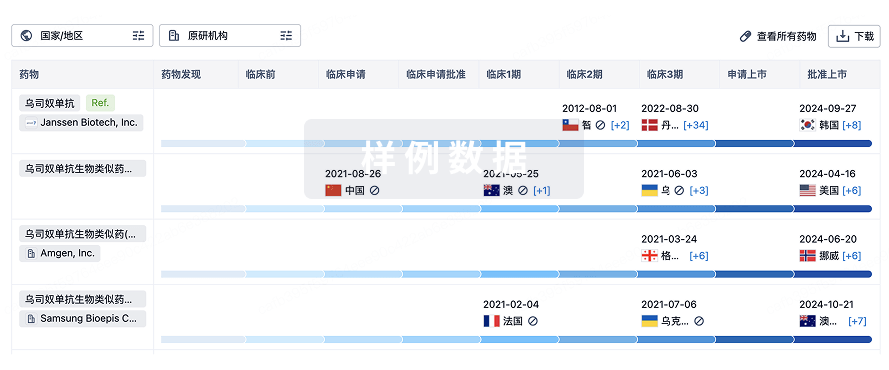
生物类似药
生物类似药在不同国家/地区的竞争态势。请注意临床1/2期并入临床2期,临床2/3期并入临床3期
登录
或
特殊审评
只需点击几下即可了解关键药物信息。
登录
或

提出任何生物医药研究问题
让每一步生物医药决策都精准制胜
基于十亿级生物数据与全球情报的精准 AI,赋能早期药物发现
立即开始免费试用!
智慧芽新药情报库是智慧芽专为生命科学人士构建的基于AI的创新药情报平台,助您全方位提升您的研发与决策效率。
立即接入生物医药数据包
智慧芽新药库数据也通过智慧芽开放平台,以MCP或API服务形式对外开放。立即使用我们的MCP服务定制您的LLM智能体。
生物序列数据库
生物药研发创新
免费使用
化学结构数据库
小分子化药研发创新
免费使用