预约演示
更新于:2026-11-06
Cefilavancin Trihydrochloride
更新于:2026-11-06
概要
基本信息
药物类型 合成多肽、环肽药物 |
别名 Cefilavancin、RD-1792、TD-1792 |
靶点 |
作用方式 抑制剂 |
作用机制 PBPs抑制剂(细菌青霉素结合蛋白家族抑制剂) |
非在研机构- |
权益机构- |
最高研发阶段临床3期 |
首次获批日期- |
最高研发阶段(中国)- |
特殊审评- |

登录后查看时间轴
结构/序列
分子式C87H95Cl3N16O28S2 |
InChIKeyOGUAFUAJSPORAH-KHCCTVBNSA-N |
CAS号722454-12-8 |
关联
1
项与 Cefilavancin Trihydrochloride 相关的临床试验NCT00442832
A Phase 2, Randomized, Double Blind, Study of Intravenous TD 1792 Versus Vancomycin for Treatment of Complicated Gram Positive Skin and Skin Structure Infections
100 项与 Cefilavancin Trihydrochloride 相关的临床结果
登录后查看更多信息
100 项与 Cefilavancin Trihydrochloride 相关的转化医学
登录后查看更多信息
100 项与 Cefilavancin Trihydrochloride 相关的专利(医药)
登录后查看更多信息
8
项与 Cefilavancin Trihydrochloride 相关的文献(医药)2026-08-29Reviews on Recent Clinical Trials
Isatin-based Strategies for Microbial Infections: A Multifaceted Perspective
Article
作者: Rahate, Kalpana ; Singh, Manjot ; Kashyap, Pushp ; Sharma, Radhika ; Mishra, Shubhangi
Abstract::
Novel chemotherapeutic drugs that can fight multidrug-resistant bacteria are desperately
needed due to the fast growth of antimicrobial resistance (AMR). As a favoured scaffold in medicinal
chemistry, the naturally produced indole derivative isatin (1H-indole-2,3-dione) is found in microorganisms,
plants, and the metabolic pathways of mammals, has garnered significant interest.
Isatin is a crucial pharmacophore for the creation of broad-spectrum antibacterial medicines because
of its adaptable chemical structure and ease of structural alteration at several reactive locations. The
therapeutic potential of isatin and its derivatives against bacterial, fungal, viral, and microbacterial
diseases is well highlighted in this study. Schiff bases, Mannich bases, thiosemicarbazones, azole,
furan, sulfonamide, fluoroquinolone, chalcone, and coumarin conjugates are among the many isatinbased
hybrids and analogs that show strong and specific antimicrobial action. According to mechanistic
investigations, these compounds function via a variety of mechanisms, including biofilm suppression,
membrane disruption, interference with DNA gyrase and topoisomerase IV, inhibition of
cell-wall production, and targeting vital enzymes like FtsZ and CrtM. To enhance biological potency
and overcome drug resistance, electronic substituents, linker flexibility, and hybridization techniques
are crucial, according to structure–activity relationship (SAR) studies. The clinical approval of numerous
isatin-based drugs, including sunitinib and nintedanib, for the treatment of cancer, as well as
the evaluation of other drugs, like TD-1792 and Ro 23-9424, for the treatment of infectious diseases,
demonstrate the translational success of this scaffold. This review focuses on significant advancements,
procedures, and potential treatments in isatin-based antimicrobial research.
2012-04-01Antimicrobial agents and chemotherapy2区 · 医学
2区 · 医学
Article
作者: Tyrrell, Kerin L. ; Warren, Yumi A. ; Citron, Diane M. ; Goldstein, Ellie J. C.
ABSTRACT:
TD-1792 is a multivalent glycopeptide-cephalosporin heterodimer antibiotic with potent activity against Gram-positive bacteria. We tested TD-1792 against 377 anaerobes and 34 strains of
Corynebacterium
species. Against nearly all Gram-positive strains, TD-1792 had an MIC
90
of 0.25 μg/ml and was typically 3 to 7 dilutions more active than vancomycin and daptomycin.
2012-03-01ANTIMICROBIAL AGENTS AND CHEMOTHERAPY
Pharmacodynamics of TD-1792, a Novel Glycopeptide-Cephalosporin Heterodimer Antibiotic Used against Gram-Positive Bacteria, in a Neutropenic Murine Thigh Model
Article
作者: Obedencio, Glenmar ; Skinner, Robert ; Hegde, Sharath S. ; Okusanya, Olanrewaju O. ; Ambrose, Paul G. ; Shaw, Jeng-Pyng ; Blais, Johanne ; Bhavnani, Sujata M.
ABSTRACT:
TD-1792 is a novel glycopeptide-cephalosporin heterodimer investigational antibiotic that displays potent bactericidal effects against clinically relevant Gram-positive organisms
in vitro
. The present studies evaluated the
in vivo
pharmacokinetics (PK) and pharmacodynamics (PD) of TD-1792 in the neutropenic murine thigh infection animal model. TD-1792, dosed subcutaneously (SC), produced dose-dependent reduction in the thigh bacterial burden of several organisms, including methicillin-susceptible and -resistant strains of
Staphylococcus aureus
and
Staphylococcus epidermidis
(MSSA, MRSA, MSSE, MRSE, respectively), penicillin-susceptible strains of
Streptococcus pneumoniae
(PSSP),
Streptococcus pyogenes
, and vancomycin-intermediate-susceptible
Staphylococcus aureus
(VISA). In single-dose efficacy studies, the 1-log
10
CFU kill effective dose (ED
1-log kill
) estimates for TD-1792 ranged from 0.049 to 2.55 mg/kg of body weight administered SC, and the bacterial burden was reduced by up to 3 log
10
CFU/g from pretreatment values. Against
S. aureus
ATCC 33591 (MRSA), the total 24-h log
10
stasis dose (ED
stasis
) and ED
1-logkill
doses for TD-1792 were 0.53 and 1.11 mg/kg/24 h, respectively, compared to 23.4 and 54.6 mg/kg/24 h for vancomycin, indicating that TD-1762 is 44- to 49-fold more potent than vancomycin. PK-PD analysis of data from single-dose and dose-fractionation studies for MRSA (ATCC 33591) demonstrated that the total-drug 24-h area under the concentration-time curve-to-MIC ratio (AUC/MIC ratio) was the best predictor of efficacy (
r2
= 0.826) compared to total-drug maximum plasma concentration of drug-to-MIC ratio (Cmax/MIC ratio;
r2
= 0.715) and percent time that the total-drug plasma drug concentration remains above the MIC (%Time>MIC;
r2
= 0.749). The magnitudes of the total-drug AUC/MIC ratios associated with net bacterial stasis, a 1-log
10
CFU reduction from baseline and near maximal effect, were 21.1, 37.2, and 51.8, respectively. PK-PD targets based on such data represent useful inputs for analyses to support dose selection decisions for clinical studies of patients.
1
项与 Cefilavancin Trihydrochloride 相关的新闻(医药)100 项与 Cefilavancin Trihydrochloride 相关的药物交易
登录后查看更多信息
外链
| KEGG | Wiki | ATC | Drug Bank |
|---|---|---|---|
| - | - | - |
研发状态
10 条进展最快的记录, 后查看更多信息
登录
| 适应症 | 最高研发状态 | 国家/地区 | 公司 | 日期 |
|---|---|---|---|---|
| 复杂的皮肤和软组织感染 | 临床3期 | 格鲁吉亚 | 2015-12-27 | |
| 革兰氏阳性细菌感染 | 临床3期 | - | - | |
| 革兰氏阳性细菌感染 | 临床3期 | - | - | |
| 皮肤和皮肤结构感染 | 临床3期 | - | - | |
| 皮肤和皮肤结构感染 | 临床3期 | - | - | |
| 复杂皮肤和皮肤结构感染 | 临床2期 | 美国 | 2006-12-01 | |
| 葡萄球菌皮肤感染 | 临床2期 | 美国 | 2006-12-01 |
登录后查看更多信息
临床结果
临床结果
适应症
分期
评价
查看全部结果
登录后查看更多信息
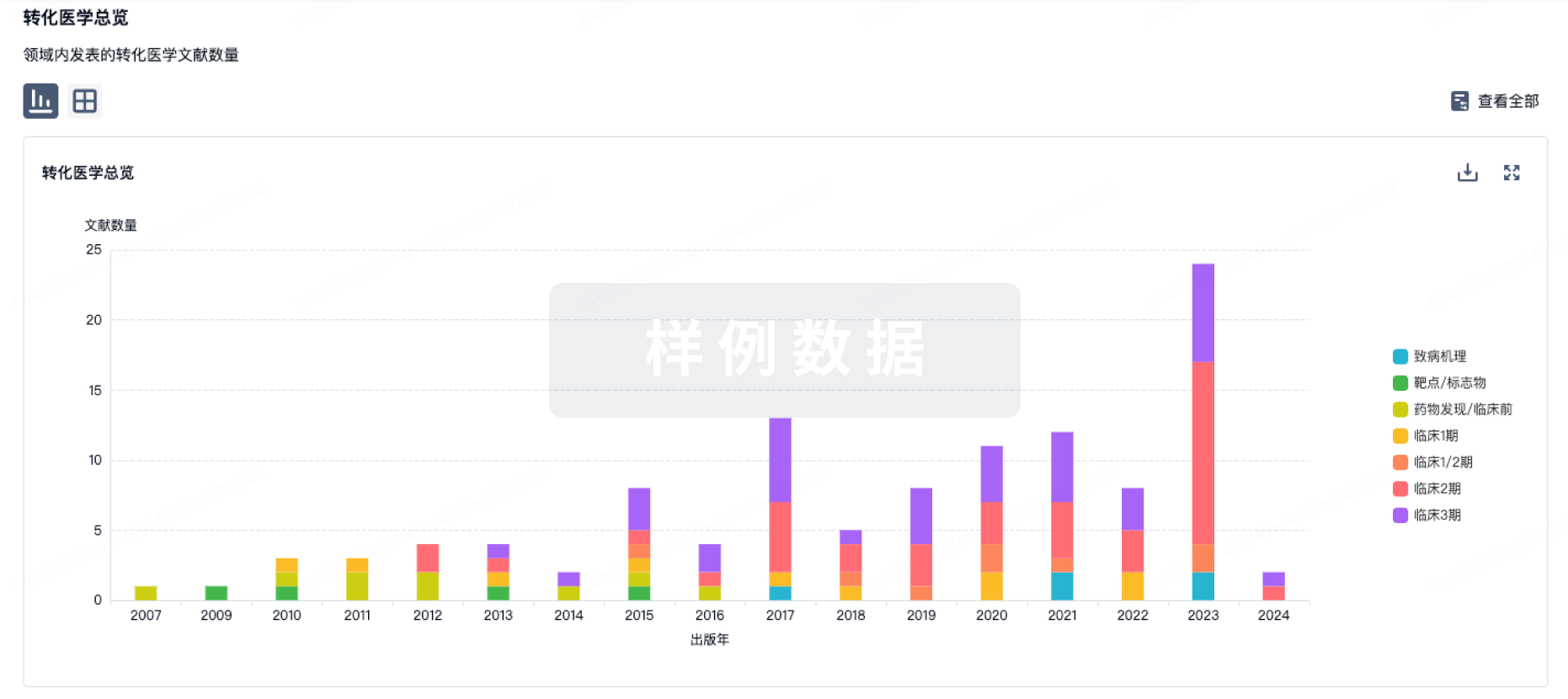
转化医学
使用我们的转化医学数据加速您的研究。
登录
或
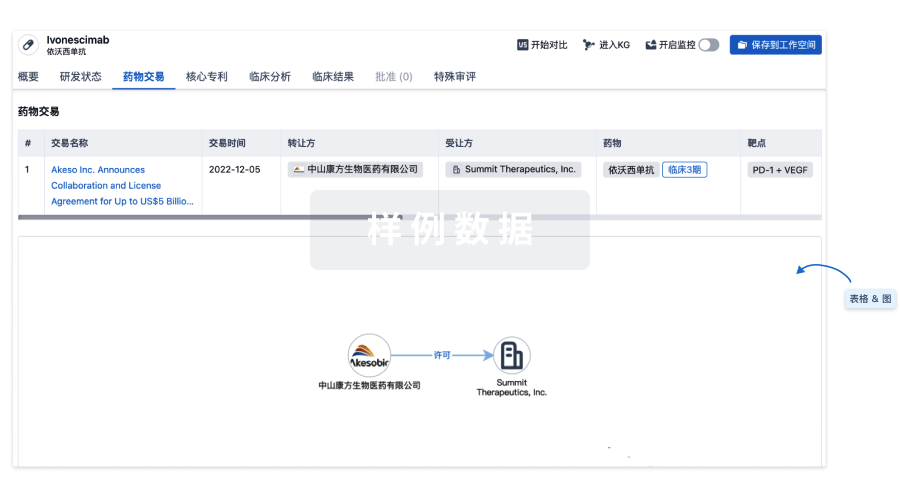
药物交易
使用我们的药物交易数据加速您的研究。
登录
或
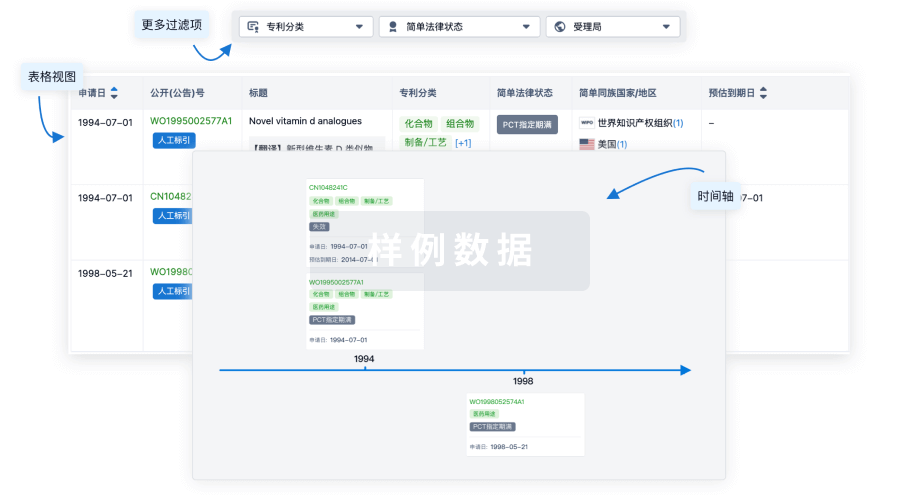
核心专利
使用我们的核心专利数据促进您的研究。
登录
或
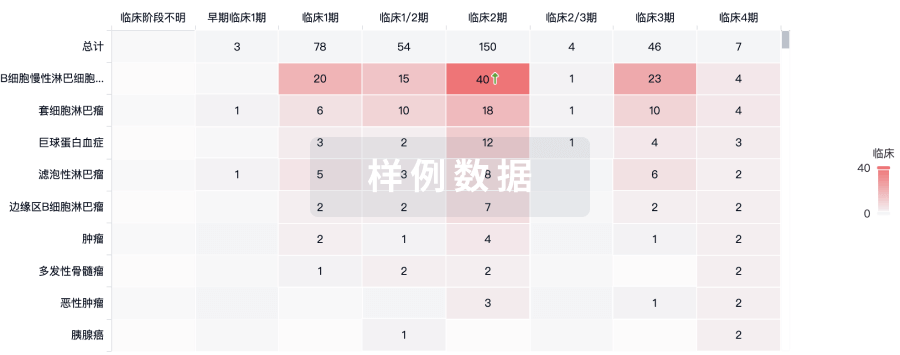
临床分析
紧跟全球注册中心的最新临床试验。
登录
或
批准
利用最新的监管批准信息加速您的研究。
登录
或
生物类似药
生物类似药在不同国家/地区的竞争态势。请注意临床1/2期并入临床2期,临床2/3期并入临床3期
登录
或
特殊审评
只需点击几下即可了解关键药物信息。
登录
或
提出任何生物医药研究问题
让每一步生物医药决策都精准制胜
基于十亿级生物数据与全球情报的精准 AI,赋能早期药物发现
立即开始免费试用!
智慧芽新药情报库是智慧芽专为生命科学人士构建的基于AI的创新药情报平台,助您全方位提升您的研发与决策效率。
立即接入生物医药数据包
智慧芽新药库数据也通过智慧芽开放平台,以MCP或API服务形式对外开放。立即使用我们的MCP服务定制您的LLM智能体。
生物序列数据库
生物药研发创新
免费使用
化学结构数据库
小分子化药研发创新
免费使用