预约演示
更新于:2026-09-05
Leu-Leu-Pro
更新于:2026-09-05
概要
基本信息

关联
100 项与 Leu-Leu-Pro 相关的临床结果
登录后查看更多信息
100 项与 Leu-Leu-Pro 相关的转化医学
登录后查看更多信息
100 项与 Leu-Leu-Pro 相关的专利(医药)
登录后查看更多信息
60
项与 Leu-Leu-Pro 相关的文献(医药)2026-05-27·JOURNAL OF ORTHOPAEDIC TRAUMA
Comparative Analysis of Nail Plate Combination over Alternative Fixation Constructs in Low Energy Distal Femur Fractures: Recovery of Ambulatory Status and Outcomes
Article
作者: Berkes, Marschall B. ; Barton, David ; Pereira, Daniel E. ; Eggebrecht, Zachary ; Obey, Mitchel R. ; McAndrew, Christopher M. ; Rust, Brian ; Wilson, Jenna-Leigh
OBJECTIVES::
To compare ambulatory status, union, mortality, and operative complications in distal femur fracture patients treated with the Nail Plate Combination and alternative fixation constructs.
METHODS::
Design
: Retrospective Cohort Study
Setting::
Single Level 1, tertiary referral Academic center
Patient Selection Criteria::
This study included adults with a low-energy distal femur fracture (OTA/AO33A/C and Su 1-3) that received ORIF within 2018-2024. Exclusions were pathologic fractures, antegrade intramedullary devices, and baseline nonambulators (from ambulatory status evaluation only).
Outcome Measures and Comparisons::
The primary outcome was ambulatory status at postoperative intervals utilizing Koval-Walking-Score. Secondary outcomes included radiographic union, mortality, and reoperation.
RESULTS::
404 patients with a low energy distal femur fracture were included, with 342 included for mobility analysis. Fixation constructs included 189 Nail-Plate-Combination (NPC) (mean age 75.0 ± 10.2, 83.1% female), 118 Lateral Locking Plate (LLP) (mean age 73.4 ± 10.2;, 76.3% female), 79 Retrograde Intramedullary Nail (rIMN) (mean age 73.7 ± 11.1, 74.7% female), and 18 Dual-Plate-Combination (DPC) (mean age 74.6 ± 10.9, 83.3% female) (Age p=0.567, Sex p=0.701). NPC was more frequently selected for Su 2 (56.2%) and Su 3 (65.9%) (p=0.001). NPC demonstrated lower average ambulatory impairment score over LLP: 3-week (-0.8; p=0.002), 6-week (-1.1; p<0.001), and both LLP and rIMN at 3-month (-0.9/-0.8; p=0.049/0.013) and 6-month (-0.9/-0.8; p=0.043/0.021). After Bonferroni correction to account for multiple testing, post hoc pairwise comparisons showed that NPC ambulation scores remained lower at 3 and 6 weeks (-0.8, p=0.024; -1.1, p<0.001). Six-month mortality was lower in NPC than rIMN (9% vs. 19%; p=0.04). DPC showed higher infection (22.2%; p=0.012), wound dehiscence (11.1%; p=0.013), and drainage (5.6%; p<0.001); though sample size limited analysis. Radiographic union was comparable (36.3% vs 52.9% vs 39.6% vs 54.5%, p=0.104).
CONCLUSIONS::
In this study, NPC was associated with superior ambulatory recovery rates to preinjury status over single implant constructs and improved mortality rates over rIMN. Thus, NPC represented a reliable construct for early ambulation and recovery in these injuries.
LEVEL OF EVIDENCE::
III
2026-05-01·FOOD RESEARCH INTERNATIONAL
Dual attenuation of bound heterocyclic amine release and free heterocyclic amine-induced cellular toxicity by lotus leaf polysaccharide during in vitro simulated digestion and fecal fermentation
Article
作者: Liu, Zhonghua ; Guo, Shiyin ; Liu, Changwei ; Zeng, Hongzhe ; Deng, Senwen ; Liu, Lu ; Xue, Chaoyi ; Li, Qinyu
Using in vitro digestion and fecal fermentation models, this study systematically explored how lotus leaf polysaccharide (LLP) inhibited the release of bound heterocyclic amines (HAs) in beef patties, myofibrillar protein (MP), and sarcoplasmic protein (SP) systems. The study also evaluated the potential of LLP to alleviate the cellular toxicity associated with free HAs. In vitro digestion significantly promoted HA release, with β-carboline HAs exhibiting the highest liberation. LLP inhibited HA release in a dose-dependently manner, with maximum inhibition rates of 29.82%, 37.17%, and 30.49% in three systems, respectively. The suppression of HA subclasses by LLP was model-specific: predominantly inhibiting pyridine and carboline HAs in beef patties; targeting pyridine and quinoline/quinoxaline HAs in MP model; suppressing quinoline/quinoxaline and carboline HAs in SP model. Fecal fermentation resulted in less HA release compared to digestion. LLP reduced HA release in a concentration-dependent manner with maximum inhibition rates of 16.00%, 13.67%, and 20.55% across systems. Notably, only carboline HAs were significantly suppressed in SP model. LLP significantly alleviated free PhIP-induced cellular damage by mitigating oxidative stress and inflammatory responses. This study reveals LLP's dual mechanisms-blocking bound HA release and counteracting the associated peroxidative/inflammatory toxicity-thereby uncovering the multi-target role of dietary polysaccharides in HA toxicity mitigation during digestion, advancing functional ingredient development for safer food processing.
2025-09-01·BIOORGANIC CHEMISTRY
Structure-activity relationship and molecular interaction mechanisms of the ACE-inhibitory tripeptide LL-X
Article
作者: Ma, Zhengkun ; Cai, Mengmeng ; Lan, Xiongdiao ; Yang, Cuicui ; Liu, Pengru
Investigating the molecular interaction mechanisms of angiotensin-converting enzyme (ACE) inhibitory peptides is valuable in antihypertensive drug development. In this study, we designed two novel peptide variants, Leu-Leu-Phe (LLF) and Leu-Leu-Pro (LLP), by substituting the C-terminal tyrosine (Tyr) in casein-derived Leu-Leu-Tyr (LLY) with phenylalanine (Phe) and proline (Pro), respectively, to investigate the impact of C-terminal amino acid properties of peptide on ACE inhibition. The ACE inhibitory activity, inhibition kinetics, peptides-ACE binding mechanisms, and LLF and LLP conformational relationship were systematically investigated with comparative assessment against the LLY. The results showed the ACE inhibitory activity of the synthetic peptide (LLF: IC50 = 168.57 ± 5.11 μM; LLP: IC50 = 96.64 ± 2.93 μM) was significantly lower than that casein-derived tripeptide LLY (IC50 = 44.16 ± 2.45 μM). The Lineweaver-Burk plots and molecular docking indicated that both LLF and LLP were noncompetitive inhibitors, which was consistent with LLY. Molecular dynamics simulations validated their stable binding to the ACE complex. The comparison of the three peptides interacting with ACE using multispectral techniques indicated that LLY resulted in the formation of a greater number of disordered protein structural regions, rendering it more active than the other peptides. Consequently, we concluded that the role of the C-terminal Tyr in the ACE inhibitory peptide LLY is more significant than that of Phe and Pro. This study highlights the crucial influence of C-terminal amino acids on the inhibitory activity of tripeptides, providing an essential theoretical foundation for the rational design of effective ACE inhibitory peptides.
100 项与 Leu-Leu-Pro 相关的药物交易
登录后查看更多信息
研发状态
10 条进展最快的记录, 后查看更多信息
登录
| 适应症 | 最高研发状态 | 国家/地区 | 公司 | 日期 |
|---|---|---|---|---|
| 高血压 | 临床前 | 中国 | 2025-09-01 |
登录后查看更多信息
临床结果
临床结果
适应症
分期
评价
查看全部结果
| 研究 | 分期 | 人群特征 | 评价人数 | 分组 | 结果 | 评价 | 发布日期 |
|---|
No Data | |||||||
登录后查看更多信息
转化医学
使用我们的转化医学数据加速您的研究。
登录
或

药物交易
使用我们的药物交易数据加速您的研究。
登录
或

核心专利
使用我们的核心专利数据促进您的研究。
登录
或

临床分析
紧跟全球注册中心的最新临床试验。
登录
或

批准
利用最新的监管批准信息加速您的研究。
登录
或

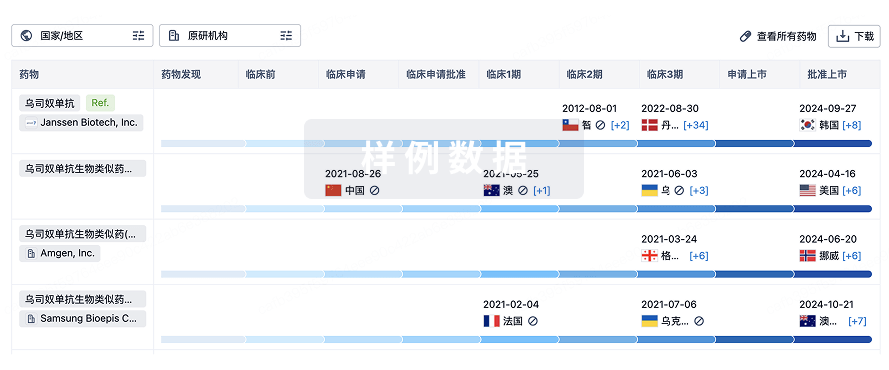
生物类似药
生物类似药在不同国家/地区的竞争态势。请注意临床1/2期并入临床2期,临床2/3期并入临床3期
登录
或
特殊审评
只需点击几下即可了解关键药物信息。
登录
或

提出任何生物医药研究问题
让每一步生物医药决策都精准制胜
基于十亿级生物数据与全球情报的精准 AI,赋能早期药物发现
立即开始免费试用!
智慧芽新药情报库是智慧芽专为生命科学人士构建的基于AI的创新药情报平台,助您全方位提升您的研发与决策效率。
立即接入生物医药数据包
智慧芽新药库数据也通过智慧芽开放平台,以MCP或API服务形式对外开放。立即使用我们的MCP服务定制您的LLM智能体。
生物序列数据库
生物药研发创新
免费使用
化学结构数据库
小分子化药研发创新
免费使用