预约演示
更新于:2026-09-19
Recombinant human alkaline phosphatase(Alloksys Life Sciences BV)
更新于:2026-09-19
概要
基本信息
在研机构- |
权益机构- |
最高研发阶段无进展临床1期 |
首次获批日期- |
最高研发阶段(中国)- |
特殊审评孤儿药 (欧盟) |



登录后查看时间轴
关联
1
项与 Recombinant human alkaline phosphatase(Alloksys Life Sciences BV) 相关的临床试验NCT01889147
A Single Dose Study to Assess the Peak Plasma Concentration of a Microdose of Recombinant Human Placental Alkaline Phosphatase (hRESCAP, Part 1) Followed by a Single Ascending Dose, FIH Study to Assess Safety and Tolerability of hRESCAP (Part 2).

100 项与 Recombinant human alkaline phosphatase(Alloksys Life Sciences BV) 相关的临床结果
登录后查看更多信息
100 项与 Recombinant human alkaline phosphatase(Alloksys Life Sciences BV) 相关的转化医学
登录后查看更多信息
100 项与 Recombinant human alkaline phosphatase(Alloksys Life Sciences BV) 相关的专利(医药)
登录后查看更多信息
1
项与 Recombinant human alkaline phosphatase(Alloksys Life Sciences BV) 相关的文献(医药)2026-03-11Journal of the American Chemical Society
Micron-Scale 2D Antibody Arrays for HER2 Signaling Blockade and Cancer Therapy
Article
作者: Zhong, Xiang ; Jiang, Jiang ; Wang, Qiangbin ; Yao, Tingfeng ; Ling, Sisi ; Chen, Qian ; Chen, Guangcun ; Wu, Xiangyu ; Wang, Yuefei ; Li, Ying ; Du, Mingming
Monoclonal antibodies (mAbs) targeting the human epidermal growth factor receptor 2 (HER2) are widely used in the treatment of breast, gastric, and other solid tumors. However, rapid HER2 endocytosis and recycling contribute to low response rates and treatment resistance. Here, we introduce RhuA-P, a self-assembling protein that forms uniform, micron-sized 2D arrays (2.4 × 2.4 μm) featuring spatially addressable Protein G sites for mAb conjugation. This design allows control over antibody density (22-274 molecules per array) and intermolecular spacing (57-230 nm). We show that trastuzumab (TmAb) arrays templated on RhuA-P inhibit HER2 dimerization, cluster HER2 into micron-scale inactive domains dictated by the 2D TmAb geometry, and prolong receptor membrane retention by blocking endocytosis. This sustained blockade of HER2 signaling induces oxidative stress and triggers potent apoptosis. In a murine breast cancer model, TmAb arrays exhibited superior antitumor efficacy compared to free TmAb. Moreover, the modular design of RhuA-P makes it a versatile platform for assembling other clinically relevant mAbs─such as anti-PD-1 and anti-PD-L1 antibodies─offering a generalized strategy for enhancing antibody-based therapies.
100 项与 Recombinant human alkaline phosphatase(Alloksys Life Sciences BV) 相关的药物交易
登录后查看更多信息
研发状态
10 条进展最快的记录, 后查看更多信息
登录
| 适应症 | 最高研发状态 | 国家/地区 | 公司 | 日期 |
|---|---|---|---|---|
| 慢性病 | 临床1期 | 荷兰 | 2013-06-01 | |
| 类风湿关节炎 | 临床1期 | - | - | |
| 类风湿关节炎 | 临床1期 | - | - | |
| 类风湿关节炎 | 临床1期 | - | - |
登录后查看更多信息
临床结果
临床结果
适应症
分期
评价
查看全部结果
登录后查看更多信息
转化医学
使用我们的转化医学数据加速您的研究。
登录
或

药物交易
使用我们的药物交易数据加速您的研究。
登录
或

核心专利
使用我们的核心专利数据促进您的研究。
登录
或

临床分析
紧跟全球注册中心的最新临床试验。
登录
或

批准
利用最新的监管批准信息加速您的研究。
登录
或

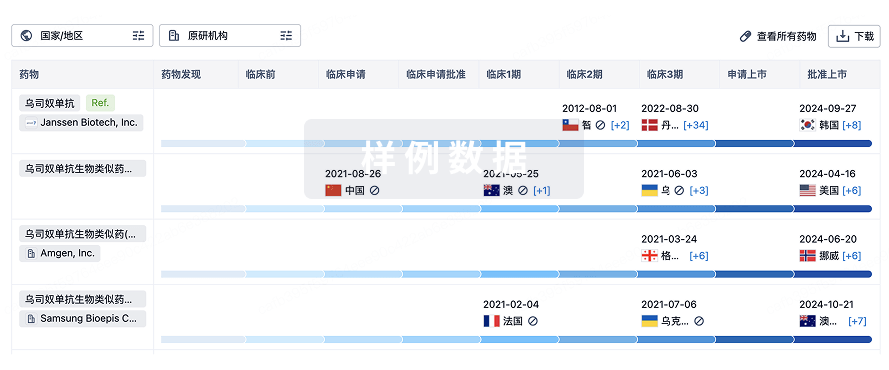
生物类似药
生物类似药在不同国家/地区的竞争态势。请注意临床1/2期并入临床2期,临床2/3期并入临床3期
登录
或
特殊审评
只需点击几下即可了解关键药物信息。
登录
或

提出任何生物医药研究问题
让每一步生物医药决策都精准制胜
基于十亿级生物数据与全球情报的精准 AI,赋能早期药物发现
立即开始免费试用!
智慧芽新药情报库是智慧芽专为生命科学人士构建的基于AI的创新药情报平台,助您全方位提升您的研发与决策效率。
立即接入生物医药数据包
智慧芽新药库数据也通过智慧芽开放平台,以MCP或API服务形式对外开放。立即使用我们的MCP服务定制您的LLM智能体。
生物序列数据库
生物药研发创新
免费使用
化学结构数据库
小分子化药研发创新
免费使用