预约演示
更新于:2026-02-27
Pegadricase
聚乙二醇化重组假丝酵母尿酸氧化酶(Polaris)
更新于:2026-02-27
概要
基本信息
原研机构 |
非在研机构- |
最高研发阶段临床2期 |
首次获批日期- |
最高研发阶段(中国)临床1期 |
特殊审评孤儿药 (美国) |




登录后查看时间轴
结构/序列
Sequence Code 24143
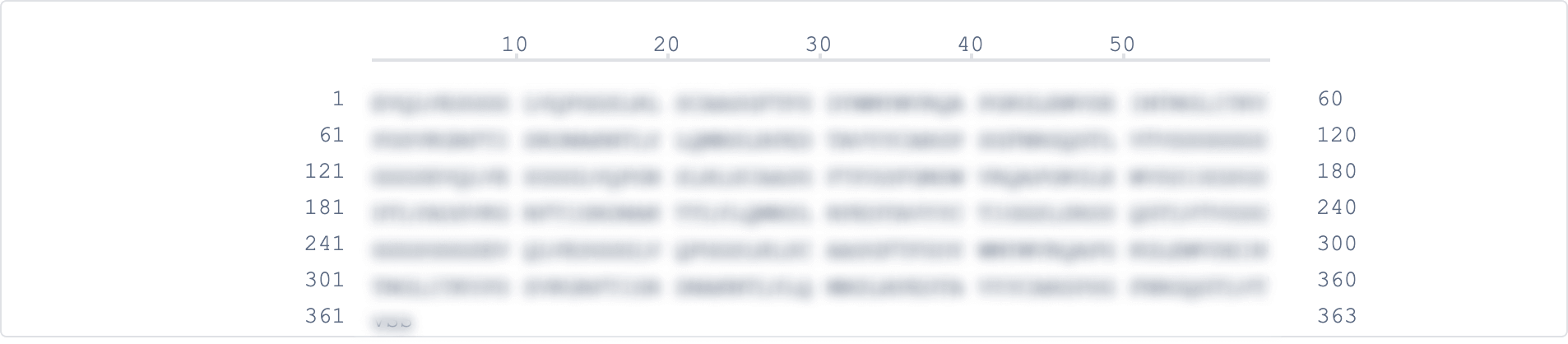
来源: *****
关联
11
项与 聚乙二醇化重组假丝酵母尿酸氧化酶(Polaris) 相关的临床试验CTR20233654
注射用聚乙二醇化重组假丝酵母尿酸氧化酶在中国健康成年受试者中不同预处理条件下单次给药、剂量递增、随机双盲的安全耐受性研究
CTR20232891
注射用聚乙二醇化重组假丝酵母尿酸氧化酶在痛风和高尿酸血症患者中多次给药、剂量递增、随机双盲、安慰剂对照的安全性、耐受性、药代动力学和初步药效学研究
NCT06629376
Safety, Tolerability, Pharmacokinetics, and Preliminary Pharmacological Studies of SSS11 in Patients With Gout and Hyperuricemia After Multiple Administrations, Dose Escalation, Randomized Double-blind, Placebo-controlled Trials
100 项与 聚乙二醇化重组假丝酵母尿酸氧化酶(Polaris) 相关的临床结果
登录后查看更多信息
100 项与 聚乙二醇化重组假丝酵母尿酸氧化酶(Polaris) 相关的转化医学
登录后查看更多信息
100 项与 聚乙二醇化重组假丝酵母尿酸氧化酶(Polaris) 相关的专利(医药)
登录后查看更多信息
4
项与 聚乙二醇化重组假丝酵母尿酸氧化酶(Polaris) 相关的文献(医药)2024-04-02Rheumatology (Oxford, England)
The COMPARE head-to-head, randomized controlled trial of SEL-212 (pegadricase plus rapamycin-containing nanoparticle, ImmTOR™) versus pegloticase for refractory gout
Article
作者: DeHaan, Wesley ; Azeem, Rehan ; Traber, Peter G ; Kivitz, Alan J ; Choi, Hyon K ; Baraf, Herbert S B ; Strand, Vibeke ; Terkeltaub, Robert ; Keenan, Robert T ; Dalbeth, Nicola ; Khanna, Puja P
Abstract:
Objectives:
Serum urate (SU) lowering with PEGylated uricases in gout can reduce flares and tophi. However, treatment-emergent anti-drug antibodies adversely affect safety and efficacy and the currently approved PEGylated uricase pegloticase requires twice-monthly infusions. Investigational SEL-212 therapy aims to promote uricase-specific tolerance via monthly sequential infusions of a proprietary rapamycin-containing nanoparticle (ImmTOR) and pegadricase.
Methods:
COMPARE was a randomized, phase 2, open-label trial of SEL-212 vs pegloticase in adults with refractory gout. SEL-212 [ImmTOR (0.15 mg/kg) and pegadricase (0.2 mg/kg)] was infused monthly or pegloticase (8 mg) twice monthly for 6 months. The primary endpoint was the proportion of participants with SU <6 mg/dl for ≥80% of the time during 3 and 6 months. Secondary outcomes were mean SU, gout flares, number of tender and/or swollen joints and safety.
Results:
During months 3 and 6 combined, numerically more participants achieved and maintained a SU <6 mg/dl for ≥80% of the time with SEL-212 vs pegloticase (53.0% vs 46.0%, P = 0.181). The percentage reductions in SU levels were statistically greater during months 3 and 6 with SEL-212 vs pegloticase (−73.79% and −47.96%, P = 0.0161). Reductions in gout flare incidence and number of tender and/or swollen joints were comparable between treatments. There were numerical differences between the most common treatment-related adverse events of interest with SEL-212 and pegloticase: gout flares (60.2% vs 50.6%), infections (25.3% vs 18.4%) and infusion-related reactions (15.7% vs 11.5%), respectively. Stomatitis (and related terms) was experienced by eight participants (9.6%) with SEL-212 and none with pegloticase. Stomatitis, a known event for rapamycin, was associated with ImmTOR only.
Conclusions:
SEL-212 efficacy and tolerability were comparable to pegloticase in refractory gout. This was associated with a substantial reduction in treatment burden with SEL-212 due to decreased infusion frequency vs pegloticase.
Clinical trial registration:
NCT03905512.
2002-09-01The Journal of rheumatology
Uricase formulated with polyethylene glycol (uricase-PEG 20): biochemical rationale and preclinical studies.
Article
作者: Ensor, C Mark ; Clark, Mike A ; Bomalaski, John S ; Holtsberg, Frederick W
OBJECTIVE:
Humans have a non-sense codon inserted into the 5 prime end of the open reading frame of urate oxidase, and thus express an enzymatically inactive fragment of this enzyme; and consequently are unable to metabolize uric acid into allantoin and are prone to develop hyperuricemia and gout. Various urate oxidases (uricase) from mammals and microorganisms have been administered to humans with hyperuricemia and gout. Although successful in lowering plasma uric acid, these therapies have had limited application due to undesirable biochemical properties of the enzymes used, the short circulating half-life, and inherent antigenicity of these preparations.
METHODS:
We compared urate oxidase from a variety of sources for specific enzyme activity, pH optimum, affinity, and retention of enzyme activity under physiological conditions. A variety of polyethylene glycols (PEG) were tested to formulate uricase.
RESULTS:
Urate oxidase from Candida utilis had more favorable enzymatic properties and PEG of 20,000 MW (termed uricase-PEG 20) had greatly reduced antigenicity and increased circulating half-life as compared to those previously described.
CONCLUSION:
It is anticipated that uricase-PEG 20 may have utility as a treatment for hyperuricemia and gout.
DRUGS
Nanoencapsulated Sirolimus Plus Pegadricase (NASP) in Uncontrolled Gout: Current Status and Future Directions
Article
作者: Baraf, Herbert S B ; Strand, Vibeke ; Schlesinger, Naomi
Uncontrolled gout (UG) is a progressive arthropathy that develops as a consequence of sustained hyperuricemia. Recombinant uricases can profoundly lower serum urate (SU) and reverse the clinical manifestations of uncontrolled gout. However, therapeutic uricases are highly immunogenic and can provoke the development of anti-drug antibodies (ADAs), resulting in a loss of effect and potentially severe allergic reactions. Pegloticase is currently the only US Food and Drug Administration-approved uricase indicated for the treatment of UG. The Food and Drug Administration recently approved the co-administration of methotrexate with pegloticase to inhibit ADA formation and enhance the efficacy and tolerability of pegloticase. Nanoencapsulated sirolimus plus pegadricase (NASP) is a novel every-4-week treatment delivered as a sequential two-component infusion consisting of nanoencapsulated sirolimus immediately followed by pegadricase, a novel PEGylated uricase. NASP mitigates ADA formation by promoting uricase-specific immunotolerance, thereby obviating the need for systemic immunomodulatory drugs. Phase I trials demonstrated that NASP inhibited ADA development, allowing sustained pegadricase control and SU lowering for up to 30 days. The dose-finding (phase II) study showed NASP (nanoencapsulated sirolimus 0.1-0.15 mg/kg and pegadricase 0.2 mg/kg) reduced ADA development and supported durable SU lowering. The phase II COMPARE trial demonstrated that monthly NASP was as effective as twice-monthly pegloticase in achieving SU targets at 6 months. Combined phase III DISSOLVE trial data confirmed that NASP significantly lowered SU and increased SU responses in participants with UG. All phase I-III trials demonstrated that NASP was generally well tolerated with no specific safety signals. Overall, NASP has demonstrated robust and durable SU lowering, which ultimately reduced disease burden, supporting positive health-related quality-of-life outcomes. This review summarizes the clinical development of NASP with particular reference to the targeted immunotolerizing strategy that diminishes its immunogenicity. Video abstract available online. Video Abstract.
23
项与 聚乙二醇化重组假丝酵母尿酸氧化酶(Polaris) 相关的新闻(医药)2025-12-30
2025-12-15
2025-12-15
并购临床3期上市批准临床2期
100 项与 聚乙二醇化重组假丝酵母尿酸氧化酶(Polaris) 相关的药物交易
登录后查看更多信息
研发状态
10 条进展最快的记录, 后查看更多信息
登录
| 适应症 | 最高研发状态 | 国家/地区 | 公司 | 日期 |
|---|---|---|---|---|
| 高尿酸血症 | 临床2期 | 美国 | 2016-10-01 | |
| 肿瘤溶解综合征 | 临床2期 | 美国 | 2014-05-23 | |
| 自身免疫性疾病 | 临床1期 | 中国 | 2022-01-30 | |
| 肿瘤 | 临床1期 | 中国 | 2019-10-22 |
登录后查看更多信息
临床结果
临床结果
适应症
分期
评价
查看全部结果
登录后查看更多信息
转化医学
使用我们的转化医学数据加速您的研究。
登录
或

药物交易
使用我们的药物交易数据加速您的研究。
登录
或

核心专利
使用我们的核心专利数据促进您的研究。
登录
或

临床分析
紧跟全球注册中心的最新临床试验。
登录
或

批准
利用最新的监管批准信息加速您的研究。
登录
或

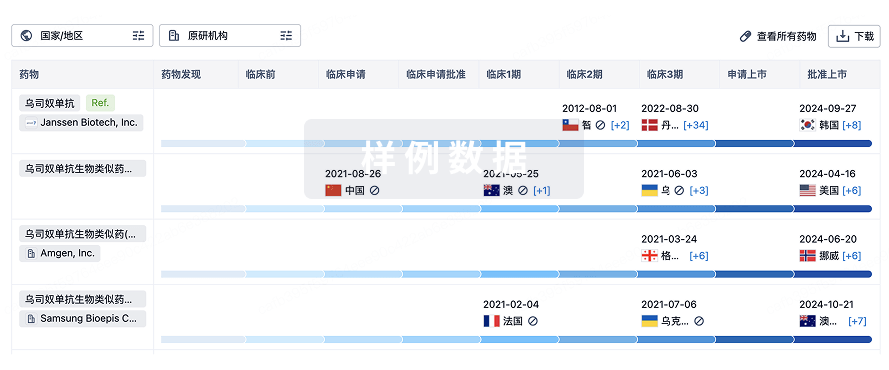
生物类似药
生物类似药在不同国家/地区的竞争态势。请注意临床1/2期并入临床2期,临床2/3期并入临床3期
登录
或
特殊审评
只需点击几下即可了解关键药物信息。
登录
或

提出任何生物医药研究问题
让每一步生物医药决策都精准制胜
基于十亿级生物数据与全球情报的精准 AI,赋能早期药物发现
立即开始免费试用!
智慧芽新药情报库是智慧芽专为生命科学人士构建的基于AI的创新药情报平台,助您全方位提升您的研发与决策效率。
立即接入生物医药数据包
智慧芽新药库数据也通过智慧芽开放平台,以MCP或API服务形式对外开放。立即使用我们的MCP服务定制您的LLM智能体。
生物序列数据库
生物药研发创新
免费使用
化学结构数据库
小分子化药研发创新
免费使用