预约演示
更新于:2026-02-07
EKI-785
更新于:2026-02-07
概要
基本信息
关联
100 项与 EKI-785 相关的临床结果
登录后查看更多信息
100 项与 EKI-785 相关的转化医学
登录后查看更多信息
100 项与 EKI-785 相关的专利(医药)
登录后查看更多信息
4
项与 EKI-785 相关的文献(医药)2006-11-01·Zhonghua zhong liu za zhi [Chinese journal of oncology]
[The regulation of EKI-785 to the growth of U937 cell line].
Article
作者: Song, Xin ; Yuan, Xiang-fei ; Lu, Min ; Feng, Yi ; Liu, Na ; Lu, Shi-hong
OBJECTIVE:
The aim of this study was to explore the expression of erbBs in U937, an acute monocyte leukemia cell line, and their impact on the growth of this cell line.
METHODS:
Expression of erbBs was detected by RT-PCR and expression of erbB2 at protein level by Western blot. After U937 cells was treated with EKI-785, an irreversible specific inhibitor of erbBs, the growth was assessed by MTT and growth curve, apoptosis was detected by Annexin V-FITC Apoptosis Detection Kit, and signal pathway was detected by Western blot.
RESULTS:
erbB2-4 were expressed in U937 cell line, but not erbB1. Especially, protein of erbB2 was expressed in this cell line. After treating with EKI-785, the growth of U937 cells was inhibited and early apoptosis was induced. Moreover, the Ras/MAPK and the PI3K/Akt signaling pathways were all blocked.
CONCLUSION:
erbBs may play key roles in the development of some leukemia. Therefore, erbBs may become new targets of treatment to leukemia, and EKI-785 has a potency of clinic use to leukemia.
2005-10-01·Neoplasia (New York, N.Y.)2区 · 医学
Disruption of Parallel and Converging Signaling Pathways Contributes to the Synergistic Antitumor Effects of Simultaneous mTOR and EGFR Inhibition in GBM Cells
2区 · 医学
ArticleOA
作者: Goble, Jennie M. ; Rao, Ravi D. ; Erlichman, Charles ; James, C. David ; Lamont, Jeffrey D. ; Mladek, Ann C. ; Sarkaria, Jann N.
Elevated epidermal growth factor receptor (EGFR) and mammalian target of rapamycin (mTOR) signaling are known to contribute to the malignant properties of glioblastoma multiforme (GBM), which include uncontrolled cell proliferation and evasion of apoptosis. Small molecule inhibitors that target these protein kinases have been evaluated in multiple clinical trials for cancer patients, including those with GBM. Here we have examined the cellular and molecular effects of a combined kinase inhibition of mTOR (rapamycin) and EGFR (EKI-785) in U87 and U251 GBM cells. Simultaneous treatment with rapamycin and EKI-785 results in synergistic antiproliferative as well as proapoptotic effects. At a molecular level, rapamycin alone significantly decreases S6 phosphorylation, whereas EKI-785 alone promotes substantially reduced signal transducer and activator of transcription (STAT3) phosphorylation. Treatment with rapamycin alone also increases Akt phosphorylation on Ser-473, but this effect is blocked by a simultaneous administration of EKI-785. Individually, EKI-785 diminishes while rapamycin promotes the binding of the translation inhibitor eukaryotic initiation factor 4E binding protein (4EBP1) to the eukaryotic translation initiation factor 4E (eIF4E). In spite of these opposing effects, the highest level of 4EBP1-eIF4E binding occurs with the combination of the two inhibitors. These results indicate that the inhibition of EGFR and mTOR has distinct as well as common signaling consequences and provides a molecular rationale for the synergistic antitumor effects of EKI-785 and rapamycin administration.
2000-12-01·Molecular medicine today
Chemoprevention of intestinal neoplasia
Article
作者: Bustin, Stephen A
Colorectal cancer is one of the leading causes of cancer-related death in the western world, with surgical resection the only curative treatment. Screening programmes involving faecal occult blood tests with periodic endoscopic examination of the bowel can achieve a reduction in mortality of 15–33%. However, despite widely published recommendations for such screening programmes, compliance remains poor. Chemoprevention, defined as the prevention of cancer by the use of pharmacological agents that inhibit or reverse the process of carcinogenesis, might provide an alternative approach to reducing mortality from colorectal cancer. Moreover, therapeutic strategies that use a combination of chemopreventative drugs to target multiple alterations that result in tumour initiation or progression are highly attractive.Colorectal neoplasia is frequently associated with alterations in signalling through the epidermal growth factor (EGF)-family of receptors, as well as changes in the cyclooxygenase (Cox) pathway. Colorectal neoplasia results in increased cell proliferation and cell motility and helps stimulate tumour growth by promoting tumour-associated angiogenesis. Interactions between the EGF and Cox pathways are well documented: EGF induces Cox-2 and overexpression of Cox-2 increases EGF-receptor expression in intestinal epithelial cells. The targeting of their respective pathways by inhibitors has been shown to have potent anti-neoplastic effects, although tumour growth is not completely prevented and there is potential toxicity associated with their long-term use.Torrence et al.1xCombinatorial chemoprevention of intestinal neoplasia. Torrence, C.J. et al. Nat. Med. 2000; 6: 1024–1028Crossref | PubMed | Scopus (446)See all References used a combination therapy involving a newly developed inhibitor of the EGF receptor (EGFR) kinase (EKI-785) and a well-known cyclooxygenase inhibitor (sulindac) to prevent tumour development in the Min mouse model of colorectal cancer. These mice harbour an inactivated APC gene and normally develop multiple intestinal polyps. Mice were treated for 60 days with various combinations of drug–food formulations, after which their intestinal tracts were removed and the number of polyps counted. Individually, the compounds provided significant protection from polyp formation (approximately 50% and 70% reduction, respectively); in combination, they provided nearly complete protection (95–97%). Detailed histopathological staining revealed the presence of numerous microscopic adenomas in all treatment groups, suggesting that the main effect of the chemopreventative agents was on tumour progression rather than on initiation.Chemical modification of EKI-785 resulted in the development of EKI-569, which has improved pharmacokinetics, is better at reducing the number of polyps (87%) and can inhibit EGFR kinase activity in vivo at clinically relevant doses. Use of EKI-569 allowed less-toxic doses of sulindac to be used and, in combination, resulted in protection from tumour development in 95% of Min mice, with nearly 50% of mice having no tumours at all. Detailed histological examinations of the entire gastrointestinal tract revealed no evidence of overt toxicity.It is surprising that Torrence et al.1xCombinatorial chemoprevention of intestinal neoplasia. Torrence, C.J. et al. Nat. Med. 2000; 6: 1024–1028Crossref | PubMed | Scopus (446)See all References used sulindac, a nonselective NSAID inhibitor, rather than one of the readily available selective inhibitors. Nevertheless, it will be fascinating to unravel the molecular and biochemical mechanisms involved in growth suppression by the combination therapies. Most importantly, these results have direct practical implications and suggest that it should be possible to bypass the main toxicity associated with long-term, non-steroidal, anti-inflammatory drug treatment in patients.
100 项与 EKI-785 相关的药物交易
登录后查看更多信息
研发状态
10 条进展最快的记录, 后查看更多信息
登录
| 适应症 | 最高研发状态 | 国家/地区 | 公司 | 日期 |
|---|---|---|---|---|
| 常染色体隐性遗传性多囊肾 | 临床前 | 美国 | - |
登录后查看更多信息
临床结果
临床结果
适应症
分期
评价
查看全部结果
| 研究 | 分期 | 人群特征 | 评价人数 | 分组 | 结果 | 评价 | 发布日期 |
|---|
No Data | |||||||
登录后查看更多信息
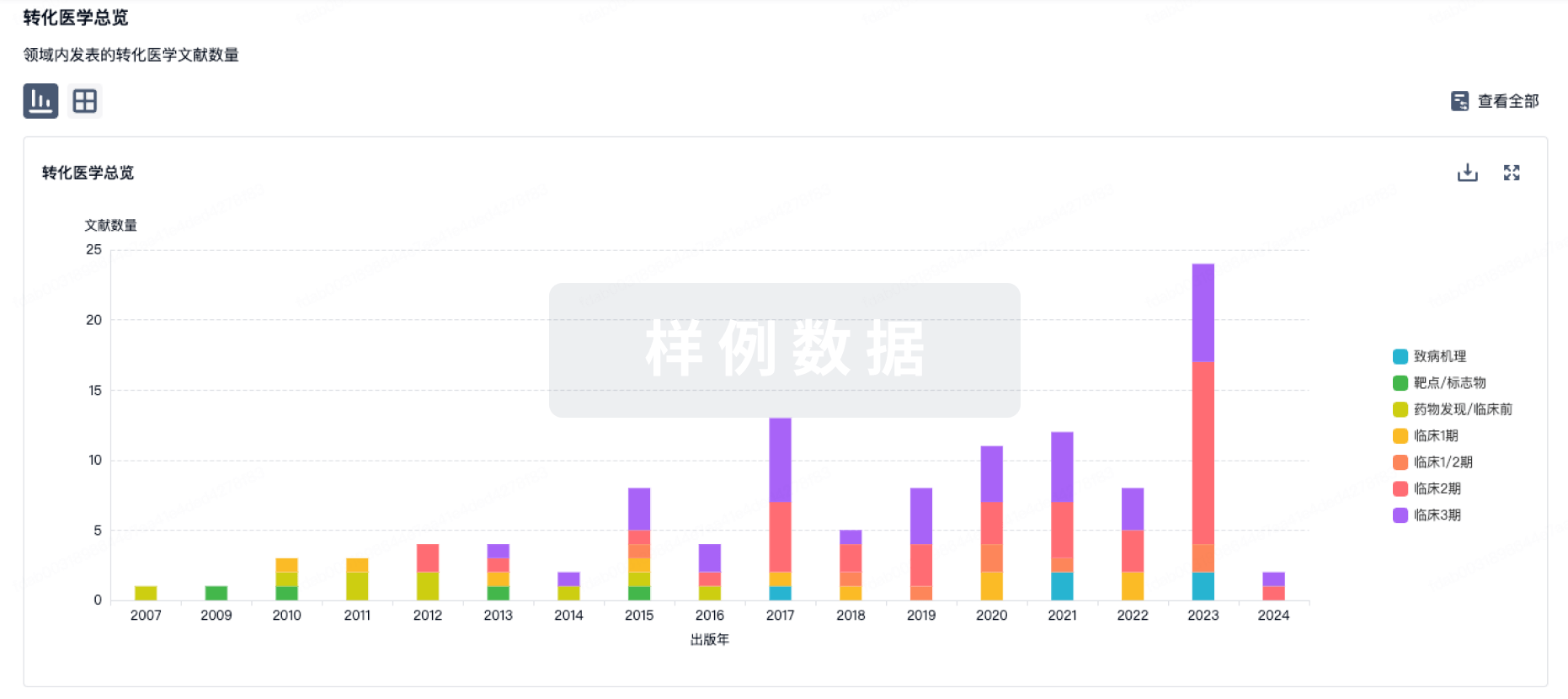
转化医学
使用我们的转化医学数据加速您的研究。
登录
或
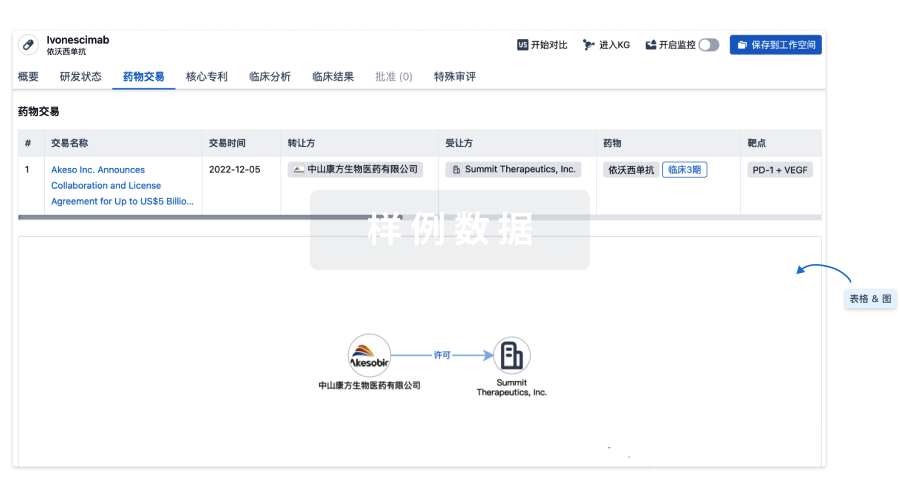
药物交易
使用我们的药物交易数据加速您的研究。
登录
或
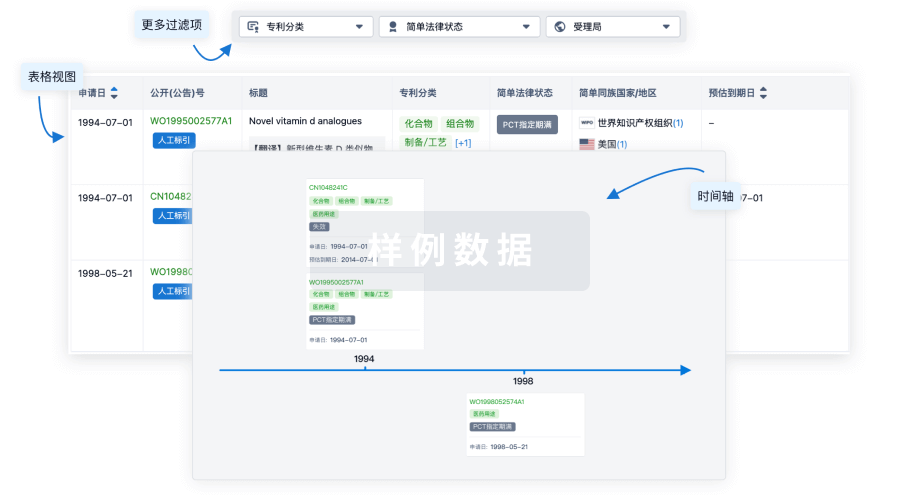
核心专利
使用我们的核心专利数据促进您的研究。
登录
或
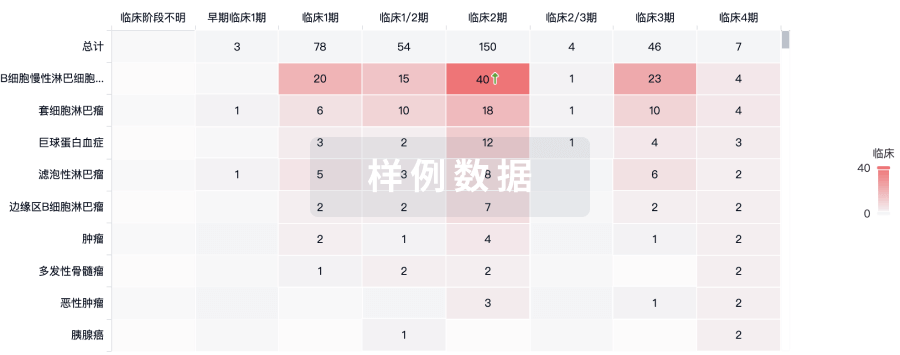
临床分析
紧跟全球注册中心的最新临床试验。
登录
或
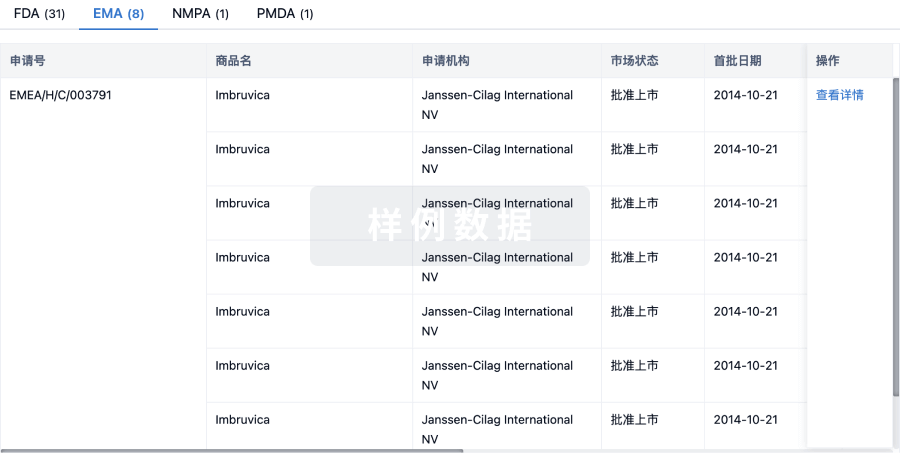
批准
利用最新的监管批准信息加速您的研究。
登录
或
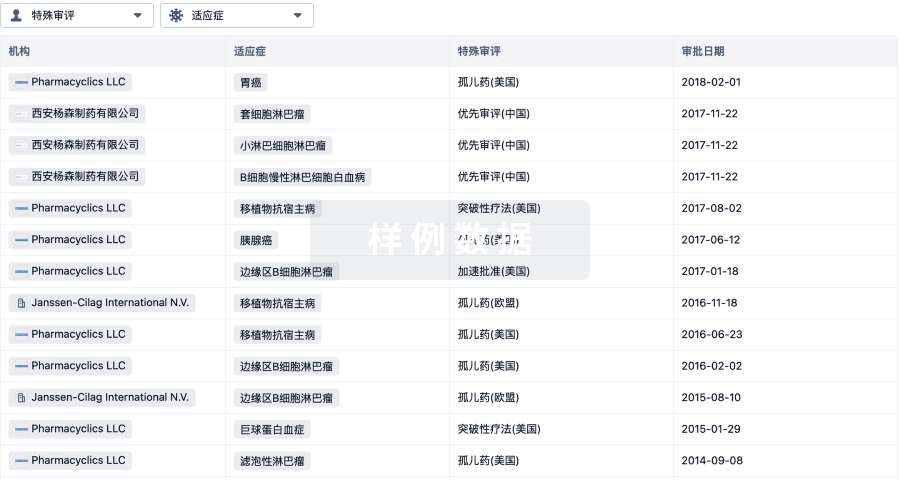
特殊审评
只需点击几下即可了解关键药物信息。
登录
或
生物医药百科问答
全新生物医药AI Agent 覆盖科研全链路,让突破性发现快人一步
立即开始免费试用!
智慧芽新药情报库是智慧芽专为生命科学人士构建的基于AI的创新药情报平台,助您全方位提升您的研发与决策效率。
立即开始数据试用!
智慧芽新药库数据也通过智慧芽数据服务平台,以API或者数据包形式对外开放,助您更加充分利用智慧芽新药情报信息。
生物序列数据库
生物药研发创新
免费使用
化学结构数据库
小分子化药研发创新
免费使用