预约演示
更新于:2026-09-12
Recombinant human basic fibroblast growth factor(Jinan University)
重组人碱性成纤维细胞生长因子 (暨南大学)
更新于:2026-09-12
概要
基本信息


结构/序列
Sequence Code 412323927
关联
2
项与 重组人碱性成纤维细胞生长因子 (暨南大学) 相关的临床试验CTR20171134
重组人碱性成纤维细胞生长因子外用溶液用于促进创面愈合的随机、双盲双模拟、阳性药平行对照临床试验
CTR20132467
重组人碱性成纤维细胞生长因子外用凝胶治疗体表慢性创面的有效性和安全性
100 项与 重组人碱性成纤维细胞生长因子 (暨南大学) 相关的临床结果
登录后查看更多信息
100 项与 重组人碱性成纤维细胞生长因子 (暨南大学) 相关的转化医学
登录后查看更多信息
100 项与 重组人碱性成纤维细胞生长因子 (暨南大学) 相关的专利(医药)
登录后查看更多信息
63
项与 重组人碱性成纤维细胞生长因子 (暨南大学) 相关的文献(医药)2026-03-01JOURNAL OF CRANIOFACIAL SURGERY
Clinical Study of Recombinant Human Basic Fibroblast Growth Factor Combined With Collagen Sponge in the Treatment of Maxillofacial Degree II Acute Skin Contusion
Article
作者: Qian Wang ; Zhiyi Wei ; Longfeng Wang ; Xiaolan Yang ; Juntao Cheng
Objective::
To evaluate the clinical efficacy of recombinant human basic fibroblast growth factor (Rh-bFGF) combined with collagen sponge in the treatment of grade II acute maxillofacial abrasions.
Methods::
During the study period from September 2020 to September 2023, 128 such patients were in the authors' hospital and randomly divided into control group (N = 64) and experimental group (N = 64). The observation group was treated with Rh-bFGF and collagen sponge after debridement, while the control group was treated with vaseline gauze after debridement. The healing rate and healing time were observed, and the levels of TNF-α, IL-6, IL-10, EGF, VEGF, and Timp-1 were determined. The Vancouver Scar Scale (VSS) was used to evaluate the local scar hyperplasia 6 months after wound healing in both groups.
Results::
On the seventh and 14th day of treatment, the wound healing rate in the observation group was significantly higher than that in the control group (
P
< 0.05), and the wound healing time in the observation group was lower than that in the control group (
P
< 0.05), the levels of TNF-α, IL-6, EGF, VEGF, and Timp-1 in the observation group were lower than those in the control group (
P
< 0.05), the levels of Il-10 were higher than those in the control group (
P
< 0.05), and the levels of EGF, VEGF, and Timp-1 were higher than those in the control group (
P
< 0.05). Vancouver Scar Scale score of local scar hyperplasia was significantly lower than that of control group (
P
< 0.05).
Conclusions::
Recombinant human basic fibroblast growth factor (Rh-bFGF) combined with collagen sponge in the treatment of maxillofacial contusion can decrease the levels of TNF-α and IL-6, increase the levels of IL-10 and effectively control inflammation, at the same time, it can increase the levels of EGF, VEGF, and Timp-1, promote wound healing and reduce scar hyperplasia. The therapeutic scheme is simple, safe, and effective, and suitable for clinical popularization and application.
2025-06-01FISH & SHELLFISH IMMUNOLOGY
Establishment and identification of spleen cell line from tiger puffer fish (Takifugu rubripes) and immune transcriptome response to IHNV
Article
作者: Zhang, Jingjing ; Dong, Caichao ; Liu, Kaiqiang ; Liu, Yuyan ; Shao, Changwei ; Ji, Honglong ; Meng, Bo ; Wang, Qian ; Lin, Lei ; He, Yangbin ; Yang, Yu
The tiger puffer fish (Takifugu rubripes) is highly valued both economically and for its culinary appeal. However, it currently faces a significant risk of disease. This study aimed to establish a spleen cell line to aid in disease prevention and control for this species. We established a new stable cell line (TRSC) from the spleen tissue of the tiger puffer fish. The TRSC cells exhibited stable growth over more than 90 generations in L-15 medium supplemented with 4 ng/mL recombinant human basic fibroblast growth factor (bFGF) and 2 ng/mL recombinant human leukemia inhibitory factor (LIF) at 24 °C. Chromosomal analysis revealed a diploid number of 2n = 44. The TRSC cells were susceptibly infected by both viral hemorrhagic septicemia virus (VHSV) and infectious hematopoietic necrosis virus (IHNV), exhibiting a clear cytopathic effect (CPE). After 48 h of infection, alterations in cell morphology and disintegration were observed. Quantitative reverse-transcription polymerase chain reaction (qRT-PCR) analysis revealed differential replication of the two viruses in TRSC cells. Transcriptome sequencing identified 1308 differentially expressed genes (DEGs) following IHNV infection, with 668 genes upregulated and 640 downregulated. These DEGs were significantly enriched in MAPK signaling pathway, p53 signaling pathway, and DNA replication and so on. The establishment of the TRSC cell line provides valuable insights into viral infection mechanisms, aids in the identification of key immune genes, and offers a more effective approach to disease control in aquaculture, supporting the sustainable development of the industry.
2023-03-01Clinical otolaryngology : official journal of ENT-UK ; official journal of Netherlands Society for Oto-Rhino-Laryngology & Cervico-Facial Surgery
Therapeutic potential of recombinant human basic fibroblast growth factor on postoperative patients with chronic rhinosinusitis with nasal polyps
Article
作者: Wang, Kanghua ; Lai, Ming ; Xu, Zhaofeng ; Lai, Yinyan ; Gao, Wenxiang ; Jiang, Lijie ; Shi, Jianbo ; Wu, Jian
Abstract:
Objectives:
To explore the effect of intranasal administration of recombinant human basic fibroblast growth factor (rh‐bFGF) on postoperative chronic rhinosinusitis with nasal polyps (CRSwNP) patients.
Design:
A prospective, randomised, controlled, single‐blinded trial.
Setting and Participants:
Seventy‐five hospitalised patients who met the criteria of primary bilateral CRSwNP were enrolled from March 2020 to January 2021.
Main outcome measures:
Visual analogue scale, 22‐item Sino‐Nasal Outcome Test, Lund–Kennedy (L‐K) system and scanning electron microscopy and quantitative real‐time polymerase chain reaction.
Results:
Seventy‐five patients with CRSwNP were randomly assigned to three groups, and 72 patients completed the 1‐month medication regimen and 1‐year follow‐up. Rh‐bFGF nasal‐spray and drop application reduced general nasal VAS scores within 2 weeks after endoscopic sinus surgery (ESS) compared to the control group. In contrast, only rh‐bFGF nasal‐drops reduced SNOT‐22 scores at 2 weeks and 1 year compared with the control group. A significant reduction in the endoscopic L‐K score was observed in the rh‐bFGF nasal‐spray and drop group compared with the control group. This is primarily because rh‐bFGF promotes cilia growth in the nasal mucosal epithelium after the operation, as illustrated by scanning electron microscopy and expression of CP110, Tap73 and Foxj1 mRNA. For eosinophilic CRSwNP, the general VAS score of rh‐bFGF nasal‐drops was more obviously reduced compared to the control group after ESS. A similar trend was observed for L‐K score.
Conclusions:
Rh‐bFGF nasal‐drops and sprays can quickly and effectively relieve postoperative symptoms and improve long‐term prognosis of patients with CRSwNP. Moreover, rh‐bFGF nasal‐drops is also an effective method for postoperative patients with eosinophilic CRSwNP.
1
项与 重组人碱性成纤维细胞生长因子 (暨南大学) 相关的新闻(医药)2025-07-12
·摩熵医药
上市批准医药出海
100 项与 重组人碱性成纤维细胞生长因子 (暨南大学) 相关的药物交易
登录后查看更多信息
外链
| KEGG | Wiki | ATC | Drug Bank |
|---|---|---|---|
| - | - | - |
研发状态
10 条最早获批的记录, 后查看更多信息
登录
| 适应症 | 国家/地区 | 公司 | 日期 |
|---|---|---|---|
| 创伤和损伤 | 中国 | 2004-07-26 |
登录后查看更多信息
临床结果
临床结果
适应症
分期
评价
查看全部结果
登录后查看更多信息
转化医学
使用我们的转化医学数据加速您的研究。
登录
或

药物交易
使用我们的药物交易数据加速您的研究。
登录
或

核心专利
使用我们的核心专利数据促进您的研究。
登录
或

临床分析
紧跟全球注册中心的最新临床试验。
登录
或

批准
利用最新的监管批准信息加速您的研究。
登录
或

生物类似药
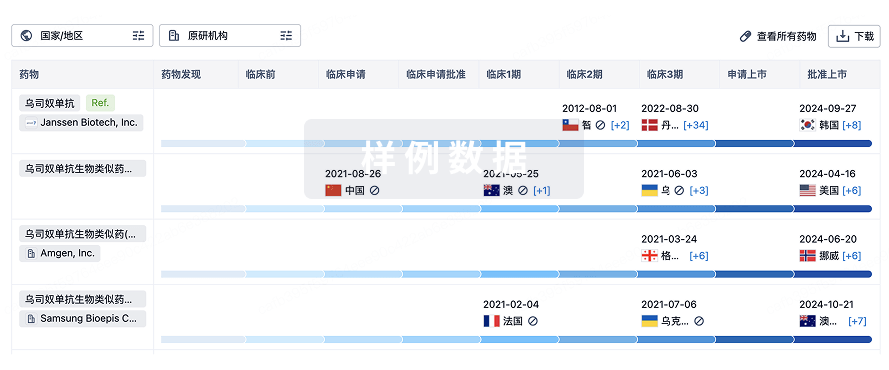
生物类似药在不同国家/地区的竞争态势。请注意临床1/2期并入临床2期,临床2/3期并入临床3期
登录
或
特殊审评
只需点击几下即可了解关键药物信息。
登录
或

提出任何生物医药研究问题
让每一步生物医药决策都精准制胜
基于十亿级生物数据与全球情报的精准 AI,赋能早期药物发现
立即开始免费试用!
智慧芽新药情报库是智慧芽专为生命科学人士构建的基于AI的创新药情报平台,助您全方位提升您的研发与决策效率。
立即接入生物医药数据包
智慧芽新药库数据也通过智慧芽开放平台,以MCP或API服务形式对外开放。立即使用我们的MCP服务定制您的LLM智能体。
生物序列数据库
生物药研发创新
免费使用
化学结构数据库
小分子化药研发创新
免费使用