预约演示
更新于:2026-08-22
WBP-3425
更新于:2026-08-22
概要
基本信息
原研机构 |
在研机构 |
非在研机构- |
权益机构- |
最高研发阶段临床1期 |
首次获批日期- |
最高研发阶段(中国)临床1期 |
特殊审评- |

登录后查看时间轴
关联
1
项与 WBP-3425 相关的临床试验CTR20201604
一项开放、单臂、非随机的Ⅰ期临床试验:评估WBP3425在晚期恶性实体瘤患者的安全性、耐受性、药代动力学特征、和药效动力学特征,并初步探索WBP3425的抗肿瘤活性
100 项与 WBP-3425 相关的临床结果
登录后查看更多信息
100 项与 WBP-3425 相关的转化医学
登录后查看更多信息
100 项与 WBP-3425 相关的专利(医药)
登录后查看更多信息
1
项与 WBP-3425 相关的文献(医药)2026-05-01Journal of Thoracic Oncology
Bispecific T-cell Engager (CD3 × EGFR)-Based Triplet Therapy Unlocks CD40/CD40L Crosstalk to Revert Immunosuppression in Third-Generation EGFR-Tyrosine Kinase Inhibitor–Refractory NSCLC
Article
作者: Xiong, Anwen ; Wang, Qianyi ; Han, Ruoshuang ; Wang, Yuanyuan ; Li, Xuefei ; Zhao, Chao ; Zhou, Fei ; Guo, Haoyue ; Diao, Meng ; Zhou, Caicun ; Wu, Yuhan ; Li, Wei ; Cheng, Lei ; He, Taiping
INTRODUCTION:
Acquired resistance to third-generation EGFR-tyrosine kinase inhibitors (EGFR-TKIs) is a major challenge in NSCLC, with approximately 50% of cases lacking precise resistance mechanisms. This study investigates the immunosuppressive tumor microenvironment (TME) driving resistance and develops a novel triple-combination therapy to restore T-cell antitumor activity.
METHODS:
Single-cell RNA sequencing and multicolor fluorescence staining were performed on NSCLC patient samples to analyze TME changes post-EGFR-TKI resistance. A triple therapy combining BC3448 (EGFR and CD3 bispecific T-cell engager), tucidinostat (histone deacetylase inhibitor), and WBP3425 (4-1BB agonist) was tested using in vitro co-culture assays, syngeneic cell-derived xenograft models in humanized NOG-EXL mice, and multi-omics analyses.
RESULTS:
Single-cell RNA sequencing revealed reduced T-cell infiltration or activation and increased immunosuppressive myeloid cells in resistant NSCLC. BC3448 monotherapy activated T cells and induced tumor cell apoptosis in vitro but was limited in vivo because of myeloid-driven immunosuppression. The triple therapy significantly enhanced tumor regression in osimertinib-resistant models (tumor growth inhibition >70%, p < 0.001), promoted CD8+ effector T-cell differentiation, and suppressed Tregs and M2 macrophages. CD40-CD40L axis activation between T cells and monocyte-derived macrophages was critical for TME remodeling, with spatial profiling revealing increased CD40L+ T-cell and CD40+ macrophage proximity, correlating with higher IFN-γ and reduced angiogenesis. A durable response to BC3448 monotherapy was observed in an immunotherapy-resistant patient with NSCLC (>2 y of stable disease), presenting a translational potential of this approach.
CONCLUSIONS:
This study establishes a novel triple therapy that overcomes the limitations of bispecific T-cell engagers in cold and immunosuppressive TMEs and provides an immunomodulatory approach to addressing third-generation EGFR-TKI resistance.
100 项与 WBP-3425 相关的药物交易
登录后查看更多信息
研发状态
10 条进展最快的记录, 后查看更多信息
登录
| 适应症 | 最高研发状态 | 国家/地区 | 公司 | 日期 |
|---|---|---|---|---|
| 晚期恶性实体瘤 | 临床1期 | 中国 | 2020-09-03 | |
| 结肠癌 | 临床申请 | 中国 | 2019-10-23 |
登录后查看更多信息
临床结果
临床结果
适应症
分期
评价
查看全部结果
登录后查看更多信息
转化医学
使用我们的转化医学数据加速您的研究。
登录
或

药物交易
使用我们的药物交易数据加速您的研究。
登录
或

核心专利
使用我们的核心专利数据促进您的研究。
登录
或

临床分析
紧跟全球注册中心的最新临床试验。
登录
或

批准
利用最新的监管批准信息加速您的研究。
登录
或

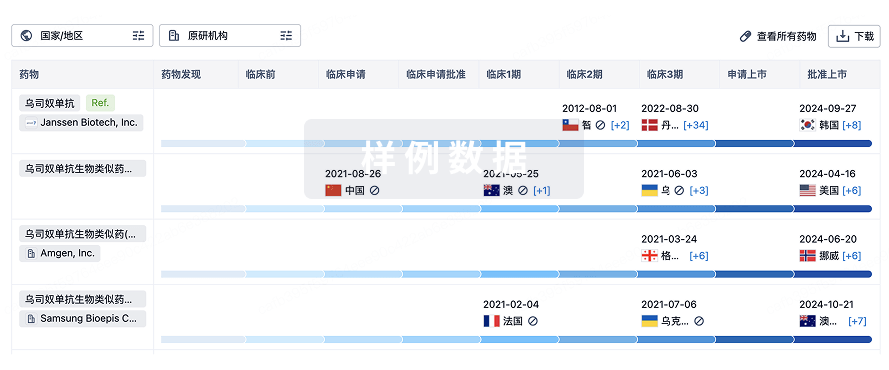
生物类似药
生物类似药在不同国家/地区的竞争态势。请注意临床1/2期并入临床2期,临床2/3期并入临床3期
登录
或
特殊审评
只需点击几下即可了解关键药物信息。
登录
或

提出任何生物医药研究问题
让每一步生物医药决策都精准制胜
基于十亿级生物数据与全球情报的精准 AI,赋能早期药物发现
立即开始免费试用!
智慧芽新药情报库是智慧芽专为生命科学人士构建的基于AI的创新药情报平台,助您全方位提升您的研发与决策效率。
立即接入生物医药数据包
智慧芽新药库数据也通过智慧芽开放平台,以MCP或API服务形式对外开放。立即使用我们的MCP服务定制您的LLM智能体。
生物序列数据库
生物药研发创新
免费使用
化学结构数据库
小分子化药研发创新
免费使用