预约演示
更新于:2026-03-19
Centre Hospitalier General de St. Denis
更新于:2026-03-19
概览
关联
45
项与 Centre Hospitalier General de St. Denis 相关的临床试验NCT07204626
Medical Anthropology and Migrants in Precarious Situations, Cared for in Intensive and Post-intensive Care Units
Analyze the experience (perception, interpretation and incorporation - embodiment) that migrant people with low socio-economic status/precarity have of their own health conditions for which they have come to be hospitalized in the Intensive Care Unit (ICU) and Post-Resuscitation Rehabilitation Care (PRRC).
开始日期2025-10-15 |
NCT07206914
Geographic Analysis of Cancer Patients' Residences at Delafontaine Hospital
This study looks at where cancer patients treated at Delafontaine Hospital live and how far they have to travel for care. By mapping patients' home addresses (anonymized), the research will show how distance, transportation, and social factors affect access to cancer treatments and support services. The goal is to better understand inequalities in access to care and to improve patient support in the future.
开始日期2025-10-15 |
NCT07200999
Prevalence of Carriage of Extended-Spectrum Beta-Lactamase (ESBL)-Producing Enterobacteria in Preterm Premature Rupture of Membranes : A French Multicenter Cohort Study
This study looks at how common certain antibiotic-resistant bacteria (called extended-spectrum beta-lactamase-producing Enterobacteriaceae, or E-BLSE) are in pregnant women who experience premature breaking of their water before full term. The goal is to understand how often these bacteria are found, how long they stay, and what factors increase the risk of carrying them. This information will help doctors choose the best antibiotics to protect both the mother and baby from infections during and after pregnancy. The study follows women from the time of their membrane rupture until delivery, collecting samples to track the bacteria over time.
开始日期2025-10-01 |
100 项与 Centre Hospitalier General de St. Denis 相关的临床结果
登录后查看更多信息
0 项与 Centre Hospitalier General de St. Denis 相关的专利(医药)
登录后查看更多信息
98
项与 Centre Hospitalier General de St. Denis 相关的文献(医药)2026-01-01·JAMA Neurology
Intravenous Thrombolysis Use in the Late Time Window Before Interhospital Transfer for Thrombectomy
Article
作者: Nehme, Nour ; Maïer, Benjamin ; Lapergue, Bertrand ; Lansberg, Maarten G. ; Forestier, Géraud ; Savatovsky, Julien ; Charbonneau, Frédérique ; Costalat, Vincent ; Seners, Pierre ; Sibon, Igor ; Allard, Julien ; Rigal, Julien ; Mazighi, Mikael ; Benoit, Tristan ; Girard Buttaz, Isabelle ; Belley, Marie ; Sablot, Denis ; Obadia, Michael ; Desilles, Jean-Philippe ; Smadja, Didier ; Olivot, Jean-Marc ; Ben Hassen, Wagih ; Clarençon, Frédéric ; Caroff, Jildaz ; Marc, Guillaume ; Bourcier, Romain ; Rosso, Charlotte ; Girbovan, Andrei ; Kaaouana, Olfa ; Casenave, Philippe ; Zuber, Mathieu ; Scarcia, Luca ; Chivot, Cyril ; Loeillot, Julia ; Ghazanfari, Sam ; Piotin, Michel ; Skerlak, Stéphane ; Legris, Loïc ; Papassin, Jérémie ; Dassa, Jérémie ; Blanc, Raphaël ; Alamowitch, Sonia ; Manchon, Eric ; Yger, Marion ; Pico, Fernando ; Basille, Florian ; Lun, François ; Gerschenfeld, Gaspard ; Marnat, Gaultier ; Dupin, Mathilde ; Wacongne, Anne ; Arquizan, Caroline ; Bennani, Omar Naciri ; Ter Schiphorst, Adrien ; Chausson, Nicolas ; Turc, Guillaume ; Albers, Gregory W. ; Detante, Olivier ; Henry, Carole ; Henon, Hilde
Importance:
In patients with acute ischemic stroke due to large vessel occlusion (AIS-LVO), the benefit of intravenous thrombolysis (IVT) administered beyond 4.5 hours from the last time known well before endovascular therapy (EVT) is uncertain. Recently, the TIMELESS trial failed to demonstrate a benefit of IVT in this setting, but this trial focused on patients directly admitted to comprehensive stroke centers (CSCs) with fast access to EVT.
Objective:
To assess the efficacy and safety of IVT initiated beyond 4.5 hours in patients with AIS-LVO initially admitted to primary stroke centers (PSCs) and subsequently transferred to a CSC for EVT, allowing substantial time for the IVT to take effect.
Design, Setting, and Participants:
This multicenter retrospective cohort study was conducted between January 2020 and December 2024, with 3-month follow-up, at 20 French PSCs. All consecutive patients with AIS-LVO admitted beyond 4.5 hours from the last time they were known well in the PSC and subsequently transferred to a CSC for EVT, with or without IVT administered prior to transfer, were eligible for inclusion. Data analysis was performed between May 2025 and July 2025.
Main Outcomes and Measures:
The primary outcome was the 3-month modified Rankin Scale score, analyzed in the ordinal approach. Propensity score with overlap weighting (PSOW) balanced covariates between patients treated with IVT vs those without.
Results:
A total of 584 patients were included, among whom 309 patients (52.9%) were female. Median (IQR) age was 71 (61-81) years, median (IQR) baseline National Institutes of Health Stroke scale score was 15 (10-19), median (IQR) time from last known well to PSC imaging was 10.5 (6.9-14.0) hours, and 232 patients (39.7%) received IVT before transfer. Advanced brain imaging (magnetic resonance imaging or computed tomography [CT] with CT-perfusion) was performed at the PSC in 544 patients (93.2%). IVT use before transfer was independently associated with a shift toward better 3-month outcomes (PSOW–common odds ratio [OR], 1.97; 95% CI, 1.33-2.92;
P
= .001) and higher odds of recanalization during transfer (PSOW-OR, 8.69; 95% CI, 3.16-23.87;
P
< .001) compared with those without. The rate of any intracerebral hemorrhage and symptomatic intracerebral hemorrhage were similar between groups.
Conclusions and Relevance:
In this multicenter cohort study, IVT initiated beyond 4.5 hours prior to interhospital transfer for EVT was associated with higher rates of recanalization during transfer and improved 3-month functional outcomes, without safety concerns. These findings offer encouraging support for clinical trials evaluating IVT in the late time window before interhospital transfer.
2025-10-01·Journal of Visceral Surgery
Medical tourism in bariatric surgery: Challenges and perspectives
作者: Cohen, Régis ; Nassour, Fajer ; Catheline, Jean-Marc
2025-10-01·JAMA Neurology
Therapeutic Management During Pregnancy and Relapse Risk in Women With Multiple Sclerosis
Article
Importance:
In women with multiple sclerosis (MS), disease-modifying therapy (DMT) management during pregnancy might impact relapse risk.
Objective:
To estimate the effect of DMT management during pregnancy on MS relapse rate and compare different therapeutic strategies.
Design, Setting, and Participants:
This was a multicenter retrospective cohort study using data from January 1990 to December 2023. Data were extracted in December 2023 from the French MS registry. Among 52 955 women in the registry, we included pregnancies identified through childbirths in patients with relapsing-onset MS who were monitored for at least 18 months before delivery and 9 months after. Pregnancies occurring less than 18 months apart or with missing month of birth were excluded.
Exposures:
Mediation analysis was used to estimate the total, direct, and indirect (mediated by DMT management) effects of pregnancy. Different therapeutic strategies were compared: DMT interruption, switching to or maintaining interferon β or glatiramer acetate, switching to or maintaining natalizumab until the third trimester, and switching to or maintaining intravenous anti-CD20 and interrupting it 3 months before conception.
Main Outcomes and Measures:
The primary outcome was the annualized relapse rate (ARR) during the preconception, gestation, and postpartum periods. Within a causal inference framework, counterfactual ARRs were estimated using longitudinal g-computation, combining a random forest algorithm for predicting DMTs, and a mixed-effects Poisson model for relapses.
Results:
We included 6341 pregnancies occurring in 4998 women (mean [SD] age at conception, 31.5 [4.5] years). DMT management during pregnancy significantly increased ARR during gestation (causal rate ratio [cRR], 1.13; 95% CI, 1.06-1.22) and postpartum (cRR, 1.08; 95% CI, 1.01-1.16) periods. This led to a deleterious total effect of pregnancy on ARR, particularly in women receiving natalizumab before pregnancy with prolonged interruption (ie, interruption before the second trimester or resumption more than 3 months after delivery; cRR, 2.18; 95% CI, 1.76-2.69), and in women receiving fingolimod (cRR, 2.15; 95% CI, 1.60-2.93). Compared to DMT interruption, anti-CD20 strategy was the most effective (cRR, 0.38; 95% CI, 0.25-0.52), followed by the natalizumab strategy with short interruption (cRR, 0.80; 95% CI, 0.71-0.90), whereas interferon β (cRR, 0.93; 95% CI, 0.86-0.99) and glatiramer acetate strategies (cRR, 0.91; 95% CI, 0.84-0.99) were less effective.
Conclusion:
In this study, DMT management during pregnancy significantly increased relapse risk, particularly in patients receiving natalizumab with prolonged interruption or fingolimod. The strategy based on the use of anti-CD20 before pregnancy was the most effective to mitigate this risk.
100 项与 Centre Hospitalier General de St. Denis 相关的药物交易
登录后查看更多信息
100 项与 Centre Hospitalier General de St. Denis 相关的转化医学
登录后查看更多信息
组织架构
使用我们的机构树数据加速您的研究。
登录
或
管线布局
2026年06月16日管线快照
无数据报导
登录后保持更新
药物交易
使用我们的药物交易数据加速您的研究。
登录
或
转化医学
使用我们的转化医学数据加速您的研究。
登录
或
营收
使用 Synapse 探索超过 36 万个组织的财务状况。
登录
或
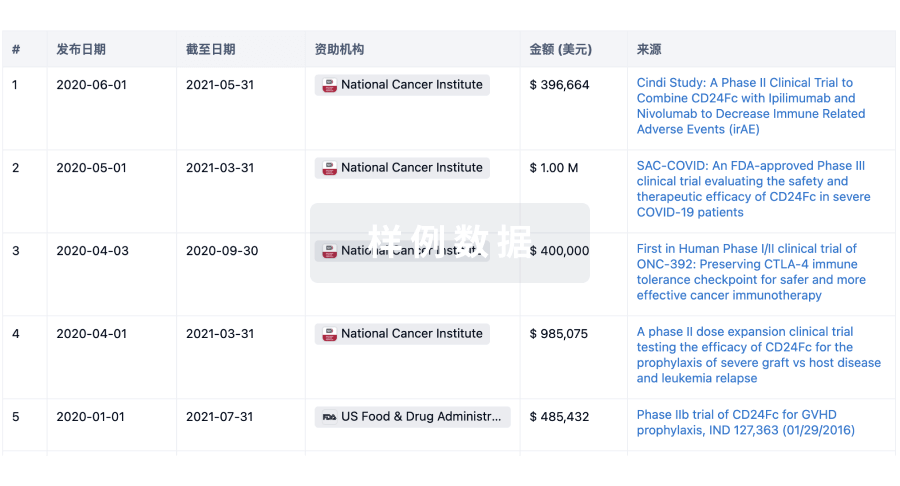
科研基金(NIH)
访问超过 200 万项资助和基金信息,以提升您的研究之旅。
登录
或
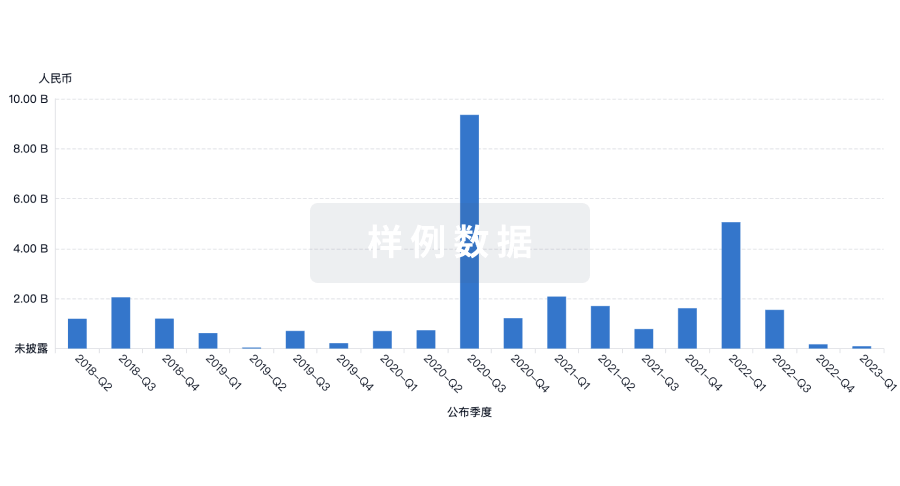
投资
深入了解从初创企业到成熟企业的最新公司投资动态。
登录
或
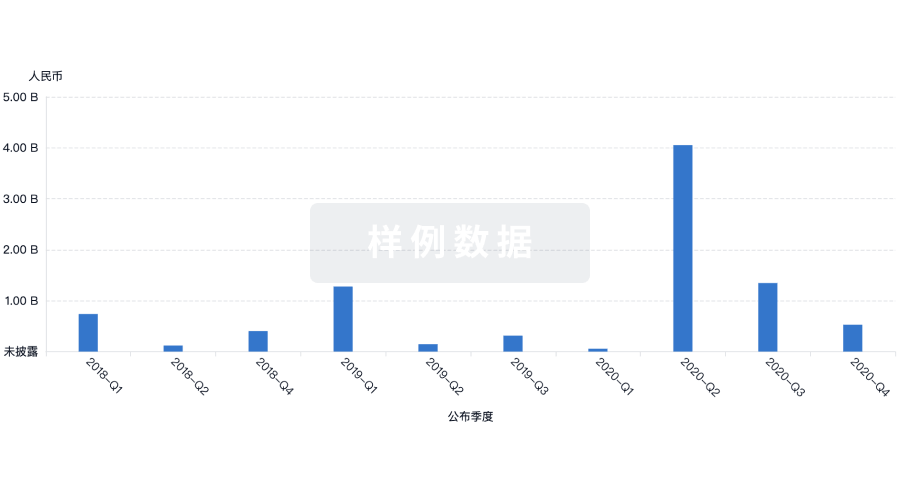
融资
发掘融资趋势以验证和推进您的投资机会。
登录
或
生物医药百科问答
全新生物医药AI Agent 覆盖科研全链路,让突破性发现快人一步
立即开始免费试用!
智慧芽新药情报库是智慧芽专为生命科学人士构建的基于AI的创新药情报平台,助您全方位提升您的研发与决策效率。
立即开始数据试用!
智慧芽新药库数据也通过智慧芽数据服务平台,以API或者数据包形式对外开放,助您更加充分利用智慧芽新药情报信息。
生物序列数据库
生物药研发创新
免费使用
化学结构数据库
小分子化药研发创新
免费使用