预约演示
更新于:2025-12-06

Southwest Research Institute
更新于:2025-12-06
概览
标签
其他疾病
小分子化药
疾病领域得分
一眼洞穿机构专注的疾病领域

暂无数据
技术平台
公司药物应用最多的技术
靶点
公司最常开发的靶点
关联
靶点 |
作用机制 |
在研机构 |
原研机构 |
在研适应症 |
非在研适应症 |
最高研发阶段 |
首次获批国家/地区 |
首次获批日期 |
100 项与 Southwest Research Institute 相关的临床结果
登录后查看更多信息
登录后查看更多信息
2025-12-01SPACE SCIENCE REVIEWS
The Psyche Light Elements Investigation
Review
作者: Binzel, Richard P ; Merayo, José M G ; Marchi, Simone ; Prettyman, Thomas H ; Courville, Samuel W ; Weiss, Benjamin P ; Asphaug, Erik I ; Mittlefehldt, David W ; Lawrence, David J ; Elkins-Tanton, Linda T ; McCoy, Timothy J
Light elements, such as C, S, Si, O, C, and H, are thought to be present in Earth's liquid-Fe outer core. These elements lower melting temperatures, thereby allowing the core to remain in liquid state at high pressure and influencing magnetic and geodynamic processes. However, the identity and abundance of the light elements in the cores of terrestrial planets and how they were delivered to these cores is not well known. The NASA Psyche mission will travel to and explore (16) Psyche, which may be the metal-rich core of a differentiated planetesimal exposed by collisional stripping. If so, the Psyche mission could provide a direct assessment of the light element content of an asteroidal core, allowing comparisons to the inferred composition of planetary cores and the parent bodies of the magmatic iron group meteorites. In particular, Earth's high-pressure core formed gradually (over ∼100 Myr), in a multistage process, under increasingly oxidizing conditions, whereas the cores of planetesimals formed quickly (within 10 Myr) at low pressure, likely in chemical equilibrium with their mantles. The trace element systematics and mineral composition of magmatic iron meteorites indicate the presence of C, P, and S in planetesimal cores prior to solidification. Such elements would have played a role in core dynamics, including dynamo generation. Their low solubility combined with the immiscibility of their mineral precipitates would have resulted in their separation from Fe upon crystallization and their eruption onto the surface of a stripped core (via ferrovolcanism). The Psyche spacecraft will detect their elemental, mineral, and magnetic signatures with the payload instruments, which include a Gamma Ray and Neutron Spectrometer, a Multispectral Imager, and a Magnetometer. Additional constraints on interior composition and processes influenced by light elements will be provided by Psyche's gravity and geomorphology investigations. We provide a brief introduction to the topic of light elements along with prospects for (16) Psyche. While we emphasize core formation processes, we also consider other possibilities for the origin and evolution of this metal-rich body.
2025-11-01ICARUS
Phosphates reveal high pH ocean water on Enceladus
作者: Truong, Ngoc ; Glein, Christopher R.
Enceladus offers our best opportunity for exploring the chem. of an ocean on another world.Here, we perform geochem. modeling to show how the distribution of phosphate species found in ice grains from Enceladus′s plume provides a very straightforward constraint on the pH of the host solutionThe ratio of HPO4/PO4 species serves as a pH indicator.We find evidence of moderately alk. water (pH 10.1-11.6)-significantly more alk. than current estimates (∼8-9) of the pH of Enceladus′s ocean.Nevertheless, the pH range from phosphates is consistent with the CO2/H2O ratio measured in the plume if CO2 exsolves from ocean water according to its equilibrium solubilityA simple energy balance can be used to quantify volatile fractionation during gas transport inside Enceladus′s tiger stripes; we deduce that ∼83 % of water vapor is removed as ice during transport between the liquid-vapor interface and where gases exit the subsurface.We also explore how CO2 degassing may lead to an increase in the apparent pH of ocean water.We generate maps of allowed combinations of pH and dissolved inorganic carbon concentration of the source water for a wide range of scenarios.Our preferred interpretation, constrained by the observed heat flux, implies minimal CO2 degassing from ocean water.Hence, the pH recorded by phosphates should closely approx. that of the ocean; our best estimate is pH ∼10.6.Such a high pH seems to reflect a major role of silicates enriched in Na, Mg, or Fe(II) interacting extensively with ocean water.Silica nanoparticles would not form or would subsequently dissolve if the pH is too high (>10.5).The outgassing model presented here provides a new path to quantify the dissolved concentrations of volatile species.
2025-10-09Nature
Southward impact excavated magma ocean at the lunar South Pole–Aitken basin
Article
作者: Andrews-Hanna, Jeffrey C ; Levin, Janette N ; Bottke, William F ; Moruzzi, Samantha A ; Gowman, Gabriel ; Mallik, Ananya ; Keane, James T ; Wakita, Shigeru ; Broquet, Adrien ; Roy, Arkadeep ; Johnson, Brandon C ; Evans, Alexander J ; Marchi, Simone
Abstract:
The ancient South Pole–Aitken impact basin provides a key data point for our understanding of the evolution of the Moon, as it formed during the earliest pre-Nectarian epoch of lunar history1, excavated more deeply than any other known impact basin2,3 and is found on the lunar far side, about which less is known than the well-explored near side. Here we show that the tapering of the basin outline and the more gradual topographic and crustal thickness transition towards the south support a southward impact trajectory, opposite of that commonly assumed. A broad thorium-rich and iron-rich ejecta deposit southwest of the basin is consistent with partial excavation of late-stage magma ocean liquids. These observations indicate that thorium-rich magma ocean liquids persisted only beneath the southwestern half of the basin at the time of impact, matching predictions for the transition from a global magma ocean to a local enrichment of potassium, rare-earth elements and phosphorus (KREEP) in the near-side Procellarum KREEP Terrane. These results have important implications for the upcoming human exploration of the lunar south pole by Artemis, as proposed landing sites are now recognized to sit on the downrange rim and thorium-rich impact ejecta of the basin.
100 项与 Southwest Research Institute 相关的药物交易
登录后查看更多信息
100 项与 Southwest Research Institute 相关的转化医学
登录后查看更多信息
组织架构
使用我们的机构树数据加速您的研究。
登录
或
管线布局
2026年09月23日管线快照
管线布局中药物为当前组织机构及其子机构作为药物机构进行统计,早期临床1期并入临床1期,临床1/2期并入临床2期,临床2/3期并入临床3期
临床前
1
登录后查看更多信息
当前项目
登录后查看更多信息
药物交易
使用我们的药物交易数据加速您的研究。
登录
或
转化医学
使用我们的转化医学数据加速您的研究。
登录
或
营收
使用 Synapse 探索超过 36 万个组织的财务状况。
登录
或
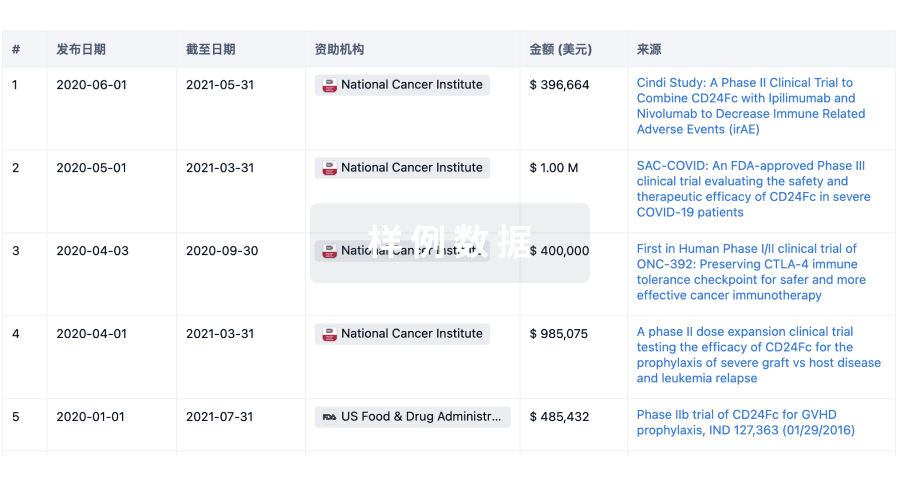
科研基金(NIH)
访问超过 200 万项资助和基金信息,以提升您的研究之旅。
登录
或
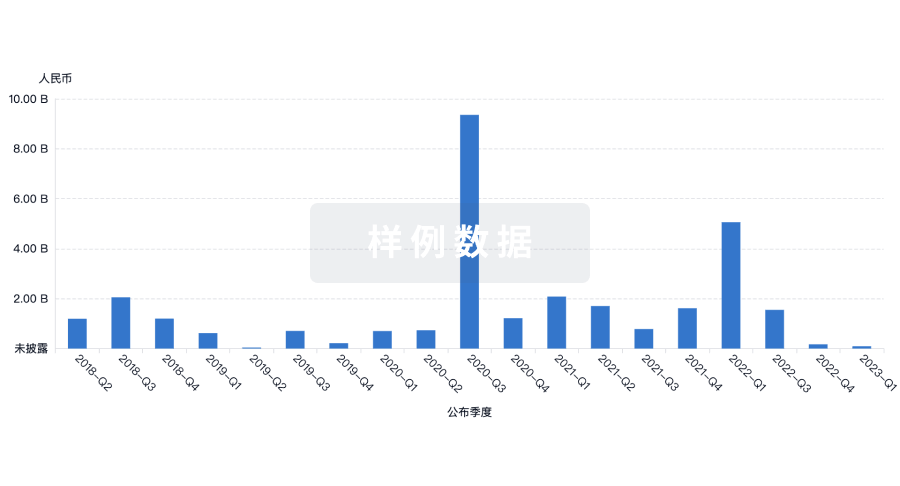
投资
深入了解从初创企业到成熟企业的最新公司投资动态。
登录
或
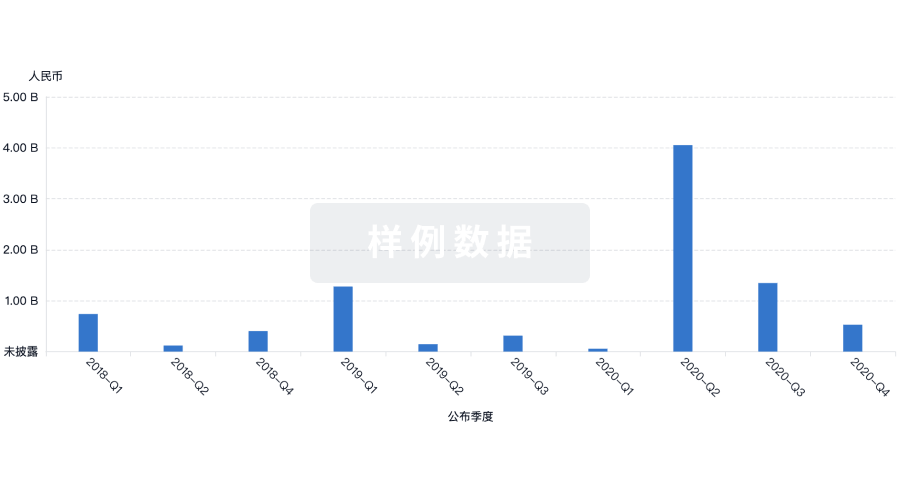
融资
发掘融资趋势以验证和推进您的投资机会。
登录
或
提出任何生物医药研究问题
让每一步生物医药决策都精准制胜
基于十亿级生物数据与全球情报的精准 AI,赋能早期药物发现
立即开始免费试用!
智慧芽新药情报库是智慧芽专为生命科学人士构建的基于AI的创新药情报平台,助您全方位提升您的研发与决策效率。
立即接入生物医药数据包
智慧芽新药库数据也通过智慧芽开放平台,以MCP或API服务形式对外开放。立即使用我们的MCP服务定制您的LLM智能体。
生物序列数据库
生物药研发创新
免费使用
化学结构数据库
小分子化药研发创新
免费使用