预约演示
更新于:2026-03-25

Mercy Medical Center Redding
更新于:2026-03-25
概览
关联
NCT06750731
Real World Study of Efficacy and Adherence to Subcutaneous vs. Intravenous Vedolizumab in Patients With Inflammatory Bowel Disease Using a Novel Remote MONITORing Intervention (MONITOR Study)
NCT03976973
A Phase 2, Multi-centre Study of BromAc for Recurrent Peritoneal Mucinous Tumour or Pseudomyxoma Peritonei

NCT04588077
Comparison the Seroconversion Rate Between Two-dose and Three-dose Regimens of Heplisav B Among Patients With Cirrhosis, a Randomized-control Prospective Study.
100 项与 Mercy Medical Center Redding 相关的临床结果
登录后查看更多信息
登录后查看更多信息
2024-02-01Critical care medicine
Society of Critical Care Medicine Guidelines on Recognizing and Responding to Clinical Deterioration Outside the ICU: 2023
Review
作者: Rowley, Daniel D. ; DeVita, Michael ; Wax, Randy S. ; Downar, James ; Jones, Daryl ; Fujitani, Shigeki ; Wax, Sophie P. ; Hecht, Jonathan D. ; Honarmand, Kimia ; Cheatham, Michael L. ; Welch, John ; Inada-Kim, Matthew ; Fuller, Raeann M. ; Kellett, John ; Fox-Robichaud, Alison ; Edelson, Dana ; Davis, Daniel P. ; Rochwerg, Bram ; Knowles, Heidi ; Lighthall, Geoffery ; Kolb, Philipp ; Penoyer, Daleen ; Kumar, Anand ; Haskell, Helen ; Sebat, Frank ; Shipley, Jonathan K. ; Baldisseri, Marie R. ; Olsen, Keith M. ; Danesh, Valerie
RATIONALE::
Clinical deterioration of patients hospitalized outside the ICU is a source of potentially reversible morbidity and mortality. To address this, some acute care hospitals have implemented systems aimed at detecting and responding to such patients.
OBJECTIVES::
To provide evidence-based recommendations for hospital clinicians and administrators to optimize recognition and response to clinical deterioration in non-ICU patients.
PANEL DESIGN::
The 25-member panel included representatives from medicine, nursing, respiratory therapy, pharmacy, patient/family partners, and clinician-methodologists with expertise in developing evidence-based Clinical Practice Guidelines.
METHODS::
We generated actionable questions using the Population, Intervention, Control, and Outcomes (PICO) format and performed a systematic review of the literature to identify and synthesize the best available evidence. We used the Grading of Recommendations Assessment, Development, and Evaluation Approach to determine certainty in the evidence and to formulate recommendations and good practice statements (GPSs).
RESULTS::
The panel issued 10 statements on recognizing and responding to non-ICU patients with critical illness. Healthcare personnel and institutions should ensure that all vital sign acquisition is timely and accurate (GPS). We make no recommendation on the use of continuous vital sign monitoring among unselected patients. We suggest focused education for bedside clinicians in signs of clinical deterioration, and we also suggest that patient/family/care partners’ concerns be included in decisions to obtain additional opinions and help (both conditional recommendations). We recommend hospital-wide deployment of a rapid response team or medical emergency team (RRT/MET) with explicit activation criteria (strong recommendation). We make no recommendation about RRT/MET professional composition or inclusion of palliative care members on the responding team but suggest that the skill set of responders should include eliciting patients’ goals of care (conditional recommendation). Finally, quality improvement processes should be part of a rapid response system.
CONCLUSIONS::
The panel provided guidance to inform clinicians and administrators on effective processes to improve the care of patients at-risk for developing critical illness outside the ICU.
2023-10-01Plastic and reconstructive surgery
Reply: The Superficial Vein–Only DIEP Flap
Article
作者: Chang, Bernard ; Park, Jungwon ; Nigro, Lauren C.
We would like to thank you for the critical analysis of our recent article “The Superficial Vein−Only DIEP Flap.”1 The purpose of this article was to share our experience with a variation of the deep inferior epigastric artery perforator (DIEP) flap in which the superficial inferior epigastric vein (SIEV) can safely provide the only source of venous outflow. The viability of the superficial vein−only (SVO) DIEP flap has been suggested by anatomical studies, and this correlates clinically with our results.2 Since the article was written, an additional 43 SVO-DIEP flaps have been completed by the senior author, with only one flap failure to date (1.3% flap failure rate). Notably, the flaps in our study were not completed as salvage procedures (ie, the deep inferior epigastric vessels were not inadvertently damaged or ligated). However, our study may provide some reassurance to the surgeon who has inadvertently damaged the deep inferior epigastric venous outflow and the SIEV is the only remaining option. Perforator selection is a subjective, albeit critical, component of DIEP flap dissection. Our use of Acland clamps to systematically assess the flap’s viability with various permutations of perforators and/or the SIEV vessels has been very successful, and this technique is described in the article. When perforating vessels are in a row and more than one is needed for venous outflow, this is readily noted. However, we prefer not to use multiple perforators when possible to avoid the morbidity to the abdominal wall musculature and innervation. Our preference is to use the deep inferior epigastric vein (DIEV) for venous outflow whenever possible and save the SVO-DIEP for scenarios when the flap becomes congested without SIEV outflow, despite DIEV patency. The critical factor in these flaps is that the flap is significantly dependent on the SIEV for venous outflow and would not survive without its use. The argument for adding a DIEV and SIEV in parallel highlights the crux of this article: do you need to couple two veins or is the SIEV sufficient? We have shown that coupling a DIEV is not always necessary, but we are not discouraging the use of two veins; this decision should be made by the surgeon. We agree that flap size is an important consideration. In our experience, we have found the majority of larger flaps have corresponding large perforator vessels. Our average body mass index is approximately 30 kg/m2 and therefore we are typically raising larger flaps without the need to cross midline for our unilateral flaps. When we do cross midline, we do not include zone IV. If a unilateral breast reconstruction needs additional volume beyond what a unilateral flap can provide, we recommend considering stacking flaps, addition of an implant, or use of staged fat grafting. Our preference for the thoracodorsal artery and vein as the recipient vessels for the SVO-DIEP is based on senior author preference; however, we do not discourage the use of the internal mammary vessels or, as di Pompeo et al. prefer, the circumflex scapular vessels. Our backup flap options include gluteal artery perforator flaps and medial thigh–based flaps, and we therefore do not rely on preservation of the thoracodorsal vessels. We recommend that surgeons consider the DIEA and SIEV vessel length and flap orientation when selecting their recipient vessels. We thank the authors for their interest in our article and appreciate their contribution to this discussion. DISCLOSURE The authors have no financial interests to report.
2022-06-01Journal of perianesthesia nursing : official journal of the American Society of PeriAnesthesia Nurses4区 · 医学
Nurse, Parent, and Nurse Leader Perspective on Adoption of iPads for Pediatric Preoperative Anxiety Reduction
4区 · 医学
Article
作者: Woodworth, Jennie ; Patmon, Frances ; Holder, Danyell ; Anderson, Matthew ; Gee, Perry M ; Rylee, Tina L
PURPOSE:
The purpose of this study was to examine the use of an iPad to facilitate distraction and reduce anxiety with preoperative pediatric patients.
DESIGN:
The authors conducted a descriptive case study in a Pre-Anesthesia Surgical Suite.
METHODS:
Nurses were trained on the use of the iPad, which came preloaded with games. The research staff took detailed notes during training and implementation. Research staff conducted interviews with nurses, leaders, and patient guardians for the study.
FINDINGS:
The authors discovered different perspectives among the clinical nurse, parent, and nursing leadership. The clinical nurse felt the iPad afforded them more focused time with the parents before surgery, though there was some hesitation at the beginning due to ownership of the devices. The parents felt the iPads were helpful to distract their child but worried there were not enough games appropriate for various age ranges. Nursing leadership found the iPads helpful in building a connection with the patient and their parents. Still, they felt many obstacles made integrating the use of the iPads in the nurses' workflow very difficult. There were technological issues that also delayed and discouraged the use of iPads. Once these preliminary issues were resolved, the iPad appeared to reduce anxiety in both patients and their parents.
CONCLUSIONS:
The iPad is an evidence-based intervention used for preoperative anxiety reduction. This study identifies essential facilitators and barriers associated with adopting the technology from the perspective of key stakeholders (nurses, parents, and nursing leadership). Overall, the iPad was considered a valuable tool to help parents feel less stressed with their child, allowing them to interact more effectively with the clinician. However, additional work is indicated to address the limitations regarding sample size and actual measures of anxiety.
100 项与 Mercy Medical Center Redding 相关的药物交易
登录后查看更多信息
100 项与 Mercy Medical Center Redding 相关的转化医学
登录后查看更多信息
组织架构
使用我们的机构树数据加速您的研究。
登录
或
管线布局
2026年09月14日管线快照
无数据报导
登录后保持更新
药物交易
使用我们的药物交易数据加速您的研究。
登录
或
转化医学
使用我们的转化医学数据加速您的研究。
登录
或
营收
使用 Synapse 探索超过 36 万个组织的财务状况。
登录
或
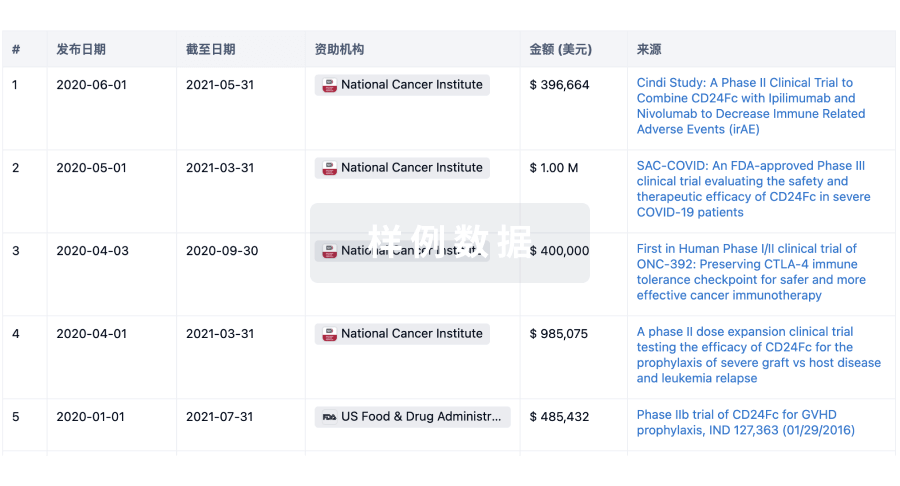
科研基金(NIH)
访问超过 200 万项资助和基金信息,以提升您的研究之旅。
登录
或
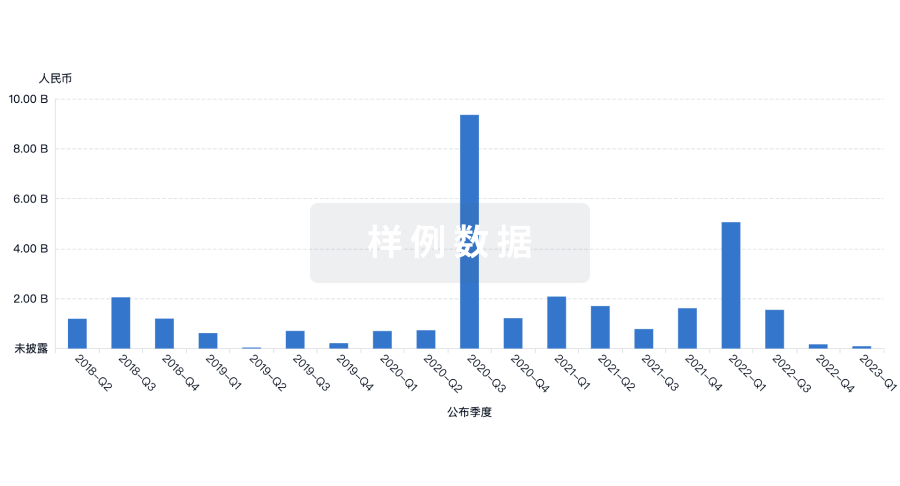
投资
深入了解从初创企业到成熟企业的最新公司投资动态。
登录
或
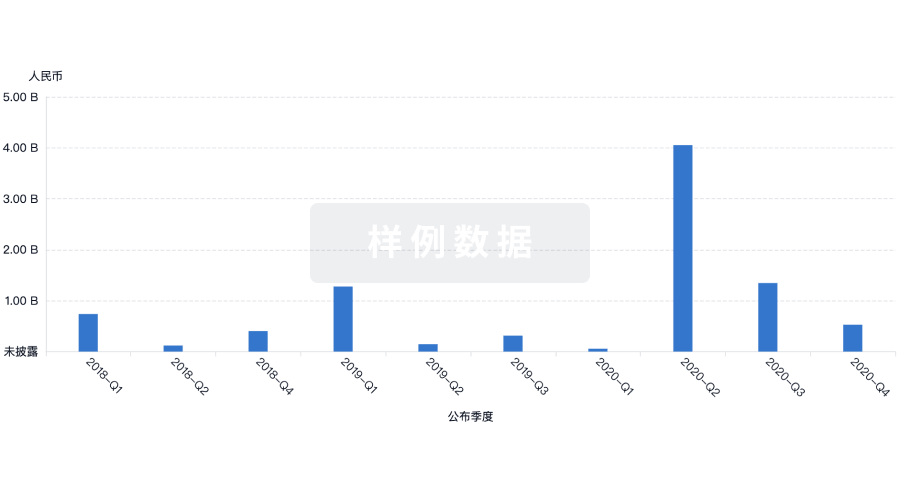
融资
发掘融资趋势以验证和推进您的投资机会。
登录
或
提出任何生物医药研究问题
让每一步生物医药决策都精准制胜
基于十亿级生物数据与全球情报的精准 AI,赋能早期药物发现
立即开始免费试用!
智慧芽新药情报库是智慧芽专为生命科学人士构建的基于AI的创新药情报平台,助您全方位提升您的研发与决策效率。
立即接入生物医药数据包
智慧芽新药库数据也通过智慧芽开放平台,以MCP或API服务形式对外开放。立即使用我们的MCP服务定制您的LLM智能体。
生物序列数据库
生物药研发创新
免费使用
化学结构数据库
小分子化药研发创新
免费使用