预约演示
更新于:2026-08-20

Regional Centre for Biotechnology
更新于:2026-08-20
概览
标签
消化系统疾病
感染
肿瘤
益生菌
预防性疫苗
融合蛋白
疾病领域得分
一眼洞穿机构专注的疾病领域

技术平台
公司药物应用最多的技术
靶点
公司最常开发的靶点
关联
靶点 |
作用机制 |
在研机构 |
原研机构 |
在研适应症 |
非在研适应症 |
最高研发阶段 |
首次获批国家/地区 |
首次获批日期 |

靶点 |
作用机制 |
在研机构 |
原研机构 |
在研适应症 |
非在研适应症 |
最高研发阶段 |
首次获批国家/地区 |
首次获批日期 |

靶点 |
作用机制 |
在研机构 |
原研机构 |
在研适应症 |
非在研适应症 |
最高研发阶段 |
首次获批国家/地区 |
首次获批日期 |
100 项与 Regional Centre for Biotechnology 相关的临床结果
登录后查看更多信息
登录后查看更多信息
2026-12-01Molecular & general genetics : MGG
Transcriptome analysis coupled with virus induced gene silencing delineates the unfolded protein response of tomato
Article
作者: Kandoth, Pramod Kaitheri ; Pandey, Ajay Kumar ; Kaur, Navpreet ; Rana, Ankita
The molecular details of endoplasmic reticulum (ER) stress and the unfolded protein response (UPR) and their functional significance in combating environmental stress in crop species remain inadequately elucidated. Tomato (Solanum lycopersicum) is an important crop, sensitive to temperature, and serves as a model crop plant for studying these pathways. To establish a tomato UPR transcriptome profile, we performed RNA sequencing (RNA-seq) analysis of tomato seedlings under tunicamycin (Tm)-induced ER stress. The 339 differentially expressed genes encompassed traditional ER stress markers, ER-associated degradation elements, transcription factors, and novel candidate genes. Our functional analysis of key UPR genes, viz., SlIRE1A, SlIRE1B, SlbZIP60, and SlbZIP28, using Virus-Induced Gene Silencing (VIGS) revealed differential requirements for SlIRE1A and SlIRE1B in the Tm-induced upregulation of downstream genes. Additionally, we found that the expression of most of the downstream genes we analyzed was equally dependent on both the IRE1 and bZIP28 pathways. The expression analysis of several of these genes under environmental stress conditions indicated that their expression patterns did not align with those observed during ER stress. Furthermore, our analysis of VIGS plants subjected to heat stress revealed that the regulation of reactive oxygen species (ROS) levels in tomato depends on the IRE1-bZIP60 pathway. Overall, this study provides a comprehensive analysis of UPR pathways in tomato and offers essential molecular insights for developing resilient tomato cultivars that can withstand adverse environmental conditions.
2026-12-01MOLECULAR BIOLOGY REPORTS
Comprehensive insight into nimbolide response against breast cancer treatment: present evidence, emerging strategy and future direction
Review
作者: Sahoo, Sonali ; Kashyap, Ananya ; Sahoo, Sanjeeb Kumar ; Sarangi, Ayana ; Panda, Soumya Swarupa
Breast cancer(BC) is a predominant malignancy, widely spread among women globally and has poor prognosis & clinical outcomes Conventional therapeutic approaches like surgery, chemotherapy and radiation therapy become insignificant due to the development of resistant clones, resilience in stemness, leads to metastasis and further relapse. Specifically, eradication of BC metastasis is challenging due to its intrinsic property of tumour cell plasticity, self-renewal ability and resistant to therapeutic agents. Therefore, systemic and targeted therapeutic approach becomes the primary focus in treatment regimen. Nimbolide a phytochemical derived from Azadirachta indica have demonstrated its potency as an antiproliferative, antimetastatic, anti-inflammatory and proapoptotic agent against a broad spectrum of different BC cell lines. Along with that, its antitumour activity has been validated by integrating its molecular mechanism emphasising different in-vitro/in-vivo studies on BC models. In this review, we provide a comprehensive analysis of nimbolide as an intriguing therapeutic phytochemical marker for BC, with main emphasis on the in vitro and in vivo studies and on the underlying molecular mechanisms. In addition to revealing the novel insights into the process of development of phytochemical on potent anticancer agents, this review seeks to come up with a scientific justification by focusing on current breakthroughs for the use of nimbolide in BC treatment with integration to nanotechnology.
2026-11-01BIOSENSORS & BIOELECTRONICS
Epitope-level insights for immuno-recognition of JEV NS1 via gold nanoflower- MXene composite
Article
作者: Tripathi, Prem Prakash ; Ramya, P R ; Jothiswaran, V V ; Gandhi, Sonu ; Mallick, Rahul
Early and accurate identification of Japanese encephalitis virus (JEV) is vital for effective outbreak control and surveillance. An electrochemical immunosensor was developed for the detection of JEV non-structural protein 1 (NS1). The JEV NS1 antigen was expressed, purified and subsequently refolded in vitro to recover soluble, functional protein. High-affinity monoclonal antibodies (mAbs) were generated through hybridoma technology. To gain molecular-level insights, antibody gene sequences were decoded using next-generation sequencing (NGS), while molecular docking analysis enabled predictive epitope-paratope mapping. To maximize sensitivity, screen-printed carbon electrodes (SPCEs) were modified with a gold nanoflower/MXene (GNF/MXene) nanocomposite, enhancing the electroactive surface area, and electrical conductivity of the sensor. Cyclic voltammetry (CV), electrochemical impedance spectroscopy (EIS), and differential pulse voltammetry (DPV) were employed to analyse the electrochemical reactions. The sensor exhibited a low limit of detection (LOD) of 0.35 fM across a broad range concentration range of JEV NS1 (1 fM-1 μM). The immunosensor was further evaluated with clinical samples and sensor showed high specificity (100%), sensitivity (95%), and accuracy (96.66%) with no cross-reactivity to other flavivirus NS1 antigens, with a rapid response of 10 min and maintained excellent stability over 4 weeks.
100 项与 Regional Centre for Biotechnology 相关的药物交易
登录后查看更多信息
100 项与 Regional Centre for Biotechnology 相关的转化医学
登录后查看更多信息
组织架构
使用我们的机构树数据加速您的研究。
登录
或
管线布局
2026年10月05日管线快照
管线布局中药物为当前组织机构及其子机构作为药物机构进行统计,早期临床1期并入临床1期,临床1/2期并入临床2期,临床2/3期并入临床3期
临床前
3
登录后查看更多信息
当前项目
登录后查看更多信息
药物交易
使用我们的药物交易数据加速您的研究。
登录
或
转化医学
使用我们的转化医学数据加速您的研究。
登录
或
营收
使用 Synapse 探索超过 36 万个组织的财务状况。
登录
或
科研基金(NIH)
访问超过 200 万项资助和基金信息,以提升您的研究之旅。
登录
或
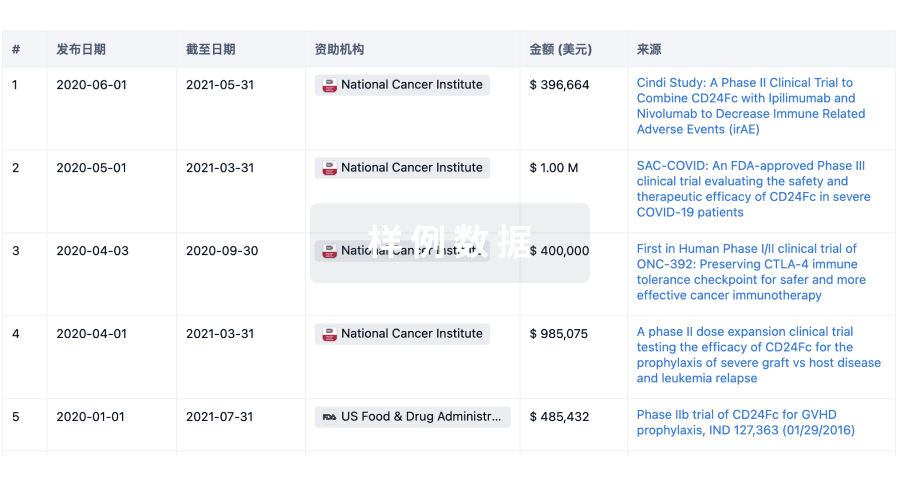
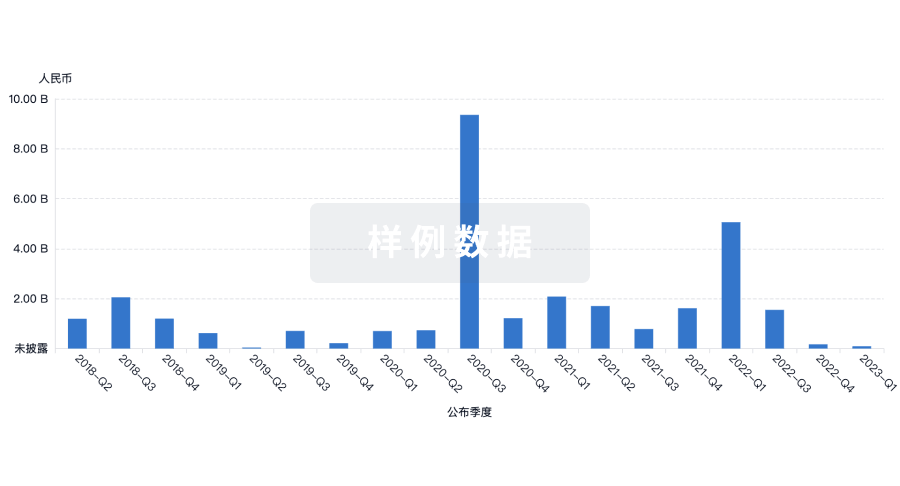
投资
深入了解从初创企业到成熟企业的最新公司投资动态。
登录
或
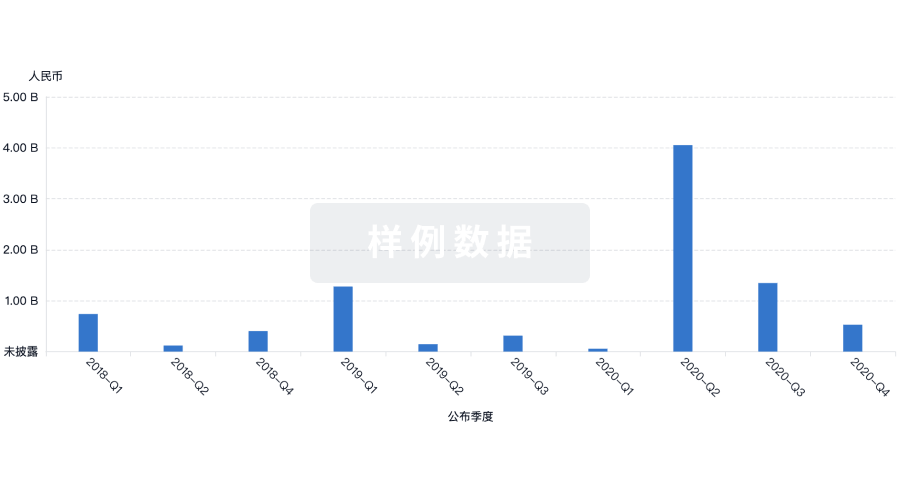
融资
发掘融资趋势以验证和推进您的投资机会。
登录
或
提出任何生物医药研究问题
让每一步生物医药决策都精准制胜
基于十亿级生物数据与全球情报的精准 AI,赋能早期药物发现
立即开始免费试用!
智慧芽新药情报库是智慧芽专为生命科学人士构建的基于AI的创新药情报平台,助您全方位提升您的研发与决策效率。
立即接入生物医药数据包
智慧芽新药库数据也通过智慧芽开放平台,以MCP或API服务形式对外开放。立即使用我们的MCP服务定制您的LLM智能体。
生物序列数据库
生物药研发创新
免费使用
化学结构数据库
小分子化药研发创新
免费使用