预约演示
更新于:2026-05-12

Lehigh University
更新于:2026-05-12
概览
标签
皮肤和肌肉骨骼疾病
小分子化药
疾病领域得分
一眼洞穿机构专注的疾病领域

暂无数据
技术平台
公司药物应用最多的技术
靶点
公司最常开发的靶点
关联
靶点 |
作用机制 |
在研机构 |
原研机构 |
在研适应症 |
非在研适应症 |
最高研发阶段 |
首次获批国家/地区 |
首次获批日期 |

NCT06871982
Norms Re-education to Promote Engagement in Parent-based Interventions: A Type 1 Implementation-effectiveness Trial

NCT05935111
Obesity and Physical Activity: Feasibility Study

NCT05892744
Establishing Multimodal Brain Biomarkers Using Data-driven Analytics for Treatment Selection in Depression

100 项与 Lehigh University 相关的临床结果
登录后查看更多信息
登录后查看更多信息
2026-05-01DEVELOPMENT AND PSYCHOPATHOLOGY
Article
作者: Uribe Tirado, Liliana Maria ; Steinberg, Laurence ; Deater-Deckard, Kirby ; Lansford, Jennifer E. ; Dodge, Kenneth A. ; Al-Hassan, Suha M. ; Junla, Daranee ; Gurdal, Sevtap ; Long, Qian ; Chang, Lei ; Yotanyamaneewong, Saengduean ; An, Danming ; Bornstein, Marc H. ; Pastorelli, Concetta ; Bacchini, Dario ; Sorbring, Emma ; Liu, Qin ; Skinner, Ann T. ; Di Giunta, Laura ; Cortright, Chelsea ; Alampay, Liane P. ; Oburu, Paul
Abstract:
Previous research has suggested bidirectional relations between depressive symptoms and both internal and external core beliefs (self-esteem and optimism, respectively) in adolescence. However, little work has examined the cultural commonality versus specificity of these developmental pathways in adolescence across diverse contexts. To address this gap, the current study traced bidirectional associations among depressive symptoms and two forms of core beliefs (self-esteem and optimism) in adolescents from 12 cultural groups in nine countries. Longitudinal data were collected from 1,090 adolescents at ages 15 and 17. Significant associations emerged between age 15 depressive symptoms and both age 17 core beliefs across all cultural groups except Sweden. No significant associations between age 15 core beliefs and age 17 depressive symptoms were found in the multigroup model. However, the pathways from core beliefs to depressive symptoms and from depressive symptoms to core beliefs did not significantly differ in strength. These findings provide cross-cultural evidence for the scar theory (depressive symptoms → core beliefs), but no clear support for the vulnerability theory (core beliefs → depressive symptoms), perhaps due to the measurement and stability of depression. These findings have implications for understanding the adolescent development of psychopathology and cognitions, such as core beliefs, across diverse cultures.
2026-04-13Journal of Chemical Information and Modeling
CHARMM-GUI
Ligand Docker
for Molecular Docking with Various Docking Programs
Article
作者: Im, Wonpil ; Suh, Donghyuk ; Kim, Gyusik
Molecular docking aims to identify a biologically relevant binding pose of a ligand in the active site of a receptor. Reliable preparation of docking systems remains a key bottleneck in structure-based drug discovery, as it requires extensive preprocessing of receptor and ligand structures and careful configuration of docking parameters. To simplify this process and promote reproducibility through online docking experiments, we have developed CHARMM-GUI Ligand Docker, integrating four popular docking engines (AutoDock Vina, Smina, RxDock, and DiffDock) into a unified and intuitive framework for both experts and nonexperts. Users can upload and modify receptor and ligand structures, define binding sites and flexible residues, select docking programs, and execute docking calculations. The resulting docking poses can be optionally filtered using PoseBuster to remove physically implausible or geometrically strained ligand poses. Selected poses can then be seamlessly transferred to the CHARMM-GUI High-Throughput Simulator to generate molecular dynamics simulation systems and inputs for further refinement or free-energy evaluation. Ligand Docker thus provides a robust and automated platform that bridges the gap between ligand docking and simulation, ensuring that reproducible and simulation-ready systems can be prepared rapidly and conveniently for a wide range of applications in drug discovery. Ligand Docker is expected to serve as a valuable web-based resource that simplifies and accelerates the multistate docking setup.
2026-04-07PNAS nexus
Article
作者: Herrera, Santiago ; Sánchez-García, Mayra ; Page, Heather N ; Roberson, Loretta M ; Hansel, Colleen M ; Grabb, Kalina C
Abstract:
Reactive oxygen species (ROS), including superoxide, are central molecules in eukaryotic growth, function, and immunity. Some coral species, such as Porites sp., have been associated with high extracellular superoxide concentrations, yet we lack a clear understanding of the role of controls on superoxide production in corals. Here, we combine extracellular superoxide concentration and decay rate measurements with bioinformatics to better constrain the controls and mechanisms underlying ROS formation by Porites species. Consistent with previous studies, we find that extracellular superoxide concentrations are significantly higher for Porites species compared with other coral species. We further find that superoxide decay rates are not significantly different across species, indicating that changes in production rather than decay control steady-state concentrations. Extracellular superoxide is produced by Porites astreoides across life stages from larval to newly settled polyps to adult colonies. Our bioinformatic analysis reveals that Porites lobata has genes that encode for two types of NADPH oxidase (NOX), enzymes that produce exclusively extracellular superoxide. In fact, we find widespread presence of NOX genes within genomes across scleractinian species despite species-specific variation in superoxide production. Together, these findings indicate that corals regulate extracellular superoxide levels and point to an important role for extracellular superoxide in coral physiology, such as cell signaling, cell differentiation, and growth regulation. These findings add to a growing appreciation for the beneficial role of ROS in marine organisms and provide a foundation to investigate the role of ROS in coral physiology that may provide insight into coral health and subsequent approaches for coral restoration and preservation.
100 项与 Lehigh University 相关的药物交易
登录后查看更多信息
100 项与 Lehigh University 相关的转化医学
登录后查看更多信息
组织架构
使用我们的机构树数据加速您的研究。
登录
或
管线布局
2026年09月22日管线快照
管线布局中药物为当前组织机构及其子机构作为药物机构进行统计,早期临床1期并入临床1期,临床1/2期并入临床2期,临床2/3期并入临床3期
临床前
1
2
其他
登录后查看更多信息
当前项目
登录后查看更多信息
药物交易
使用我们的药物交易数据加速您的研究。
登录
或
转化医学
使用我们的转化医学数据加速您的研究。
登录
或
营收
使用 Synapse 探索超过 36 万个组织的财务状况。
登录
或
科研基金(NIH)
访问超过 200 万项资助和基金信息,以提升您的研究之旅。
登录
或
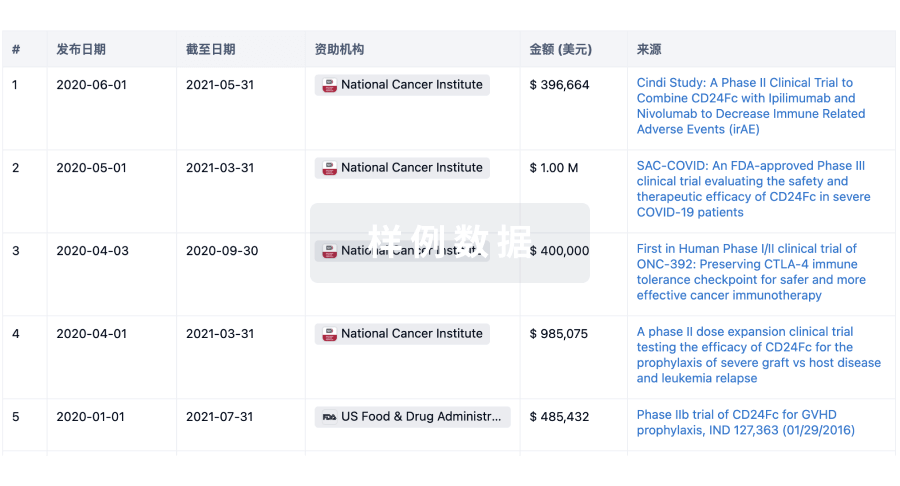
投资
深入了解从初创企业到成熟企业的最新公司投资动态。
登录
或
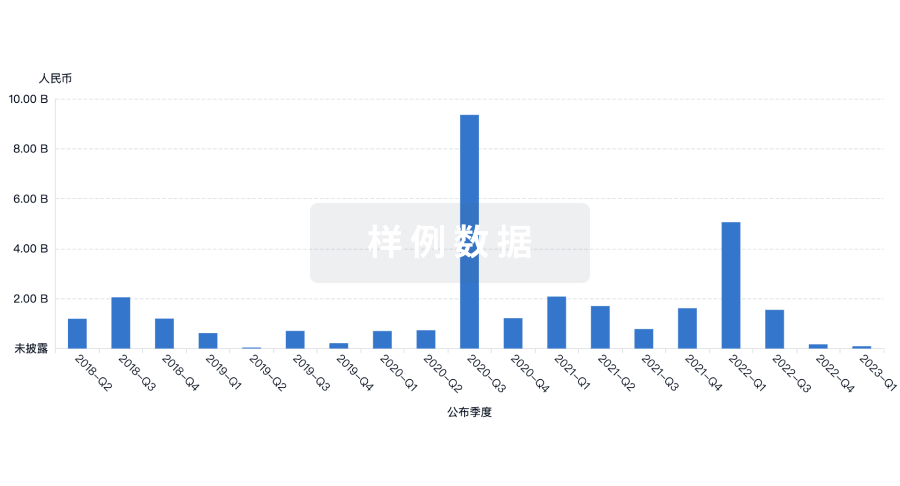
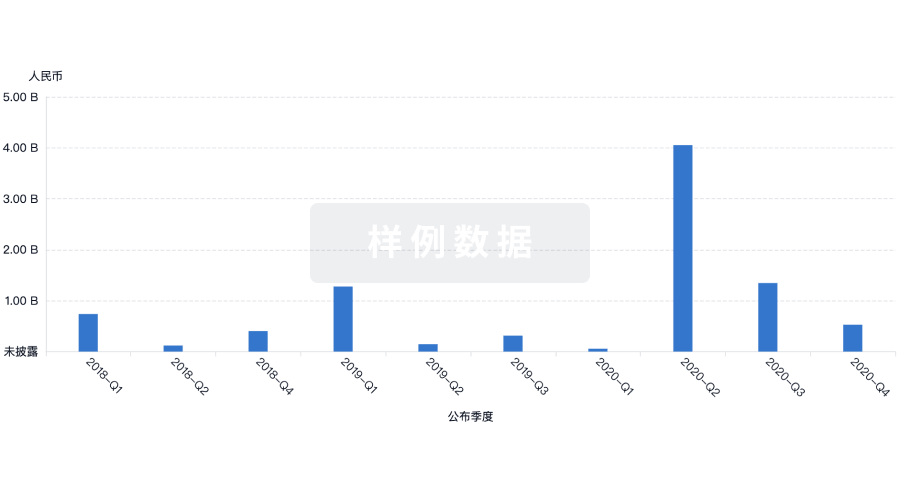
融资
发掘融资趋势以验证和推进您的投资机会。
登录
或
提出任何生物医药研究问题
让每一步生物医药决策都精准制胜
基于十亿级生物数据与全球情报的精准 AI,赋能早期药物发现
立即开始免费试用!
智慧芽新药情报库是智慧芽专为生命科学人士构建的基于AI的创新药情报平台,助您全方位提升您的研发与决策效率。
立即接入生物医药数据包
智慧芽新药库数据也通过智慧芽开放平台,以MCP或API服务形式对外开放。立即使用我们的MCP服务定制您的LLM智能体。
生物序列数据库
生物药研发创新
免费使用
化学结构数据库
小分子化药研发创新
免费使用