预约演示
更新于:2026-03-04

Korea Atomic Energy Research Institute
更新于:2026-03-04
概览
标签
肿瘤
呼吸系统疾病
感染
小分子化药
单克隆抗体
疾病领域得分
一眼洞穿机构专注的疾病领域

技术平台
公司药物应用最多的技术
靶点
公司最常开发的靶点
关联
靶点 |
作用机制 |
在研机构 |
原研机构 |
在研适应症 |
非在研适应症 |
最高研发阶段 |
首次获批国家/地区 |
首次获批日期 |
靶点 |
作用机制 |
在研机构 |
原研机构 |
在研适应症 |
非在研适应症 |
最高研发阶段 |
首次获批国家/地区 |
首次获批日期 |
靶点 |
作用机制 |
在研机构 |
原研机构 |
在研适应症 |
非在研适应症 |
最高研发阶段 |
首次获批国家/地区 |
首次获批日期 |
100 项与 Korea Atomic Energy Research Institute 相关的临床结果
登录后查看更多信息
登录后查看更多信息
2026-05-01MICROBIOLOGICAL RESEARCH
Genomic insights into high-yield carotenoid production from renewable resources in radiation-resistant Deinococcus yunweiensis KCTC3955 and its optimization through fed-batch fermentation
Article
作者: Hwang, Chi Young ; Cho, Eui-Sang ; Seo, Myung-Ji ; Jung, Jong-Hyun ; Jeong, Soyoung
The environmental impacts of climate change highlight the need for sustainable bioprocesses using low-cost feedstocks. Microbial fermentation offers an eco-friendly method to produce value-added compounds from renewable resources. Deinoxanthin, a unique carotenoid pigment produced by radiation-resistant bacteria, Deinococcus, has pharmaceutical and food industry applications. However, most microorganisms preferentially utilize glucose as their primary carbon source, limiting their capacity to ferment byproducts or waste-derived resources effectively. Here, we hypothesized that identifying microbial hosts capable of metabolizing a broader range of nutrients could improve fermentation efficiency. Through whole-genome sequencing, we identified that D. yunweiensis KCTC3955 possesses multiple nutrient transporters and is capable of efficiently utilizing glycerol and various nitrogen sources for carotenoid production. Using one-factor-at-a-time and response surface methodologies, we optimized conditions with glycerol, achieving a 4.45-fold increase in carotenoid yield. Notably, key biosynthetic genes (dxr, idi, ispF, ispH, and cruF) were highly up-regulated under mixed nutrient conditions. Fed-batch fermentation with mixed renewable resources such as glycerol and corn steep liquor reached 23.22 mg/L carotenoid production and 15.48 mg/L/day productivity after 36 h, representing over 11- and 15-fold improvements compared to non-optimized conditions. These results highlight D. yunweiensis KCTC3955 as a strong candidate for carotenoid production from mixed renewable substrates.
2026-03-04ANALYTICAL LETTERS
Characterization of Ancient Pottery Using X-Ray Absorption Spectroscopy, Neutron Activation Analysis, X-Ray Fluorescence, and Fourier-Transform Infrared Spectroscopy
作者: Cho, Hana ; N, Lakshmana Das ; Dasari, Kishore B. ; Sun, Gwang-Min ; Lee, Taegon
Anal. methods for inorganic elements play a crucial role in archeometric investigations by revealing the technol. behind ancient ceramic production and the provenance of raw materials.In this study, a combination of nuclear- and at.-based anal. methods, including neutron activation anal., X-ray fluorescence spectroscopy, and Fourier-transform IR (FT-IR) spectroscopy, was applied to characterize ancient ceramic samples.These techniques provide comprehensive insights into the chem. composition, firing temperature, and color mechanisms, aiding archaeol. interpretation.Furthermore, the atm. conditions during the firing process were identified by determining the iron phases (Fe2O3, Fe3O4, and FeO) using the X-ray absorption near-edge structure spectroscopy, which proved to be more reliable than the previous FT-IR spectroscopy-based approaches.The integration of these anal. results provides an enhanced understanding of ancient ceramic production technologies.
2026-03-01FOOD CHEMISTRY
Highly efficient raw starch degradation by a novel dual-function maltogenic debranching enzyme of the intermediate GH13_20 subfamily from Deinococcus radiodurans
Article
作者: Jeong, Soyoung ; Seo, Dong-Ho ; Park, Cheon-Seok ; Yang, Seul-Ki ; Yoo, Sang-Ho ; Jung, Jong-Hyun ; So, Yun-Sang ; Lim, Sangyong ; Kim, Ye-Jin ; Lee, Jooyoung
The neopullulanase subfamily comprises diverse enzymes involved in starch modification. In Deinococcus radiodurans, we newly identified a maltogenic debranching amylase (DrMD) that lacks the N-terminal domain and uniquely exhibits both pullulanase (EC 3.2.1.41) and maltogenic amylase (EC 3.2.1.133, EC 3.2.1.54) activities at a single active site. Notably, DrMD produced a higher amount of reducing sugars from various types of gelatinized raw starch, showing a 4-fold increase in efficiency over type I pullulanase. The HPSEC-RI analysis indicated that DrMD hydrolyzes the branch point of the large amylopectin fraction, followed by the cleavage of the amylose structure. With side chain length-dependent debranching activity and maltogenic amylase-like function, DrMD was effective in producing glucose (G1) and maltooligosaccharides ranging from G2 to G5. As a result, 86.97% of the raw starch fraction was degraded into low-molecular-weight glucans (<1 × 10⁴ Da). These findings highlight efficiency of DrMD in starch modification and its potential as a versatile enzyme for industrial starch processing.
100 项与 Korea Atomic Energy Research Institute 相关的药物交易
登录后查看更多信息
100 项与 Korea Atomic Energy Research Institute 相关的转化医学
登录后查看更多信息
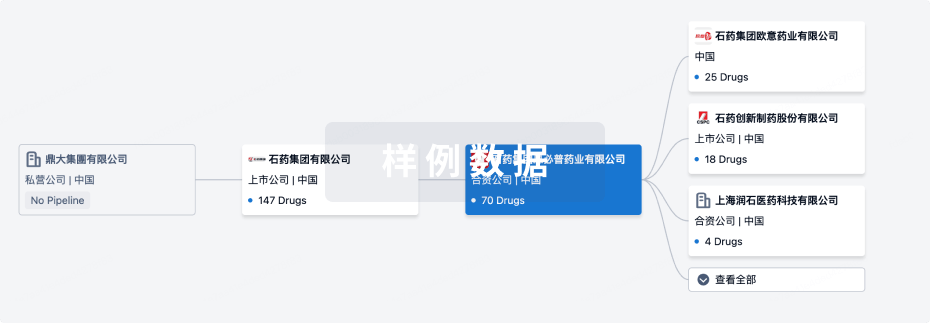
组织架构
使用我们的机构树数据加速您的研究。
登录
或
管线布局
2026年10月12日管线快照
管线布局中药物为当前组织机构及其子机构作为药物机构进行统计,早期临床1期并入临床1期,临床1/2期并入临床2期,临床2/3期并入临床3期
药物发现
1
5
临床前
登录后查看更多信息
当前项目
登录后查看更多信息
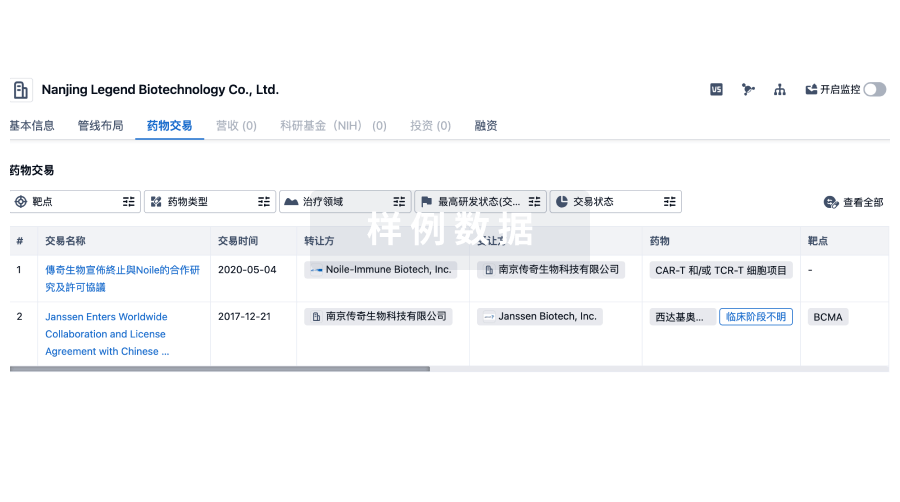
药物交易
使用我们的药物交易数据加速您的研究。
登录
或
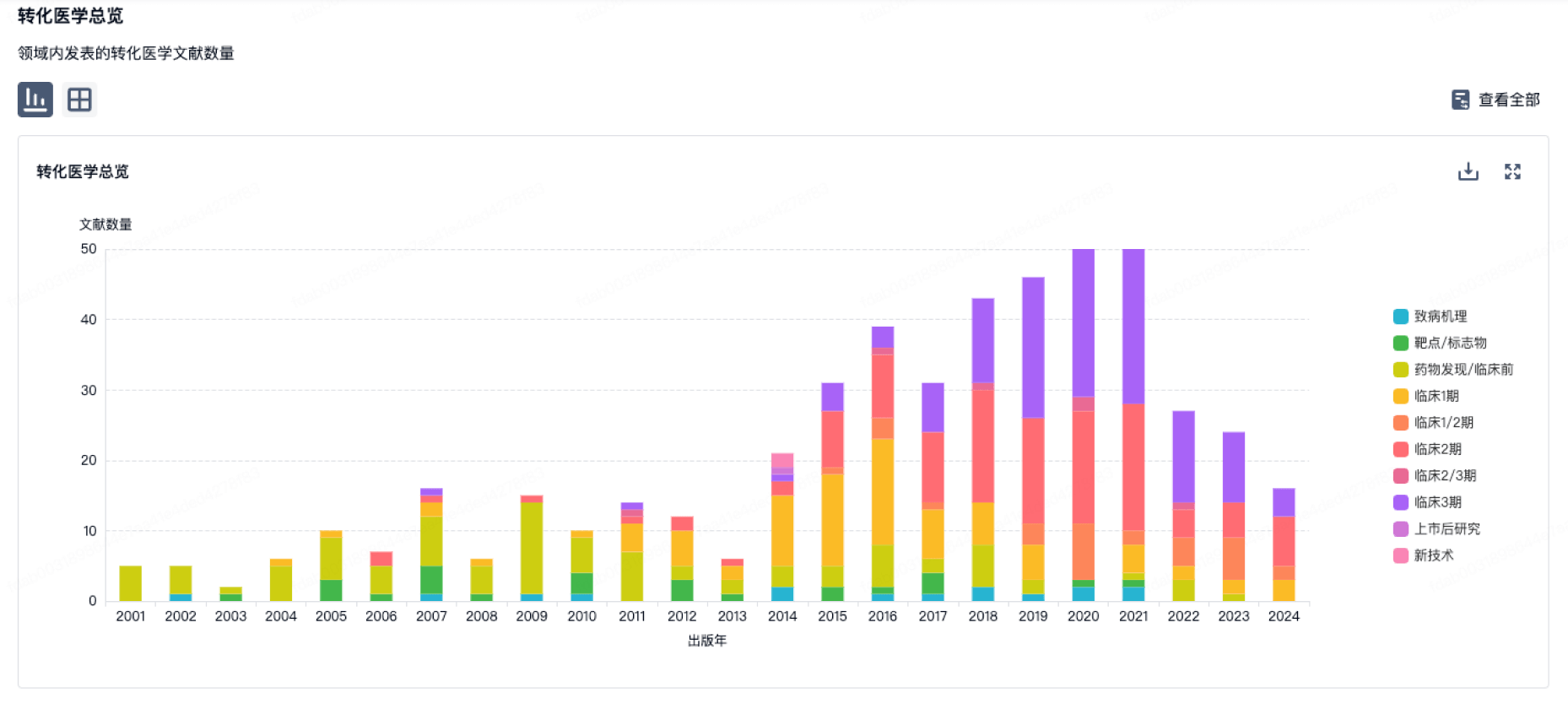
转化医学
使用我们的转化医学数据加速您的研究。
登录
或
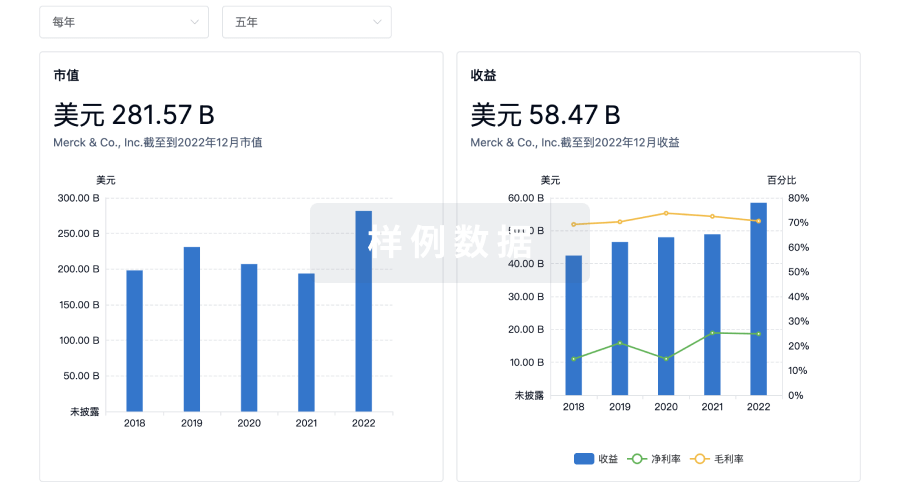
营收
使用 Synapse 探索超过 36 万个组织的财务状况。
登录
或
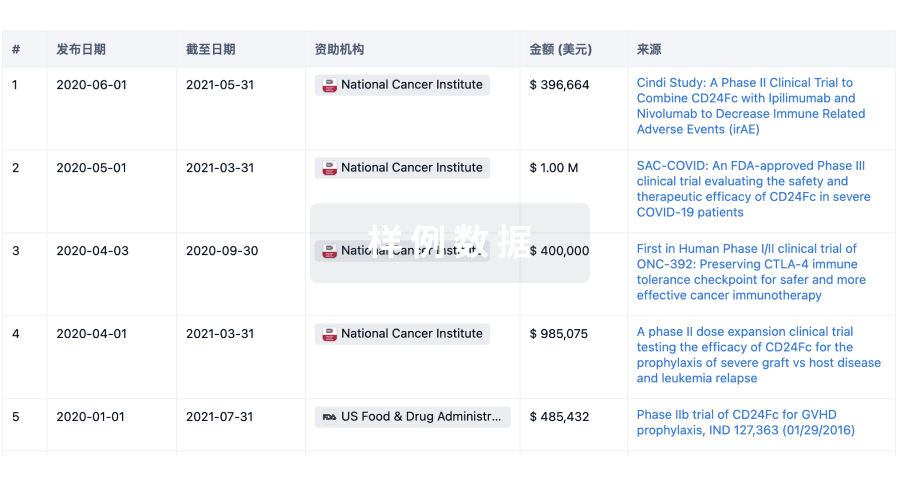
科研基金(NIH)
访问超过 200 万项资助和基金信息,以提升您的研究之旅。
登录
或
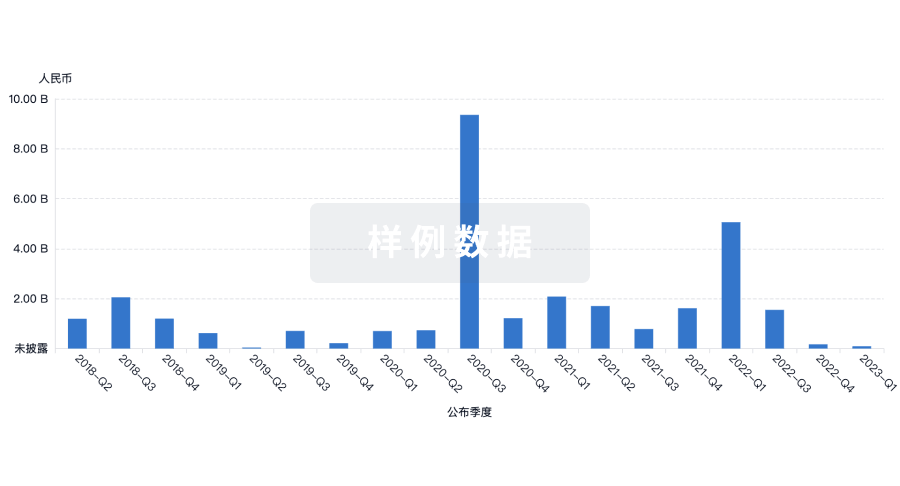
投资
深入了解从初创企业到成熟企业的最新公司投资动态。
登录
或
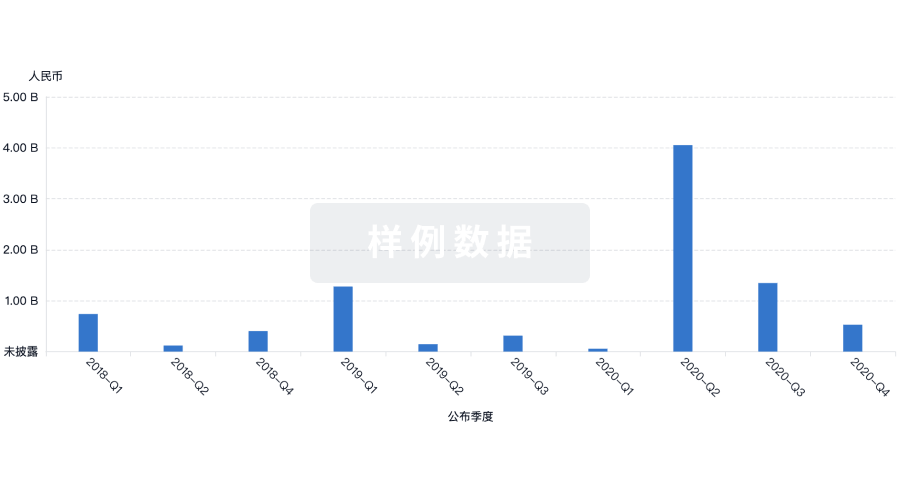
融资
发掘融资趋势以验证和推进您的投资机会。
登录
或
提出任何生物医药研究问题
让每一步生物医药决策都精准制胜
基于十亿级生物数据与全球情报的精准 AI,赋能早期药物发现
立即开始免费试用!
智慧芽新药情报库是智慧芽专为生命科学人士构建的基于AI的创新药情报平台,助您全方位提升您的研发与决策效率。
立即接入生物医药数据包
智慧芽新药库数据也通过智慧芽开放平台,以MCP或API服务形式对外开放。立即使用我们的MCP服务定制您的LLM智能体。
生物序列数据库
生物药研发创新
免费使用
化学结构数据库
小分子化药研发创新
免费使用