预约演示
更新于:2025-09-09

National Academy of Agricultural Sciences
更新于:2025-09-09
概览
关联
KCT0005676
Effect of diet-gut microbiota interactions on the human metabolome and health parameters in Korean adults
KCT0002831
Study on food metabolome and dietary biomarkers in blood and urine for the Korean population
KCT0002558
Human intervention study on dietary biomarkers measured in urine and blood for Korean traditional fermented foods
100 项与 National Academy of Agricultural Sciences 相关的临床结果
登录后查看更多信息
登录后查看更多信息
2025-07-01JOURNAL OF THERMAL BIOLOGY
Body mass and mate choice in bumblebees (Bombus terrestris) under climate heating
Article
作者: Lee, Kwang Sik ; Jin, Byung Rae ; Kim, Bo Yeon ; Woo, Ji Hyun ; Lee, Kyeong Yong ; Yoon, Hyung Joo ; Trewick, Steven A ; Park, Min Su
Climate warming influences the population size, body size, and diversity of bumblebees, important pollinators in agriculture and ecosystems. Increases in developmental temperatures due to climate warming lead to reduction in bumblebee body size, particularly among the worker caste, resulting in reduced pollination activity. However, how reduced body mass resulting from warm conditions influences mate choice between new queens and males remains unclear. This interaction has a major role in viability of subsequent generations, and we investigated male-male competition and queen mate choice in Bombus terrestris at optimal and elevated mating temperatures (23 °C and 32 °C, respectively). At both temperatures, large males had a significantly higher mating rate than small males. Small males exhibited slightly prolonged mating, while large males transferred more sperm to queens' spermathecae owing to their higher sperm count. In mating experiments with queens of different body weights, no significant difference was observed in the mating rate between large and small queens at 23 °C, but at 32 °C, large queens had a significantly higher mating rate than small queens, indicating strong male preferences for large queens. Additionally, the survival of mated queens after hibernation was positively correlated with their body weight prior to hibernation. These results demonstrate the changes in the mating preferences of queens and males under warm conditions, suggesting that mate choice shapes subsequent generations in such environments.
2025-06-03PLANT DISEASE
First Report of Apple Bitter Rot Caused by Colletotrichum orientalis in South Korea.
Article
作者: Hassan, Oliul ; Kim, Hyo-Suk ; Hong, Sung Kee ; Ryu, Hyunjoo ; Choi, Hyo-Won ; Ju, Hyeon-Yeong
Apple bitter rot is a significant fungal disease affecting apple (Malus domestica) orchards globally, including South Korea, and is known for causing severe yield losses and economic damage in apple orchards. In the summer of 2023, apple fruits (cv. Hongro) exhibiting typical bitter rot symptoms were collected from orchards in Jangsu, Korea (GPS: 35.625260° N, 127.516693° E). The Disease incidence ranged from 30% to 40% across 2 surveyed orchards. Infected apple fruits exhibited initial symptoms of small, circular, sunken lesions. Under humid conditions, pink to orange spore masses were visible on the lesion surface. Lesions were excised, surface-sterilized, and cultured on potato dextrose agar (PDA) to isolate the causal agent. Pure cultures were obtained by single-spore isolation. A total of four Colletotrichum isolates were obtained from the four affected fruits. Morphologically, seven-day old colonies on PDA (incubated at 25°C in the dark) were gray to pale pink with a cottony texture, and conidia were cylindrical to fusiform, measuring 12.6 - 18.6 × 3.9 - 6.3 μm (mean ± SD, 14.6 ± 1.4 × 5.1 ± 0.5 μm, n = 70), hyaline, and smooth-walled. Appressoria were dark brown, round to oval, measuring 7.0 - 12.9 × 5.5 - 10.2 μm (mean ± SD, 9.3 ± 1.3 × 6.9 ± 1.9 μm, n = 70). The morphological characteristics of the present isolates align with those of Colletotrichum species within the Colletotrichum acutatum species complex, including C. orientalis and C. fioriniae (Damm et al. 2012; Chen et al. 2022). The molecular identification involved PCR amplification and sequencing of the ITS, GAPDH, TUB, ACT, CHS-1, and HIS3 using ITS1/ITS4, GDF1/GDR1, T1/Bt2b, ACT 512F/ ACT-783R, CHS-79F/CHS-345R, and CYLH3F/CYLH3R, respectively (Damm et al. 2012). The resulting sequences were deposited in NCBI with GenBank accession numbers LC863958 to LC863977. The maximum likelihood tree was constructed based on the concatenated ITS, GAPDH, TUB, ACT, CHS-1, and HIS3 sequences using MEGA X software. The phylogenetic tree positioned three isolates within the C. orientalis clade and one isolate within the C. fioriniae clade. Pathogenicity tests were conducted by inoculating either wounded apple (a wound made with sterile pin) or un-wounded apple surface sterilized healthy fruits with the spore suspension (1 × 10⁶ conidia/mL) of the isolates. Control fruits were mock-inoculated with sterile water. Fruits were incubated in a plastic box at 25°C with high humidity. Symptoms identical to those observed in the field developed on inoculated fruits within 7 d, while control and un-wounded fruits remained symptomless. C. orientalis was re-isolated and identified from the lesions, fulfilling Koch's postulates. Seven healthy fruits (cv. Hongro) were used per treatment, and the experiment was repeated twice. In Korea, Colletotrichum species associated with apple bitter rot include C. gloeosporioides, C. aenigma, C. acutatum, C. fructicola, C. fioriniae, C. gloeosporioides, C. greavilleae, C. nymphaeae, and C. siamense (Oo et al. 2018; Kim et al. 2022; Lee et al. 2021; Nam et al. 2024). To the best of our knowledge, this is the first report of apple bitter rot caused by C. orientalis in South Korea. The outcome highlights the need for vigilant monitoring and help to develop integrated disease management practices to deal with C. orientalis.
2025-03-01ENVIRONMENTAL POLLUTION
Sub-lethal exposure to 2,4-Dichlorophenoxyacetic acid disrupts nursing and foraging behaviors in honey bees
Article
作者: Frunze, Olga ; Kwon, Hyung-Wook ; Kim, Kwang-Ho ; Kim, Hyunjee
A popular herbicide from the chlorophenoxy group, 2,4-Dichlorophenoxyacetic acid (2,4-D) effectively controls broadleaf weeds in agricultural environments. However, its application threatens honey bee habitats and has been implicated in colony collapse disorder (CCD) due to its toxic effects. While the general hazards of 2,4-D to honey bees are recognized, its specific impact on nursing and foraging behaviors remains poorly understood. This study quantified the lethal dose (LD50) of 2,4-D for honey bees across developmental stages, finding LD50 values of 104.1 μg/bee for newly emerged bees, 456.6 μg/bee for nurse bees, and 221.6 μg/bee for foragers. We further investigated sub-lethal effects on nursing and foraging, observing that exposure led to significant reductions in hypopharyngeal gland (HG) acini size, essential for brood care, and decreased expression of AmGr10, an amino acid receptor gene linked to nursing behavior. For foragers, sub-lethal 2,4-D exposure impaired gustatory responsiveness to key feeding stimuli, such as sucrose and glucose. This impairment corresponded with a decrease in AmGr1 expression, a taste receptor gene critical for resource detection. Additionally, affected foragers showed reduced olfactory learning and memory, likely due to decreased expression of the octopamine receptor AmOA1, essential for associative learning processes. These findings provide compelling evidence that sub-lethal abdominal exposure to 2,4-D disrupts both nursing and foraging behaviors by impairing physiological and cognitive functions, ultimately jeopardizing colony health and resilience.
100 项与 National Academy of Agricultural Sciences 相关的药物交易
登录后查看更多信息
100 项与 National Academy of Agricultural Sciences 相关的转化医学
登录后查看更多信息
组织架构
使用我们的机构树数据加速您的研究。
登录
或
管线布局
2026年02月07日管线快照
无数据报导
登录后保持更新
药物交易
使用我们的药物交易数据加速您的研究。
登录
或
转化医学
使用我们的转化医学数据加速您的研究。
登录
或
营收
使用 Synapse 探索超过 36 万个组织的财务状况。
登录
或
科研基金(NIH)
访问超过 200 万项资助和基金信息,以提升您的研究之旅。
登录
或
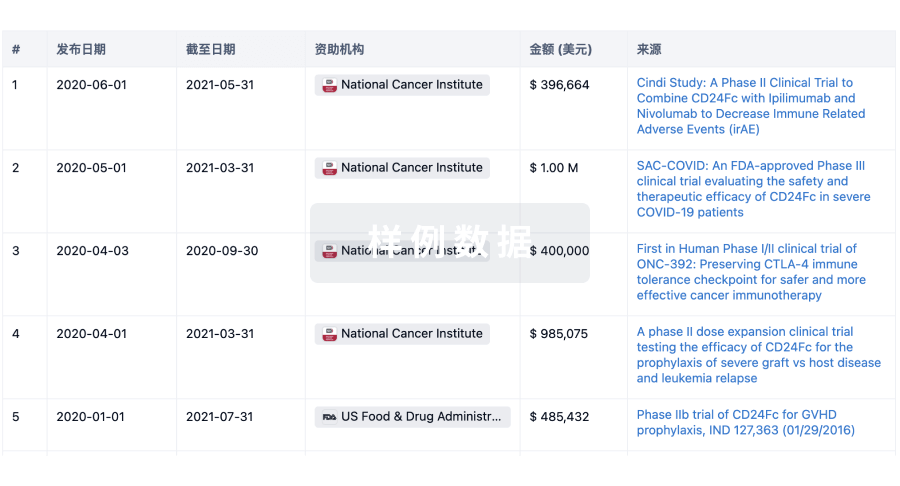
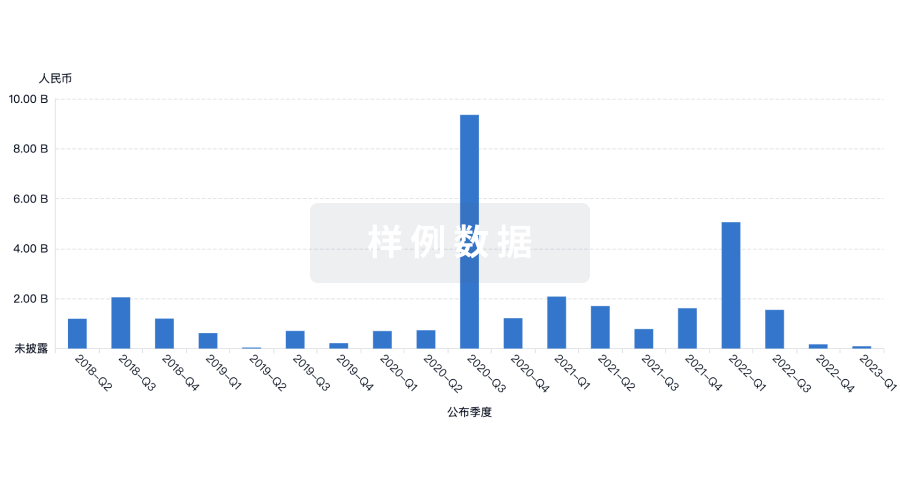
投资
深入了解从初创企业到成熟企业的最新公司投资动态。
登录
或
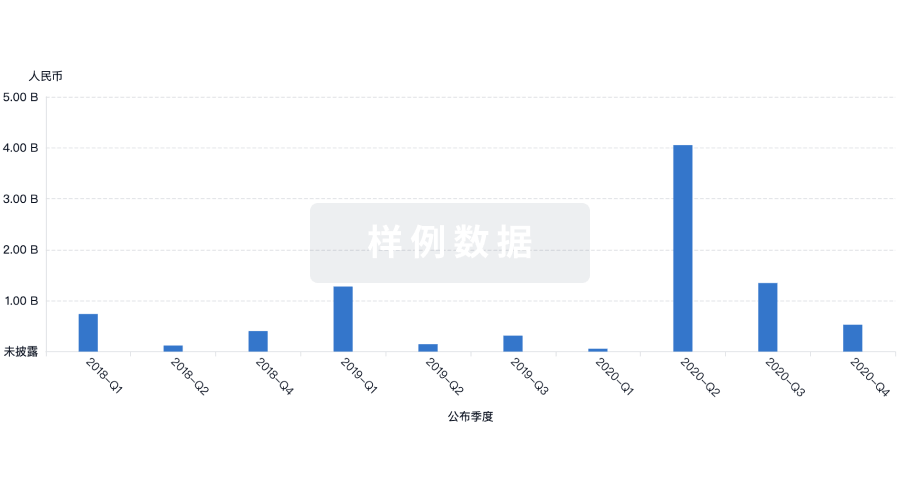
融资
发掘融资趋势以验证和推进您的投资机会。
登录
或
生物医药百科问答
全新生物医药AI Agent 覆盖科研全链路,让突破性发现快人一步
立即开始免费试用!
智慧芽新药情报库是智慧芽专为生命科学人士构建的基于AI的创新药情报平台,助您全方位提升您的研发与决策效率。
立即开始数据试用!
智慧芽新药库数据也通过智慧芽数据服务平台,以API或者数据包形式对外开放,助您更加充分利用智慧芽新药情报信息。
生物序列数据库
生物药研发创新
免费使用
化学结构数据库
小分子化药研发创新
免费使用