预约演示
更新于:2026-02-02

HistoSonics, Inc.
更新于:2026-02-02
概览
关联
NCT07214675
The Edison System for Treatment of Benign Prostatic Hyperplasia (BPH) Using Histotripsy
NCT07044362
Histotripsy Plus Chemotherapy for Advanced Colorectal Liver Metastasis: A Prospective, Single-Armed Trial

NCT06282809
The HistoSonics Edison™ System for Treatment of Pancreatic Adenocarcinoma Using Histotripsy
100 项与 HistoSonics, Inc. 相关的临床结果
登录后查看更多信息
登录后查看更多信息
2026-01-01ULTRASOUND IN MEDICINE AND BIOLOGY
Non-Invasive Pancreas Ablation Using Histotripsy: Pre-clinical Safety Study in an In Vivo Porcine Model
Article
作者: Ivester, Hannah ; Paul, Tamalika ; Trusiano, Brie ; Powar, Manali ; Stopek, Joshua ; Lopez, Victor ; Amaral, Joe ; Grumbir, Justin ; Youngs, Cora ; Ruger, Lauren ; Vlaisavljevich, Eli ; Edwards, Michael ; Gannon, Jessica ; Johnsen, Ellie ; Allen, Irving C ; Moore, Tyler ; Eden, Kristin ; Ziemlewicz, Timothy ; Coutermarsh-Ott, Sheryl ; Laeseke, Paul ; Clark, Sherrie ; Imran, Khan Mohammad ; Keith, Amber ; Vidal-Jove, Joan
Pancreatic cancer is an aggressive disease that is typically diagnosed late, leading to poor prognosis and overall survival. Even with advances in treatment, the 5-year survival rate for patients is only 12.5%. Histotripsy is a non-invasive, non-thermal and non-ionizing focused ultrasound treatment method that has recently been US FDA approved for treating liver tumors and is currently being investigated for other applications. This study expands on prior work investigating the feasibility of pancreas ablation using ultrasound-guided histotripsy in pigs. Here, we applied histotripsy to healthy pancreas in nine pigs using a therapy system with treatments guided by real-time ultrasound imaging. After treatment, subjects survived for 1 week (n = 3) or 5 weeks (n = 6). Damage to the pancreas and surrounding tissue was characterized using gross morphology, histological analysis, and computed tomography imaging. Treatment zones were visible on immediate post-procedure computed tomography, with lesion dimensions measuring 1.4 ± 0.6 cm, 1.2 ± 0.3 cm, and 1.5 ± 0.4 cm in the anteroposterior, transverse, and craniocaudal planes, aligning with the planned 1.5 cm-diameter spherical treatment volume. At 5 weeks, lesion size reduction was observed in three subjects, decreasing by 49%, 98%, and 100%, respectively. Histotripsy was well-tolerated, with successful pancreas targeting in six of nine subjects. Two cases of potential pancreatitis were noted. Three pigs experienced bowel damage due to poor ultrasound visualization, leading to off-target effects including septic peritonitis and gastrointestinal blockage. These findings suggest histotripsy is a viable approach for pancreatic treatment when the organ is clearly visualized and bubble clouds remain within the tissue.
2022-12-31International journal of hyperthermia : the official journal of European Society for Hyperthermic Oncology, North American Hyperthermia Group
First-in-man histotripsy of hepatic tumors: the THERESA trial, a feasibility study
Article
作者: Serres, Xavier ; Bolduan, Ryan ; Hall, Timothy ; Vidal-Jove, Joan ; Lee, Fred T. ; Miller, Ryan ; Amaral, Joseph ; Cannata, Jon ; Ziemlewicz, Timothy J. ; Kam, Yossi ; Xu, Zhen ; Velat, Manuela ; Vlaisavljevich, Eli ; Duryea, Alex ; Merino, Xavier
Rationale Current hepatic locoregional therapies are limited in terms of effectiveness and toxicities. Given promising pre-clinical results, a first in-human trial was designed to assess the technical effectiveness and safety profile of histotripsy, a noninvasive, non-thermal, non-ionizing focused ultrasound therapy that creates precise, predictable tissue destruction, in patients with primary and secondary liver tumors.Methods A multicenter phase I trial (Theresa Study) was performed in a single country with 8 weeks of planned follow-up. Eight of fourteen recruited patients were deemed eligible and enrolled in the study. Hepatic histotripsy, was performed with a prototype system (HistoSonics, Inc., Ann Arbor, MI). Eleven tumors were targeted in the 8 patients who all had unresectable end-stage multifocal liver tumors: colorectal liver metastases (CRLM) in 5 patients (7 tumors), breast cancer metastases in 1 (1 tumor), cholangiocarcinoma metastases in 1 (2 tumors), and hepatocellular carcinoma (HCC) in 1 (1 tumor). The primary endpoint was acute technical success, defined as creating a zone of tissue destruction per planned volume assessed by MRI 1-day post-procedure. Safety (device-related adverse events) through 2 months was a secondary endpoint.Results The 8 patients had a median age of 60.4 years with an average targeted tumor diameter of 1.4 cm. The primary endpoint was achieved in all procedures. The secondary safety profile endpoint identified no device-related adverse events. Two patients experienced a continuous decline in tumor markers during the eight weeks following the procedure.Conclusions This first-in-human trial demonstrates that hepatic histotripsy effectively destroys liver tissue in a predictable manner, correlating very well with the planned histotripsy volume, and has a high safety profile without any device-related adverse events. Based on these results, the need for more definitive clinical trials is warranted. Trial Registration: Study to Evaluate VORTX Rx (Theresa). NCT03741088. https://clinicaltrials.gov/ct2/show/NCT03741088 KEY POINTSHistotripsy, a new noninvasive, non-thermal, non-ionizing focused ultrasound therapy, safely created a zone of tissue destruction in the liver that correlated very well with the pre-defined planned tissue destruction volume.In this first human trial histotripsy was well tolerated with no histotripsy device-related adverse events and its primary endpoint of acute technical success was achieved in all 8 enrolled patients with primary or secondary liver tumors.This new locoregional therapy for patients with liver tumors is safe and effective, warranting further trials.
2022-10-01IEEE transactions on ultrasonics, ferroelectrics, and frequency control
A Modular, Kerf-Minimizing Approach for Therapeutic Ultrasound Phased Array Construction
Article
作者: Sukovich, Jonathan R. ; Lundt, Jonathan E. ; Miller, Ryan M. ; Duryea, Alexander P. ; Stocker, Greyson E. ; Xu, Zhen ; Hall, Timothy L.
A novel method for fabricating a modular, kerf-minimizing histotripsy phased array was developed and tested. The method utilizes arbitrarily shaped elements, 3-D printing, water jet cutting, and a thin, 125- [Formula: see text] electrically insulating epoxy coating to maximize aperture utilization while allowing for replacement of individual transducer modules. The method was used to fabricate a 750-kHz truncated circular aperture array (165 mm ×234 mm) transducer with a focal length of 142 mm. The aperture was segmented into 260 arc-shaped modular elements, each approximately 11.5 mm ×11.5 mm, arranged in concentric rings. The resulting aperture utilization was 92%. The full-width-half-maximum (FWHM) focal zone of the array was measured to be 1.6 mm ×1.1 mm ×4.5 mm, and the FWHM electrical steering range was measured to be 38.5 mm ×33 mm 40 mm. The array was estimated to be capable of generating approximately 120-MPa peak negative pressure at the geometric focus. In addition, the array was used to ablate a 5-cm3 volume of tissue with electric focal steering.
2025-11-25
2025-11-07
临床3期IPO放射疗法抗体药物偶联物
100 项与 HistoSonics, Inc. 相关的药物交易
登录后查看更多信息
100 项与 HistoSonics, Inc. 相关的转化医学
登录后查看更多信息
组织架构
使用我们的机构树数据加速您的研究。
登录
或
管线布局
2026年02月08日管线快照
无数据报导
登录后保持更新
药物交易
使用我们的药物交易数据加速您的研究。
登录
或
转化医学
使用我们的转化医学数据加速您的研究。
登录
或
营收
使用 Synapse 探索超过 36 万个组织的财务状况。
登录
或
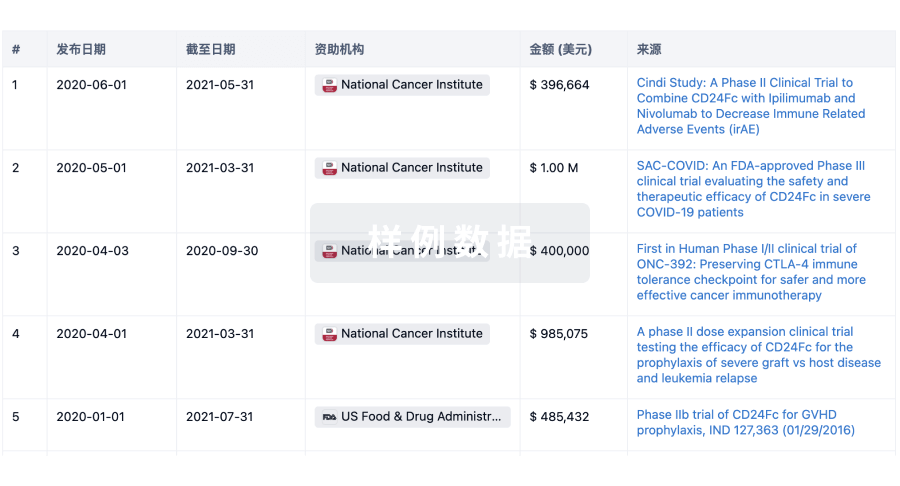
科研基金(NIH)
访问超过 200 万项资助和基金信息,以提升您的研究之旅。
登录
或
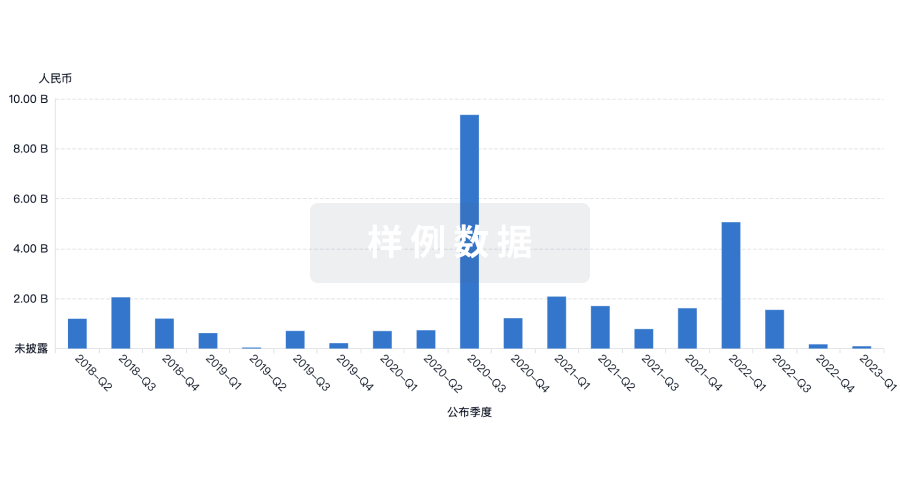
投资
深入了解从初创企业到成熟企业的最新公司投资动态。
登录
或
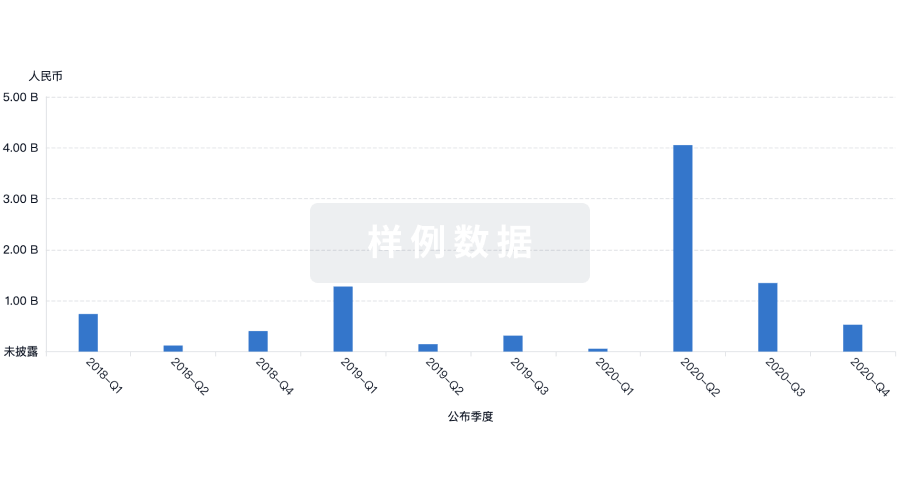
融资
发掘融资趋势以验证和推进您的投资机会。
登录
或
生物医药百科问答
全新生物医药AI Agent 覆盖科研全链路,让突破性发现快人一步
立即开始免费试用!
智慧芽新药情报库是智慧芽专为生命科学人士构建的基于AI的创新药情报平台,助您全方位提升您的研发与决策效率。
立即开始数据试用!
智慧芽新药库数据也通过智慧芽数据服务平台,以API或者数据包形式对外开放,助您更加充分利用智慧芽新药情报信息。
生物序列数据库
生物药研发创新
免费使用
化学结构数据库
小分子化药研发创新
免费使用