预约演示
更新于:2025-08-06

Hakim Sabzevari University
更新于:2025-08-06
概览
关联
IRCT20200107046035N14
Comparison of the effect of 8 week stability and neuromuscular exercises on functional movement, distribution of foot pressure and lower extremity alignment in people with foot pronation distortion syndrome
IRCT20240124060788N1
The effect of circular resistance training on ankle brachial index and fetoin A levels in hemodialysis patients
IRCT20200107046035N12
Comparison of the Effect of a Training Course in Deep and Shallow Water on Flat Foot, Balance, Lower Limb Strength, Fatigue and Performance in Neuropathic Diabetics
100 项与 Hakim Sabzevari University 相关的临床结果
登录后查看更多信息
登录后查看更多信息
2025-12-01RADIATION PHYSICS AND CHEMISTRY
Kerma factor assessment for newly introduced composite shields at different photon energies
作者: Nikfar, Kianoush ; Heidarloo, Nematollah ; Baghani, Hamid Reza ; Shamsabadi, Reza
Recently, some new composite shields have been introduced for radiation protection purposes.One of the useful parameters for dosimetry in radiation protection purposes is the Kerma factor which should be determined for each operational shield.The current study aims to evaluate and compare the Kerma factor relevant to these shields over a wide range of photon energies and compare them to those of the lead, as the reference shield for photon beam.Eleven composite materials including AT40Fe45Cu15, Polypropylene/CdO, Red-Clay/CdO, Silicon-based WO3, WO3-TeO2-B2O3, Ba2P2O7-based polymer, BaZrO3-based polymer, Epoxy Clay/PbO, Na2Si3O7/Nano-Ag, B2O3-PbO-ZnO (PBBZ1), and PDMS-WO3-Bi2O3 were regarded.The relevant Kerma factors over 0.001 MeV-20 MeV photon energy range were obtained by anal. and Monte Carlo-based approaches.The phys. reference data provided by NIST was used for the theor. approach, while MCNPX 2.6.0 Monte Carlo code was used for the second approach.The data were compared with those of the lead as the standard material for shielding against the photon beam.The obtained Kerma factors for studied composite shields can be used for radiation protection dosimetry using fluence to dose conversion technique.For all considered composite materials Kerma factors were lower than those of the lead.B2O3-PbO-ZnO (PBBZ1) showed the closest Kerma factors to the lead.On the other hand, the min. Kerma factors belonged to PDMS-WO3-Bi2O3.There was a good agreement between the results of anal. approach and Monte Carlo technique in Kerma factor evaluation where the differences never exceeded 3 %.From the results, it can be concluded that none of the studied composite shields show inferior performance with respect to the lead in protection against photon beam.On the other hand, these shields have some advantages over the lead including light weight, low cost, easy production, nontoxic nature, etc.Among the considered composite materials B2O3-PbO-ZnO (PBBZ1) showed the maximum Kerma factors values which indicated the best performance in shielding against photon beam.The desirable accordance between the anal. and Monte Carlo results indicates the reliable applicability of the Monte Carlo technique in evaluating the photon shields Kerma factor.
2025-11-01APPLIED THERMAL ENGINEERING
Techno-economic-environmental assessment of hydrogen blending in an urban natural gas network
作者: Gholizadeh, Mohammad ; Deymi-Dashtebayaz, Mahdi ; Sami, Sourena
The limited availability of natural gas (NG) and its associated emissions raise concerns about meeting residential energy demand.This work investigates the feasibility of hydrogen blending (HB) in a specified urban NG network from energy, economic, and environmental perspectives.First, the impact of 1-20 % volumetric hydrogen blending on gas composition and thermophys. properties is analyzed.The TOPSIS decision-making method then determines the optimal HB percentage for cold and hot months.Finally, dynamic network parameters-including volumetric flow, energy contribution, hydrogen production power requirements, efficiencies, CO2 emissions, and costs-are evaluated based on the optimal HB percentages.Results illustrated that optimal HB levels of 12 % in winter and 13 % in summer (totaling 23024 m3 of hydrogen annually) could save 7044 m3 of NG.This integration required 93.4 MWh of PEM electrolyzer power to supply 70 MWh of hydrogen energy to end users annually (4.34 % of the total natural gas demand), while reducing CO2 emissions by 13 tons.However, economic anal. showed that annual expenses were four times higher than revenues, with grid electricity purchasing costs being the most significant expense.Finally, to deliver the blended natural gas with hydrogen to end users with the same energy content as pure NG, an addnl. 27.2 % annual cost was incurred, resulting in a levelized cost of energy (LCOE) of 54.7 $/MWh.
2025-11-01APPLIED RADIATION AND ISOTOPES
Impact of silver nanoparticle impurity on improving LiF:Mg, Ti thermoluminescence response
Article
作者: Koushki, Ehsan ; Baghani, Hamid Reza ; Robatjazi, Mostafa ; Goli, Marzieh
Thermoluminescence dosimeters (TLDs) are widely used for radiation dose measurement in various applications, including radiation protection, radiotherapy, and diagnostic radiology. Therefore, efforts to improve TLD response and reduce uncertainty in measurements are highly valuable. This study aims to evaluate the effect of adding silver (Ag) nanoparticles to LiF:Mg,Ti TLD in terms of their structural characteristics, thermoluminescence (TL) properties, and dosimetric performance. The TLD samples were first synthesized, and Ag nanoparticles were subsequently incorporated as a third impurity. Both prepared samples (with and without Ag nanoparticles) were irradiated with predefined dose levels of 6 MV photons and corresponding glow curves and dose-response curves were compared. XRD, FESEM, and EDS analyses confirmed the proper formation of the LiF TLD structure. The presence of Ag nanoparticles was verified without any alteration in the overall crystalline structure of LiF. The obtained elemental correction coefficient (ECC) values were close to unity, indicating a nearly uniform distribution of impurities in the LiF structure. TLD glow curve at the same dose level enhanced when Ag nanoparticles were added to the TLD. Furthermore, the dose-response curve improved in the presence of Ag nanoparticles. Based on the results, it can be concluded that incorporating Ag nanoparticles into LiF:Mg,Ti enhances its thermoluminescence response and sensitivity.
100 项与 Hakim Sabzevari University 相关的药物交易
登录后查看更多信息
100 项与 Hakim Sabzevari University 相关的转化医学
登录后查看更多信息
组织架构
使用我们的机构树数据加速您的研究。
登录
或
管线布局
2026年02月08日管线快照
无数据报导
登录后保持更新
药物交易
使用我们的药物交易数据加速您的研究。
登录
或
转化医学
使用我们的转化医学数据加速您的研究。
登录
或
营收
使用 Synapse 探索超过 36 万个组织的财务状况。
登录
或
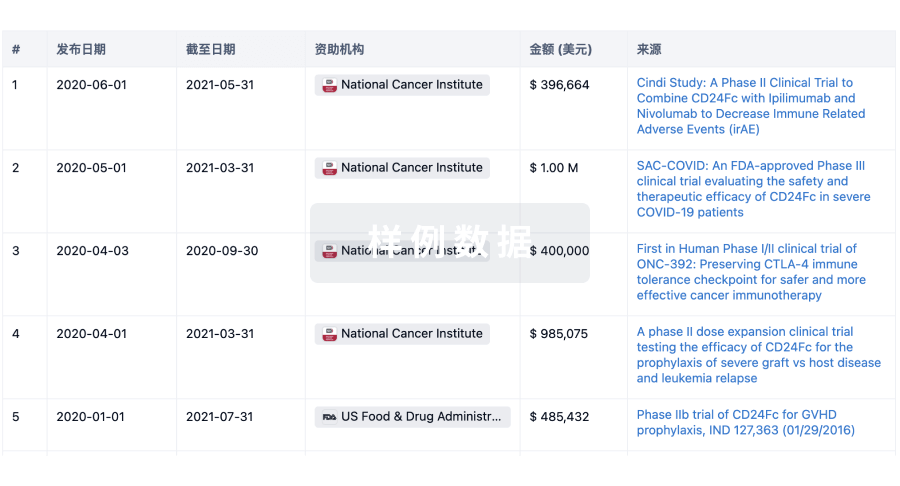
科研基金(NIH)
访问超过 200 万项资助和基金信息,以提升您的研究之旅。
登录
或
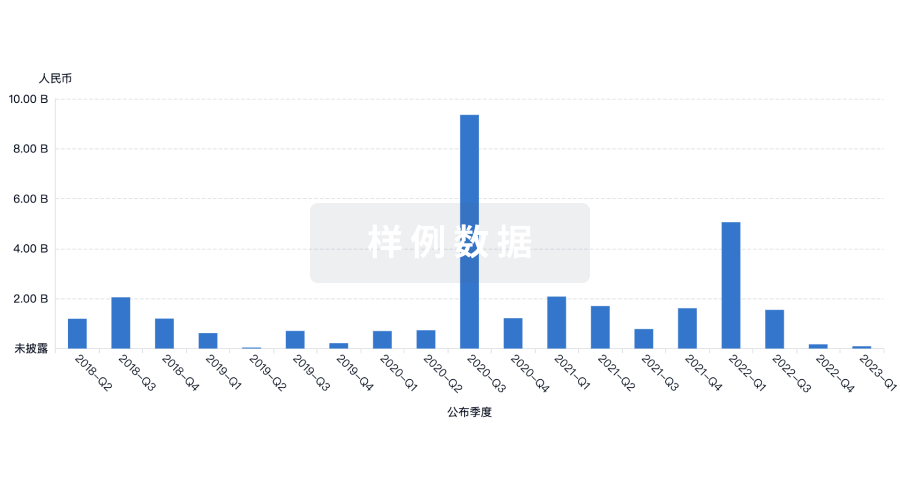
投资
深入了解从初创企业到成熟企业的最新公司投资动态。
登录
或
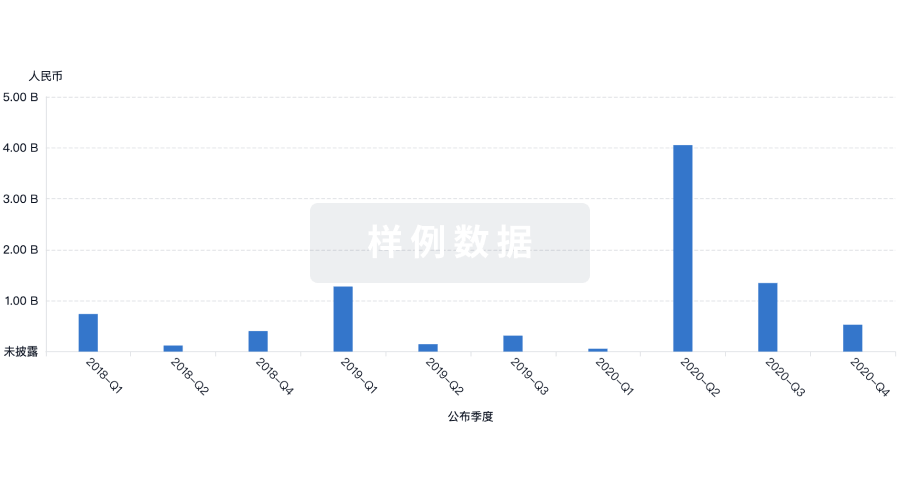
融资
发掘融资趋势以验证和推进您的投资机会。
登录
或
生物医药百科问答
全新生物医药AI Agent 覆盖科研全链路,让突破性发现快人一步
立即开始免费试用!
智慧芽新药情报库是智慧芽专为生命科学人士构建的基于AI的创新药情报平台,助您全方位提升您的研发与决策效率。
立即开始数据试用!
智慧芽新药库数据也通过智慧芽数据服务平台,以API或者数据包形式对外开放,助您更加充分利用智慧芽新药情报信息。
生物序列数据库
生物药研发创新
免费使用
化学结构数据库
小分子化药研发创新
免费使用