预约演示
更新于:2026-03-20

Instituto de Tecnologia do Paraná
更新于:2026-03-20
概览
关联
NCT07305623
Phase III Randomized Clinical Trial on the Use of a Bone Bioengineering Kit With Stem Cells Versus Autogenous Iliac Crest Graft for Alveolar Cleft Repair in Patients With Cleft Lip and Palate
RBR-72bg24
Technical feasibility studies for the diagnosis of Covid-19 by rapid non-invasive test
100 项与 Instituto de Tecnologia do Paraná 相关的临床结果
登录后查看更多信息
登录后查看更多信息
2026-01-02Tissue Barriers
Advanced 3D-Printed hydrogel dressings incorporating platelet-rich plasma for accelerated skin repair
Article
作者: Guarita-Souza, Luiz Cesar ; Francisco, Julio Cesar ; Correa Cunha, Ricardo ; de Almeida Barbosa, Carlos ; Fernandes, Beatriz Luci ; Fernanda Villaça Koch, Maria ; Kremer Gamba, Luize ; Andre Cardoso, Marco ; Simeoni, Rossana Baggio
The restoration of cutaneous barrier function following deep skin injury remains a critical challenge in regenerative medicine. In this study, we developed a semi-occlusive wound dressing by combining sodium alginate hydrogel with platelet-rich plasma (PRP), using 3D bioprinting technology to ensure structural precision and consistent bioactive distribution. This hybrid system was engineered to support tissue repair by enhancing re-epithelialization, stimulating angiogenesis, and promoting organized extracellular matrix remodeling. In vivo experiments using full-thickness skin wounds in mice revealed that the PRP enriched dressings accelerated wound contraction and epithelial closure, especially during the early stages of healing. Histological analyses showed increased formation of capillary-like structures, a shift toward type I collagen dominance, and reduced inflammation in PRP treated groups. These effects point to a more mature and functional regenerative process. Importantly, the combination of PRP with a bioprinted hydrogel scaffold not only facilitated structural recovery but also contributed to restoring the physiological integrity of the skin barrier. This approach offers a low-cost and adaptable platform with strong translational potential for the treatment of complex skin wounds.
2025-03-11ACS Omega
Integrated Bioinformatics Analysis for Target Identification and Evaluation of Recombinant Protein as an Antigen for Intradermal Skin Test in Bovine Tuberculosis Diagnosis
Article
作者: Kremer, Frederico Schmitt ; Soccol, Carlos Ricardo ; Pacce, Violetta Dias ; Vedova-Costa, Jean Michel Dela ; Thomaz-Soccol, Vanete ; dos Santos, Aline Cristina ; Guimarães, Amanda Munari ; Ferreira, Gabriela Nascimento ; Dellagostin, Odir Antônio
Bovine tuberculosis (bTB) is a respiratory disease caused by Mycobacterium bovis, posing a significant threat to animal health and the livestock industry. Current control strategies for bTB rely on diagnostic tests and slaughter policies. However, the limitations of existing diagnostic methods, which depend on PPD antigens, necessitate the exploration of alternative antigens to enhance the accuracy and reliability of bTB diagnosis. This study aimed to identify, produce, and evaluate novel antigens for use in the intradermal skin test for bTB diagnosis. A pangenome analysis of four Mycobacterium species identified 12 unique genes specific to M. bovis SP38. Further integrated bioinformatic analysis revealed 224 genomic islands associated with virulence and pathogenesis. Among these, a highly antigenic protein, termed HP28, was selected for in vivo testing. The recombinant HP28 protein (rHP28) was expressed in E. coli and assessed for its ability to induce intradermal skin reactions in guinea pigs. The rHP28 protein elicited a skin reaction of 6.6 mm at 72 h post-injection, whereas negative controls showed no reaction. This study presents a pipeline for the selection of antigens using integrated bioinformatic analysis to identify diagnostic targets that can effectively distinguish between sensitized and non-sensitized animals, offering a promising approach for improving bTB diagnostics.
2024-06-27JOURNAL OF MEDICAL MICROBIOLOGY
Detection of avian reovirus (ARV) by ELISA based on recombinant σB, σC and σNS full-length proteins and protein fragments
Article
作者: de Matos, Tatiana Reichert Assunção ; Pavoni, Daniela Parada ; de Souza, Claudemir ; Palka, Ana Paula Gori ; Fragoso, Stenio Perdigão
Introduction. Avian reovirus (ARV) is associated with arthritis/tenosynovitis and malabsorption syndrome in chickens. The σC and σB proteins, both exposed to the virus capsid, are highly immunogenic and could form the basis for diagnostic devices designed to assess the immunological status of the flock.Gap Statement. Commercial ARV ELISAs cannot distinguish between vaccinated and infected animals and might not detect circulating ARV strains.Aim. We aimed to develop a customized test to detect the circulating field ARV strains as well as distinguish between vaccinated and unvaccinated animals.Methodology. We developed ELISA assays based on recombinant (r) σB, σC and the nonstructural protein σNS and tested them using antisera of vaccinated and unvaccinated chickens as well as negative controls. Fragments of σB and σC proteins were also used to study regions that could be further exploited in diagnostic tests.Results. Vaccinated and unvaccinated birds were positive by commercial ELISA, with no difference in optical density values. In contrast, samples of unvaccinated animals showed lower absorbance in the rσB and rσC ELISA tests and higher absorbance in the rσNS ELISA test than the vaccinated animals. Negative control samples were negative in all tests. Fragmentation of σB and σC proteins showed that some regions can differentiate between vaccinated and unvaccinated animals. For example, σB amino acids 128–179 (σB-F4) and σC amino acids 121–165 (σC-F4) exhibited 85 and 95% positivity among samples of vaccinated animals but only 5% and zero positivity among samples of unvaccinated animals, respectively.Conclusion. These data suggest that unvaccinated birds might have been exposed to field strains of ARV. The reduction in absorbance in the recombinant tests possibly reflects an increased specificity of our test since unvaccinated samples showed less cross-reactivity with the vaccine proteins immobilized on ELISAs. The discrepant results obtained with the protein fragment tests between vaccinated and unvaccinated animals are discussed in light of the diversity between ARV strains.
2025-12-18
疫苗引进/卖出
2025-12-17
·金普发布
疫苗临床3期上市批准
100 项与 Instituto de Tecnologia do Paraná 相关的药物交易
登录后查看更多信息
100 项与 Instituto de Tecnologia do Paraná 相关的转化医学
登录后查看更多信息
组织架构
使用我们的机构树数据加速您的研究。
登录
或
管线布局
2026年10月17日管线快照
无数据报导
登录后保持更新
药物交易
使用我们的药物交易数据加速您的研究。
登录
或
转化医学
使用我们的转化医学数据加速您的研究。
登录
或
营收
使用 Synapse 探索超过 36 万个组织的财务状况。
登录
或
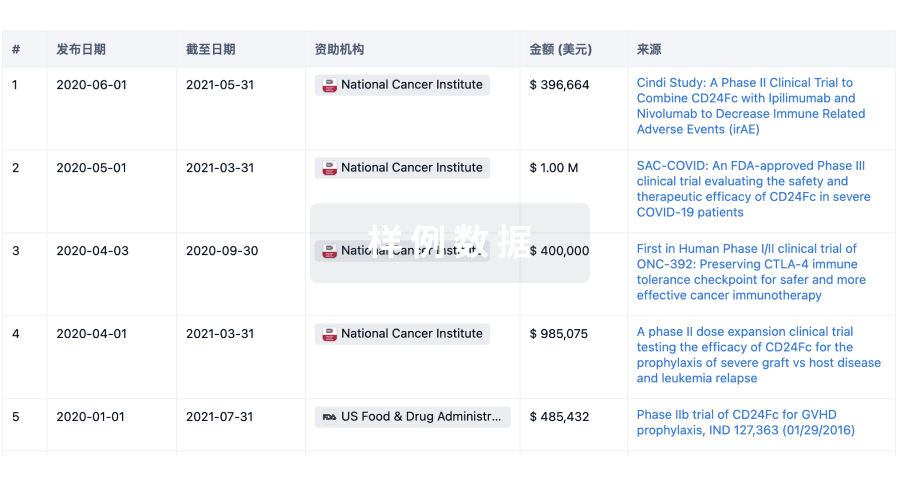
科研基金(NIH)
访问超过 200 万项资助和基金信息,以提升您的研究之旅。
登录
或
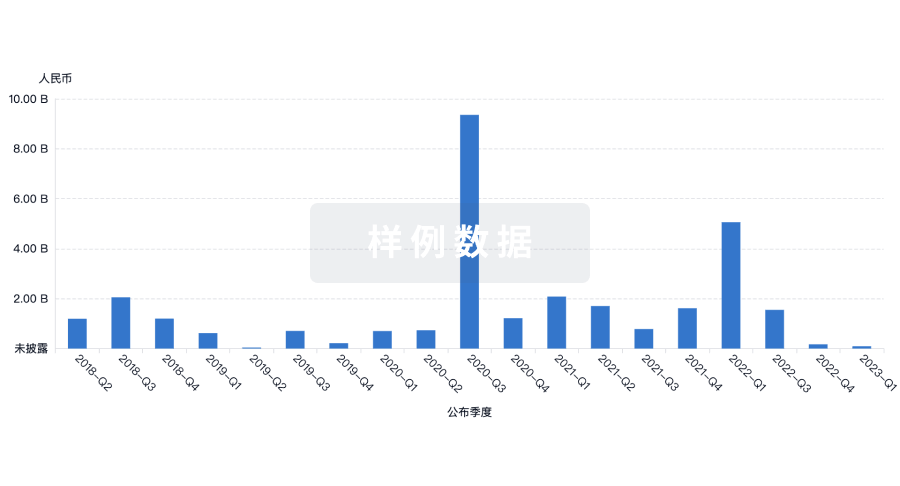
投资
深入了解从初创企业到成熟企业的最新公司投资动态。
登录
或
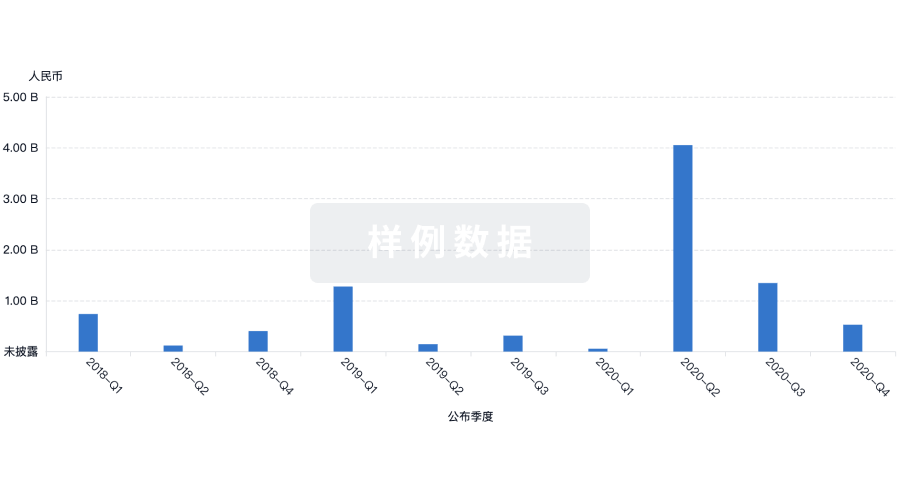
融资
发掘融资趋势以验证和推进您的投资机会。
登录
或
提出任何生物医药研究问题
让每一步生物医药决策都精准制胜
基于十亿级生物数据与全球情报的精准 AI,赋能早期药物发现
立即开始免费试用!
智慧芽新药情报库是智慧芽专为生命科学人士构建的基于AI的创新药情报平台,助您全方位提升您的研发与决策效率。
立即接入生物医药数据包
智慧芽新药库数据也通过智慧芽开放平台,以MCP或API服务形式对外开放。立即使用我们的MCP服务定制您的LLM智能体。
生物序列数据库
生物药研发创新
免费使用
化学结构数据库
小分子化药研发创新
免费使用