预约演示
更新于:2026-08-18

Chongqing University of Arts & Sciences
更新于:2026-08-18
概览
标签
肿瘤
血液及淋巴系统疾病
其他疾病
小分子化药
疾病领域得分
一眼洞穿机构专注的疾病领域

技术平台
公司药物应用最多的技术
靶点
公司最常开发的靶点
关联
靶点 |
作用机制 |
在研机构 |
原研机构 |
在研适应症 |
非在研适应症 |
最高研发阶段 |
首次获批国家/地区 |
首次获批日期 |
靶点 |
作用机制 |
在研机构 |
原研机构 |
在研适应症 |
非在研适应症 |
最高研发阶段 |
首次获批国家/地区 |
首次获批日期 |
CN119462416
专利挖掘靶点 |
作用机制 |
在研机构 |
原研机构 |
在研适应症 |
非在研适应症 |
最高研发阶段 |
首次获批国家/地区 |
首次获批日期 |
100 项与 重庆文理学院 相关的临床结果
登录后查看更多信息
登录后查看更多信息
2026-11-01INTERNATIONAL JOURNAL OF FOOD MICROBIOLOGY
Microbial antagonists for preserving pear quality: A review on biocontrol strategies against fungal spoilage
Review
作者: Liao, Qinhong ; Li, Zhen ; Huang, Xiaoya ; Wu, Jie ; Xiao, Xianmei ; Duan, Bin ; Li, Wenhua ; Sui, Yuan
Pears are rich in nutrients, flavorful, and have significant economic value. The global cultivation and acreage dedicated to the production of different pear varieties has been increasing. However, postharvest fungal decays, particularly those caused by Penicillium expansum, Botrytis cinerea, Alternaria alternata, Monilinia fructicola, and Rhizopus stolonifer, present a considerable challenge to the pear industry. These fungal postharvest pathogens cause substantial losses and mycotoxins during storage, transportation, local marketing and processing. Biological control represents a safe and sustainable strategy for the management of postharvest diseases and has received growing interest as an alternative to the use of current synthetic chemical fungicides. This review provides an overview of the research conducted on the major postharvest diseases of pears and the use of biocontrol agents (BCAs) in the management of these diseases. It also examines the mechanisms by which BCAs control fungal diseases in pears and the use of integrated management to increase the efficacy of biocontrol. The need for further research on the application of smart agriculture using advanced technologies to increase the reliability of biocontrol to manage postharvest diseases in pears is also discussed, highlighting smart agriculture as a promising new approach for improving the application of biological control strategies for disease management.
2026-09-01APPLIED ERGONOMICS
Research on a motion sickness prediction model for vehicle occupants based on vehicle dynamics parameter thresholds
Article
作者: Wu, Yingzhang ; Tang, Bangbei ; Luo, Bingjie ; Tang, Qiuyang
The ride comfort of autonomous vehicles is affected by motion sickness. This study quantifies the thresholds of vehicle dynamics parameters that induce motion sickness in both curved and straight-road scenarios, and constructs a predictive model. The results show that on S-shaped curves, the lateral acceleration thresholds (Δay) for moderate motion sickness (M2) and severe motion sickness (M3) are 0.398 m/s2 and 0.419 m/s2, respectively, while the Z-axis angular velocity thresholds (Gyroz_mean) are 6.876°/s and 8.022°/s. In straight-road scenarios, the Δay thresholds for M2 and M3 are 0.394 m/s2 and 0.648 m/s2, respectively, and the maximum longitudinal velocity (vx_max) reaches 13.961 m/s and 18.492 m/s. The proposed model achieves an accuracy of 86% for M2 and 82% for M3. Real-vehicle validation demonstrated that dynamically controlling vehicle motion states to maintain lateral acceleration, angular velocity, and longitudinal velocity below the specified thresholds reduced overall motion sickness risk by 39.7%.
2026-07-10ORGANIC LETTERS
Synthesis of N–BOH Benzazaborines via a Modular GBB-Based Strategy
Article
作者: Xue, Shi-Yu ; Cheng, Jian-Jun ; Li, Zhe-Xuan ; Xu, Chuan ; Li, Xue ; Cao, Chen-Hui ; Xu, Zhi-Gang ; Tan, Tian ; Chen, Yi-Ming
A green, one-pot Groebke-Blackburn-Bienaymé reaction is reported for the efficient synthesis of N-BOH benzazaborines. The products precipitate directly from methanol, enabling purification by simple filtration without chromatography. This scalable, operationally simple method uniquely combines synthetic efficiency with environmental sustainability, providing rapid access to boron-nitrogen scaffolds for medicinal chemistry.
2026-03-20
·吡咯生辉
100 项与 重庆文理学院 相关的药物交易
登录后查看更多信息
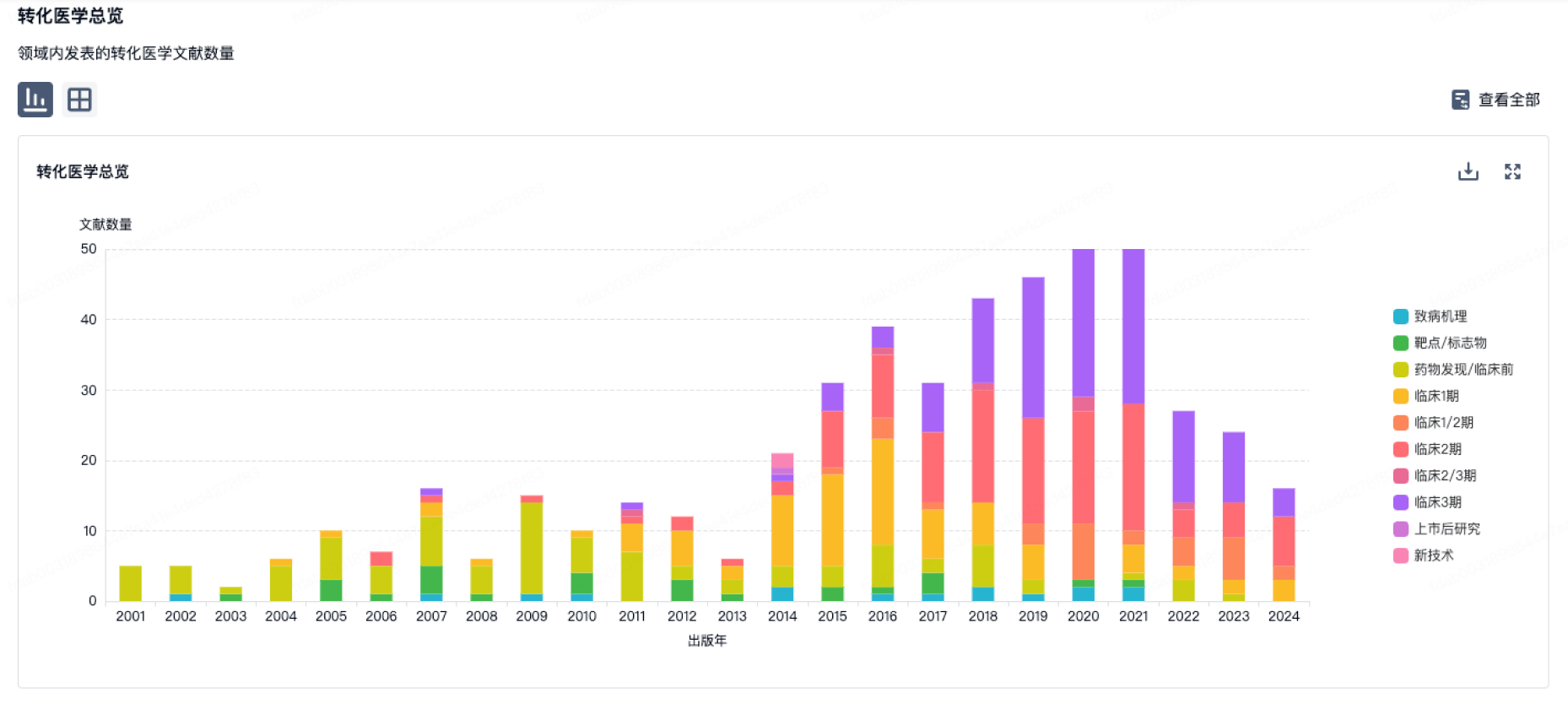
100 项与 重庆文理学院 相关的转化医学
登录后查看更多信息
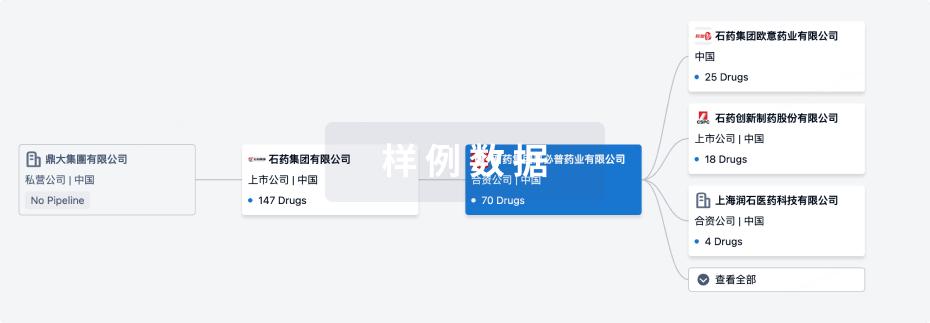
组织架构
使用我们的机构树数据加速您的研究。
登录
或
管线布局
2026年09月08日管线快照
管线布局中药物为当前组织机构及其子机构作为药物机构进行统计,早期临床1期并入临床1期,临床1/2期并入临床2期,临床2/3期并入临床3期
药物发现
3
2
临床前
其他
1
登录后查看更多信息
当前项目
登录后查看更多信息
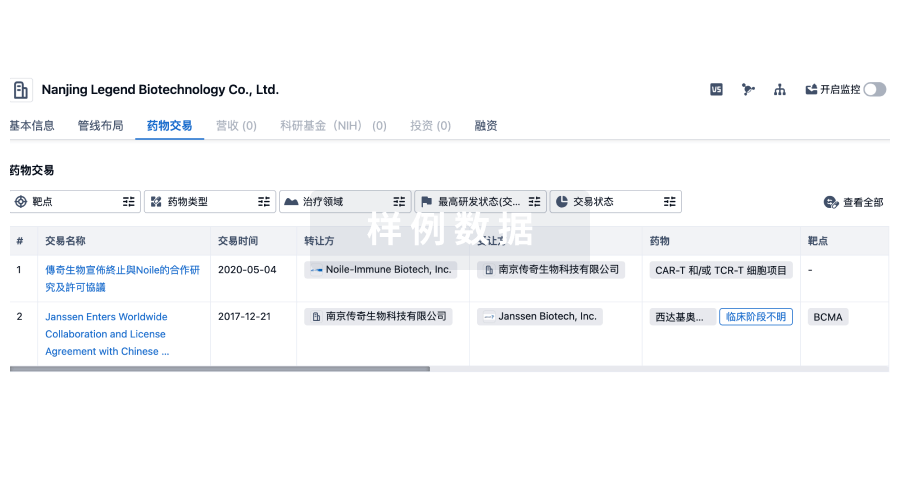
药物交易
使用我们的药物交易数据加速您的研究。
登录
或
转化医学
使用我们的转化医学数据加速您的研究。
登录
或
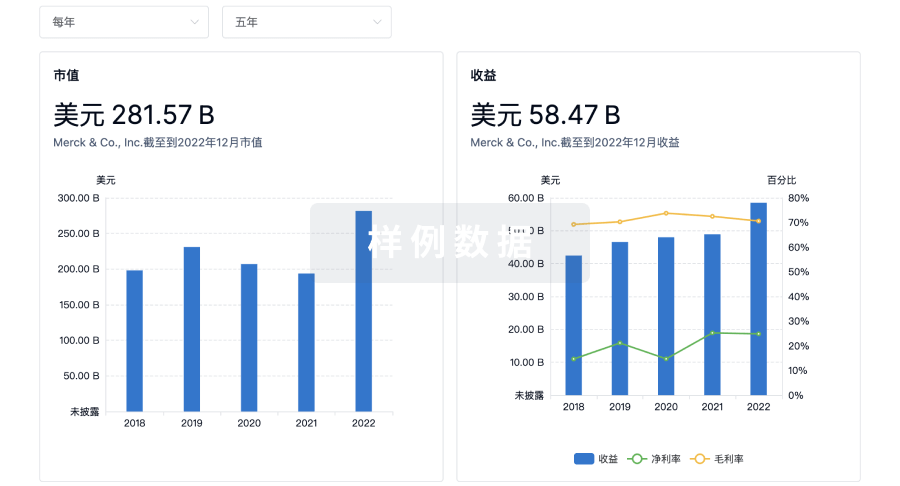
营收
使用 Synapse 探索超过 36 万个组织的财务状况。
登录
或
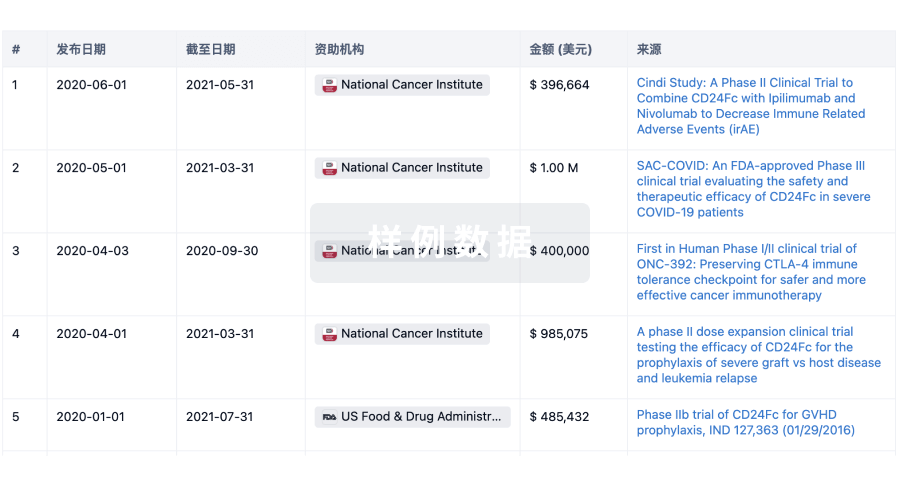
科研基金(NIH)
访问超过 200 万项资助和基金信息,以提升您的研究之旅。
登录
或
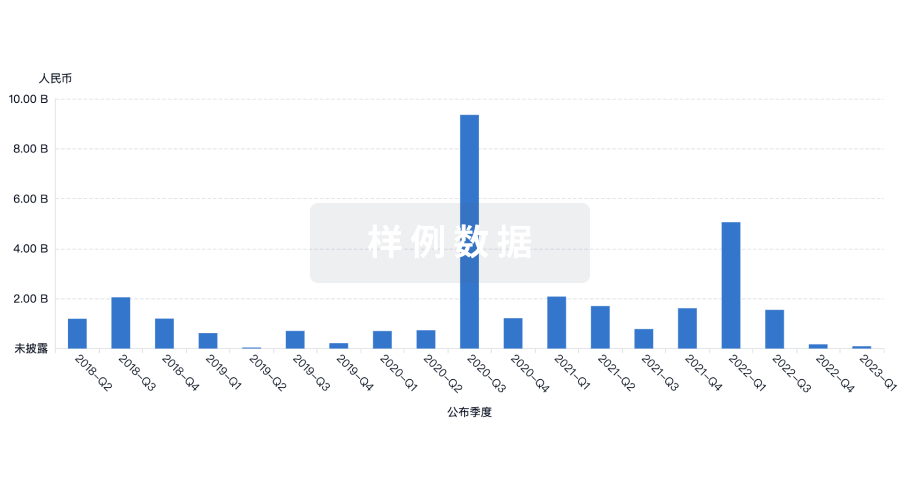
投资
深入了解从初创企业到成熟企业的最新公司投资动态。
登录
或
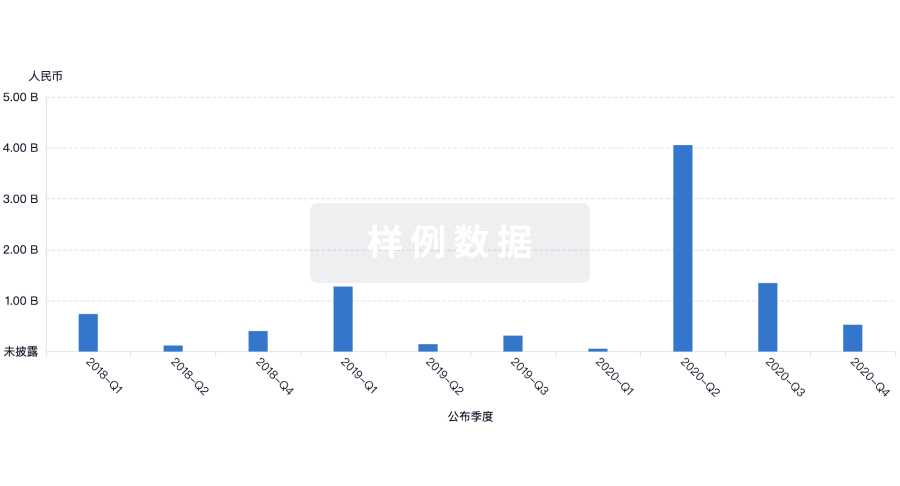
融资
发掘融资趋势以验证和推进您的投资机会。
登录
或
提出任何生物医药研究问题
让每一步生物医药决策都精准制胜
基于十亿级生物数据与全球情报的精准 AI,赋能早期药物发现
立即开始免费试用!
智慧芽新药情报库是智慧芽专为生命科学人士构建的基于AI的创新药情报平台,助您全方位提升您的研发与决策效率。
立即接入生物医药数据包
智慧芽新药库数据也通过智慧芽开放平台,以MCP或API服务形式对外开放。立即使用我们的MCP服务定制您的LLM智能体。
生物序列数据库
生物药研发创新
免费使用
化学结构数据库
小分子化药研发创新
免费使用