预约演示
更新于:2026-05-30

Sysmex Corp.
更新于:2026-05-30
概览
疾病领域得分
一眼洞穿机构专注的疾病领域
技术平台
公司药物应用最多的技术
靶点
公司最常开发的靶点

暂无数据
关联
靶点 |
作用机制 |
在研机构 |
原研机构 |
在研适应症 |
非在研适应症 |
最高研发阶段 |
首次获批国家/地区 |
首次获批日期 |

靶点 |
作用机制 |
在研机构 |
原研机构 |
在研适应症 |
非在研适应症 |
最高研发阶段 |
首次获批国家/地区 |
首次获批日期 |
JPRN-UMIN000055313
Feasibility study of Robot-Assisted Esophagectomy and Robot-Assisted Gastric Tube Reconstruction for the Patients with Locally Advanced Esophageal Carcinoma with the HinotoriTM Surgical Robot System - HINOTORI trial
JPRN-jRCT1042230164
Pilot study to investigate the possibility for partial automation using hinotori in endometrial cancer surgery
JPRN-jRCT1042230109
Pilot study to investigate the possibility for partial automation using hinotori in colon cancer surgery
100 项与 Sysmex Corp. 相关的临床结果
登录后查看更多信息
登录后查看更多信息
2026-05-01Breast Cancer
Integration of gene expression profiling and mutation analysis via RNA sequencing: transitioning the 95-gene classifier to a next-generation platform in early-stage HR+/HER2- breast cancer
Article
作者: Naoi, Yasuto ; Kato, Chikage ; Sota, Yoshiaki ; Kobayashi, Masaki ; Watanabe, Akira ; Sakaguchi, Koichi ; Motonari, Daitho ; Shimazu, Kenzo ; Nishida, Maiko ; Kitano, Sae ; Morita, Midori ; Saito, Yuria
2026-03-14BIOLOGICAL & PHARMACEUTICAL BULLETIN
Bortezomib Induces Apoptosis <i>via</i> Upregulation of Abhd4 in Peripheral Nerve Cells
Article
作者: Ijichi, Takeshi ; Yamamoto, Kazuhiro ; Itohara, Kotaro ; Yano, Ikuko ; Konishi, Yusuke ; Omura, Tomohiro ; Hayakawa, Ryunosuke ; Kitahiro, Yumi ; Nishiguchi, Hiroki
Bortezomib, a first-in-class proteasome inhibitor, is widely used to treat multiple myeloma and other hematological malignancies. Despite its therapeutic efficacy, bortezomib causes peripheral neuropathy (PN) in approximately 20-30% of patients, often leading to dose reduction or discontinuation. Preventive or therapeutic approaches to bortezomib-induced PN are currently unavailable, as its precise mechanism remains unclear. In this study, we compared the effects of bortezomib and the second-generation proteasome inhibitor carfilzomib on peripheral nerve cells to identify candidate molecules involved in PN development. Transcriptome profiling of differentiated F11 cells, a hybridoma of a rat embryonic dorsal root ganglion and mouse neuroblastoma cell line N18TG2, revealed that bortezomib selectively upregulated α/β-hydrolase containing domain 4 (Abhd4), whereas carfilzomib did not. This finding was confirmed by quantitative RT-PCR and immunoblotting, which demonstrated consistent increases in Abhd4 mRNA and protein levels following bortezomib treatment. Functional analysis further revealed that Abhd4 overexpression promoted early apoptosis, suggesting a mechanistic link between bortezomib-induced Abhd4 elevation and neuronal vulnerability. Therefore, these results suggest that Abhd4 represents a candidate molecular signature associated with bortezomib-induced PN. Although further in vivo validation is needed, these findings warrant further investigation of Abhd4 as a potential contributor to bortezomib-induced PN.
2026-03-01MOLECULAR THERAPY
Introducing arginine residues into scFv in CAR-T cells shows promising antitumor effects
Article
作者: Shiku, Hiroshi ; Fukunaga, Atsushi ; Atarashi, Yusuke ; Akahori, Yasushi ; Egashira, Yuriko ; Seo, Naohiro ; Fujiwara, Hiroshi ; Wang, Linan ; Maeta, Shingo ; Ejima, Daisuke
Current research investigating chimeric antigen receptor (CAR)-T cell therapeutics indicates that CAR properties other than intracellular signaling systems, such as high association rate constants and enhanced self-interaction of the antigen-binding domain (ABD), elicit enhanced therapeutic efficacy and are key factors for CAR-T candidates. However, rational strategies to achieve these features are to be established. To develop novel CAR-T cells with these characteristics, ABD was engineered by introducing several arginine residues into the light-chain framework region-3 of the single-chain fragment variable. The mutant CAR-T cells exhibited a higher cell-killing efficacy than that of wild-type cells and superior antitumor effects in mice, prolonged persistence in vivo, and decreased interferon-γ secretion. RNA sequencing revealed differential gene expression profiles between the mutant and wild-type CAR-T cells before and after antigen stimulation. In conclusion, we proposed a design strategy to generate CAR-T cells with high therapeutic efficacy by modulating CAR properties using an arginine cluster.
100 项与 Sysmex Corp. 相关的药物交易
登录后查看更多信息
100 项与 Sysmex Corp. 相关的转化医学
登录后查看更多信息
组织架构
使用我们的机构树数据加速您的研究。
登录
或
管线布局
2026年06月04日管线快照
管线布局中药物为当前组织机构及其子机构作为药物机构进行统计,早期临床1期并入临床1期,临床1/2期并入临床2期,临床2/3期并入临床3期
药物发现
2
1
其他
登录后查看更多信息
当前项目
登录后查看更多信息
药物交易
使用我们的药物交易数据加速您的研究。
登录
或
转化医学
使用我们的转化医学数据加速您的研究。
登录
或
营收
使用 Synapse 探索超过 36 万个组织的财务状况。
登录
或
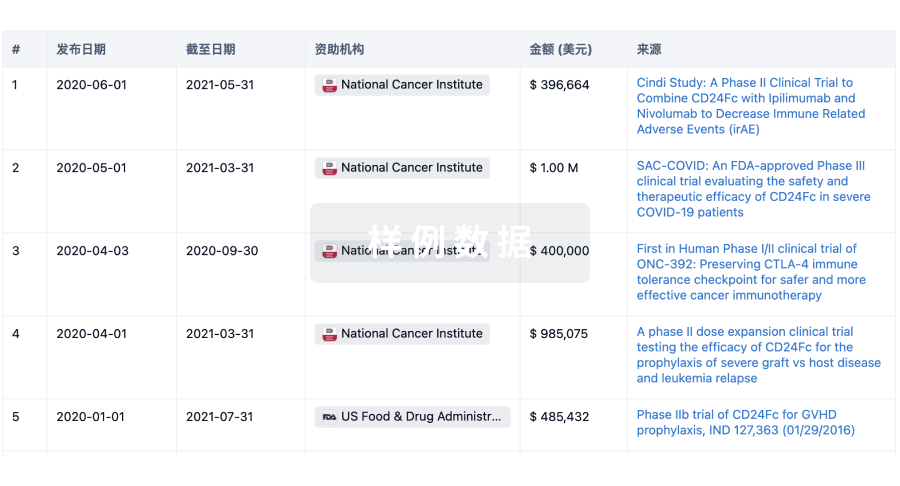
科研基金(NIH)
访问超过 200 万项资助和基金信息,以提升您的研究之旅。
登录
或
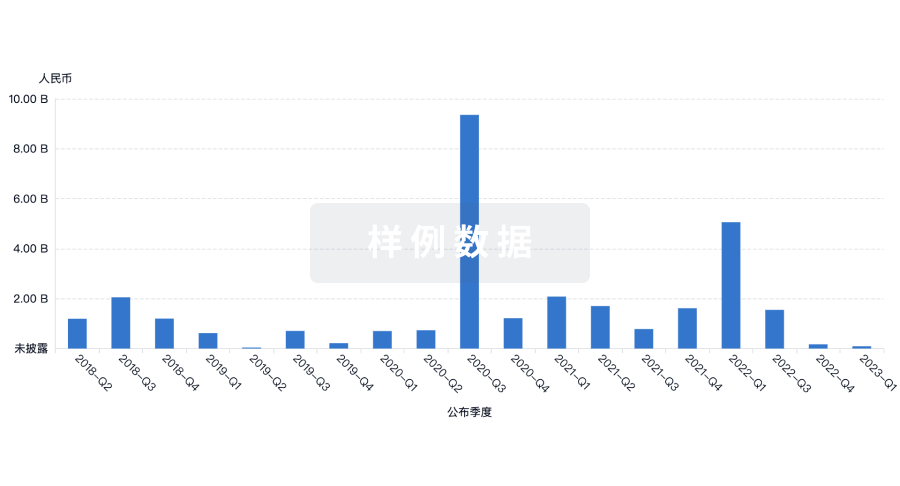
投资
深入了解从初创企业到成熟企业的最新公司投资动态。
登录
或
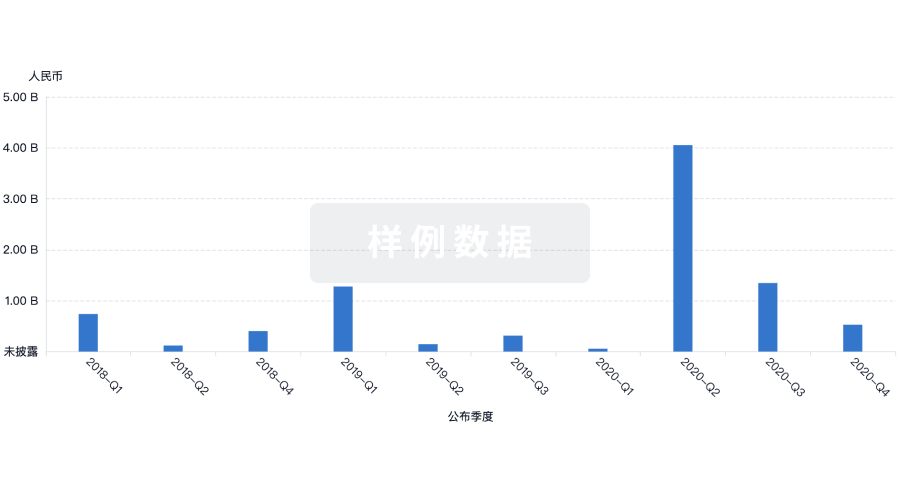
融资
发掘融资趋势以验证和推进您的投资机会。
登录
或
生物医药百科问答
全新生物医药AI Agent 覆盖科研全链路,让突破性发现快人一步
立即开始免费试用!
智慧芽新药情报库是智慧芽专为生命科学人士构建的基于AI的创新药情报平台,助您全方位提升您的研发与决策效率。
立即开始数据试用!
智慧芽新药库数据也通过智慧芽数据服务平台,以API或者数据包形式对外开放,助您更加充分利用智慧芽新药情报信息。
生物序列数据库
生物药研发创新
免费使用
化学结构数据库
小分子化药研发创新
免费使用