预约演示
更新于:2026-01-22

Shaoguan University
更新于:2026-01-22
概览
标签
消化系统疾病
其他疾病
免疫系统疾病
小分子化药
疾病领域得分
一眼洞穿机构专注的疾病领域
技术平台
公司药物应用最多的技术
靶点
公司最常开发的靶点

暂无数据
关联
CN117534641
专利挖掘靶点 |
作用机制 |
在研机构 |
原研机构 |
在研适应症 |
非在研适应症 |
最高研发阶段 |
首次获批国家/地区 |
首次获批日期 |
ChiCTR2500099936
A prospective cohort study of non-alcoholic fatty liver disease (NAFLD) after liver hepatectomy effects on Non-Alzheimer’s patients’ Dementia risks in NCCN guidelines for patient high-risk liver cancer disease analysis.
TCTR20221229001
Short Term Effects of Local Vibration to the Back Muscles on Recovery-related Parameters in College Football Athletes after Training
NCT04355910
Effects of Intermittent and Continuous Calorie Restriction on Body Weight and Metabolism in Adults With Nonalcoholic Fatty Liver Disease
100 项与 韶关学院 相关的临床结果
登录后查看更多信息
登录后查看更多信息
2026-01-01Journal of Environmental Sciences
Achieving “remediating while producing” on arsenic contaminated soil by constructing interplanting systems based on medicinal crops and Pteris vittata L․
Article
作者: Ying, Jidong ; Li, Huashou ; Chen, Yanjie ; Huang, Peiyi ; Qiu, Rongliang ; Chen, Weizhen ; Li, Miao
Industrial activities have caused widespread arsenic (As) contamination in soil and medicinal crops across southern Asia. This study constructed interplanting systems combing medicinal crops with Pteris vittata L., aiming to mitigate the risk of As exposure in medicinal crops, while simultaneously achieving ecological remediation of contaminated soil. The results revealed that interplanting with P. vittata significantly enhanced the yield of Gynostemma pentaphyllum by 31.90 % (P < 0.05) compared with monoculture systems. Under monoculture conditions, the As concentration in G. pentaphyllum leaves reached 2.34 mg/kg, exceeding the national food safety standard (GB2762-2017, 2 mg/kg). However, interplanting with P. vittata effectively reduced the As concentration in G. pentaphyllum leaves to 1.82 mg/kg. Furthermore, the interplanting of P. vittata with Rhus chinensis significantly inhibited As translocation from belowground to aboveground tissues in R. chinensis. Compared to monoculture, the stem biomass of P. vittata was significantly increased by 57.50 % and 70.32 % when interplanted with G. pentaphyllum and Cassia obtusifolia L. (P < 0.05). So the As enrichment of P. vittata was enhanced in interplanting systems, which is beneficial for the As removal from contaminated soil. The study demonstrated that interplanting primarily regulates plant As uptake through modifications of rhizosphere physicochemical properties and As bioavailability, especially for water-soluble As that is easily absorbed by plants. In conclusion, the interplanting models integrating medicinal crops and P. vittata can achieve the goal of "remediating while producing" in As-contaminated soil.
2026-01-01PHYTOCHEMISTRY
Euphebranes A−G: higher diterpenoids from the radix of Euphorbia ebracteolata
Article
作者: Huang, Dong ; Huang, Jia-Luo ; Chen, Xin ; Chen, Yun-Yun ; Chen, Jia-Qian ; Sun, Zhang-Hua ; Yuan, Tao ; Wu, Lei-Ming ; Tang, Gui-Hua ; Yuan, Fang-Yu ; Yin, Sheng ; Wu, Shu-Qi
Phytochemical investigation of roots of Euphorbia ebracteolata Hayata led to ten higher diterpenoids including seven undescribed ones (1-7) and three analogues (8-10), accompanied by four derivatives (7a and 9a-9c) obtained via chemical correlation. Notably, compound 1 represents a rare dinor-ent-isopimarane diterpenoid. Their structures were fully characterized using a combination of spectroscopic, ECD, chemical, and single-crystal X-ray diffraction means. Cytotoxicity screening suggested that the oxidized derivative of 7 (7a) displayed the most potent activity against non-small-cell lung cancer (NSCLC) cell line HCC827, comparable to the positive control, cisplatin. Mechanistic study revealed that 7a could arrest cell cycle at G1/S phase and induce apoptosis.
2026-01-01JOURNAL OF CONTROLLED RELEASE
Apoptotic-body-inspired nanoplatform targeting the lung-macrophage-mitochondrial axis for acute lung injury therapy
Article
作者: Zeng, Rong ; Tan, Baojin ; Zhang, Guanglin ; Yang, Weilin
Acute lung injury (ALI), a life-threatening inflammatory syndrome driven by macrophage polarization imbalance, triggers uncontrolled cytokine storms and alveolar-capillary barrier collapse. While macrophage-targeted immunomodulation holds therapeutic promise, current strategies suffer from imprecise cellular targeting and inadequate functional reprogramming. To address this, we developed an inhaled biomimetic apoptotic body-mimicking nanoplatform (CeCPT@PSL). Its phosphatidylserine-containing liposomal (PSL) shell replicates the "eat-me" signaling of apoptotic bodies to enable macrophage targeting and immunomodulation. Inspired by the organelle-regulating capacity of apoptotic cargo, the encapsulated synthetic mitochondrial-targeting nanozyme complexes (CeCPT) execute precision mitochondrial restitution through redox homeostasis restoration. This dual-pathway strategy achieves synergistic therapy by concurrently modulating macrophage function and repairing damaged mitochondria, thereby enhancing macrophage repolarization. In murine ALI models, inhaled CeCPT@PSL concurrently attenuated inflammatory cascades and resolved mitochondrial impairment via targeting lung-macrophage-mitochondrial axis, and restored pulmonary function. This bio-inspired multi-function platform establishes a heuristic strategy wherein artificial nanovesicles recapitulate cellular functions to resolve dysregulated pathological cascades, offering a promising therapeutic avenue for intractable inflammatory diseases.
100 项与 韶关学院 相关的药物交易
登录后查看更多信息
100 项与 韶关学院 相关的转化医学
登录后查看更多信息
组织架构
使用我们的机构树数据加速您的研究。
登录
或
管线布局
2026年02月08日管线快照
管线布局中药物为当前组织机构及其子机构作为药物机构进行统计,早期临床1期并入临床1期,临床1/2期并入临床2期,临床2/3期并入临床3期
药物发现
1
登录后查看更多信息
当前项目
登录后查看更多信息
药物交易
使用我们的药物交易数据加速您的研究。
登录
或
转化医学
使用我们的转化医学数据加速您的研究。
登录
或
营收
使用 Synapse 探索超过 36 万个组织的财务状况。
登录
或
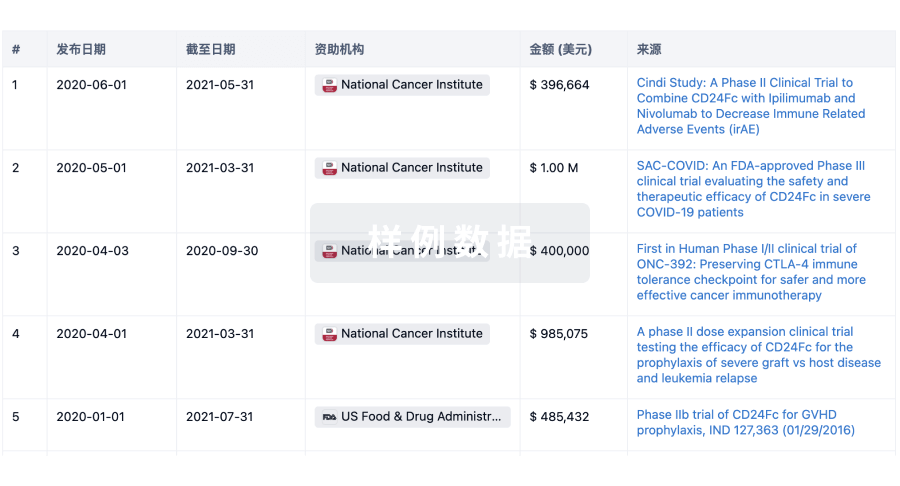
科研基金(NIH)
访问超过 200 万项资助和基金信息,以提升您的研究之旅。
登录
或
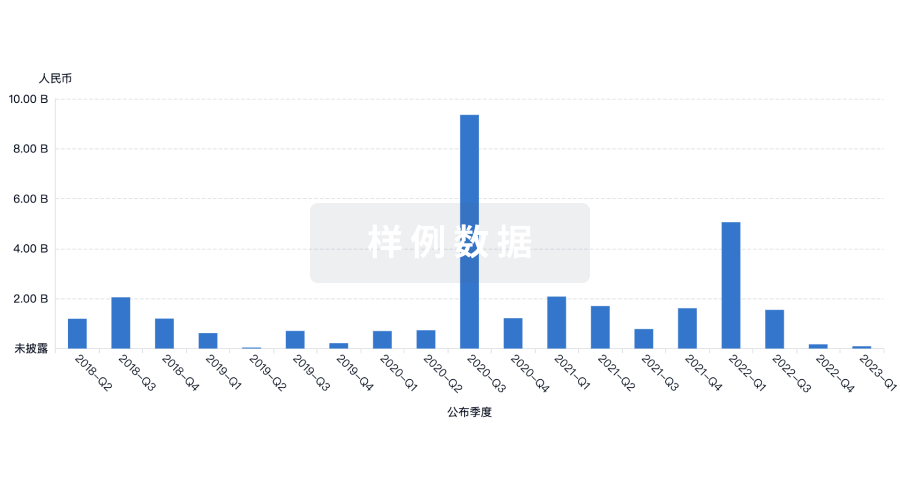
投资
深入了解从初创企业到成熟企业的最新公司投资动态。
登录
或
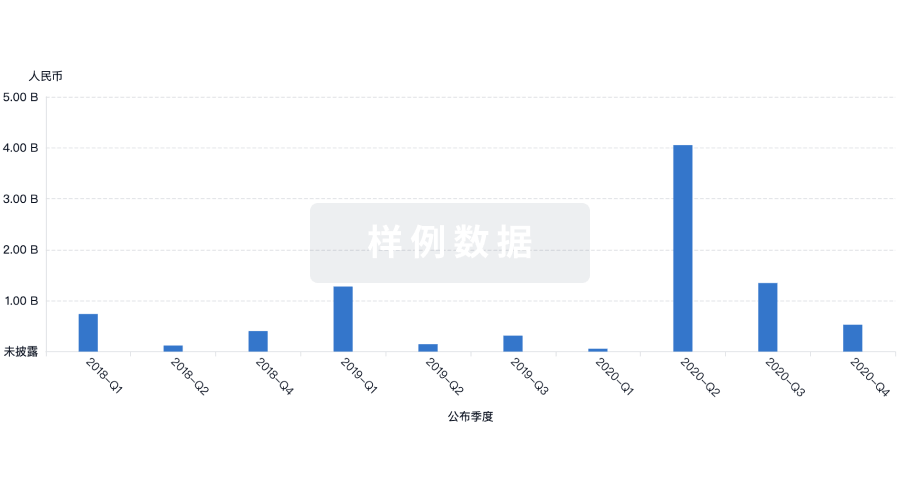
融资
发掘融资趋势以验证和推进您的投资机会。
登录
或
生物医药百科问答
全新生物医药AI Agent 覆盖科研全链路,让突破性发现快人一步
立即开始免费试用!
智慧芽新药情报库是智慧芽专为生命科学人士构建的基于AI的创新药情报平台,助您全方位提升您的研发与决策效率。
立即开始数据试用!
智慧芽新药库数据也通过智慧芽数据服务平台,以API或者数据包形式对外开放,助您更加充分利用智慧芽新药情报信息。
生物序列数据库
生物药研发创新
免费使用
化学结构数据库
小分子化药研发创新
免费使用