预约演示
更新于:2026-09-20

Shandong University of Technology
更新于:2026-09-20
概览
标签
血液及淋巴系统疾病
肿瘤
免疫系统疾病
蛋白水解靶向嵌合体(PROTAC)
噬菌体疗法
疾病领域得分
一眼洞穿机构专注的疾病领域
技术平台
公司药物应用最多的技术
靶点
公司最常开发的靶点

暂无数据
关联
靶点 |
作用机制 |
在研机构 |
原研机构 |
在研适应症 |
非在研适应症 |
最高研发阶段 |
首次获批国家/地区 |
首次获批日期 |
CN121974974
专利挖掘靶点 |
作用机制 |
在研机构 |
原研机构 |
在研适应症 |
非在研适应症 |
最高研发阶段 |
首次获批国家/地区 |
首次获批日期 |
100 项与 山东理工大学 相关的临床结果
登录后查看更多信息
登录后查看更多信息
2026-12-31Gut Microbes
Gut microbiota metabolic reprogramming drives the development of metabolic diseases in the host
Review
作者: Wei, Xue ; Wang, Yanrong ; Guan, Yuanyuan ; Huang, Beibei ; Li, Lingru ; Zheng, Yanfei ; Sun, Wenlong
Metabolic diseases pose a major global health challenge, the pathogenesis of which centers on "metabolic reprogramming"; that is, the adaptive or pathological rewiring of metabolic pathways. Emerging evidence indicates that gut microbiota dysbiosis triggers its metabolic reprogramming prior to host disease onset and plays a pivotal role in the development of metabolic disorders. However, unlike host metabolic reprogramming, which has been well characterized, the pathogenic mechanisms resulting from gut microbiota metabolic reprogramming remain poorly understood, creating a critical knowledge gap regarding its role in systemic metabolic diseases. To address this gap, this review introduces the concept of gut microbiota metabolic reprogramming and establishes its foundational role in systemic metabolic disease. We propose that gut microbiota metabolic reprogramming constitutes an early pathogenic event, preceding and potentially driving subsequent metabolic alterations in the host. Within this framework, we systematically reveal that an imbalance in the gut microbiota leads to its significant metabolic reprogramming, including lipid, glucose, amino acid, and uric acid metabolism, which in turn regulates host-wide metabolic and immune homeostasis and contributes to the development of metabolic diseases. By integrating these mechanisms into a coherent model, our work provides a novel paradigm for understanding metabolic regulation. This model refines the fundamental pathophysiology of metabolic disorders and highlights new possibilities for targeting the microbiome for the prevention and treatment of metabolic disorders.
2026-12-01Nano-Micro Letters
Robust and Biodegradable Heterogeneous Electronics with Customizable Cylindrical Architecture for Interference-Free Respiratory Rate Monitoring
Article
作者: Wang, Wenqi ; Wang, Chao ; Hao, Sanwei ; Hu, Zhouyang ; Yang, Jun ; Cong, Hailin ; Yu, Yaru ; Zhang, Jing ; Shao, Changyou ; Wang, Fangqing ; Fu, Peng ; Zhu, Hongnan
Abstract:
A rapidly growing field is piezoresistive sensor for accurate respiration rate monitoring to suppress the worldwide respiratory illness. However, a large neglected issue is the sensing durability and accuracy without interference since the expiratory pressure always coupled with external humidity and temperature variations, as well as mechanical motion artifacts. Herein, a robust and biodegradable piezoresistive sensor is reported that consists of heterogeneous MXene/cellulose-gelation sensing layer and Ag-based interdigital electrode, featuring customizable cylindrical interface arrangement and compact hierarchical laminated architecture for collectively regulating the piezoresistive response and mechanical robustness, thereby realizing the long-term breath-induced pressure detection. Notably, molecular dynamics simulations reveal the frequent angle inversion and reorientation of MXene/cellulose in vacuum filtration, driven by shear forces and interfacial interactions, which facilitate the establishment of hydrogen bonds and optimize the architecture design in sensing layer. The resultant sensor delivers unprecedented collection features of superior stability for off-axis deformation (0–120°, ~ 2.8 × 10⁻³ A) and sensing accuracy without crosstalk (humidity 50%–100% and temperature 30–80 °C). Besides, the sensor-embedded mask together with machine learning models is achieved to train and classify the respiration status for volunteers with different ages (average prediction accuracy ~ 90%). It is envisioned that the customizable architecture design and sensor paradigm will shed light on the advanced stability of sustainable electronics and pave the way for the commercial application in respiratory monitory.
2026-12-01SPECTROCHIMICA ACTA PART A-MOLECULAR AND BIOMOLECULAR SPECTROSCOPY
Controllable self-assembled AuNRs array with dual signal amplification for SERS detection of 5-HMF in honey
Article
作者: Wang, Cheng ; Zhang, Fan-Li ; Guo, Ye Min ; Zhang, Hao ; Pan, Wen ; Guo, Wan Hui ; Liu, Sheng Hong ; Zhang, Jia Bin
5-Hydroxymethylfurfural (5-HMF) is a toxic compound formed during the improper processing or storage of honey, endangering human health. Thus, rapid and accurate detection of 5-HMF is essential. In this study, we fabricated uniform gold nanorod (AuNR) array surface-enhanced Raman spectroscopy (SERS) substrates with high-density plasmonic hot spots by optimizing the AuNR aspect ratio and employing a novel three-phase self-assembly technique, significantly enhancing detection sensitivity and reproducibility. The AuNR array (aspect ratio of 3.5) showed the strongest signals due to the close match between its 781 nm longitudinal LSPR wavelength and the 785 nm excitation laser wavelength, enabling efficient resonant coupling. Leveraging the dual-resonance of the AuNR arrays, tip-induced field focusing and nanogap-mediated plasmon coupling synergistically produced ultrahigh electromagnetic enhancement for SERS detection. Using AuNR array-3.5 as the SERS substrate, the signal intensity demonstrated a positive correlation with a concentration of 5-HMF in the range of 1-50 mg/L, with a limit of detection (LOD) as low as 0.093 mg/L. The substrate revealed excellent uniformity (relative standard deviation, RSD = 3.86%), reproducibility (inter-batch RSD = 2.51%), reusability (RSD = 13.2%) and stability (stored at 4 °C for 30 days). In spiked honey samples, this method achieved an LOD of 35.4 mg/kg, well below the international maximum residue limit (40 mg/kg), and recovery values ranging from 73.32% to 95.92%, confirming its high sensitivity and accuracy. This work provided a rapid, efficient approach for detection of 5-HMF in honey and highlights its application potential in SERS-based food safety monitoring technologies.
100 项与 山东理工大学 相关的药物交易
登录后查看更多信息
100 项与 山东理工大学 相关的转化医学
登录后查看更多信息
组织架构
使用我们的机构树数据加速您的研究。
登录
或
管线布局
2026年10月11日管线快照
管线布局中药物为当前组织机构及其子机构作为药物机构进行统计,早期临床1期并入临床1期,临床1/2期并入临床2期,临床2/3期并入临床3期
药物发现
1
1
临床前
其他
2
登录后查看更多信息
当前项目
登录后查看更多信息
药物交易
使用我们的药物交易数据加速您的研究。
登录
或
转化医学
使用我们的转化医学数据加速您的研究。
登录
或
营收
使用 Synapse 探索超过 36 万个组织的财务状况。
登录
或
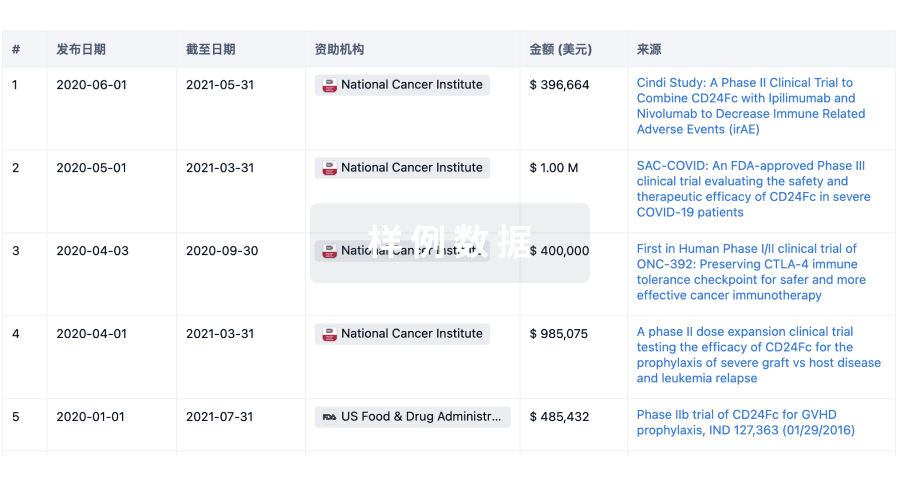
科研基金(NIH)
访问超过 200 万项资助和基金信息,以提升您的研究之旅。
登录
或
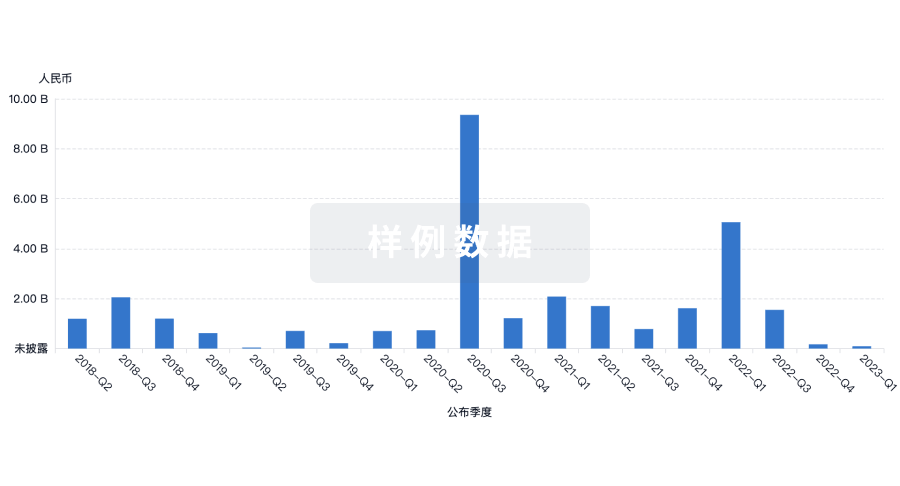
投资
深入了解从初创企业到成熟企业的最新公司投资动态。
登录
或
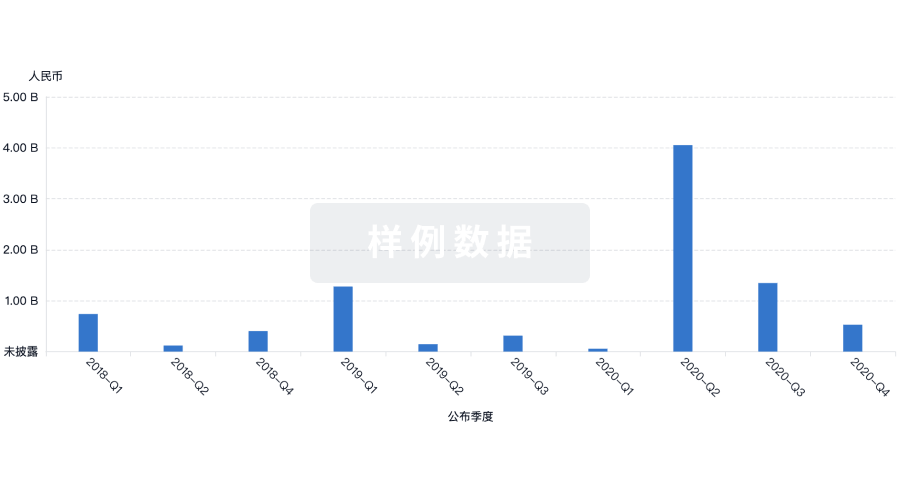
融资
发掘融资趋势以验证和推进您的投资机会。
登录
或
提出任何生物医药研究问题
让每一步生物医药决策都精准制胜
基于十亿级生物数据与全球情报的精准 AI,赋能早期药物发现
立即开始免费试用!
智慧芽新药情报库是智慧芽专为生命科学人士构建的基于AI的创新药情报平台,助您全方位提升您的研发与决策效率。
立即接入生物医药数据包
智慧芽新药库数据也通过智慧芽开放平台,以MCP或API服务形式对外开放。立即使用我们的MCP服务定制您的LLM智能体。
生物序列数据库
生物药研发创新
免费使用
化学结构数据库
小分子化药研发创新
免费使用