预约演示
更新于:2025-12-09

Casa de Saúde Santa Marcelina
更新于:2025-12-09
概览
关联
NCT03271749
Protocol for Accelerated Recovery in Patients Undergoing Thoracic Surgical Procedures Adapted to the Conditions of Santa Marcelina - Itaquera Hospital - São Paulo - Brazil (PROSM). Study Randomized Comparative Between the Adoption of the Proposed Guidelines and the Traditional Method Currently Used in the Institution
RBR-7hfd5rc
Clinical Trial: Accelerated Recovery Protocol in Patients Undergoing Bariatric Surgery. Randomized Comparative Study Between Usual Acceleration Protocols and the One Currently Used in the Institution (SAMSURP) - BARIMORP - BARIatric santa Marcelina Operational Recovery Protocol BARIMORP - BARIatric santa Marcelina Operational Recovery Protocol
NCT04610567
Two Phases Clinical Trial to Evaluate Safety and Efficacy of Methotrexate Associated to LDL Like Nanoparticles (LDE-MTX) in the Treatment of Patients With Mild Coronavirus-19 (COVID-19) Disease.
100 项与 Casa de Saúde Santa Marcelina 相关的临床结果
登录后查看更多信息
登录后查看更多信息
2025-10-01HemaSphere
Isatuximab in combination with chemotherapy for pediatric patients with relapsed/refractory acute lymphoblastic leukemia or acute myeloid leukemia: The ISAKIDS study
Article
作者: Corina Oprea ; Larissa Moreira ; Karsten Nysom ; Maria S. Felice ; Antonis Kattamis ; Daniel Freigeiro ; Jochen Buechner ; Franca Fagioli ; C. Michel Zwaan ; Guy Leverger ; Sidnei Epelman ; Simone Cesaro ; Ada Alarcón ; Carmelo Rizzari ; Ana Virginia Lopes de Sousa ; Hyoung Jin Kang ; Sandrine Macé ; Elvis Terci Valera ; Jonas Abrahamsson ; Giovanni Abbadessa ; André Baruchel ; Mariana Bohns Michalowski ; Willy Quiñones Choque ; Brigitte Nelken ; Lynn Wang ; Joaquin Duarte ; Oscar González-Llano
Abstract:
Children with relapsed acute leukemia have a poor prognosis; current relapse treatments are toxic, and novel treatments are needed. The anti‐CD38 antibody isatuximab is approved for relapsed‐refractory multiple myeloma in adults. We present results of the ISAKIDS study (NCT03860844) investigating isatuximab in children with relapsed‐refractory acute lymphoblastic leukemia (ALL) or acute myeloid leukemia (AML). This Phase 2, single‐arm, multicenter, open‐label study enrolled children aged 28 days to <18 years. Patients received isatuximab 20 mg/kg induction on Day 1, then weekly for 5 weeks (ALL) or 3 weeks (AML). Standard salvage chemotherapy was added on Day 8. Participants showing possible response could receive consolidation with every‐other‐week isatuximab (two doses) plus chemotherapy (T‐ALL, B‐ALL) or optional second induction (AML). The primary endpoint was the complete response (CR) rate (proportion with CR or CR with incomplete peripheral recovery [CRi]). CR/CRi was observed for 32/59 (54%) evaluable patients (B‐ALL, 13/25 [52%]; T‐ALL, 5/11 [45%]; and AML, 14/23 [61%]). Secondary endpoints included minimal residual disease (MRD) status and safety. Based on local and central analysis, 56% (18/32) of CR/CRi patients reached MRD negativity using 10
−4
sensitivity threshold for ALL and 10
−3
sensitivity threshold for AML. One event of fatal cytokine release syndrome was reported in a patient with a high baseline white blood cell count, leading to trial adaptation. The toxicity of isatuximab with chemotherapy was otherwise manageable. Despite initial evidence of efficacy of isatuximab combined with intensive chemotherapy, CR/CRi rates did not meet stringent prespecified criteria to proceed to ISAKIDS Stage 2 (≥60% [T‐ALL] and ≥70% [B‐ALL and AML]).
2025-10-01BMJ Open
Development of a medical screening process for patients with acute psychiatric symptoms presenting to the emergency department: protocol for a modified international Delphi study
Article
作者: Bingisser, Roland ; Wilson, Michael P ; Ünlü, Luca ; Minotti, Bruno ; Christ, Michael ; Nordstrom, Kimberly ; Griese, Johannes A ; Sterzer, Philipp ; Skinner, Clare ; Chrobok, Leon ; Lunardi, Camila ; Alsma, Jelmer ; Carpenter, Christopher R ; Nickel, Christian H
Introduction:
Patients with acute psychiatric symptoms are often referred to the emergency department (ED) for medical evaluation to exclude medical causes before psychiatric admission. The absence of a prospectively validated medical screening tool leads to wide practice variation. This study aims to develop a new, evidence-based and consensus-based medical screening tool through a collaborative, interdisciplinary, international Delphi approach.
Methods and analysis:
This modified Delphi study will include representatives from emergency medicine and psychiatry societies across four continents, as well as patient representatives with prior experience of medical screening in the ED. A minimum sample size of 24 participants is planned to account for potential dropouts. The Delphi procedure consists of four rounds. Round 1 will present current evidence and identify key items for the new medical screening tool. Round 2 will evaluate and refine statements from Round 1. Round 3 will seek consensus on the variables to be included in a medical screening tool. In Round 4, hypothetical clinical vignettes will be used to assess the agreement on the recommendations of the newly developed medical screening tool in order to test for content and construct validity. Surveys will be conducted via Research Electronic Data Capture (REDCap), with participants rating statements on a 6-point Likert scale. Response stability will be evaluated using the intraclass correlation coefficient, and consensus defined as ≥80% agreement. Results will be reported according to the ACcurate COnsensus Reporting Document guidelines and the Guidance for Reporting Involvement of Patients and the Public 2 short form.
Ethics and dissemination:
The Ethics Committee of Northwestern and Central Switzerland exempted the project from committee approval under the Human Research Act on 11 September 2024. Written consent will be obtained from all participants. Results of this study will be summarised as a medical screening tool which will be validated in a prospective, multicentre study in a second step.
Trial registration number:
NCT06936826
.
2025-08-01International Journal of Surgery Case Reports
Sigmoid colon duplication associated with urogenital malformations: A rare case report
Article
作者: Ribeiro, Maria Fernanda Brum ; Dos Santos Rego, Bárbara ; Freitas Filho, Luiz G ; Kato, André Henrique Teruaki ; Abreu, Maria Cristina Gomes ; Tonel, Alexandre Augusto Medeiros
INTRODUCTION AND IMPORTANCE:
Sigmoid colon duplication is a rare congenital anomaly, particularly when associated with complex urogenital malformations such as bladder and urethral duplication. These anomalies present significant diagnostic and surgical challenges. We previously reported this patient's case focusing on her genitourinary anomalies. During follow-up, the patient developed symptoms that led to the diagnosis of an undetected sigmoid colon duplication with a fistulous connection to the vagina, necessitating further surgical intervention.
PRESENTATION OF CASE:
A female neonate was diagnosed with bladder exstrophy, urethral and bladder duplication and ambiguous genitalia at birth. At 7 months of age, she developed intermittent fecal discharge through the vagina, initially suspected to be a rectovaginal fistula. Imaging studies, including contrast-enhanced CT, revealed a duplicated sigmoid colon with a fistulous connection to the vagina. At 3 years old, she underwent laparotomy, which confirmed two sigmoid segments sharing a common mesentery. The anterior duplicated segment forming the fistula, was surgically resected, and the fistula was closed, THE patient had an uneventful postoperative recovery, with resolution of symptoms.
CLINICAL DISCUSSION:
Sigmoid colon duplication is a rare entity that can remain undiagnosed for years. It may present with diverse symptoms, including obstruction, infection, or fistulization to adjacent organs. The association with bladder and urethral duplication suggest a possible common embryological origin. Accurate diagnosis requires advanced imaging techniques, particularly contrast studies from multiple entry points. Surgical intervention is the treatment of choice, aiming to remove the non-functional duplicated segment while preserving bowel integrity.
CONCLUSION:
This case highlights the importance of long-term follow-up in patients with complex congenital anomalies. Sigmoid colon duplication should be considered in cases of unexplained vaginal fecal discharge, particularly in individuals with associated urogenital malformations. Early recognition for preventing and surgical treatment are crucial for preventing complications and improving patient outcomes.
100 项与 Casa de Saúde Santa Marcelina 相关的药物交易
登录后查看更多信息
100 项与 Casa de Saúde Santa Marcelina 相关的转化医学
登录后查看更多信息
组织架构
使用我们的机构树数据加速您的研究。
登录
或
管线布局
2026年09月20日管线快照
无数据报导
登录后保持更新
药物交易
使用我们的药物交易数据加速您的研究。
登录
或
转化医学
使用我们的转化医学数据加速您的研究。
登录
或
营收
使用 Synapse 探索超过 36 万个组织的财务状况。
登录
或
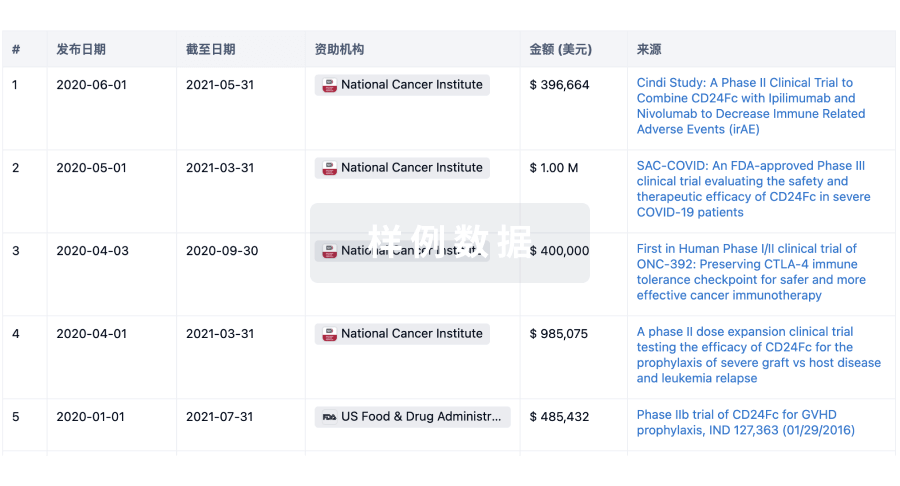
科研基金(NIH)
访问超过 200 万项资助和基金信息,以提升您的研究之旅。
登录
或
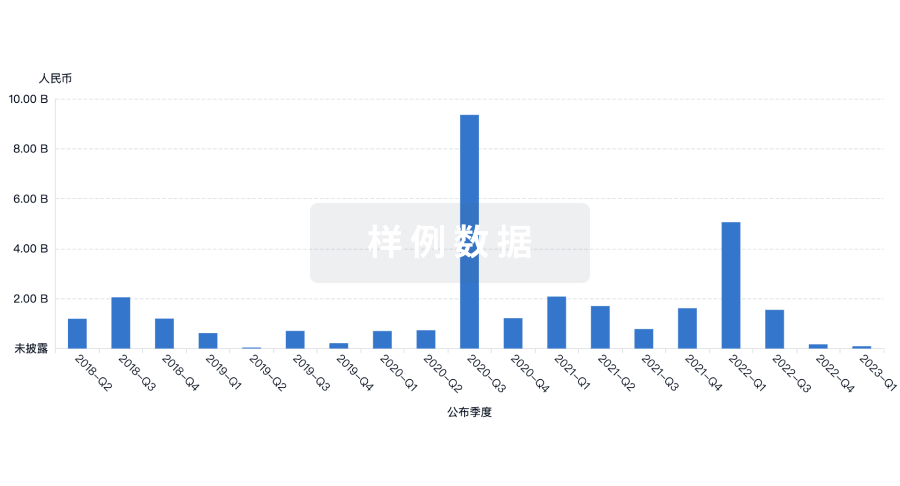
投资
深入了解从初创企业到成熟企业的最新公司投资动态。
登录
或
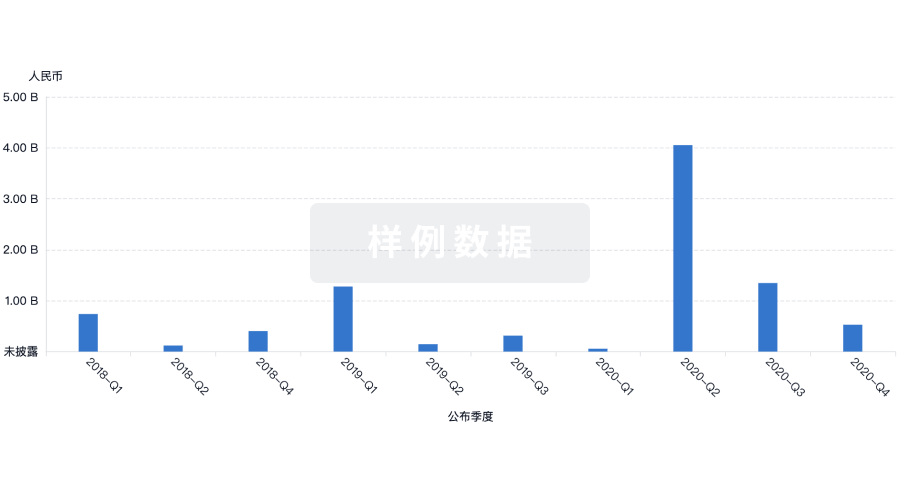
融资
发掘融资趋势以验证和推进您的投资机会。
登录
或
提出任何生物医药研究问题
让每一步生物医药决策都精准制胜
基于十亿级生物数据与全球情报的精准 AI,赋能早期药物发现
立即开始免费试用!
智慧芽新药情报库是智慧芽专为生命科学人士构建的基于AI的创新药情报平台,助您全方位提升您的研发与决策效率。
立即接入生物医药数据包
智慧芽新药库数据也通过智慧芽开放平台,以MCP或API服务形式对外开放。立即使用我们的MCP服务定制您的LLM智能体。
生物序列数据库
生物药研发创新
免费使用
化学结构数据库
小分子化药研发创新
免费使用