ENDORISK Clinical Implementation Study
Rationale: Preoperative identification of patients at risk for lymph node metastasis (LNM) is challenging in endometrial cancer (EC). Therefore, a Bayesian network model called ENDORISK was developed and validated in three external cohorts to improve preoperative risk stratification. The next step is to implement and evaluate whether use of the model improves daily clinical practice. Objective: The ENDORISK implementation (ENDORISK-I) study aims to prospectively evaluate whether implementation of ENDORISK in daily clinical practice improves preoperative risk stratification. Study design: A stepped wedge non inferiority study in which two oncology regions will consecutively start implementation of ENDORISK with one year interval. The ENDORISK model will be filled in and used in preoperative treatment counselling. Results will be compared to current standard clinical care which is prospectively evaluated in both regions since March 2022 in the 'evaluation of care in endometrial cancer' study (2021-7400). Study population: all consecutive patients recently diagnosed with early stage EC who are eligible for surgical treatment, who understand Dutch and are able to fill in a digital or paper questionnaire can be included. Main study parameters/endpoints: The ENDORISK implementation (ENDORISK-I) study aims to prospectively evaluate implementation of ENDORISK in daily clinical practice by investigating:
* The proportion of identified LNM in patients with lymph node staging (positive predictive value (PPV)) compared to standard care
* Proportion of patients who decide to have lymph node status assessed in ENDORISK care compared to standard care
* Preoperative information provision for patients and shared-decision making with the use of ENDORISK compared to standard care
* Patients' disease- specific-, overall survival, and health-related quality of life compared to standard care
* Patients' and doctors' use of and experiences with the ENDORISK-model
* Impact of ENDORISK on regional care costs
Mirtazapine and Quetiapine as Treatment for Postoperative Sleep Disturbance After Fast-track Knee Replacement
Use of mirtazapine and quetiapine for improvement of sleep quality after TKA
Implementation of Up-front ctDNA Analysis Into Lung Cancer Care and Development of Liquid Biopsy-based Decision Support Models - the Lungmarker² Study
Despite scientific evidence, use of liquid biopsy (LB) in diagnosis and monitoring of lung cancer (LC) is limited since it requires major changes in diagnostic and care pathways. Analyzing tumor markers (TMs), circulating tumor cells (CTCs) and circulating tumor DNA (ctDNA) in blood (LB) can inform about the nature of the tumor, the most appropriate therapy, therapy response and resistance.
Lungmarker2 is a multicenter, prospective, implementation and diagnostic cohort study. This study aims to implement up-front ctDNA analysis ('plasma first approach') into routine diagnostic work-up of all advanced stage LC patients in the Southeast of the Netherlands (the participating hospitals in the OncoZON region). Thereby, additional information about the molecular make-up of the tumor becomes available, the number of tissue Next-Generation Sequencing (NGS) analyses will decrease and time to therapeutic decision making is shortened. Next, using ctDNA, TM and other information, multi-parametric decision support models are built and validated that may support diagnosis, predict the outcome of the next imaging procedure and progression-free survival during follow-up. The final goal is to develop a super-resolution microscopy test that can detect PD-L1 expression on CTCs.
100 项与 St. Anna Ziekenhuis 相关的临床结果
0 项与 St. Anna Ziekenhuis 相关的专利(医药)
1999-10-15·Clinical chemistry and laboratory medicine
Letter
作者: Jansen, R. T. P.
100 项与 St. Anna Ziekenhuis 相关的药物交易
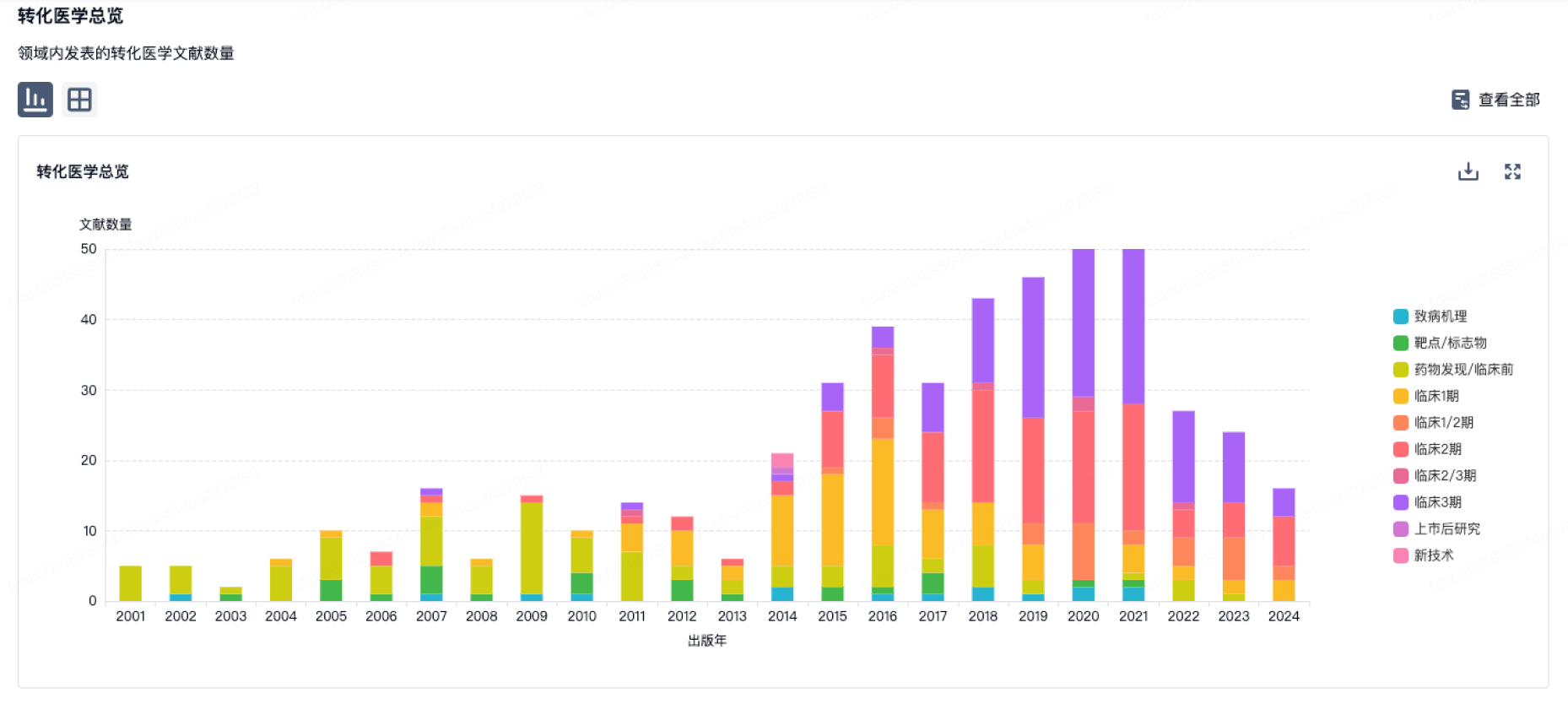
100 项与 St. Anna Ziekenhuis 相关的转化医学