预约演示
更新于:2026-03-08

Duke Kunshan University
更新于:2026-03-08
概览
关联
NCT07076134
A Pilot Trial of a Community-and Primary Care-based Intervention Linked With mObile Technology for Hypertension Control in Nepal (CoPILOT Trial)
NCT07045363
Effectiveness of an Embedded Community-based Heart-Age Risk Education Model (E-CHARM) in Improving Cardiovascular Risk Awareness and Health Behaviors Among Older Adults With Hypertension: a Randomized Controlled Trial
NCT06975501
A Community-Based 2×2 Factorial Randomized Controlled Trial Evaluating a Multicomponent Physical and Cognitive Intervention for Older Adults With Stroke and Comorbid Chronic Conditions in Urban China
100 项与 昆山杜克大学 相关的临床结果
登录后查看更多信息
登录后查看更多信息
2026-04-01AMERICAN JOURNAL OF PREVENTIVE MEDICINE
Cost-Effectiveness of Expanding Home Cook Interventions for Salt Reduction in China
Article
作者: Fan, Bonan ; Zhang, Donglan ; Pagán, José A ; He, Yibei ; Moran, Andrew E ; Yan, Lijing L ; Lv, Yipeng ; Marklund, Matti ; Wu, Qi ; Li, Na ; Wu, Jing ; Li, Yan ; Zhao, Shan ; Li, Xuanjing ; Gao, Xiang ; Liu, Fangchao ; Li, Weixin
INTRODUCTION:
Excessive salt intake is a major risk factor for cardiovascular disease and premature mortality in China and globally. A recent cluster RCT demonstrated the effectiveness of home cook interventions in reducing salt intake and blood pressure among participants from 6 provinces in China. Yet, it remains unclear whether expanding these interventions across China would be cost-effective.
METHODS:
The China Cardiovascular Disease Prevention Model, a validated microsimulation model that captures the development and consequences of cardiovascular disease among adults aged ≥35 years in China, was used to estimate lifetime averted cardiovascular disease events and deaths, direct medical costs (2022 international dollar), quality-adjusted life years gained, and the incremental cost-effectiveness ratio of home cook interventions versus the status quo. Costs and quality-adjusted life years were discounted at 3%.
RESULTS:
Compared with the status quo, home cook interventions were projected to avert 1.97 million coronary heart disease events, 3.69 million stroke events, 0.77 million deaths due to coronary heart disease, and 1.29 million deaths due to stroke in women. The interventions would also avert 1.62 million coronary heart disease events, 3.8 million stroke events, 0.6 million deaths due to coronary heart disease, and 1.15 million deaths due to stroke in men. The interventions resulted in an incremental cost-effectiveness ratio of 3,552 international dollar per quality-adjusted life year in women and 5,445 international dollar per quality-adjusted life year in men and, thus, were cost-effective considering a willingness-to-pay threshold of 21,318 international dollar (1-time gross domestic product per capita).
CONCLUSIONS:
Public health policymakers in China should consider widely adopting home cook interventions to better prevent cardiovascular disease and reduce healthcare costs.
2026-02-01NEURAL NETWORKS
Lena-TRNN: Exploring energy flow for time series prediction
Article
作者: Qian, Zhuang ; Zhang, Rui ; Yang, Xi ; Huang, Kaizhu ; Gao, Penglei
We focus on exploring the inherent energy flow for time series prediction in this paper, i.e., we consider the inherent energy of time series data as a sequence measuring properties such as fluctuations, oscillations, and trends. Distinctive with main-stream methods that adopt complex architecture to capture the presentative data relation, this brand-new perspective allows us to better differentiate the underlying distribution of the time-series data. Concretely, we design a novel decoder-free architecture, Latent-energy-aware Transformer Recurrent Neural Network (Lena-TRNN), for multivariate time series forecasting and imputation. The new network tends to assign low energy scores to the samples belonging to the in-distribution dataset, and high energy scores otherwise, which is in accordance with the law of natural change. Predicted samples can be readily obtained by iterating gradient-based optimization along the direction of energy minimization to explicitly learn the inherent energy flow. With the energy optimization modelling, our proposed method exhibits superior performance to many other competitive methods and attains state-of-the-art performance in many benchmark time series forecasting and imputation tasks. The code is available at https://github.com/PengleiGao/Lena-TRNN.
2026-01-01Gastro hep advances
Iron Deficiency Anemia Is Associated With Gastric Intestinal Metaplasia in Patients With Helicobacter pylori Infection
Article
作者: Epplein, Meira ; Salama, Nina R ; Alagesan, Priya ; Brown, HannahSofia ; Zuzul, Rachel ; Taylor, Allison O ; Min Htike, Wai Yan ; McCall, Shannon ; Garman, Katherine S ; Mebuge, Danielle L ; Wang, Frances ; Labriola, Caroline ; Patterson, Serach ; Emerson, Jacqueline
Background and Aims:
Despite acknowledgment of the relationship between iron deficiency anemia (IDA) and Helicobacter pylori, consensus is lacking on clinical practice implications. This study sought to examine the association of iron deficiency and anemia with the precancerous lesion gastric intestinal metaplasia (GIM) in a cohort of patients with active H. pylori infection.
Methods:
This retrospective cohort was assembled from adult patients diagnosed with H. pylori at endoscopy at Duke University between 2015 and 2019. Data were collected from pathology reports and electronic health records. The relationship between iron deficiency status and GIM prevalence among 422 H. pylori-positive individuals was examined using age-adjusted logistic regression models to estimate odds ratios (ORs) and 95% confidence intervals (CIs), and stratified by diagnosis of H. pylori before the diagnosis at study enrollment.
Results:
Of these 422 H. pylori-positive patients, 48.6% had evidence of anemia and/or iron deficiency in the electronic health record. Compared to patients without anemia, those with IDA were more likely to have GIM (OR = 1.66; 95% CI, 1.02-2.69). Fifty-seven patients were previously positive for H. pylori, treated, and remained positive for H. pylori at the index endoscopy, of whom 40% had IDA. Among these patients, those with IDA had 4-fold increased odds of having GIM compared to patients without anemia (OR = 4.11; 95% CI, 1.10-15.32).
Conclusion:
In a cohort of H. pylori-positive individuals at endoscopy, those with a history of IDA had greater odds of having GIM compared to patients without anemia. These results suggest the importance of close endoscopic evaluation and sampling of the gastric mucosa to evaluate for GIM in patients with IDA, and particularly those with a previous H. pylori diagnosis.
100 项与 昆山杜克大学 相关的药物交易
登录后查看更多信息
100 项与 昆山杜克大学 相关的转化医学
登录后查看更多信息
组织架构
使用我们的机构树数据加速您的研究。
登录
或
管线布局
2026年06月09日管线快照
无数据报导
登录后保持更新
药物交易
使用我们的药物交易数据加速您的研究。
登录
或
转化医学
使用我们的转化医学数据加速您的研究。
登录
或
营收
使用 Synapse 探索超过 36 万个组织的财务状况。
登录
或
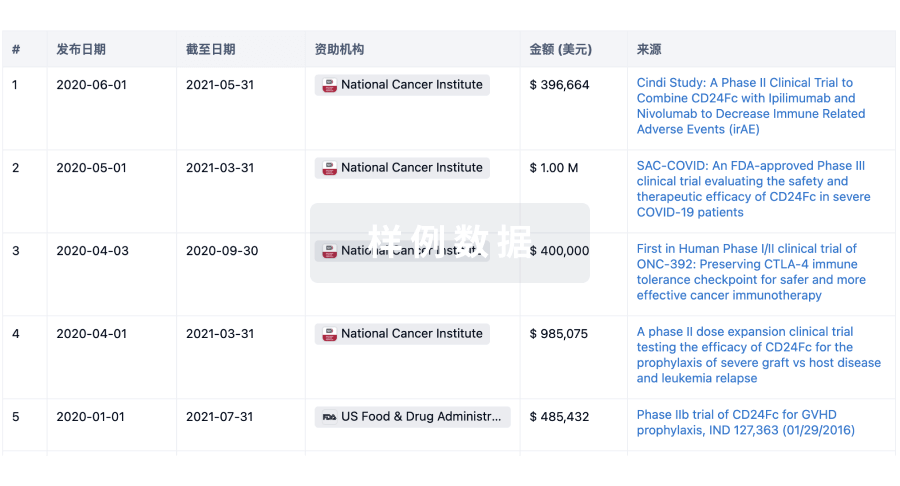
科研基金(NIH)
访问超过 200 万项资助和基金信息,以提升您的研究之旅。
登录
或
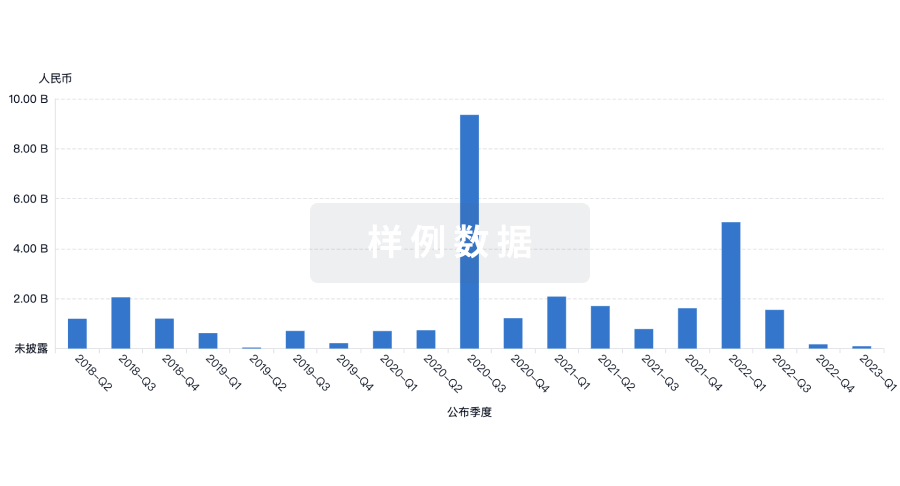
投资
深入了解从初创企业到成熟企业的最新公司投资动态。
登录
或
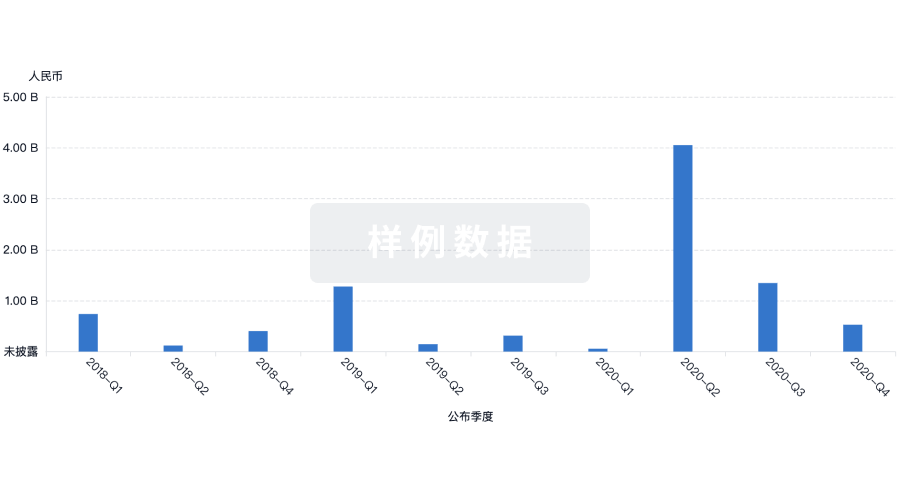
融资
发掘融资趋势以验证和推进您的投资机会。
登录
或
生物医药百科问答
全新生物医药AI Agent 覆盖科研全链路,让突破性发现快人一步
立即开始免费试用!
智慧芽新药情报库是智慧芽专为生命科学人士构建的基于AI的创新药情报平台,助您全方位提升您的研发与决策效率。
立即开始数据试用!
智慧芽新药库数据也通过智慧芽数据服务平台,以API或者数据包形式对外开放,助您更加充分利用智慧芽新药情报信息。
生物序列数据库
生物药研发创新
免费使用
化学结构数据库
小分子化药研发创新
免费使用